Gabrielle d'Estrées, Henry IV's almost-queen
- Born
- c. 1573
- Died
- 10 April 1599
- Active years
- 1590 – 1599
- Family
- Artists, saints and favourites
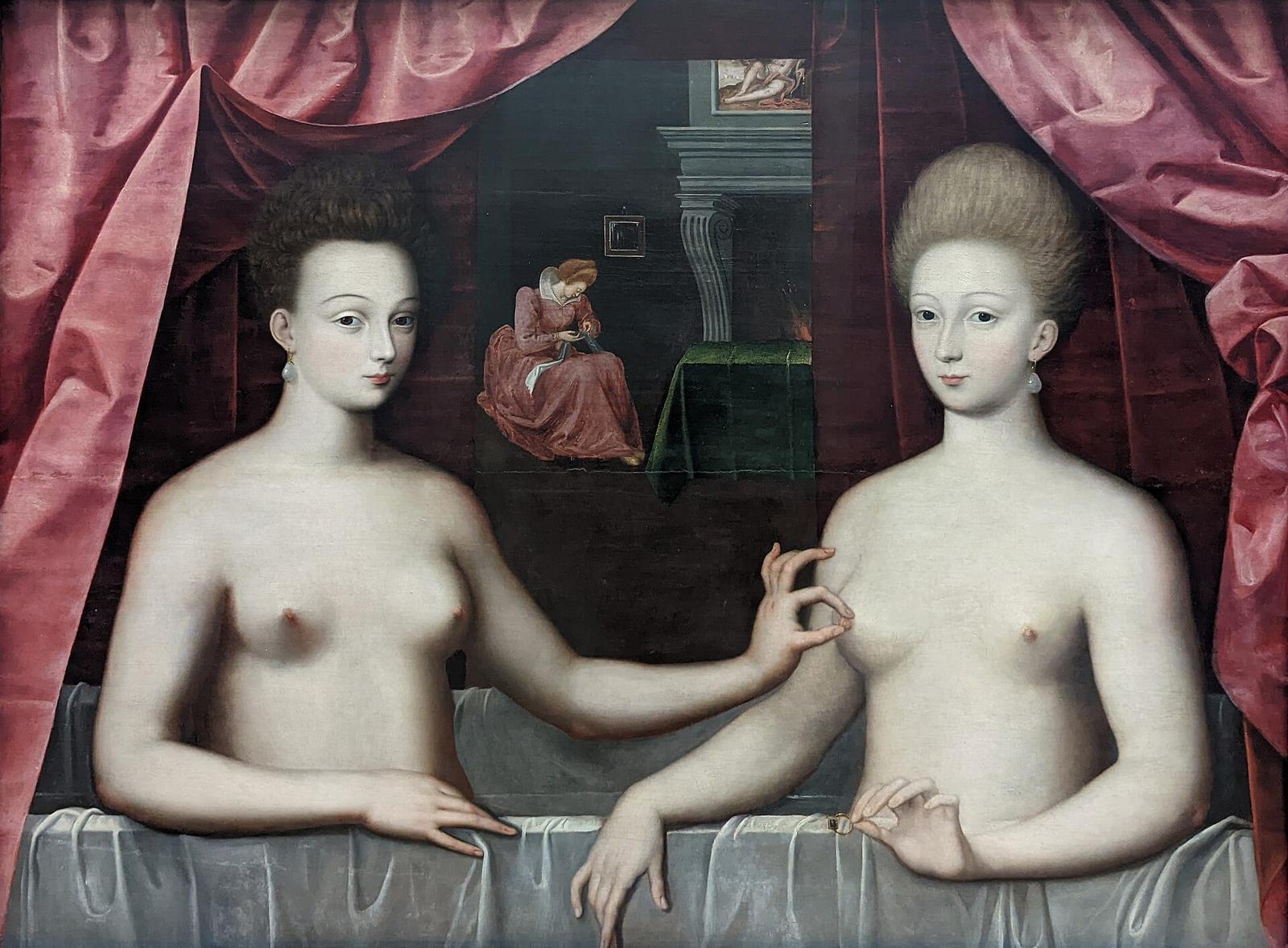
Henry IV loved her for nine years, had three children with her whom he legitimised, and wanted to marry her. Gabrielle d'Estrées, born in Touraine into a family of minor nobility, died in childbirth in Paris in April 1599, a few weeks before the planned wedding. She is best known from a painting in the Louvre in which she shares a bath with her sister.
Gabrielle d'Estrées in dates
| Date | Event |
|---|---|
| c. 1573 | Born, probably at the Château de la Bourdaisière |
| November 1590 | Henry IV falls in love with her |
| 1592 | Married to Nicolas d'Amerval, lord of Liancourt |
| 25 July 1593 | Henry IV renounces Protestantism at Saint-Denis |
| 7 June 1594 | Birth of César, future Duke of Vendôme |
| 1594-1595 | Her marriage to Liancourt is annulled |
| 1596 | Birth of Catherine-Henriette; made Marquise de Monceaux |
| 1597 | Made Duchess of Beaufort |
| 1598 | Birth of Alexandre; César is betrothed to Françoise de Lorraine |
| 9 April 1599 | Gives birth to a stillborn son |
| 10 April 1599 | Dies in Paris |
A childhood in Touraine
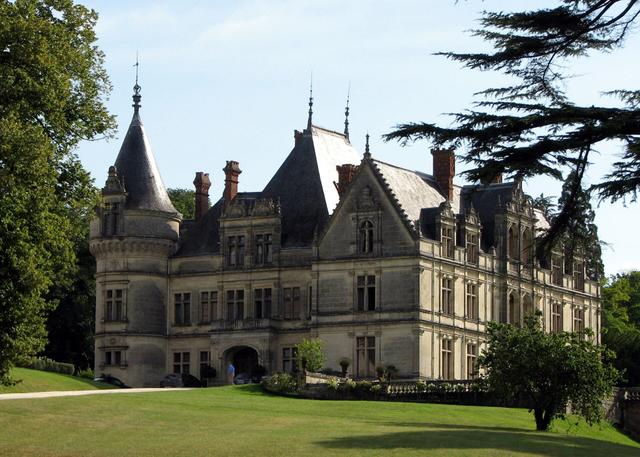
Gabrielle was the daughter of Antoine d'Estrées, a nobleman from Picardy, and Françoise Babou de La Bourdaisière, from a family of financiers in Touraine. The Babous owned the Château de la Bourdaisière, at Montlouis-sur-Loire, near Tours, which Philibert Babou, Francis I's superintendent of finances, had turned into a country residence. Tradition places Gabrielle's birth there, around 1573; other writers say she was born at the Château de Cœuvres, in Picardy, another family estate. See also: Château de la Bourdaisière
The women of the family had a bad reputation at court: her mother and aunts were said to have had many lovers. Her mother eventually left her husband for another man.
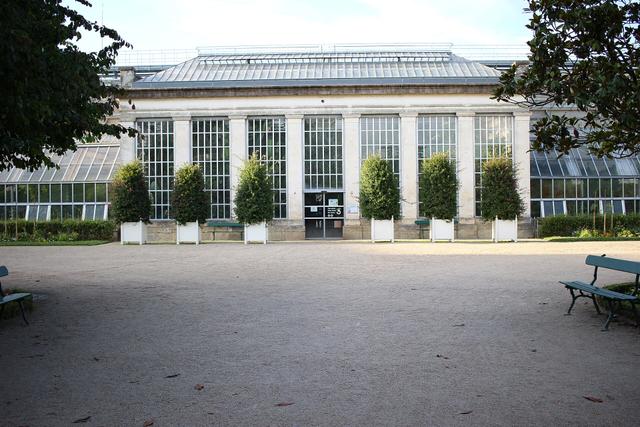
What to see: the Château de la Bourdaisière, now a hotel, with its park and its tomato conservatory, which grows hundreds of varieties.
Meeting Henry IV
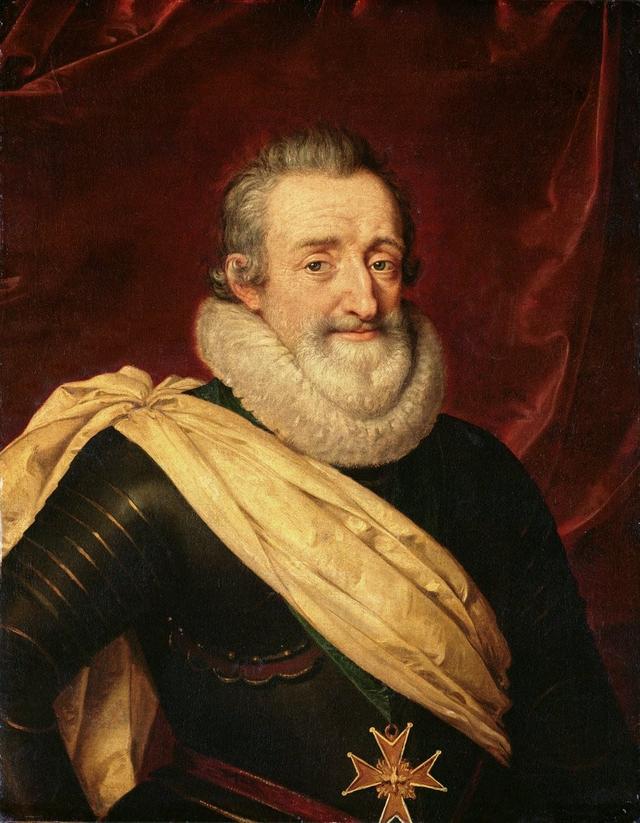
In 1590 Henry IV had been king for a year but did not hold Paris, which refused a Protestant king. His Master of the Horse, Roger de Bellegarde, praised the beauty of Gabrielle, who was his mistress. In November 1590 the king saw her and fell in love. Gabrielle preferred Bellegarde and kept the king waiting at first, but he won in the end. See also: Henry IV
In 1592 her father married her to Nicolas d'Amerval, lord of Liancourt, to keep up appearances. The unhappy marriage was annulled in 1594-1595. From then on Gabrielle followed the king on his campaigns and at court.
She pushed Henry IV to convert to Catholicism, the only way to enter Paris and end the war. The king renounced Protestantism at Saint-Denis on 25 July 1593 and entered the capital in March 1594. Three months later, on 7 June 1594, Gabrielle gave birth to César, whom the king legitimised the following year. See also: Basilica of Saint-Denis
The Louvre painting
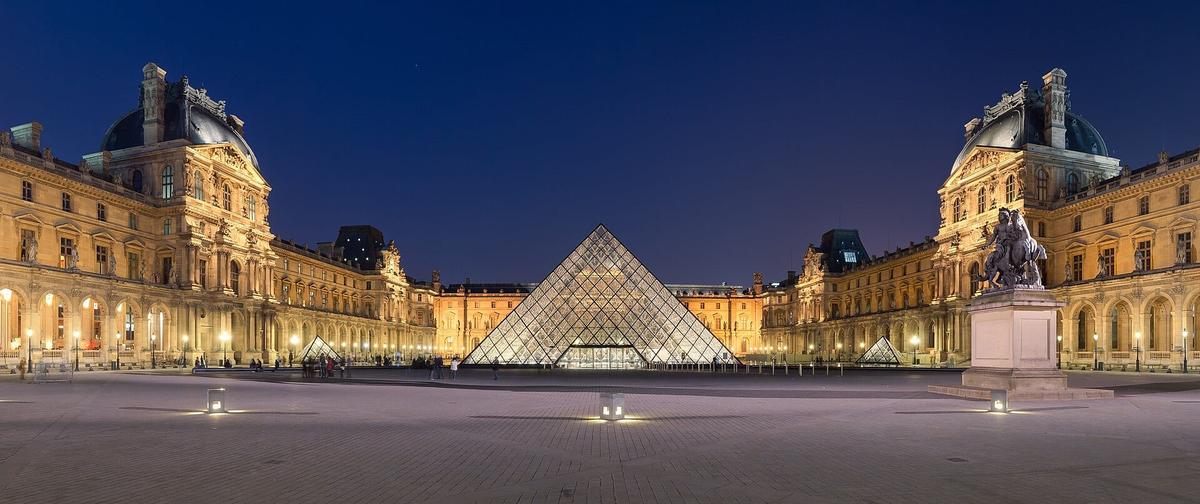
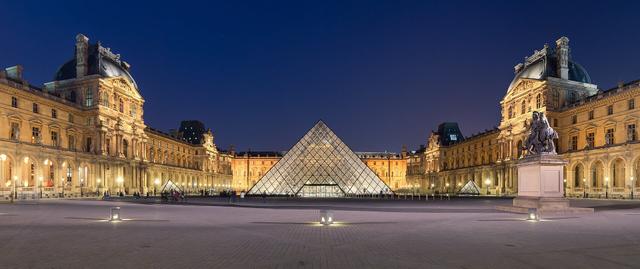
The best-known portrait of Gabrielle is an anonymous painting of the School of Fontainebleau, made around 1594 and kept in the Louvre. Two young women sit in a bathtub lined with white cloth. On the right, Gabrielle holds a ring between two fingers; on the left, her sister, the Duchess of Villars, pinches her nipple. In the background a maid sews by a fireplace. The gesture is often read as a hint at her pregnancy, and the ring as the king's promise of marriage. See also: Louvre Museum
What to see: the painting hangs in the rooms of 16th-century French painting.
Fontainebleau and the court of Henry IV
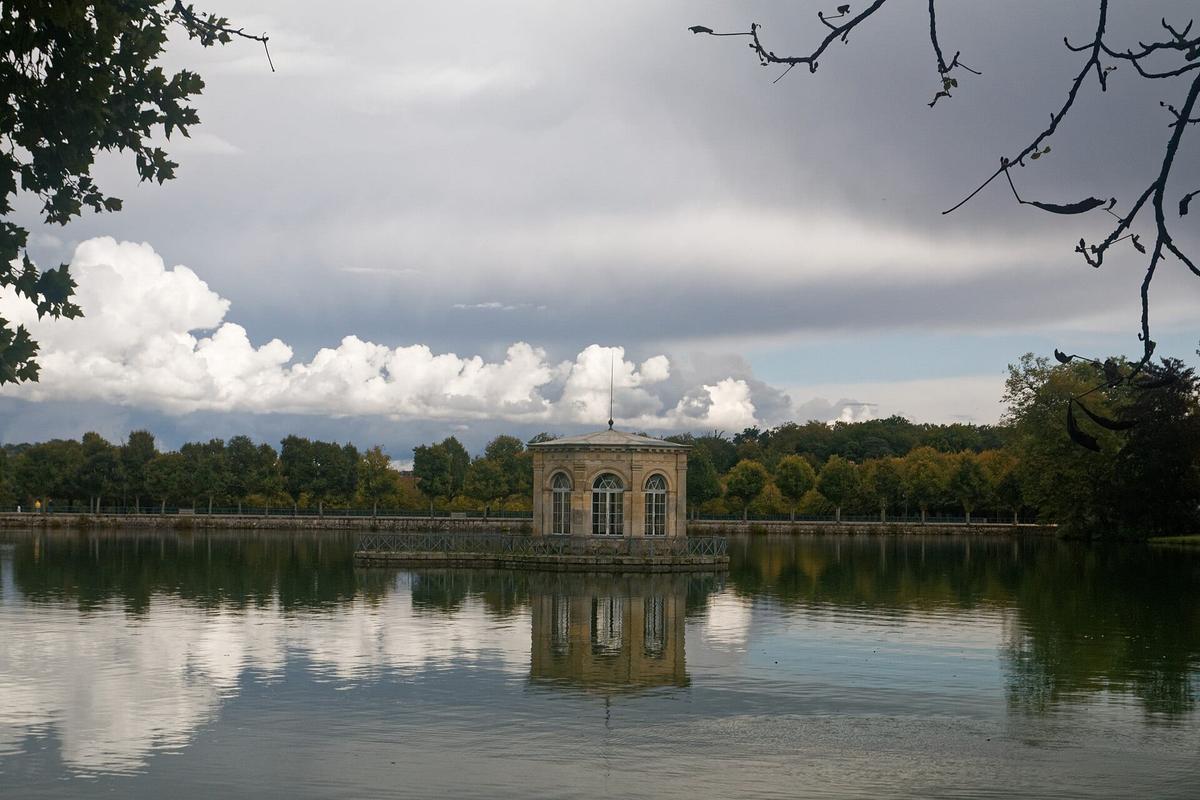
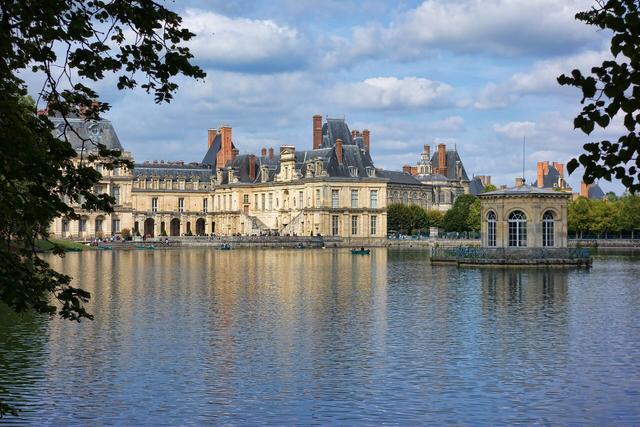
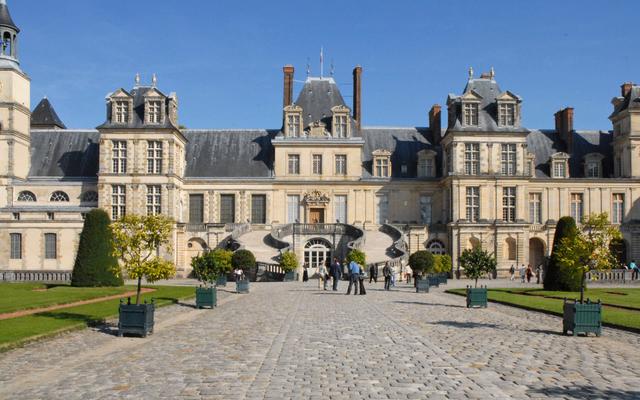
Henry IV loved Fontainebleau and began major works there: the Cour des Offices, the Diana Gallery, new gardens. Gabrielle lived there with him and their children. The king showered her with titles: Marquise de Monceaux in 1596, Duchess of Beaufort in 1597. She held almost the rank of a queen, received ambassadors and helped the king win over the last leaders of the Catholic League. See also: Palace of Fontainebleau
Henry IV wrote, or had written, a song for her that is still famous, Charmante Gabrielle. Sully, the finance minister, was against a marriage, though: he thought a mistress unworthy of the throne and feared a war of succession between Gabrielle's children and those a queen of royal blood might have. See also: Sully
What to see: the Carp Pond and its pavilion, the Diana Gallery, the Oval Courtyard.
Chenonceau, César's inheritance
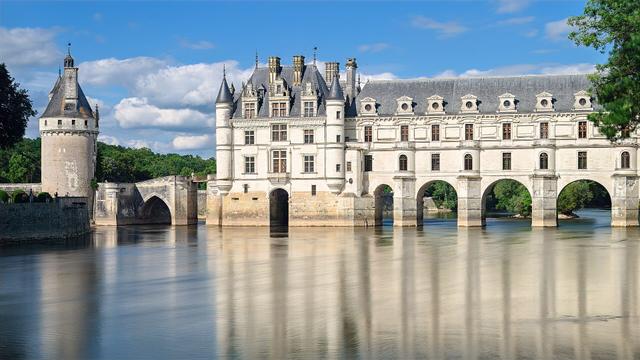
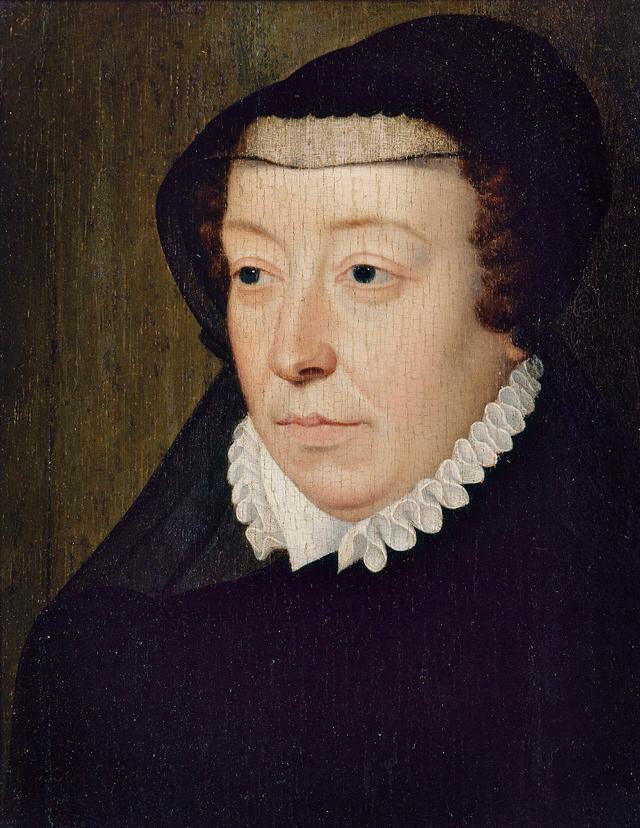
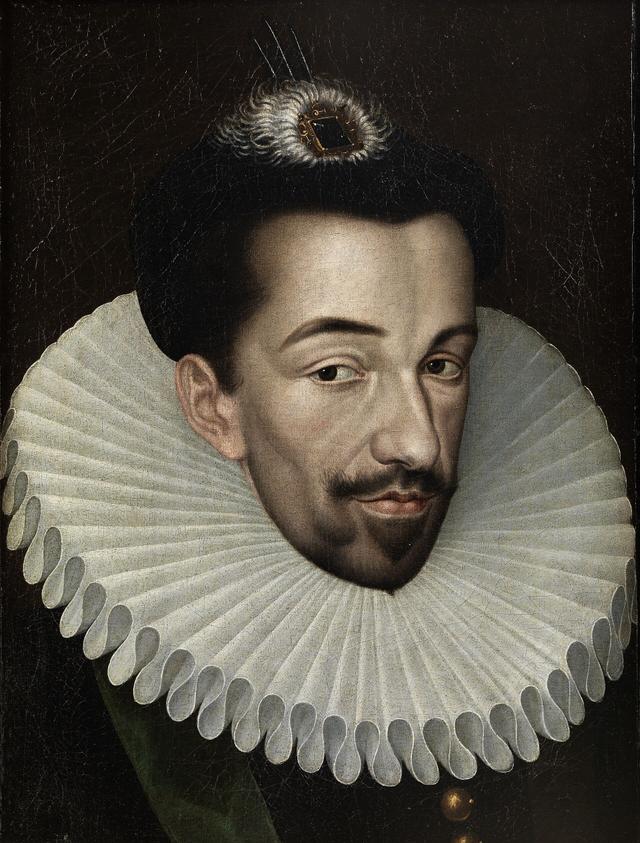
In 1598 Henry IV went to Brittany to subdue the Duke of Mercœur, the last great leader of the League. The peace was sealed by the betrothal of César, aged four, to Françoise de Lorraine, aged six, the duke's daughter. Françoise was the niece of Queen Louise, widow of Henry III, who lived in mourning at Chenonceau. Henry IV paid off the debts Catherine de' Medici had left on the château; in return, Louise left Chenonceau to her niece. When she died in 1601 the estate passed to Françoise and César, and it stayed with the Vendôme family for more than a century. See also: Château de Chenonceau, Henry III, Catherine de' Medici
What to see: Gabrielle d'Estrées's bedroom and its Flemish tapestries, then Louise of Lorraine's mourning room, hung in black and scattered with tears.
A sudden death
In the spring of 1599 the king had asked for his marriage to Marguerite de Valois to be annulled, and Gabrielle was expecting their fourth child. The wedding seemed close. She left Fontainebleau to spend Easter in Paris. On 9 April she was seized by convulsions, gave birth to a stillborn son and died the next day, aged about twenty-six. The doctors of the time could make no sense of it and rumour spoke of poison; today eclampsia is thought the likely cause.
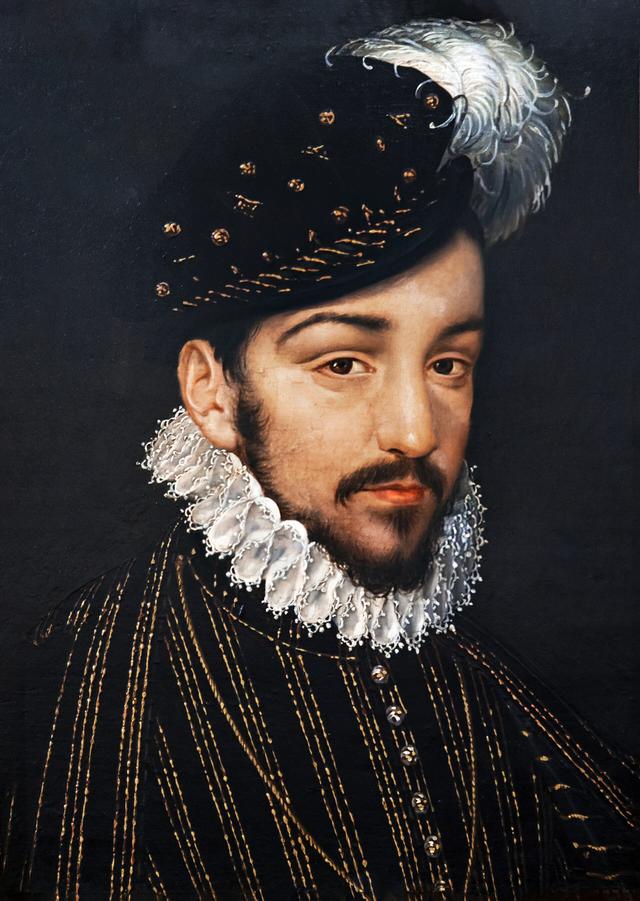
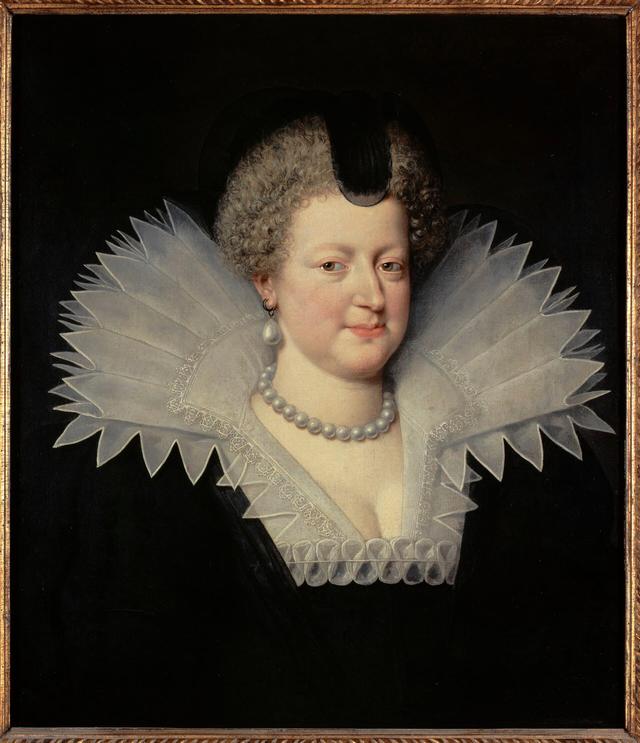
Henry IV, who had set out from Fontainebleau to join her, arrived too late. He wore black for mourning, something no King of France had done before him. Gabrielle was given a queen's funeral and buried at the Abbey of Maubuisson, near Pontoise, where her sister Angélique was abbess. Much of the abbey was destroyed after the Revolution and her tomb has disappeared. The following year the king married Marie de' Medici. See also: Marie de' Medici
In her footsteps: from Tours to Fontainebleau
In Touraine, La Bourdaisière is 10 km from Tours and 15 km from Amboise; Chenonceau is 20 minutes away by road. One day is enough for both. In Paris, the Louvre and its painting combine well with Fontainebleau, 40 minutes by train from Gare de Lyon.
Partner links: if you book through these links, we earn a commission at no extra cost to you. Partner links · Learn more
Places to stay near Montlouis-sur-Loire
FAQ
Where is Gabrielle d'Estrées buried?
At the Abbey of Maubuisson, in Saint-Ouen-l'Aumône, near Pontoise. Her tomb disappeared when much of the abbey was destroyed after the Revolution.
Where was Gabrielle d'Estrées born?
Around 1573, probably at the Château de la Bourdaisière, at Montlouis-sur-Loire, in Touraine. Some writers suggest the Château de Cœuvres, in Picardy.
What does the Gabrielle d'Estrées painting in the Louvre show?
Gabrielle and her sister, the Duchess of Villars, in a bath. The sister pinches Gabrielle's nipple while Gabrielle holds a ring: this is seen as a hint at her pregnancy and at Henry IV's promise of marriage.
Did Henry IV marry Gabrielle d'Estrées?
No. He wanted to marry her once his marriage to Marguerite de Valois was annulled, but Gabrielle died on 10 April 1599, before the ceremony.
How many children did Gabrielle d'Estrées have with Henry IV?
Three legitimised children: César, Duke of Vendôme, Catherine-Henriette and Alexandre, as well as a stillborn son in 1599.
Sources: fr.wikipedia.org (Gabrielle d'Estrées), collections.louvre.fr, chenonceau.com, labourdaisiere.com
Tickets to book online
Partner links: if you book through these links, we earn a commission at no extra cost to you. Partner links · Learn more
Places to visit
Related guides