Louvre or Orsay: which one to choose if you only have half a day?
If you only have half a day, choose Orsay for 19th-century painting and the Impressionists, or the Louvre if you want to see the Mona Lisa, the Venus de Milo and a royal palace. You can see all of Orsay in three hours, and it costs half the price for a visitor from outside the European Union; at the Louvre, in three hours, you will see a small part of the museum. The two are a quarter of an hour's walk apart, on either side of the Seine.
The short answer
- First time in Paris and you want the works everyone knows: the Louvre, for the Mona Lisa, the Venus de Milo and the Winged Victory of Samothrace.
- You love Monet, Renoir, Van Gogh or Degas: Orsay, without a doubt.
- Tight budget, visitor from outside the European Union: Orsay (€16 online) against €32 at the Louvre.
- Half a day and not much energy: Orsay, which you can see in full without wearing yourself out.
- On a Tuesday: the Louvre is closed, so go to Orsay. On a Monday: Orsay is the one that is closed.
- Both on the same day: possible, a quarter of an hour apart on foot, but book both time slots.
Louvre and Orsay at a glance
| Louvre | Orsay | |
|---|---|---|
| Adult price | €22 (EEA residents), €32 (non-EEA) | €16 online, €14 at the ticket desk, for everyone |
| Free | under-18s, Europeans aged 18 to 25 | under-18s, Europeans aged 18 to 25 |
| Size | 72,735 m² of galleries, over 36,000 works on display | a former railway station, three levels |
| Time needed | 2 hours for the highlights, half a day | 2 hours for the essentials, 3 hours to see everything |
| Closed | Tuesday | Monday |
| Opening hours | 9:00 – 18:00, late opening 9:00 – 21:00 Wednesday and Friday | 9:30 – 18:00, late opening until 21:45 on Thursday |
| Crowds | over 9,000,000 visitors in 2025 | about 4,900,000 in 2025, with the Orangerie |
2026 prices checked on 11 November 2026: the Louvre's official website, and for Orsay, prices listed by Visit Paris Region (the regional tourist board). The European Economic Area (EEA) is made up of the 27 EU countries, Iceland, Liechtenstein and Norway. Louvre floor area and number of works: Wikipedia.
What you come to see: the Mona Lisa or the Impressionists
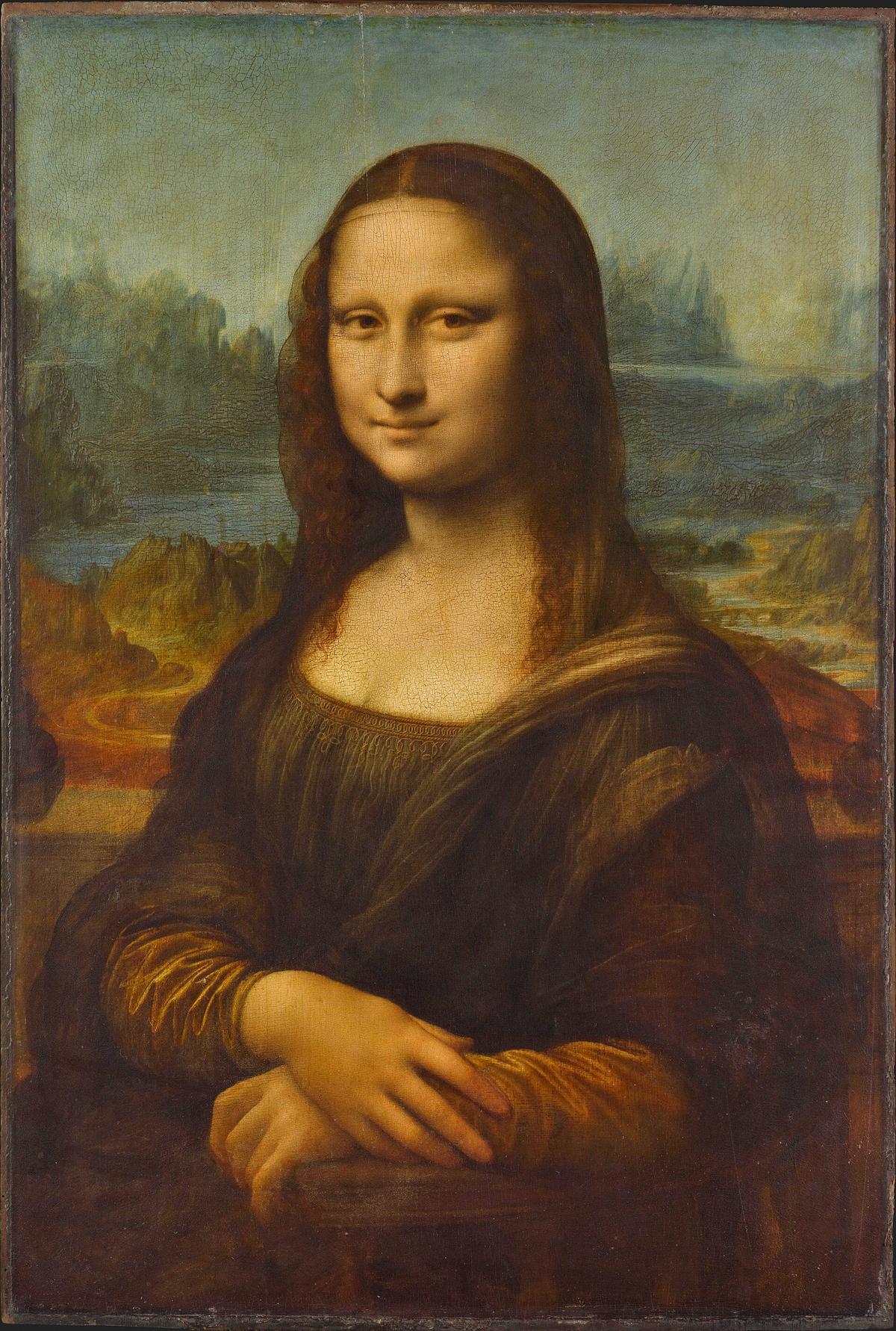
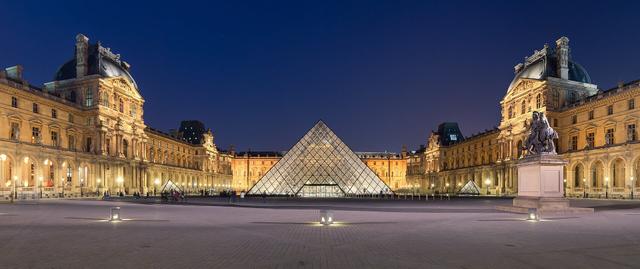
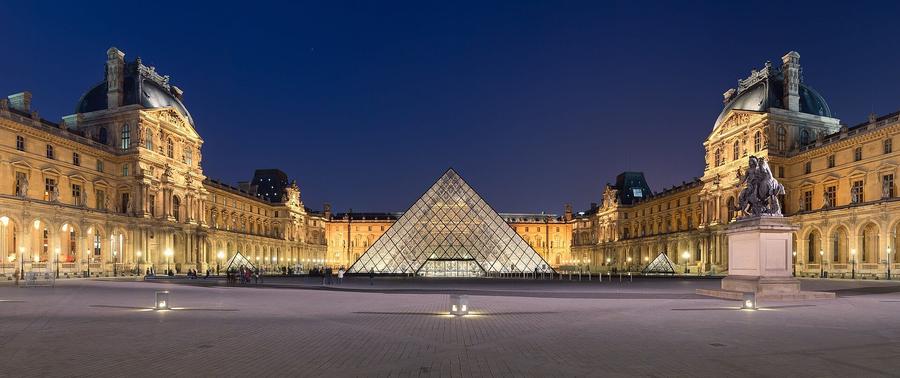
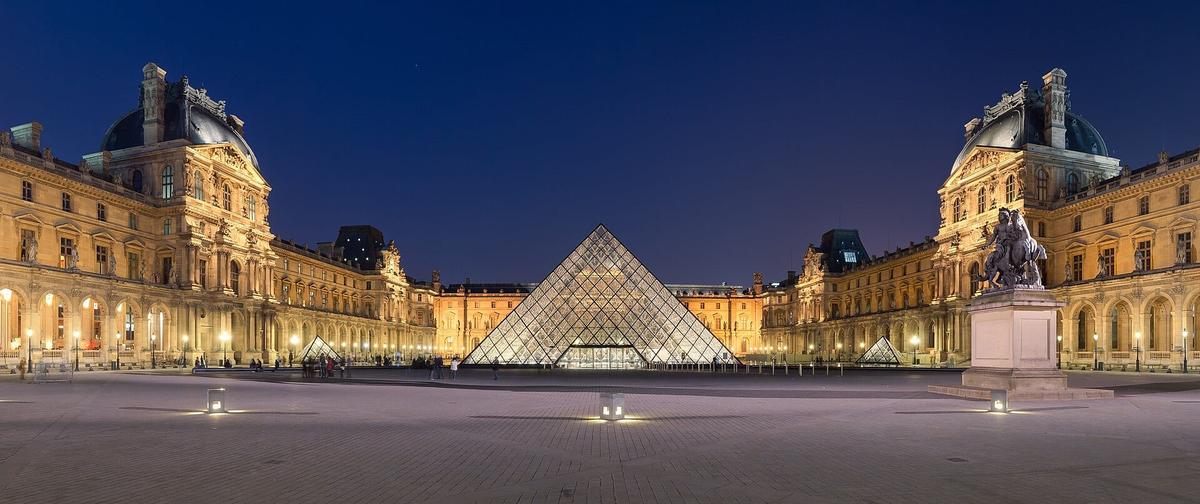
The Louvre is a royal palace that became a museum in 1793, during the Revolution. It spans thousands of years: Egyptian, Greek and Roman antiquities, sculpture, and European painting up to the mid-19th century. In half a day, you follow the highlights of the Denon wing: the Winged Victory of Samothrace at the top of the Daru staircase, the Grand Gallery and its Italian paintings, then Leonardo da Vinci's Mona Lisa in the Salle des États. Directly opposite her hangs Veronese's The Wedding Feast at Cana, the largest painting in the museum, which hardly anyone looks at. Next come The Raft of the Medusa, Liberty Leading the People and The Coronation of Napoleon, then the Venus de Milo in the Sully wing.
Two things to know before you go. The Mona Lisa is small (77 cm high), and you see her from behind a barrier, in the middle of a crowd taking photos. And since the theft on 19 October 2025, the Apollo Gallery has reopened without the French Crown Jewels: if you were coming for them, they cannot be seen for now. See also: Louvre Museum
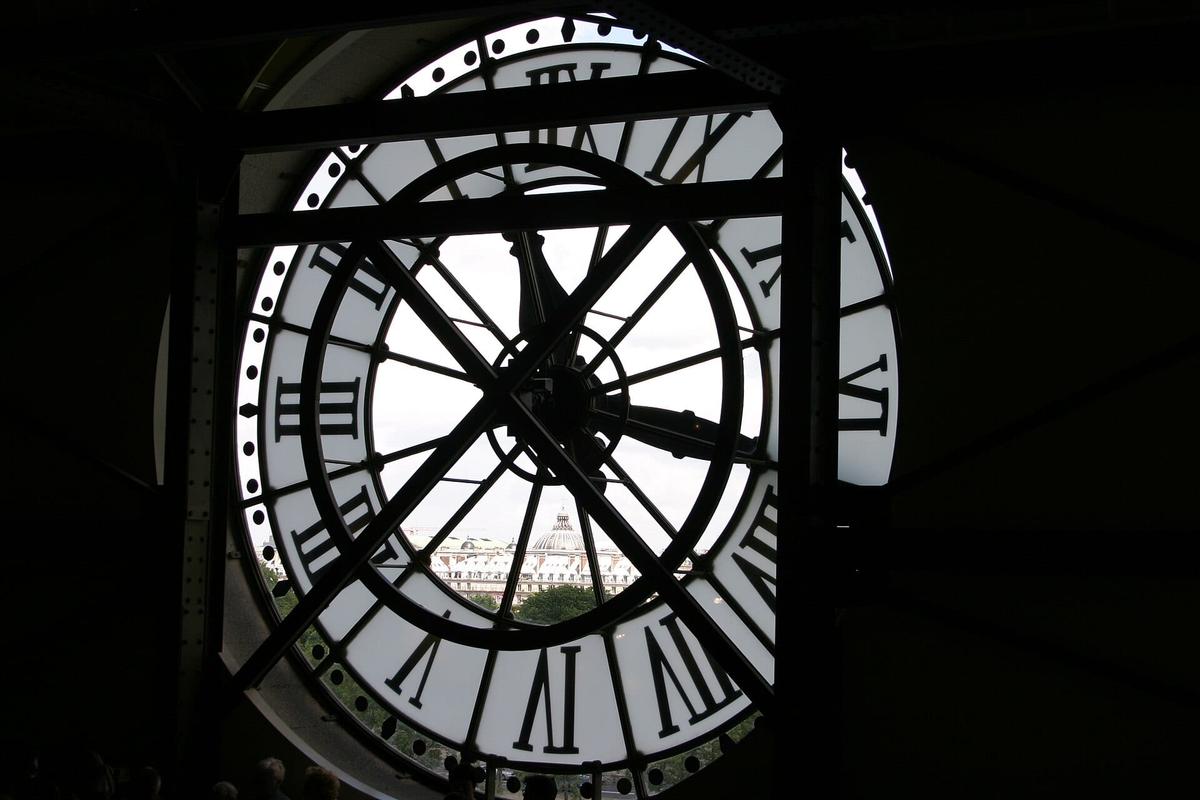
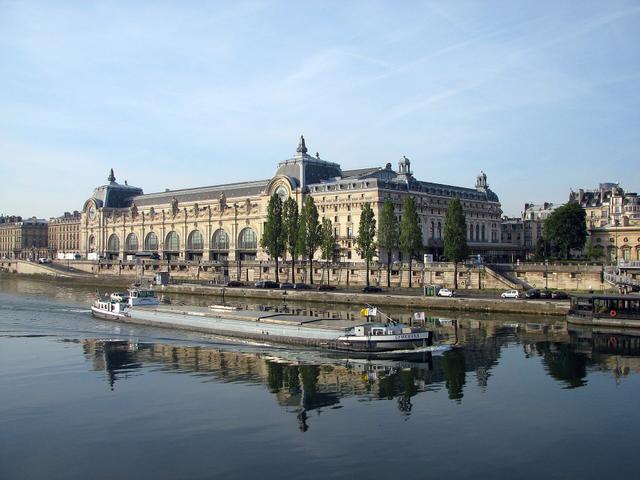
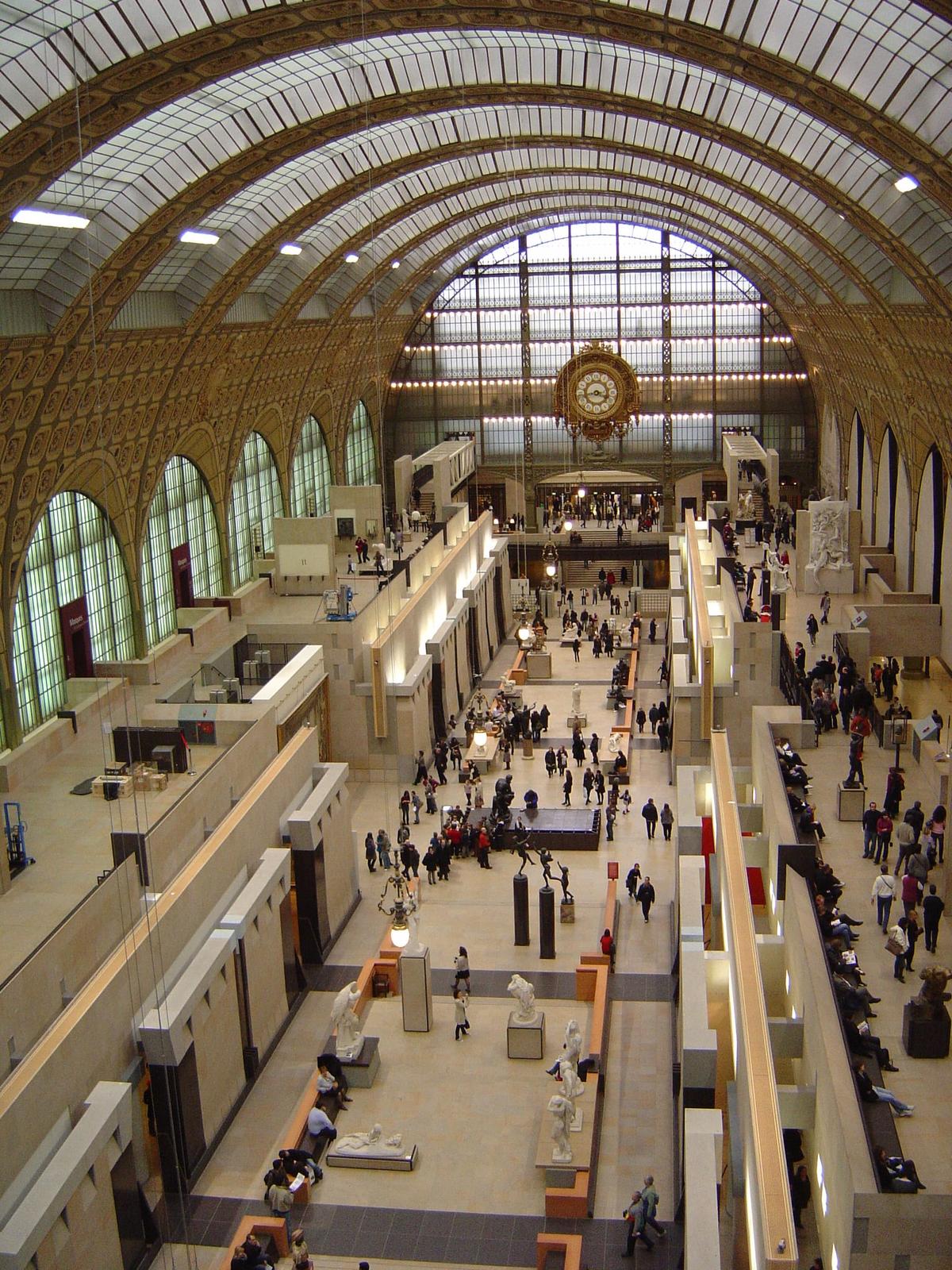
Orsay occupies the railway station built by Victor Laloux for the World's Fair of 1900, which became a museum in 1986. It covers a short period, from 1848 to 1914, but it is the one many visitors prefer. On the fifth floor, under the glass roof: Monet, Renoir, Degas, Pissarro, Sisley, Caillebotte and Berthe Morisot. Renoir's Bal du moulin de la Galette, Manet's Le Déjeuner sur l'herbe and Olympia, Monet's Rouen Cathedrals. Further on, Van Gogh with Starry Night over the Rhône and Bedroom in Arles, Gauguin, Cézanne and Seurat.
The moment everyone photographs: stepping behind the glass face of the great clock on the fifth floor, with the Seine, the Louvre and Montmartre in the distance through the numbers. See also: Musée d'Orsay
In short: the Louvre shows the whole history of art, Orsay shows one chapter, but the best-loved chapter.
How long do you need for each?
At Orsay, two hours are enough for the nave, the fifth floor and the great paintings. With the Art Nouveau decorative arts and a temporary exhibition, allow three hours. So half a day lets you see everything at your own pace, with a break at the café behind the clock.
At the Louvre, two hours let you see the most famous works without rushing. Half a day adds a whole wing, such as the Egyptian antiquities or the Napoleon III apartments in the Richelieu wing. Beyond that, tiredness wins: the museum is huge, the wings are long and there are a lot of stairs. In half a day, you will see a small part of the collections, and that is normal.
If the idea of seeing only a fraction of the museum frustrates you, choose Orsay. If you want to tick off the Mona Lisa, the Venus and the Victory, the Louvre does the job in three hours.
How much do the Louvre and Orsay cost?
This is where the answer changes most depending on where you live.
At the Louvre, since 14 January 2026, an adult living in the EEA pays €22; an adult living anywhere else (including the UK, Switzerland, the US and China) pays €32. Bring ID: checks may be made at the entrance, and the museum charges an extra €15 to anyone who bought the EEA price without being entitled to it. The audio guide costs an extra €6.
At Orsay, the price is the same for everyone: €16 online, €14 at the ticket desk. On Thursday evenings, from 18:00, it drops to €12 online and €10 at the desk. The online ticket costs more but gives you an entry time and the priority queue at entrance A.
Free entry rules are almost the same: under-18s of all nationalities, Europeans aged 18 to 25, disabled visitors and the person accompanying them, and jobseekers. For a European family with children, only the parents pay, at both museums. At Orsay, adults accompanying a minor also get the "Enfants & Cie" reduced price.
In practice:
- A French couple: €22 each at the Louvre, €16 each at Orsay online.
- An American or British couple: €32 each at the Louvre, still €16 at Orsay.
- European students under 26: free at both, but book a time slot anyway.
Do you need to book?
At the Louvre, yes. The museum recommends a time slot for all visitors, including those who get in free, and booking becomes compulsory at the busiest times, as it is this year from 17 October 2026 to 1 November 2026. Without a slot, entry is not guaranteed. Once you leave, you cannot go back in: have lunch before or inside the museum. If you are travelling from abroad, book before you leave home.
At Orsay, it is advisable but not compulsory, except on the first Sunday of the month. The online ticket gives you 30 minutes after your chosen time to use the priority queue. Beware of Tuesdays: with the Louvre closed, many visitors switch to Orsay and the queue gets longer.
If there are no slots left on the Louvre website, tickets with a guided tour of the masterpieces include a reserved entry. The guide knows the shortest way to the Mona Lisa, which matters in a palace where it is easy to get lost.
Partner links: if you book through these links, we earn a commission at no extra cost to you. Partner links · Learn more
Crowds, late openings and the best time to go
The Louvre welcomed over 9,000,000 visitors in 2025, nearly twice as many as Orsay and the Orangerie combined. But the crowds gather in a few rooms: the Salle des États, the Daru staircase and the Venus de Milo. Elsewhere, in the Near Eastern antiquities or the Flemish paintings, you can find yourself almost alone. At Orsay, the crowds are more spread out but you feel them on the fifth floor, around the Impressionists and behind the clock.
Late openings are the best time at both museums. The Louvre has late openings (9:00 – 21:00) on Wednesday and Friday: by the end of the day, the groups have gone. Orsay closes at 21:45 on Thursday, with a reduced price from 18:00. Arrive at around 6 pm and go straight up to the fifth floor.
In the morning, take the first slot of the day. At the Louvre, head straight for the Mona Lisa before the room fills up, then come back to the rest.
Avoid: weekends and French school holidays, when Louvre slots go several days in advance.
With children
For younger children, Orsay is often easier. The museum is a manageable size, the nave with its large animal sculptures and the giant clock win them over straight away, and you can turn it into a game: find Degas's little dancer or Monet's poppies. Do not go beyond two hours.
The Louvre works well with a theme rather than the masterpieces: the Egyptian mummies and sarcophagi, the moats of Philip Augustus's medieval fortress under the Sully wing, the Cour Marly and its marble horses. Keep it to an hour and a half. Pushchairs can use the lift in the Pyramid, and the free Tuileries Garden awaits at the exit with its ponds and carousel.
At both museums, children get in free. At the Louvre, still book a time slot for them.
Can you do the Louvre and Orsay on the same day?
Yes, and it is easier than you might think: the two museums are 1 km apart, about 14 minutes on foot. From the Louvre's Porte des Lions, on the Seine side, cross the Pont Royal; or go through the Tuileries Garden and over the Passerelle Léopold-Sédar-Senghor footbridge, which comes out right in front of Orsay.
The plan that works best:
- The Louvre at opening time, for two and a half hours: the Winged Victory of Samothrace, the Mona Lisa, the large French paintings, the Venus de Milo.
- Lunch in the Tuileries Garden or on rue du Bac, on the other side of the Seine.
- Orsay in the afternoon, for two hours, starting with the fifth floor.
Avoid Tuesday (Louvre closed) and Monday (Orsay closed). Thursday is the ideal day: the Louvre in the morning, Orsay's late opening until 21:45. Two major museums in one day is a lot: if you have two days, do one each day.
The Orangerie is the other afternoon option. Claude Monet's Water Lilies fill 2 oval rooms at the end of the Tuileries, and the visit takes 1 h à 1 h 30. A ticket costs €12.50 online; a combined Orsay and Orangerie ticket at €20 is sold on site only. Further out, in the 16th arrondissement, the Musée Marmottan Monet (€14) holds Impression, Sunrise, the painting that gave Impressionism its name. See also: Musée de l'Orangerie, Musée Marmottan Monet
Is the Paris Museum Pass worth it for both?
Not for just two museums. The pass costs €85 for 2 days, €105 for 4 days and €125 for 6 days (2026 prices checked on 11 November 2026). The Louvre and Orsay come to €32 plus €16 for a non-EEA visitor, or €22 plus €16 for a European: much less than €85.
It becomes worthwhile if you add three or four sites over two days: the Orangerie, the Sainte-Chapelle, the Arc de Triomphe, the Conciergerie. Note that even with the pass, you must book a time slot at the Louvre and the Orangerie, and each site only accepts one entry. Our detailed sums are in the pass guide. See also: Paris Museum Pass
First Sunday of the month and first Friday evening
Orsay is free for everyone on the first Sunday of every month, all year round, but only with a booked time slot, and these slots go quickly. The Orangerie is free that day too.
The Louvre no longer has a free Sunday, since 2019. It is free on the first Friday of the month after 6 pm, during the late opening, except in July and August, and on 14 July. The crowds are bigger on those evenings.
A first Friday evening at the Louvre and a first Sunday at Orsay: that is the cheapest way to see both, if your trip falls at the right time. The full list of free days is in our guide. See also: Free museums and monuments on the first Sunday of the month
So, Louvre or Orsay?
- It is your first trip to Paris and you want the Mona Lisa: the Louvre.
- You love Impressionist painting: Orsay.
- You are travelling with young children: Orsay, or the Louvre with a single theme.
- You live outside Europe and are watching your budget: Orsay.
- You want to see a whole museum, not a fragment: Orsay.
- You love antiquity, Egypt or grand palaces: the Louvre.
- You are in Paris on a Tuesday: Orsay. On a Monday: the Louvre.
Our verdict: for a single half-day, Orsay gives you more pleasure for less effort and less money. The Louvre remains the right choice if the Mona Lisa is the reason for your trip. See also: Things to do in Paris, Paris, Versailles or Fontainebleau
Fancy a guided visit of one or the other? Guides offer two-hour small-group tours of the Louvre's masterpieces or Orsay's Impressionists, often with the ticket included.
FAQ
Which is bigger, the Louvre or Orsay?
The Louvre, by far: 72,735 m² of galleries and over 36,000 works on display. Orsay fits into a former railway station and can be seen in full in three hours.
Which is cheaper?
For a European resident, they cost about the same (€22 at the Louvre, €16 online at Orsay). For a non-EEA visitor, Orsay costs half as much as the Louvre (€32).
What day are the Louvre and Orsay closed?
The Louvre closes on Tuesday, Orsay on Monday. Both are also closed on 1 May and 25 December, and the Louvre on 1 January.
Where is the Mona Lisa, at the Louvre or Orsay?
At the Louvre, in the Salle des États in the Denon wing. Orsay holds the Impressionists: Monet, Renoir, Degas, Van Gogh.
How long is the walk between the Louvre and Orsay?
About 14 minutes, via the Pont Royal or the Passerelle Léopold-Sédar-Senghor.
Can you visit the Louvre and Orsay on the same day?
Yes: the Louvre in the morning and Orsay in the afternoon, ideally on a Thursday to make the most of Orsay's late opening. Book both time slots in advance.
Tickets to book online
Partner links: if you book through these links, we earn a commission at no extra cost to you. Partner links · Learn more
Monuments in this article
Related guides