Cardinal Richelieu, the man who pulled down towers
- Born
- 9 September 1585
- Died
- 4 December 1642
- Active years
- 1624 – 1642
- Family
- Artists, saints and favourites
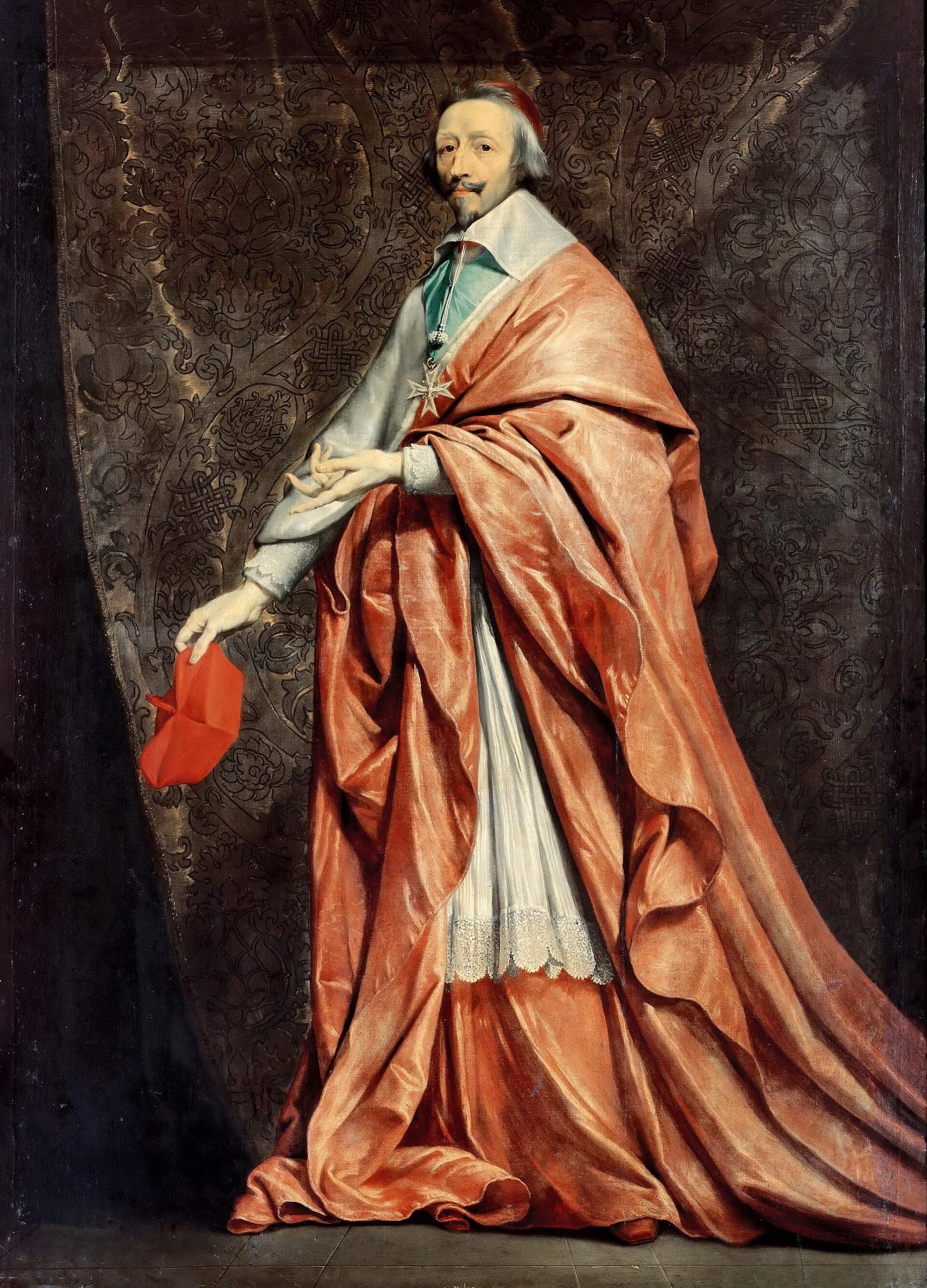
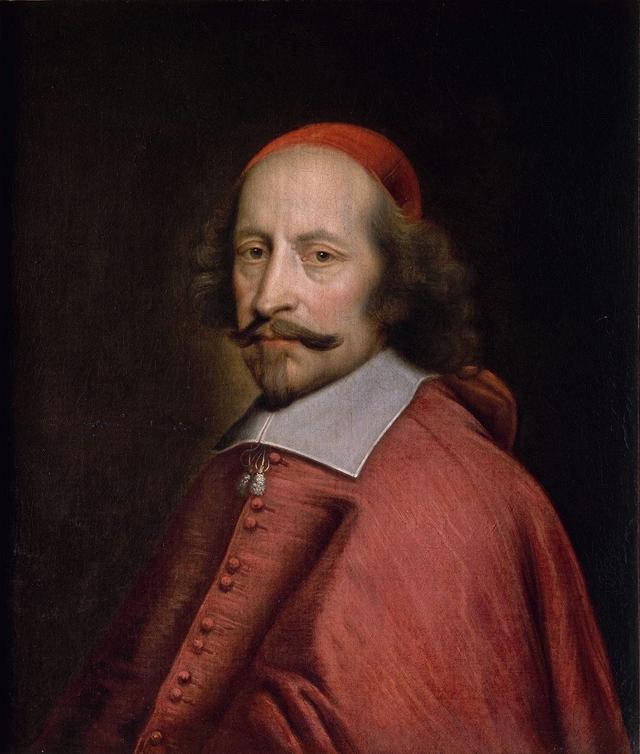
For eighteen years Cardinal Richelieu governed France alongside Louis XIII. He brought Protestant La Rochelle to its knees, fortified Brouage, had the castles of the great lords dismantled and sent those who plotted against him to the scaffold. What he left behind is mostly walls: the ones he built and the ones he knocked down.
Richelieu in dates
| Date | Event |
|---|---|
| 9 September 1585 | Born in Paris, into a minor noble family from Poitou |
| 1607 | Consecrated Bishop of Luçon, aged 21 |
| 1614 | Deputy for the clergy at the Estates General |
| 1622 | Made a cardinal |
| 1624 | Joins the king's council, and soon leads it |
| 1627 | Governor of Brouage; the siege of La Rochelle begins |
| 28 October 1628 | La Rochelle surrenders |
| 1629 | The towers of Josselin are pulled down |
| 10-11 November 1630 | Day of the Dupes: the king keeps his minister |
| 1635 | Founds the Académie française; war with Spain |
| 12 September 1642 | Cinq-Mars is executed in Lyon |
| 4 December 1642 | Dies in Paris, at the Palais-Cardinal |
The bishop who became minister
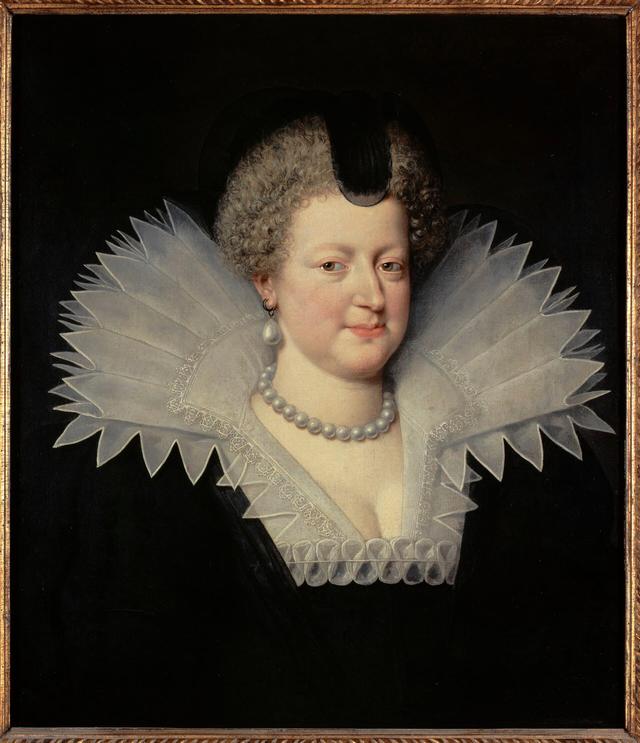
Armand Jean du Plessis was born in Paris in 1585. His family held the bishopric of Luçon, in Poitou, and he, the younger son, had to take it. He was made bishop at 21. At the Estates General of 1614 he caught the eye of the queen mother, Marie de' Medici, who brought him into government. See also: Marie de' Medici
Made a cardinal in 1622, he joined Louis XIII's council in 1624 and soon took charge of it. He and the king were not fond of each other, but they shared the same goal: a king obeyed by everyone, Protestants and great lords alike. On 11 November 1630 Marie de' Medici thought she had secured his dismissal. That same evening Louis XIII confirmed Richelieu in office. Those who had believed in his fall went down in history as the "dupes". See also: Louis XIII
La Rochelle: the siege of 1627-1628
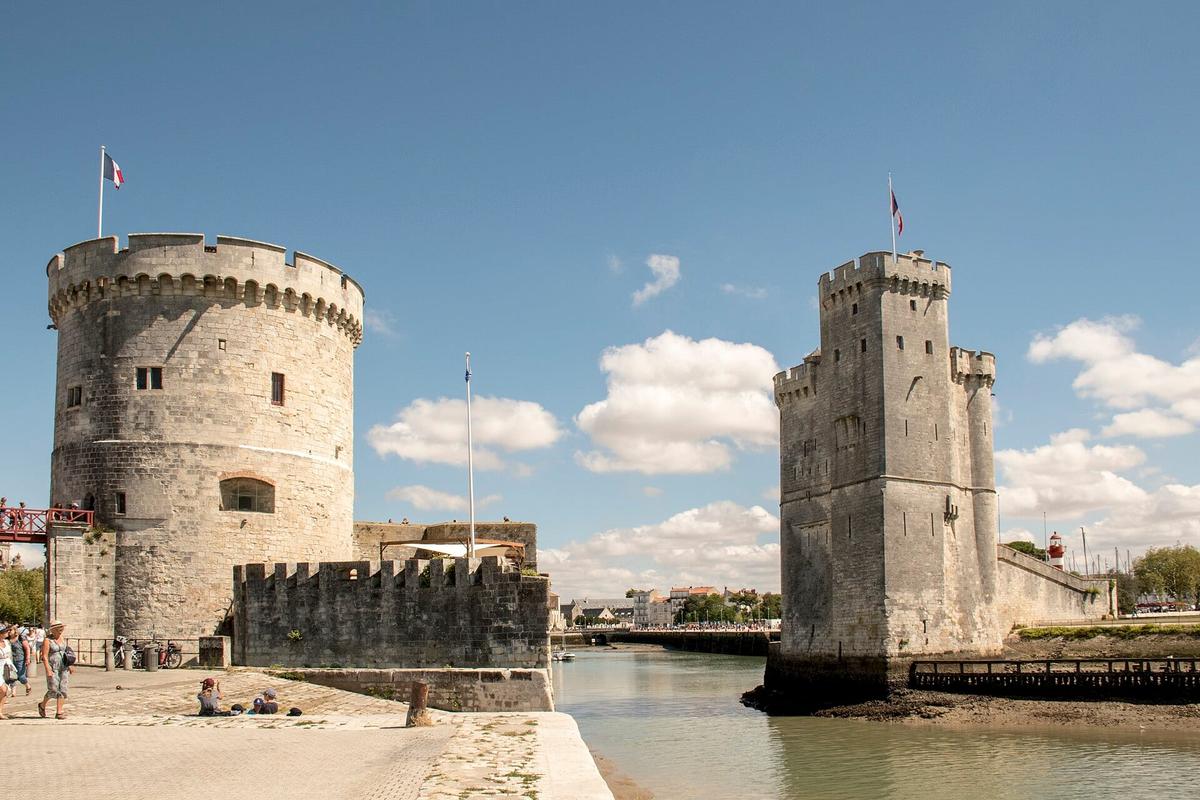
In 1627 La Rochelle was the great Protestant stronghold of the kingdom, and it allied itself with England. Richelieu led the siege himself. To stop the English fleet under the Duke of Buckingham from supplying the town, he had the bay closed off by a stone dyke about one and a half kilometres long. The people of La Rochelle held out for fourteen months. When the town surrendered on 28 October 1628, hunger had killed most of its inhabitants.
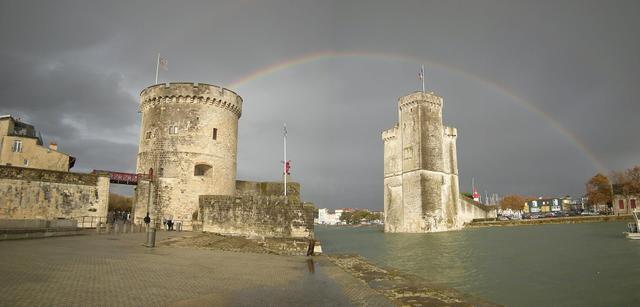
The king then had the ramparts razed. The harbour towers were partly kept, among them the Lantern Tower, the town's old lighthouse. See also: Towers of La Rochelle
What to see: the Chain Tower and the Lantern Tower, with their prisoners' graffiti; from the quay, the entrance to the Old Port that Richelieu's dyke blocked.
Brouage: the cardinal's fortress
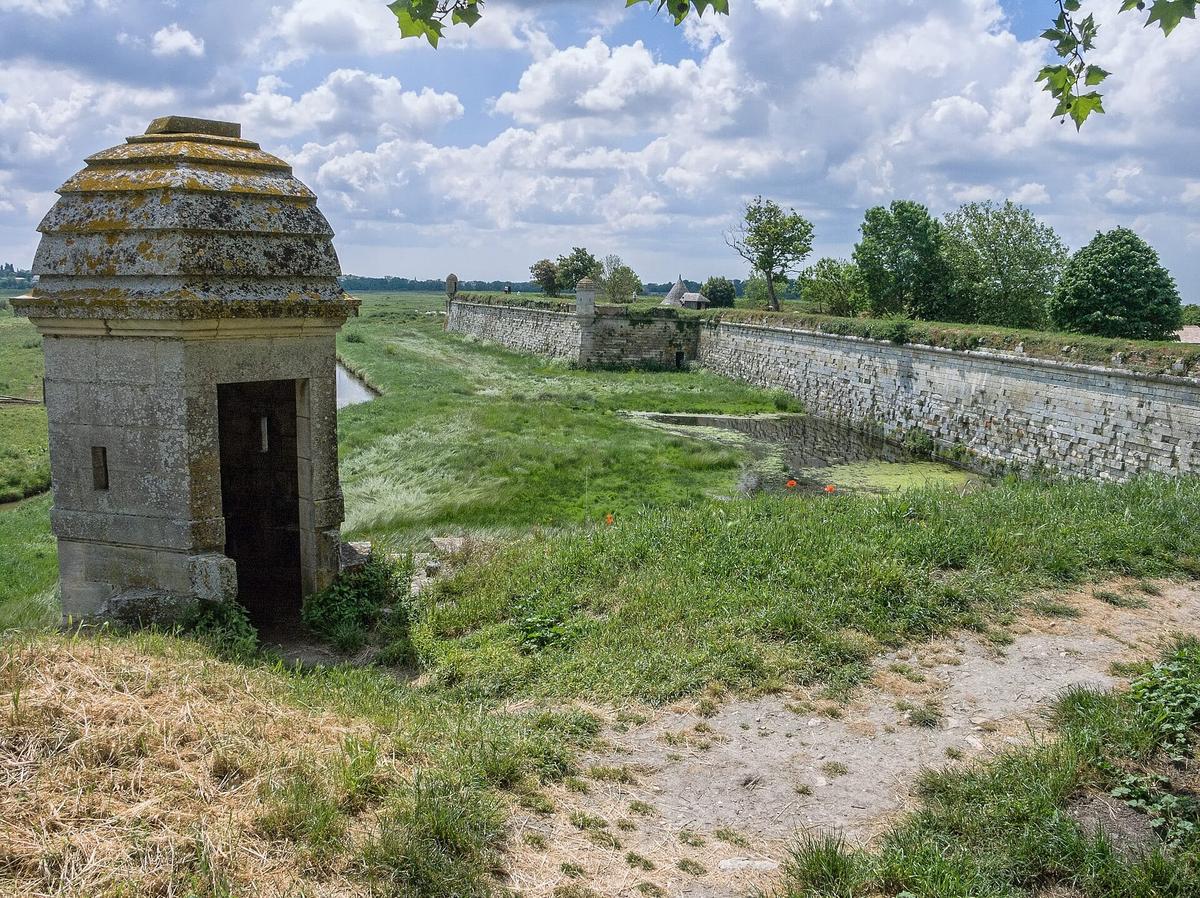
Richelieu became governor of Brouage in 1627. The salt port, a few hours from La Rochelle, served as his royal base during the siege. He had it surrounded by new walls, built between about 1628 and 1640 to plans by the engineer Charles Leber du Carlo. The sea has since retreated, and the walled town now stands in the middle of the marshes. See also: Brouage Citadel
What to see: the full circuit of the ramparts along the wall walk, the corner watchtowers, and the Halle aux Vivres, where an exhibition tells the story of Richelieu's fortress.
Josselin: "a good ball in your game of skittles"
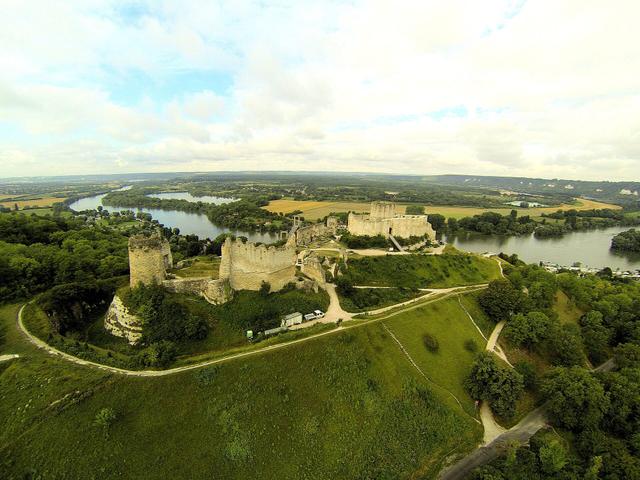
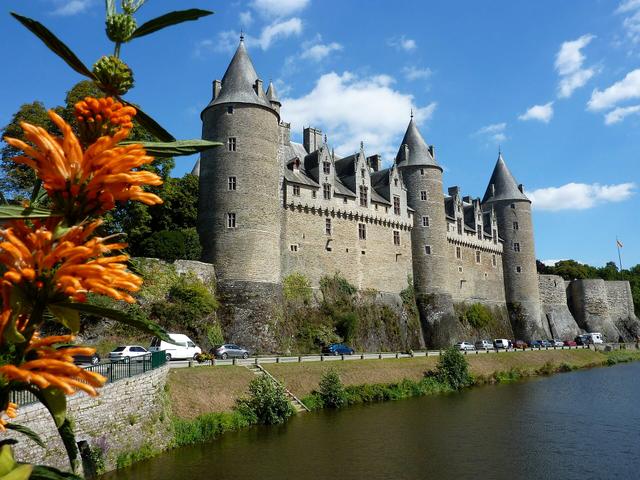
Richelieu distrusted the great lords' castles: in 1626 a royal declaration ordered the destruction of those not needed to defend the borders. At Josselin, in Brittany, Duke Henri de Rohan was the leader of the Protestant rebels. In 1629 the cardinal had the keep and several towers pulled down. The Renaissance façade on the courtyard side was spared.
The story goes that Richelieu then told Rohan: "I have just thrown a good ball into your game of skittles." There is no proof he said it, but it has been repeated at Josselin for centuries. See also: Château de Josselin
What to see: the three remaining towers above the Oust, then the carved façade of the lodge on the courtyard side.
Cinq-Mars: revenge on the walls
Henri d'Effiat, Marquis de Cinq-Mars, owed his fortune to Richelieu, who placed him close to Louis XIII. The young man became Master of the Horse and the king's favourite, then plotted against the cardinal with Spain. Richelieu, already ill, got hold of proof of the secret treaty. Cinq-Mars was beheaded in Lyon on 12 September 1642, aged 22, together with his friend de Thou.
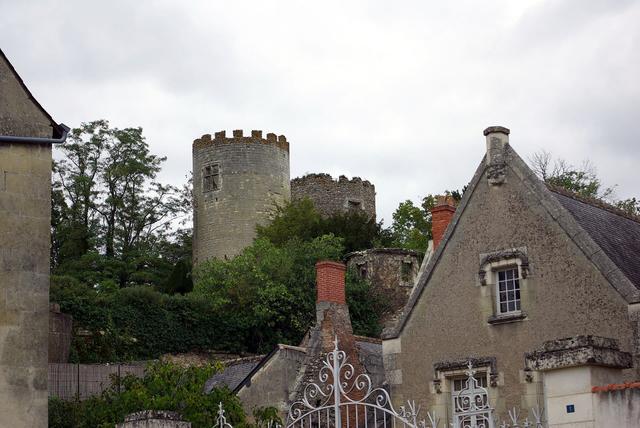
His château in Touraine was then razed on the cardinal's orders. Only two towers and the moats remain. Alfred de Vigny turned the story into a novel, Cinq-Mars, in 1826. See also: Château de Cinq-Mars-la-Pile
What to see: the two round towers, the three-arched bridge over the moats and the romantic park planted in the 19th century.
The Louvre: the portrait in red
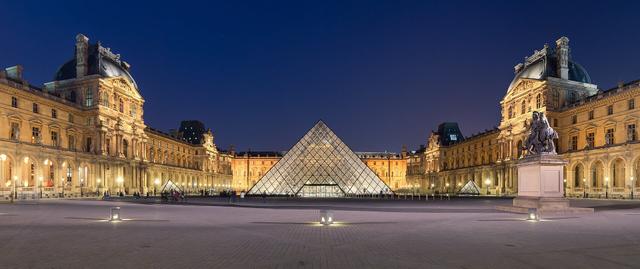
In Paris, right opposite the Louvre, Richelieu built the Palais-Cardinal, which he left to the king: it is today's Palais-Royal. He died there on 4 December 1642. Mazarin, whom he had trained, succeeded him. See also: Cardinal Mazarin
His favourite painter was Philippe de Champaigne, who showed him standing in his great red robes. The Louvre holds this full-length portrait, and one wing of the museum bears the cardinal's name. See also: Louvre Museum
What to see: Champaigne's full-length portrait of Richelieu in the French painting rooms, then, on your way out, the Palais-Royal across the Rue de Rivoli.
In his footsteps: from La Rochelle to Touraine
La Rochelle and Brouage are about an hour apart by road: you can see the harbour towers in the morning and the ramparts of Brouage in the afternoon. Cinq-Mars-la-Pile is 17 km from Tours and combines with nearby Langeais. See also: Château de Langeais Josselin, in the Morbihan, means a detour through Brittany. In Paris, the Louvre and the Palais-Royal can both be seen on foot in one morning.
Partner links: if you book through these links, we earn a commission at no extra cost to you. Partner links · Learn more
Places to stay near La Rochelle
FAQ
Where is Cardinal Richelieu buried?
In the chapel of the Sorbonne in Paris, which he had rebuilt. His tomb is by the sculptor Girardon. In 1793 revolutionaries opened the tomb and took away the head; it was only put back in the chapel in 1866.
Where was Cardinal Richelieu born?
In Paris, on 9 September 1585. His family came from the borderlands of Poitou and Touraine, where the village of Richelieu lies.
Why is Cardinal Richelieu famous?
He governed France for Louis XIII from 1624 to 1642. He subdued the Protestants at La Rochelle, weakened the great lords, fought the Habsburgs and founded the Académie française in 1635.
Why did Richelieu have castles razed?
To stop the great lords from rebelling behind their walls. Fortresses of no use to the kingdom's defence were dismantled, like Josselin in 1629 or Cinq-Mars in 1642.
Is Richelieu the villain of The Three Musketeers?
Yes, in Alexandre Dumas's novel, published in 1844. The siege of La Rochelle is in the book, but the cardinal's plots against the queen are the novelist's invention.
Sources: fr.wikipedia.org (Armand Jean du Plessis de Richelieu), fr.wikipedia.org (Siège de La Rochelle (1627-1628)), tours-la-rochelle.fr, brouage.fr, chateau-cinq-mars.fr, chateaudejosselin.com, louvre.fr
Tickets to book online
Partner links: if you book through these links, we earn a commission at no extra cost to you. Partner links · Learn more
Places to visit
Related guides