Anne of Austria, mother of Louis XIV
- Born
- 22 September 1601
- Died
- 20 January 1666
- Active years
- 1615 – 1651
- Family
- Artists, saints and favourites
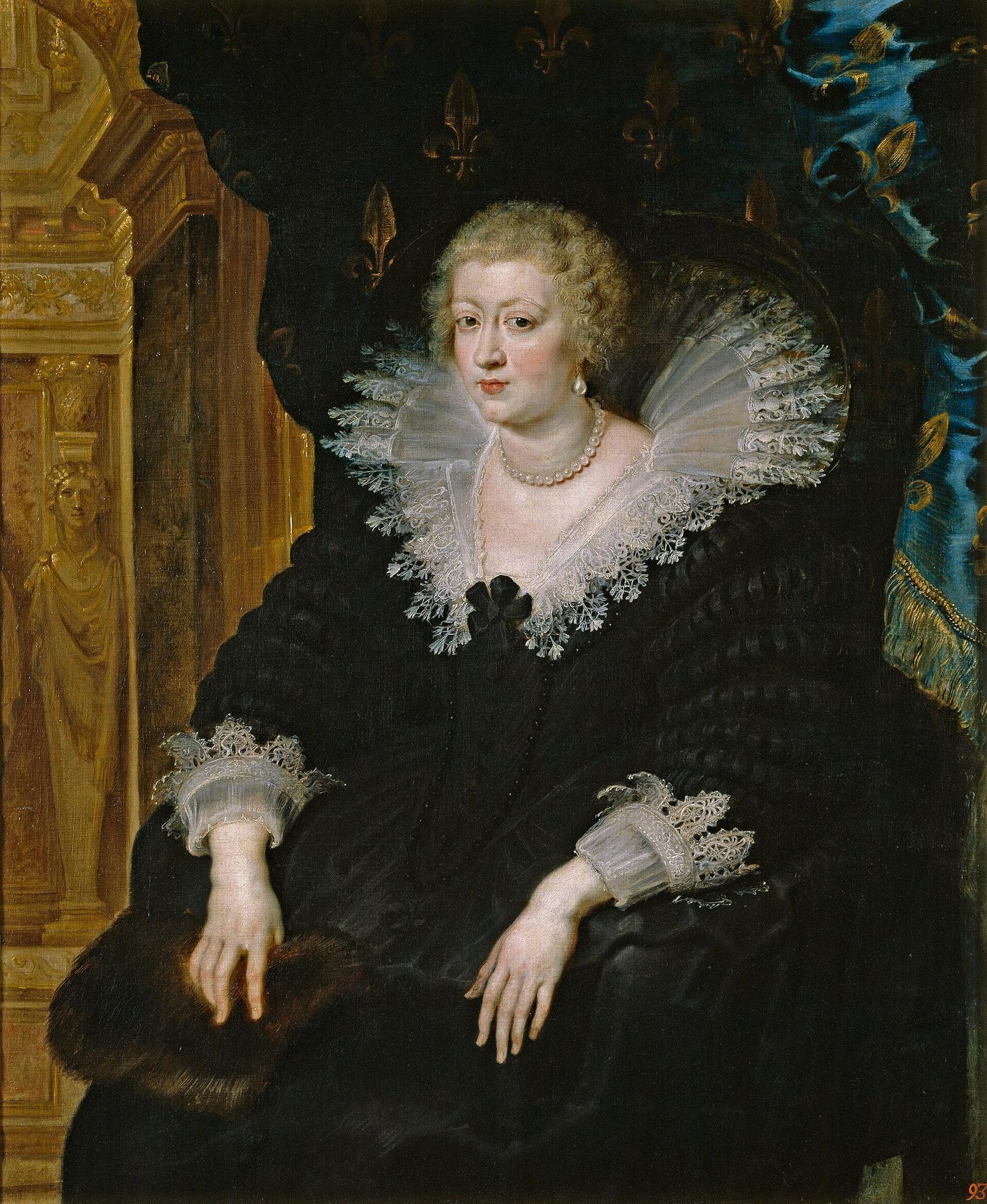
A Spanish infanta married at fourteen to Louis XIII, Anne of Austria waited twenty-three years before giving the king a son. Suspected by Richelieu of plotting with Spain, she became regent in 1643, ruled with Mazarin, came through the Fronde and handed Louis XIV an intact kingdom. Her summer apartments can still be visited at the Louvre.
Anne of Austria in dates
| Date | Event |
|---|---|
| 22 September 1601 | Born in Valladolid, Spain |
| 18 October 1615 | Married by proxy at Burgos |
| November 1615 | Exchange of the princesses on the Bidassoa; wedding in Bordeaux |
| 1625 | The Duke of Buckingham scandal at Amiens |
| August 1637 | The affair of the Val-de-Grâce letters |
| 5 September 1638 | Louis XIV is born at Saint-Germain-en-Laye |
| 21 September 1640 | Birth of Philippe, future Duke of Orléans |
| 14 May 1643 | Louis XIII dies: she becomes regent |
| Night of 5 to 6 January 1649 | Flees Paris during the Fronde |
| 7 September 1651 | Louis XIV comes of age, end of the regency |
| 9 June 1660 | Louis XIV marries her niece Maria Theresa |
| 20 January 1666 | Dies in Paris, of breast cancer |
An infanta for Louis XIII
Anne was born on 22 September 1601 in Valladolid. She was the eldest daughter of Philip III, King of Spain, and Margaret of Austria. She was called "of Austria" because she belonged to the House of Habsburg, also known as the House of Austria. The French king Louis XIII was born five days after her, on 27 September 1601. See also: Louis XIII
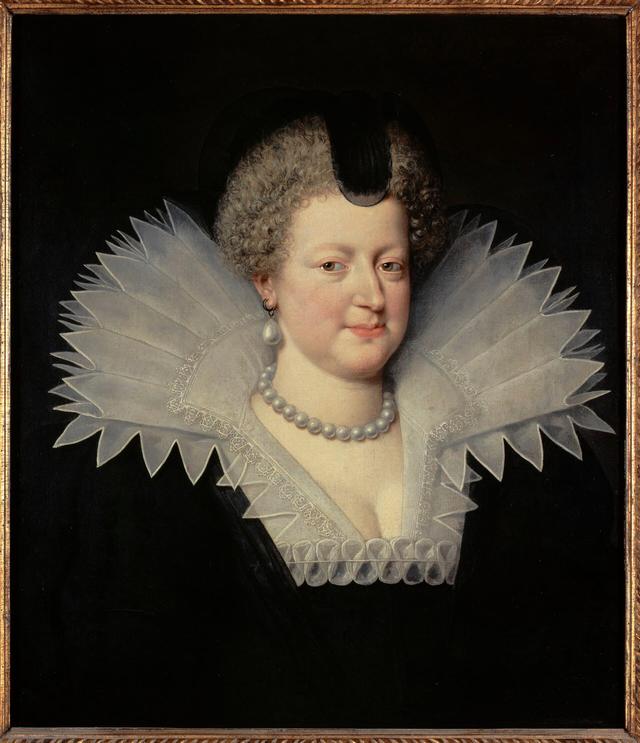
Marie de' Medici, regent for her son, wanted peace with Spain. She negotiated a double marriage: Louis XIII would marry Anne, and his sister Elisabeth of France would marry the future Philip IV, Anne's brother. Both marriages were celebrated by proxy on 18 October 1615, one at Burgos, the other in Bordeaux. See also: Marie de' Medici
The Bordeaux wedding
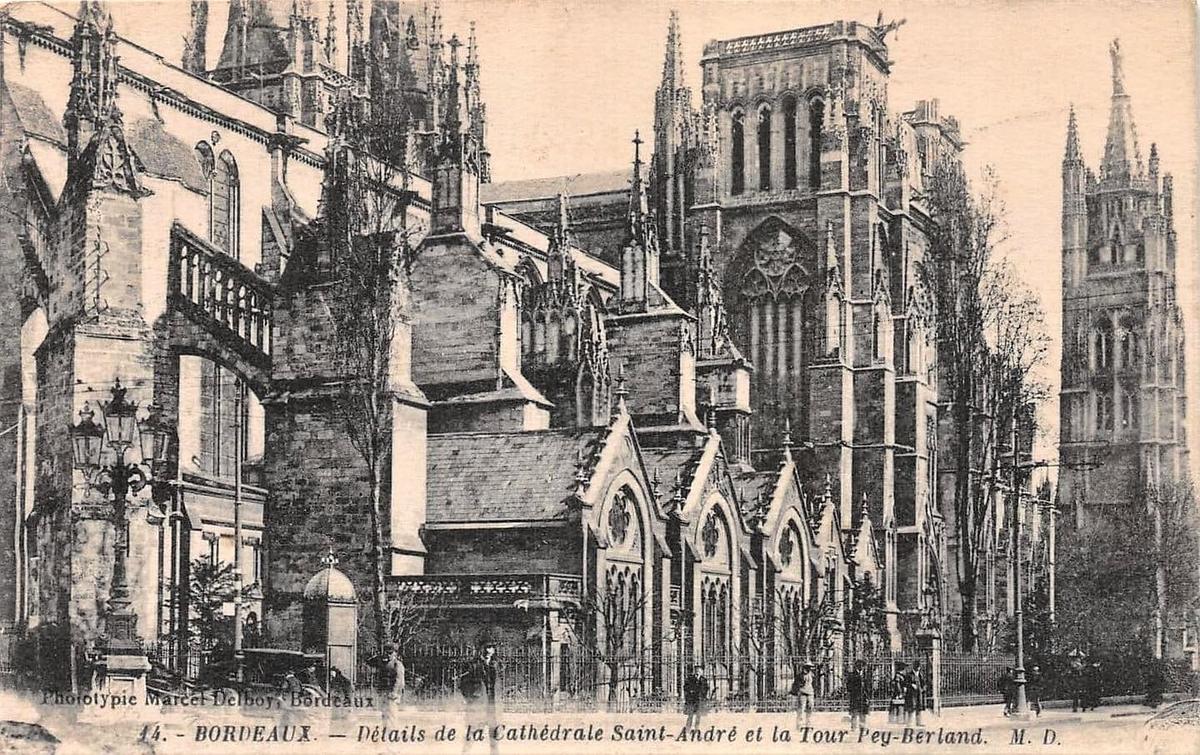
In November 1615 the two princesses were exchanged on Pheasant Island, in the middle of the Bidassoa, the river between France and Spain. Anne arrived in Bordeaux, where Louis XIII was waiting for her. The marriage was blessed in Saint-André Cathedral at the end of the month. Both were fourteen. Eleanor of Aquitaine had married there in 1137. See also: Bordeaux Cathedral (Saint-André), Eleanor of Aquitaine
The couple got on badly. The king was shy, and the queen kept a circle of Spanish ladies around her. The marriage was only truly consummated in 1619.
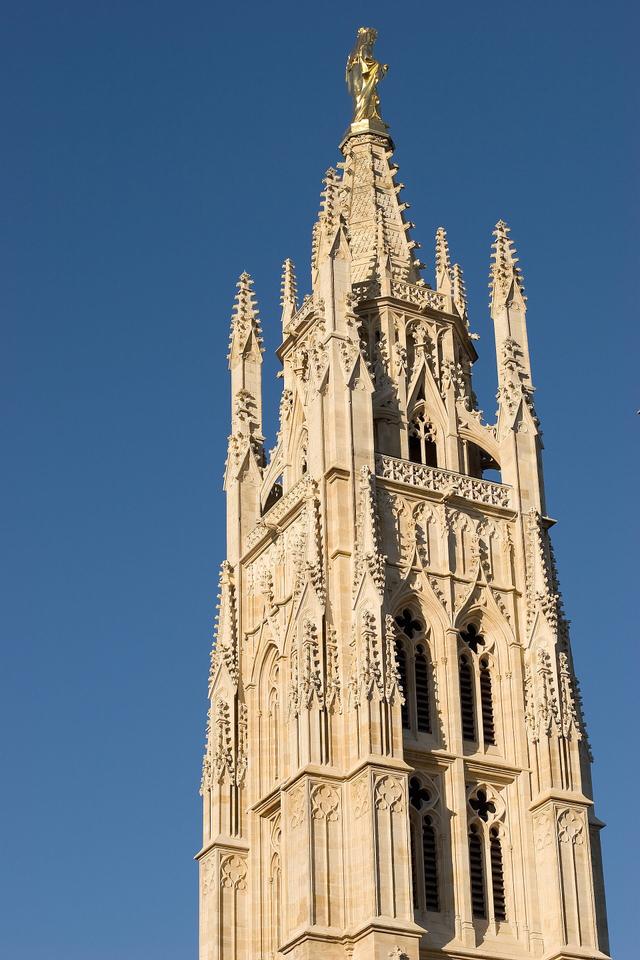
What to see: the nave of the cathedral, the Royal Portal and the Pey-Berland Tower, the cathedral's free-standing bell tower, with a view over the whole of Bordeaux.
Buckingham and Richelieu
In 1625 the Duke of Buckingham, favourite of the King of England, came to fetch Henrietta Maria, sister of Louis XIII, who was to marry Charles I. He paid pressing court to the queen. At Amiens he joined her one evening in a garden; the queen cried out and her ladies came running. The scandal was real. The story of the diamond studs given to Buckingham, on the other hand, was invented by Alexandre Dumas in The Three Musketeers.
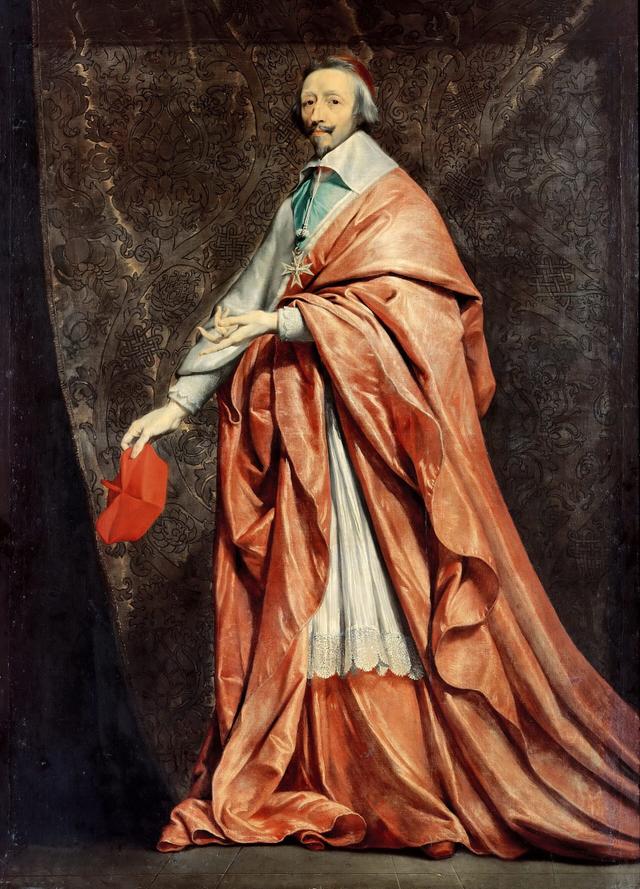
Cardinal Richelieu distrusted this Spanish queen while France and Spain were at war. In August 1637 he discovered that Anne was writing secretly to her brother Philip IV and to the Cardinal-Infante, governor of the Spanish Netherlands, through the convent of the Val-de-Grâce in Paris. She denied it under oath, then confessed. From then on her letters were read and her visits to convents banned. See also: Cardinal Richelieu
Two sons
After twenty-three years of marriage and several miscarriages, the queen gave birth to a son on 5 September 1638 at the Château de Saint-Germain-en-Laye. The kingdom hailed it as a miracle and the child was nicknamed Louis Dieudonné, "God-given". A second son, Philippe, was born in 1640. Anne had vowed to build a church if God gave her a son: this was the origin of the church of the Val-de-Grâce, begun in 1645 by François Mansart. See also: Louis XIV
The regency and the Fronde
Louis XIII died on 14 May 1643. His will limited the queen's powers in favour of a council; Anne had the Paris Parlement overturn it and took the regency for her four-year-old son. To everyone's surprise she kept Cardinal Mazarin, Richelieu's political heir, as chief minister. People said they were lovers, without proof. See also: Cardinal Mazarin
In 1648 the Fronde began, a revolt first of the magistrates, then of the great nobles. On Twelfth Night, 5 to 6 January 1649, the queen secretly left Paris with her sons and Mazarin and took refuge at the Château de Saint-Germain, with no furniture or luggage. In 1651 a crowd entered the Palais-Royal to make sure the king was still there; the queen showed him to them asleep. The Fronde ended in 1653. See also: Gaston, Duke of Orléans
The summer apartments at the Louvre
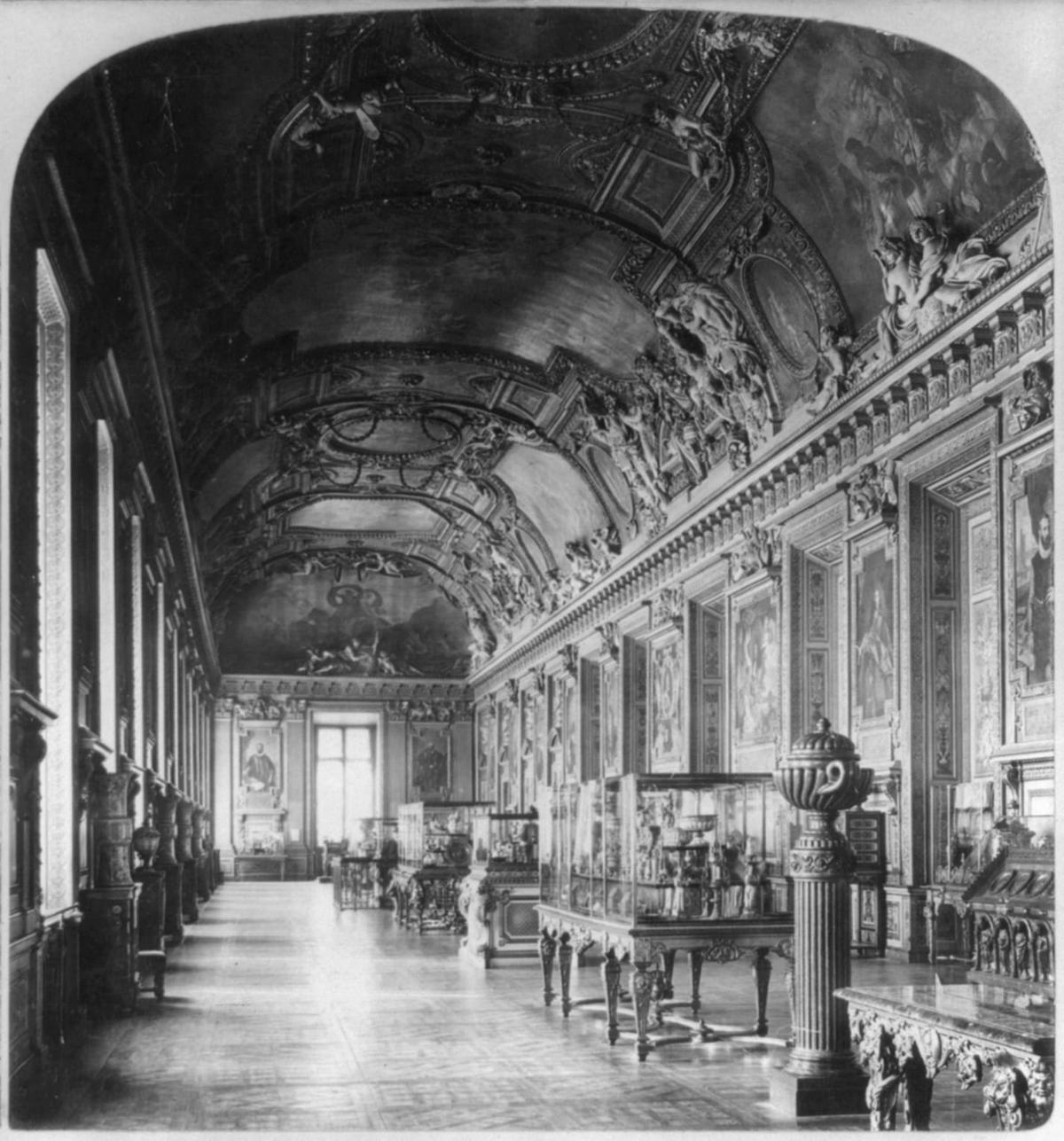
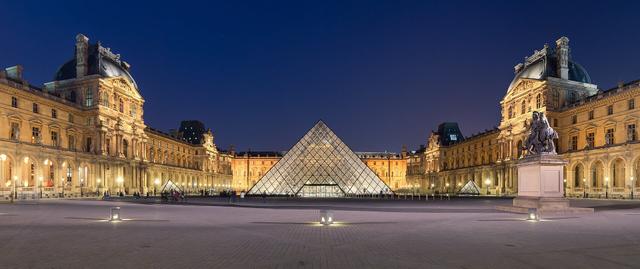
After the Fronde the court returned to the Louvre. From 1655 to 1658 Anne had a summer apartment fitted out on the ground floor of the Petite Galerie, by the Seine, cooler in hot weather. The Italian painter Giovanni Francesco Romanelli painted the ceilings and Michel Anguier made the stucco. See also: Louvre Museum
What to see: these rooms now house the museum's Roman antiquities. Look up: Romanelli's ceilings are still there. On the floor above, the Apollo Gallery.
Fontainebleau and old age
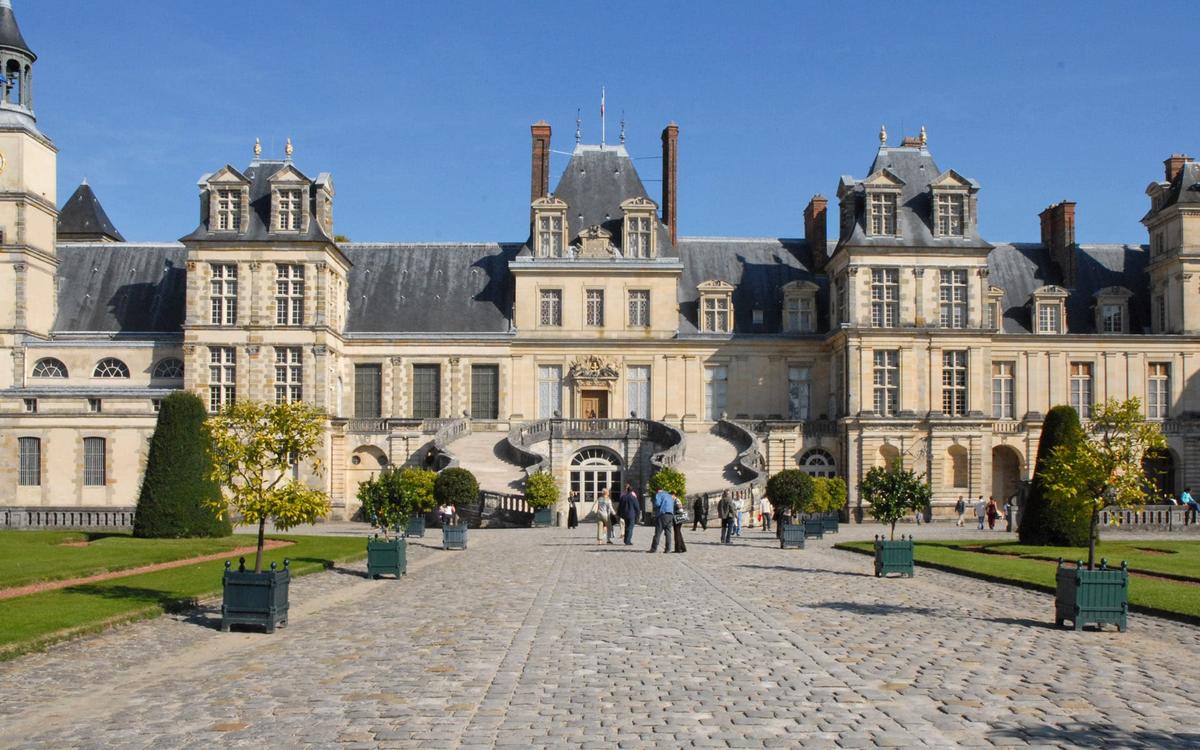
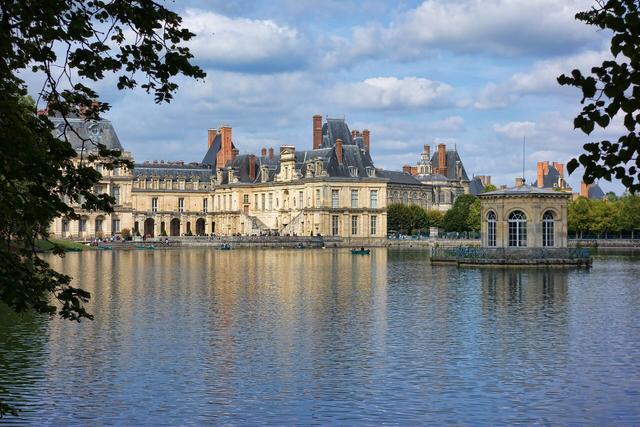
The queen followed the court to Fontainebleau, where the king and his family stayed every year. She lived in the suite now called the Queen Mothers' Apartment, because Catherine de' Medici and then Anne of Austria lived there. See also: Palace of Fontainebleau
In 1660 she saw her son marry her niece Maria Theresa, infanta of Spain, at Saint-Jean-de-Luz, sealing the peace between the two countries. Mazarin died in 1661. Suffering from breast cancer, Anne died in Paris on 20 January 1666, aged sixty-four.
What to see: the Cour des Adieux and its horseshoe staircase, rebuilt under Louis XIII, then the state apartments.
Saint-Denis
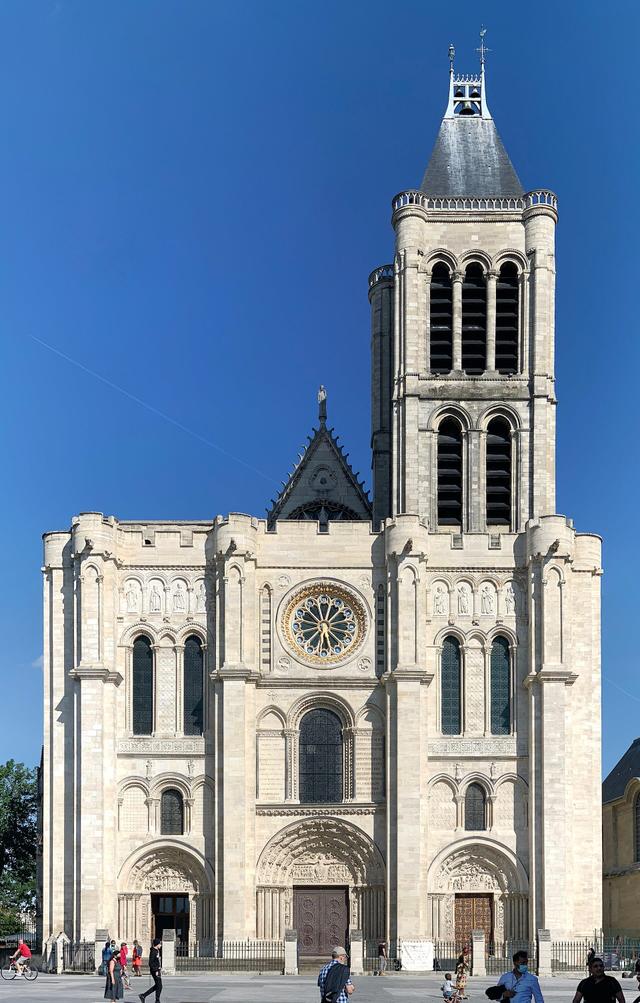
Anne of Austria was buried in the Basilica of Saint-Denis, near Louis XIII. Her heart was placed in the Val-de-Grâce. In 1793 revolutionaries opened the Bourbon coffins at Saint-Denis and threw the remains into pits. See also: Basilica of Saint-Denis
What to see: the crypt, where Louis XVIII had the remains of the Bourbons gathered in an ossuary in 1817, and the Gothic choir of the basilica.
In her footsteps: Paris and Bordeaux
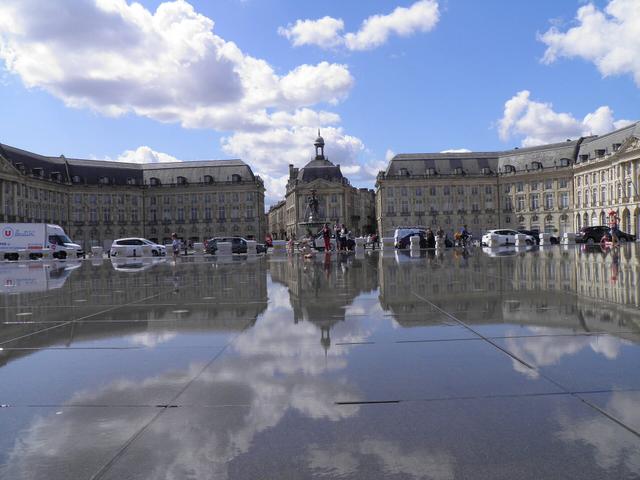
In Paris, the Louvre and Saint-Denis fit into the same day by metro. Add the church of the Val-de-Grâce, in the 5th arrondissement. Fontainebleau is 40 minutes from Gare de Lyon. Bordeaux is two hours from Paris by TGV, and Saint-André Cathedral is a ten-minute walk from the Place de la Bourse. See also: Place de la Bourse and Water Mirror
Partner links: if you book through these links, we earn a commission at no extra cost to you. Partner links · Learn more
FAQ
Where is Anne of Austria buried?
In the Basilica of Saint-Denis, near Louis XIII. Her heart was placed in the Val-de-Grâce, in Paris.
Where was Anne of Austria born?
In Valladolid, Spain, on 22 September 1601. She was an infanta of Spain.
Why is she called Anne of Austria if she was Spanish?
Because she belonged to the House of Habsburg, also called the House of Austria, which ruled Spain.
Did Anne of Austria have an affair with Buckingham?
The duke courted her in 1625 and the Amiens scandal was real, but there is no proof of an affair. The diamond studs come from Dumas's novel.
Who did Anne of Austria marry?
Louis XIII, in 1615, in Bordeaux. They had two sons: Louis XIV and Philippe, Duke of Orléans.
Sources: fr.wikipedia.org (Anne d'Autriche (1601-1666)), louvre.fr, cathedrale-bordeaux.fr, saint-denis-basilique.fr
Tickets to book online
Partner links: if you book through these links, we earn a commission at no extra cost to you. Partner links · Learn more
Places to visit


Related guides
Related historical figures