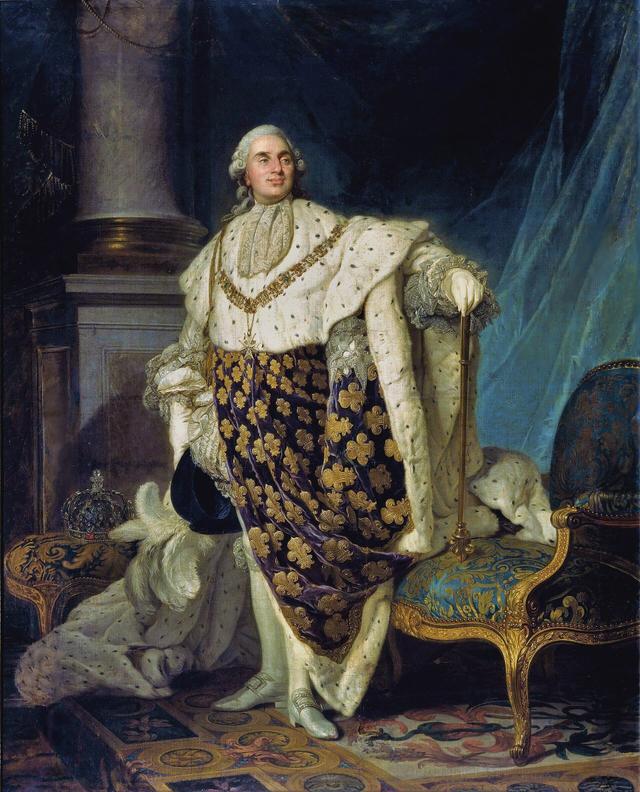
Viollet-le-Duc, the architect who rebuilt the Middle Ages
- Born
- 27 January 1814
- Died
- 17 September 1879
- Active years
- 1840 – 1879
- Family
- Artists, saints and favourites
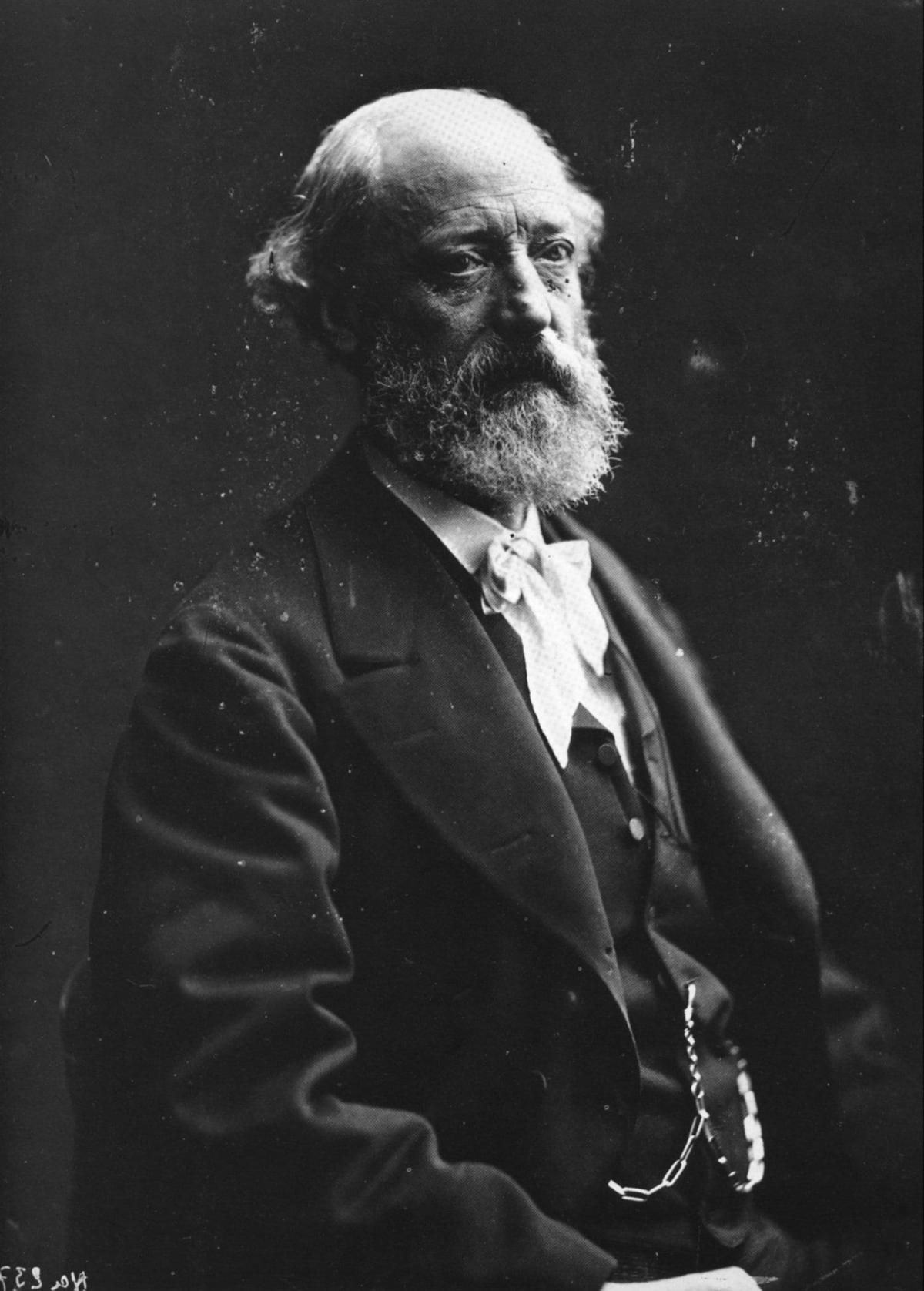
The spire of Notre-Dame that burned in 2019 and was then rebuilt exactly as before: that was his. The ramparts of Carcassonne with their pointed roofs: his again. Eugène Viollet-le-Duc spent his life saving ruined churches and fortresses, sometimes completing them beyond what they had ever been. He is criticised for the liberties he took; without him, much of what we visit today would no longer exist.
Viollet-le-Duc in dates
| Date | Event |
|---|---|
| 27 January 1814 | Born in Paris |
| 1831 | Refuses to enter the École des Beaux-Arts; trains by travelling and drawing |
| 1840 | Prosper Mérimée entrusts him with the restoration of the basilica at Vézelay |
| 1840 | Begins restoring the Sainte-Chapelle with Jean-Baptiste Lassus |
| 1844 | Wins the competition to restore Notre-Dame de Paris with Lassus |
| 1846 | Put in charge of the Basilica of Saint-Denis |
| 1853 | Restoration of the medieval city of Carcassonne begins |
| 1854-1868 | Publishes the Dictionnaire raisonné de l'architecture française (Dictionary of French Architecture) |
| 1857 | Begins rebuilding the Château de Pierrefonds for Napoleon III |
| 17 September 1879 | Dies in Lausanne, Switzerland |
An architect with no school
Eugène Viollet-le-Duc grew up in Paris in a cultured family: his father was curator of the royal residences, and his uncle, the painter Étienne-Jean Delécluze, mixed with the Romantic writers. He refused to attend the École des Beaux-Arts, which he called “a mould for architects” (“un moule à architectes”), and went off to draw the monuments of France and Italy. He was twenty-six when Prosper Mérimée, inspector general of historic monuments, entrusted him in 1840 with the basilica at Vézelay, which was close to collapse. The work lasted nineteen years.
Notre-Dame and the Sainte-Chapelle
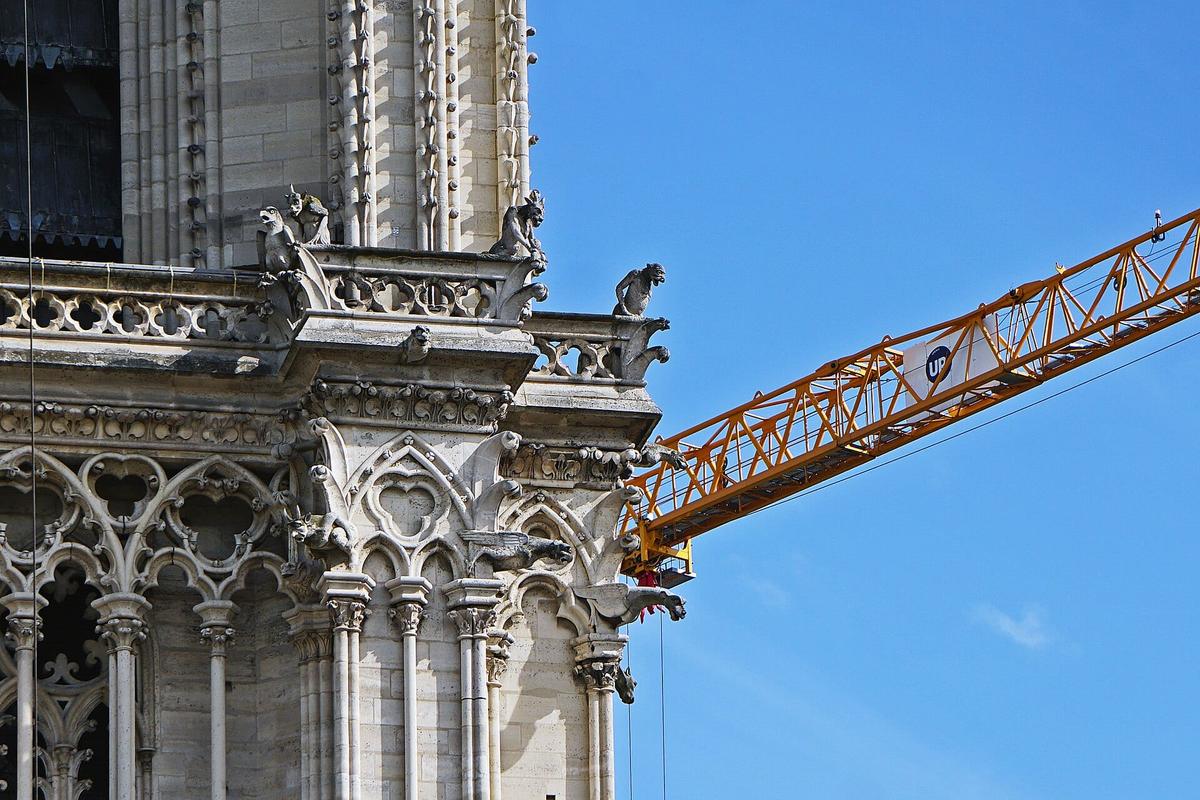
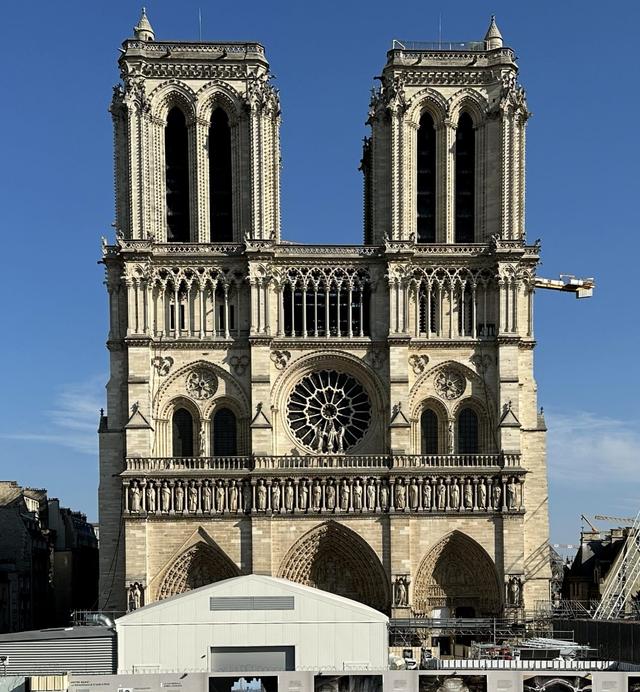
In 1844, with Jean-Baptiste Lassus, he won the competition to restore Notre-Dame de Paris, damaged by the Revolution and by centuries of alterations. He remade the statues on the façade, put back stained glass and sculptures, and added the chimeras on the upper gallery, including the famous Stryge, who gazes over Paris with her head in her hands. Above all, he rebuilt the spire, taken down in 1786. It collapsed in the fire of 15 April 2019; the new spire, 96 metres high, follows his design. See also: Notre-Dame Cathedral
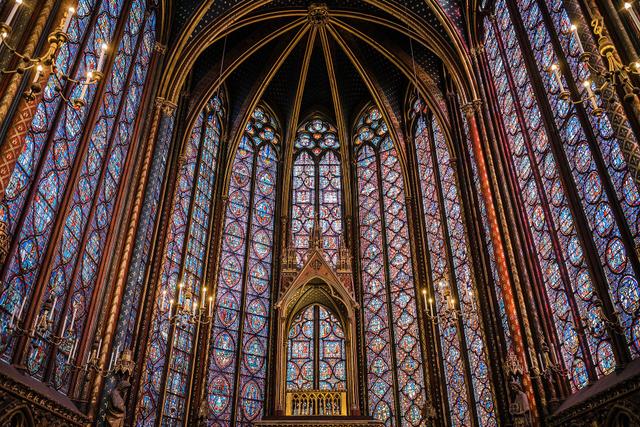
Again with Lassus, he had begun restoring the nearby Sainte-Chapelle as early as 1840. See also: Sainte-Chapelle
What to see: at Notre-Dame, the rebuilt spire and, from the towers, Viollet-le-Duc's chimeras; at the Sainte-Chapelle, the stained glass of the upper chapel.
Saint-Denis, the necropolis of the kings
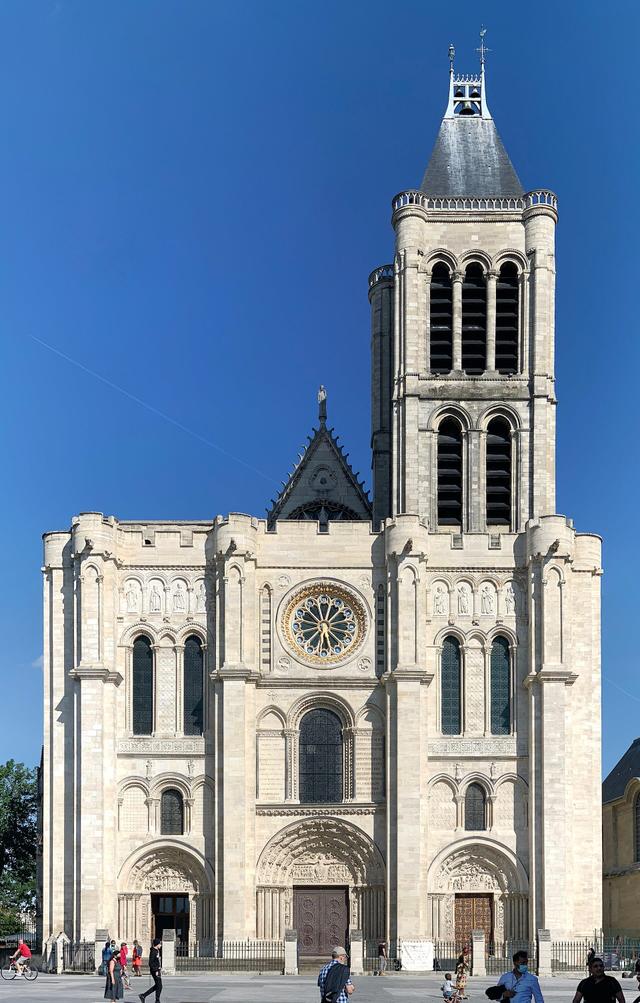
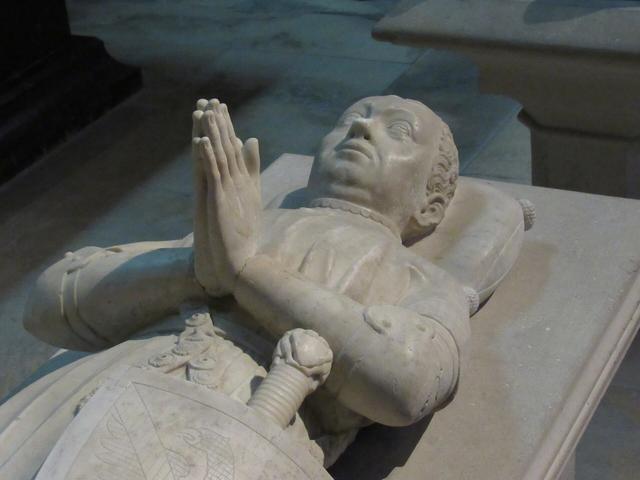
In 1846, he was called to the Basilica of Saint-Denis, where a clumsy restoration had cracked the north tower. He had it taken down, restored the interior and put back the royal tombs, which had been scattered during the Revolution. See also: Basilica of Saint-Denis
What to see: the recumbent effigies of the kings and queens of France, and the crypt.
Carcassonne, the city brought back
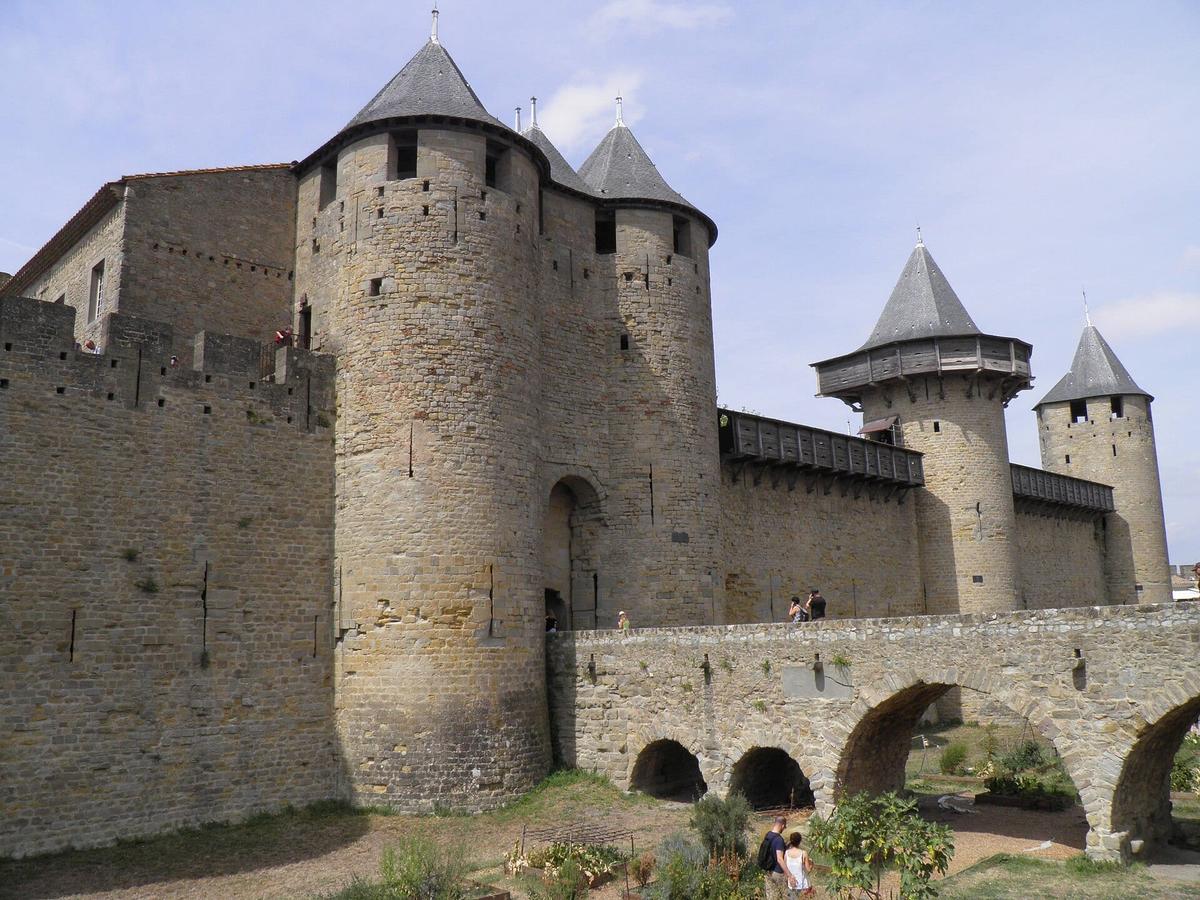
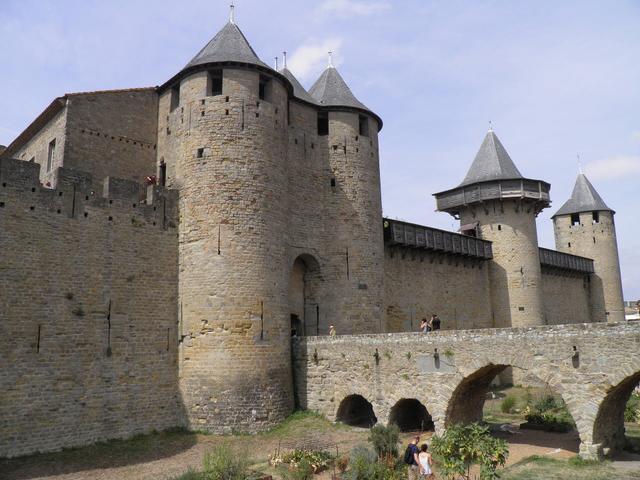
In the mid-19th century, the medieval city of Carcassonne was falling into ruin and the army was thinking of demolishing it. Viollet-le-Duc drew up plans and, from 1853, restored the ramparts, the towers, the Narbonne Gate and the Basilica of Saint-Nazaire. The work went on after his death. He has been much criticised for the pointed slate roofs he put on the towers, closer to northern France than to Languedoc. The city was listed as a UNESCO World Heritage Site in 1997. See also: Carcassonne Medieval City
What to see: the walk around the lists, between the two rings of walls, the Château Comtal and the Narbonne Gate.
Pierrefonds and Roquetaillade
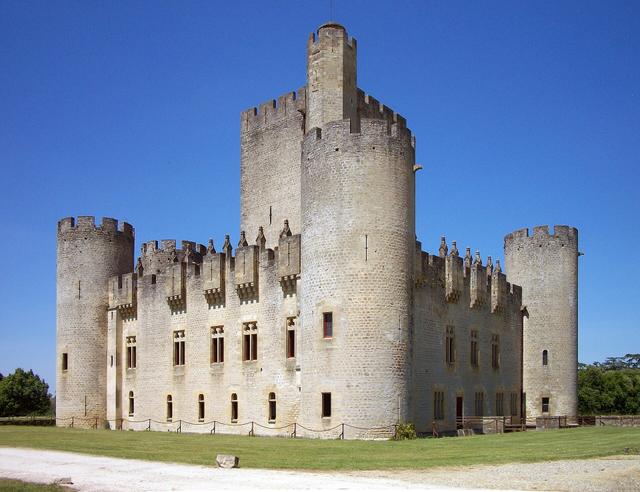
For Napoleon III, from 1857 he turned the ruins of the Château de Pierrefonds, in the Oise, into an imperial residence. Near Bordeaux, the owners of the Château de Roquetaillade, a 14th-century fortress, called him in in 1865 to redo the interiors: he designed the painted decoration, the fireplaces and even the furniture, in a brightly coloured Gothic Revival style. See also: Château de Roquetaillade
What to see: at Roquetaillade, the Pink Bedroom and the Synod Hall, with their decoration and furniture designed by Viollet-le-Duc.
Restoration according to Viollet-le-Duc
His ten-volume Dictionnaire raisonné de l'architecture française is still read by architects. In it he gives his definition: “To restore a building is not to maintain it, repair it or rebuild it; it is to bring it back to a complete state that may never have existed at any given time.” (“Restaurer un édifice…”) That is the whole debate around his work. He died in Lausanne in 1879.
In his footsteps: from Paris to Carcassonne
In Paris, you can visit Notre-Dame, the Sainte-Chapelle and the Basilica of Saint-Denis in a day. Notre-Dame is a short walk from the Cité and Saint-Michel stations. The medieval city of Carcassonne is 26 minutes on foot from the station. Roquetaillade is in southern Gironde, near Langon, an hour from Bordeaux.
Partner links: if you book through these links, we earn a commission at no extra cost to you. Partner links · Learn more
Places to stay near Carcassonne
FAQ
What did Viollet-le-Duc do at Notre-Dame de Paris?
With Lassus, he led the restoration of the cathedral from 1844: statues on the façade, chimeras on the upper gallery and, above all, the spire, destroyed in the 2019 fire and then rebuilt exactly as before.
Why is the restoration of Carcassonne criticised?
Viollet-le-Duc completed the city according to his own idea of the Middle Ages, in particular by putting pointed slate roofs on the towers, when the region mostly used tiles.
Which monuments did Viollet-le-Duc restore?
Among others, the basilica at Vézelay, the Sainte-Chapelle, Notre-Dame de Paris, the Basilica of Saint-Denis, Amiens Cathedral, the medieval city of Carcassonne, the Château de Pierrefonds and the interiors of the Château de Roquetaillade.
Where did Viollet-le-Duc die?
In Lausanne, Switzerland, on 17 September 1879.
Did Viollet-le-Duc attend the École des Beaux-Arts?
No, he refused to enter it. He trained by travelling and drawing monuments. He was appointed a professor there in 1863, but resigned the same year.
Sources: fr.wikipedia.org (Eugène Viollet-le-Duc)
Tickets to book online
Partner links: if you book through these links, we earn a commission at no extra cost to you. Partner links · Learn more
Places to visit
Related guides