Marie Antoinette, from the Trianon to the Conciergerie
- Born
- 2 November 1755
- Died
- 16 October 1793
- Reign
- 1774 – 1792
- Family
- Bourbons
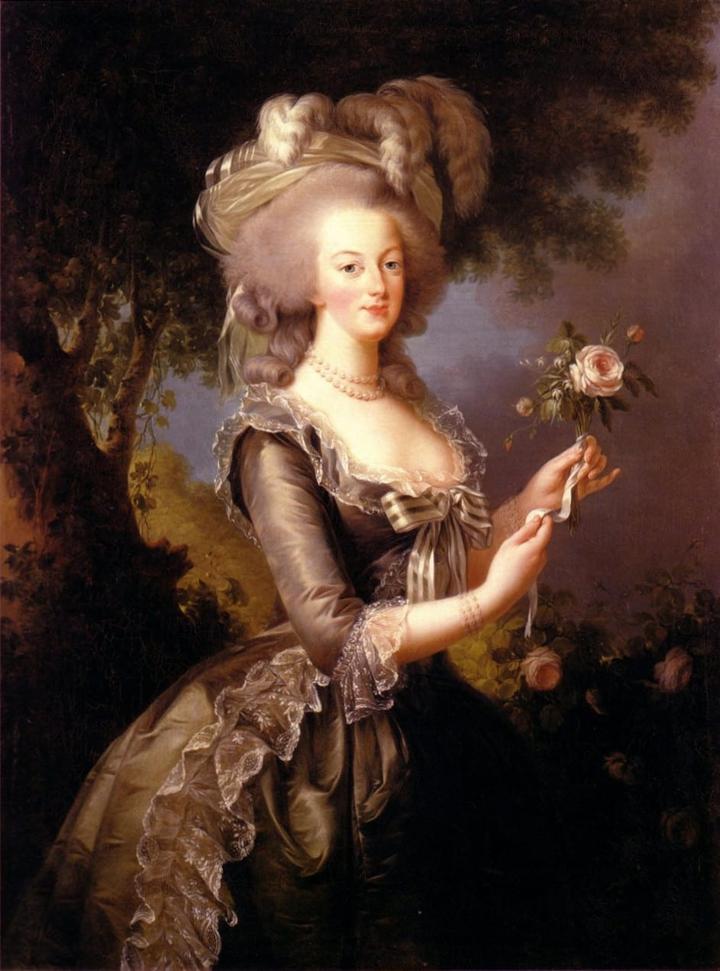
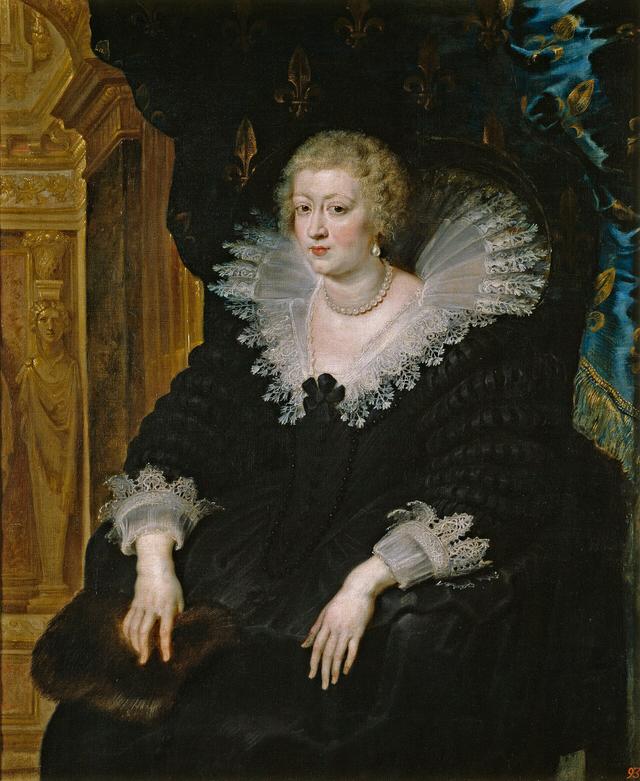
She arrived in France at fourteen to marry a shy dauphin she had never seen. Queen at eighteen, she escaped the etiquette of Versailles in a small château at the far end of the park, had a stage-set village built for herself and an exquisite boudoir at Fontainebleau. Twenty-three years after her wedding, she climbed the scaffold on the Place de la Révolution, after two and a half months in a cell at the Conciergerie.
Marie Antoinette in dates
| Date | Event |
|---|---|
| 2 November 1755 | Born in Vienna, daughter of Empress Maria Theresa of Austria |
| 16 May 1770 | Marries the dauphin Louis in the Royal Chapel at Versailles |
| 10 May 1774 | Becomes queen on the death of Louis XV; Louis XVI gives her the Petit Trianon |
| 19 December 1778 | Birth of her daughter Marie-Thérèse, in front of the court |
| 1783-1787 | The Queen's Hamlet is built |
| 1785 | The Affair of the Necklace ruins her reputation |
| 1786 | Has her boudoir at Fontainebleau fitted out |
| 6 October 1789 | The crowd brings the royal family back from Versailles to Paris |
| 20-21 June 1791 | Flight stopped at Varennes |
| 10 August 1792 | Fall of the monarchy; the royal family is locked up in the Temple |
| 2 August 1793 | Moved to the Conciergerie |
| 16 October 1793 | Guillotined on the Place de la Révolution, today's Place de la Concorde |
The Archduchess from Vienna
Maria Antonia was the fifteenth child of Empress Maria Theresa. Her marriage was meant to seal the alliance between Austria and France, long enemies. At fourteen she left Vienna; at the border, on an island in the Rhine, her Austrian clothes were taken off and she was dressed in the French style. On 16 May 1770, at Versailles, she married Louis XV's grandson, the future Louis XVI, who was fifteen.
The marriage was not consummated for seven years. In the meantime, the court watched and criticised her, and her mother wrote to her every month to lecture her.
Versailles and the Petit Trianon
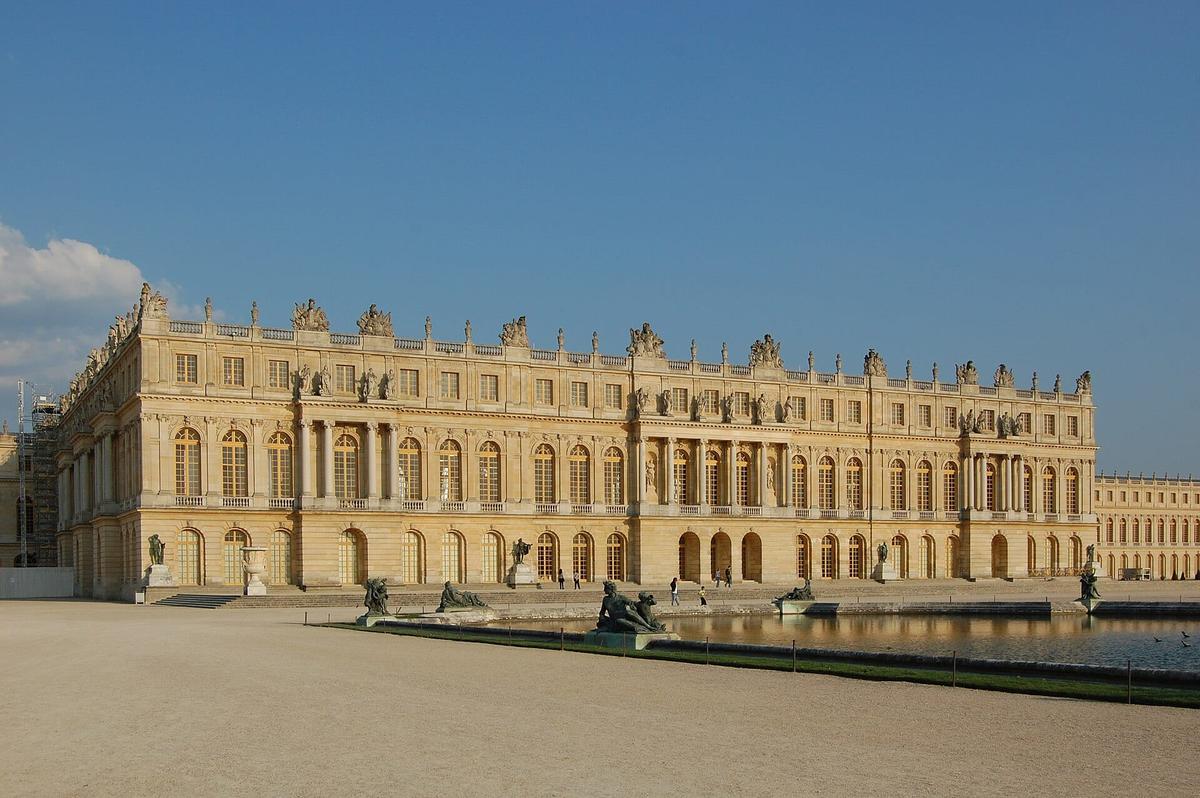
When she became queen in 1774, Louis XVI gave Marie Antoinette the Petit Trianon, a small château built for Louis XV at the far end of the park. There she lived like a private person, with a few chosen friends, far from protocol. She had an English garden laid out and a small theatre built, where she acted herself, then, from 1783 to 1787, the Queen's Hamlet: a village of thatched cottages with a farm, a dairy and a mill, around a pond. See also: Palace of Versailles
At court, queens gave birth in public, so that no doubt could hang over the heir. On 19 December 1778, when her daughter was born, the room was so crowded that Marie Antoinette fainted. The windows, sealed for the winter, had to be forced open.
What to see: in the palace, the Queen's Bedchamber and the private rooms; on the Trianon estate, the Petit Trianon, its theatre, the English garden and the Hamlet.
The Fontainebleau boudoir
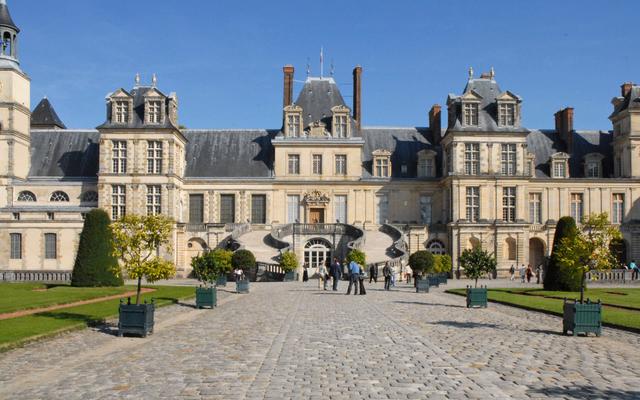
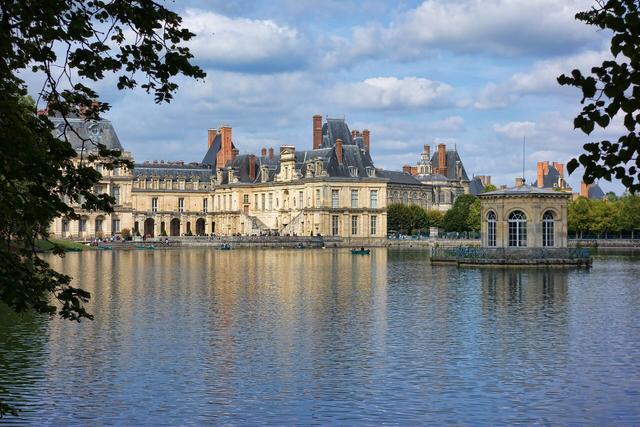
Every autumn, the court spent a few weeks at Fontainebleau for the hunting. Marie Antoinette had the queen's bedchamber, where she slept, redecorated, and in 1786 she had a small boudoir fitted out, its walls painted with arabesques and its furniture made by the cabinetmaker Riesener. See also: Palace of Fontainebleau
What to see: the Queen's Bedchamber and the Queen's Boudoir, in the State Apartments.
Madame Deficit
From 1785, the Affair of the Necklace caused a scandal. An adventuress, passing herself off as a friend of the queen, persuaded Cardinal de Rohan to buy a wildly expensive diamond necklace for her. Marie Antoinette had nothing to do with it, but public opinion believed she was guilty. People called her “Madame Deficit” and “the Austrian woman”. The phrase “Let them eat cake” (« S'ils n'ont pas de pain, qu'ils mangent de la brioche ») is wrongly attributed to her: Rousseau reports it in his Confessions, written when she was a child in Vienna.
On 6 October 1789, a crowd from Paris stormed Versailles and took the royal family back to the Tuileries. In June 1791, their flight to the east failed at Varennes. On 10 August 1792, the monarchy fell; the royal family was locked up in the Temple. Louis XVI was guillotined on 21 January 1793.
The Conciergerie
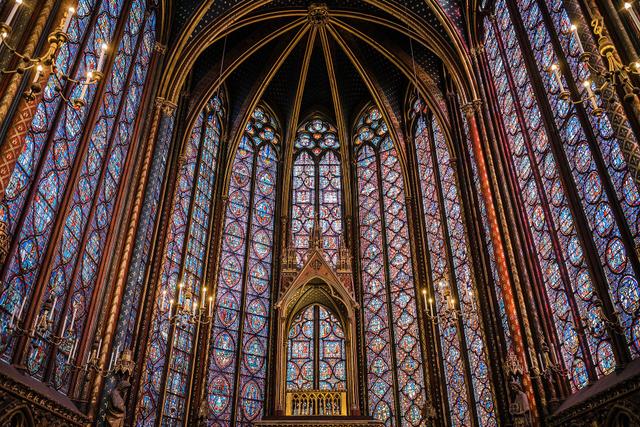
On 2 August 1793, Marie Antoinette was moved to the Conciergerie, the prison set up in the former palace of the kings, on the Île de la Cité, next to the Sainte-Chapelle. She spent two and a half months there, watched day and night. Tried on 14 and 15 October by the Revolutionary Tribunal, she was guillotined on 16 October, on the Place de la Révolution. See also: Sainte-Chapelle
What to see: at the Conciergerie, the Hall of the Men-at-Arms, the Revolution-era cells and the expiatory chapel, built under the Restoration on the site of her cell.
Saint-Denis
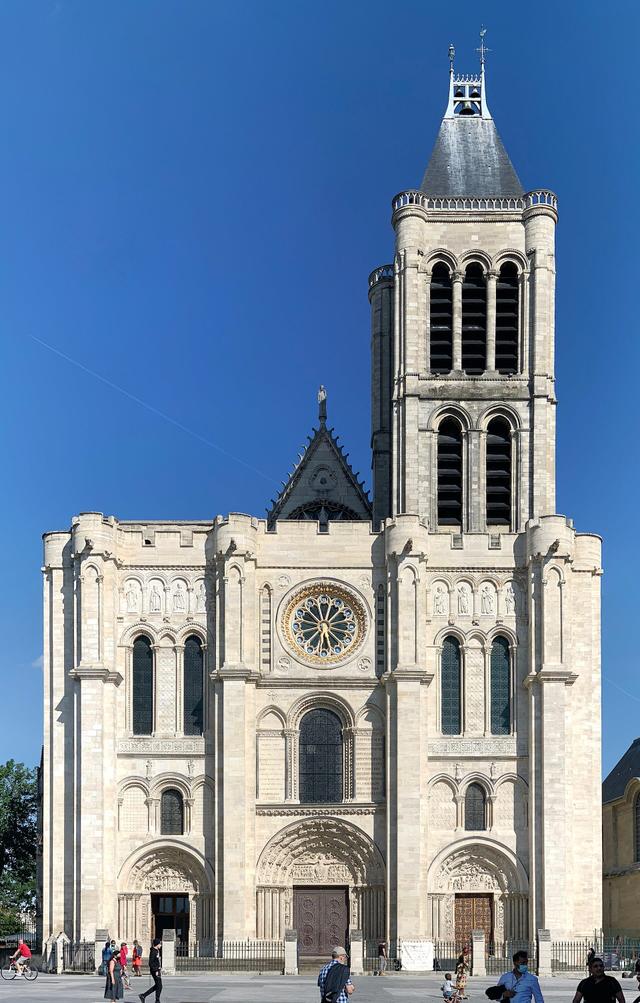
Buried in a pit in the Madeleine cemetery, she was exhumed in 1815 on the orders of Louis XVIII, Louis XVI's brother, and reburied with her husband in the Basilica of Saint-Denis. The heart of their son, Louis XVII, who died in the Temple at the age of ten, was placed there in 2004. See also: Basilica of Saint-Denis
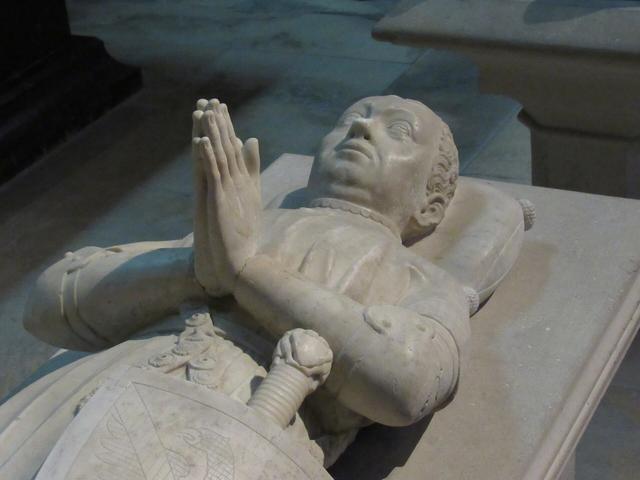
What to see: in the crypt, the vault of Louis XVI and Marie Antoinette; in the basilica, their kneeling statues, carved in the 19th century.
In her footsteps: Versailles and Paris
Versailles is a ten-minute walk from the Versailles Château Rive Gauche station on RER C. Allow a full day for the palace and the Trianon estate. In Paris, the Conciergerie and the Sainte-Chapelle can be visited with a combined ticket, and the Basilica of Saint-Denis is at the end of metro line 13. Fontainebleau is 40-45 minutes from the Gare de Lyon.
Partner links: if you book through these links, we earn a commission at no extra cost to you. Partner links · Learn more
Places to stay near Versailles
FAQ
Where is Marie Antoinette buried?
In the Basilica of Saint-Denis, with Louis XVI, since 1815. She had first been buried in the Madeleine cemetery, in Paris.
Did Marie Antoinette say “Let them eat cake”?
No. The phrase appears in Rousseau's Confessions, written when she was still a child in Vienna. It was attributed to her later.
Can you see Marie Antoinette's cell?
At the Conciergerie, an expiatory chapel was built on the site of her cell. A reconstruction of the cell is next to it.
What is the Queen's Hamlet?
A small village of thatched cottages built from 1783 to 1787 in the grounds of the Petit Trianon, at Versailles, with a farm, a dairy and a mill.
How old was Marie Antoinette when she died?
Thirty-seven. She was guillotined on 16 October 1793, two weeks before her thirty-eighth birthday.
Sources: fr.wikipedia.org (Marie-Antoinette d'Autriche)
Tickets to book online
Partner links: if you book through these links, we earn a commission at no extra cost to you. Partner links · Learn more
Places to visit


Related guides
Related historical figures