Cité de Carcassonne: planning your visit to the castle and ramparts
Carcassonne Medieval City at a glance
- High season
- 10:00 – 18:30
- Low season
- 9:30 – 17:00
- Full price
- €19
- Free
- under 18s
- Time needed
- 2 hours
- Where
- Carcassonne
Official ticket-office prices, checked on 29 October 2026. Full opening hours, reduced prices and access
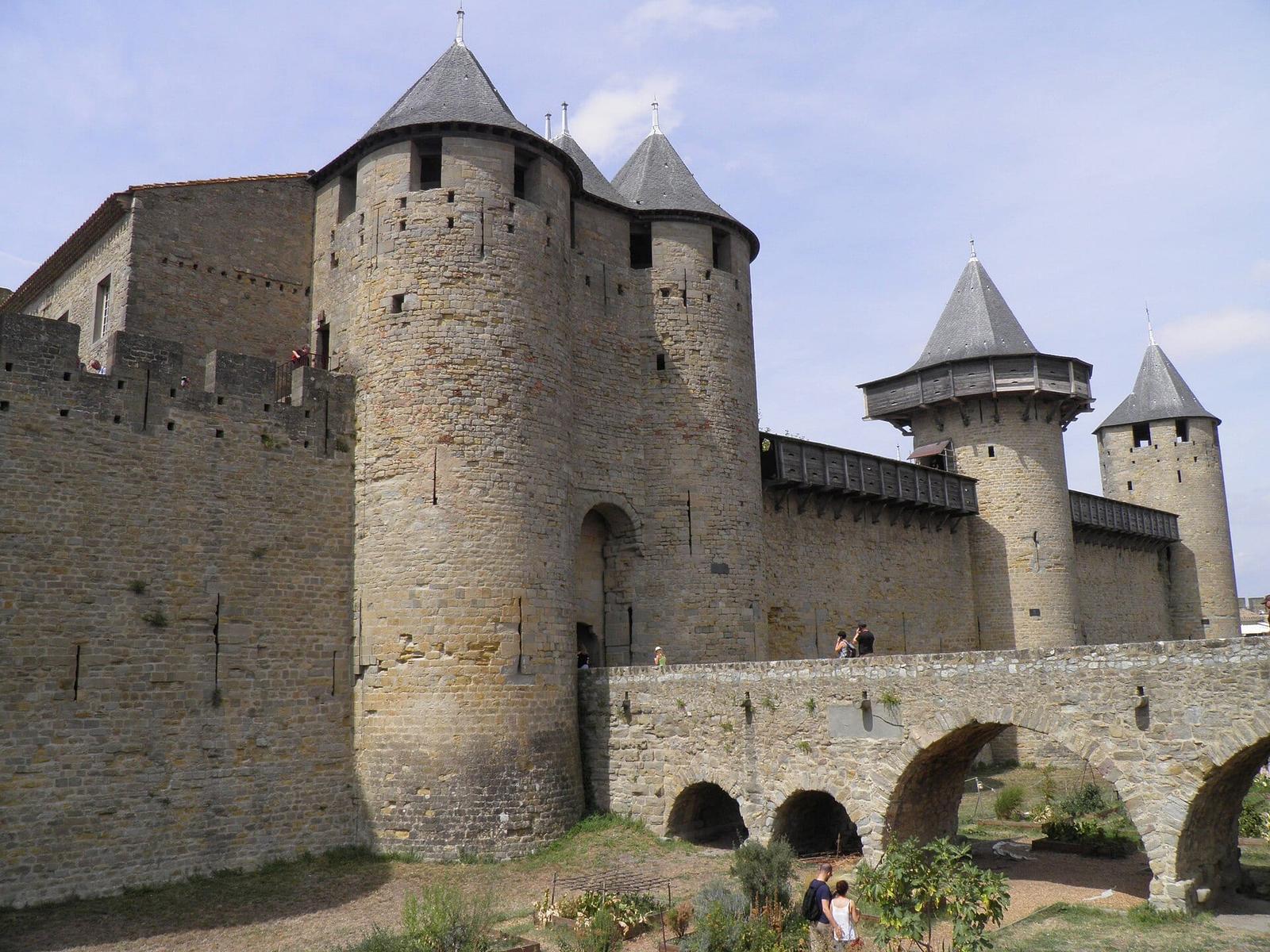
On its hill above the river Aude, the Cité de Carcassonne lines up two rings of walls, dozens of towers and a count's castle. Walking into the fortified town is free, but the castle and the walk along the ramparts are not. Here is what the ticket covers, who gets in free, when to come to avoid the crowds and how to plan your day.
Carcassonne at a glance
- What's free: the Cité itself (its streets, squares and the Basilica of Saint-Nazaire) and the lists, the open strip of ground between the two rings of walls.
- What you pay for: the count's castle (Château Comtal) and the wall walk on the ramparts, run by the Centre des monuments nationaux. €19 from April to September, €13 from October to March.
- Free for: under-18s, European residents aged 18 to 25, disabled visitors and their companion, jobseekers.
- Opening hours: 10:00 – 18:30 from April to September, 9:30 – 17:00 from October to March. Closed on 1 January, 1 May and 25 December.
- Time needed: about 2 hours for the castle and ramparts, half a day with the rest of the Cité.
Partner links: if you book through these links, we earn a commission at no extra cost to you. Partner links · Learn more
What to see in the Cité de Carcassonne
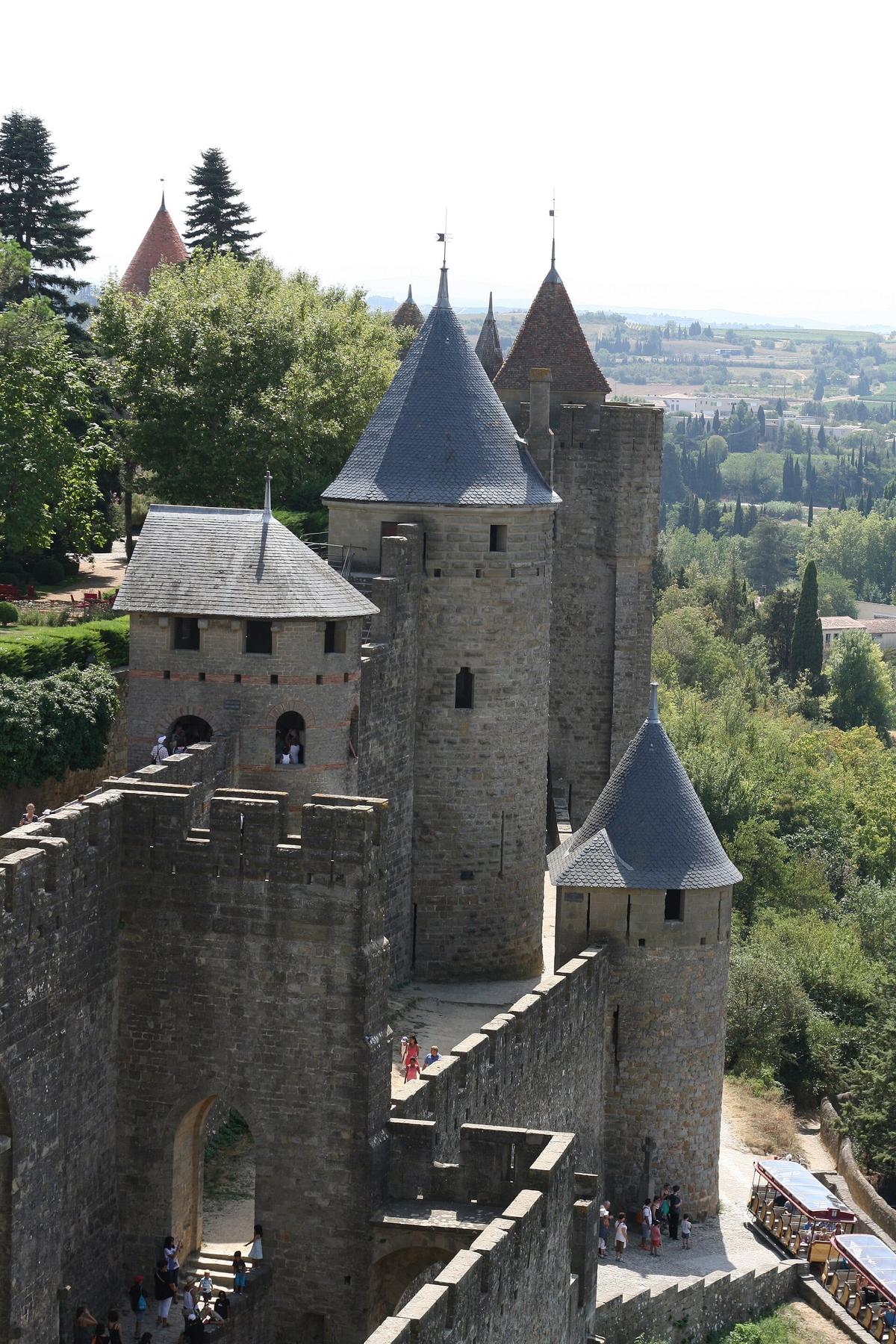
The Cité is a complete walled town, with people living in it, cobbled streets, restaurants and shops. Two rings of walls surround it. The outer one is lower. The inner one is higher and partly follows the line of the Roman wall. Between the two lie the lists (les lices), a long grassy and paved corridor where you can walk freely.
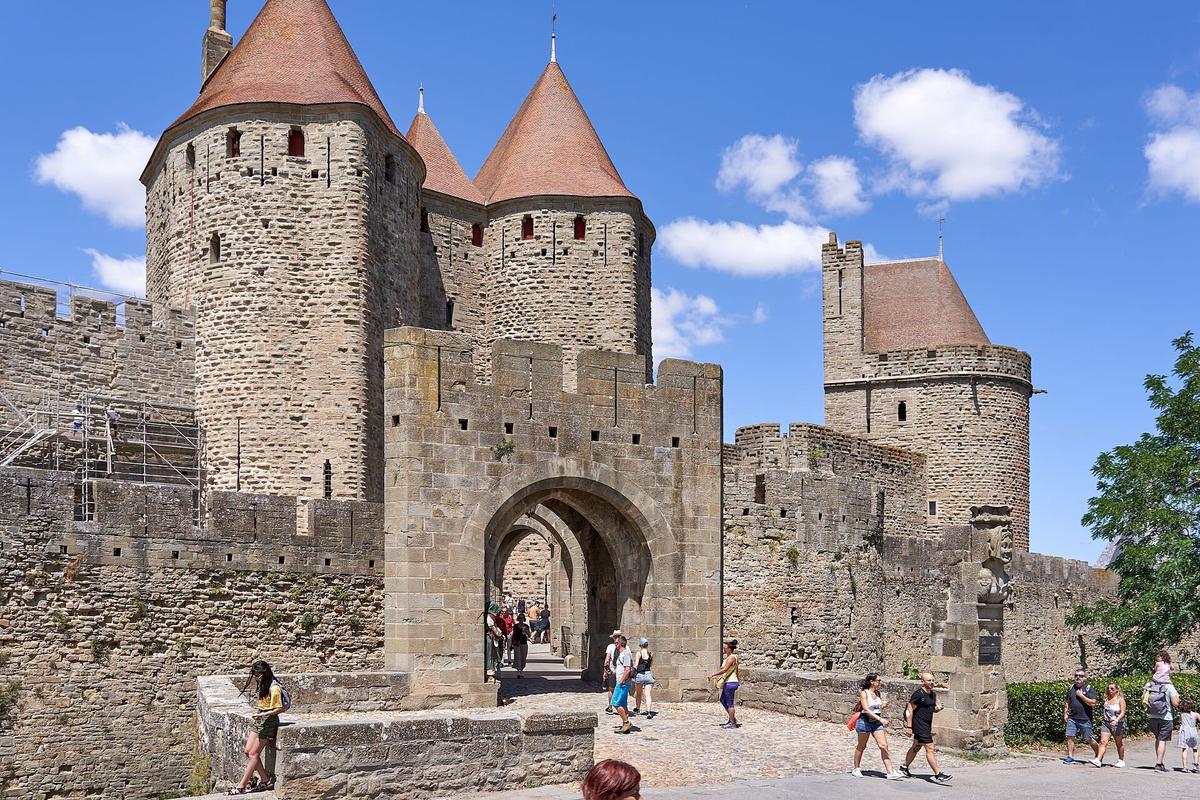
Most people come in through one of two gates. The Porte Narbonnaise, on the east side, is the main entrance, used by delivery vans and by visitors coming from the car park. The Porte d'Aude, on the west side, is reached on foot by a sloping path from the lower town and the Pont-Vieux. It is the most beautiful way in and the least crowded.
Inside, three places matter:
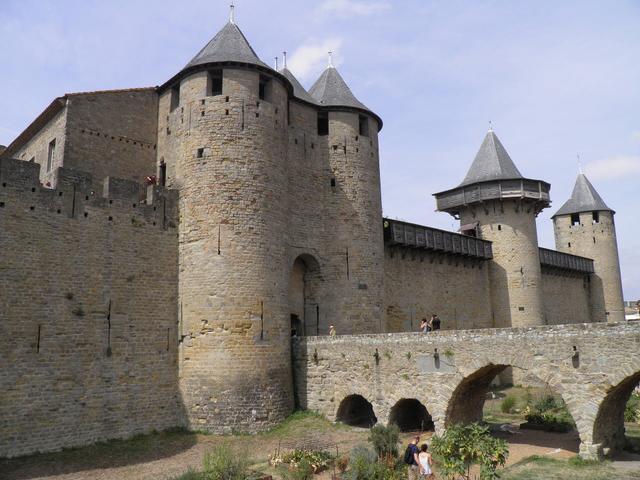
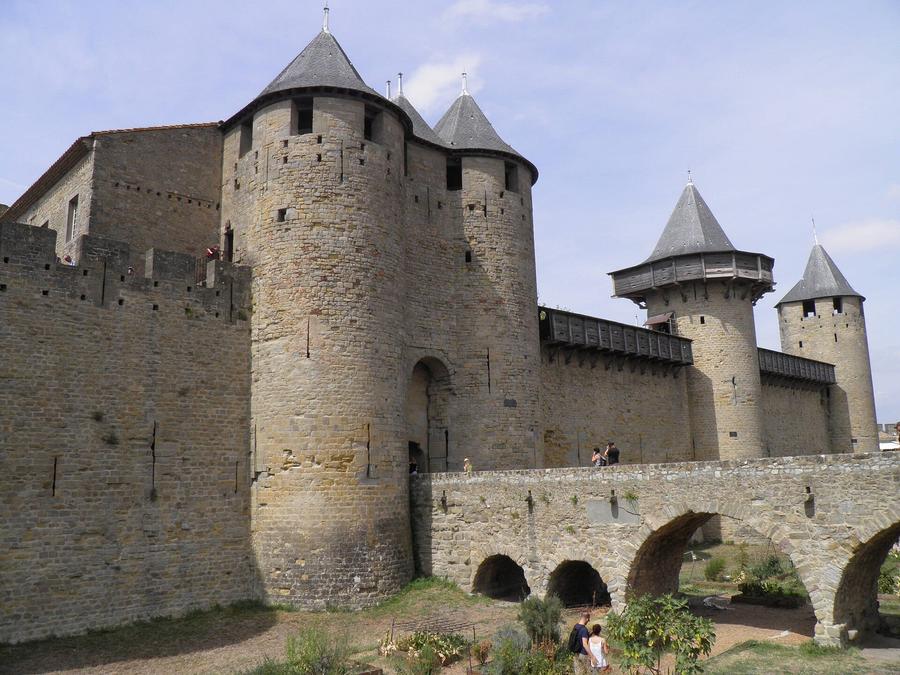
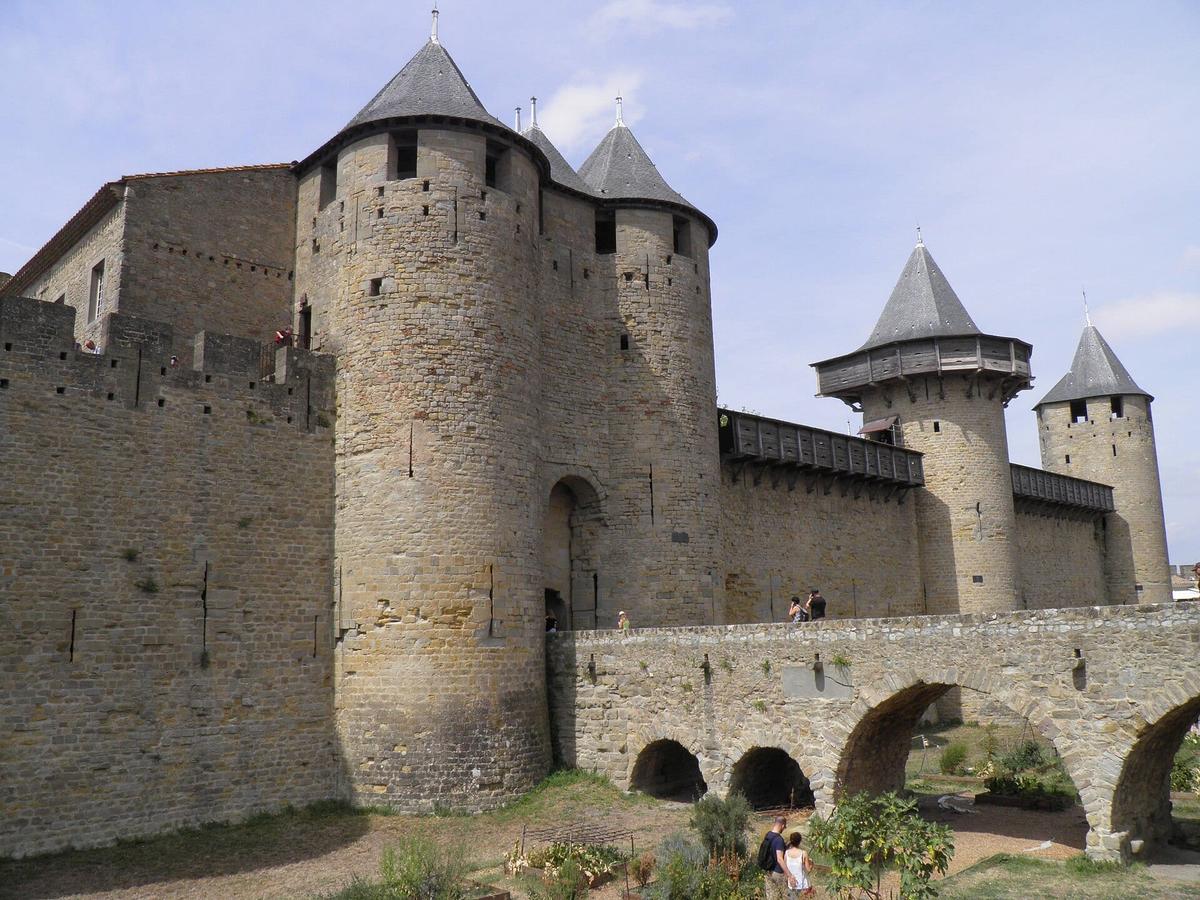
The Château Comtal. A castle within the town, it has its own moat, drawbridge and hoardings, the wooden galleries hung from the top of the walls so defenders could shoot down at attackers. This is where the paid visit starts, with a route through the rooms and a stone museum displaying sculptures and carved stones found in the Cité.
The ramparts. The ticket gives access to part of the wall walk on the inner ring. You walk on the walls from tower to tower, with views over the lower town, the Aude plain and, on a clear day, the Pyrenees.
The Basilica of Saint-Nazaire. Free to enter, it combines a Romanesque nave with a Gothic choir lit by large stained-glass windows. It is a few minutes from the castle, in the south of the Cité.
How much does the castle and ramparts ticket cost?
The price depends on the season. An adult pays €19 from April to September and €13 from October to March. The ticket covers the Château Comtal and the walk along the ramparts.
Entry is free, with proof, for:
- under-18s;
- 18 to 25-year-olds who are EU nationals or legal residents in France;
- disabled visitors and their companion;
- jobseekers, with a certificate less than six months old;
- holders of the French Pass Éducation and Pass Culture.
Visitors aged 18 to 25 from outside the EU, such as from the UK, the US or Australia, pay the full price unless they legally live in France.
Everyone gets in free on the first Sunday of the month from January to March, and during the European Heritage Days on the third weekend of September. Be aware that without valid proof, free entry is refused at the ticket desk. A family with two parents and two children therefore only pays for two adult tickets.
There are also partner rates: €16.50 in summer and €11.50 in winter with the Carca'City Pass, or if you arrived on a TGV inOui or Intercités train with a ticket less than five days old. Keep your train ticket.
Optional extras:
- the audio guide, €5, in six languages, with a route for children aged 6 to 10;
- the discovery guided tour, €21 in summer, €14 in winter;
- the longer lecture tour, €27 in summer, €20.50 in winter.
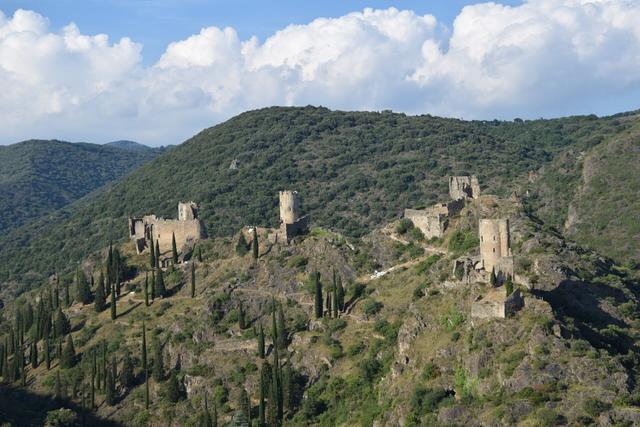
If you also plan to visit the four castles of Lastours, north of Carcassonne, a combined ticket valid for 7 days is sold on site: €19.50 from October to March, €24 from April to September.
Do you need to book tickets?
It is not compulsory, but numbers are limited and the monument strongly recommends booking, especially in July and August. Online tickets are sold on the Centre des monuments nationaux website, with a time slot.
Partner links: if you book through these links, we earn a commission at no extra cost to you. Partner links · Learn more
Guided tours sold online by tour companies often start at the Porte Narbonnaise and go around the Cité, sometimes with castle entry included. Check before you buy: a tour "of the Cité" without a castle ticket will not take you up onto the ramparts.
Opening hours and best time to visit
From April to September, the castle is open 10:00 – 18:30, with last entry at 17:45. From October to March, it is open 9:30 – 17:00, last entry at 16:15. It is closed on 1 January, 1 May and 25 December.
Two traps to know about. If you come in on the last time slot, the monument does not guarantee that you will be able to complete the whole route, castle and ramparts, and it does not give refunds. And audio guide sales stop at 16:00.
To avoid the crowds, come at opening time or late in the afternoon. In summer, the streets of the Cité are packed between 11 am and 5 pm, when the tour groups arrive. The lists stay quiet for most of the day: walk around them before or after the castle. In the evening, once the shops have closed, the Cité goes quiet again, and a walk around the floodlit lists costs nothing.
Winter is the quietest and cheapest season, with tickets at €13 and free entry on the first Sunday of January, February and March.
How long does it take to visit Carcassonne?
The monument suggests 2 hours for the castle and ramparts. Add an hour for the streets of the Cité and the basilica, and an hour to walk all the way around the lists. Half a day is enough, or a full day if you also want to see the lower town, the Bastide Saint-Louis, on the other side of the Aude.
How to get to the Cité de Carcassonne
By train. Carcassonne station is in the lower town. From there, allow 26 minutes on foot to the castle. The walk crosses the Bastide Saint-Louis, goes over the Pont-Vieux on the Aude, then climbs to the Porte d'Aude. It is the finest approach, but the last part is uphill.
By coach or shuttle. The closest public transport stop given by the regional tourist board is "Carcassonne – Cité Administrative", about 10 minutes' walk away.
By car. The Cité is just off the A61 motorway, between Toulouse and Narbonne. Visitors' cars are not allowed inside the Cité: park in the car parks at the foot of the walls, on the Porte Narbonnaise side, and walk in.
Renting a car. Carcassonne is the natural base for exploring Cathar Country: the castles of Peyrepertuse and Quéribus, high in the Corbières hills, have no public transport, and Fontfroide Abbey only has a bus in summer. Rental companies are based at Carcassonne station and airport. Book early for summer, especially if you need an automatic, and bring a credit card in the driver's name for the deposit.
Visiting Carcassonne with children
Children love the Cité: a real castle with a drawbridge, towers to climb and battlements. The audio guide has a route for 6 to 10-year-olds, and the castle runs children's workshops during some French school holidays. Since entry is free for under-18s, it is a cheap family day out.
A few practical tips. The wall walk has steps and narrow passages: leave the pushchair at the castle's pushchair park and bring a baby carrier. Hold small children by the hand on the ramparts. Suitcases are not allowed in the monument, which matters if you come on the day you leave. Picnics are not allowed in the castle, but there is a food service in the main courtyard, and there are toilets on site.
Dogs and accessibility
Animals are not allowed in the castle, except guide and assistance dogs. In the streets of the Cité and the lists, however, you can walk with your dog on a lead.
The castle holds the Tourisme et Handicap label for hearing and learning disabilities. For wheelchair users, the wall walk is difficult, with steps and slopes: call the monument on +33 4 68 11 70 70 before you come. Disabled visitors and their companion get in free.
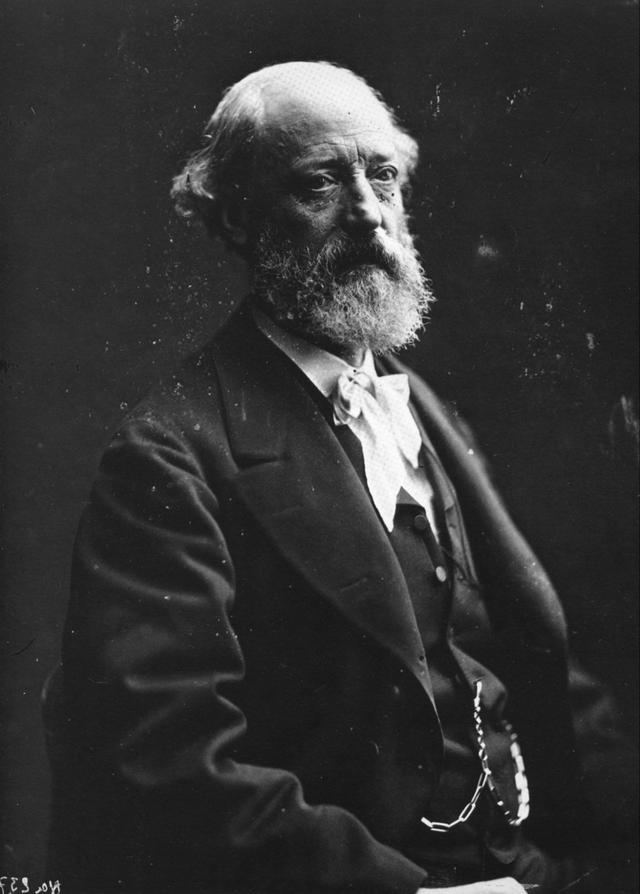
Viollet-le-Duc and the history of the Cité
The hill has been fortified since Roman times. In the Middle Ages, Carcassonne belonged to the Trencavels, viscounts allied with the counts of Toulouse. In 1209, during the Albigensian Crusade against the Cathars, the crusader army besieged the Cité. Cut off from water in the middle of summer, it surrendered after two weeks. The young viscount Raymond-Roger Trencavel, who came out to negotiate, was taken prisoner and died in captivity a few months later. The Cité passed to Simon de Montfort, then to the King of France, who strengthened the defences and built the outer ring of walls.
After the Treaty of the Pyrenees in 1659, the border with Spain moved south and the fortress lost its purpose. It fell into decay for two centuries, to the point that the State considered pulling it down. Prosper Mérimée, inspector of historic monuments, and the local historian Jean-Pierre Cros-Mayrevieille fought to save it.
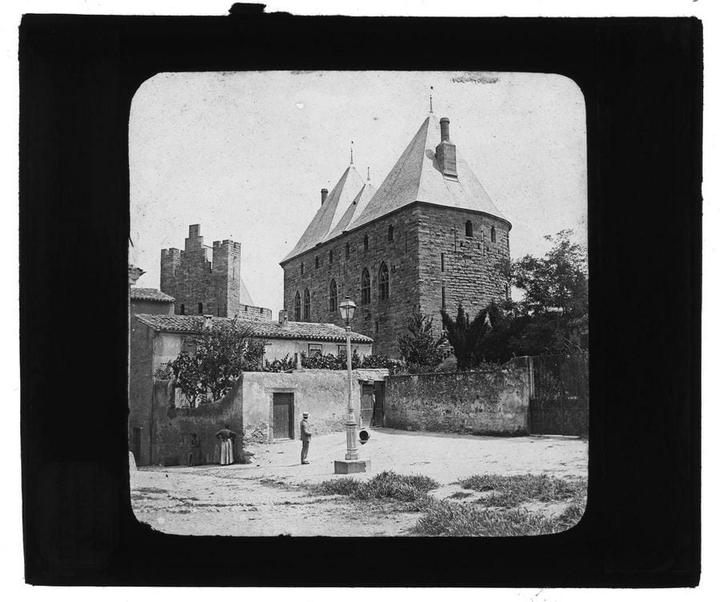
From 1853, the architect Eugène Viollet-le-Duc led its restoration. The work went on for decades and continued after his death in 1879. His most debated choice was the pointed slate roofs on the towers, closer to the castles of northern France than to the southern tradition of low-pitched tiled roofs. Historians still argue about it, but it is this silhouette that made the Cité famous.
The Cité was added to the UNESCO World Heritage list in 1997.
Stories and curiosities
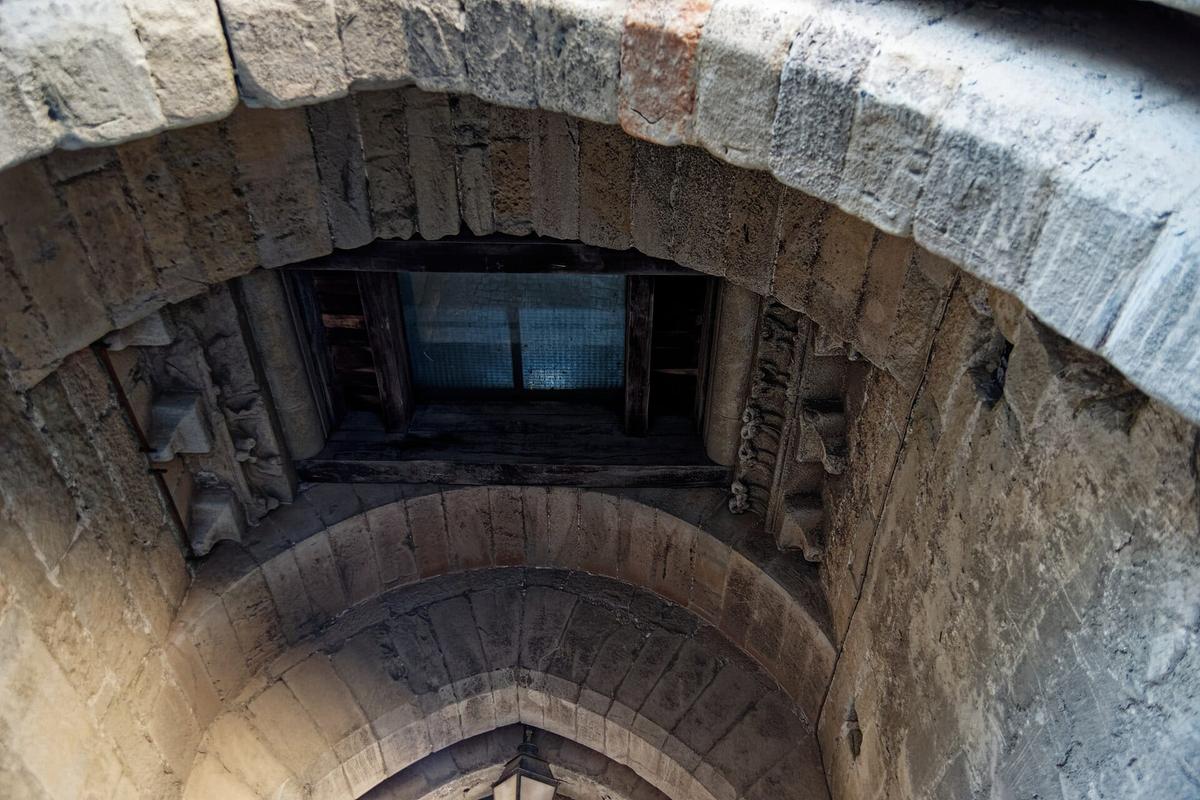
- Dame Carcas and her trick. Legend has it that during a long siege by Charlemagne, a Saracen princess called Carcas fed the town's last grain to a pig, then threw the well-fed animal down from the ramparts. The besiegers, thinking the town still had plenty of food, lifted the siege. The bells were then rung: "Carcas sonne" ("Carcas rings"). It is only a legend, but a bust of Dame Carcas greets visitors near the Porte Narbonnaise.
- A film set. The Cité has appeared in several films, including Robin Hood: Prince of Thieves (1991) with Kevin Costner.
- The wooden hoardings. The wooden galleries on top of some of the castle walls are Viollet-le-Duc's reconstructions, based on the beam holes still visible in the stone.
- The Bastille Day fireworks. Every 14 July, the "embrasement de la Cité", when the walls are lit up by fireworks, draws a huge crowd to the foot of the ramparts. That evening, arrive early or watch from the lower town.
What to combine with Carcassonne
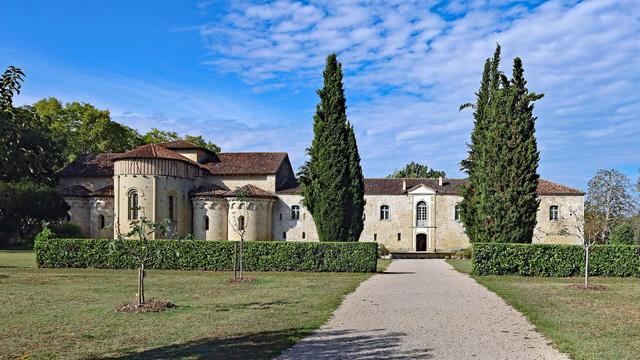
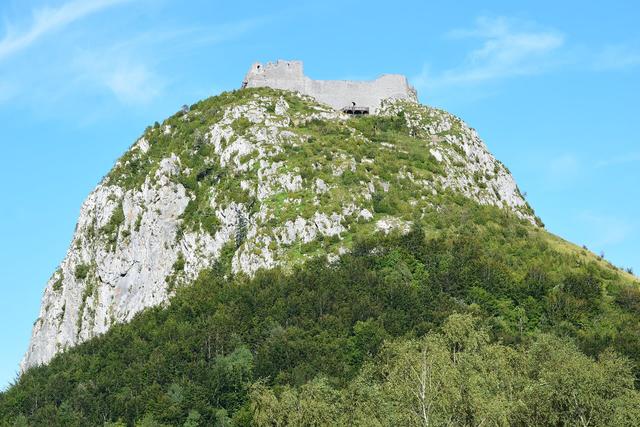
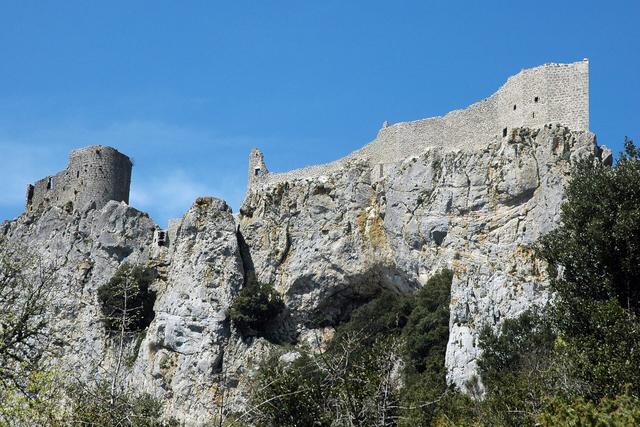
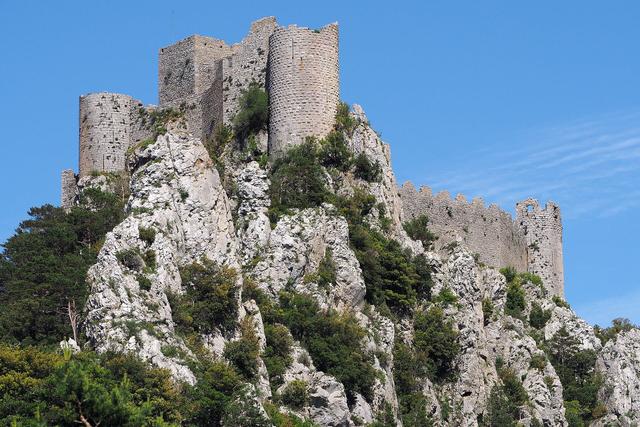
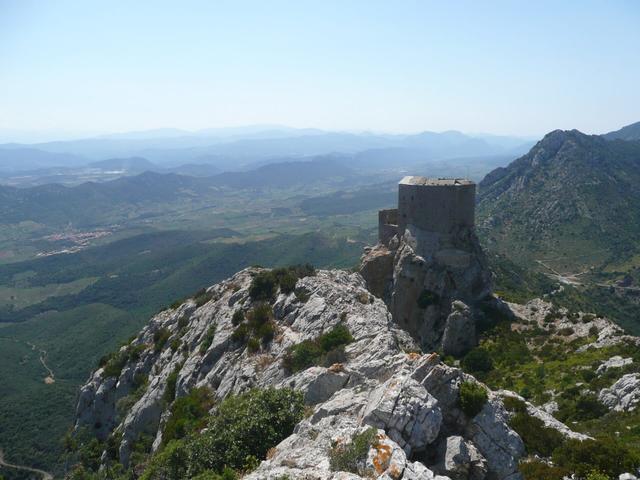
Carcassonne is the usual starting point for the Cathar castles and the abbeys of the Corbières. Allow an hour and a half by road to the clifftop castles of Peyrepertuse and Quéribus, and less than an hour to Fontfroide Abbey. See also: Peyrepertuse Castle, Quéribus Castle, Fontfroide Abbey
| Also worth seeing | Distance | Travel time |
|---|---|---|
| Fontfroide Abbey | 70 km | 55 min by car |
| Peyrepertuse Castle | 90 km | 90 min by car |
| Quéribus Castle | 95 km | 95 min by car |
Approximate road distances and travel times.
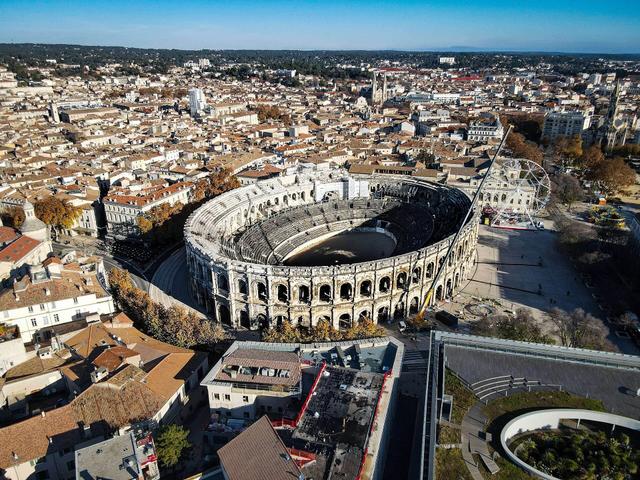
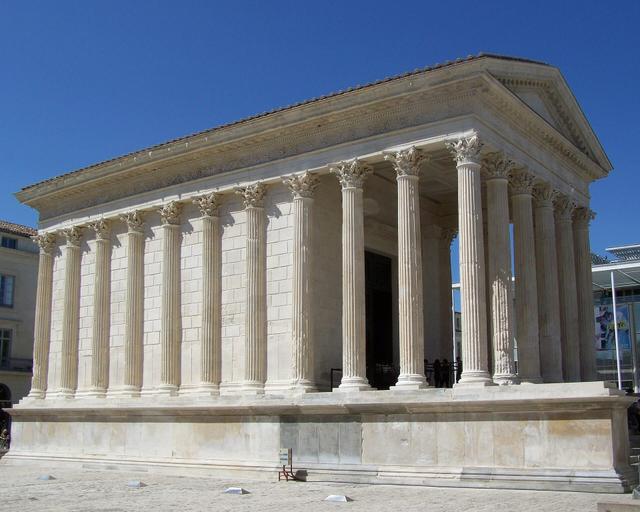
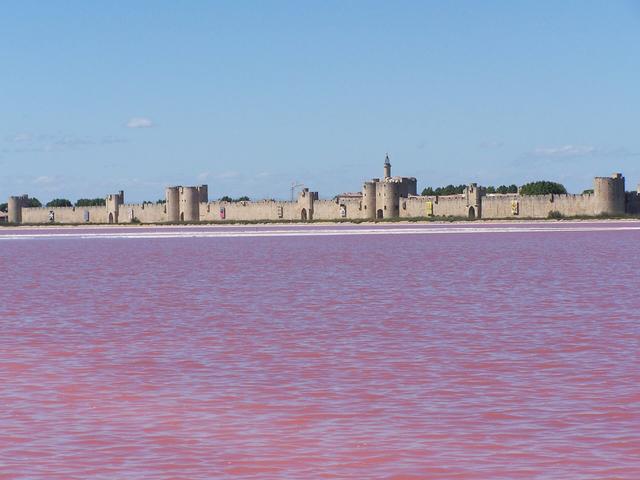
For a longer trip in the region, the ramparts of Aigues-Mortes and the Roman arena in Nîmes are about two and a half hours' drive away. See also: Aigues-Mortes Ramparts, Nîmes Arena, Languedoc and Cathar Country
Where to eat and stay
In the Cité, restaurants are clustered around Place Marcou and in the streets leading to the castle. There are plenty of them and they are handy, but often expensive and packed at lunchtime in summer. For a quieter and cheaper meal, walk down to the Bastide Saint-Louis, around Place Carnot, twenty minutes away on foot.
Staying inside the Cité is a special experience: you get the empty streets in the evening and early morning. The choice there is limited; the lower town, near the station, has far more hotels and B&Bs and is more convenient if you are travelling by train.
Places to stay near Carcassonne
FAQ
How much does it cost to visit Carcassonne castle?
€19 per adult from April to September, €13 from October to March. The ticket covers the Château Comtal and the ramparts. Under-18s get in free.
Is the Cité de Carcassonne free to visit?
Yes, entry to the Cité, its streets, the Basilica of Saint-Nazaire and the lists is free. Only the Château Comtal and the ramparts walk are paid.
When is the castle free for everyone?
On the first Sunday of the month from January to March, and during the European Heritage Days in September.
How long does it take to visit?
About 2 hours for the castle and ramparts, half a day with the streets of the Cité and the lists.
Can you walk from the station?
Yes, in about 26 minutes, through the Bastide Saint-Louis, over the Pont-Vieux and up to the Porte d'Aude. The end of the walk is uphill.
Are dogs allowed?
Not in the castle, except guide and assistance dogs. In the streets of the Cité and the lists, yes, on a lead.
Practical information
Opening hours 2026
| 1 January 2026 to 31 March 2026 | 9:30 – 17:00 |
|---|---|
| 1 April 2026 to 30 September 2026 | 10:00 – 18:30 |
| 1 October 2026 to 31 March 2027 | 9:30 – 17:00 |
Closed: 1 January, 1 May, and 25 December
Official ticket-office prices 2026
| Full price | €19 |
|---|---|
| Full price (1 April-30 September) | €19 |
| Audio guide | €5 |
| Free | under 18s, EU/EEA residents aged 18 to 25, disabled visitors and one companion, jobseekers, and French teachers (Pass Éducation) |
Partner links: if you book through these links, we earn a commission at no extra cost to you. Partner links · Learn more
See tickets and availability on Tiqets ›
Address
Château et remparts de la Cité de Carcassonne, 1 rue Viollet-le-Duc, 11000 Carcassonne, France
Directions · Phone+33 4 68 11 70 70
On site and nearby
- On site: Toilets and food and drink
- Nearest shops and pharmacy: Carcassonne, 1 km away Straight-line distance, based on OpenStreetMap.
- Emergencies: 112 (all emergencies, free from any phone), 15 (SAMU, medical emergency)
Around the site, on Google Maps
With children
Family days out nearby: Lastours Castles (14 km), Termes Castle (28 km), Peyrepertuse Castle (41 km)
Swimming pools and play areas nearby, on Google Maps
Facts checked on 29 October 2026. Sources: remparts-carcassonne.fr, remparts-carcassonne.fr, tourisme-occitanie.com, fr.wikipedia.org, remparts-carcassonne.fr
Map
In the same region