Saint-Guilhem-le-Désert: visiting Gellone Abbey and the village
Saint-Guilhem-le-Désert and Gellone Abbey at a glance
- High season
- 8:00 – 18:00
- Low season
- 8:00 – 18:00
- Admission
- Free
- Visitors per year
- about 700,000 (2017)
- Where
- Saint-Guilhem-le-Désert
Facts checked on 29 October 2026. Full opening hours, reduced prices and access
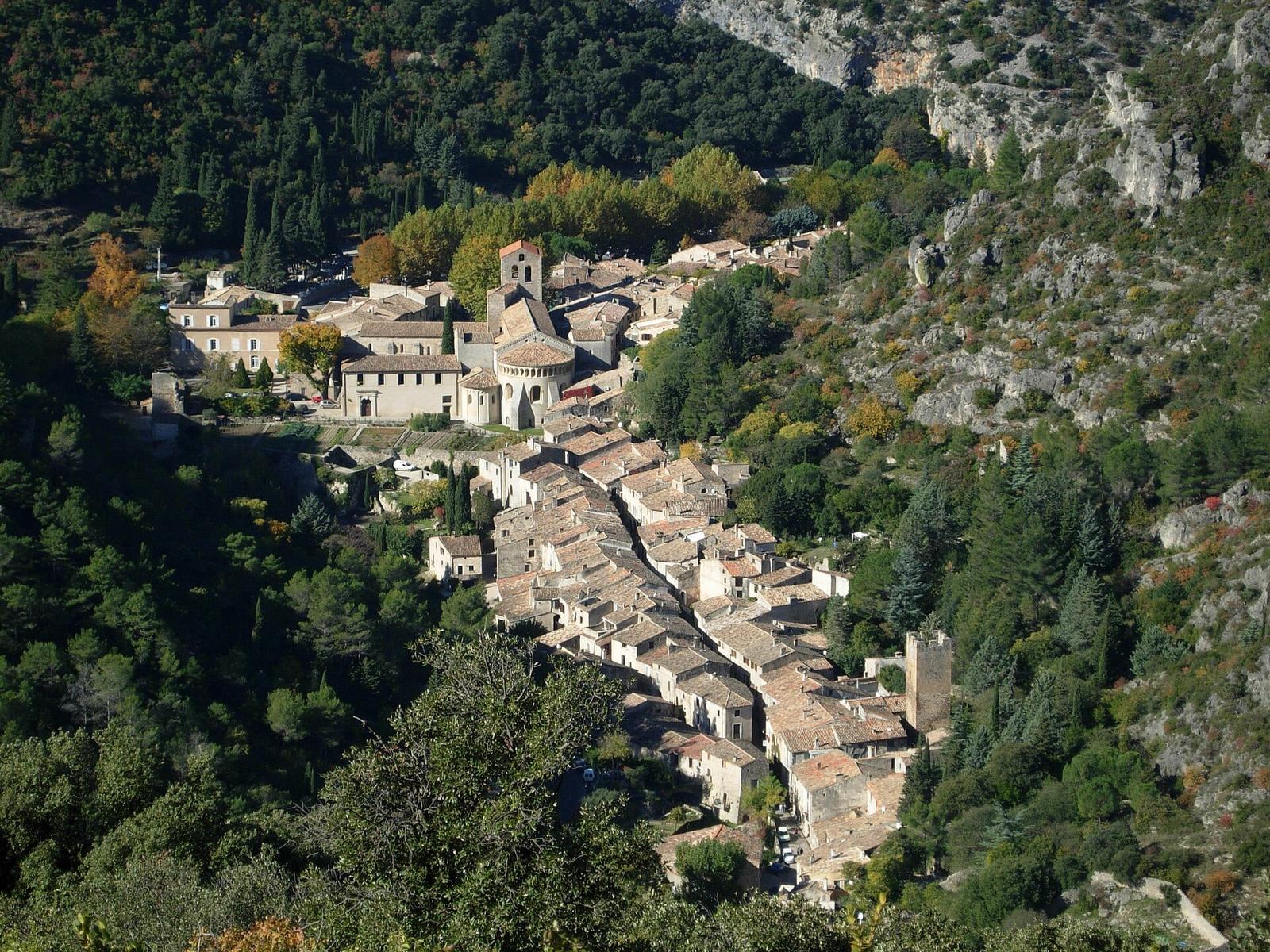
Deep in a side valley of the Hérault gorges, Saint-Guilhem-le-Désert grew up around an abbey founded in 804. The abbey church, a masterpiece of early Romanesque art in Languedoc, is free to visit, and the village is a UNESCO-listed stop on the Way of St James to Santiago de Compostela. Here is how to plan your visit: opening hours, time needed, parking and what to see nearby.
Saint-Guilhem-le-Désert at a glance
- Where: in the Hérault department, about forty kilometres north-west of Montpellier, in the Gellone valley above the Hérault gorges.
- Price: entry to the abbey church is free.
- Opening hours: the abbey church is open every day, 8:00 – 18:00.
- Time needed: half a day for the abbey and the village, a full day with the Pont du Diable and a swim.
- Best for: lovers of Romanesque art, walkers on the Way of St James, anyone who likes pretty villages. Less suited to pushchairs: the streets are steep and cobbled.
Why visit Saint-Guilhem-le-Désert?
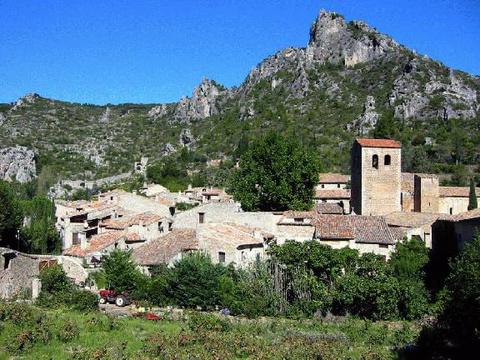
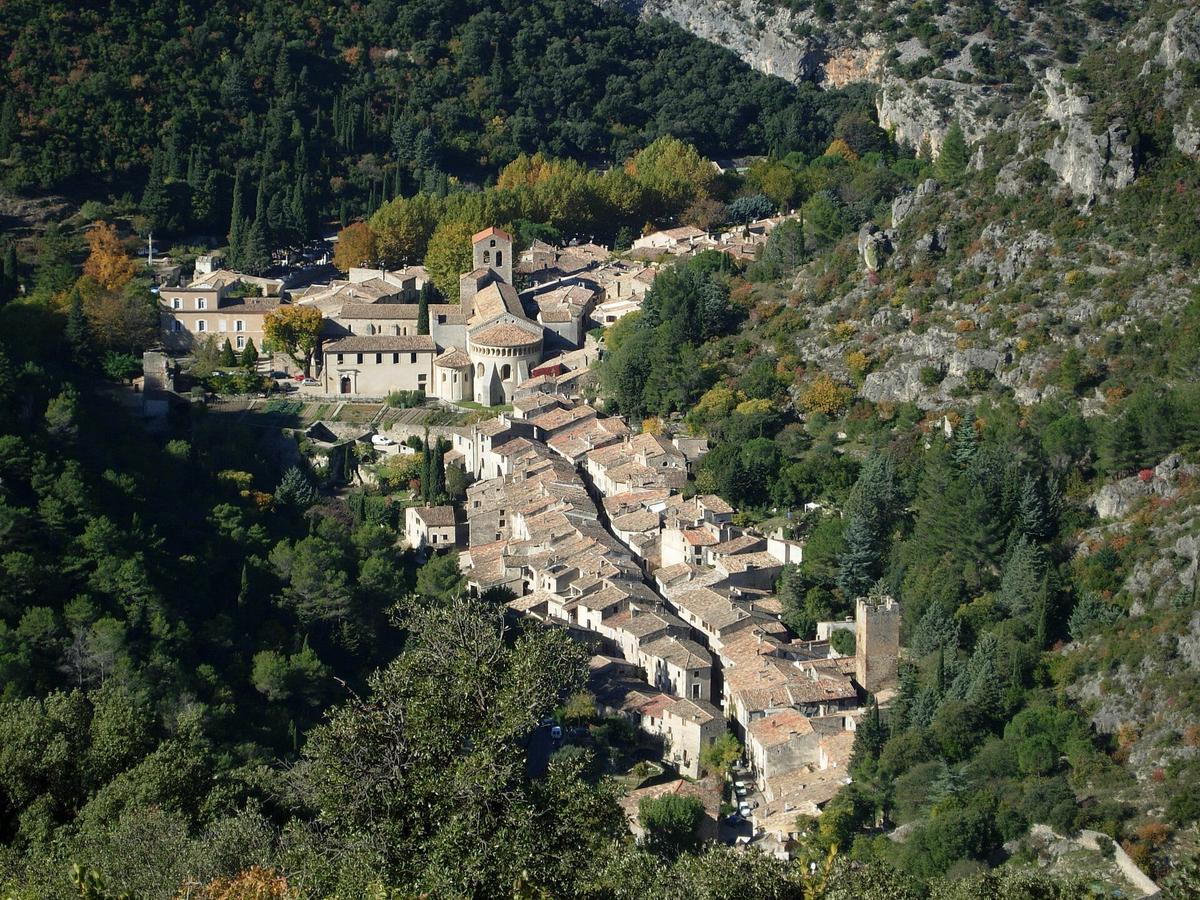
Saint-Guilhem-le-Désert is less famous than Carcassonne or the monuments of Nîmes, but it draws big crowds in summer. It is just a few streets of stone houses squeezed between the cliffs and the Verdus stream, with the abbey in the middle. The word "désert" has nothing to do with sand: in the Middle Ages, it meant a remote place suited to the life of monks.
Gellone Abbey was founded in 804 as a Benedictine abbey. By the 10th century, its founder Guilhem had become Saint Guilhem, and the monastery became an important stop on the pilgrim route to Santiago de Compostela. In 1998, UNESCO added the abbey church to the World Heritage list as part of the Routes of Santiago de Compostela in France.
The village and the Pont du Diable, a few kilometres downstream, make up the Grand Site de France of the Hérault gorges. According to a report by the French environment ministry published in 2017, this Grand Site receives nearly 700,000 visitors a year. Most come in summer, which explains the advice below.
How much does it cost to visit Gellone Abbey?
Nothing. Entry to the abbey church is free all year round. It is a working place of worship: services are held there, and a religious community lives on site. Dress respectfully and keep your voice down during services.
There is a shop in the abbey. An audio guide is available in French, German, English and Spanish, and guided tours in French and English can be arranged on request. To book one or ask about prices, contact the abbey on +33 4 67 57 75 80 or the Saint-Guilhem-le-Désert Vallée de l'Hérault tourist office.
Parking takes a little planning. Cars cannot drive into the village: you have to park in the car parks set up above or below it. Check the "parkings et navettes" (car parks and shuttles) page of the tourist office before you go, as arrangements change with the season.
Opening hours and best time to visit
The abbey church is open every day of the year, 8:00 – 18:00. Times may change during services or events: if in doubt, call before you go.
In July and August, the village is very busy between 11 am and 5 pm. The car parks fill up by late morning and the lanes feel narrow for the crowds. Two solutions: arrive early, when the church opens at 8 am, or come in the late afternoon, when the day trippers leave. The evening light on the rooftops and cliffs is also the most beautiful.
Spring and autumn are the best seasons. It is pleasant for walking, the village is calm, and the scrubland is in flower in April and May. In winter, the visit is very peaceful, but some restaurants and shops are closed.
How long does it take to visit?
Allow an hour for the abbey church and its cloister, then an hour or two to wander through the village, climb up the slopes and have a drink on Place de la Liberté, in front of the abbey. Half a day covers the essentials.
A full day makes sense if you add the Pont du Diable, a swim in the Hérault or a hike. Trails from the village climb to the ruins of the so-called Giant's Castle (château du Géant), above the rooftops, with a view straight down into the Gellone valley. Wear good shoes and bring water: the climb is steep and has no shade.
What to see in Saint-Guilhem-le-Désert
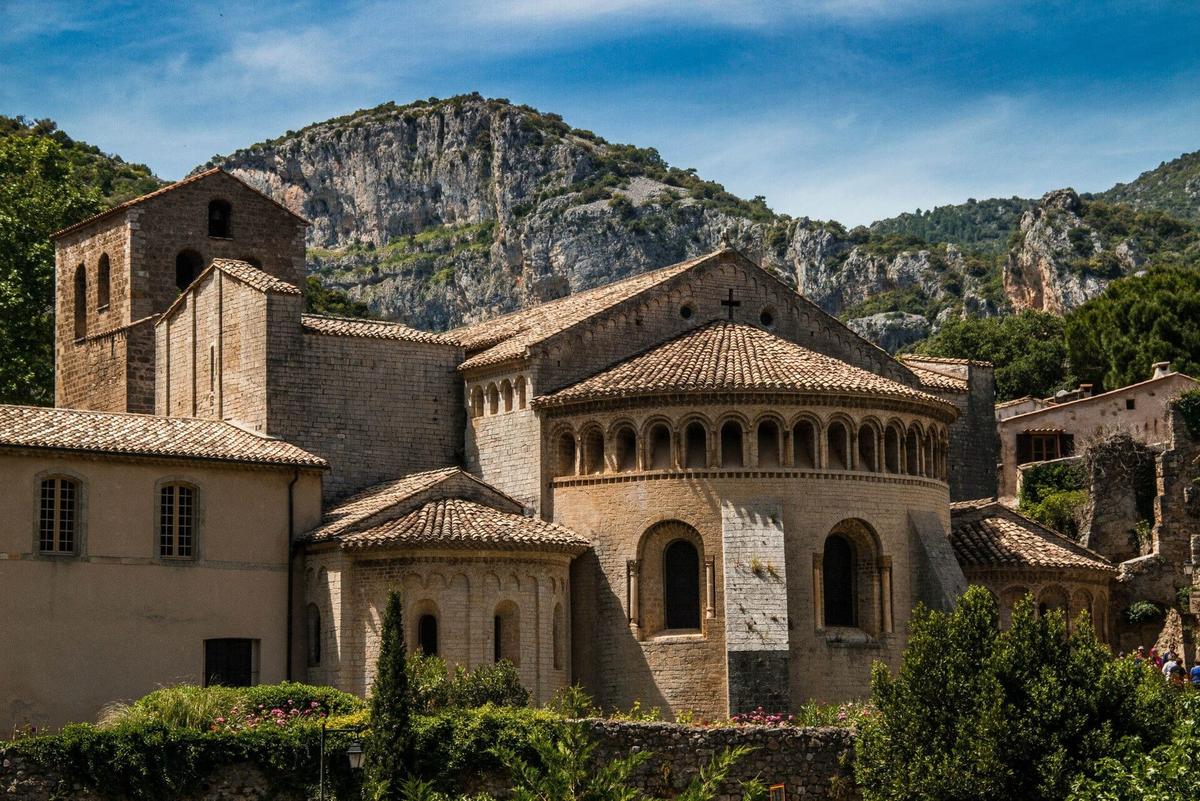
The abbey church. This is the heart of the visit. Its apse, at the back, shows the blind arcading typical of early Romanesque art in Languedoc; it is one of the most photographed views in the village. Inside, the nave is plain and tall. You can see the organ, the altar and the relics of Saint Guilhem, still venerated today.
The cloister. Only part of the original galleries remains. After the French Revolution, the abbey was sold and the cloister taken apart stone by stone. Many of its capitals and columns ended up in New York, where they are on display at The Cloisters, a branch of the Metropolitan Museum of Art. What remains on site lets you imagine the whole.
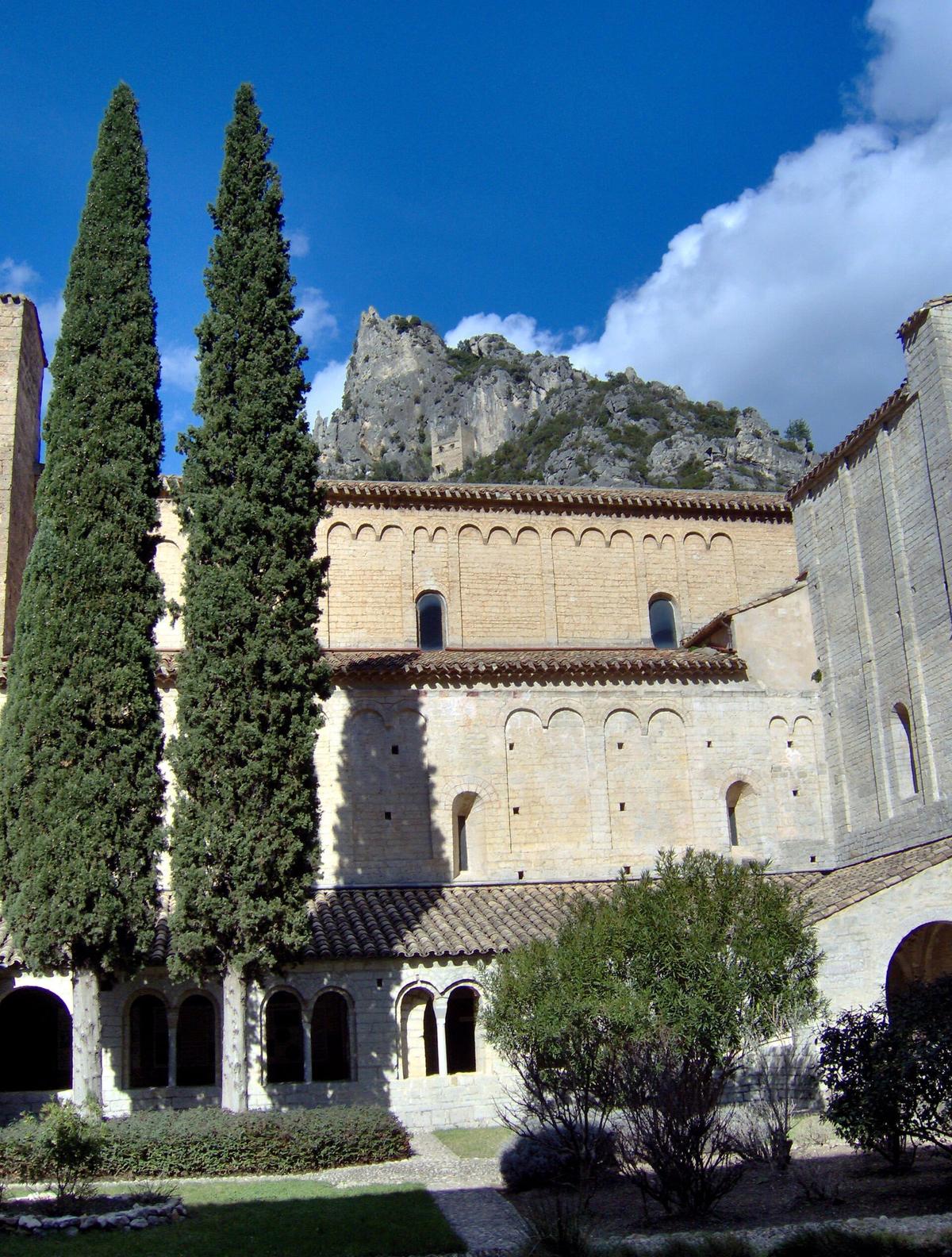
The village. Take time to walk up the main street to the far end of the village, then come back down through the lanes. Many houses have kept their Romanesque or Gothic windows. Place de la Liberté, with its huge plane tree, is the village meeting point.
The Pont du Diable. A few kilometres downstream, this Romanesque bridge spans the Hérault where it leaves the gorges. It was built in the 11th century by the monks of the Gellone and Aniane abbeys, and it is also part of the UNESCO-listed Routes of Santiago. In summer, people swim in the river below. There is a tourist office information point on site.
Two stories to know before you go
The count who became a monk. Guilhem, Count of Toulouse and a close companion of Charlemagne, fought the Muslim armies south of the Pyrenees. Towards the end of his life, he withdrew to this remote valley and founded Gellone Abbey, where he died as a monk. His legend inspired the medieval epic poems, the chansons de geste, under the name William of Orange. According to tradition, Charlemagne gave him a fragment of the True Cross, which drew pilgrims for centuries.
A cloister that went to America. In the 19th century, the cloister's stones were used for other buildings, and local people took some home. In the early 20th century, the American sculptor and collector George Grey Barnard bought a large part of them. They have since been reassembled at The Cloisters in New York, alongside pieces from other French abbeys such as Saint-Michel-de-Cuxa. If you visit New York one day, you will see part of Saint-Guilhem again.
Visiting with children
Children enjoy the village's lanes and passageways, but the abbey will not hold their attention for long. Plan the day around an outdoor activity: a swim below the Pont du Diable in summer, a short walk on the trails, or a picnic by the Hérault.
Bring a baby carrier rather than a pushchair: the streets are cobbled and steep. In summer, it gets very hot in the valley, and the river can be dangerous after a storm: follow the signs and only swim where it is allowed.
How to get to Saint-Guilhem-le-Désert
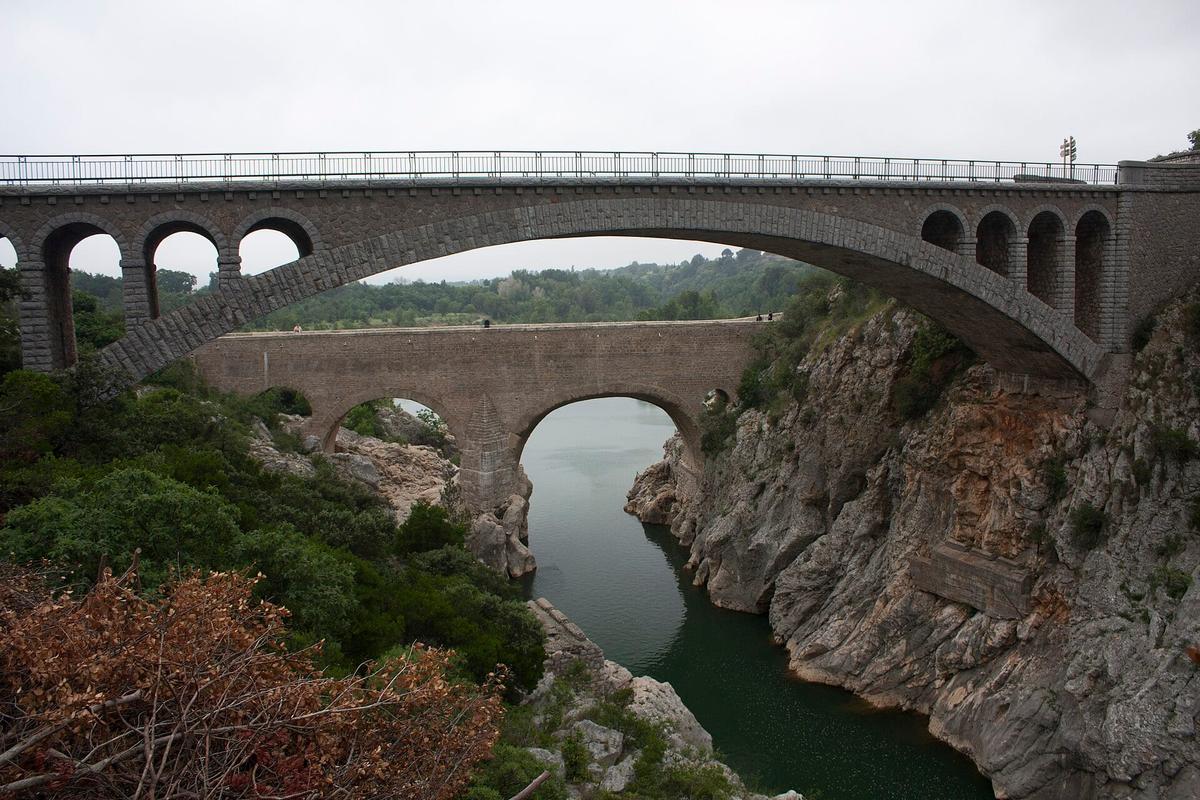
By car. This is the easiest way. From Montpellier, follow signs for Millau, then take the exit for Gignac and Aniane and follow the Hérault gorges road. The road passes the Pont du Diable before reaching the village. The village itself is pedestrianised: you have to park outside it. Shuttles link some car parks to the village; the tourist office publishes the details on its "parkings et navettes" page.
By coach. Hérault Transport coaches serve the valley from Montpellier. Services are limited, especially at weekends and out of season: check the times on the Hérault Transport website before relying on them.
On foot. The village is a stage on the Way of St James, on the Arles route (Via Tolosana). Walkers arrive from Aniane and continue towards Lodève.
A car also lets you combine the visit with Montpellier or the coast on the same day.
Partner links: if you book through these links, we earn a commission at no extra cost to you. Partner links · Learn more
Guided tours and day trips
Guided tours of the abbey can be booked on request, in French and English. From Montpellier, several day trips combine Saint-Guilhem-le-Désert, the Pont du Diable and sometimes a wine tasting in the Hérault valley vineyards. It is a good option if you do not have a car.
Guided tours and day trips on GetYourGuide
What to combine with your visit
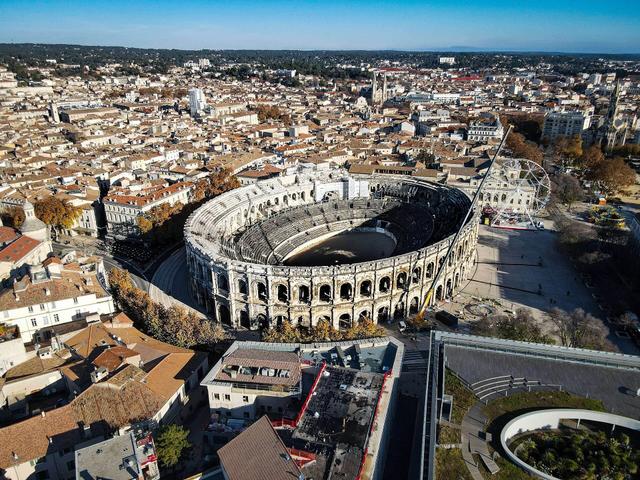
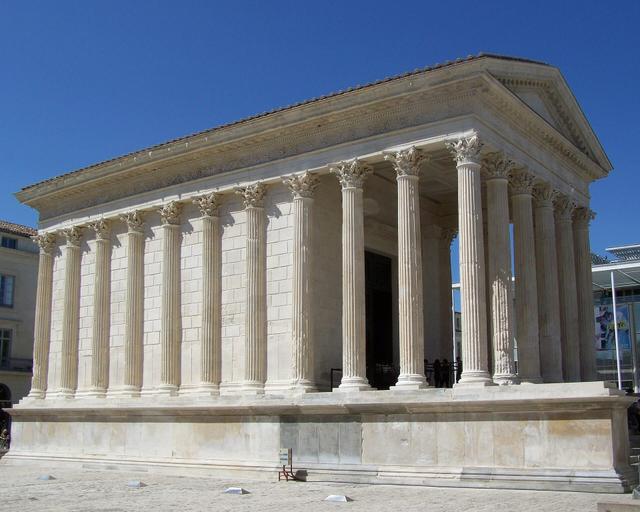
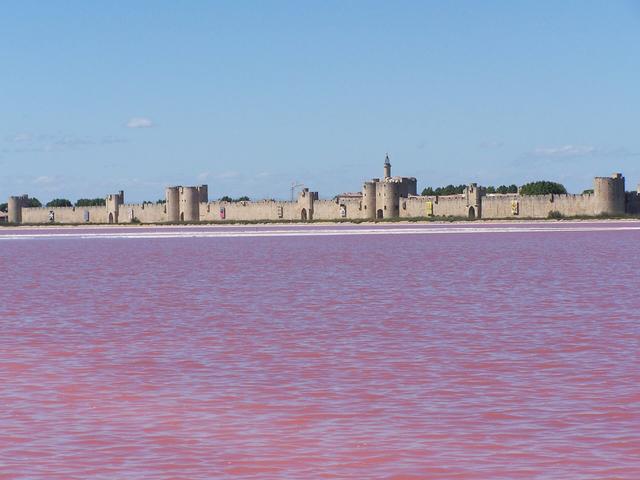
Saint-Guilhem-le-Désert is out on its own: the other major sights of Languedoc are more than an hour's drive away. If you are staying in Montpellier, you can do Saint-Guilhem in the morning and Aigues-Mortes in the afternoon. Nîmes, with its arena and Maison Carrée, needs a day of its own.
| Also worth seeing | Distance | Travel time |
|---|---|---|
| Aigues-Mortes Ramparts | 80 km | 70 min by car |
| Maison Carrée | 100 km | 75 min by car |
Approximate road distances and travel times.
See also: Aigues-Mortes Ramparts, Maison Carrée, Nîmes Arena
For another Languedoc abbey, Fontfroide Abbey, near Narbonne, fits in on the way to Carcassonne and the Cathar castles. See also: Fontfroide Abbey, Carcassonne Medieval City, Languedoc and Cathar Country
Where to eat and stay
Eating. The village has several restaurants and cafés, around Place de la Liberté and along the main street. In summer, book or have lunch early. Out of season, some close on weekdays. A picnic by the Hérault, near the Pont du Diable, is a good alternative.
Staying. The village has little accommodation, a few B&Bs and holiday cottages that fill up fast. Neighbouring villages in the valley, such as Aniane, Gignac or Saint-Jean-de-Fos, have more choice. Montpellier remains the most practical base if you want to see several sights in the region.
Places to stay near Montpellier
FAQ
Do you have to pay to visit Gellone Abbey?
No. Entry to the abbey church is free, every day, 8:00 – 18:00.
Can you drive into the village?
No. The village is pedestrianised: you have to park in the car parks around it, which are linked to the village by shuttles.
How long does it take to visit Saint-Guilhem-le-Désert?
Half a day for the abbey and the village. A full day if you add the Pont du Diable and a walk.
Why is Saint-Guilhem-le-Désert a UNESCO World Heritage Site?
The abbey church and the Pont du Diable have been listed since 1998 as part of the Routes of Santiago de Compostela in France.
When is the best time to visit?
Spring and autumn. In summer, come early in the morning or late in the afternoon to avoid the crowds and the heat.
What happened to the abbey's cloister?
A large part of it was sold in the early 20th century and is now at The Cloisters museum in New York.
Practical information
Opening hours 2026
| 1 January 2026 to 31 December 2026 | 8:00 – 18:00 |
|---|
Official ticket-office prices 2026
Free admission
Address
Abbaye de Gellone, 2 Grand Chemin du Val de Gellone, 34150 Saint-Guilhem-le-Désert, France
Directions · Phone+33 4 67 57 75 80
On site and nearby
- Nearest shops and pharmacy: Saint-Jean-de-Fos, 4 km away Straight-line distance, based on OpenStreetMap.
- Emergencies: 112 (all emergencies, free from any phone), 15 (SAMU, medical emergency)
Around the site, on Google Maps
With children
Family days out nearby: Grotte de Clamouse (3 km), Fonseranes Locks (53 km), Seaquarium Le Grau-du-Roi (53 km)
Swimming pools and play areas nearby, on Google Maps
Facts checked on 29 October 2026. Sources: saintguilhem-valleeherault.fr, herault-tourisme.com, igedd.developpement-durable.gouv.fr
Map
In the same region