Basilica of Saint-Sernin, Toulouse: how to plan your visit
Basilica of Saint-Sernin, Toulouse at a glance
- Admission
- Free
- Time needed
- about 1 h
- Visitors per year
- about 754,800 (2019)
- Where
- Toulouse
Facts checked on 11 November 2026. Full opening hours, reduced prices and access
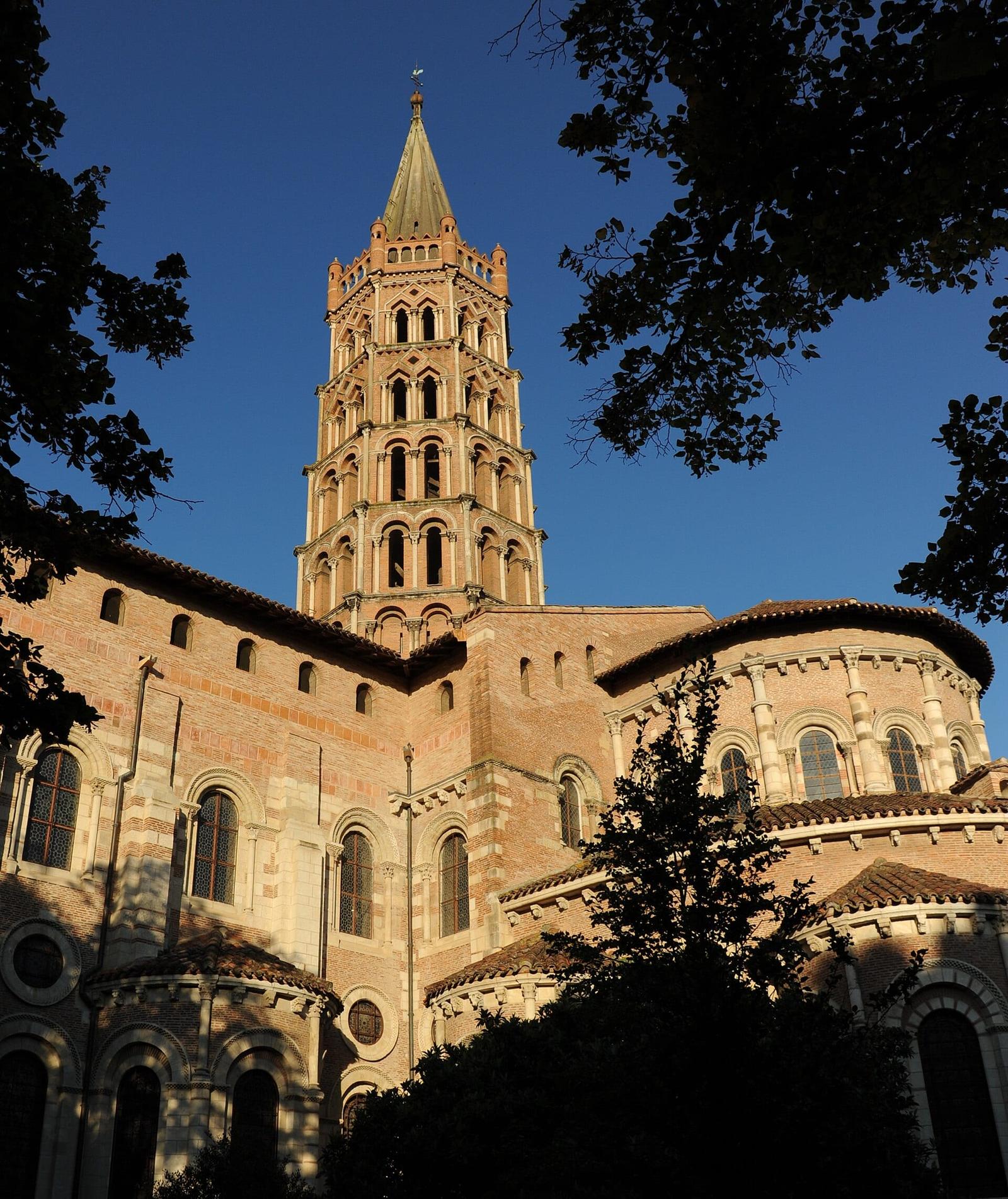
At 115 metres long, with a brick bell tower you can see from all over the city, Saint-Sernin is the largest Romanesque church in France. It was built to receive pilgrims on the way to Santiago de Compostela, around the tomb of the first bishop of Toulouse. Entry is free; only the crypt is visited separately. Here are the opening hours, how long to allow, what not to miss and our tips.
Saint-Sernin at a glance
- Where: place Saint-Sernin, in the historic centre of Toulouse, a ten-minute walk from the Capitole.
- Price: free entry to the basilica. The crypt and the ambulatory, where the reliquaries are displayed, have their own entrance and opening hours; no price is published online, so ask at the entrance.
- Open: the basilica opens every day, 8:30 – 18:00 (hours published by the tourist office for October to May). The crypt opens 10:00 – 17:30 on weekdays and 13:00 – 17:00 on Sundays.
- Time needed: the tourist office suggests 45 min to 1 hr, crypt included.
- Visitors: about 754,800 in 2019, according to the Occitanie tourist board.
- Good to know: this is a parish church. Visits are restricted during Mass and ceremonies.
Why visit the Basilica of Saint-Sernin
Saint-Sernin is the Occitan name of Saint Saturnin, the first bishop of Toulouse. According to tradition, he was martyred around 250, tied to a bull that dragged him through the streets. A church stood over his tomb from the 5th century. In the 11th century, the pilgrimage to Santiago de Compostela brought crowds of the faithful, and the canons launched a huge building project in the early 1070s.
Pope Urban II consecrated the altar on 24 May 1096. He had come to Toulouse to ask Count Raymond IV of Saint-Gilles to join the Crusade. Most of the building was finished by the end of the 13th century, but the west front was only completed in 1929.
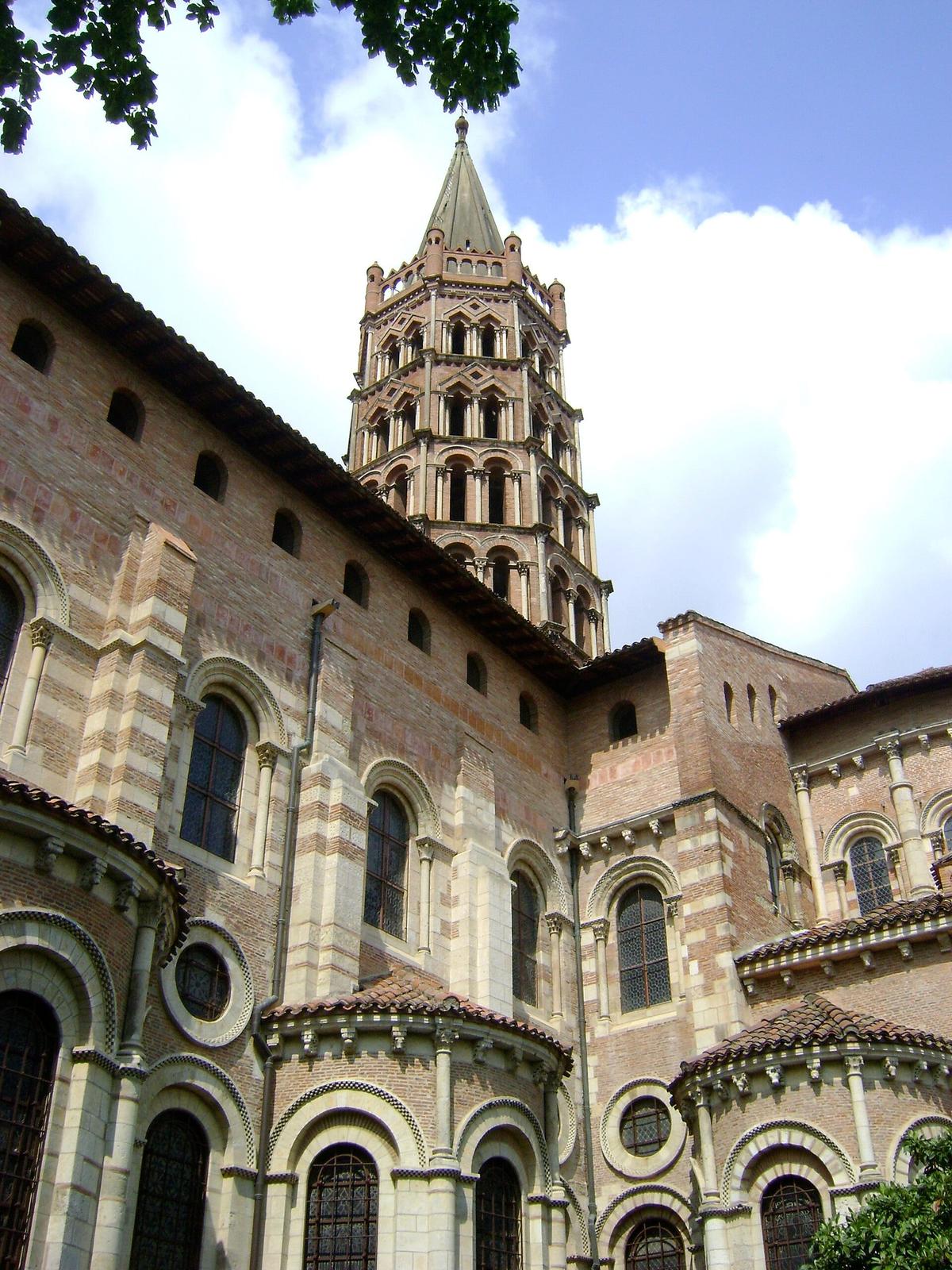
The result is an exceptional church: 115 metres long, with 5 aisles, a vault 21 metres high and an octagonal bell tower of 65 metres. The official website describes it as "the largest and most spacious Romanesque church in Europe" still standing. It has been a listed historic monument since the list of 1840 and a UNESCO World Heritage Site since 1998, as part of the Routes of Santiago de Compostela in France.
What strikes you most is a layout designed for crowds. An ambulatory runs round the choir and leads to a ring of chapels. Pilgrims could walk past the relics without disturbing the canons' services.
Is entry to Saint-Sernin free?
Yes. The Toulouse tourist office states that "access to the basilica is free". You can walk into the nave, the side aisles and the transept without a ticket.
Two areas are visited separately:
- The crypt and the ambulatory, also known as the "tour of the holy bodies". This is where the reliquaries and the tomb of Saint Saturnin are displayed. Access is separate, during the crypt's opening hours; neither the basilica nor the tourist office publishes a price, so ask at the entrance.
- The parish guided tours, which leave from the basilica at set times (see below).
The Toulouse Pass Tourisme. The tourist office sells this pass, which combines museums, public transport and tours. Before buying it for Saint-Sernin, check what it includes: the basilica itself is already free.
2026 opening hours of the basilica and the crypt
The basilica. The Toulouse tourist office lists it as open every day, 8:30 – 18:00, from October to May. It does not publish separate summer hours: in June and September, call the front desk on +33 5 61 21 80 45 if you plan to come early or late.
The crypt and the ambulatory. Hours published by the basilica:
- Monday to Saturday: 10:00 – 17:30.
- From 1 June 2026 to 30 September 2026, on weekdays: 10:00 – 18:30.
- Sunday: 13:00 – 17:00.
Mass times. On Sundays, Mass is held at 9:00, 10:30, 12:00 and 18:30; the noon Mass is said in English. On weekdays, Mass is celebrated at 9:00, Monday to Friday. During services, avoid walking around the nave; some areas may be closed.
Our tip: come on a weekday in the late morning. The crypt is open, the morning Mass is over and there are fewer groups. Sunday morning is the worst time for sightseeing: one Mass follows another and the crypt only opens in the afternoon (13:00 – 17:00).
Do you need to book?
No. For the basilica, you just walk in. The same goes for the crypt: you get in on the spot, during the hours given above.
Guided tours. The Occitanie tourist board lists guided tours on Saturdays at 10:00 and 15:00 and Sundays at 15:00, and every day in July and August. They cover the architecture, the sculpture and the spiritual meaning of the place. Groups book with the basilica by email (visites@basilique-saint-sernin.fr). The parish also offers "spiritual tours" on its website.
Toulouse city tours. Saint-Sernin is a stop on almost every guided tour of the historic centre, on foot or by little tourist train. It is a good option if you only have one day in Toulouse.
Partner links: if you book through these links, we earn a commission at no extra cost to you. Partner links · Learn more
How long does it take to visit Saint-Sernin?
The Toulouse tourist office suggests 45 min to 1 hr. Allow:
- 20 to 30 minutes for the nave, the transept and a walk round the outside of the apse;
- 20 to 30 minutes more for the crypt and the ambulatory;
- an hour and a half with a guided tour, or if you take time to look at the capitals.
What to see at Saint-Sernin
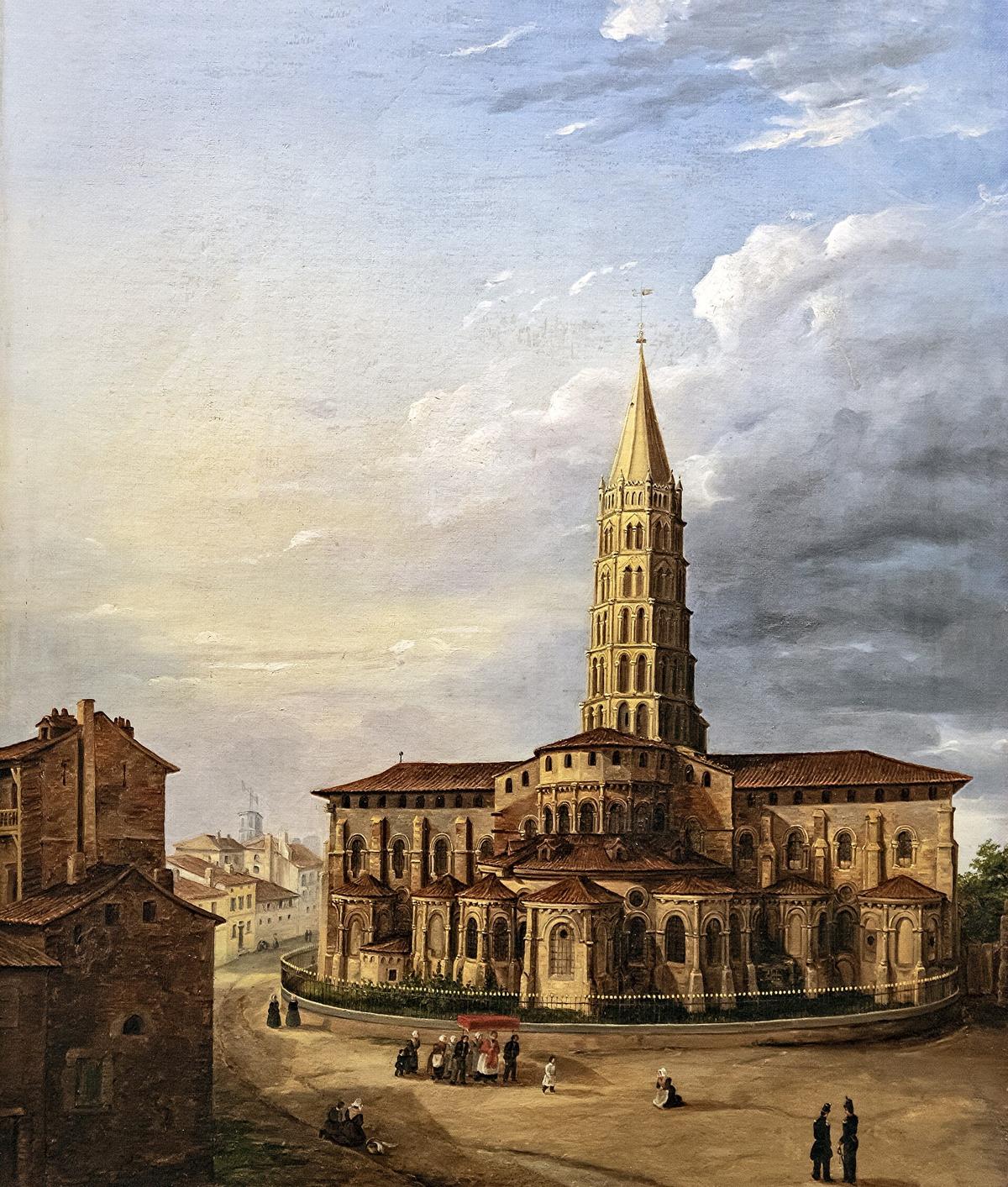
The apse and bell tower, from outside. Start by walking round the church from the square. On the east side, the radiating chapels rise in tiers up to the octagonal bell tower. The lower storeys are Romanesque, with round arches; the top two, added in the 13th century, have mitre arches, typical of Toulouse brick architecture.
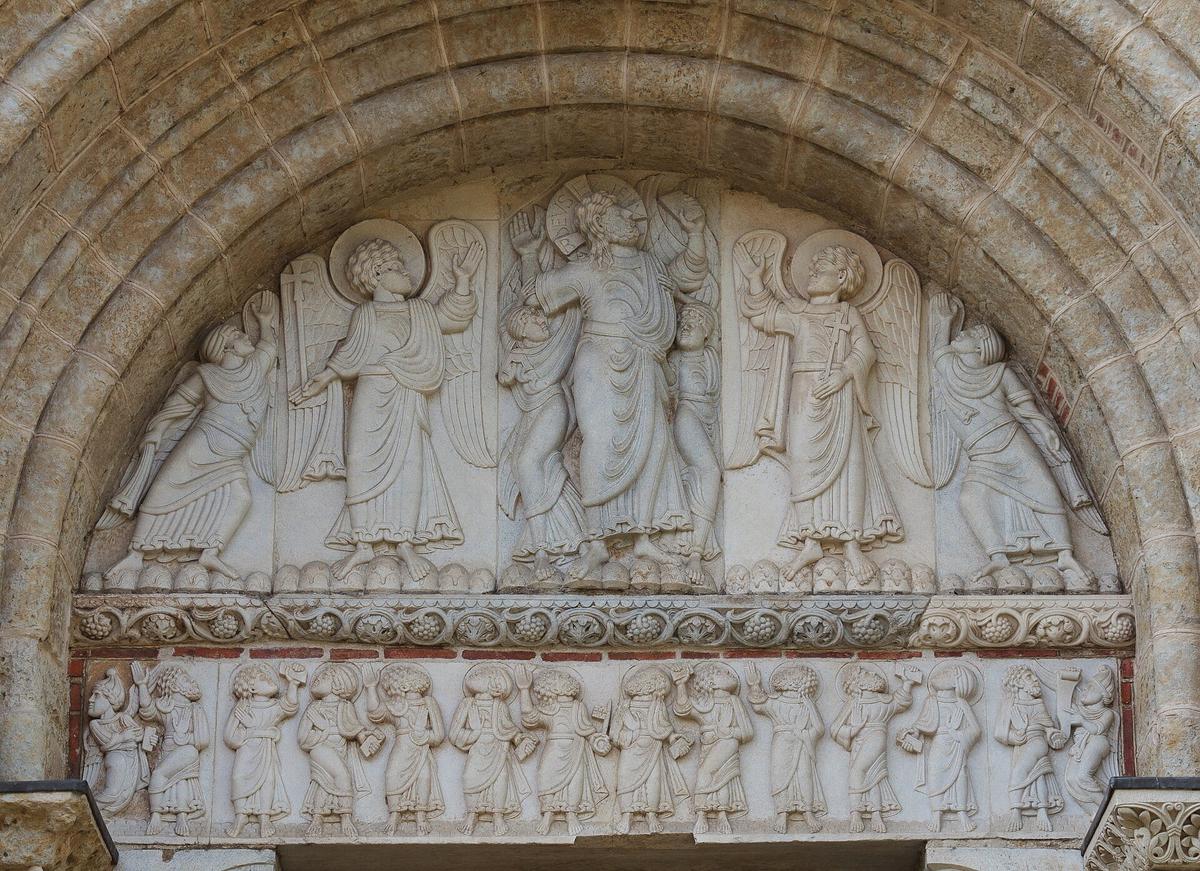
The Porte Miègeville. On the south side, it dates from the late 11th or early 12th century. Its carved tympanum shows the Ascension of Christ, between Saint Peter and Saint James. According to Wikipedia, it is the oldest known portal in France with a carved lintel and tympanum. Its name comes from the Occitan mièja vila: it faces the middle of the town.
The Porte des Comtes. At the end of the south transept, carved around 1082, this is the oldest doorway of the church. Its capitals tell the parable of the rich man and Lazarus. The counts of Toulouse were buried close by.
The nave. Enter through the west front and look towards the choir. The 11 bays and the barrel vault give you the scale of the building. Some 260 Romanesque capitals survive in the church.
Bernard Gilduin's reliefs. In the ambulatory, seven marble panels carved in the 1090s show Christ in Majesty, angels and apostles. The same sculptor signed the altar table consecrated by Urban II, now placed at the crossing.
The paintings in the north transept. 12th-century wall paintings were found under the plaster, including an angel of the Resurrection.
The Cavaillé-Coll organ. Completed in 1889, it has 54 stops and 3458 pipes. It is one of the star instruments of the Toulouse les Orgues festival every autumn.
The rose window by Jean-Michel Othoniel. The rose window of the west front has received a contemporary stained-glass window by the artist, which echoes the organ case.
The crypt and the relics
The crypt is the reason Saint-Sernin exists. An inventory from 1246 lists nearly 200 relics in the "tour of the holy bodies". Wikipedia still counts 128 today, including some attributed to six apostles. The parish website calls it "one of the largest reliquaries in the world".
What you will see:
- The tomb of Saint Saturnin, under a Baroque canopy from the 1720s to 1740s, behind the high altar.
- The upper crypt, whose keystone shows the Coronation of the Virgin (1260s).
- The lower crypt, dug from 1280 onwards, which holds the reliquary of the Holy Thorn, given in 1251 by Alphonse of Poitiers, brother of Saint Louis.
- The 17th-century reliquaries in the chapels of the ambulatory.
Two stories worth knowing
Viollet-le-Duc undone. The famous architect began restoring the basilica in 1860. He replaced the flat roofs with stone roofing and added pinnacles. A century later, these additions were judged unfaithful. The restoration launched in 1967 removed part of his work and brought back the original roofs and the small openings under the eaves (the mirandes), not without protests.
The Gospel book given to Napoleon. Saint-Sernin used to hold the Godescalc Evangelistary, a manuscript commissioned by Charlemagne. In 1811, the city gave it to Napoleon I for the baptism of his son, the King of Rome. It is now in the Bibliothèque nationale de France.
Visiting Saint-Sernin with kids
The visit is short and free, which makes it easy to fit into a day in Toulouse. To keep children interested:
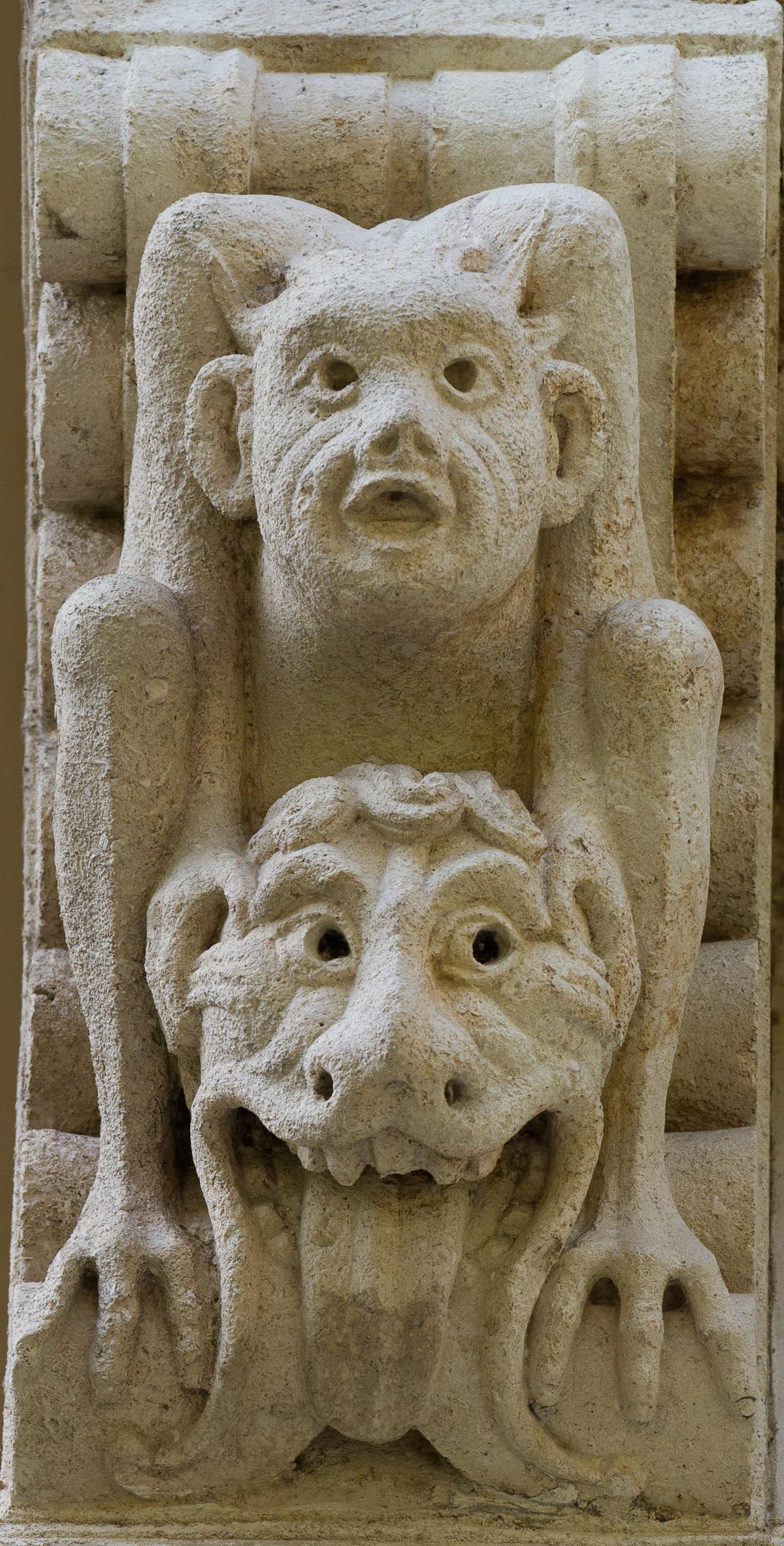
- ask them to look for the animals and monsters on the capitals and on the Porte Miègeville;
- count the storeys of the bell tower from the square;
- go down into the crypt: the gilded reliquaries and the saint's tomb make more of an impression than the nave.
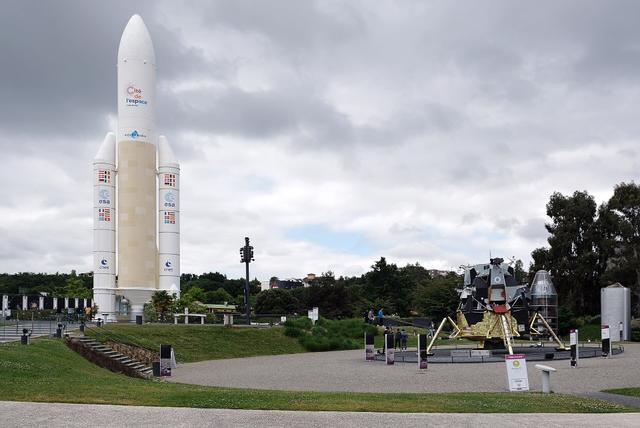
If your children like space and machines, keep half a day for the Cité de l'espace or the Halle de la Machine, on the other side of the city.
How to get to the Basilica of Saint-Sernin
By metro. Jeanne d'Arc station (line B) is the closest. From Capitole station (line A), it is about a ten-minute walk along the rue du Taur. You will pass the church of Notre-Dame du Taur, built, according to tradition, where Saint Saturnin's body was left.
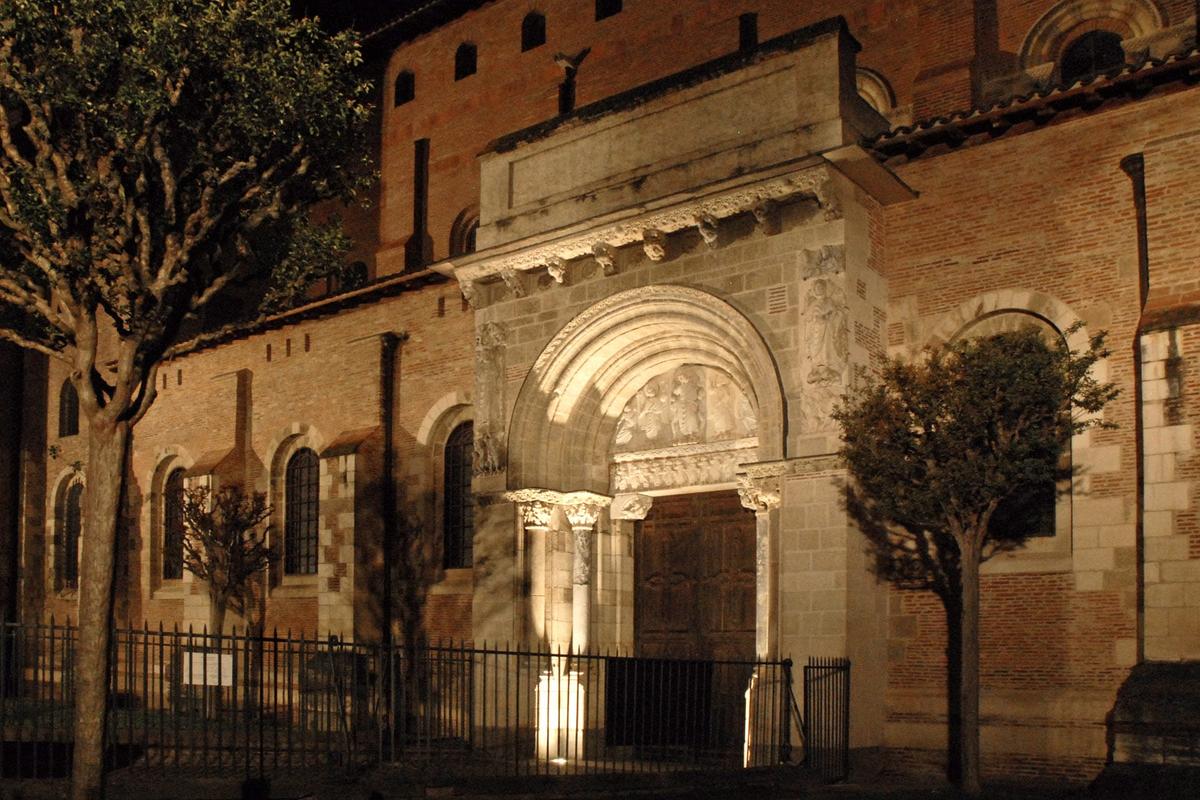
On foot. From the place du Capitole, walk up the rue du Taur: the basilica is at the end.
By car. Driving in central Toulouse is difficult. The Occitanie tourist board lists the Saint-Sernin, Capitole, Jeanne d'Arc, Arnaud Bernard and Victor Hugo car parks. The Capitole or Jeanne d'Arc car park and a few minutes' walk is the simplest option.
From Matabiau station. Take metro line A to Jean Jaurès, then line B to Jeanne d'Arc, or walk for about twenty minutes.
Renting a car. You do not need one for Saint-Sernin, but it is useful for day trips from Toulouse: Albi, Carcassonne or Conques. Toulouse-Blagnac airport, with its rental desks, is linked to the city centre by tram.
What to combine with Saint-Sernin
| Also worth seeing | Distance | Travel time |
|---|---|---|
| Halle de La Machine | 7 km | 20 min by car |
| Cité de l'Espace | 7 km | 20 min by car |
| Aeroscopia | 12 km | 25 min by car |
Approximate road distances and travel times.
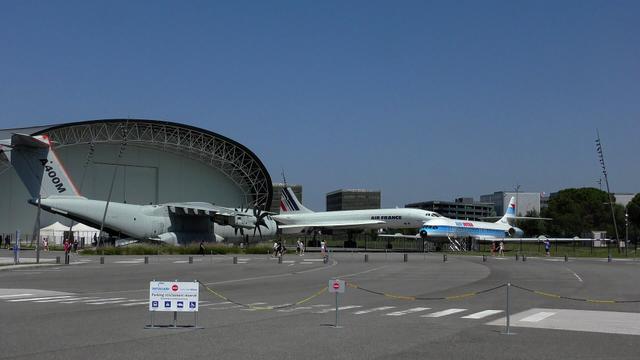
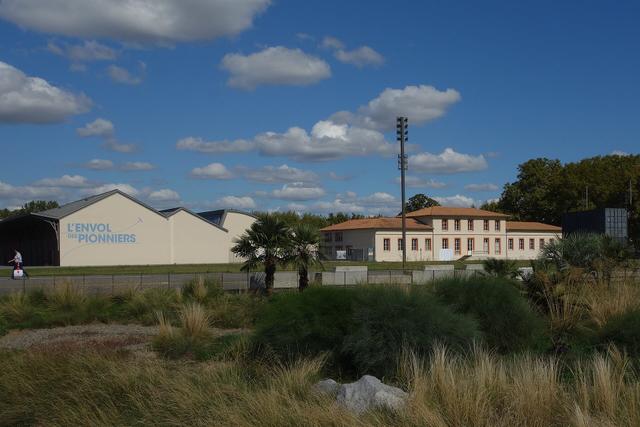
In Toulouse itself, the Halle de la Machine and its giant Minotaur are in Montaudran, on the historic Aéropostale airfield. See also: Halle de La Machine L'Envol des Pionniers, right next door, tells the story of that adventure. See also: L'Envol des Pionniers The Cité de l'espace is the city's big family day out. See also: Cité de l'Espace In Blagnac, Aeroscopia displays Concorde and the A380. See also: Aeroscopia
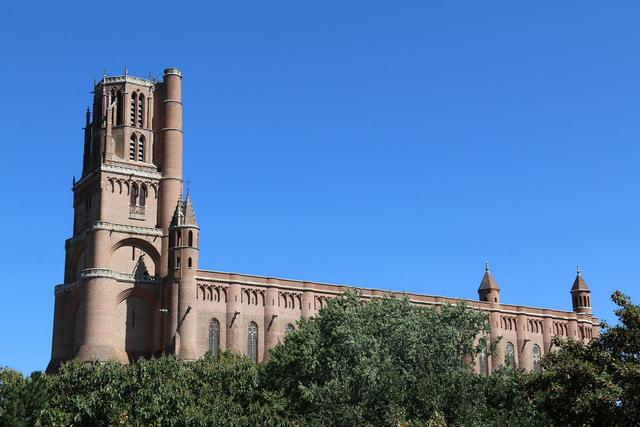
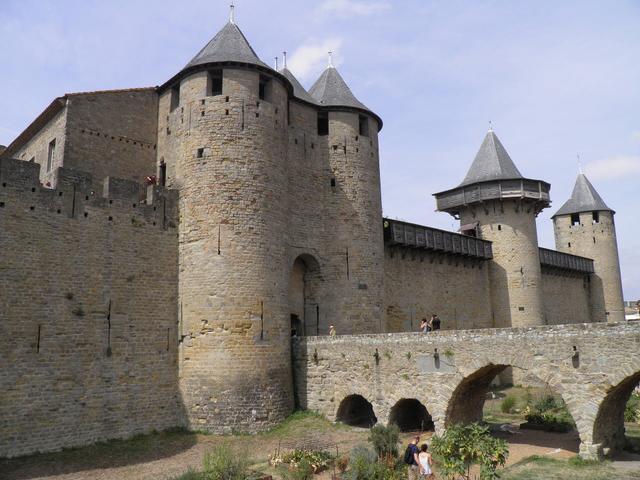
For a day trip, Albi's Sainte-Cécile Cathedral, another brick giant, is an hour away. See also: Albi Cathedral (Sainte-Cécile) Carcassonne is just over an hour by motorway. See also: Carcassonne Medieval City Lovers of Romanesque art will make the drive to Conques, another major stop on the way to Santiago. See also: Abbey Church of Sainte-Foy, Conques, Languedoc and Cathar Country
Where to eat and stay
The Saint-Sernin quarter is lively and studenty, with plenty of cafés and restaurants. On Sunday mornings, a large flea and fabric market sets up around the basilica: great for browsing, less so for getting around.
To stay, the historic centre, between the Capitole and Saint-Sernin, lets you do everything on foot. The area around Matabiau station is cheaper and well served by the metro.
FAQ
Is the Basilica of Saint-Sernin free?
Yes, entry to the basilica is free. The crypt, with the reliquaries and the tomb of Saint Saturnin, is visited separately, during its own opening hours.
What are the crypt opening hours?
10:00 – 17:30 on weekdays (10:00 – 18:30 from June to September) and 13:00 – 17:00 on Sundays.
How long does the visit take?
The tourist office suggests 45 min to 1 hr, crypt included.
Why is Saint-Sernin a UNESCO World Heritage Site?
Since 1998, it has been part of the "Routes of Santiago de Compostela in France" listing, because it was a major pilgrimage stop on the Arles route.
What is the difference between Saint-Sernin and Toulouse Cathedral?
Toulouse Cathedral is Saint-Étienne, on the east side of the centre. Saint-Sernin is a basilica: the largest church in the city, but not the bishop's seat.
Can you visit during Mass?
You can attend the service, but not walk around sightseeing. Avoid Sunday mornings for a visit.
Practical information
Official ticket-office prices 2026
Free admission
Address
Basilique Saint-Sernin, 13 place Saint-Sernin, 31000 Toulouse, France
Directions · Phone+33 5 61 21 80 45
On site and nearby
- Nearest shops and pharmacy: Toulouse, less than 1 km away Straight-line distance, based on OpenStreetMap.
- Emergencies: 112 (all emergencies, free from any phone), 15 (SAMU, medical emergency)
Around the site, on Google Maps
With children
Family days out nearby: Cité de l'Espace (5 km), L'Envol des Pionniers (5 km), Halle de La Machine (5 km)
Swimming pools and play areas nearby, on Google Maps
Facts checked on 11 November 2026. Sources: basilique-saint-sernin.fr, basilique-saint-sernin.fr, toulouse-tourisme.com, toulouse-tourisme.com, fr.wikipedia.org, basilique-saint-sernin.fr, basilique-saint-sernin.fr, tourisme-occitanie.com
Map
In the same region