The Cathar castles: the history of the crusade and which ones to visit
The so-called "Cathar castles" are mostly royal fortresses, rebuilt by the King of France after the Albigensian Crusade (1209-1229). The Cathars took refuge in them before that, until the fall of Montségur in 1244 and of Quéribus in 1255. Here is the history, what is left to see at each castle, a three-day road trip and what you need to know about the climbs and the wind.
The short version
- Who were the Cathars? Christians judged heretics by the Church, numerous in the Languedoc in the 12th and 13th centuries. They were also called "Albigensians".
- The crusade: launched by the Pope in 1209, it began with the massacre at Béziers and the capture of Carcassonne, led by Simon de Montfort.
- The two end dates: the burning at Montségur in 1244, the surrender of Quéribus in 1255.
- The catch in the name: most of the walls you will see were built or rebuilt by the King of France after the crusade. Since 26 July 2026, eight of these sites have been on the UNESCO World Heritage List as the "Royal Fortresses of Languedoc".
- If you only see three: Carcassonne, Peyrepertuse and Quéribus, the last two 25 minutes apart.
- Bring: a car, good shoes and a windproof jacket.
Key dates
| Year | Event | Where |
|---|---|---|
| 1208 | Murder of the papal legate Pierre de Castelnau | near Saint-Gilles |
| 1209 | Massacre at Béziers (22 July), surrender of Carcassonne (15 August) | Béziers, Carcassonne |
| 1210 | Sieges of Minerve and Termes | Minervois, Corbières |
| 1211 | Surrender of Lastours | Cabardès |
| 1213 | Battle of Muret, death of the King of Aragon | near Toulouse |
| 1218 | Death of Simon de Montfort | Toulouse |
| 1229 | Treaty of Paris, end of the crusade | Paris |
| 1244 | Fall of Montségur and the burning (16 March) | Ariège |
| 1255 | Surrender of Quéribus | Corbières |
| 1258 | Treaty of Corbeil, border with Aragon | Corbeil |
Who were the Cathars?
The Cathars called themselves "good men" or "good Christians". They believed that the material world was the work of evil and rejected most of the sacraments of the Catholic Church. Their only rite was the consolament, received once in a lifetime. Those who had received it, the "Perfects", lived in poverty and did not eat meat.
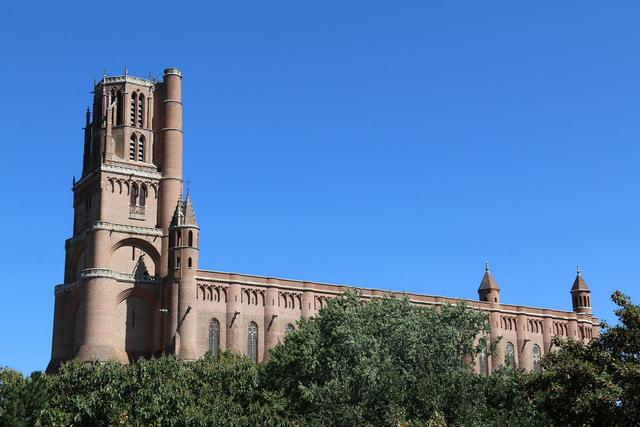
In the Languedoc, they were protected by part of the nobility, including the Trencavel family, Viscounts of Carcassonne and Béziers, and tolerated by the Count of Toulouse. The name "Albigensians" comes from Albi, even though the town was not their capital. Sainte-Cécile Cathedral, built from 1282 as a brick fortress, is the Church's answer to that period. See also: Albi Cathedral (Sainte-Cécile)
The Albigensian Crusade, from Béziers to Montségur
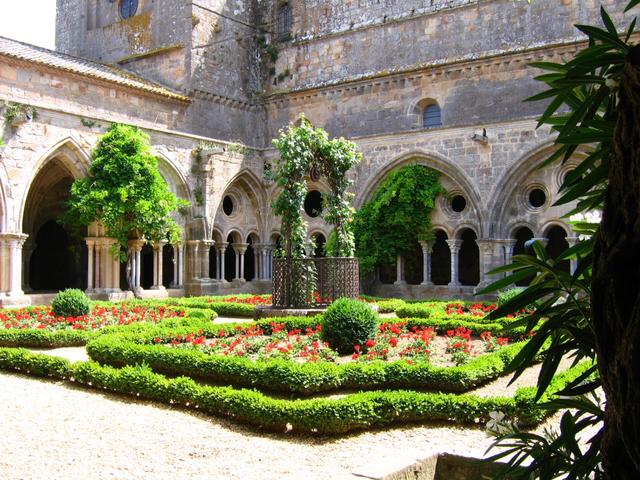
1208, the spark. Pierre de Castelnau, papal legate and a former monk of Fontfroide Abbey, near Narbonne, was murdered in January 1208. Pope Innocent III blamed the Count of Toulouse and called for a crusade. See also: Fontfroide Abbey
1209, Béziers. On 22 July, the crusader army took the town and massacred its inhabitants, even those who had taken refuge in the churches. The line "Kill them all, God will know his own" is attributed to the legate Arnaud Amaury, but it only appears in an account written years later by a German monk, Caesarius of Heisterbach. Historians doubt it was ever said.
1209, Carcassonne. Three weeks later, the crusaders besieged Carcassonne, cut off from water in high summer. The young Viscount Raymond-Roger Trencavel gave himself up on 15 August and died in prison a few months later, aged 24. His lands were handed to a lord from the Paris region, Simon de Montfort.
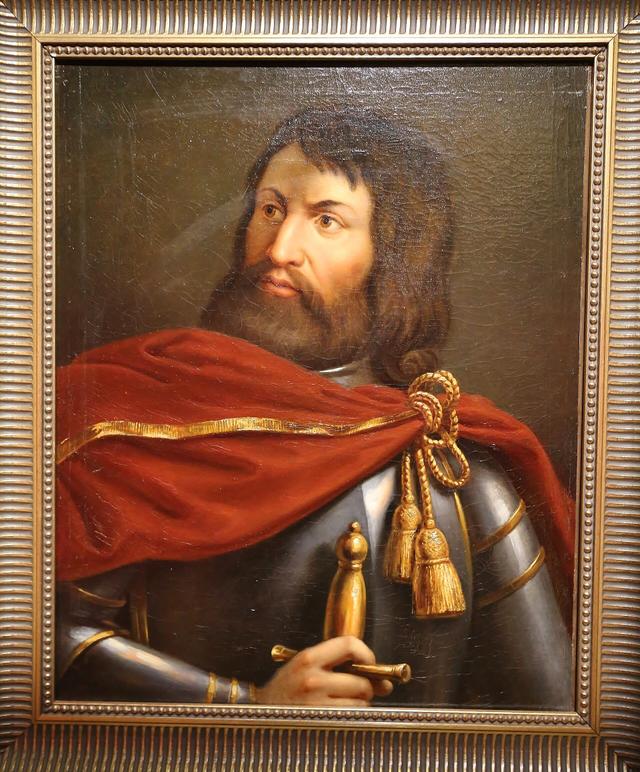
1210-1218, Simon de Montfort. He took Minerve, where 140 Perfects were burned, then Termes after a four-month siege, then Lastours in 1211. In 1213, at Muret, he defeated the King of Aragon, who had come to help the southern lords. He died on 25 June 1218 at the siege of Toulouse, his head smashed by a stone. According to the Song of the Albigensian Crusade, the machine that hurled it was worked by women of the town. See also: Simon de Montfort
1226-1229, the king steps in. Simon's son could not hold the country. King Louis VIII led the crusade himself in 1226, and the Treaty of Paris, in 1229, placed a large part of the Languedoc under the authority of the crown.
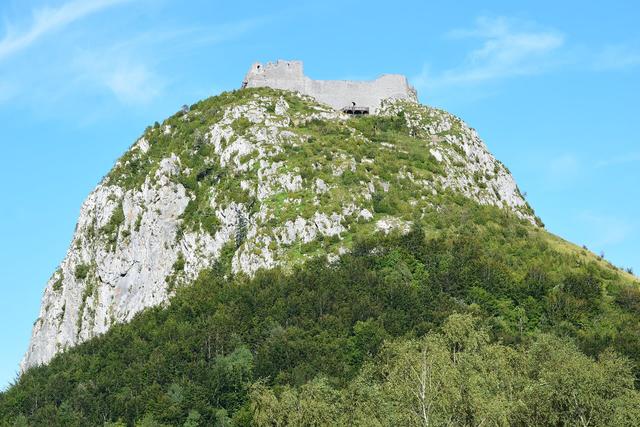
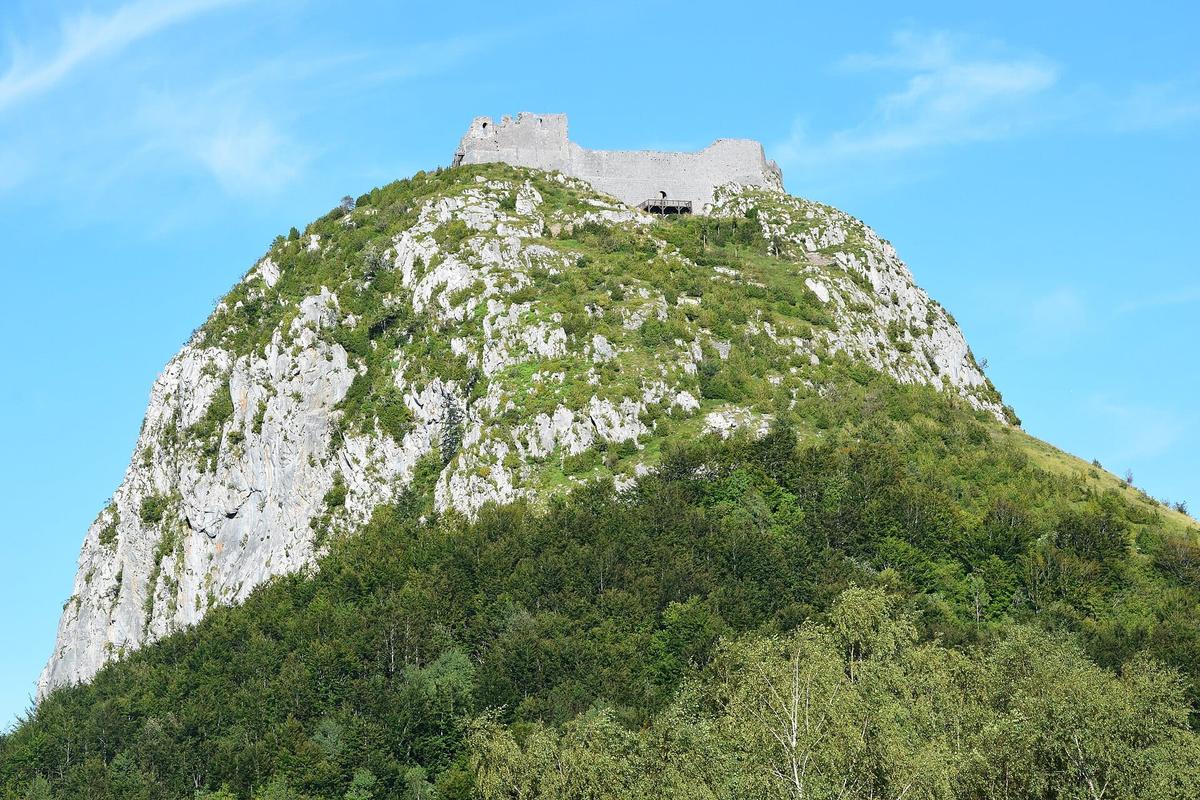
1244, Montségur. The last Perfects gathered on this peak in the Ariège. After a ten-month siege, the stronghold fell in March 1244. On 16 March, around 220 people who refused to recant were burned at the foot of the mountain. According to statements made before the Inquisition, a few Perfects had secretly left the castle shortly before, taking money with them: this is the origin of the legend of the "Cathar treasure".
1255, Quéribus. Its lord, Chabert de Barbaira, who had sheltered fleeing Cathars, handed the stronghold to the troops of Saint Louis after negotiating his freedom. It marked the end of armed resistance. See also: Saint Louis (Louis IX)
Why they are called "Cathar castles"
The Cathars never built a castle. They found refuge with lords who protected them. After the crusade, the King of France had these strongholds rebuilt or strengthened to watch over a population he did not trust and to guard the border with the nearby Kingdom of Aragon.
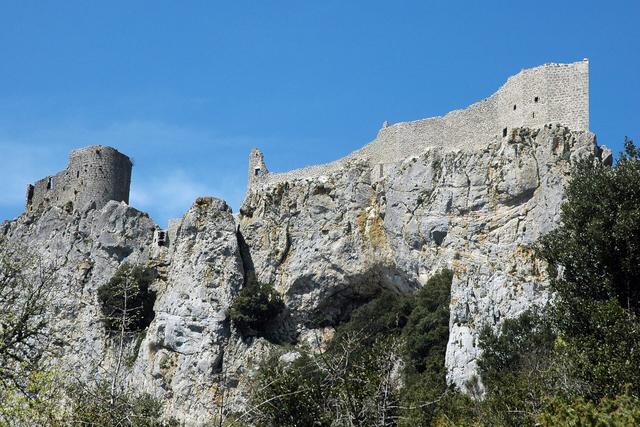
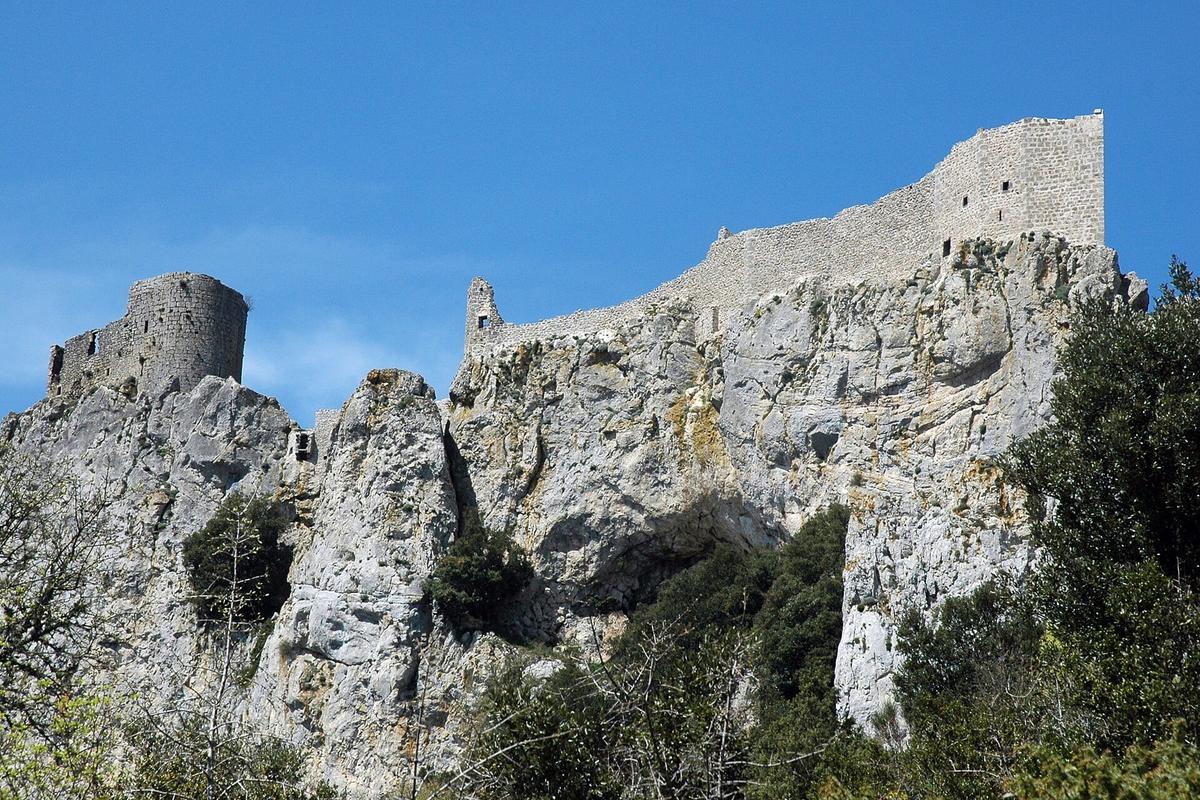
At Peyrepertuse, Saint Louis had the San Jordi castle built from 1242. At Montségur, the ruins you will see are those of the castle rebuilt by the Lévis family after 1245, not those of the Cathars' fortified village. Historians call Aguilar, Quéribus, Peyrepertuse, Puilaurens and Termes the "five sons of Carcassonne": they guarded the border set by the Treaty of Corbeil in 1258.
The Treaty of the Pyrenees, in 1659, moved the border further south. The fortresses lost their role and fell into ruin. The term "Cathar castle" only caught on much later, with tourism. On 26 July 2026, UNESCO added eight sites to the World Heritage List as the "Royal Fortresses of Languedoc": Carcassonne, Lastours, Termes, Aguilar, Peyrepertuse, Quéribus, Puilaurens and Montségur.
Which Cathar castles should you visit?
| Castle | Full price | Walk up | Good to know |
|---|---|---|---|
| Carcassonne (castle and ramparts) | €13 to €19 | none | free for under-26s (EU) |
| Lastours | €9 | 2 to 2.5-hour circuit | four castles on one ridge |
| Termes | €6 | 15 min | closed in winter |
| Peyrepertuse | €9 | 20 min, then the Saint-Louis staircase | the largest |
| Quéribus | €9 | 10 min | the shortest climb |
| Puilaurens | €7 | 15 to 20 min | closed in winter |
| Montségur | €7.50 | 30 min, steep | the site of the burning |
Full adult prices taken from each castle's official website, checked between 29 October and 10 November 2026. Children pay less everywhere, and under-6s get in free at the Corbières castles and Montségur. At Carcassonne, the under-26 free entry applies only to EU residents: visitors from outside the EU pay the full price.
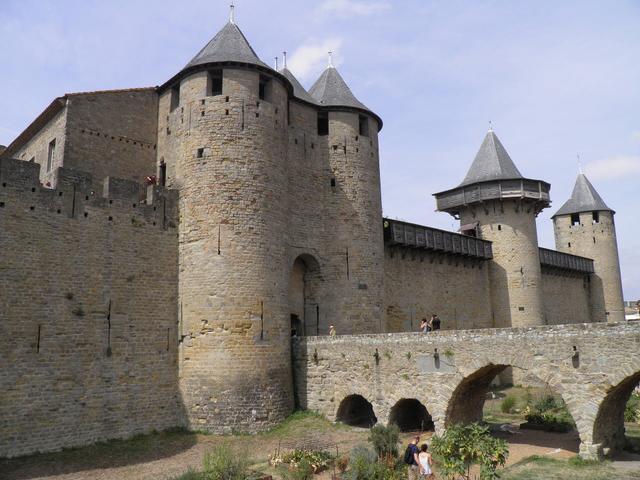
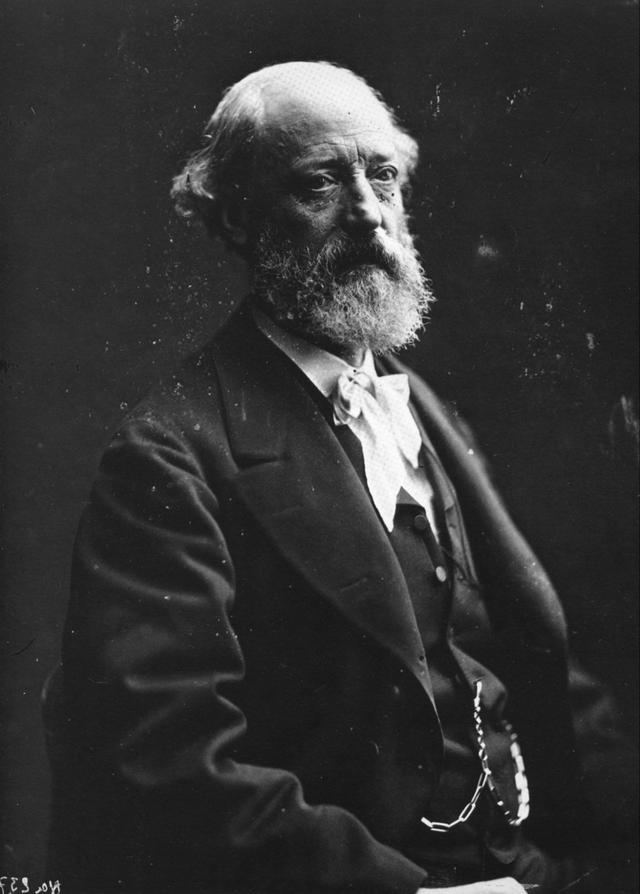
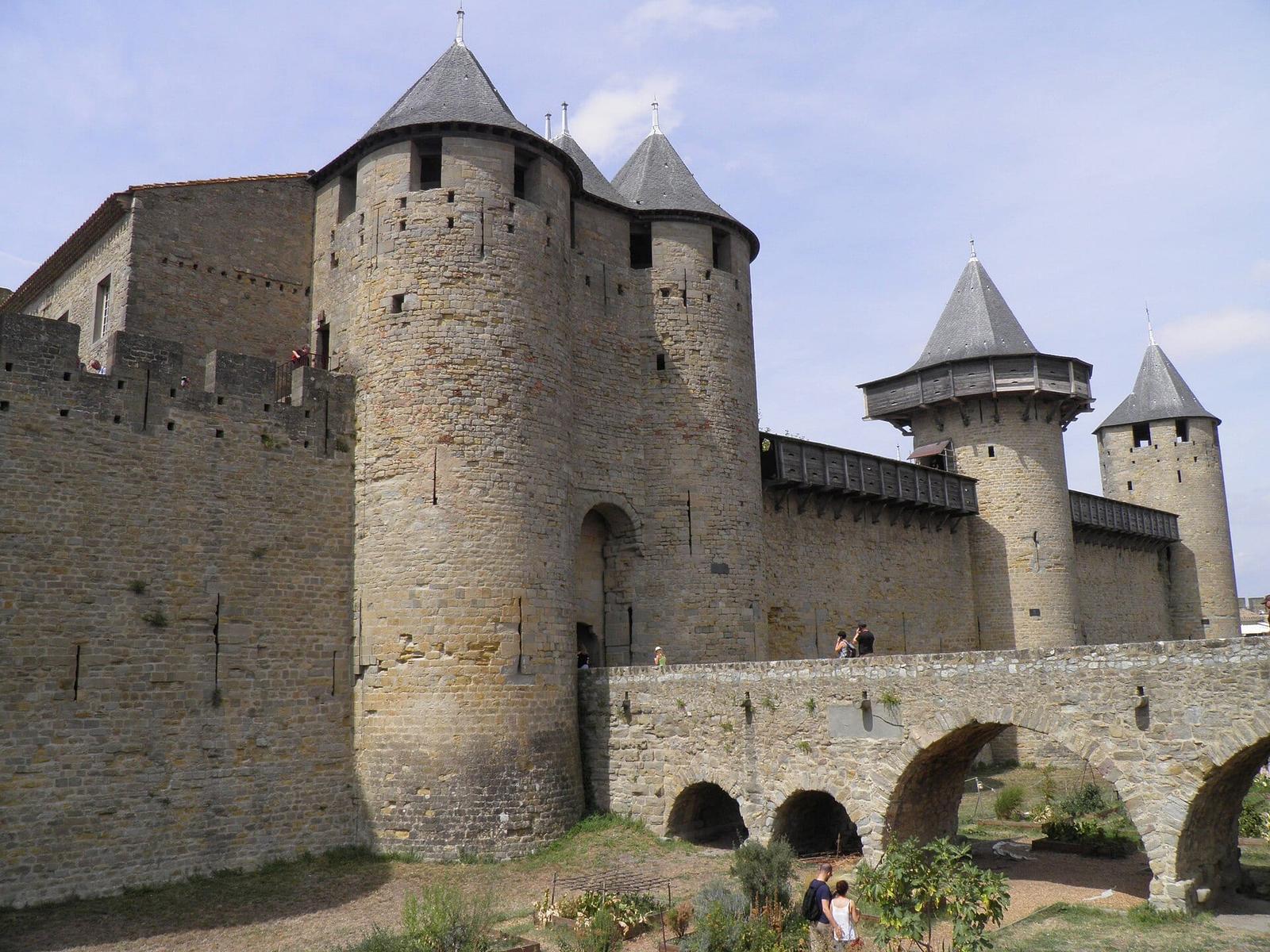
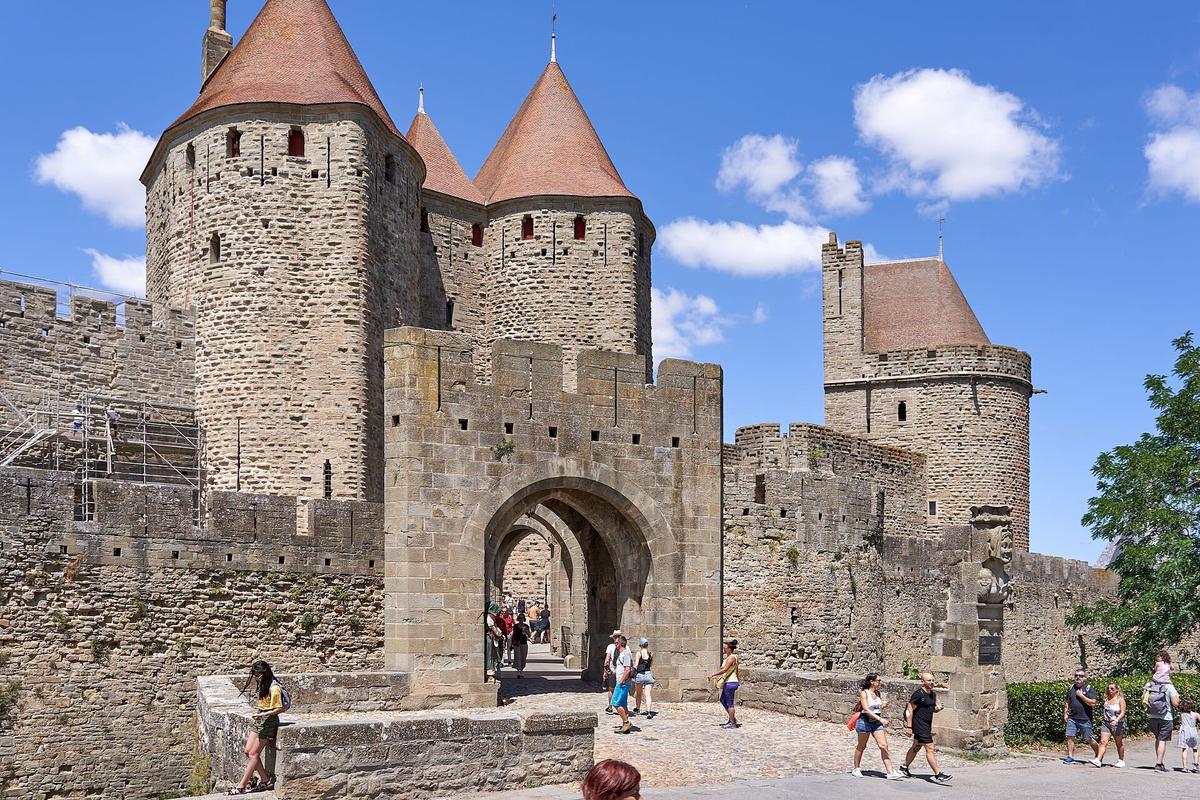
Carcassonne gives you the background. The Château Comtal belonged to the Trencavels and was taken in 1209; the walls owe a lot to Viollet-le-Duc's restoration, begun in 1853. Allow 2 hours. The combined ticket with Lastours (€24 in season) is valid for 7 days. See also: Carcassonne Medieval City, Eugène Viollet-le-Duc
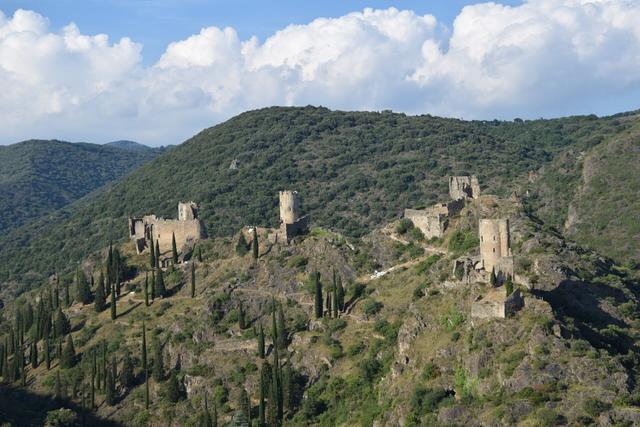
Lastours, 20 minutes from Carcassonne: four ruined towers on a ridge that Simon de Montfort could not take in 1209. They surrendered in 1211. See also: Lastours Castles
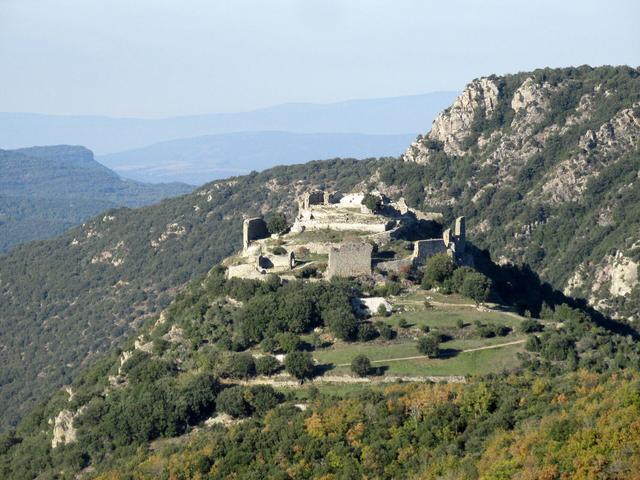
Termes is the least known, deep in the Corbières. The siege of 1210 lasted about four months; only low walls remain, but the site is peaceful and the climb short. See also: Termes Castle
Peyrepertuse is the most spectacular: a stone town along the whole ridge, at about 800 metres. Allow 90 minutes there. See also: Peyrepertuse Castle
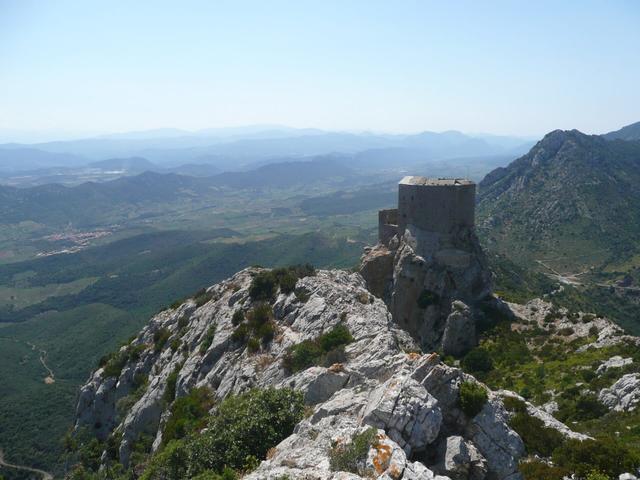
Quéribus sits on a rocky peak above Cucugnan. Do not miss the pillar hall, with its rib vaulting, in the keep. See also: Quéribus Castle
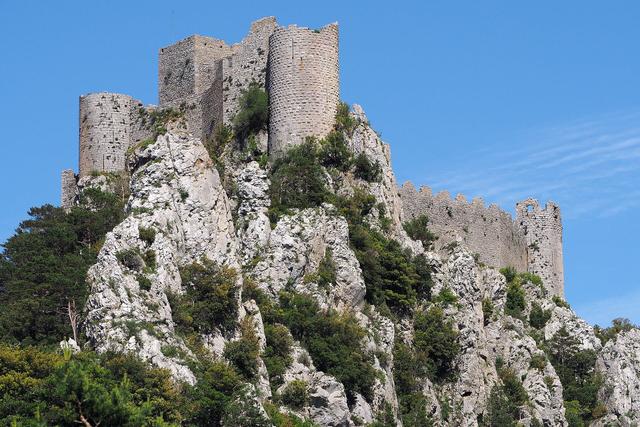
Puilaurens, above the Aude valley, has kept an almost complete curtain wall. See also: Puilaurens Castle
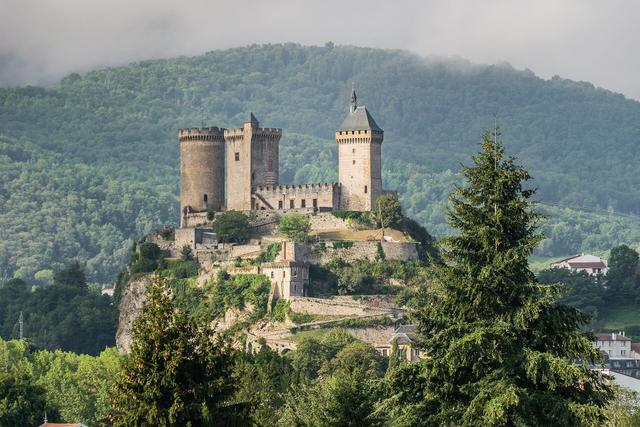
Montségur stands apart, 90 minutes from Carcassonne, in the Ariège, at 1207 metres. The small village museum (€3.50) shows objects found during the excavations. On the way, Foix, whose castle Simon de Montfort never took, is worth a stop. See also: Montségur Castle, Foix Castle
The climb, the wind and your shoes
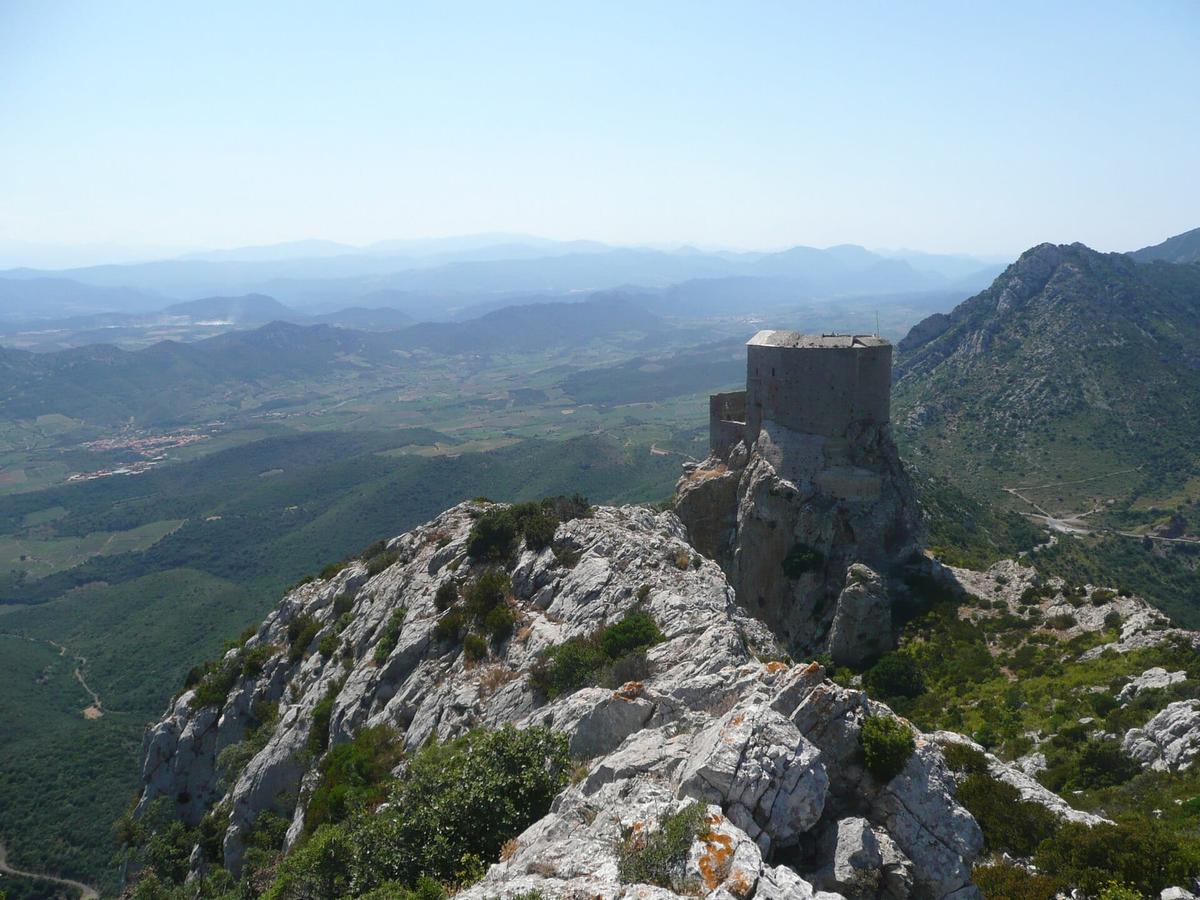
The Corbières castles stand on exposed ridges, with no shade. Three rules:
- Closed shoes with grippy soles. The paths are stony, and the steps cut into the rock are slippery, especially on the way down. At Peyrepertuse, the official website describes the access as a hiking trail.
- The wind. The tramontane often blows hard. At Quéribus, access is not advised in strong winds and is forbidden during storms. On a day with wind forecast, call before you set off: Quéribus on +33 4 68 45 03 69, Peyrepertuse on +33 4 30 37 00 77.
- Water and a warm layer. There is no water point at Quéribus. In summer, go up early in the morning; the rest of the year, it is cooler at the top than in the car park.
Pushchairs cannot get up: Peyrepertuse lends baby carriers at the ticket office. None of these paths is wheelchair accessible. Dogs on a lead are allowed at Quéribus and Peyrepertuse.
In winter: Termes and Puilaurens close in mid-November and reopen in spring. Peyrepertuse, Quéribus, Montségur and Carcassonne stay open, with short hours.
A 3-day Cathar castles road trip
Day 1: Carcassonne and Lastours. In the morning, the Château Comtal and the ramparts, at opening time. In the afternoon, Lastours, 25 minutes away, with the combined ticket. Night in Carcassonne.
Day 2: the Corbières. Termes in the morning, 60 minutes from Carcassonne. Then Peyrepertuse, 55 minutes away. In the late afternoon, Quéribus, 25 minutes away, as the light falls on the Roussillon plain. Night in Cucugnan, Duilhac or in the valley.
Day 3: Puilaurens and Montségur. Puilaurens is 50 minutes from Quéribus. Carry on to Montségur through the Pays de Sault, on slow mountain roads: allow a good part of the day. Head back via Foix or Carcassonne.
Short on time? In one day from Carcassonne: Peyrepertuse and Quéribus, about 90 minutes' drive to the first.
With children: Quéribus and Puilaurens, both short climbs; avoid the Saint-Louis staircase at Peyrepertuse with young children.
How to get there
None of the Corbières castles has regular public transport. A car is almost essential. The roads are narrow and winding: the road to Peyrepertuse is not recommended for vehicles over 7 metres, which must stop at the car park halfway up.
Carcassonne has an SNCF railway station: it is the easiest place to start and rent a car.
Partner links: if you book through these links, we earn a commission at no extra cost to you. Partner links · Learn more
Without a car, the simplest option is a day tour from Carcassonne, which often combines Peyrepertuse and Quéribus.
Where to stay near the Cathar castles
Carcassonne is the most practical base for Lastours and Termes, and the only one with a wide choice of hotels. For the Corbières, staying locally, in Cucugnan or Duilhac-sous-Peyrepertuse, saves you an hour and a half's drive in the morning. For Montségur, Foix or Lavelanet are closer.
Places to stay near Carcassonne
See also: Languedoc and Cathar Country, The Plantagenet tombs at Fontevraud
FAQ
Which is the most beautiful Cathar castle?
Peyrepertuse, for its size and its position on the ridge. Quéribus is the easiest to reach of the big Corbières castles.
Which was the last Cathar castle?
Quéribus, handed over to the King of France in 1255, eleven years after the fall of Montségur.
What happened at Montségur?
After a ten-month siege, the fortress fell in March 1244. On 16 March, around 220 Cathars who refused to recant were burned.
Who was Simon de Montfort?
A lord from the Paris region, military leader of the Albigensian Crusade from 1209 until his death in 1218 at the siege of Toulouse.
Were the Cathar castles built by the Cathars?
No. The Cathars took refuge with lords who protected them. The walls you see today are mostly those of royal fortresses built after the crusade.
How long is the walk up to Quéribus?
About 10 minutes from the car park, on an easy path, then stairs inside the castle.
Tickets to book online
Partner links: if you book through these links, we earn a commission at no extra cost to you. Partner links · Learn more
Monuments in this article