Who is buried at Fontevraud? The Plantagenet effigies
Four Plantagenet rulers have their effigies in the abbey church at Fontevraud: Henry II, Eleanor of Aquitaine, their son Richard the Lionheart and Isabella of Angoulême, wife of King John. The statues are there, but the bodies have vanished, probably during the French Revolution. Here is who lies where, why the English asked for these tombs and what you will see on the spot.
The short version
- Who is buried at Fontevraud? Henry II of England, Eleanor of Aquitaine, Richard the Lionheart and Isabella of Angoulême. Their four painted 13th-century effigies are in the abbey church.
- Are the bodies still there? No. The tombs were ransacked during the Revolution and nobody knows what happened to the bones. The effigies are now cenotaphs.
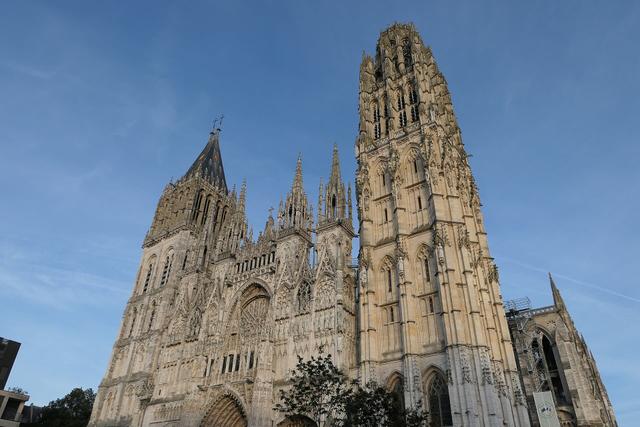
- Elsewhere: Richard's heart is in Rouen Cathedral, and King John lies in Worcester Cathedral, in England.
- Price: €13 for the abbey, free for under-18s and students under 25.
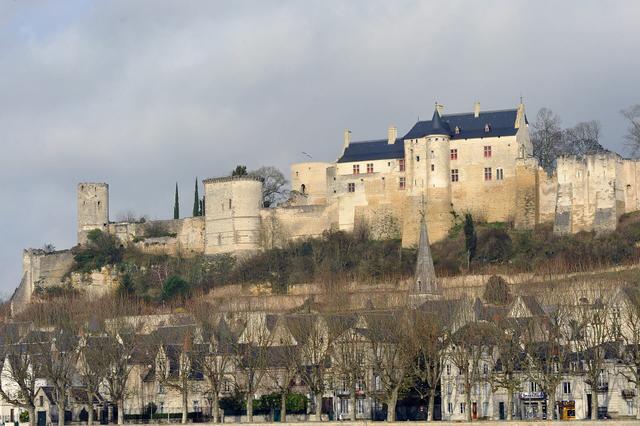
- Combine with: the fortress of Chinon, where Henry II died, 20 minutes away by car.
Key dates
| Year | Event | Where |
|---|---|---|
| 1101 | Robert of Arbrissel founds the abbey | Fontevraud |
| 1152 | Eleanor of Aquitaine marries Henry Plantagenet | Poitiers |
| 1154 | Henry becomes King of England | London |
| 1189 | Henry II dies at Chinon and is buried at Fontevraud | Chinon, Fontevraud |
| 1199 | Richard dies at Châlus and is buried on 11 April at his father's feet | Châlus, Fontevraud |
| 1204 | Eleanor dies and is buried at Fontevraud | Fontevraud |
| 1216 | King John dies and is buried at Worcester | England |
| 1246 | Isabella of Angoulême dies at Fontevraud | Fontevraud |
| 1792 | The abbey is dissolved and the tombs ransacked | Fontevraud |
| 1814 | The prison officially opens | Fontevraud |
| 1867 | Napoleon III offers the effigies to Queen Victoria; they stay in France | Fontevraud |
| 1963 | The prison closes | Fontevraud |
Who is buried at Fontevraud?
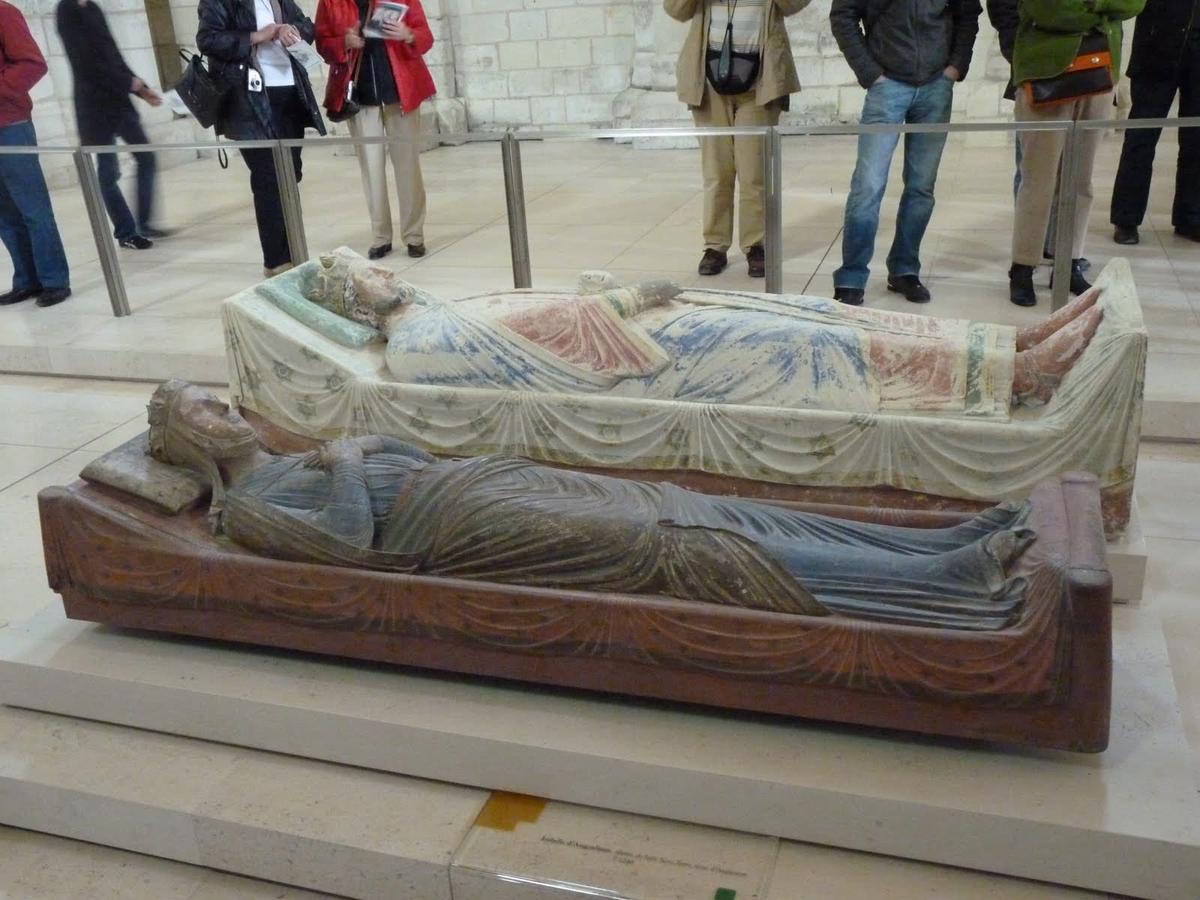
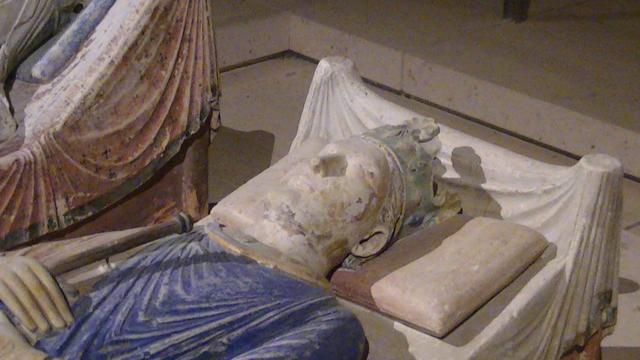
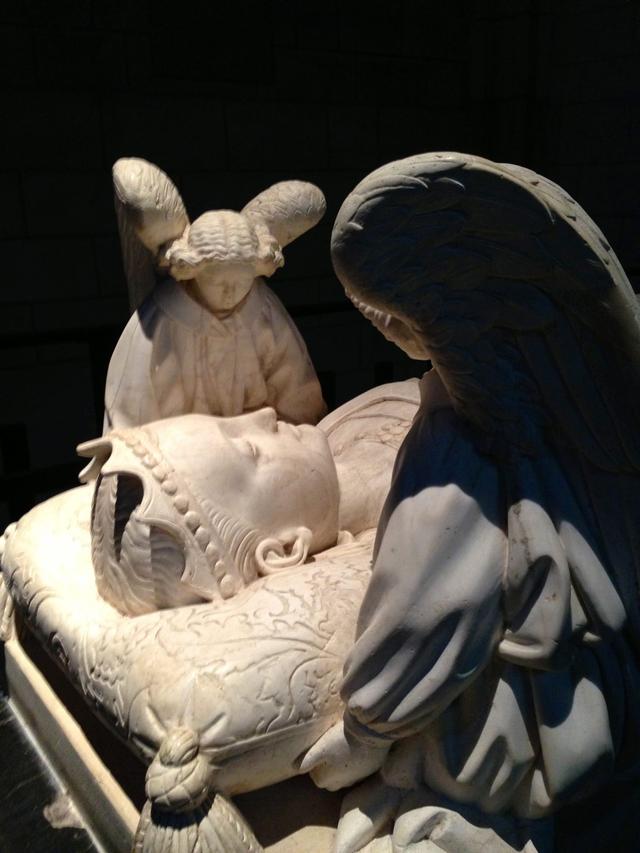
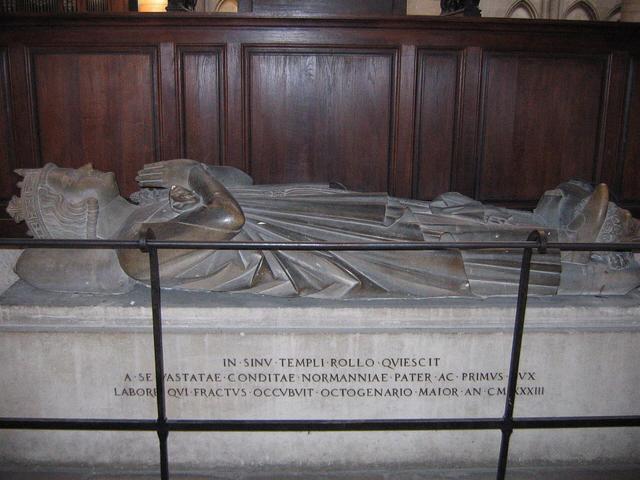
In the nave of the abbey church, just before the crossing, four effigies lie in two pairs. In front, Isabella of Angoulême and Richard the Lionheart. Behind them, Eleanor of Aquitaine and Henry II. They are thought to be roughly in their original place, in the last bay of the nave.
Three are carved in tuffeau, the local white limestone. Isabella's is made of wood. The colours you see largely date from a restoration carried out at Versailles in 1846, which was heavily criticised at the time.
Other members of the family were buried here, but their tombs have disappeared: Joan of England, Richard's sister, who died in 1199; her son Raymond VII, Count of Toulouse, buried near his mother in 1250; and the heart of Henry III of England, Isabella's son. Raymond VII was also a key figure in the Albigensian Crusade, which we cover in Cathar castles.
Henry II, the king who died at Chinon
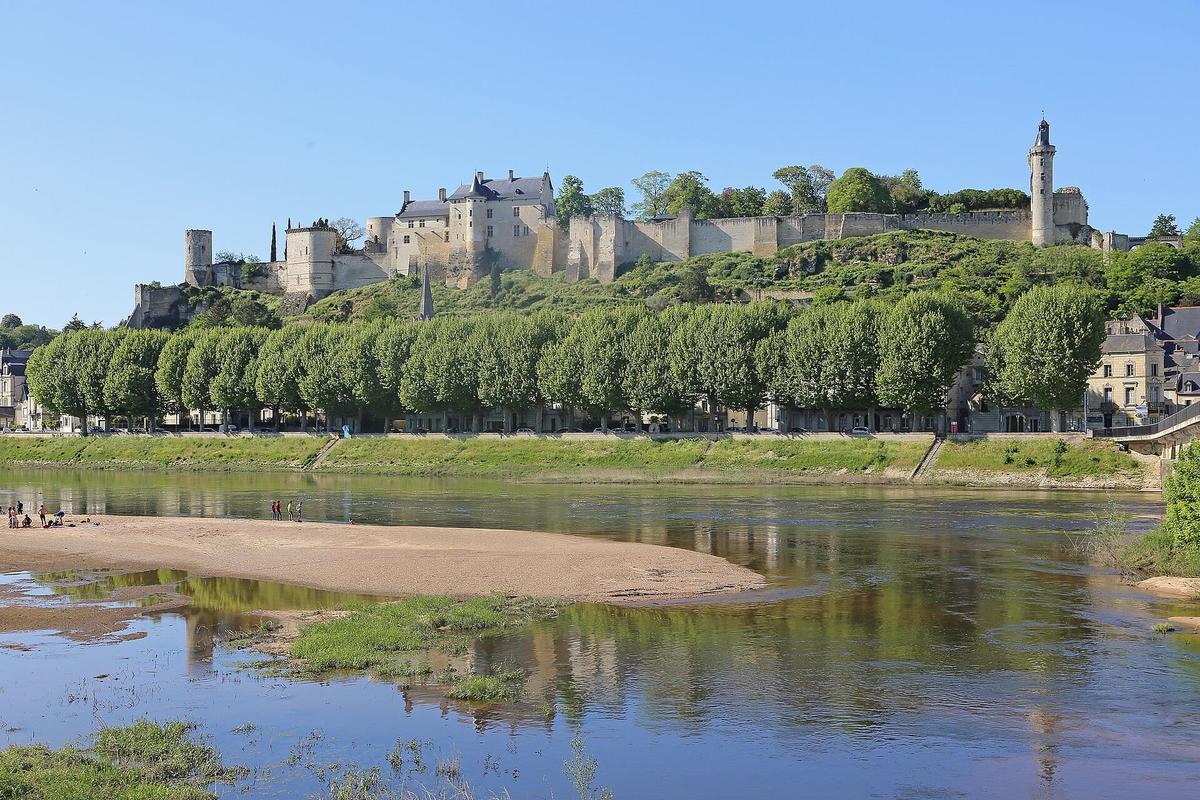
Henry Plantagenet was Count of Anjou, Duke of Normandy, then King of England from 1154. With Eleanor's lands, he held the west of France, from Normandy to the Pyrenees: more land in France than the King of France himself.
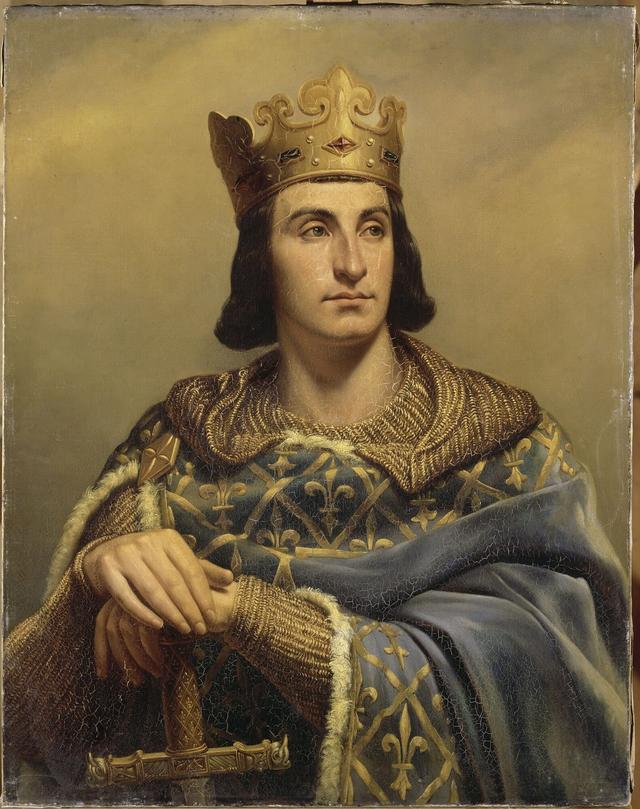
He died at Chinon on 6 July 1189, ill and at war with his son Richard, who had allied himself with King Philip Augustus. He had made no plans for his funeral. He may have wanted to lie at Grandmont, in the Limousin, but carrying a body so far in high summer was difficult, so nearby Fontevraud was chosen. It was this chance that turned the abbey into the family's burial place.
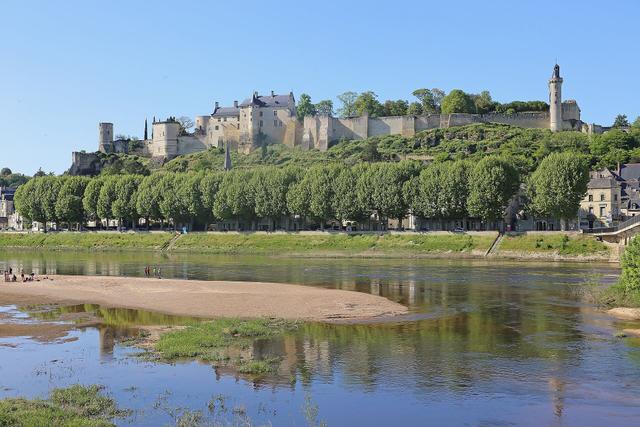
What to see today: his crowned effigy, sceptre in hand, and the fortress of Chinon, on its spur above the River Vienne (€12.50 entry). Philip Augustus took it from the Plantagenets in 1205. See also: Henry II of England, Royal Fortress of Chinon, Things to do in Chinon
The tomb of Eleanor of Aquitaine
Eleanor was Queen of France through her first marriage, to Louis VII, then Queen of England through her second, to Henry, in 1152. After her sons rebelled against their father in 1173, Henry II kept her a prisoner for many years. She only regained her freedom when the king died.
Around 1200, aged over seventy-five, she retired to Fontevraud. She died on 1 April 1204 and was buried beside her husband, Richard and her daughter Joan.
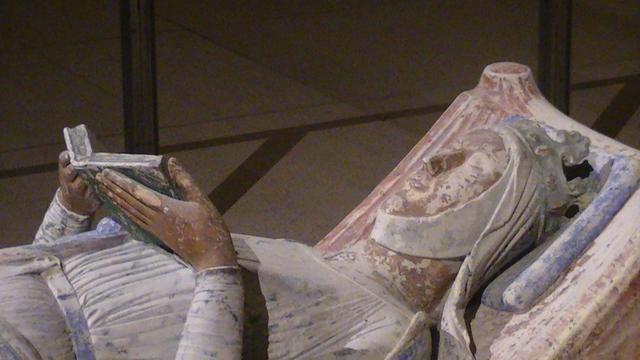
The detail to look for: her effigy holds an open book. It is often described as one of the oldest carved images of a woman reading. See also: Eleanor of Aquitaine
Richard the Lionheart: his body at Fontevraud, his heart in Rouen
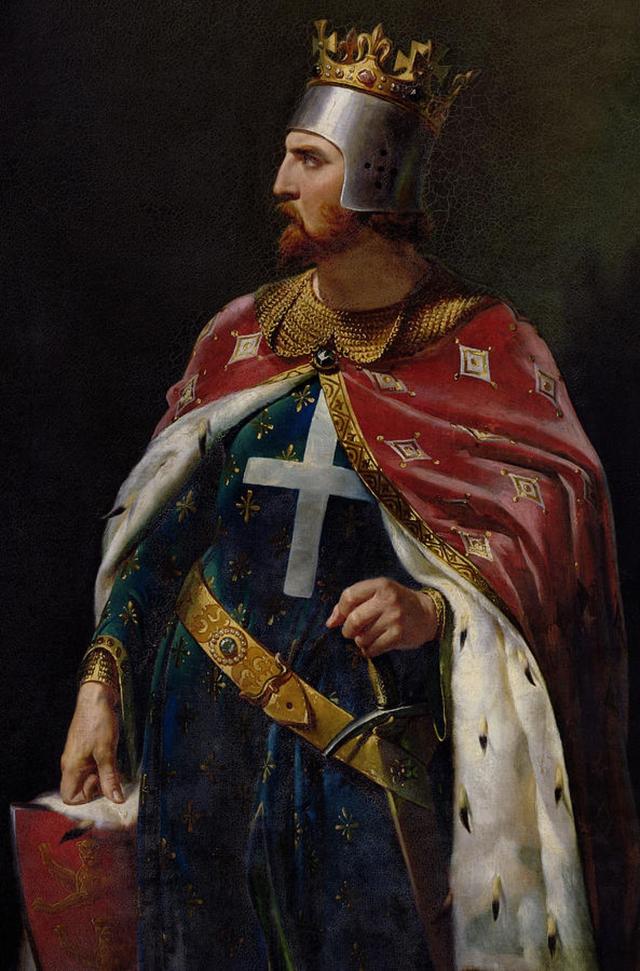
On 26 March 1199, Richard was besieging the small castle of Châlus-Chabrol, in the Limousin. A crossbow bolt struck him in the shoulder. The wound became infected and he died twelve days later, on 6 April. He was 41.
His body was divided, as was the custom for kings:
- his body was buried at Fontevraud on 11 April, at the feet of the father he had rebelled against;
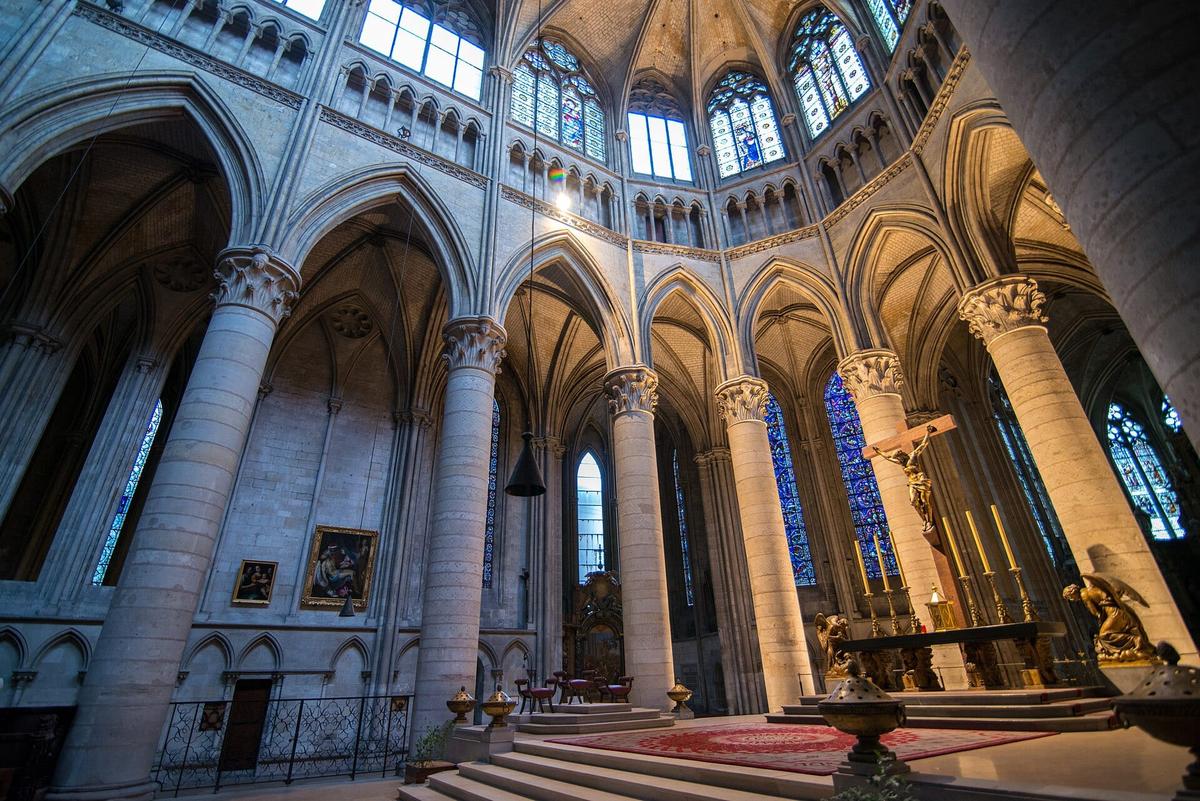
- his heart went to Rouen Cathedral, capital of his Duchy of Normandy;
- his entrails stayed at Châlus, in the castle chapel.
A true story: the lead casket that held the heart was found in 1838 in Rouen Cathedral by the historian Achille Deville. In 2013, the team of forensic scientist Philippe Charlier published its analysis: the heart had been embalmed with myrtle, mint, daisy, frankincense and mercury.
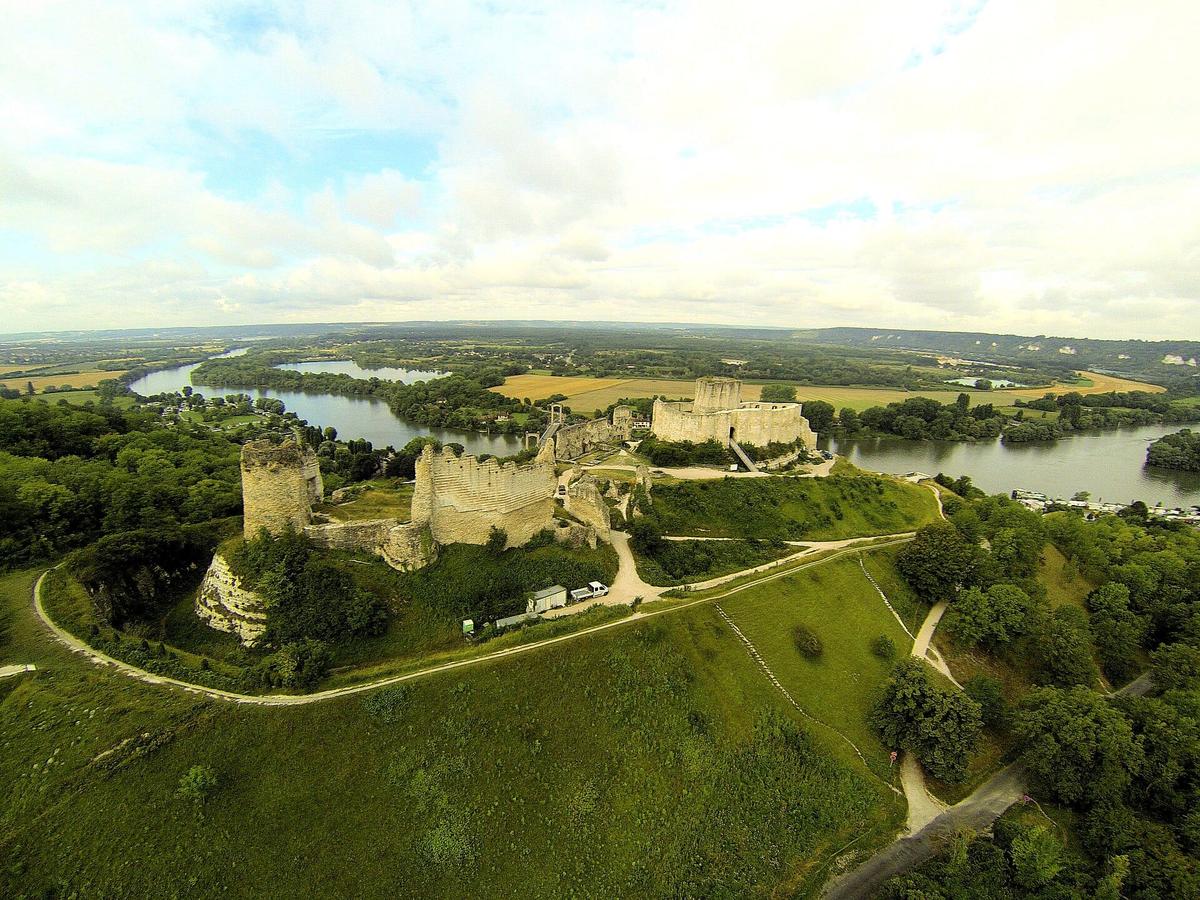
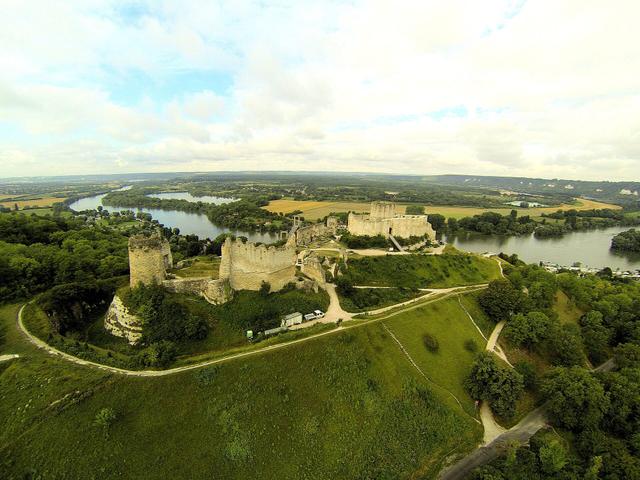
What to see today: Richard's effigy at Fontevraud, and his heart tomb around the choir of Rouen Cathedral, where entry is free. In Normandy, Richard also had Château Gaillard built above the Seine, in just two years (1196-1198). Philip Augustus took it in 1204, five years after the king's death. See also: Richard the Lionheart, Rouen Cathedral, Château Gaillard
Isabella of Angoulême, the queen who asked for the cemetery
Isabella married King John in 1200, while still a child. Before that marriage, she had been promised to Hugh IX of Lusignan. Widowed in 1216, in 1220 she married his son, Hugh X of Lusignan. She ended her life at Fontevraud and died there in 1246.
As an act of penance, she had asked to be buried in the nuns' cemetery, not in the church. Her son Henry III of England came to Fontevraud in 1254 and had her remains moved into the choir, under a proper monument.
And King John?
The last son of Henry II and Eleanor is not at Fontevraud. King John died in England in October 1216, in the middle of a war against his barons. He was buried in Worcester Cathedral, as he had asked. He had lost almost all the family's French lands: Normandy, Anjou, Touraine. Fontevraud was no longer his territory.
His elder brother, Henry the Young King, who died in 1183, also lies in Rouen Cathedral.
Where are the bodies today?
This is the question many visitors ask in front of the effigies. The honest answer: nobody knows.
The tombs have had an eventful history:
- 1504: the effigies are moved to make room for the nuns in the nave.
- 1638: Abbess Jeanne-Baptiste de Bourbon gathers them in a large mausoleum.
- 1792-1793: the abbey is dissolved and the mausoleum destroyed. In the abbesses' vault, the sarcophagi are smashed and the bones thrown out. The Plantagenet remains are thought to have been scattered or lost at that point.
- 1804-1814: Napoleon turns the abbey into a prison. The effigies are dumped in a cellar, where the English artist Charles Stothard finds them in 1816.
The statues were then moved several times before returning to the abbey church in the 20th century. What you see today are empty tombs.
The British request to bring them home
The English long wanted to recover these four effigies, since two kings of England are among them. According to the archaeologist Ernest Beulé, quoted in The Times in 1867, the Restoration monarchy and then Louis-Philippe had already turned down English requests.
In 1867, Napoleon III went further: he offered the statues to Queen Victoria by letter, and she accepted. The British minister announced it in the House of Commons on 7 March 1867. But the elected representatives of Anjou protested, Beulé argued that the effigies belonged to the whole of France, and the transfer never happened.
In 1907, a British MP again asked the government to claim the bones and the effigies. The Foreign Secretary, Edward Grey, replied that it was not desirable: France could not agree to it. The effigies have been protected as historic monuments since 1909.
What you see today in the abbey church
The abbey church has no furniture: a long Romanesque nave roofed with domes, very light, and at the end the four effigies, which you can see up close.
Our tips:
- Come at opening time, at 10 am. In the middle of the day, every group stops at the same spot, in front of the effigies.
- Look at the faces and hands: Henry II's crown and sceptre, Eleanor's book, Richard's crown.
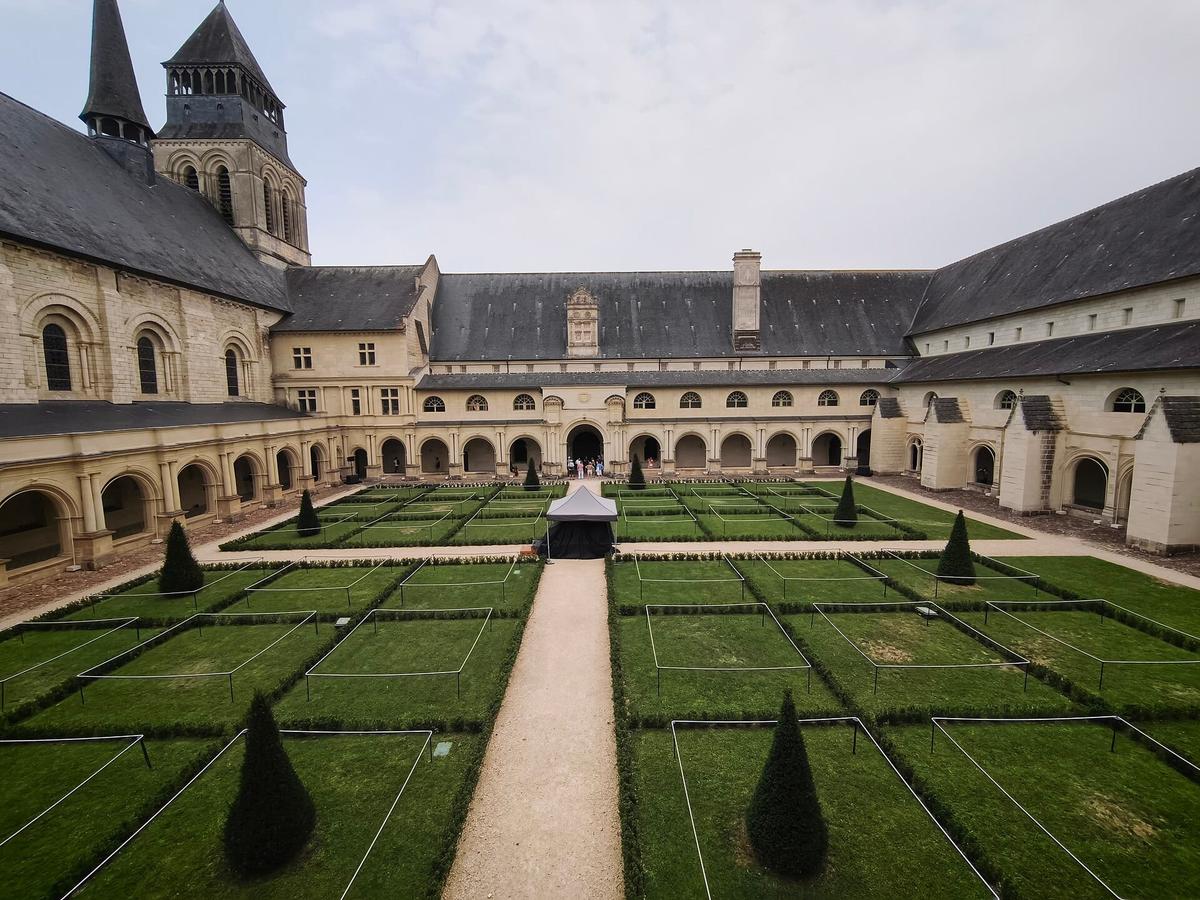
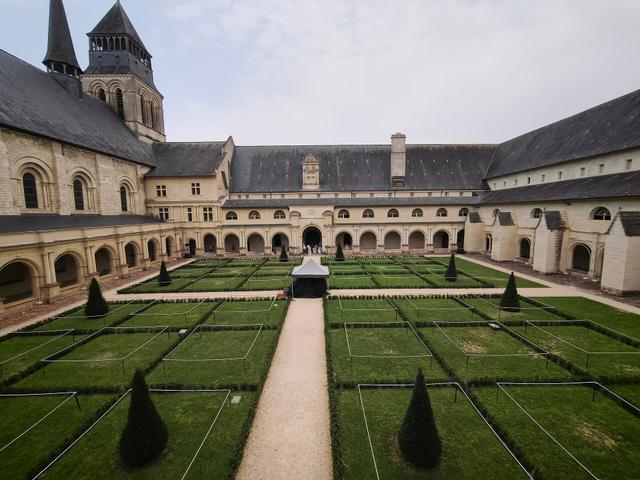
- Do not stop at the church. The great cloister, the chapter house and the Romanesque kitchen, with its roof bristling with chimneys, are all on the same ticket. So are the traces of the prison.
- Allow about 3 hours for the abbey, and an extra hour with the Museum of Modern Art.
Prices and visiting
| Ticket | Price |
|---|---|
| Abbey | €13 |
| Reduced price | €7.50 |
| Abbey and Museum of Modern Art | €17 |
| Guided tour (extra) | €5 |
| Under 18, students under 25 | free |
Prices taken from the abbey's official website, checked on 29 October 2026.
In November and until 18 December 2026, the abbey opens from 10 am to 6 pm and is closed on Tuesdays. It is closed on 25 December and 1 January; last entry is one hour before closing.
Fontevraud is 15 minutes by car from Saumur, the nearest station. The guided tour is worth the extra if you are coming mainly for the Plantagenets: the guide tells the story of the tombs that the panels only summarise. See also: Fontevraud Abbey, Things to do around Fontevraud and Montsoreau
Partner links: if you book through these links, we earn a commission at no extra cost to you. Partner links · Learn more
Guided tours and day trips on GetYourGuide
A Plantagenet trail in the Loire Valley
In one day, you can follow the family without long drives:
- Morning, Fontevraud: the effigies and the abbey.
- Afternoon, Chinon: the fortress where Henry II died, 20 minutes away.
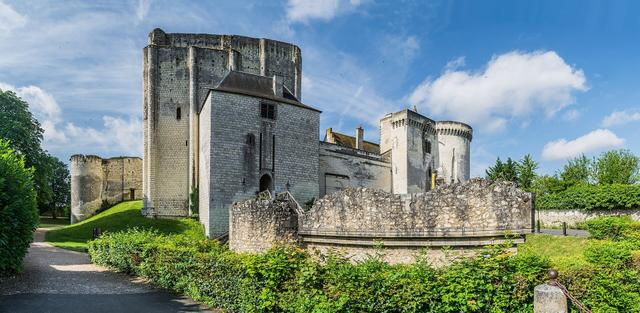
- The next day, Loches: the keep begun around 1013 by Fulk Nerra, an ancestor of the Plantagenets. Richard took it back in 1194, on his return from captivity. Entry €12.50.
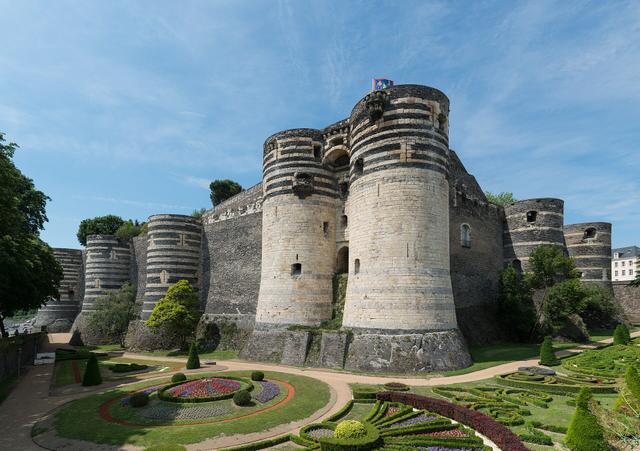
Angers, the cradle of the Counts of Anjou, completes the picture, even though the castle you will see was built under Saint Louis, from 1230 to 1242, after King John lost Anjou. If you head north to Normandy, add Rouen and Château Gaillard. See also: Royal City of Loches, Château d'Angers, Fulk Nerra, Loire Valley castles
Where to stay near Fontevraud
Saumur and Chinon are the two most practical bases, about twenty minutes from the abbey. Chinon lets you visit the fortress on the evening you arrive and Fontevraud at opening time the next day. Part of the abbey also houses a hotel.
FAQ
Who is buried at Fontevraud Abbey?
Henry II of England, Eleanor of Aquitaine, Richard the Lionheart and Isabella of Angoulême, whose effigies are in the abbey church. Joan of England, Raymond VII of Toulouse and the heart of Henry III were also buried there, but their tombs have disappeared.
Where is Eleanor of Aquitaine's tomb?
In the abbey church at Fontevraud, next to Henry II's. Her effigy shows her reading an open book.
Are the Plantagenet bodies still at Fontevraud?
No, nobody knows where the bones are. The tombs were destroyed during the Revolution, and the effigies are now cenotaphs.
Where is Richard the Lionheart's heart?
In Rouen Cathedral, where his heart tomb stands around the choir. The casket was found in 1838 and analysed in 2013.
Why is King John not at Fontevraud?
He died in England in 1216 and asked to be buried in Worcester Cathedral.
Do you have to pay to see the effigies?
Yes, they are in the abbey church, which is included in the abbey ticket (€13). Entry is free for under-18s.
Tickets to book online
Partner links: if you book through these links, we earn a commission at no extra cost to you. Partner links · Learn more
Monuments in this article


Related guides

Related historical figures