Rollo, the Viking who founded Normandy
- Born
- c. 846
- Died
- c. 932
- Reign
- 911 – 927
- Family
- Dukes of Normandy
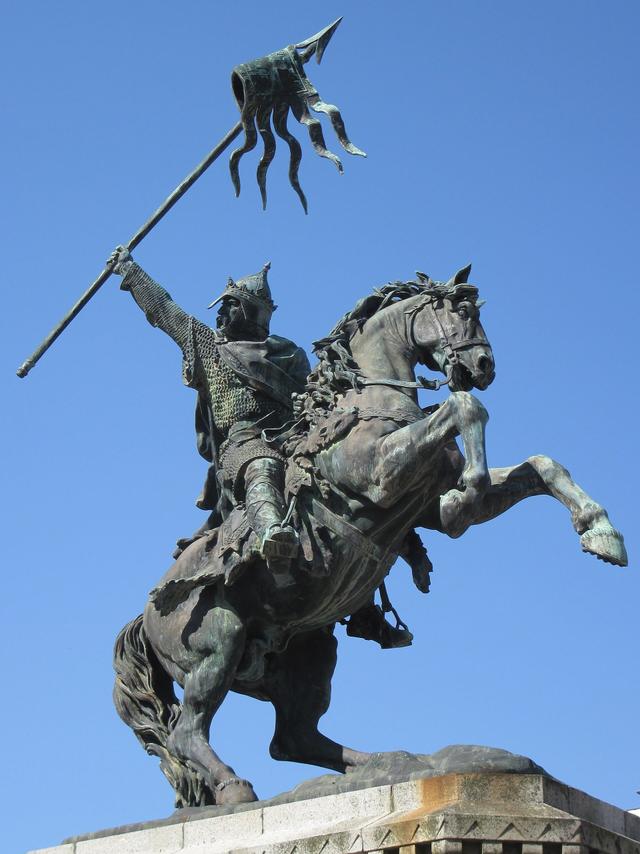
By the early 10th century, the Vikings had been sailing up the Seine for seventy years. In 911, King Charles the Simple chose to hand the valley over to one of their leaders rather than defend it. That leader was Rollo. He was baptised, married a Norman woman, and his descendants became Dukes of Normandy, then Kings of England.
Rollo in dates
| Date | Event |
|---|---|
| Around 846 | Born in Norway or Denmark, depending on the sources |
| 885-887 | According to the chronicler Dudo, takes part in the great Viking siege of Paris |
| Around 898-905 | Agrees the “pact of Jumièges” with the Archbishop of Rouen, which spares the city |
| 911 | Defeated outside Chartres; Treaty of Saint-Clair-sur-Epte with Charles the Simple |
| 912 | Baptised in Rouen Cathedral under the name Robert |
| Around 927 | His son William Longsword succeeds him |
| Around 932 | Dies; buried in Rouen Cathedral |
A Viking with no birth certificate
Almost nothing certain is known about his origins. Canon Dudo of Saint-Quentin, writing a century later for his descendants, makes him a Dane; the Icelandic sagas see him as Göngu-Hrólfr, “Rolf the Walker”, son of a Norwegian jarl, too tall for any horse to carry. The dates of his life are just as uncertain.
What is certain is that the Seine valley was then living from one raid to the next. The abbeys were the first targets, because they were rich and undefended.
Jumièges and Saint-Wandrille: the plundered abbeys
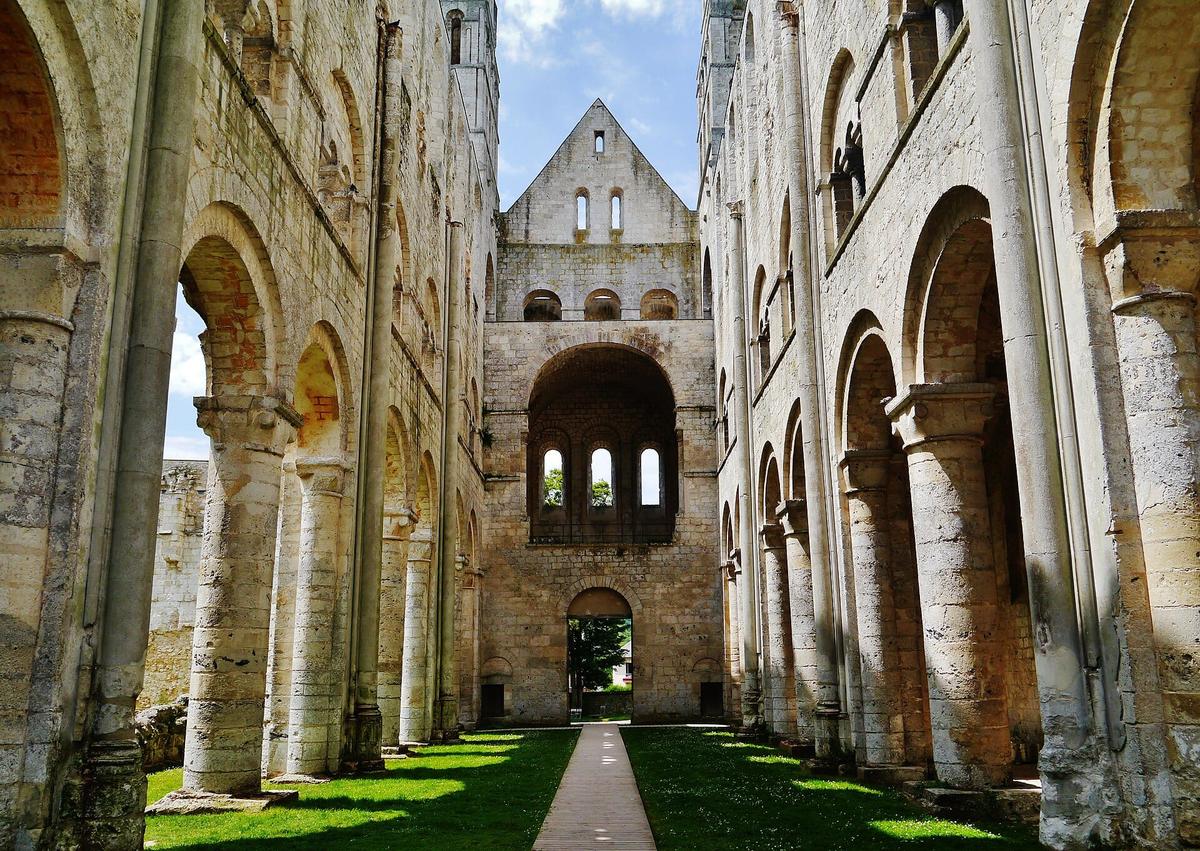
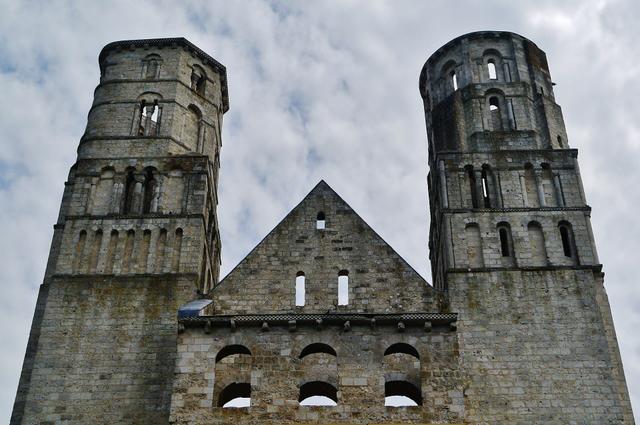
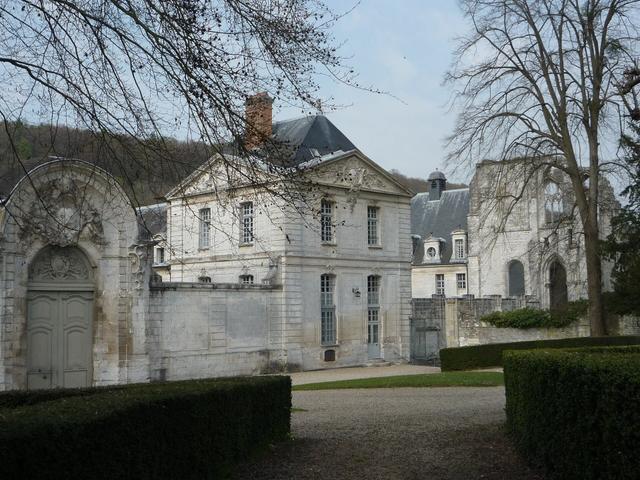
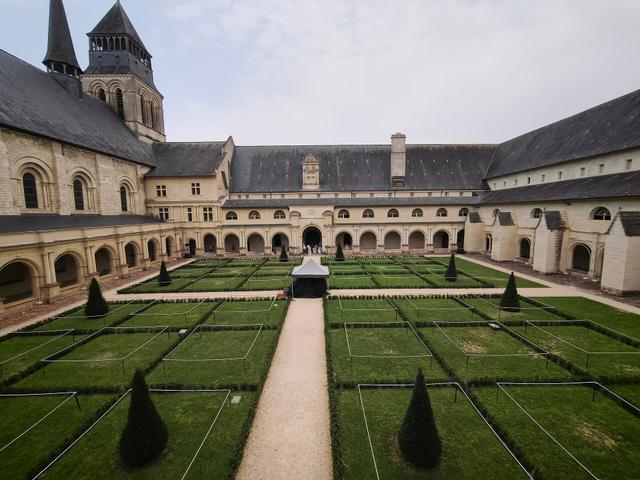
Jumièges was devastated by the Viking raids of 841-851. Saint-Wandrille, a little downstream, was plundered and burned in 852; the monks went into exile with the relics. According to Dudo, it was at Jumièges that Rollo met the Archbishop of Rouen and was allowed to enter the city without a fight.
Once Normandy was established, his descendants brought the monks back. Around 930, his son William Longsword restored Jumièges; the monks returned to Saint-Wandrille around 960. See also: Jumièges Abbey, Saint-Wandrille Abbey
What to see: at Jumièges, the roofless nave and the two front towers; at Saint-Wandrille, the ruins of the Gothic abbey church and the cloister, where monks still live.
911: Saint-Clair-sur-Epte
In 911, Rollo's army was defeated outside Chartres. The Carolingian king Charles the Simple took the chance to negotiate. By the Treaty of Saint-Clair-sur-Epte, he granted Rollo the land between the Epte and the sea, around Rouen. In return, Rollo had to close the Seine to other Vikings and convert. The text of the treaty is lost: its terms are known only through Dudo.
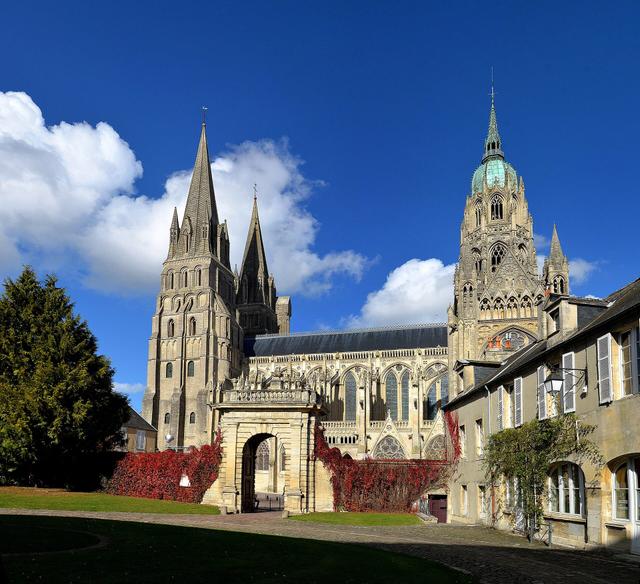
The territory later grew westward, as far as the Bessin and the Cotentin. According to the chroniclers, Rollo had taken Bayeux and found there Poppa, daughter of a local count, who became his partner “in the Danish manner” and the mother of William Longsword. See also: Bayeux Cathedral
Rouen: the baptism and the tomb
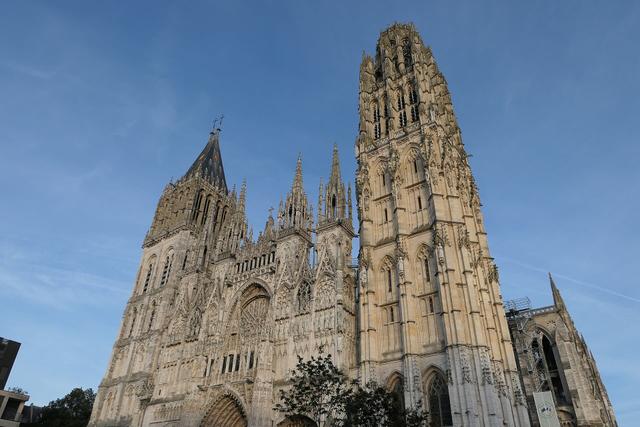
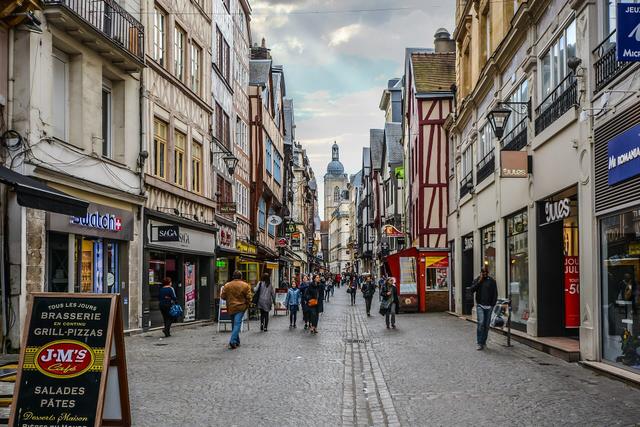
In 912, Rollo was baptised in Rouen Cathedral. He took the name Robert, after his godfather, Duke Robert, ancestor of the Capetians. He made Rouen his capital.
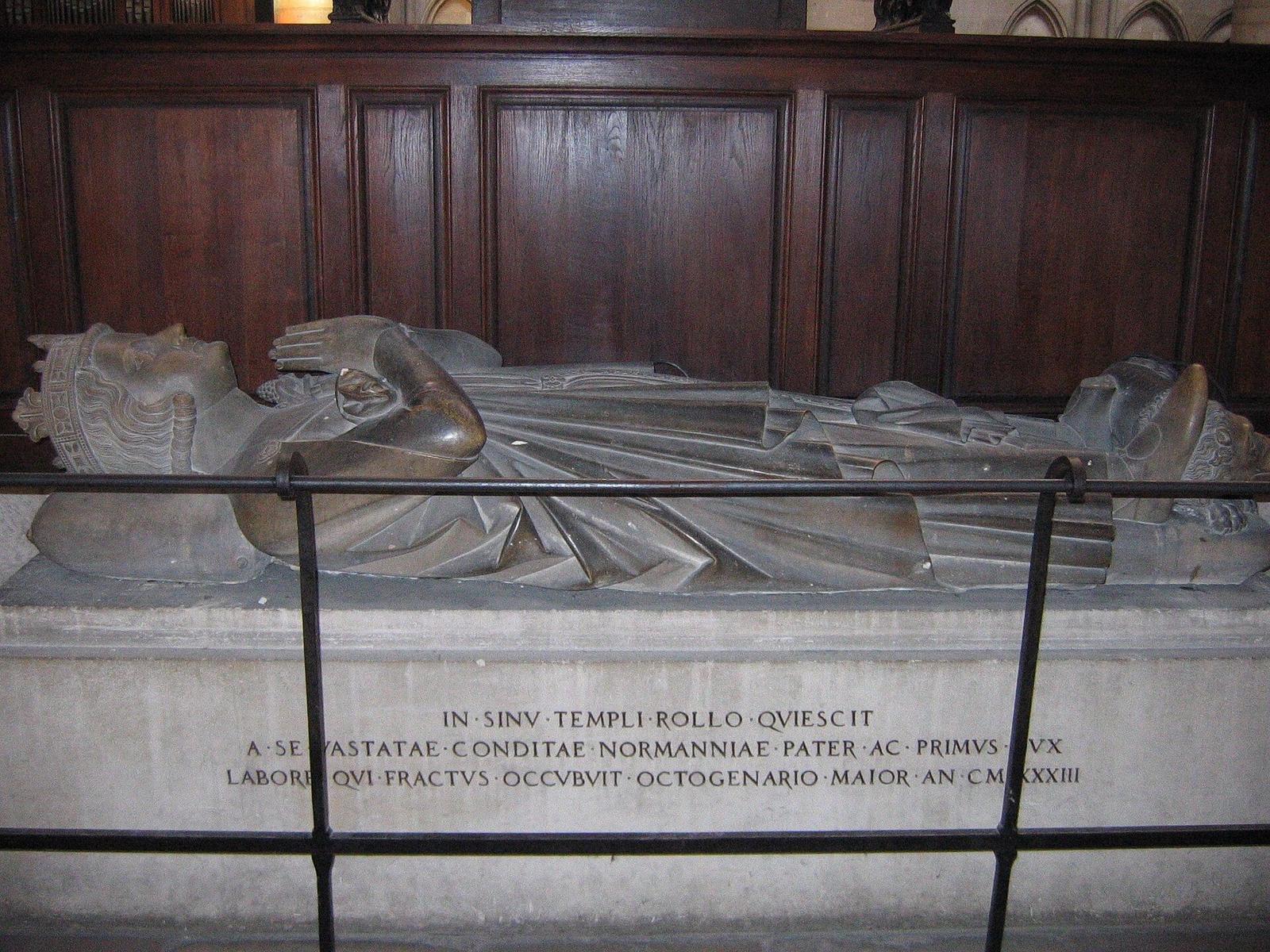
He was buried in the cathedral around 932. The effigy you see today in the south ambulatory is not original: it is a 19th-century copy, put in place in 1956, as the medieval original had been destroyed. His son William Longsword lies beside him, not far from the heart of Richard the Lionheart, one of his distant descendants. See also: Rouen Cathedral, Richard the Lionheart
What to see: the tomb effigies of Rollo and William Longsword, the heart of Richard the Lionheart, the façade and the Butter Tower.
Five generations later
The dynasty held. Rollo's descendants took the title of duke. Five generations after him, William, the future Conqueror, was born at Falaise; he crossed the Channel in 1066 and became King of England. See also: William the Conqueror
In his footsteps: the Seine valley
Rouen, Jumièges and Saint-Wandrille can be visited in one day, following the Seine and its loops westward. Bayeux is two hours away by road, with its cathedral and the tapestry of the Conquest.
Partner links: if you book through these links, we earn a commission at no extra cost to you. Partner links · Learn more
FAQ
Who was Rollo?
A Viking leader who in 911 obtained from King Charles the Simple the land around Rouen. His descendants became Dukes of Normandy.
What does the Treaty of Saint-Clair-sur-Epte say?
The king granted Rollo the land between the Epte and the sea; Rollo agreed to defend the Seine against other Vikings and to be baptised. The original text is lost.
Where is Rollo buried?
In Rouen Cathedral, where his tomb effigy can be seen in the south ambulatory. The present effigy is a 19th-century copy.
Was Rollo Danish or Norwegian?
Nobody knows. The chronicler Dudo of Saint-Quentin says he was Danish; the Scandinavian sagas make him a Norwegian, Rolf the Walker.
How is Rollo related to William the Conqueror?
William is his direct descendant, five generations later: Rollo, William Longsword, Richard I, Richard II, Robert the Magnificent, then William.
Sources: fr.wikipedia.org (Rollon), fr.wikipedia.org (Cathédrale Notre-Dame de Rouen)