Matilda of Flanders, William's queen
- Born
- c. 1031
- Died
- 2 November 1083
- Reign
- 1066 – 1083
- Family
- Dukes of Normandy
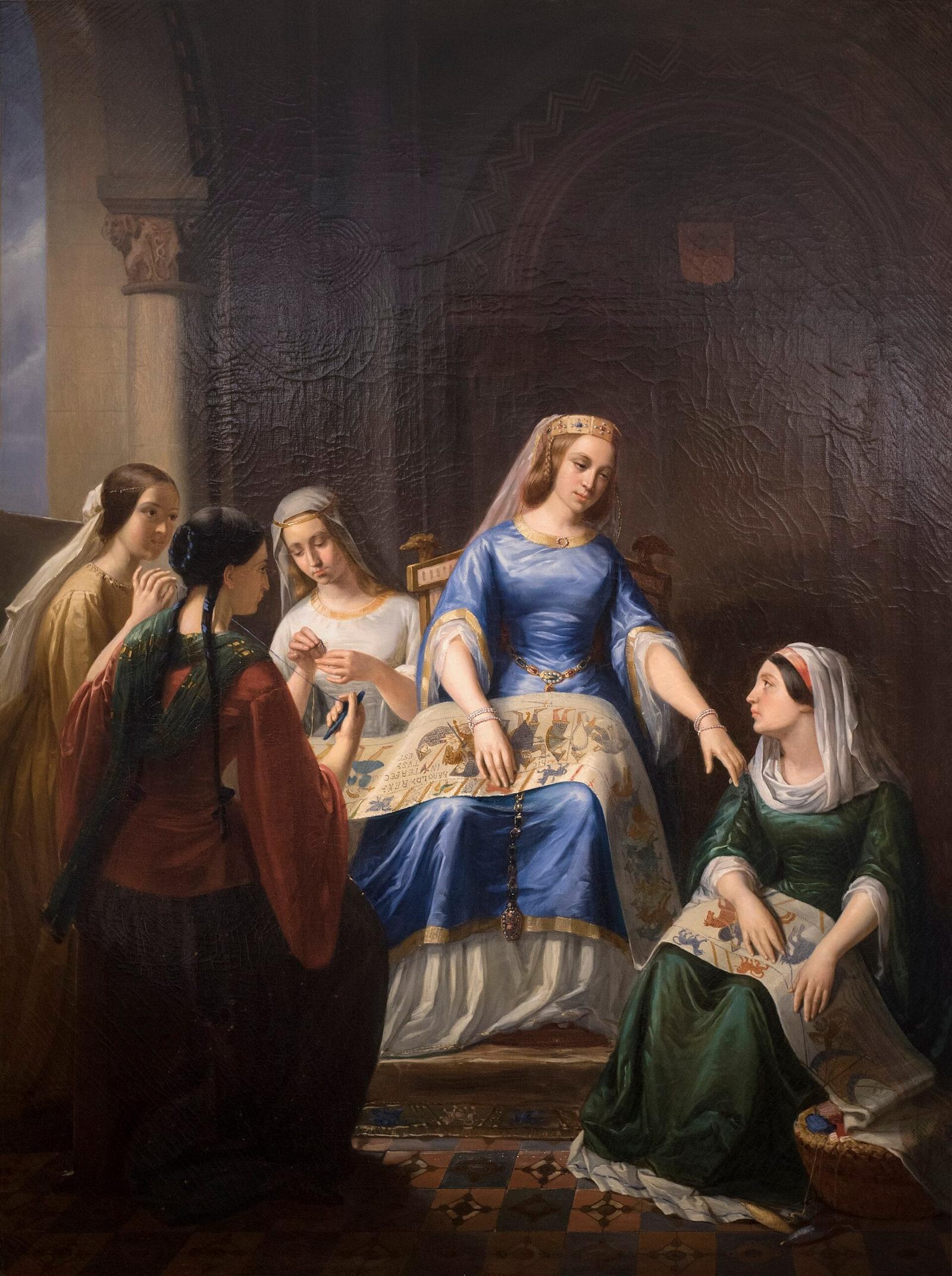
While William was conquering England, she was the one governing Normandy. Matilda of Flanders married the duke against the Pope's ban, founded the Abbaye aux Dames in Caen to win the Church's forgiveness, and, through a stubborn legend, gave her name to the Bayeux Tapestry. She still lies in the abbey church she had built.
Matilda of Flanders in dates
| Date | Event |
|---|---|
| c. 1031 | Born, daughter of Baldwin V, Count of Flanders, and Adela of France |
| 1049 | Pope Leo IX forbids her marriage to William, her distant cousin |
| 1050 or 1051 | Marries William, Duke of Normandy, all the same |
| 1059 | Pope Nicholas II recognises the marriage, in return for the founding of two abbeys |
| 1060s | Founds the Abbaye aux Dames (Women's Abbey) in Caen; William founds the Abbaye aux Hommes (Men's Abbey) |
| 1066 | Governs Normandy during the conquest of England |
| Whitsun 1068 | Crowned Queen of England at Westminster |
| 2 November 1083 | Dies in Caen; buried in the Church of the Holy Trinity at the Abbaye aux Dames |
A forbidden marriage
Matilda was the daughter of the Count of Flanders and, through her mother, the granddaughter of King Robert the Pious of France. She was a fine match, and the young Duke of Normandy, William, asked for her hand around 1049. Pope Leo IX objected: the couple were cousins, to a degree the Church did not allow. They ignored him and married around 1050. See also: William the Conqueror
It took ten years to settle the matter. In 1059, Pope Nicholas II recognised the marriage, on condition that each of them found an abbey. William built the Abbaye aux Hommes and Matilda the Abbaye aux Dames, at opposite ends of Caen.
Caen: the two abbeys
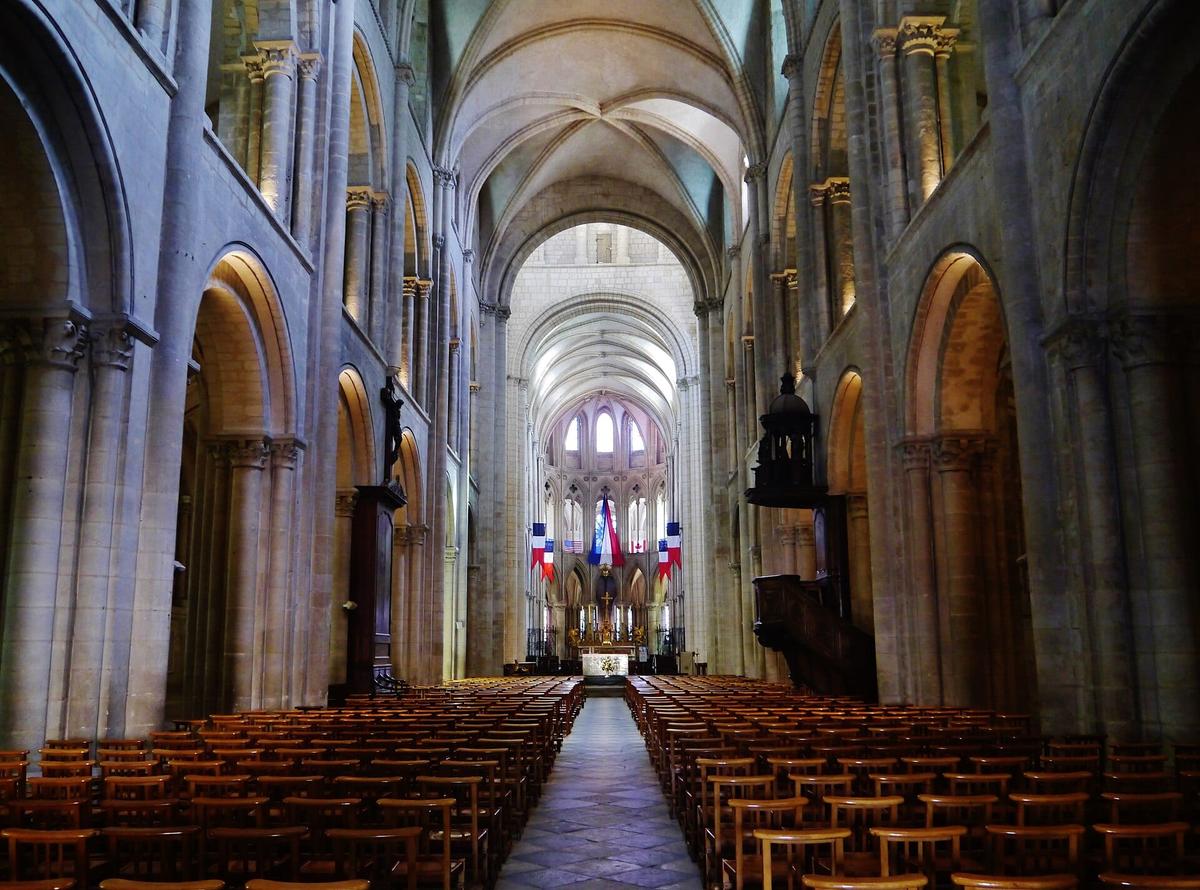
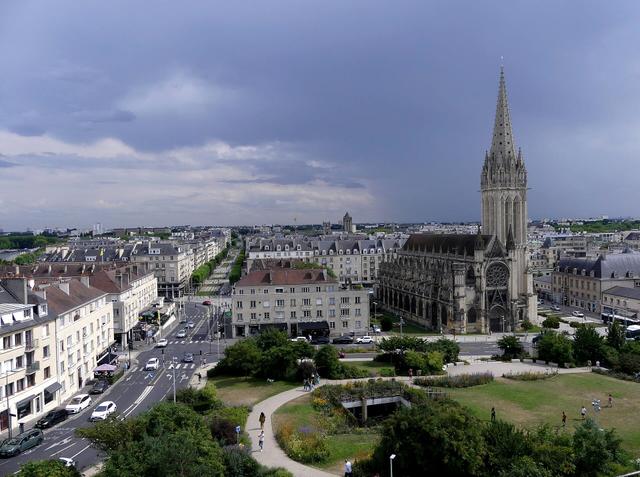
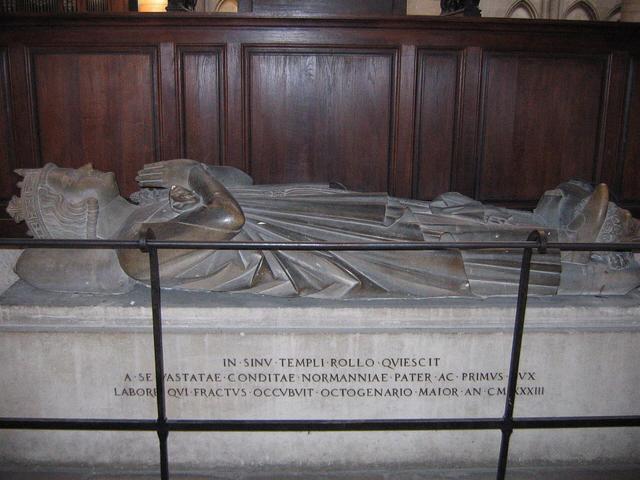
The Abbaye aux Hommes, with the Church of Saint-Étienne, is now Caen's town hall; William was buried there in 1087. Its twin, the Abbaye aux Dames, lies east of the town centre. Matilda was buried there in 1083, in the choir of the Church of the Holy Trinity. Her black marble tomb slab is still there, despite the Protestant looting of 1562. See also: Abbaye aux Hommes (Men's Abbey)
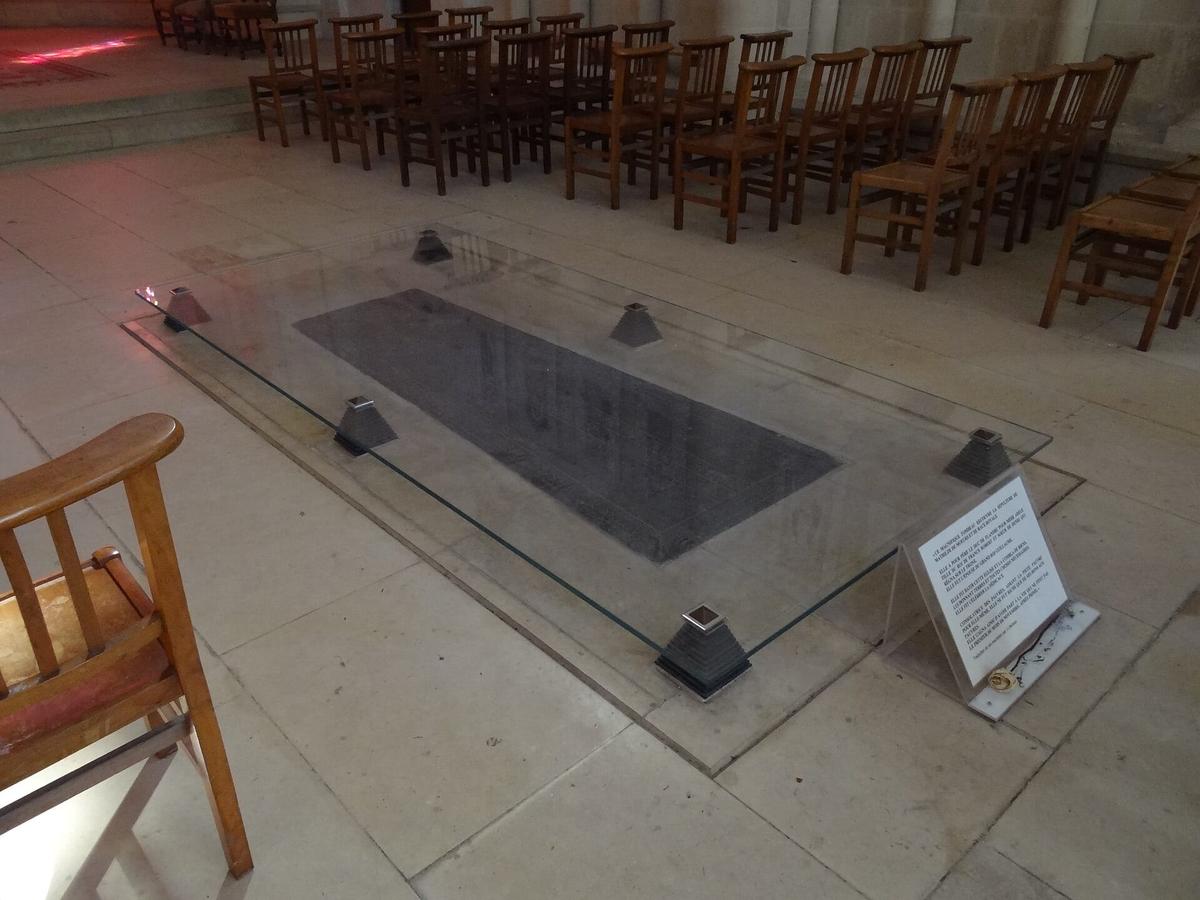
What to see: the Church of Saint-Étienne and William's tomb, the cloister of the Abbaye aux Hommes, then the Holy Trinity and Matilda's tomb slab, half an hour's walk away by way of the castle.
Regent of Normandy
Matilda gave William at least eight children, including two future kings of England, William Rufus and Henry Beauclerc, and Robert Curthose, who would inherit Normandy. While her husband conquered and then held England, she governed the duchy. She was crowned queen at Westminster in 1068.
A study of her bones in 1961 put her height at about 1.52 metres; the legend of a tiny queen, barely 1.27 metres tall, is false.
“Queen Matilda's Tapestry”
In the 19th century, the Bayeux Tapestry was called “Queen Matilda's Tapestry”: people imagined the queen and her ladies embroidering William's deeds. This attribution has been dropped. Most historians think the embroidery was commissioned by Odo, Bishop of Bayeux and William's half-brother, and made in England. See also: Bayeux Cathedral
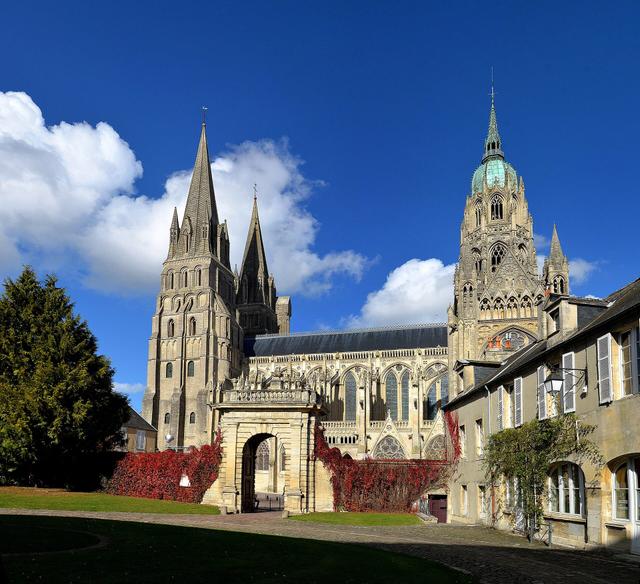
What to see: Bayeux Cathedral, consecrated in William's presence, and the Tapestry once it returns to the new Bayeux museum.
In her footsteps: Caen, Bayeux, Falaise
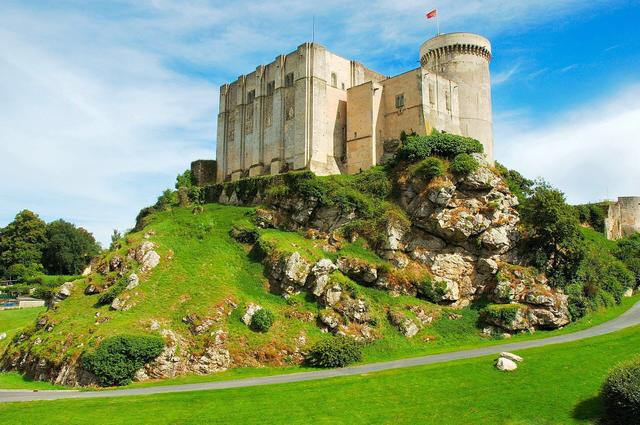
The two abbeys in Caen can be visited on the same day, with William's castle in between. Bayeux is half an hour away by train, and Falaise, with William's birthplace castle, is 40 minutes by car. See also: Falaise Castle (William the Conqueror's Castle) The Caen Memorial rounds off a stay. See also: Caen Memorial
Partner links: if you book through these links, we earn a commission at no extra cost to you. Partner links · Learn more
FAQ
Where is Queen Matilda buried?
In Caen, in the Church of the Holy Trinity at the Abbaye aux Dames, which she founded. Her tomb slab is still in the choir.
Why did William and Matilda found two abbeys in Caen?
As penance: the Pope had forbidden their marriage because they were related. He recognised it in 1059, on condition that each of them founded an abbey.
Did Queen Matilda embroider the Bayeux Tapestry?
No. That is a 19th-century legend. The embroidery was probably commissioned by Bishop Odo of Bayeux and made in England.
How tall was Queen Matilda?
About 1.52 metres, according to the study of her bones in 1961. The often-quoted figure of 1.27 metres is wrong.
How many children did Matilda of Flanders have?
At least eight, including Robert Curthose, Duke of Normandy, and two kings of England, William Rufus and Henry I Beauclerc.
Sources: fr.wikipedia.org (Mathilde de Flandre), abbaye-aux-dames.fr