Falaise Castle: visiting William the Conqueror's birthplace
Falaise Castle (William the Conqueror's Castle) at a glance
- High season
- 10:00 – 18:00
- Full price
- €9.50
- Free
- children under 6
- Where
- Falaise
Official ticket-office prices, checked on 29 October 2026. Full opening hours, reduced prices and access
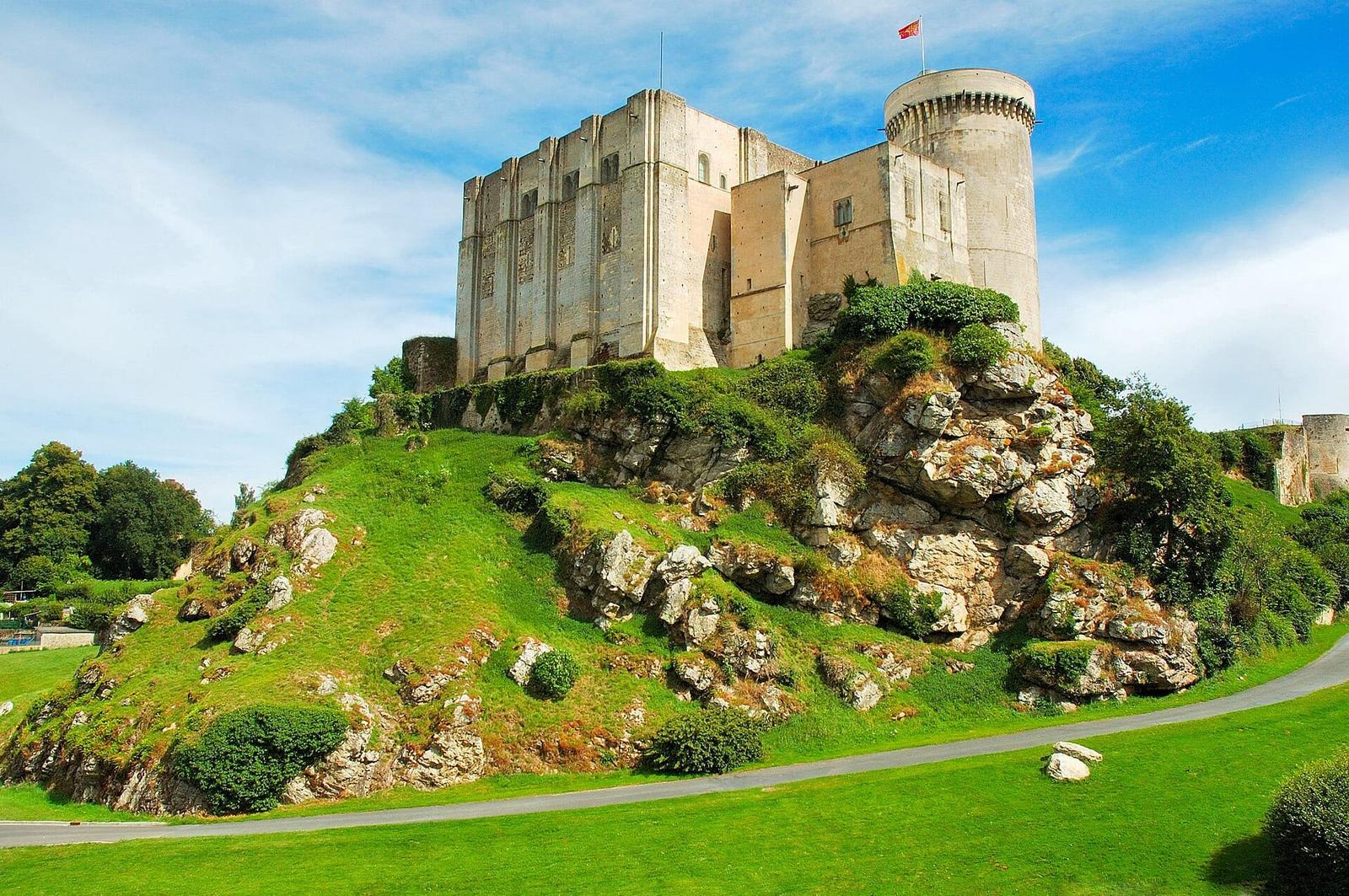
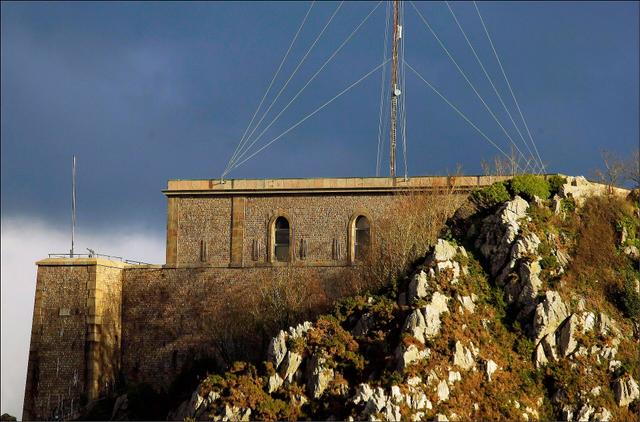
High on its rock above the town of Falaise, forty minutes from Caen, the castle of the dukes of Normandy is where William the Conqueror was born. You visit three keeps, two of them restored in a strikingly modern way, with a tablet that rebuilds the 12th-century rooms on screen. Prices, hours, time needed, how to get there and tips for a visit that fills half a day with the town.
Falaise Castle at a glance
- Where: in Falaise, in the south of Calvados, about 35 km from Caen on the N158.
- Price: €9.50 for adults, €5 for ages 6 to 16, free under 6. Family pass €24.
- Open: daily, 10am to 6pm. Closed 2 to 6 November 2026, 25 December and 1 January, then for the annual closure from 4 January to 20 February 2027.
- Time needed: about 1½ hours for the keeps, with the tablet guide.
- Best for: medieval history fans, families with children over 10, and anyone driving between Caen and Mont-Saint-Michel.
Why visit Falaise Castle
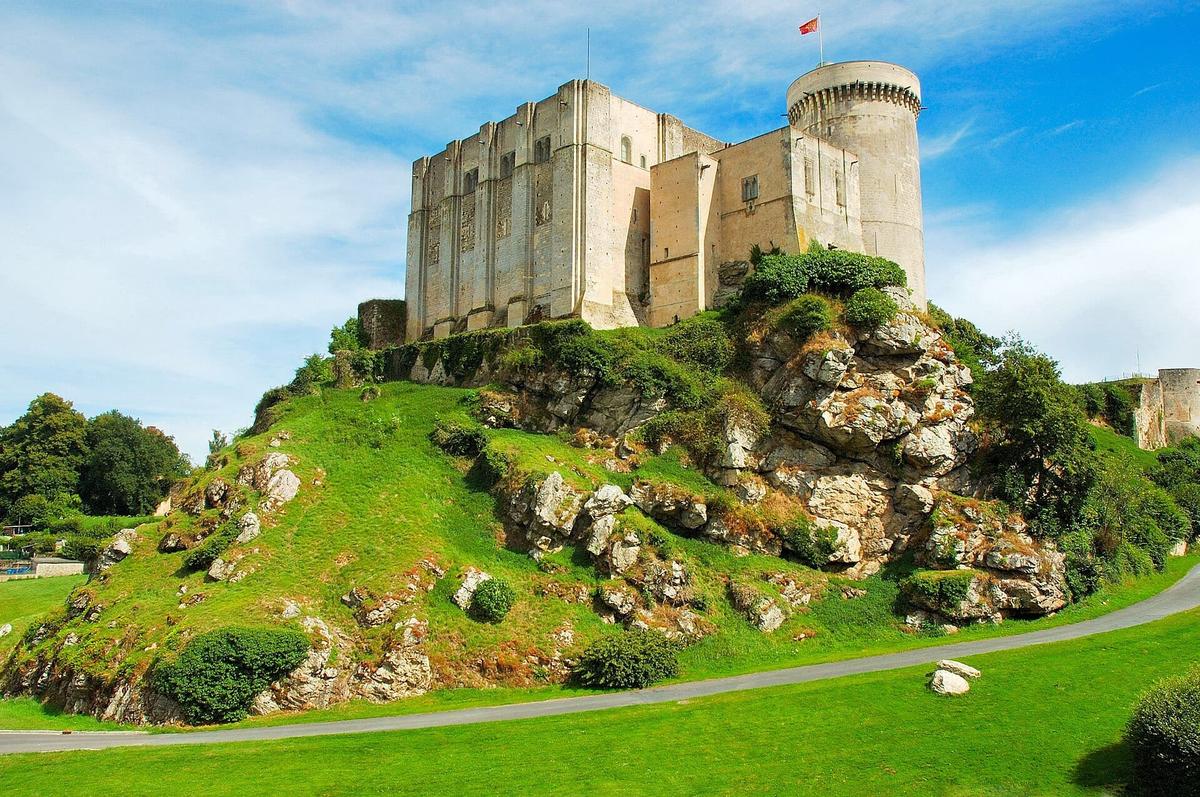
This is where William, future Duke of Normandy and King of England, was born around 1027. He was the son of Duke Robert, known as Robert the Magnificent, and Arlette (Herleva), a local girl. The ducal fortress already stood here: by around the year 1000 it controlled a large estate from its rock.
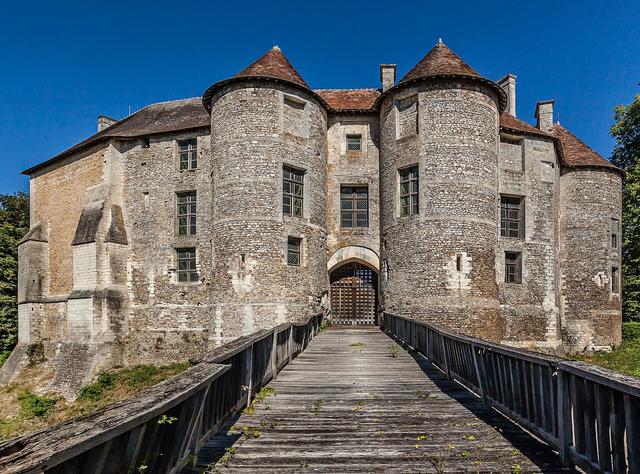
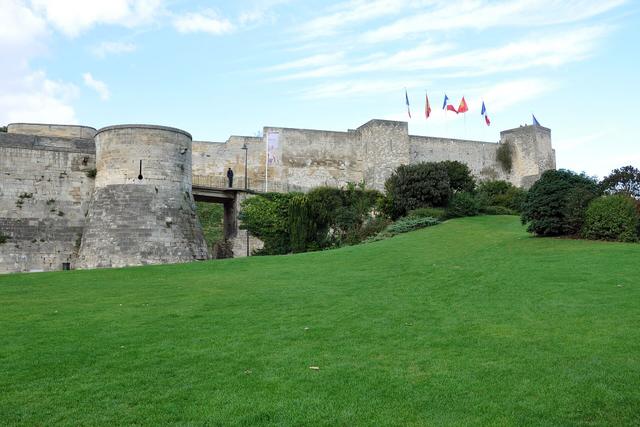
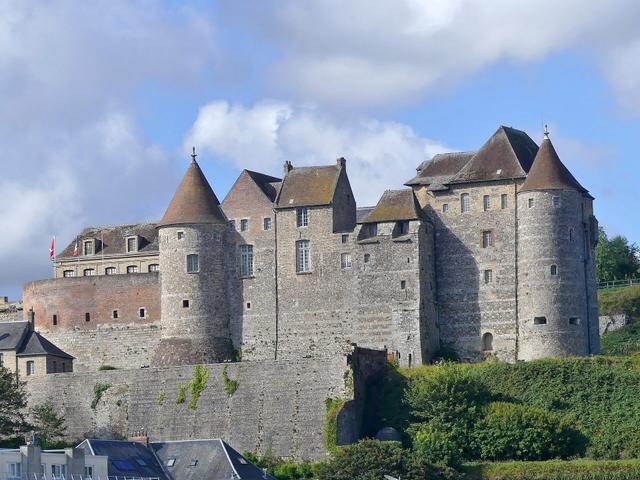
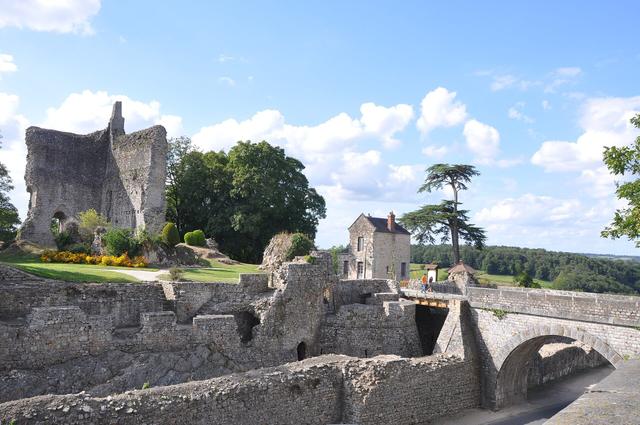
The buildings you visit came a little later. The great keep was built from 1123 by Henry I Beauclerc, William's youngest son. The small keep was added around 1154. After Philip Augustus annexed Normandy to France in 1204, a massive round tower completed the group: the Talbot Tower. Seen from the Ante valley below the rock, these three keeps make one of the most powerful military skylines in Normandy.
The other reason to come is the restoration. It does not try to fake the Middle Ages: where nobody knew what the original looked like, the architect used concrete, metal and glass. You may love it or hate it, but it leaves no one indifferent.
2027 marks the thousandth anniversary of William's birth, with a region-wide programme called “Millenium” and events in Falaise. Expect more visitors than usual. See also: Normandy
How long does it take to visit Falaise Castle?
Allow about 1½ hours for the keeps, which you explore on your own, at your own pace. Last admission is 60 minutes before closing, so arriving after 5pm is cutting it fine.
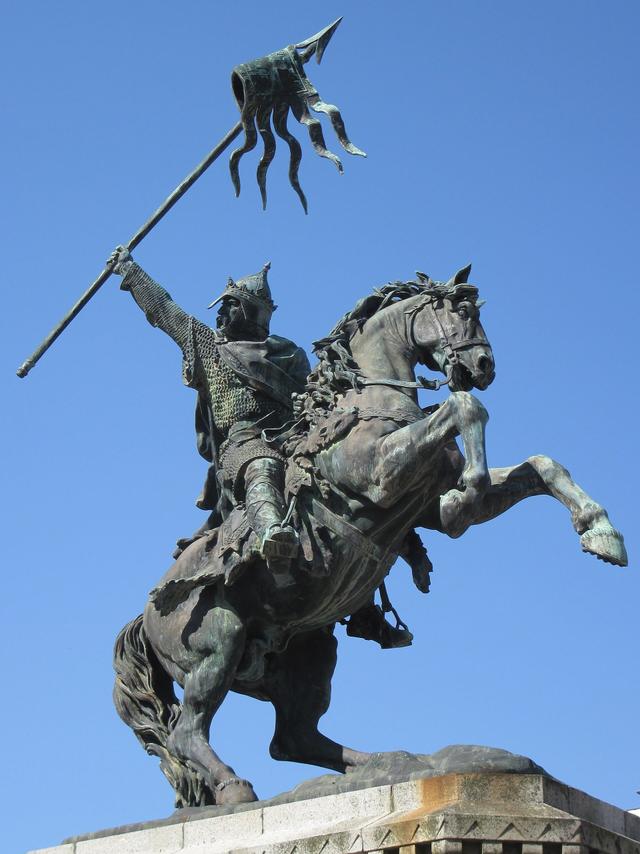
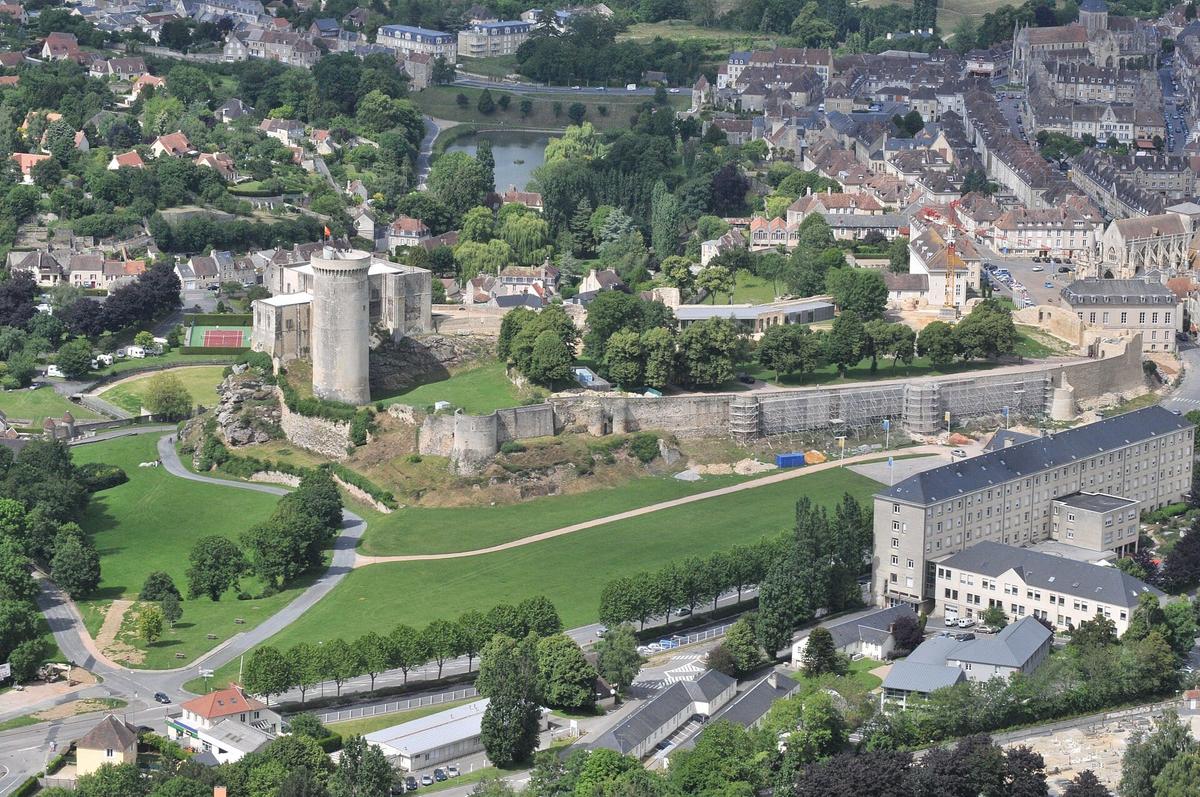
Add an hour for the town: the ramparts seen from below, Arlette's fountain, Holy Trinity church and the equestrian statue of William just outside the entrance. With the Memorial of Civilians in the War, Falaise easily fills half a day.
Our tip: the tour is under cover and the keeps are heated in winter, which makes Falaise Castle a good choice for a rainy day in Normandy.
Ticket prices
The castle belongs to the town of Falaise. Prices for 2026:
- Adult: €9.50.
- Child aged 6 to 16: €5.
- Under 6: free.
- Reduced rate: €7.50 for adults, €3.50 for children. It applies to students over 16, jobseekers, disabled visitors and their companion, and holders of various French cards (tourist office, CNAS, Cezam, Gîtes de France and others). The list can change, so ask at the desk.
- Family pass: €24 for 2 adults and up to 4 children.
- 3-site pass: €16.50 for the castle, the Memorial of Civilians in the War and the Automata Museum, from age 12, valid until 31 December 2026.
- Ambassador card: €20, an annual card for regulars.
The tablet guide comes with your ticket at the entrance, but only for visitors over 10. The regional tourist board also mentions a reduced “low carbon” rate for visitors arriving by train, coach or bike. No need to book: buy your ticket at the desk.
Our tip: with two adults and two children, the family pass costs less than four separate tickets. If you plan to see the Memorial of Civilians, get the 3-site pass.
Opening hours and the best time to go
The castle is open daily from 10am to 6pm, with last admission one hour before closing. It may close on the occasional Monday, so call ahead if you plan a Monday visit.
Known closures:
- 2 to 6 November 2026 (exceptional closure);
- 25 December 2026 and 1 January 2027;
- annual closure from 4 January to 20 February 2027.
Hours for the 2027 season have not been published yet. The best time is a weekday morning in spring or September. School holidays and summer weekends, with their medieval events, are the busiest. From 7 November 2026 to 3 January 2027, the castle runs a storytelling exhibition, “Amour, gloire et conquête” (Love, glory and conquest).
How to get to Falaise Castle
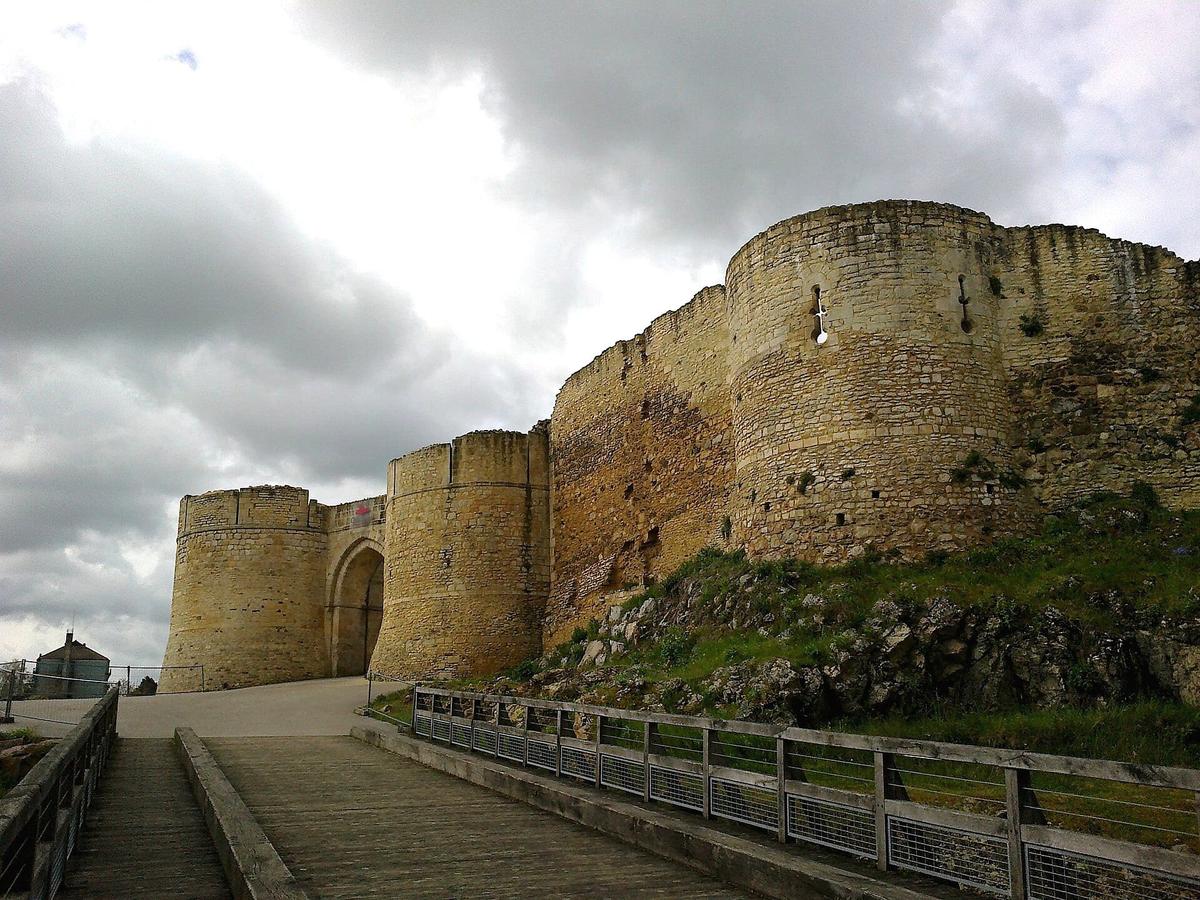
By car. From Caen, take the N158 towards Argentan and Alençon: Falaise is about 35 km away, around forty minutes. Park in the free car park below the ramparts, boulevard des Bercagnes. The entrance is on place Guillaume le Conquérant, next to the town hall, about a hundred metres away. The walk up is short but steep.
Without a car. Falaise has no train station. Take the train to Caen or Argentan, then a regional Nomad coach to Falaise. Timetables are on the Normandy Region's Nomad website; services are sparse on Sundays, so check before you go. See also: Normandy without a car
Renting a car. It is the easiest way to combine Falaise with the D-Day beaches or Mont-Saint-Michel on the same trip. Caen, at the station or in town, has the widest choice of rental companies.
Partner links: if you book through these links, we earn a commission at no extra cost to you. Partner links · Learn more
What to see at Falaise Castle
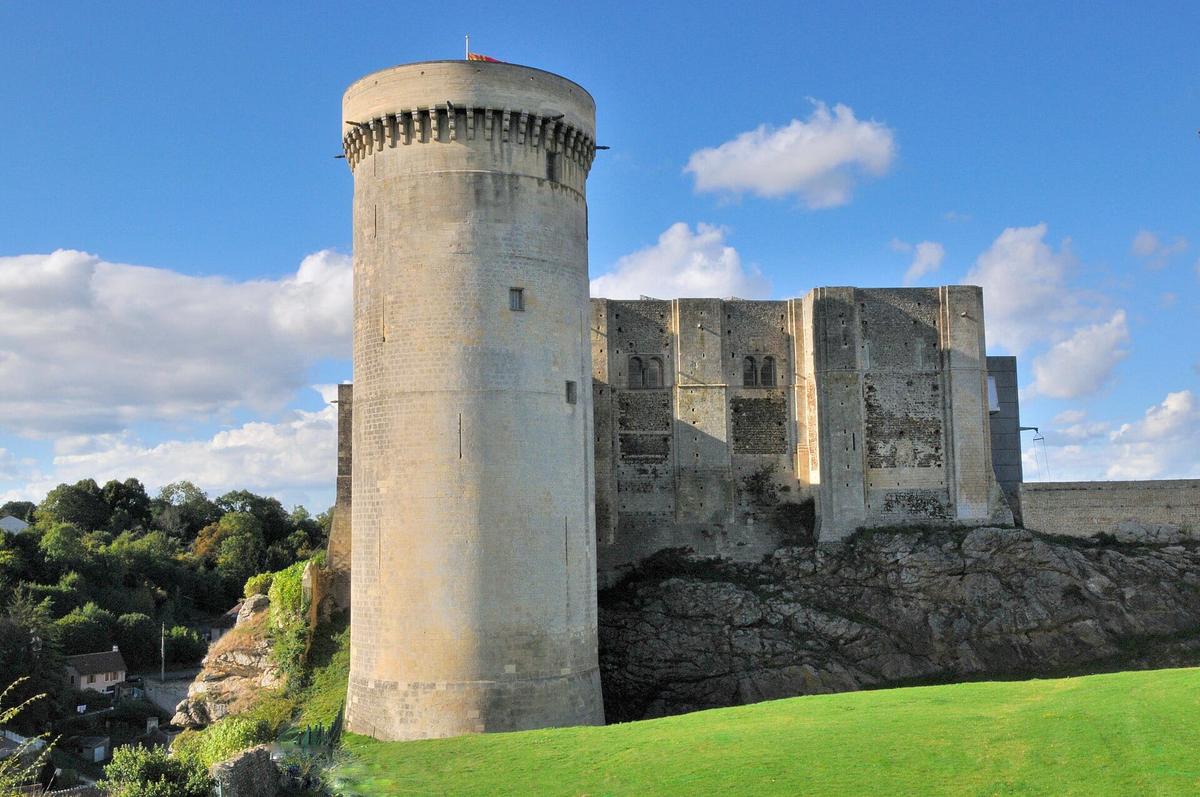
The great keep. The heart of the visit. This 22 m high building, with walls more than three metres thick, held the great hall and the duke's apartments. Over the centuries it lost its floors and roof. The 1990s restoration recreated its interior volumes in contemporary materials, without copying the lost decoration.
The small keep. Built against the first one, it was a residence. Inside are staged scenes with replica furniture.
The Talbot Tower. 30 m high, 15 m across, with walls 4 m thick, this is Philip Augustus's round tower. It is named after an English captain of the Hundred Years' War. The narrow staircase is a climb, but the view over Falaise and the hedged countryside is the best on the site.
The tablet. It shows reconstructions of the rooms and 3D objects you can turn and handle, with augmented-reality areas. Film projections complete the tour.
The upper courtyard and ramparts. The outer wall was flanked by some fifteen towers. The upper courtyard, excavated and then restored until 2004, links the keeps. Restoration of the ramparts is planned over several years.
Visiting Falaise Castle with children
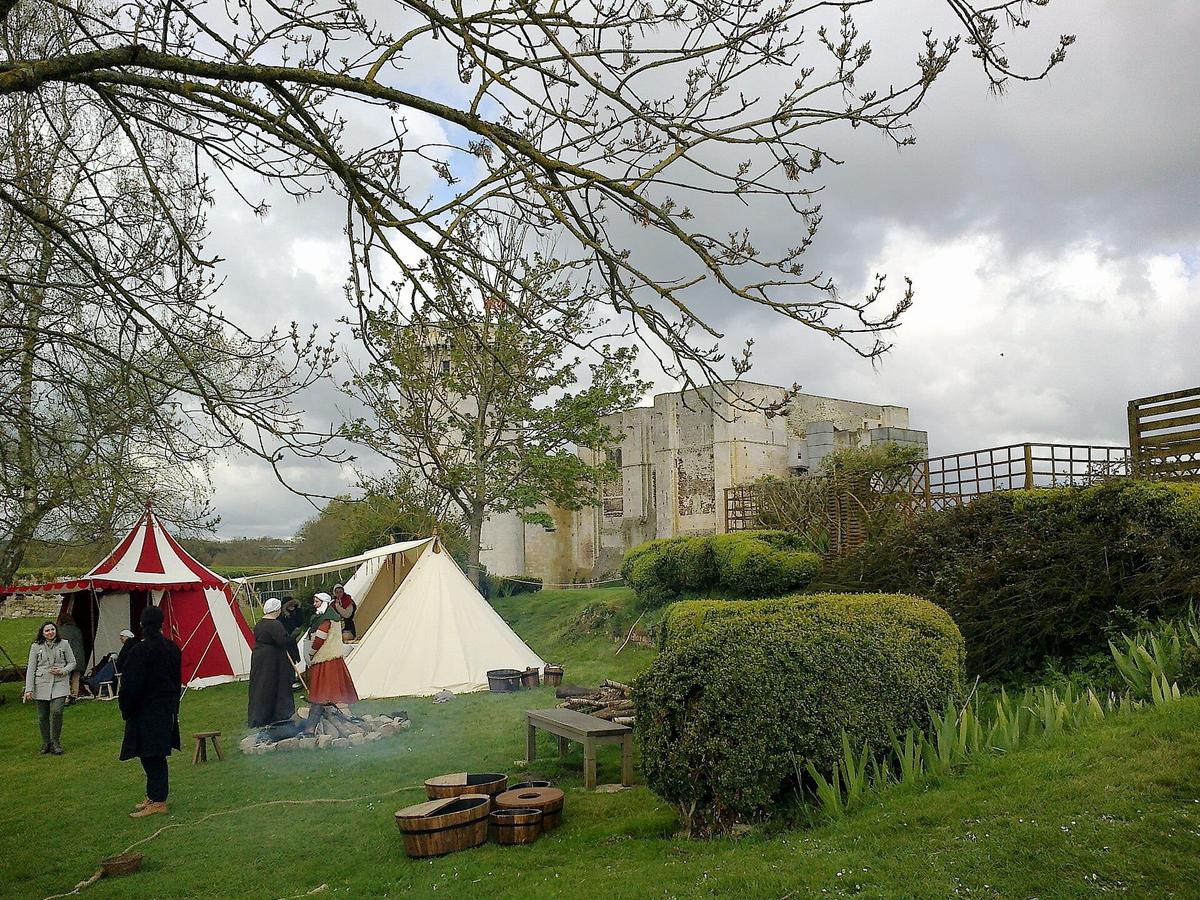
This is one of the easiest family visits in Calvados: under cover, heated and fairly short. A few things to know:
- The tablet is only handed to visitors over 10. For younger children, an adult does the handling.
- Family tours run during French school holidays, with games and hands-on activities. At All Saints' 2026 the theme was “remedies, potions and brews”.
- Illustrated storytelling sessions for ages 3 to 6 take place on some Sundays (in French).
- Pushchairs cannot go into the keeps: bring a baby carrier.
There are children's toilets, a baby-changing area and a picnic area. There are many stairs, so keep little ones close in the Talbot Tower.
Visiting Falaise Castle in a wheelchair
The castle is clear about it: the keeps cannot be visited in a wheelchair or with a pushchair. The site sits on a rock, with slopes and many stairs. Visits are also difficult for visually impaired people, because of obstacles, changes in level and strong contrasts of light. Disabled visitors and their companion pay the reduced rate.
In Falaise, the Memorial of Civilians in the War may be an alternative: check with them before you go.
Are dogs allowed at Falaise Castle?
The official website gives no rule on animals. Call the desk on +33 2 31 41 61 44 before you come. Either way, carrying a dog up the narrow stairs of the Talbot Tower is not a good idea.
Guided tours and day trips
A guided tour in French runs at weekends at 15:30, except during European Heritage Days. It lasts about 60 minutes and cannot be booked: buy your ticket at the desk a few minutes before it starts. It may be cancelled when the castle is very busy. Staff speak French and English.
Falaise rarely features in organised day trips. The simplest plan is to start from Caen, where most guided tours in the area leave from, and drive down.
What to see near Falaise on the same day
| Also worth seeing | Distance | Travel time |
|---|---|---|
| Caen Memorial | 37 km | 35 min by car |
| Normandy American Cemetery | 85 km | 65 min by car |
Approximate road distances and travel times.
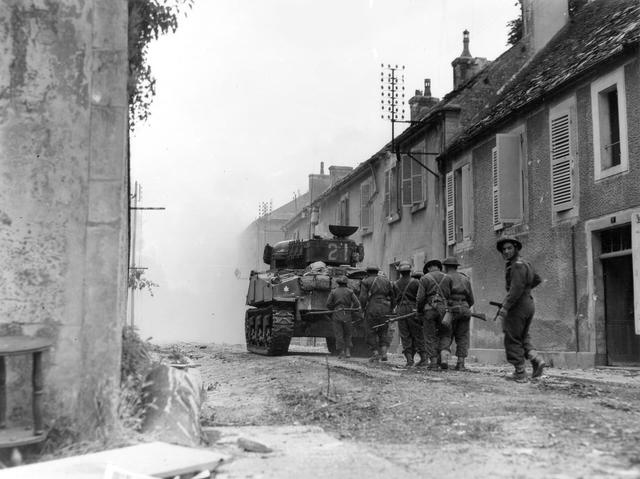
In Falaise itself, the Memorial of Civilians in the War tells the story of local people during the Second World War. In August 1944, the battle of the Falaise Pocket sealed the end of the Battle of Normandy and destroyed much of the town. The Automata Museum, also in town, is a hit with children. Both are covered by the 3-site pass.
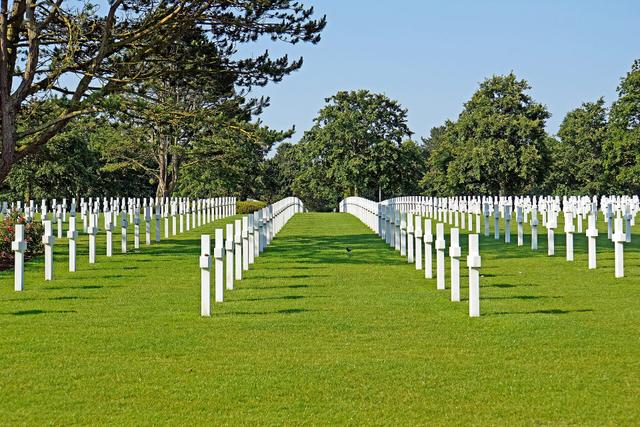
In Caen, the Caen Memorial gives the background to 1944 in half a day. Further on, the Normandy American Cemetery at Colleville-sur-Mer and the D-Day beaches are just over an hour away. See also: Caen Memorial, D-Day beaches
Facts and figures
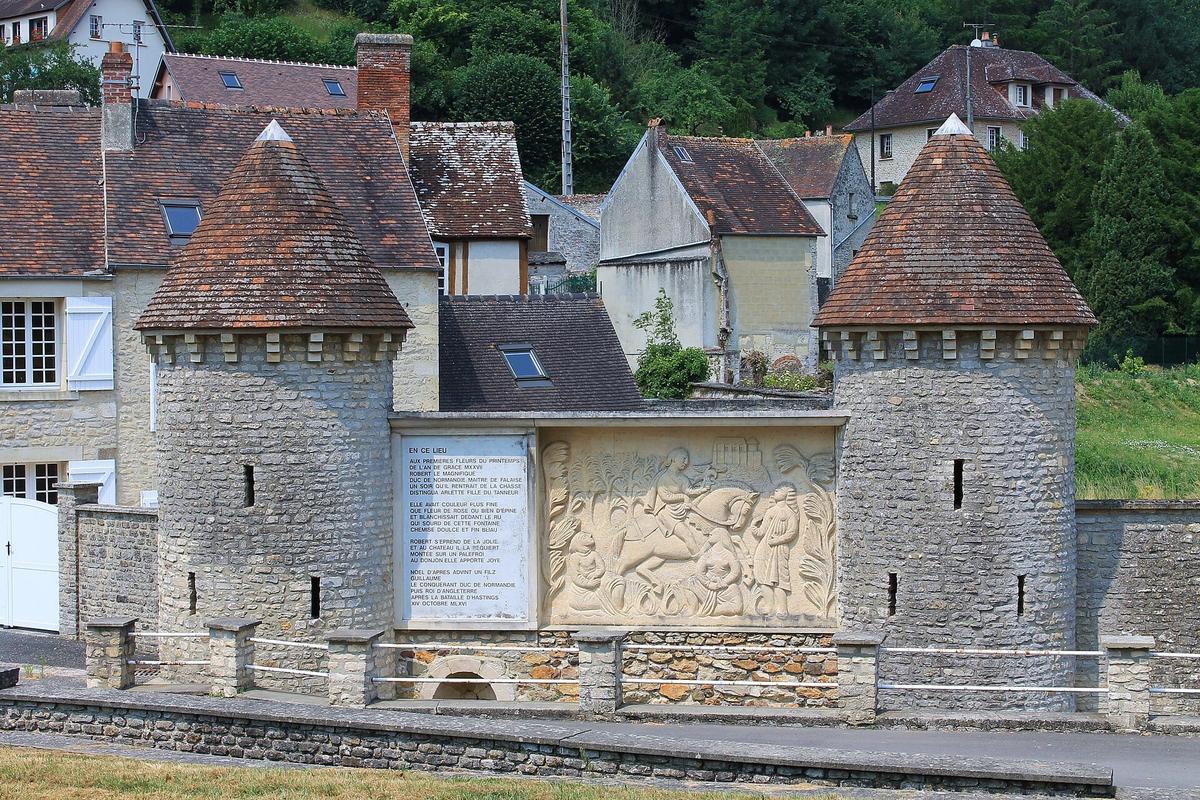
- The legend of Arlette. Tradition says Robert the Magnificent spotted Arlette from a castle window as she washed linen in the river below. A fountain at the foot of the rock bears her name. Born out of wedlock, William was long nicknamed “the Bastard”.
- 30 m high and walls 4 m thick: the Talbot Tower.
- A restoration that ended up in court. The work led by chief heritage architect Bruno Decaris was highly controversial. It deliberately adds modern elements, following the 1965 Venice Charter, so that old and new can be told apart. In 2005 the architect was fined by the Caen criminal court for a planning offence.
- Keeps spared in 1944. The bombing and fighting of the Falaise Pocket flattened the modern buildings and the Saint-Nicolas chapel, but barely touched the keeps.
- Prosper Mérimée was behind the castle's listing as a historic monument in 1840.
Falaise Castle in eight dates
- Around 1027: William is born in Falaise.
- 1123: Henry I has the great keep built.
- 1204: Philip Augustus takes Falaise and annexes Normandy, then builds the Talbot Tower.
- 1418: the English occupy Normandy and take Falaise; they lose it in 1450.
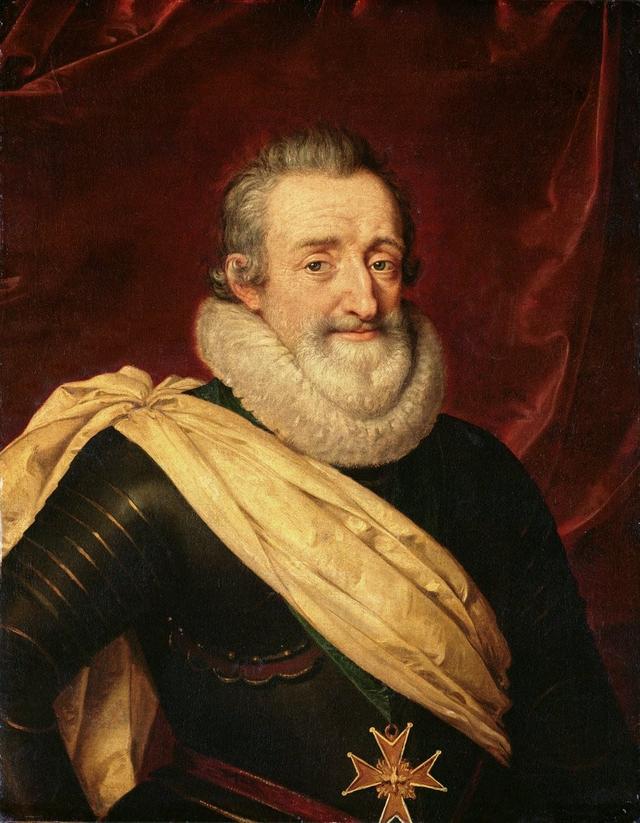
- 1590: during the Wars of Religion, Henry IV's troops breach the west rampart.
- 1840: listed as a historic monument.
- 1944: the town is destroyed in the battle of the Falaise Pocket.
- 1997: the restored keeps open to the public.
Where to eat and stay in Falaise
The castle has no restaurant or café: just a water fountain and a picnic area. The town centre, a few minutes' walk away, has crêperies, brasseries and restaurants serving Norman food.
Falaise has a few hotels and B&Bs, handy for a stop between Caen and Mont-Saint-Michel. Caen, forty minutes away, has the widest choice if you are also visiting the D-Day beaches. See also: Normandy in 3 days
FAQ
How much does Falaise Castle cost?
€9.50 for adults, €5 for ages 6 to 16, free under 6. The family pass costs €24.
Is Falaise Castle open in winter?
Yes, daily from 10am to 6pm, except 2 to 6 November 2026, 25 December and 1 January. It then closes from 4 January to 20 February 2027.
Is the tablet guide included in the ticket?
Yes, it is handed out at the entrance to visitors over 10.
Was William the Conqueror really born in this castle?
That is the tradition, accepted by historians: he was born in Falaise around 1027, in the ducal residence. The keeps you see today were built after his birth, by his successors.
Can you visit Falaise Castle in a wheelchair?
No. The castle states that the keeps cannot be visited in a wheelchair or with a pushchair.
How long does a visit take?
About 1½ hours for the keeps, half a day with the town and the Memorial of Civilians.
How do you get to Falaise from Caen?
By car on the N158, in about forty minutes, or by regional Nomad coach. See also: Caen Memorial
Practical information
Opening hours 2026
| 29 October 2026 to 3 January 2027 | 10:00 – 18:00 |
|---|
Closed: 2 November 2026, 3 November 2026, 4 November 2026, 5 November 2026, 6 November 2026, 25 December 2026, and 1 January 2027
Official ticket-office prices 2026
| Full price | €9.50 |
|---|---|
| Reduced rate | €7.50 |
| Child (aged 6–16) | €5 |
| Family ticket | €24 |
| Free | children under 6 |
Address
Château Guillaume-le-Conquérant, place Guillaume le Conquérant, 14700 Falaise, France
Directions · Phone+33 2 31 41 61 44
On site and nearby
- On site: Toilets
- Nearest shops and pharmacy: Falaise, less than 1 km away Straight-line distance, based on OpenStreetMap.
- Emergencies: 112 (all emergencies, free from any phone), 15 (SAMU, medical emergency)
Around the site, on Google Maps
With children
Family days out nearby: Falaise Memorial, Civilians in War (0 km), Château de Vendeuvre (14 km), Clécy and the Suisse Normande (21 km)
Swimming pools and play areas nearby, on Google Maps
Facts checked on 29 October 2026. Sources: chateau-guillaume-leconquerant.fr, chateau-guillaume-leconquerant.fr, chateau-guillaume-leconquerant.fr, explore-calvados.com, chateau-guillaume-leconquerant.fr, chateau-guillaume-leconquerant.fr, chateau-guillaume-leconquerant.fr, fr.wikipedia.org, en.normandie-tourisme.fr
Map
In the same region