Visiting Varengeville-sur-Mer: a practical guide to Braque's village
Varengeville-sur-Mer at a glance
- Admission
- Free
- Time needed
- half a day
- Where
- Varengeville-sur-Mer
Facts checked on 4 November 2026. Full opening hours, reduced prices and access
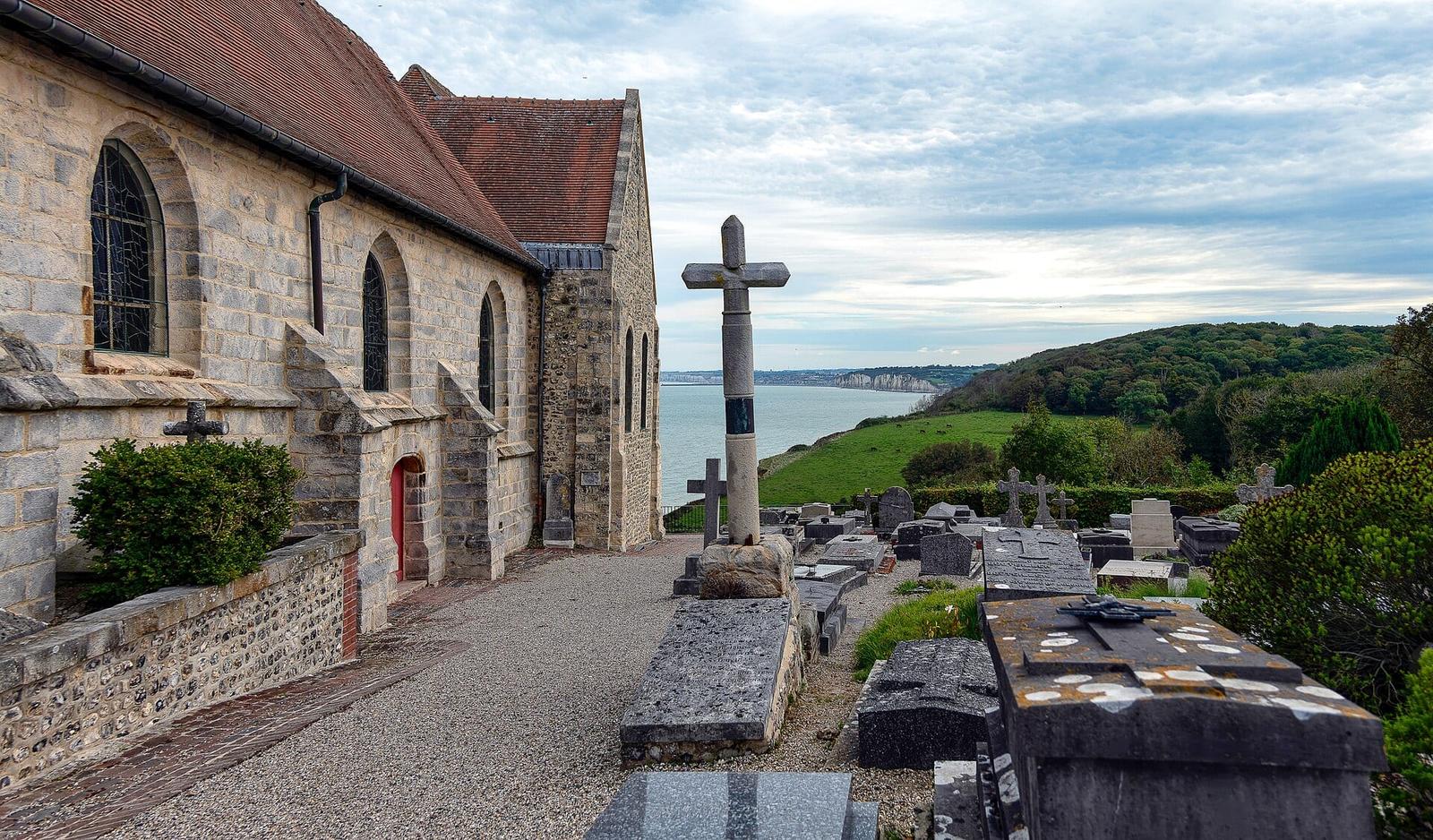

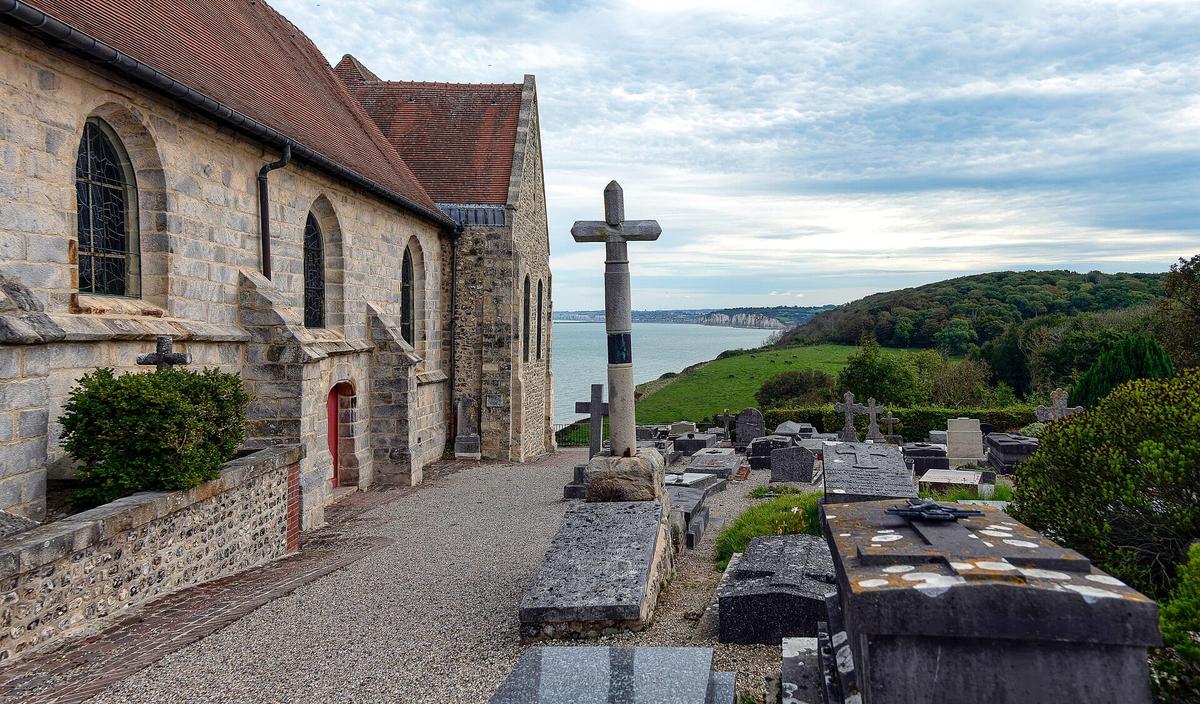
A few kilometres from Dieppe, Varengeville-sur-Mer spreads out between woods, gardens and cliffs. Its church of Saint-Valery stands on the edge, 80 metres above the sea, and the painter Georges Braque lies in the seaside cemetery around it. The village is free to explore, with no ticket. Here is how long to allow, how to reach the beach through the valleys, what to know about the Manoir d'Ango and what to combine on the same day.
Varengeville-sur-Mer at a glance
- Where: in the Seine-Maritime department, on the Alabaster Coast, about 9 km west of Dieppe.
- Price: free. St Valery's church, the seaside cemetery, the paths and the beach are open access. Only the Manoir d'Ango, a private house open in season, charges: €6 full price.
- Time needed: 45 minutes to 1 hour for the church and cemetery, half a day with a walk down to the beach or a garden visit.
- Highlights: Braque's stained-glass window in the church, his grave topped with a dove, the view over the bay of Dieppe, the Manoir d'Ango, and the Petit Ailly, Moutiers and Vasterival valleys.
- Good to know: by November the Manoir d'Ango's season is over. The village itself can be visited all year.
- Who it suits: art lovers, walkers, photographers, and anyone already visiting the Bois des Moutiers or Dieppe.
Why visit Varengeville-sur-Mer
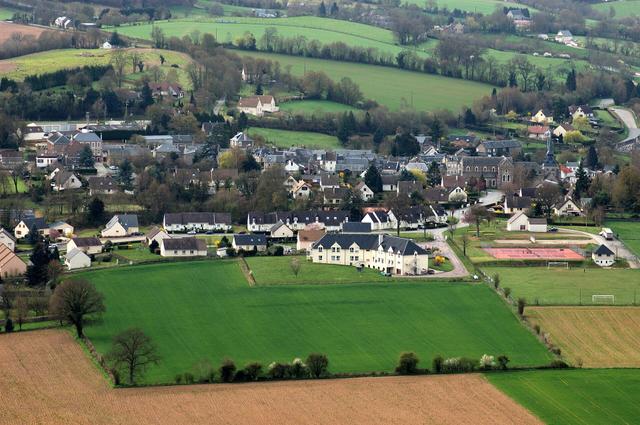
Varengeville-sur-Mer has 962 inhabitants (2022) spread over a large area of scattered hamlets between woods, fields and the cliff. There is no real village square. People come for a church on the edge of the cliff, for the memory of the artists who lived here, and for the gardens.
Claude Monet painted here in 1882, including The Customs House and The Sunken Path in the Cliff, and came back in 1897. According to the Dieppe tourist office, his paintings of the church made it known around the world. Georges Braque settled in Varengeville and is buried here. The composer Albert Roussel and the architect Paul Nelson lie in the same cemetery.
The village is also known for its gardens. The best known, the Bois des Moutiers, has its own guide, so we do not describe it again here. See also: Bois des Moutiers
How long does it take to visit Varengeville-sur-Mer?

Allow 45 minutes to 1 hour for St Valery's church, its window and the seaside cemetery, with time to take in the view.
For a fuller outing, plan on half a day:
- The church and cemetery: 45 minutes to 1 hour.
- The walk down to the beach through a valley and back: about an hour, more if you walk along the shingle.
- The Manoir d'Ango, in season, from outside or with a visit to the courtyard.
- A garden: the Bois des Moutiers in the morning, by booking. See also: Bois des Moutiers
- The Three Gorges of the Ailly walk: 13.1 km and 3 hours 15 minutes on foot, according to the tourist office.
Our tip: the Bois des Moutiers is visited in the morning. Do the garden first, then the church late in the morning: it is at the end of the same road.
Is Varengeville-sur-Mer free? Prices and visits
Yes. St Valery's church and the seaside cemetery are free for everyone, according to the Dieppe tourist office. The paths, valleys and beach are public spaces.
What you pay for:
- The Manoir d'Ango: €6 full price and €4 reduced, according to the Dieppe and Seine-Maritime tourist offices. These pages also show a rate "from €8.50" without saying what it covers, probably a guided tour: ask on site.
- Private gardens in the village, such as the Bois des Moutiers, have their own prices. See also: Bois des Moutiers
Opening hours and the best time to visit

The village and cemetery have no published hours. The Dieppe tourist office warns that the church's opening hours are not guaranteed. If you really want to see Braque's window, call the town hall on +33 2 32 14 40 60 before you come.
The Manoir d'Ango opened in 2026 from 4 April to 1 November, 10:00 – 12:30 and 14:00 – 18:00. It opened at weekends, and every day for part of the season: check the exact days. The 2027 dates have not been published yet. Until spring, you will only see the manor from outside.
When to come. Spring is the best season: the gardens are in flower and the days are long. On a clear day, the view from the cemetery takes in the whole bay of Dieppe. In winter the village is very quiet and the wind is strong on the cliff, so dress warmly. Come late in the afternoon for the light on the sea.
How to get to Varengeville-sur-Mer
By car. This is the easiest way. The village is 9 km from Dieppe along the coast road heading west. For the church, follow the narrow Route de l'Église through the village to the cliff edge. The entrance to the Bois des Moutiers is on the same road.
Parking. Official sources do not detail parking near the church. The road is narrow: use the marked spaces and do not block the entrances to private properties.
Without a car. The nearest station is Dieppe, with trains from Rouen. We did not find a convenient regular bus to the church: plan on a taxi from Dieppe, or a bike if you are fit, as the coast is hilly. See also: Normandy without a car
On foot along the coast. The GR21 long-distance path follows the coastline. The Seine-Maritime tourist office also mentions a route along the beach to the Cap d'Ailly.
Renting a car. To combine Varengeville, Dieppe and the villages of the Alabaster Coast, a car gives you far more freedom. The agencies with the widest choice are in Rouen, about an hour's drive away.
Partner links: if you book through these links, we earn a commission at no extra cost to you. Partner links · Learn more
St Valery's church and the seaside cemetery
The church. It dates from the 13th century and stands about 80 metres above the sea, on the side of the cliff. It is a listed historic monument. Cliff erosion threatens it: if the cliff gives way, the church could fall into the sea.
Inside, look for Georges Braque's stained-glass window, which shows the Tree of Jesse, the family tree of Christ. It is in a small chapel of the church, according to the tourist office.
The seaside cemetery. It surrounds the church and looks over the bay of Dieppe. Several well-known figures are buried here:
- Georges Braque (1882-1963), painter;
- Albert Roussel (1869-1937), composer;
- Georges de Porto-Riche (1849-1930), writer;
- Paul Nelson (1895-1979), architect.
How to behave. The cemetery is still in use. Stay on the paths, keep your voice down and do not climb on graves for a photo. Never cross the fences on the cliff side: the edge is unstable.
Georges Braque in Varengeville: the grave and the windows
The grave. It is easy to find in the cemetery, near the church: a slab topped with a mosaic of a white dove.
The church window. This is Braque's Tree of Jesse, mentioned above.
The Chapelle Saint-Dominique. On the road from Varengeville to Dieppe, this small chapel has more windows by Braque. You can see it as you drive past; official sources do not publish its opening hours.
Going further. The Château-Musée de Dieppe holds a large collection of Braque's prints. Check that they are on display before you go specially for them. See also: Dieppe Castle Museum
The Manoir d'Ango
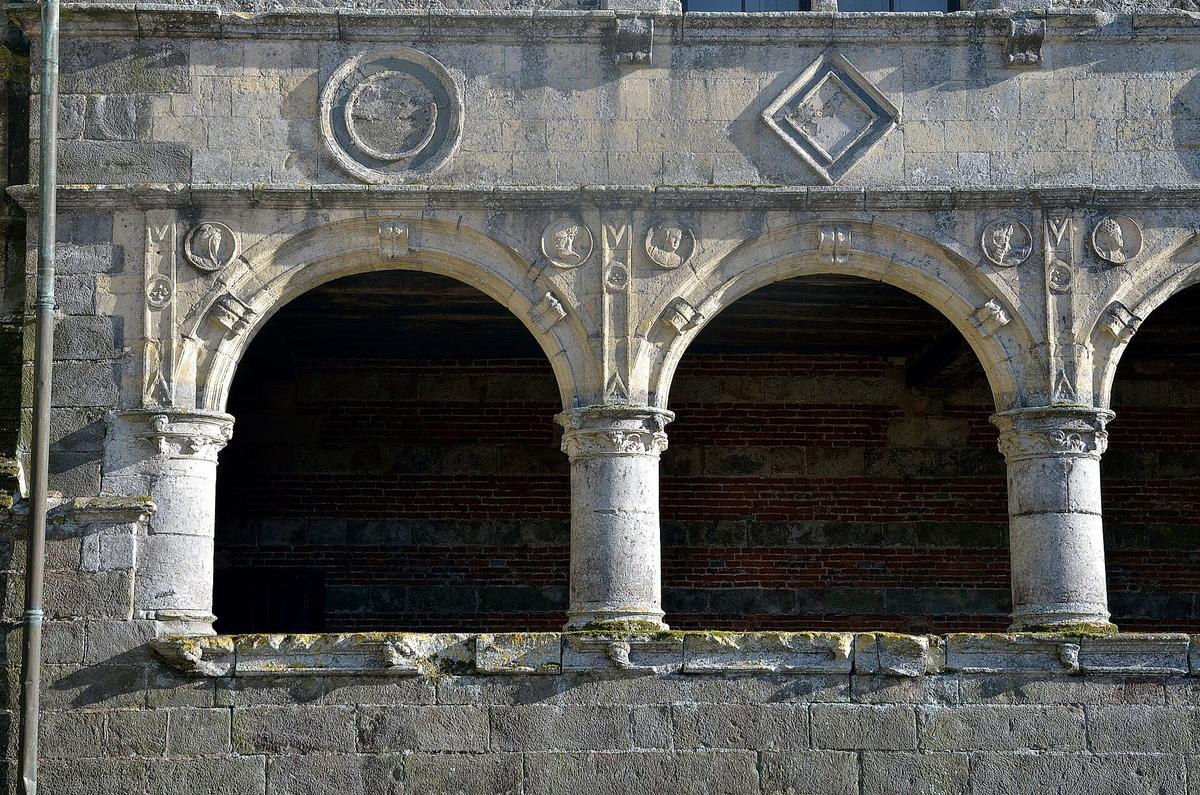

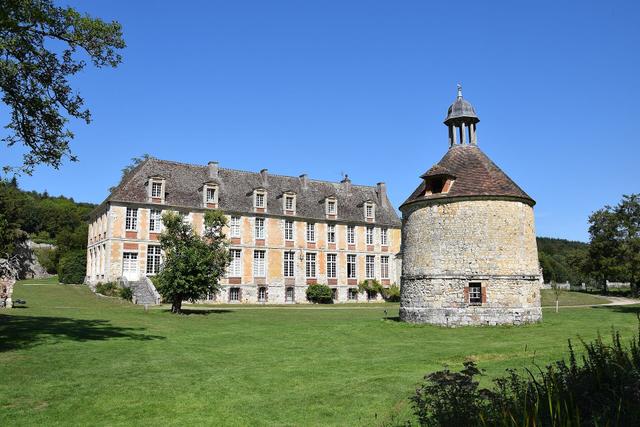
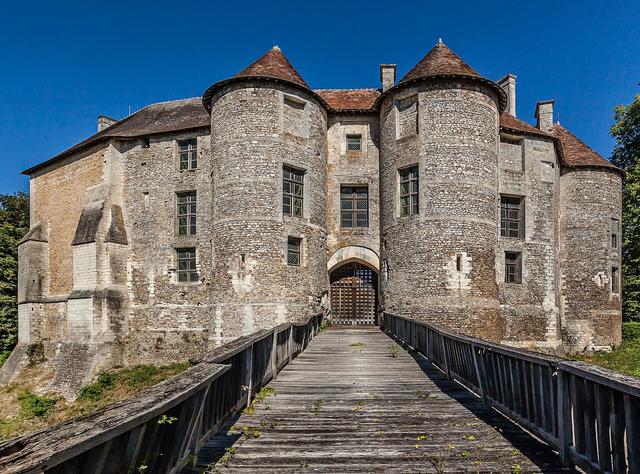
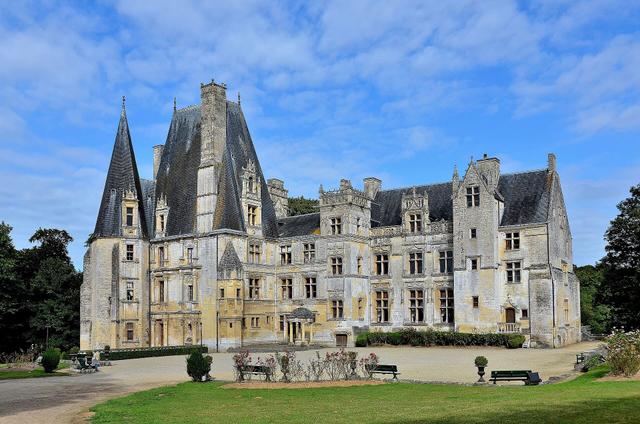
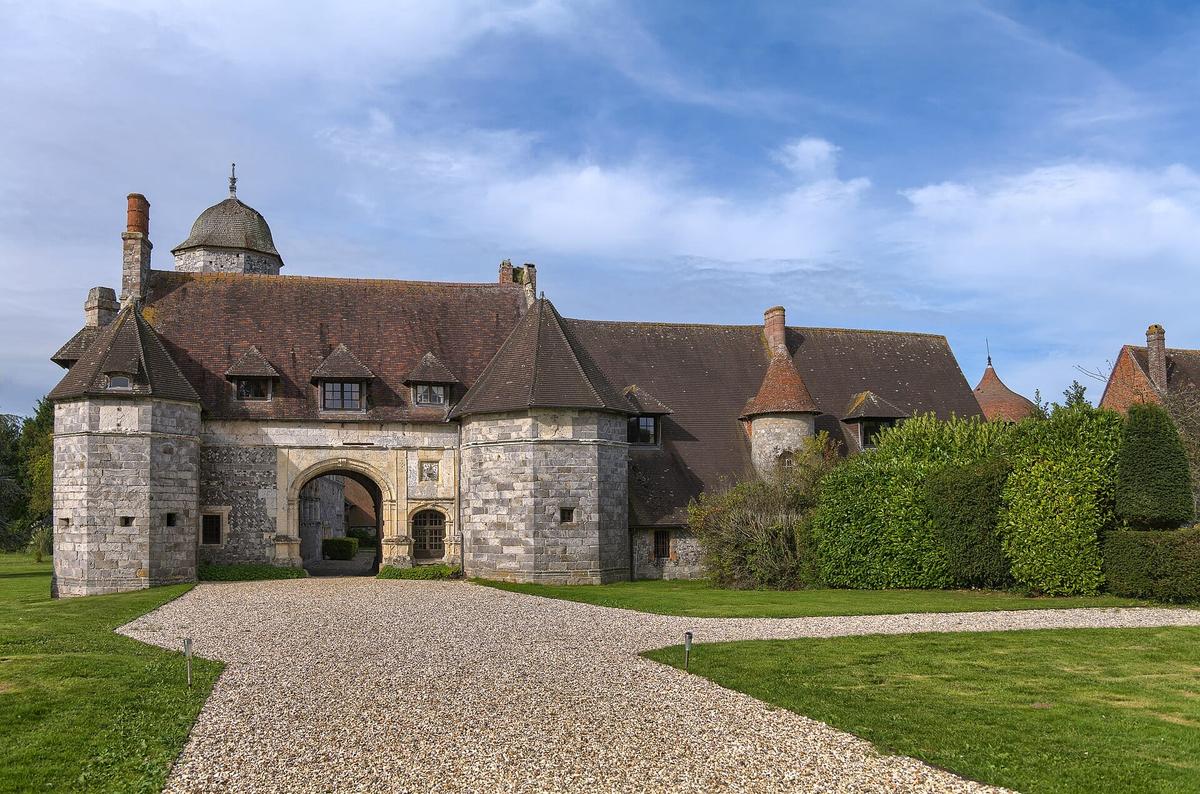
The Manoir d'Ango was built between 1530 and 1545 by Jean Ango, a Dieppe shipowner. From outside it looks like a fortress. In the courtyard it is a Renaissance residence, with a loggia decorated with pilasters and medallions.
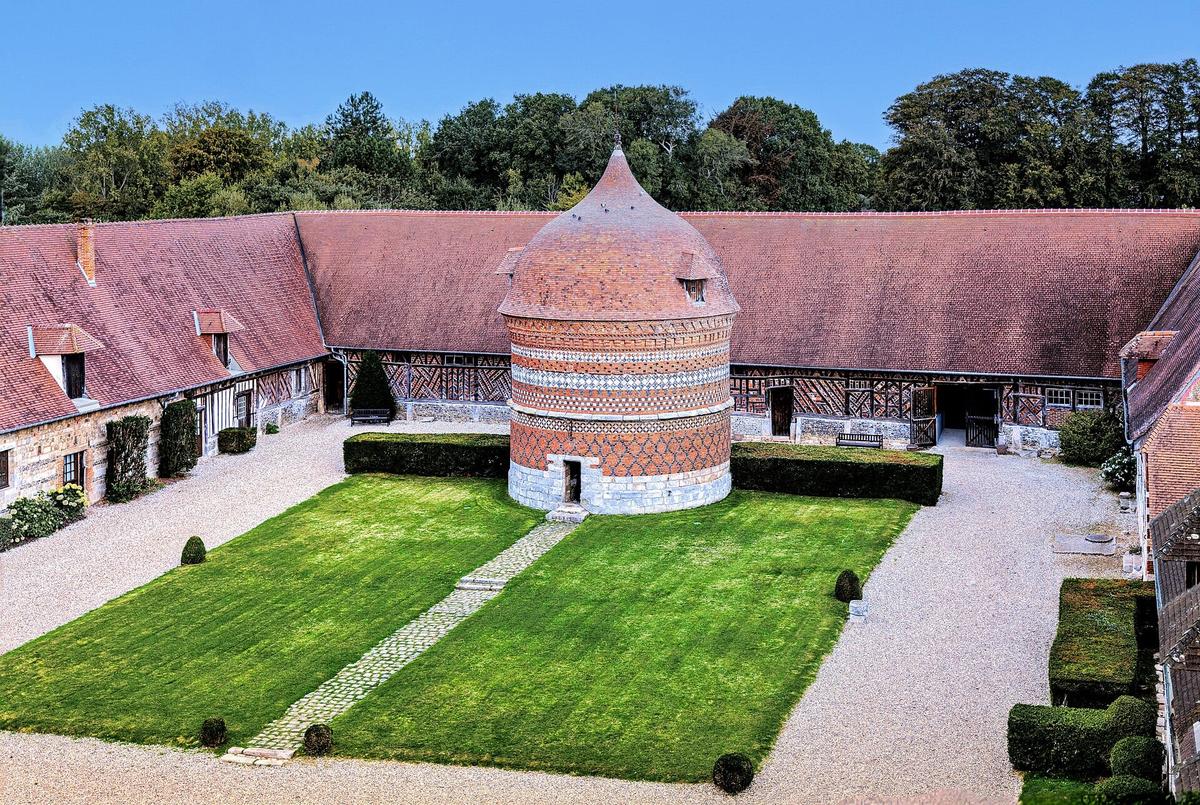
Its most photographed feature is the 1532 dovecote, topped with a dome, with bricks and cut flints laid in geometric patterns. King François I stayed here, according to the Dieppe tourist office.
The manor was set on fire during the Revolution, sold as national property and turned into a farm. Prosper Mérimée had it placed among the first historic monuments, on the 1862 list. The Hugot-Gratry family bought it in 1928, and their descendants have been restoring it since 2007.
In practice. It is a private property, open in season only, on Route de la Cayenne. Pets are not allowed. Out of season, simply walk past.
The valleys, the beach and the Three Gorges walk
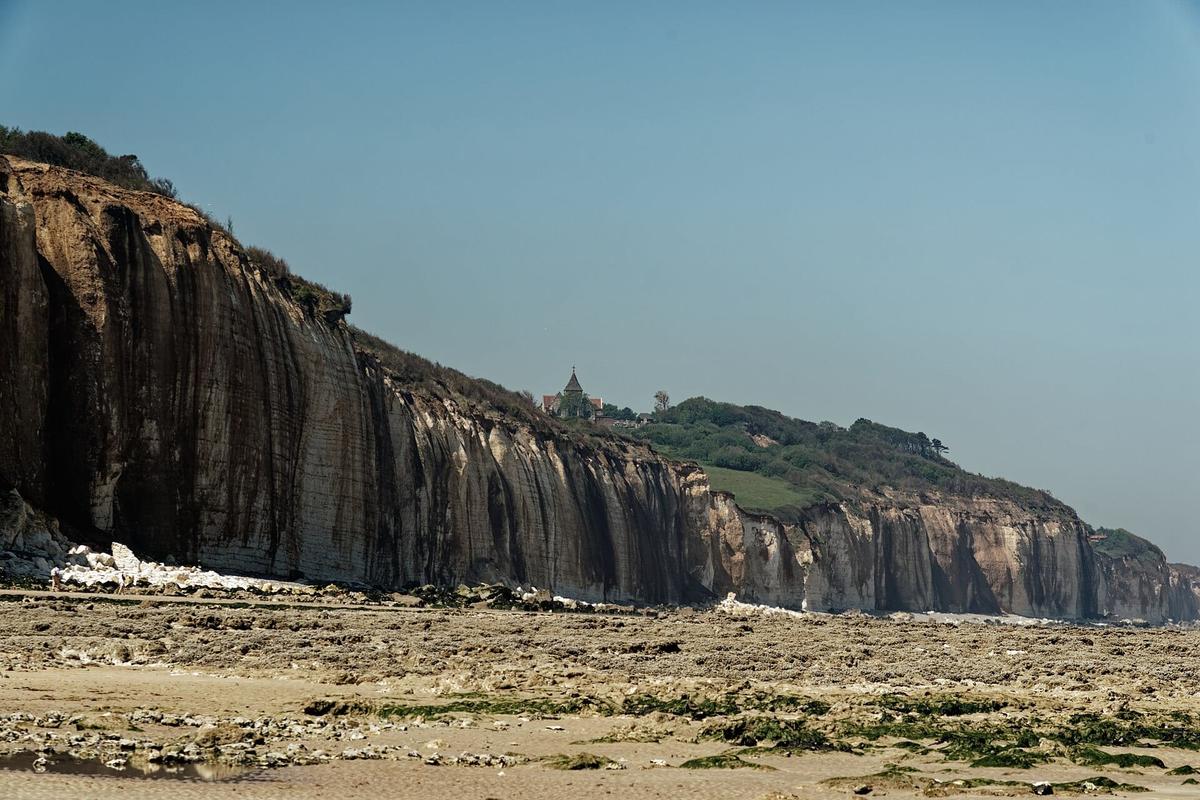

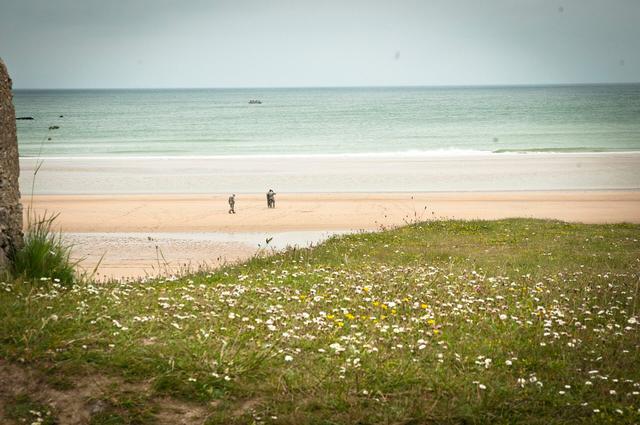
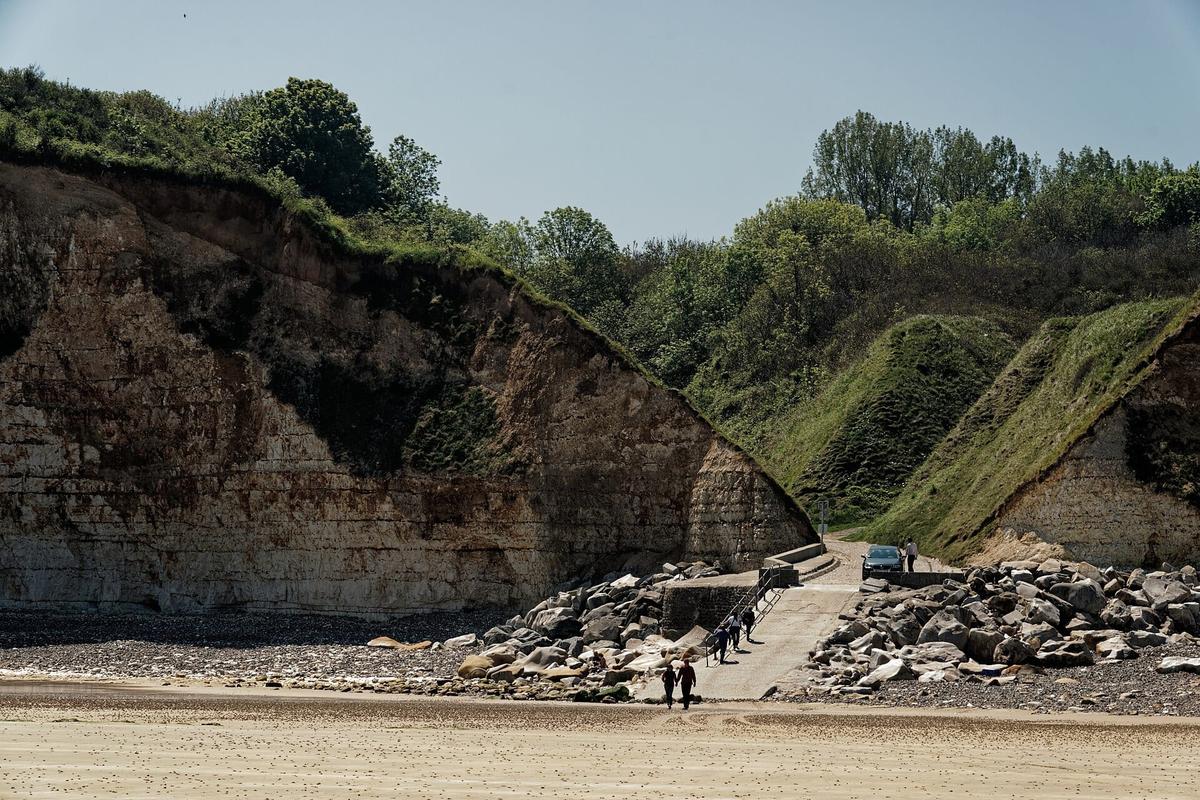
Varengeville reaches the sea through valleuses, dry valleys cut into the chalk cliff. The tourist offices mention three:
- The Gorge des Moutiers, below the church and cemetery. It leads to a beach you can only reach on foot. It is the most direct way to the sea from the church.
- The Vasterival valley, which runs down to a small wild beach of sand and rocks.
- The Petit Ailly valley, wilder, with a view of the bay of Dieppe. Its nickname is "la Glacière" (the icebox) because of the wind that rushes through it.
The Three Gorges of the Ailly walk. The Dieppe tourist office suggests a 13.1 km loop with 275 m of climbing and 3 hours 15 minutes of walking, of medium difficulty. It starts at the church, goes down to the sea through the valleys and passes near the Manoir d'Ango. The route can be downloaded from the tourist office website.
Safety. The tourist office describes some valleys as "sometimes perilous". Paths can be slippery and the beach lies at the foot of crumbling cliffs.
- Check the tide times before going down, and do not set off along the beach on a rising tide.
- Keep away from the foot of the cliffs.
- Wear good shoes: the beaches are mostly shingle.
Varengeville-sur-Mer with children

- The walk down to the beach through the Gorge des Moutiers is the easiest outing with them: hunting for pebbles and looking at the cliffs.
- The dovecote at the Manoir d'Ango, in season, appeals to children for its shape.
- The Three Gorges walk suits families used to walking, because of the climbs.
The cliff edge and the cemetery mean keeping young children close. A pushchair is hard going in the valleys: bring a baby carrier.
Varengeville-sur-Mer in a wheelchair
Official sources do not detail access to the church or the cemetery. The valleys and the beach are not suitable for wheelchairs: steep paths, steps and shingle.
Our tip: call the town hall on +33 2 32 14 40 60 to find out where to park closest to the church and how to get in.
Are dogs allowed in Varengeville-sur-Mer?
In the streets and on the paths, your dog can come with you on a lead. Official sources give no rule for the cemetery: out of respect, leave your dog outside with someone if you can. Pets are not allowed at the Manoir d'Ango. For the beach, ask at the town hall, as rules on the coast often change in summer.
Guided tours and day trips
We found no regular guided tour of the church or cemetery published for 2026 or 2027. Guided visits take place in some years during the European Heritage Days in September: keep an eye on the events listings of the Dieppe tourist office, at Pont Jehan Ango.
Day trips to the Alabaster Coast leave mostly from Rouen or Paris, and stop at Étretat or Dieppe more often than at Varengeville. If the church matters to you, check it is on the programme. See also: Étretat Cliffs
Guided tours and day trips on GetYourGuide
What to visit near Varengeville-sur-Mer on the same day
| Also worth seeing | Distance | Travel time |
|---|---|---|
| Bois des Moutiers | 1 km | 5 min by car |
| Dieppe Castle Museum | 9 km | 15 min by car |
| Veules-les-Roses | 25 km | 25 min by car |
Approximate road distances and travel times.
The Bois des Moutiers. On Route de l'Église, a few minutes from the church. Visits are in the morning, by booking. See also: Bois des Moutiers
Dieppe and its château-musée. A quarter of an hour away, the castle overlooks the beach and holds Braque's prints. See also: Dieppe Castle Museum
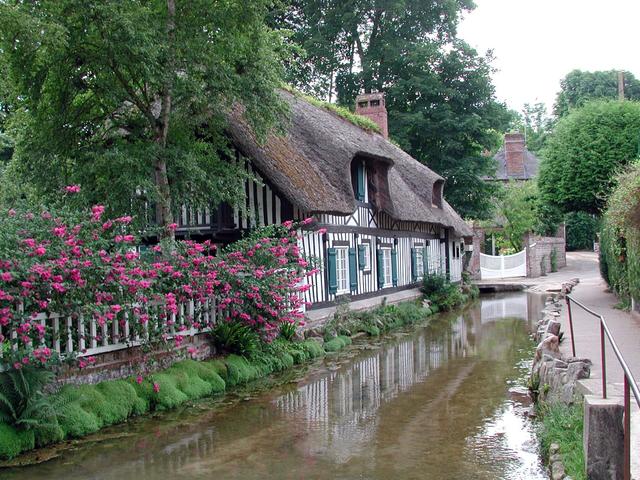
Veules-les-Roses. Half an hour west, an Alabaster Coast village crossed by a tiny river. See also: Veules-les-Roses
The Château de Miromesnil. Near Dieppe, inland. See also: Château de Miromesnil
Fécamp. Further west, for the abbey church of the Trinity. See also: Holy Trinity Abbey Church, Fécamp
Varengeville-sur-Mer in 8 dates
- 13th century: St Valery's church is built on the edge of the cliff.
- 1530: Jean Ango begins his manor. The dovecote dates from 1532.
- 1862: the Manoir d'Ango appears on the list of historic monuments.
- 1882: Claude Monet paints in Varengeville, including The Customs House.
- 1898: Guillaume Mallet begins the Bois des Moutiers.
- 1928: the Hugot-Gratry family buys the Manoir d'Ango.
- 1963: Georges Braque dies and is buried in the seaside cemetery.
- 2007: major restoration work begins at the Manoir d'Ango.
Anecdotes. In the 20th century, Surrealists such as André Breton and Louis Aragon stayed at the Manoir d'Ango. After the Revolution, stones from the manor were reused in village houses. The highest point of the commune is 102 metres.
Where to eat and stay in Varengeville-sur-Mer
The village has few restaurants. The Seine-Maritime tourist office mentions the restaurant of the hotel La Terrasse. Check its opening dates out of season. For more choice, Dieppe is a quarter of an hour away, with fish restaurants on the harbour. See also: Dieppe Castle Museum
To stay, Varengeville mainly offers B&Bs and holiday cottages spread across its quiet hamlets. Dieppe has more hotels. In spring, when the gardens are in flower, book early. See also: Normandy
Places to stay near Varengeville-sur-Mer
FAQ
Is visiting Varengeville-sur-Mer free?
Yes. St Valery's church, the seaside cemetery, the paths and the beach are free. Only the Manoir d'Ango charges, in season: €6 full price.
Where is Georges Braque's grave?
In the seaside cemetery around St Valery's church, on the edge of the cliff. It is topped with a mosaic of a white dove.
Where can you see Braque's windows in Varengeville?
In St Valery's church, with the Tree of Jesse, and in the Chapelle Saint-Dominique, on the road to Dieppe.
Is the Manoir d'Ango open?
In 2026 it opened from 4 April to 1 November. The 2027 dates have not been published yet: until then, you can see it from outside.
How do you get down to the beach from the church?
Through the Gorge des Moutiers, on foot, below the church and cemetery. Check the tides and stay away from the foot of the cliffs.
What is there to see near Varengeville-sur-Mer?
The Bois des Moutiers on the same road, Dieppe and its château-musée a quarter of an hour away, and Veules-les-Roses half an hour away. See also: Bois des Moutiers
Practical information
Official ticket-office prices 2026
Free admission
Address
Église Saint-Valery et cimetière marin, route de l'Église, 76119 Varengeville-sur-Mer, France
Directions · Phone+33 2 32 14 40 60
On site and nearby
- Nearest shops and pharmacy: Varengeville-sur-Mer, 2 km away Straight-line distance, based on OpenStreetMap.
- Emergencies: 112 (all emergencies, free from any phone), 15 (SAMU, medical emergency)
Around the site, on Google Maps
With children
Family days out nearby: Dieppe Castle Museum (6 km), Château de Miromesnil (9 km), Veules-les-Roses (14 km)
Swimming pools and play areas nearby, on Google Maps
Swimming poolsPlaygroundsLeisure parks
Family activities around Varengeville-sur-Mer on GetYourGuide
Facts checked on 4 November 2026. Sources: varengeville-sur-mer.fr, uk.dieppetourisme.com, uk.dieppetourisme.com, seine-maritime-tourisme.com, uk.dieppetourisme.com, fr.wikipedia.org, en.wikipedia.org, pop.culture.gouv.fr, uk.dieppetourisme.com, seine-maritime-tourisme.com
Map
In the same region