Visiting Veules-les-Roses: a practical guide to the village of France's shortest river
Veules-les-Roses at a glance
- Admission
- Free
- Time needed
- half a day
- Where
- Veules-les-Roses
Facts checked on 4 November 2026. Full opening hours, reduced prices and access
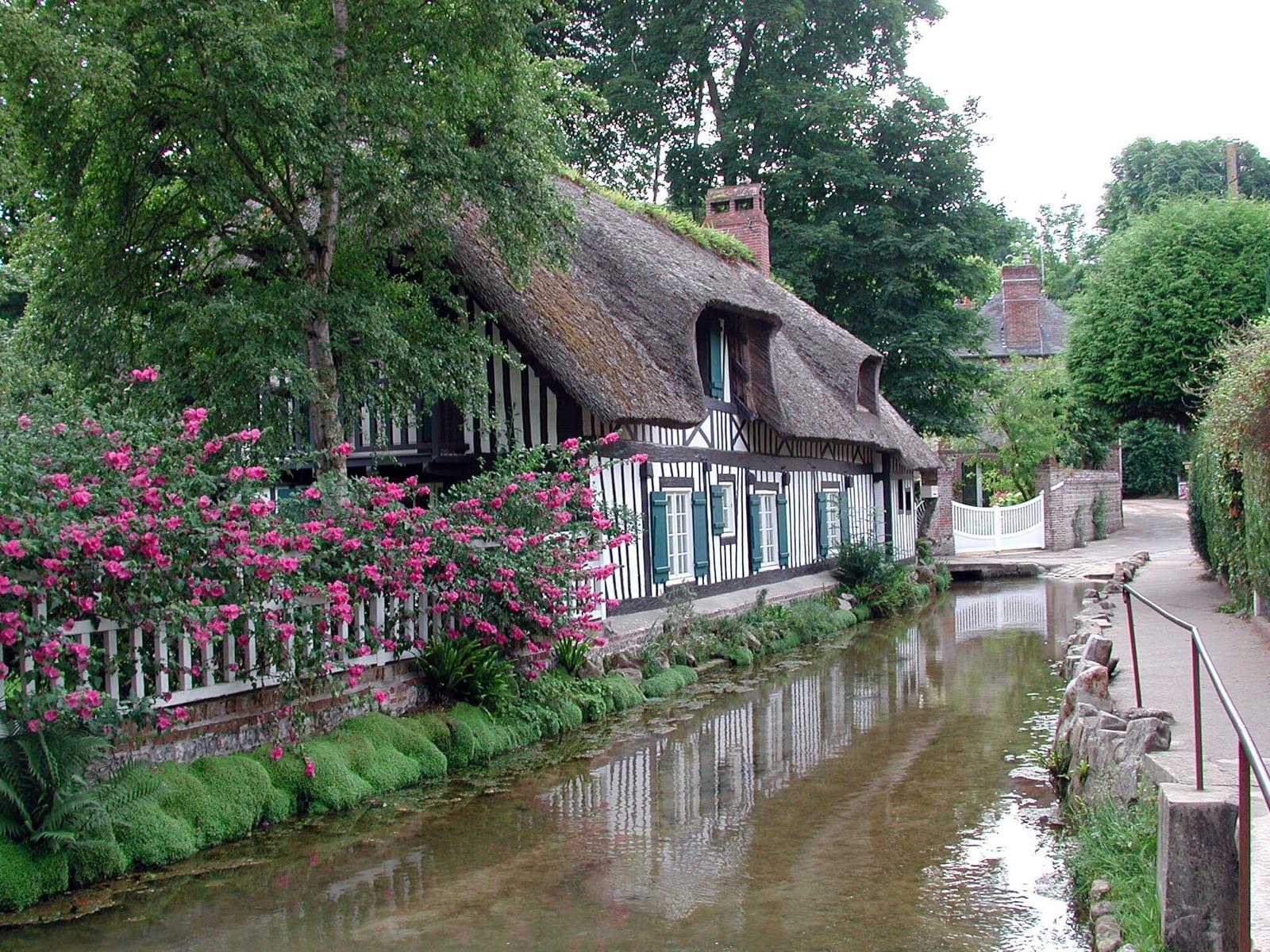

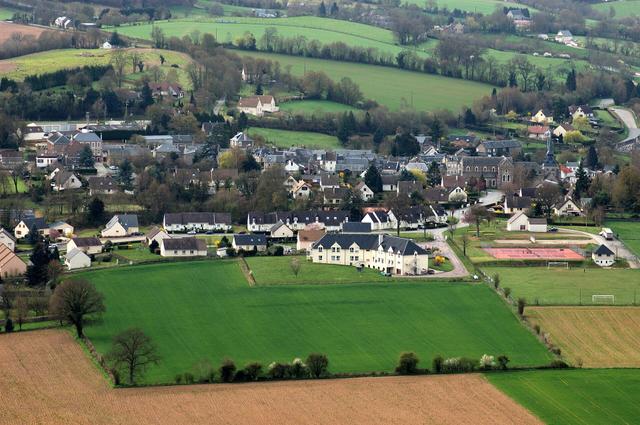
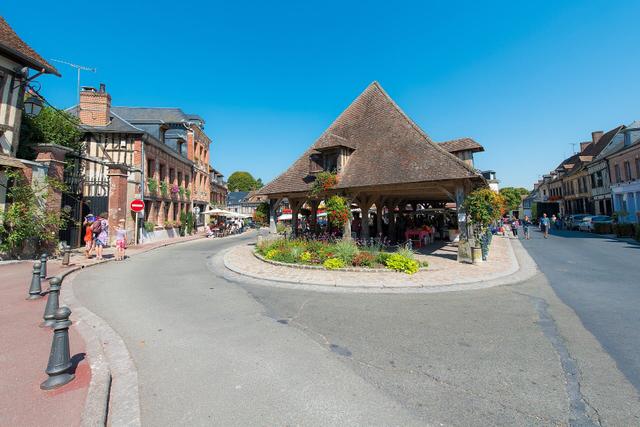
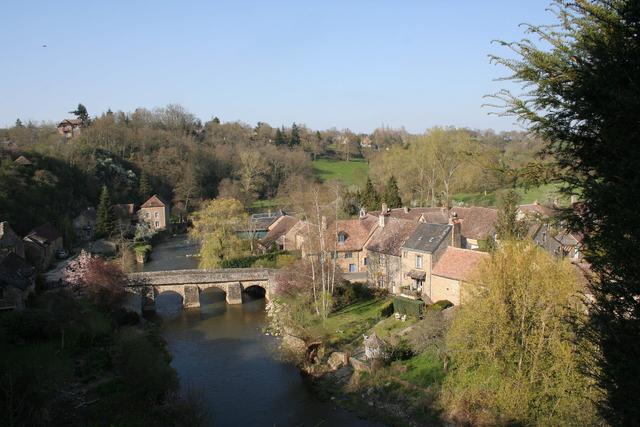
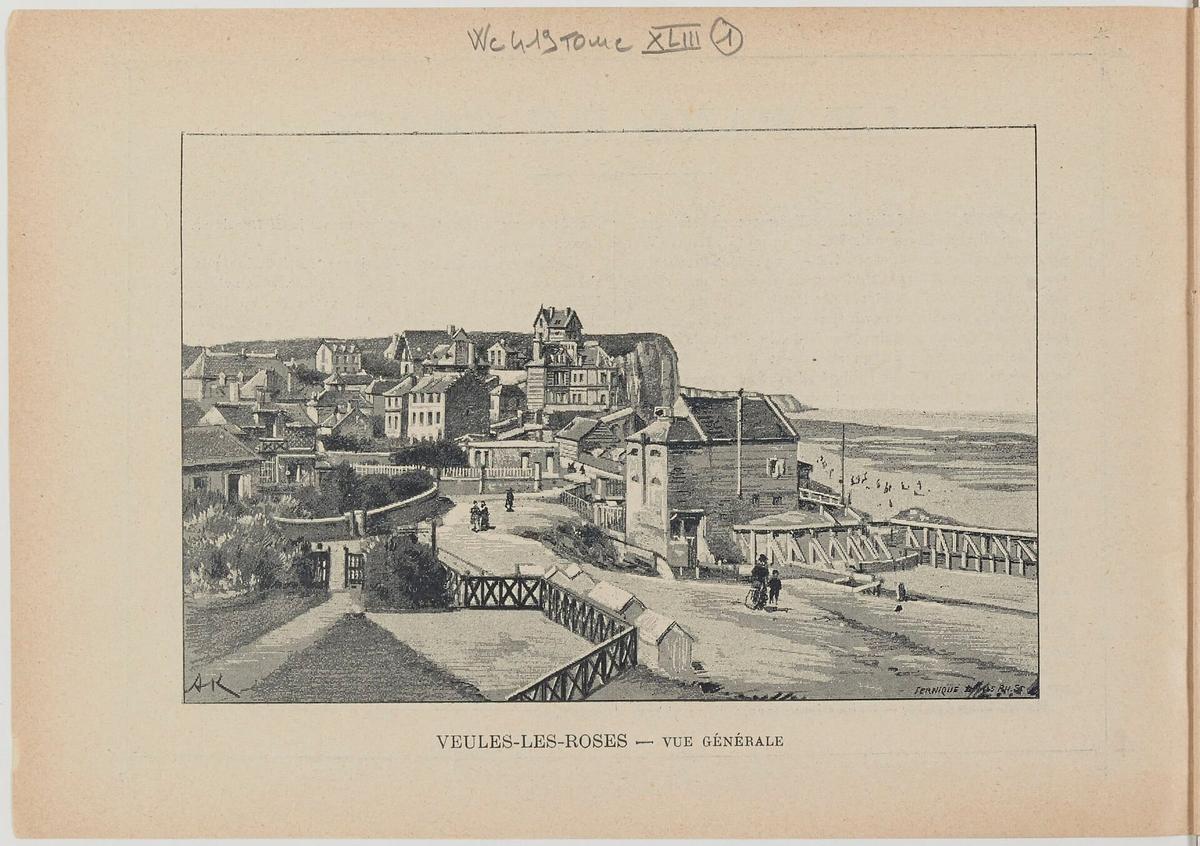
Veules-les-Roses sits in a small valley on the Alabaster Coast, between Fécamp and Dieppe. The Veules, billed as the shortest river in France, turns old mill wheels, runs past thatched cottages and watercress beds, then reaches the sea below the cliffs. The village is free to wander, with no ticket. Here is where to park, how long to allow, the free summer guided walk, the Victor Hugo connection and what to combine on the same day.
Veules-les-Roses at a glance
- Where: in Seine-Maritime, on the Alabaster Coast between Fécamp and Dieppe. The village fills a valleuse, a dry valley that runs down to the sea.
- Price: free. The village, the river walk and the beach are open access all year. The summer guided walk is free too, but you must book.
- Time needed: 1.5 to 2 hours for the river walk, half a day with the beach, lunch and the galleries.
- The river: the Veules is 1149 metres long from its springs to the sea.
- Parking: 5 free car parks around the village. The centre is a blue zone (30 minutes).
- Label: one of the Most Beautiful Villages of France since 2017, the first in Seine-Maritime.
- Best for: walkers, families, photographers, Victor Hugo readers and anyone who likes villages built along water.
Why visit Veules-les-Roses
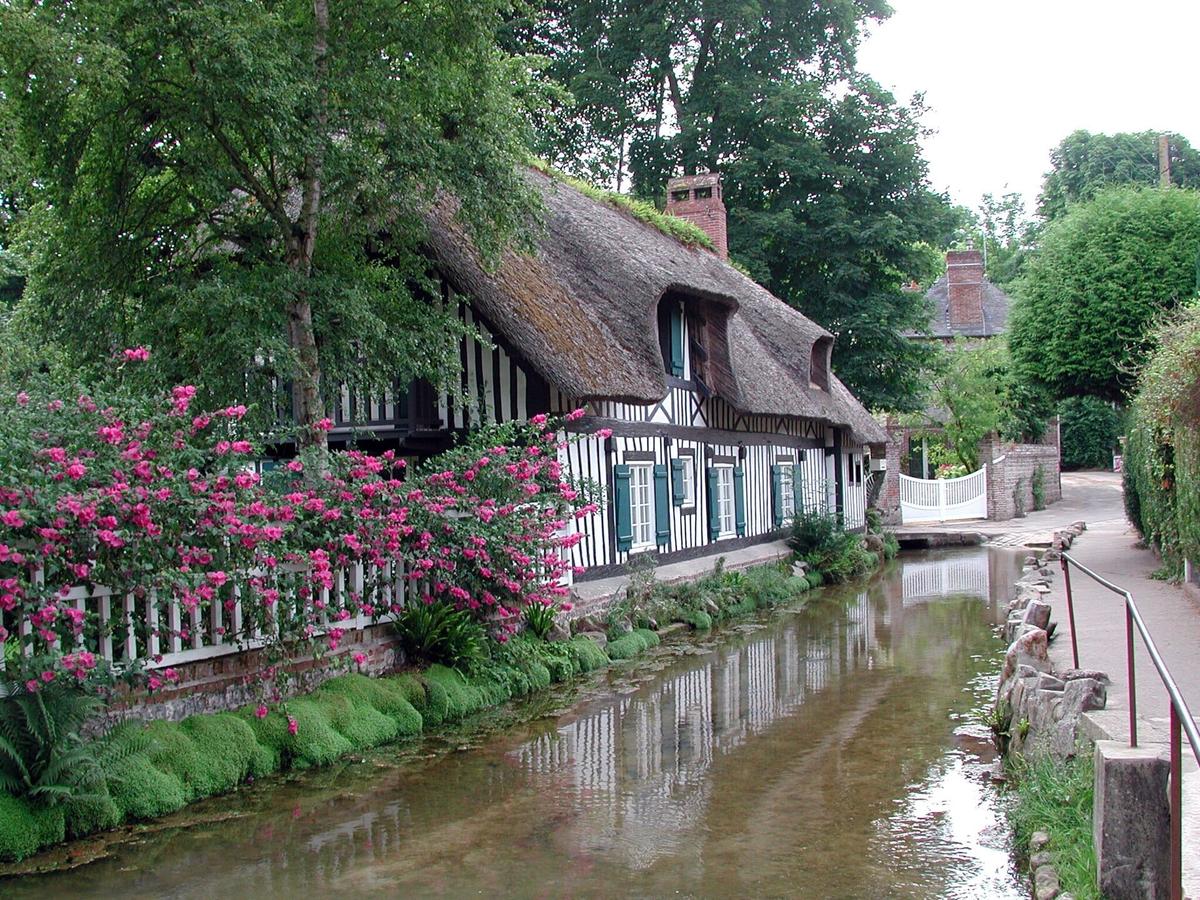
Veules-les-Roses is a village of 510 people (2023) in a valleuse, a dry valley that opens onto the sea between two cliffs. The town council dates human settlement here to the 4th century.
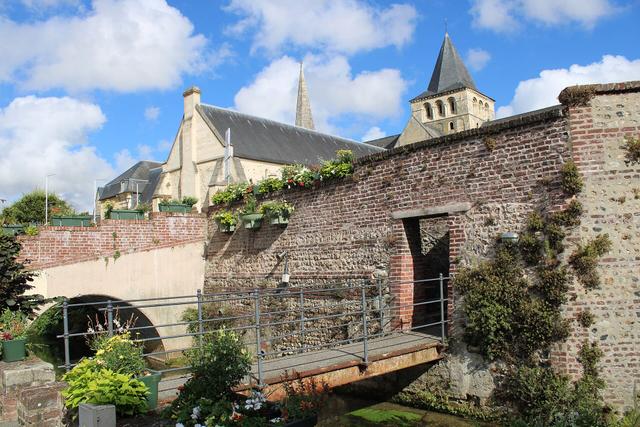
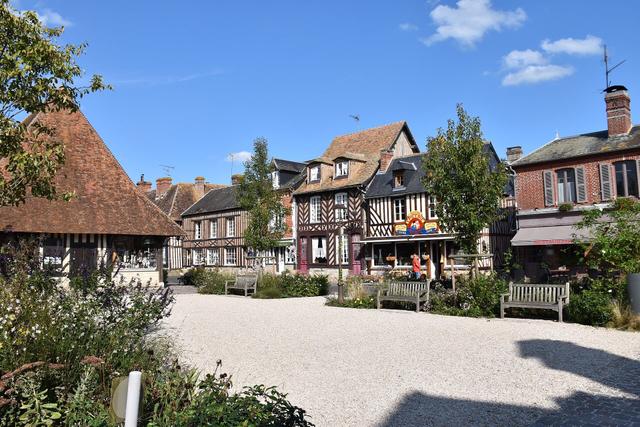
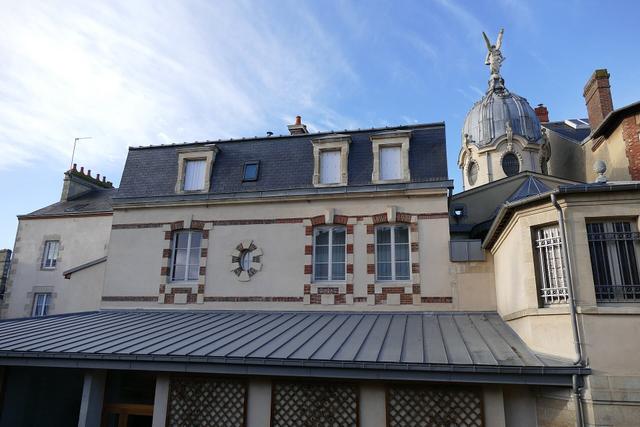
Its reputation comes from the Veules. The river rises at the top of the village, runs through gardens, passes under footbridges and flows into the Channel a few hundred metres further on. Along its course you find mills, seaside villas, thatched cottages covered in flowers and a listed church.
The village also has a long history with artists. According to the council, the actress Anaïs Aubert of the Comédie-Française discovered it in 1826. Writers and painters followed: Victor Hugo, the Goncourt brothers, François Coppée, Jean Richepin, and several Russian painters, including Ilya Repin and Vasily Polenov. Today the village has more than ten studios and exhibition spaces.
In 2017, Veules-les-Roses became the first village in Seine-Maritime to join the Most Beautiful Villages of France. It also holds the Villes et Villages Fleuris label, with three flowers.
How long does it take to visit Veules-les-Roses?
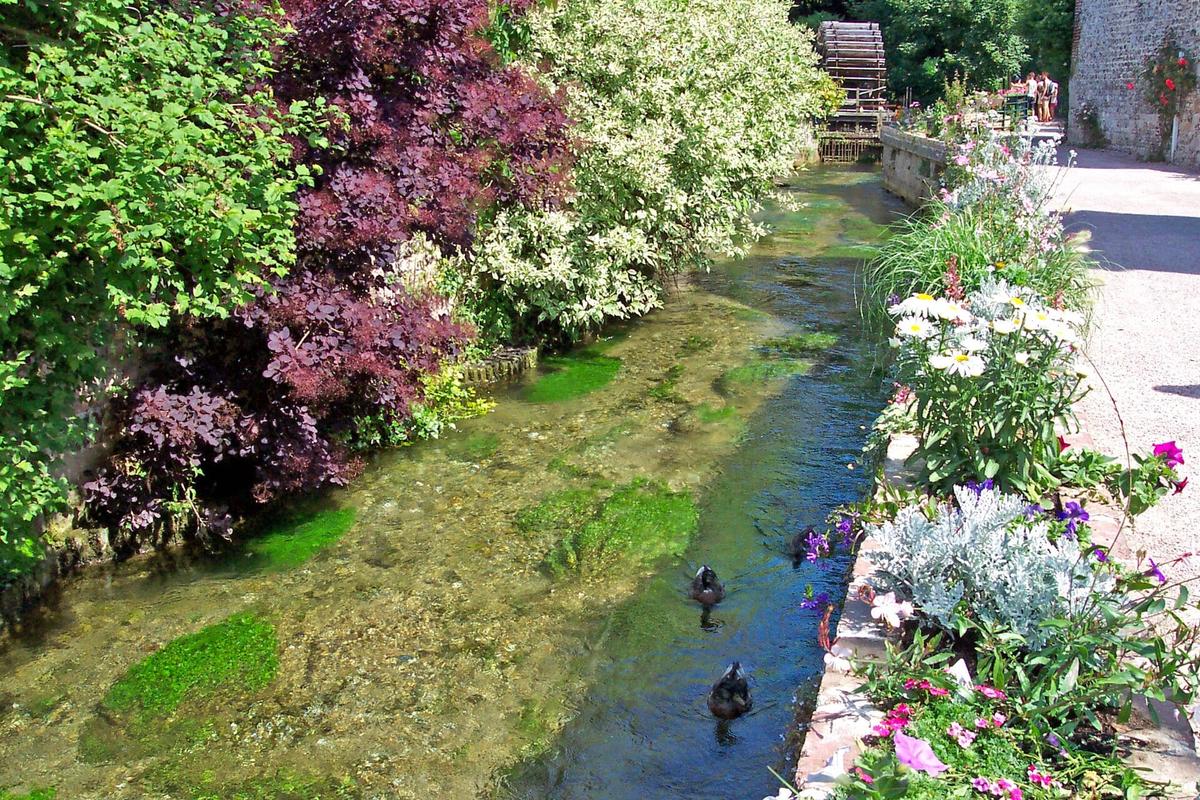

Allow 1.5 to 2 hours for the walk along France's shortest river. The loop is about 3.5 km there and back from the beach, according to the council, with information panels. You walk slowly, stopping at the mills, the old watering place and the watercress beds.
For a full outing, plan half a day:
- The river walk: 1.5 to 2 hours.
- The beach and seafront: an hour, timed for low tide if you want to walk on the sand.
- St Martin's Church and the galleries: half an hour to an hour.
- The summer guided walk: 1.5 hours.
Our tip: start at the top of the village, near the springs, and follow the water down to the sea. You end on the beach with the afternoon sun on the cliffs.
Is Veules-les-Roses free? Parking and guided walk
Yes, it is free. Veules-les-Roses is a village: you can walk around at any time, with no ticket. The river walk, the beach, the lanes and the outside of the mills are all open access. The official listing for the river walk says "free".
The car parks are free. The council lists 5 of them, each about ten minutes on foot from the centre or the beach:
- Parking du Canon: 200 spaces, beach side.
- Parking des Falaises: 250 spaces, beach side.
- Parking des Chasses-Marées: 110 spaces, beach side.
- Parking des Sources: 100 spaces, village side.
- Parking des Cressonnières: 30 spaces, village side.
In the centre, parking is a blue zone limited to 30 minutes. The council advises against driving and parking in the heart of the village: leave the car in a car park and walk in.
The guided walk along the river, run by the Côte d'Albâtre tourist office, is free and must be booked.
Opening hours and best time to visit
The village has no opening hours: the river walk and the beach are accessible all year, day and night. Restaurants, shops and galleries keep their own hours, which are shorter in winter.
Tourist information office (27 rue Victor Hugo). It belongs to the Côte d'Albâtre tourist office. We could not find reliable published hours for 2026: call +33 2 35 97 00 63 before relying on it.
The market. A traditional market is held in the morning in the centre, on rue Victor Hugo, 9:00 – 12:00 (9:00 – 13:00 in summer). The dates published for November and December 2026 all fall on Wednesdays.
Public toilets, free: at the Cressonnières car park and on place des Écossais, open day and night. On the beach, next to the fishmongers' stalls, 8:30 – 17:00 in low season and 8:30 – 19:00 in high season. A second block, next to the lifeguard post, opens in high season only.
When to go. The village is very busy on summer weekends and public holidays: arrive before 10 am to park near the beach. Spring and early autumn are quieter, with the gardens still in flower. On weekdays outside school holidays you will have the walk almost to yourself, but check that your chosen restaurant is open. Look up the tide times: at low tide the beach uncovers a wide stretch of sand.
How to get to Veules-les-Roses
By car. This is the easiest way. Veules-les-Roses is on the coast between Saint-Valery-en-Caux and Dieppe, on the Pays de Caux plateau. The council's website has a route planner. Park in one of the 5 free car parks and walk the rest.
By tour coach. Coaches drop passengers at a reserved stop on rue Mélingue and park on the coach car park on route de Blosseville. The council asks tour organisers to tell the town hall when they are coming and not to drive through the village on rue du Docteur Girard or rue Victor Hugo.
Without a car. There is no railway station in Veules-les-Roses. The council points visitors to Atoumod (atoumod.fr), the regional journey planner, to combine train and coach. Public transport takes time: check the return times before you set off. See also: Normandy without a car
Renting a car. For Veules and the Alabaster Coast, a car gives you far more freedom: you can easily combine Varengeville, Dieppe and Étretat on the same day. The most convenient rental offices are in Rouen, at the station or in town.
Partner links: if you book through these links, we earn a commission at no extra cost to you. Partner links · Learn more
What to see in Veules-les-Roses: the walk along France's shortest river
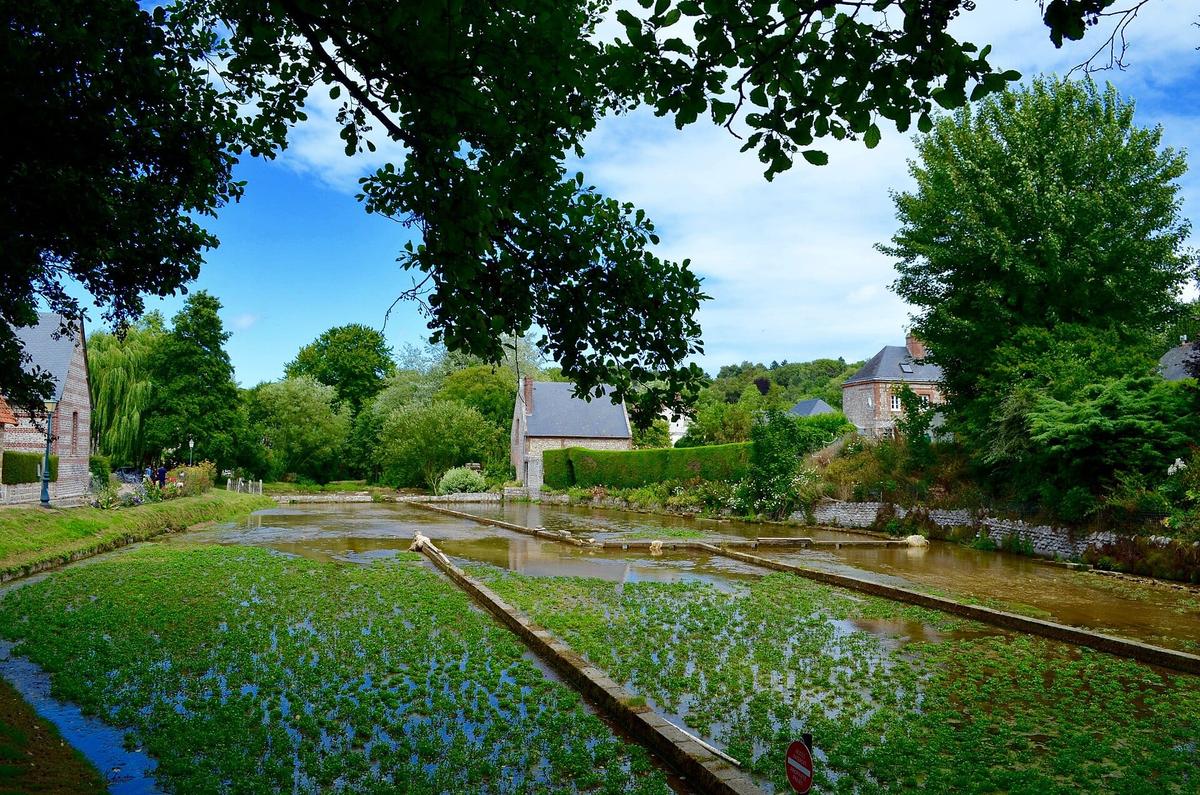

The Veules is 1149 metres long. The signposted walk follows it from the springs to the sea, about 3.5 km there and back, with information panels. The département's listing gives a slightly different length for the river; we use the council's figure.
The springs and watercress beds. The river rises at the top of the village. Watercress has been grown here since the 14th century, in clear-water beds where it grows on the surface. It now features in local cooking.
The Champs-Élysées. This path, named as a nod to Paris, runs under the trees to the mills and the narrow lanes along the Veules.
The abreuvoir. This is a ford lined with thatched cottages, where animals were once taken to drink. Follow the Veules to a sandstone footbridge.
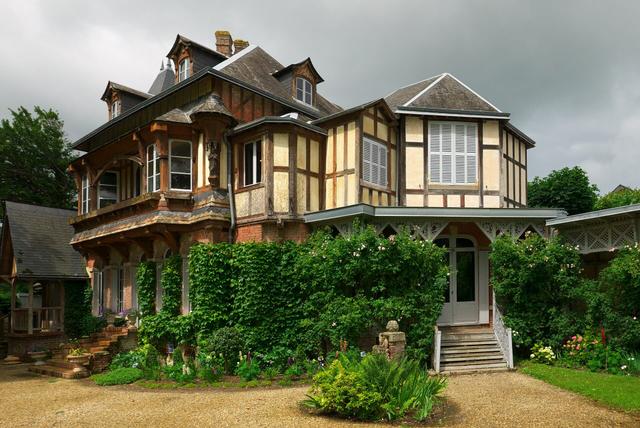
The seaside villas. Along the river and towards the sea, a few richly decorated villas recall the early days of sea bathing. Many were lost in June 1940.
Our tip: in places the path is narrow and runs between private properties. Stay on the route and keep your voice down: people live here.
The mills, the watercress beds and St Martin's Church
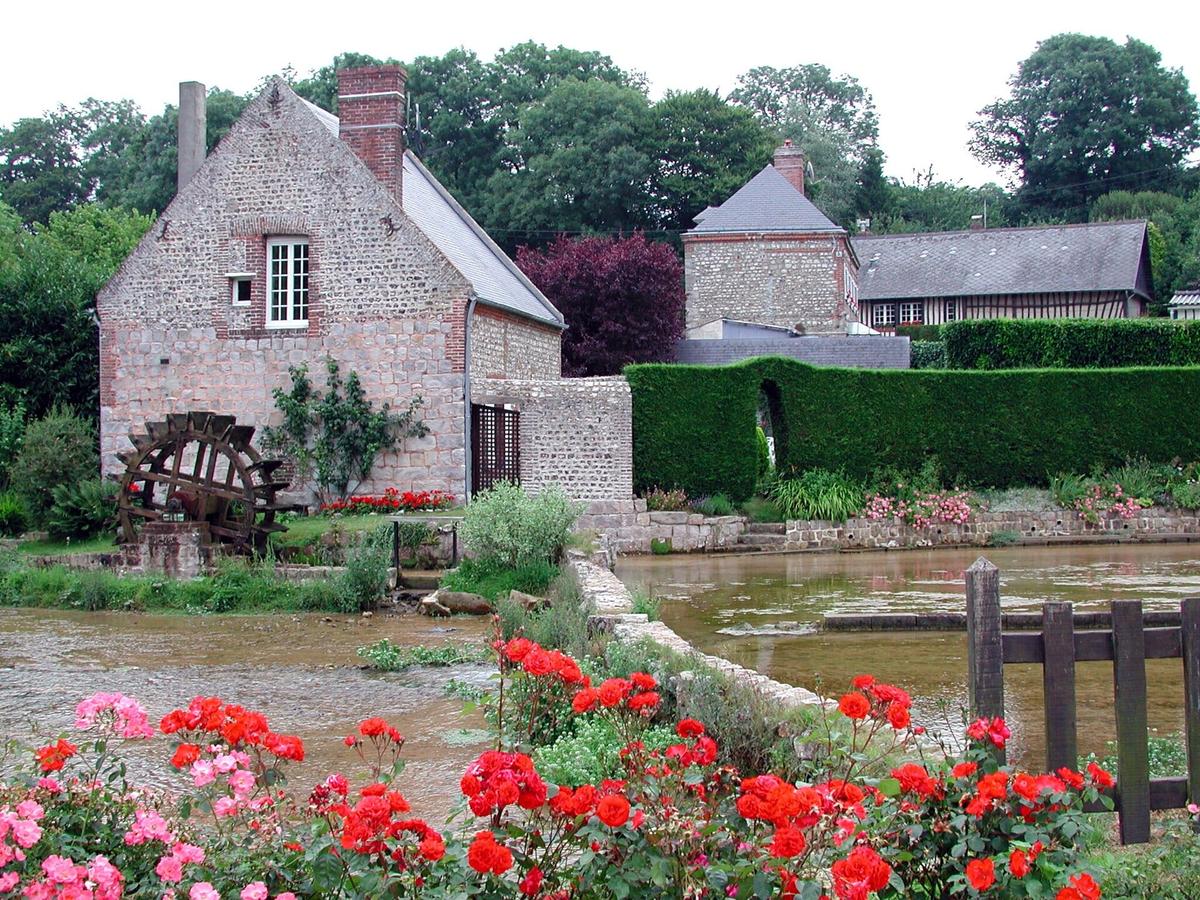

The mills. According to the council, there were once 11 mills on the Veules. Four are still visible: the Moulin des Cressonnières, the Moulin Anquetil, the Moulin des Aïeux and the Moulin du Marché. The wheels of the first three still turn. Only a turbine remains of the Moulin du Marché, the one that supplied Veules with electricity. Over the centuries the mills ground grain, then crushed flax during the Industrial Revolution, according to the council. You see them from outside.
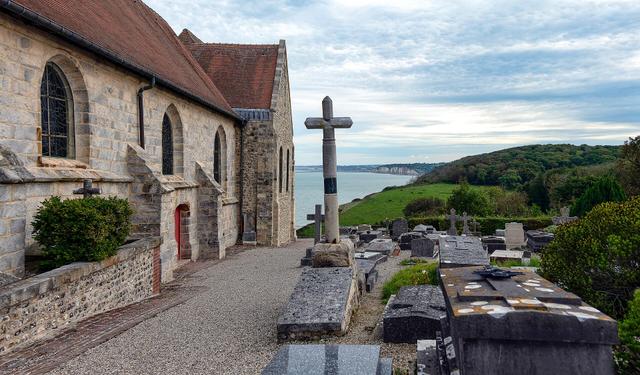
St Martin's Church. It was rebuilt in the late 15th and early 16th centuries, except for its older bell tower, which the council dates to the 13th century. Inside, look at the carved sandstone pillars, the Renaissance furnishings and the organ of 1628, which still plays. The church has been a listed historic monument since 1996.
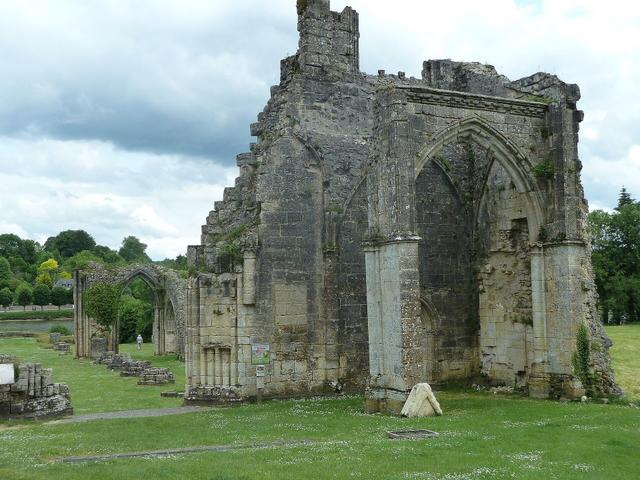
The ruins of St Nicholas' Church. From the 11th century, the Veules divided two parishes: St Martin on the left bank and St Nicholas on the right. Ruins of St Nicholas remain in a garden, and in the old churchyard there is a sandstone hosanna cross, protected since 1930.
Place des Écossais. The old market square got this name at the Liberation, in August 1944, according to the river walk leaflet.
The beach, the cliffs and Victor Hugo's grotto
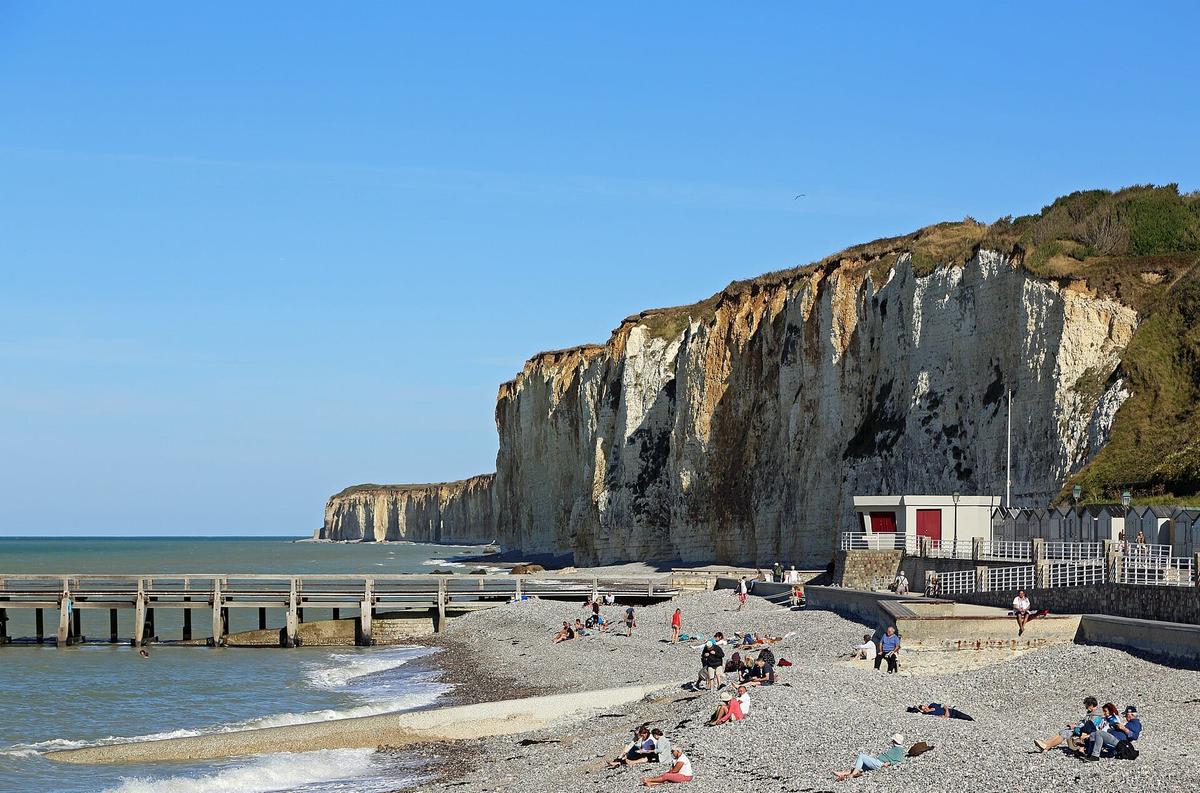

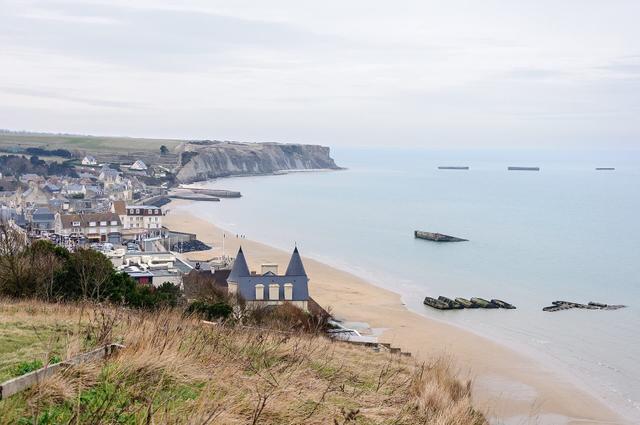
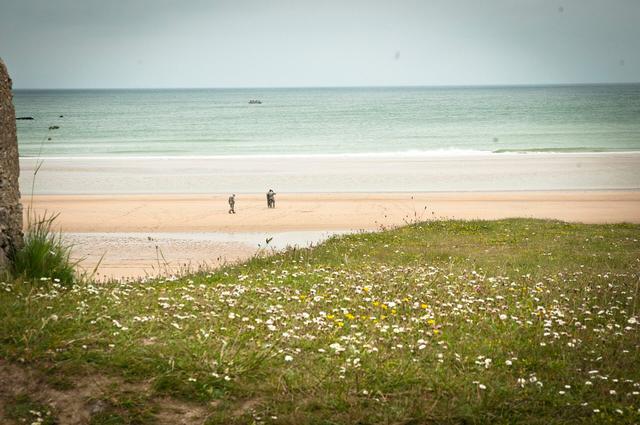
The beach. It lies at the mouth of the Veules, below the cliffs. At every low tide it uncovers a wide stretch of sand. The seafront was fully redesigned between 2001 and 2014: the Veules, which used to run in a channel, got back a natural course to the sea, and parking by the water was reduced.
The wreck of the Cérons. This patrol boat was sunk off the beach in June 1940. Its wreck shows at low tide.
Victor Hugo's grotto. Victor Hugo stayed in Veules in 1879, 1880, 1882 and 1884, with his friend the writer Paul Meurice. He liked to sit in a hollow in the cliff to think, write and watch the horizon. This "grotte Victor Hugo" can be seen above the beach huts. Rockfalls threaten it: look at it from the beach.
The Victor Hugo monument. A monument to him stands on place Mélingue. On 24 September 1882, the writer gave a large banquet for the village's poor children, with a raffle in which every ticket won.
Safety. Keep away from the foot of the cliffs: rocks fall regularly. Watch the rising tide if you walk far out on the sand.
Veules-les-Roses with children
- The river walk is short and varied: mill wheels turning, footbridges and clear water where wild trout live.
- The beach is the reward at the end. At low tide, children have plenty of room to play on the sand.
- The wreck of the Cérons, visible at low tide, often fascinates older children.
- Picnic areas are at the Cressonnières and near the town hall. The département's listing also mentions a play area along the walk.
With a pushchair, the seafront is easy. Some parts of the walk are narrow, with steps or dirt paths: a baby carrier is more practical.
Veules-les-Roses in a wheelchair
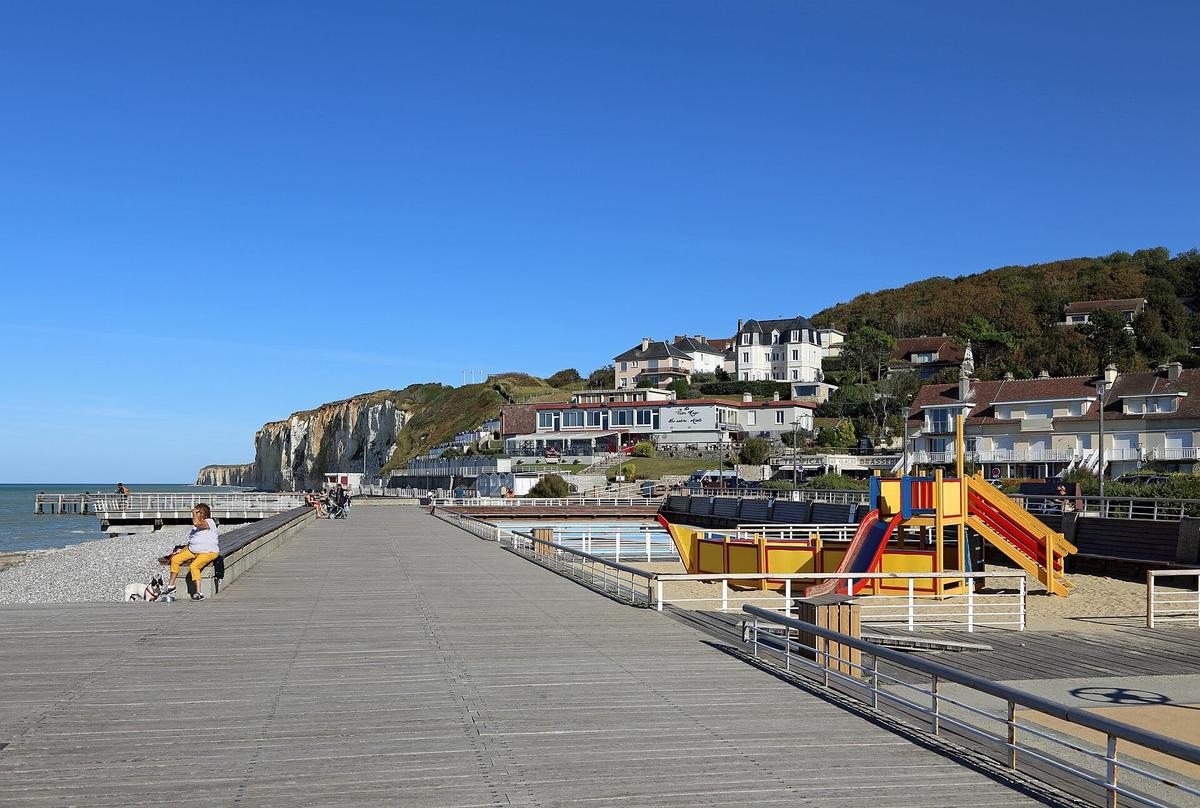

Official sources do not give details on the accessibility of the walk. The route mixes sloping streets, footbridges and narrow paths along the water. The recently redesigned seafront is the easiest part.
Our tip: call the tourist office on +33 2 35 97 00 63 or the town hall on +33 2 35 97 64 11 before you come to ask about reserved parking spaces and which sections are manageable.
Are dogs allowed in Veules-les-Roses?
Yes in the village: the département's listing for the river walk says animals are accepted, including on the guided walk. Keep your dog on a lead in the lanes and near houses. For the beach, we found no official published rule: many Normandy beaches restrict dogs in season, so ask the town hall or the tourist office before letting yours run on the sand.
Guided tours and excursions
The Côte d'Albâtre tourist office runs a guided walk along France's shortest river. In 2026 it took place on some summer Tuesdays, 10:30 – 12:00, starting from the church forecourt. It lasts 1.5 hours. It is free, but you must book with the office, on +33 2 35 97 00 63 or by email at info@cote-albatre-tourisme.fr. Groups of more than 10 contact the office directly, which welcomes them all year by appointment. The 2027 dates are not yet published.
Some day trips along the Alabaster Coast also stop in Veules. Check how much free time you get in the village: you need at least an hour to walk down the river to the sea.
What to visit near Veules-les-Roses on the same day
| Also worth seeing | Distance | Travel time |
|---|---|---|
| Bois des Moutiers | 19 km | 25 min by car |
| Dieppe Castle Museum | 27 km | 30 min by car |
| Étretat Cliffs | 60 km | 55 min by car |
Approximate road distances and travel times.
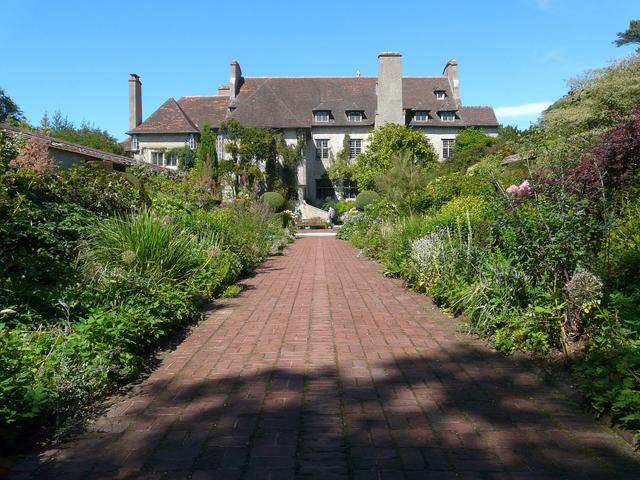
Le Bois des Moutiers, in Varengeville-sur-Mer. About twenty minutes towards Dieppe, this park and its Arts and Crafts house are known for their rhododendrons. Visits are in the morning and must be booked. See also: Bois des Moutiers
The Château-Musée de Dieppe. This castle on the west cliff holds the town's ivory collection and paintings of the coast. Dieppe is half an hour away. See also: Dieppe Castle Museum
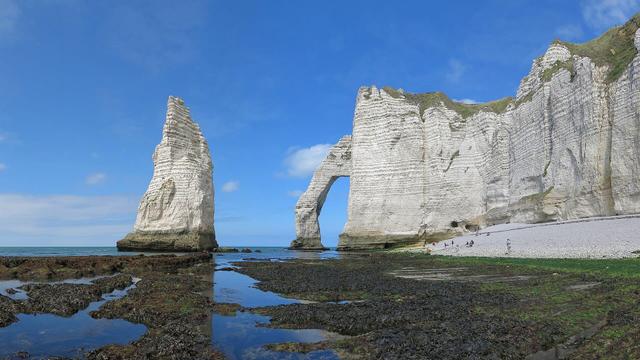
The cliffs of Étretat. Further west, close to an hour's drive, they round off a day on the Alabaster Coast well. See also: Étretat Cliffs
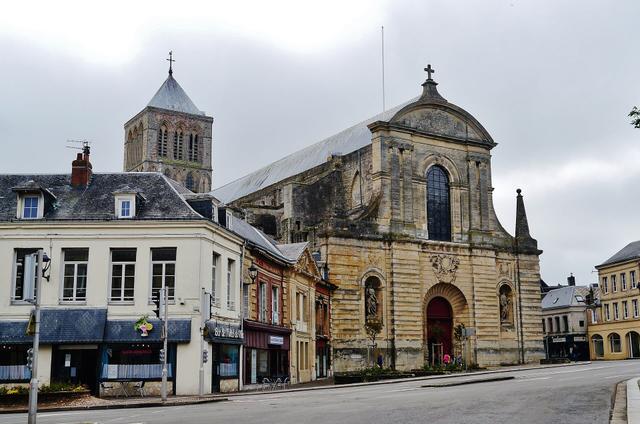
Fécamp. On the way to Étretat, the Abbey of the Holy Trinity and the Palais Bénédictine make a good halfway stop. See also: Holy Trinity Abbey Church, Fécamp, Bénédictine Palace
Veules-les-Roses in 10 dates

- 4th century: first traces of settlement in the valley, according to the council.
- 13th century: St Nicholas' Church is built and St Martin's is rebuilt.
- 1628: the organ of St Martin's, still in use.
- 1826: the actress Anaïs Aubert discovers the village.
- 1879-1884: Victor Hugo's four stays with Paul Meurice.
- 30 July 1897: Veules-en-Caux becomes Veules-les-Roses.
- 31 August 1930: Costes and Bellonte's plane, the "Point d'Interrogation", is seen for the last time over the cliffs, on its way to the first east-to-west crossing of the North Atlantic.
- 12 June 1940: a battle destroys the seafront, the casino and 35 houses. Around 3000 British and French soldiers had embarked from the beach, with no harbour.
- 2001-2014: the seafront is redesigned and the Veules gets back a natural course.
- 2017: the village joins the Most Beautiful Villages of France.
Trivia. The name may come from the Old Saxon "well", meaning spring. The village has been twinned with Alfriston, in England, since 2013. Veules oysters have won several medals at the Paris Agricultural Show, according to the council.
Where to eat and stay in Veules-les-Roses
The village has several restaurants and tearooms between the centre and the seafront. Menus often feature Veules watercress, oysters and seafood. On the beach, fishmongers' stalls sell the day's catch. In high season, book lunch at weekends.
For a night, the choice ranges from the Douce France hotel on rue du Docteur-Girard to B&Bs and holiday rentals, the Les Mouettes campsite and a VVF holiday village. Saint-Valery-en-Caux and Dieppe have more hotels less than half an hour away. See also: Normandy in 3 days
Places to stay near Veules-les-Roses
FAQ
Do you have to pay to visit Veules-les-Roses?
No. The village, the river walk and the beach are open access. The summer guided walk is free, but must be booked.
Where can I park in Veules-les-Roses?
In one of the 5 free car parks: Canon, Falaises and Chasses-Marées on the beach side, Sources and Cressonnières on the village side. The centre is a blue zone.
How long is the Veules, France's shortest river?
1149 metres from its springs to the sea, according to the council.
How long does it take to visit Veules-les-Roses?
1.5 to 2 hours for the river walk, half a day with the beach and lunch.
Where is Victor Hugo's grotto?
In the cliff, above the beach huts. Rockfalls threaten it, so view it from the beach.
What is there to see near Veules-les-Roses?
Le Bois des Moutiers in Varengeville, the Château-Musée de Dieppe, Fécamp and, a little further, the cliffs of Étretat. See also: Bois des Moutiers
Practical information
Official ticket-office prices 2026
Free admission
Address
Bureau d'information touristique, 27 rue Victor Hugo, 76980 Veules-les-Roses, France
Directions · Phone+33 2 35 97 00 63
On site and nearby
- On site: Toilets and picnics allowed
- Nearest shops and pharmacy: Veules-les-Roses, less than 1 km away Straight-line distance, based on OpenStreetMap.
- Emergencies: 112 (all emergencies, free from any phone), 15 (SAMU, medical emergency)
Around the site, on Google Maps
With children
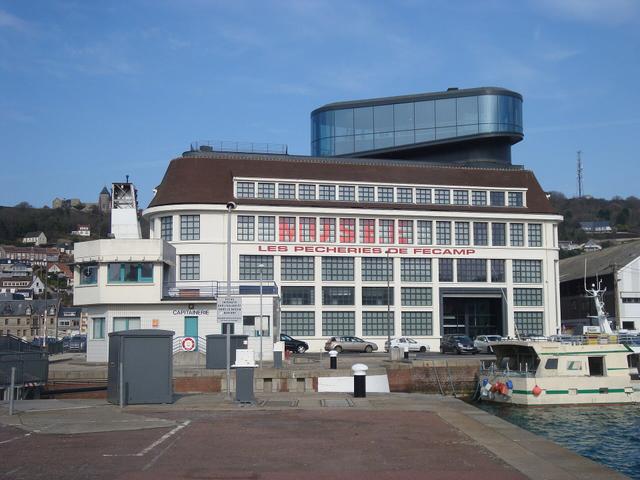
Family days out nearby: Château de Miromesnil (20 km), Dieppe Castle Museum (20 km), Les Pêcheries, Fécamp Museum (33 km)
Swimming pools and play areas nearby, on Google Maps
Facts checked on 4 November 2026. Sources: tourisme.veules-les-roses.fr, seine-maritime-tourisme.com, seine-maritime-tourisme.com, tourisme.veules-les-roses.fr, tourisme.veules-les-roses.fr, tourisme.veules-les-roses.fr, tourisme.veules-les-roses.fr, tendanceouest.com, tendanceouest.com, les-plus-beaux-villages-de-france.org, fr.wikipedia.org, en.wikipedia.org, tourisme.veules-les-roses.fr
Map
In the same region