Normandy American Cemetery: planning your visit
Normandy American Cemetery at a glance
- High season
- 9:00 – 18:00
- Low season
- 9:00 – 17:00
- Admission
- Free
- Where
- Colleville-sur-Mer
- Nearest station
- Bayeux
Facts checked on 29 October 2026. Full opening hours, reduced prices and access
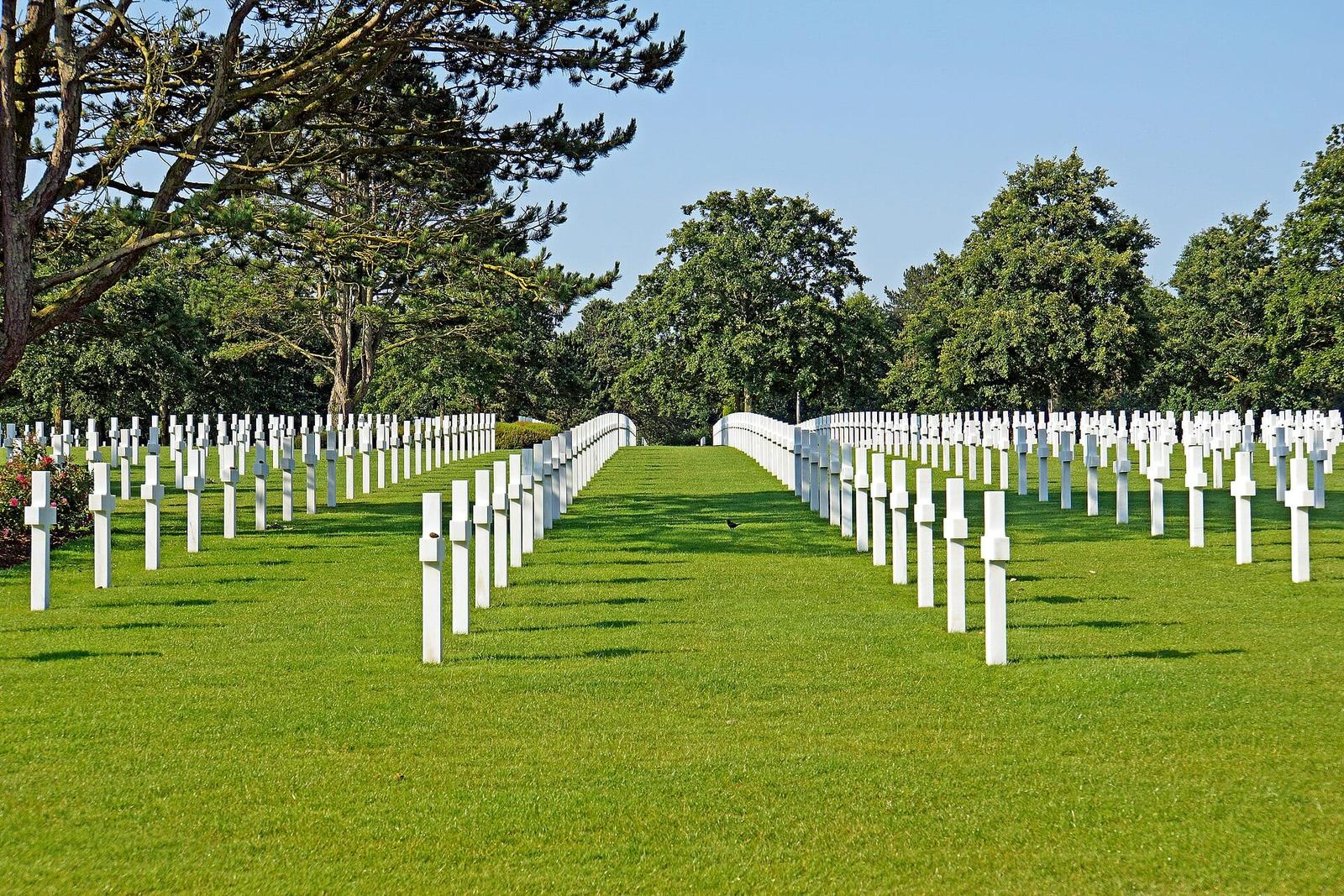
On the bluff above Omaha Beach, the Normandy American Cemetery holds 9389 graves of soldiers who died in the D-Day landings and the Battle of Normandy. Entry is free, it is open almost every day of the year, and more than a million people visit each year. Here are the opening hours, the rules to know, the booking system announced for 2027 and the best way to plan your visit.
At a glance
- Where: Colleville-sur-Mer (Calvados), on the bluff above Omaha Beach, northwest of Bayeux.
- Price: free, like every cemetery run by the American Battle Monuments Commission (ABMC).
- Open: every day except December 25 and January 1. 9 a.m. to 6 p.m. from April to September, 9 a.m. to 5 p.m. the rest of the year.
- Time needed: 1.5 to 2 hours, including the visitor center.
- Good to know: the ABMC plans to make advance registration compulsory for all visitors from summer 2027.
- Dogs: not allowed, except service animals.
Understanding what happened here
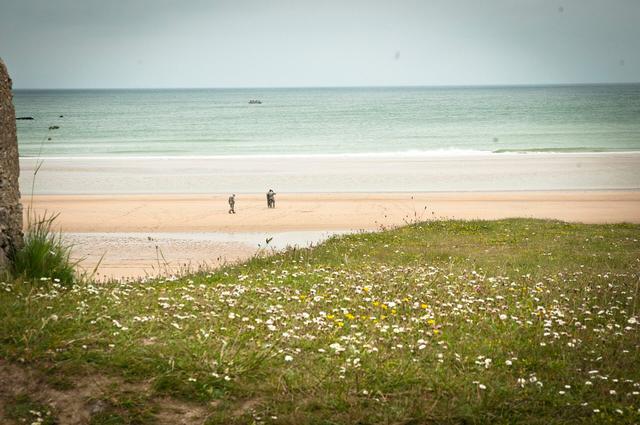
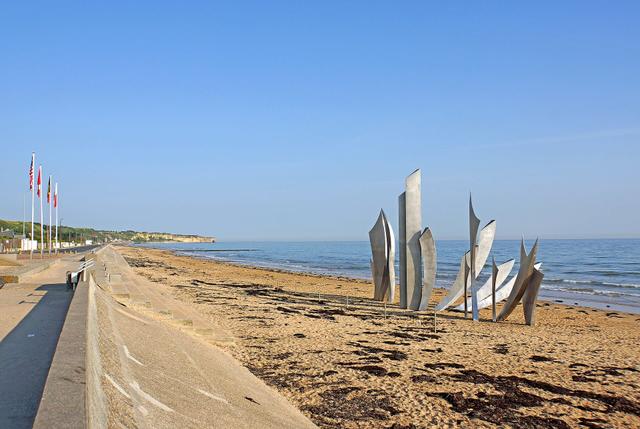
On June 6, 1944, American troops landed on two beaches: Utah, at the foot of the Cotentin peninsula, and Omaha, the beach you see below the cemetery. At Omaha, first-day losses were the heaviest of the whole landing. The bluffs, intact German defenses and a rough sea turned the beach into a trap for hours.
On 8 June 1944, the US First Army opened a temporary cemetery here, the St. Laurent Cemetery, the first American cemetery of World War II on European soil. After the war, families could choose: bring the body home to the United States or leave it in Normandy. Around 14,000 bodies were repatriated. The others remain here, in the permanent cemetery dedicated on 19 July 1956.
France granted the land to the United States free of charge and with no time limit, under an agreement signed in 1947. The ABMC, a US federal agency, maintains the cemetery and welcomes visitors. This is not a museum: it is a working military cemetery where families still come to pay their respects.
How long does it take to visit the Normandy American Cemetery?
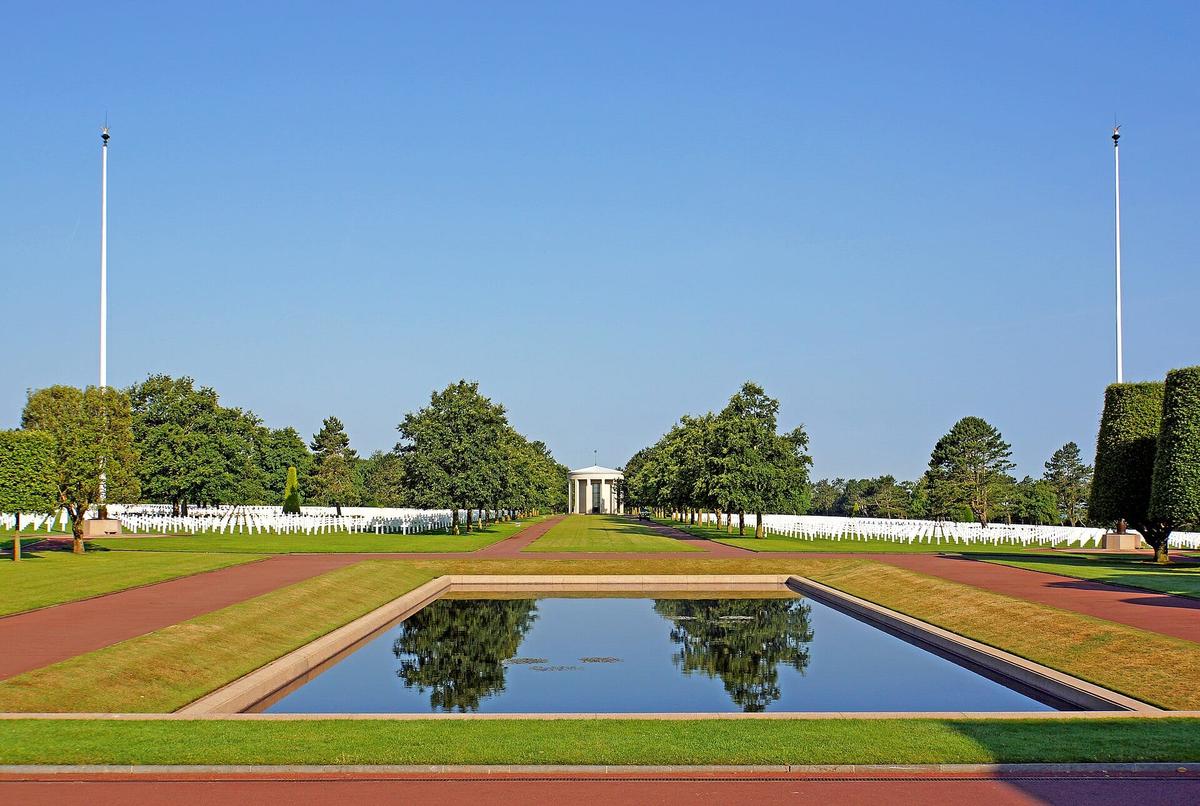
Allow 1.5 to 2 hours. The visitor center takes 30 to 45 minutes. The Memorial, the orientation table on the bluff, the central mall and the chapel take another hour on foot at an easy pace. The grounds cover about 70 hectares (172.5 acres): wear comfortable shoes.
Our tip: if you are adding Omaha Beach and Pointe du Hoc, keep at least half a day for the lot. See also: D-Day beaches
Free entry and booking
Entry is free, with no ticket. The ABMC states that all its sites are, and will remain, free to enter.
The access rules are changing, though. The cemetery is the ABMC's most visited site, and the agency has announced compulsory pre-registration for everyone: individuals, groups and tour operators. The timeline has already slipped. A first announcement targeted April 2026; the official page now expects the system to launch at the end of 2026, with reservations starting in summer 2027. These dates are still projections.
For now, no booking is needed. Families with a relative buried in the cemetery will always be able to visit on the day and at the time of their choice. If you are travelling in 2027, check the "Visiting Normandy American Cemetery" page on the ABMC website, where you can also sign up for email updates.
Opening hours and the best time to go
The cemetery is open every day, French public holidays included:
- April 1 to September 30: 9 a.m. to 6 p.m.
- October 1 to March 31: 9 a.m. to 5 p.m.
It is closed on December 25 and January 1. Admission ends 30 minutes before closing. The ABMC sometimes announces one-off closures of the visitor center, and around the D-Day anniversary access is tightly managed: check the news on the official website if you are coming near June 6.
The best time is first thing in the morning, before the tour coaches arrive. Late afternoon is the other good slot, with the flag lowering ceremony. On windy days the bluff is exposed, so bring a jacket even in summer.
How to get to the Normandy American Cemetery

By car. From Paris, take the A13 toward Caen, then the N13 toward Bayeux and Formigny. At Formigny, follow the D517 to Saint-Laurent-sur-Mer, then the D514 to Colleville-sur-Mer. The entrance is signposted. There is a car park near the visitor center, with spaces for coaches. Note: the ABMC warns that part of the A13 between Paris and Normandy will be closed from November 16, 2026 to August 2027. Plan another route.
By train. Trains run from Paris Saint-Lazare to Bayeux. From the station, finish by taxi, on an organized tour or by bus.
By bus. From 5 July 2026 to 31 August 2026, the Nomad summer line 125 runs along the coast between Grandcamp-Maisy and Courseulles-sur-Mer, with a "Cimetière Américain" stop at Colleville and a stop at Pointe du Hoc. From Bayeux, line 120 goes to Port-en-Bessin, where you can pick up the summer line. Outside that period there are far fewer buses: check the timetables on the Nomad website before you set off. See also: Normandy without a car
Getting down to Omaha Beach. The path from the cemetery to the beach has been closed to the public since 2016 for security reasons. To reach the beach, drive: either take the D514 west to Saint-Laurent-sur-Mer and the first exit at the roundabout, or take the D514 east to Colleville-sur-Mer and follow the road on your left to the grass car park.
Renting a car. It is the easiest way to see the cemetery, Omaha Beach, Pointe du Hoc and Arromanches in one day. The nearest rental agencies are in Bayeux.
Partner links: if you book through these links, we earn a commission at no extra cost to you. Partner links · Learn more
What to see at the Normandy American Cemetery
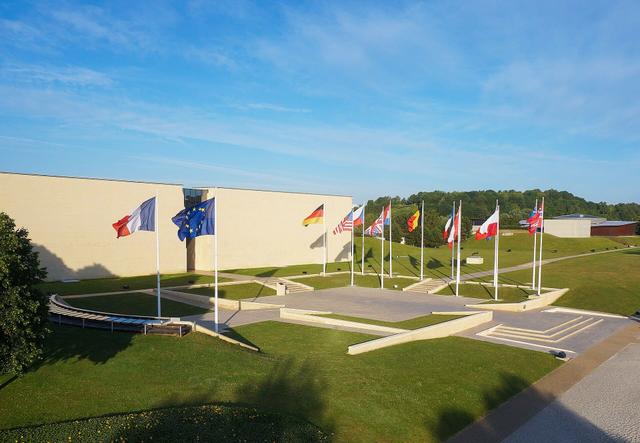
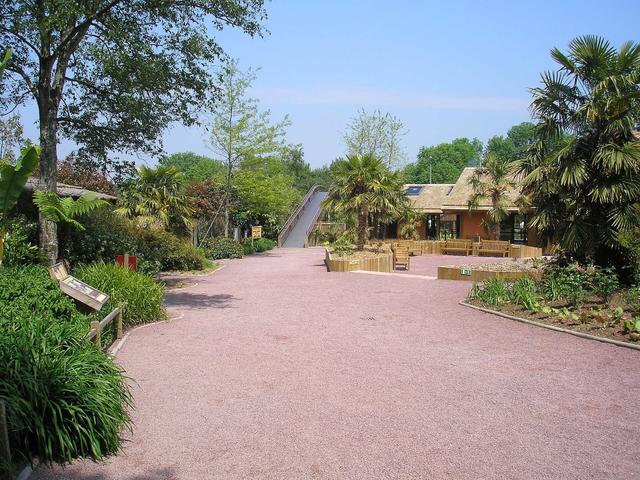
The visitor center. Opened on 6 June 2007, it stands in a wooded area about a hundred meters east of the Garden of the Missing. Its permanent exhibition covers the American forces in Normandy, and a film completes the visit. The displays are built around portraits of soldiers buried here, each grave holding a personal story. Start here: the cemetery makes more sense afterwards.
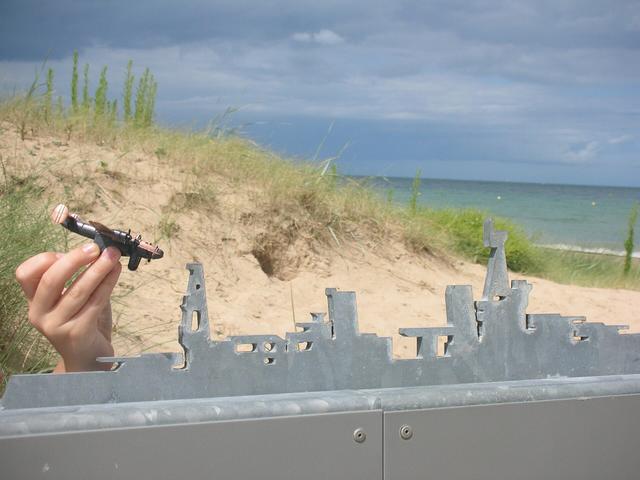
The orientation table. On the edge of the bluff, it explains the landings and looks straight down onto Omaha Beach. This is where guided tours meet.
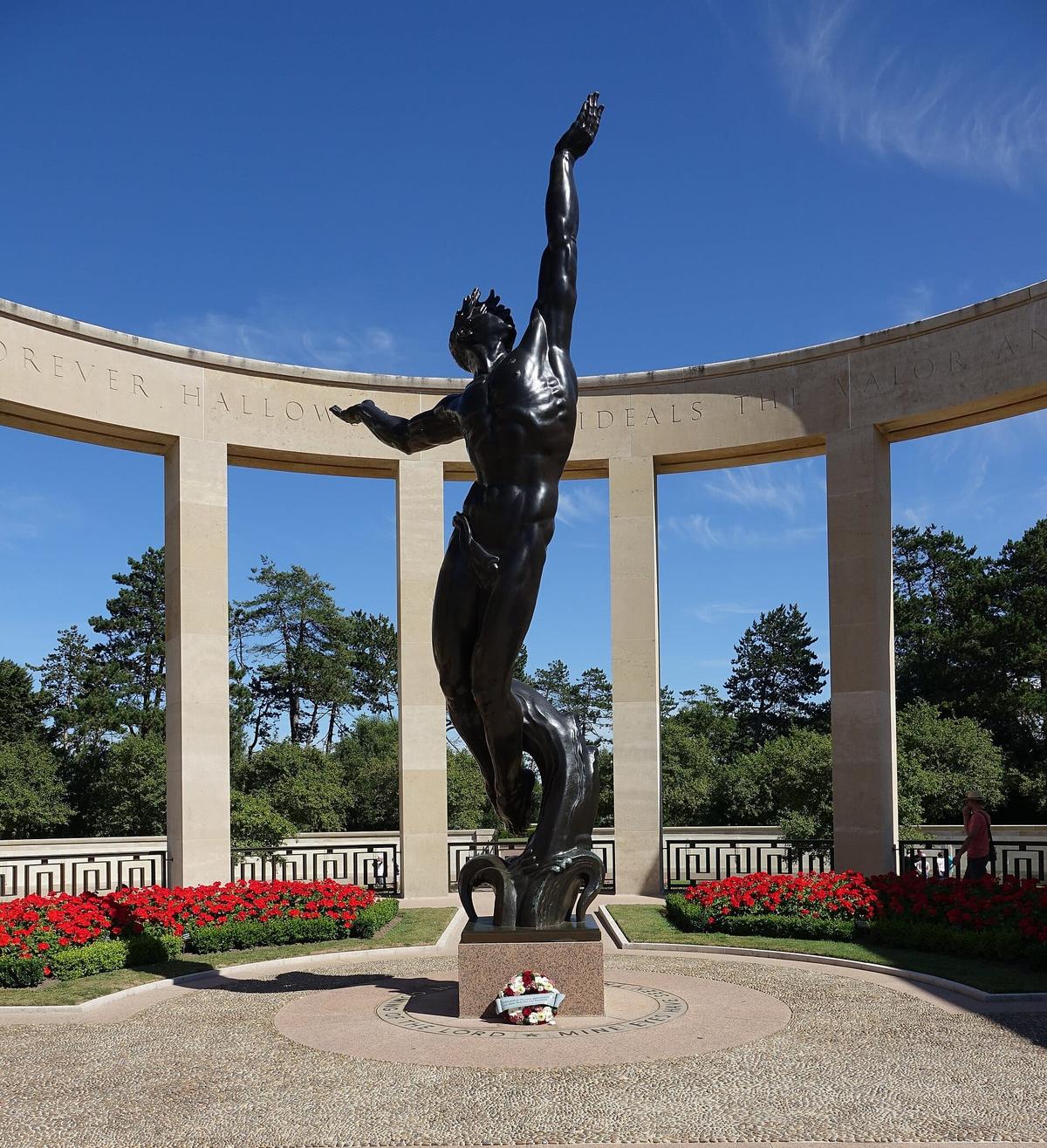
The Memorial. A semicircular colonnade with a loggia at each end holds large maps and narratives of the military operations. In the center stands the bronze statue "The Spirit of American Youth Rising from the Waves" by Donald De Lue, about 7 meters tall.
The Garden of the Missing. Behind the Memorial, a semicircular wall bears the names of 1557 missing servicemen whose remains were never found or identified. Rosettes mark the names of those since recovered and identified.
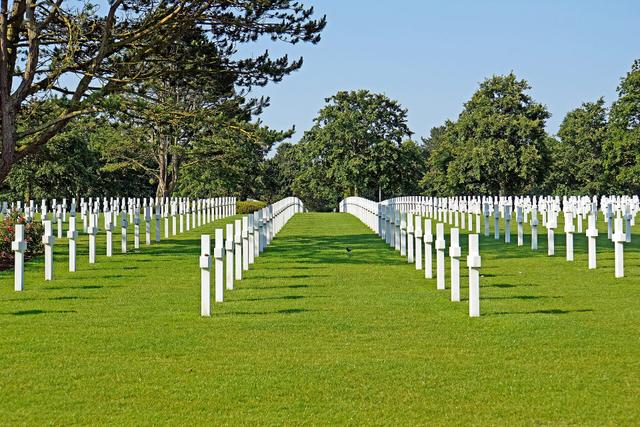
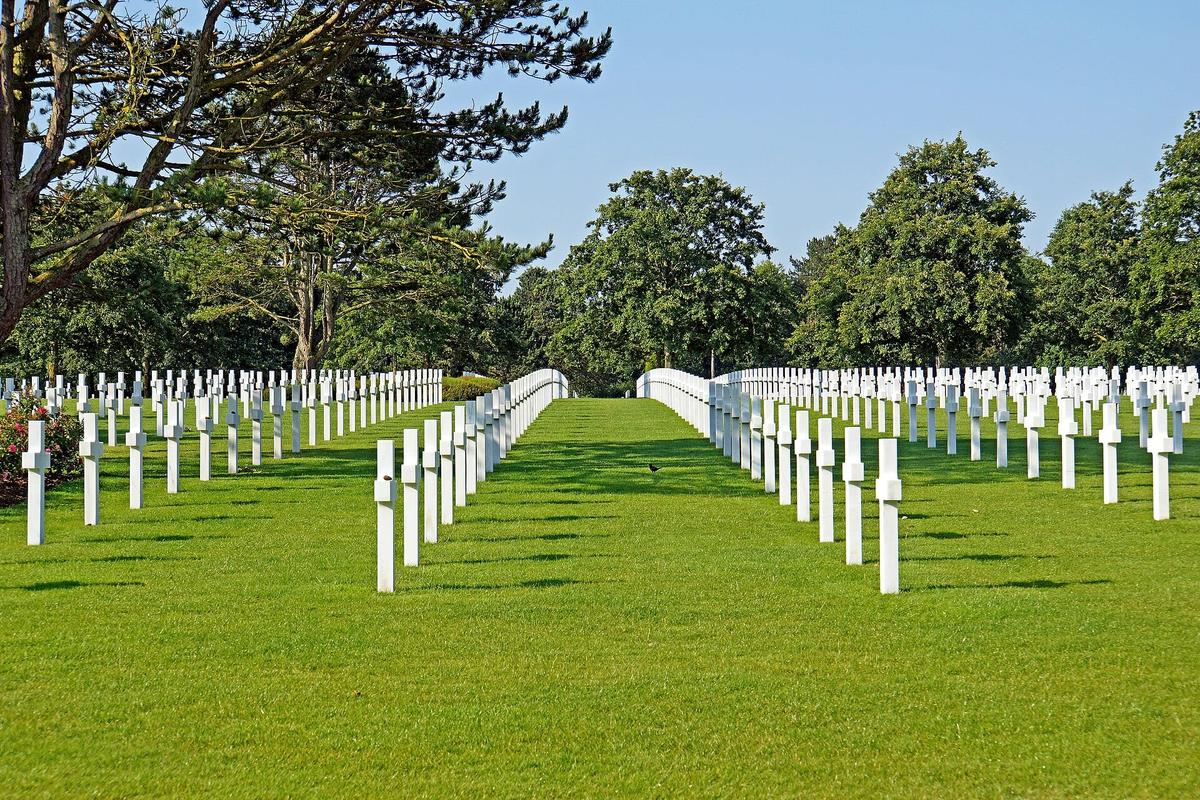
The graves. To the west, beyond the reflecting pool, lie the 9389 white marble headstones, Latin crosses and Stars of David, in rows across the lawn. Among them are 307 unknown soldiers. The main paths form a Latin cross.
The chapel. Circular and open to all faiths, it stands where the paths cross. Inside are a mosaic by Leon Kroll and an altar of Pyrenean marble. At the far end, two granite statues represent the United States and France.
Ceremonies
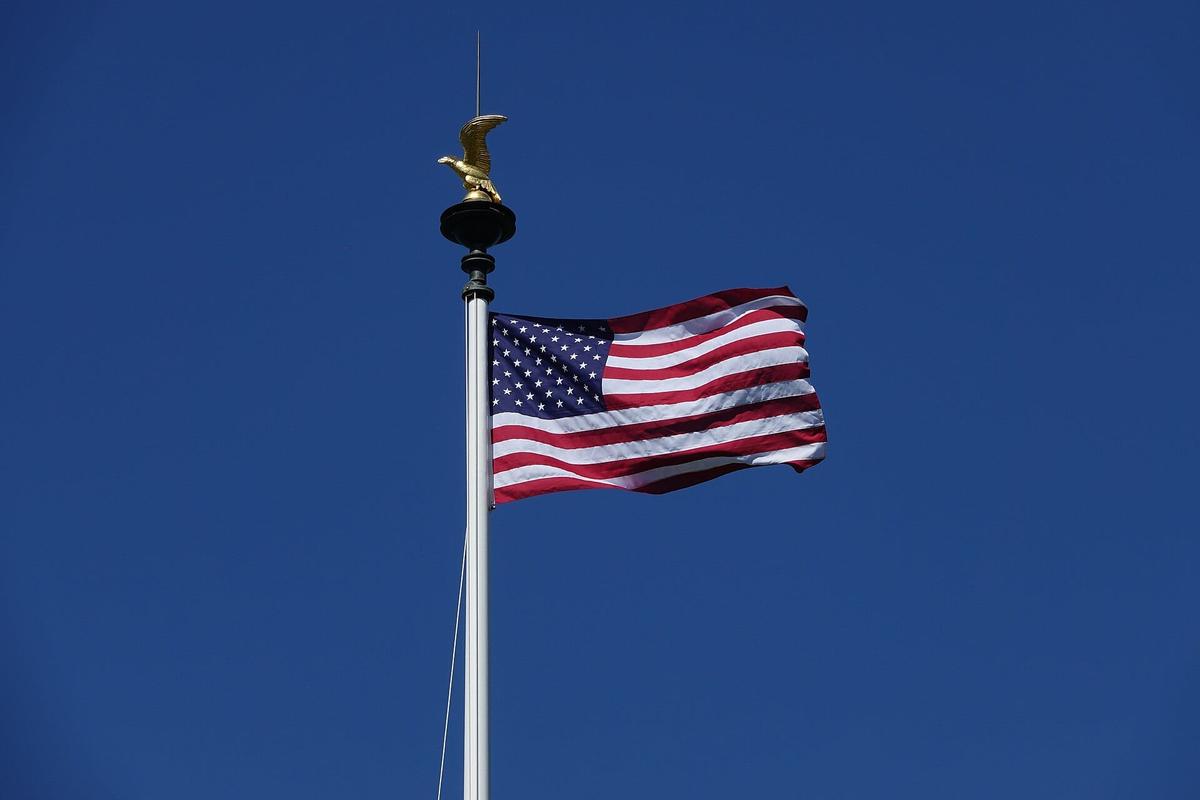
Every day, a flag lowering ceremony takes place one hour before closing: around 5 p.m. from April to September, around 4 p.m. from October to March. The American flag is lowered and folded. If you are there, stop, stay silent and leave room for those taking part.
The cemetery also hosts official ceremonies, in particular on the D-Day anniversary, June 6, and for Memorial Day in late May. On those days access is often limited or changed: the ABMC posts visitor notices on its website. Groups wishing to lay a wreath should ask in advance by email (NormandyVisits@abmc.gov).
Finding a grave or a soldier
Looking for a relative or a particular soldier? Start with the burial search on the ABMC website, which gives the plot, row and grave number, or the listing on the Walls of the Missing.
On site, a staff member is on duty in the visitor center whenever the cemetery is open. They answer questions and escort families to their relative's grave or name. For a family visit, let the cemetery know in advance at NormandyVisits@abmc.gov.
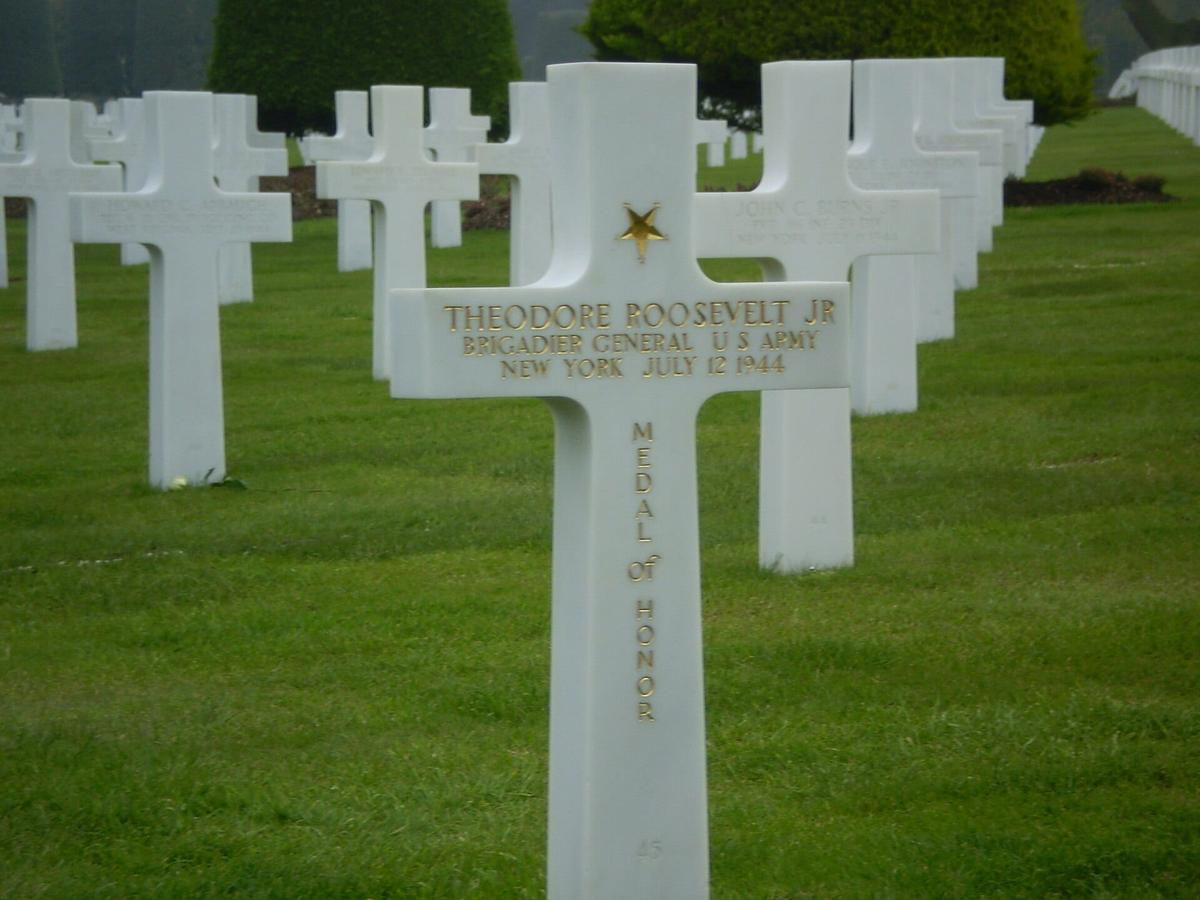
A few graves are often asked about. Theodore Roosevelt Jr., son of President Theodore Roosevelt and a Medal of Honor recipient, lies next to his brother Quentin, killed in World War I and reburied here. The brothers Preston and Robert Niland, buried side by side, inspired Steven Spielberg's Saving Private Ryan. The cemetery holds 45 pairs of brothers, 30 of them side by side, and 4 women.
How to behave
The ABMC asks visitors to be calm and respectful and to avoid anything that disturbs the peace of the site. In practice:
- Keep your voice down and silence your phone.
- Stay on the paths and do not sit on the graves.
- Keep picnics and ball games for outside the cemetery.
- Taking photos for yourself is common; avoid staged shots, and do not photograph grieving families without their consent. For filming or drones, send a request to the ABMC first ("Film / Drone Requests" on its website).
- Dress simply. It is not a written rule, but this is a military cemetery.
Visiting with children
This is no place for games, but it speaks to children from about 8 to 10, especially after the film and portraits in the visitor center. Prepare them: explain before going in that people talk quietly here. Younger children tire quickly; a short loop of visitor center, orientation table and Memorial is often enough.
Visiting in a wheelchair
The official website does not give accessibility details. Distances are long over 70 hectares, and the lawn between the graves is harder going than the paths. Email the ABMC (NormandyVisits@abmc.gov) before you come to ask what help is available, especially to reach a particular grave.
Are dogs allowed at the Normandy American Cemetery?
No. Dogs are not permitted in the cemetery, except service animals. Do not leave them shut in the car in summer.
Guided tours and day trips
ABMC staff run free guided tours in season, with no booking. In 2026, until 30 September 2026, they ran daily at 11:00 and 14:00 in English and at 11:00 and 15:00 in French, starting from the orientation table. The next season's schedule is published on the ABMC website.
Without a car, a day trip from Bayeux or Caen is the simplest option: most combine Omaha Beach, the cemetery and Pointe du Hoc, with a guide telling the story of June 6 on the spot.
What to see near the cemetery on the same day
| Also worth seeing | Distance | Travel time |
|---|---|---|
| Caen Memorial | 50 km | 45 min by car |
Approximate road distances and travel times.
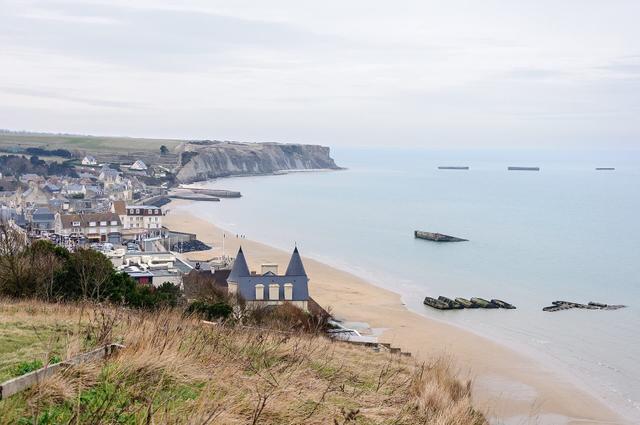
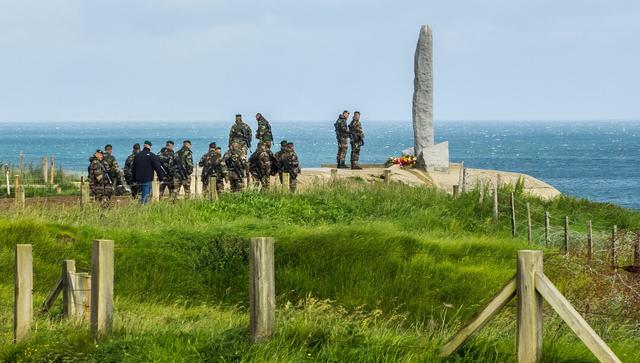
Omaha Beach, just below, is free to visit from Saint-Laurent or Colleville (see access above). Pointe du Hoc, about fifteen kilometers west, still has its bomb craters and the remains of the casemates scaled by the Rangers. Arromanches, to the east, shows the remains of the artificial harbor. For the wider story of the war, the Caen Memorial is a good complement. See also: Caen Memorial, D-Day beaches, Normandy in 3 days
The cemetery in six dates
- June 6, 1944: landing on Omaha Beach.
- 8 June 1944: the temporary St. Laurent Cemetery opens.
- 1947: France grants the land to the United States.
- 19 July 1956: the permanent cemetery is dedicated.
- 6 June 2007: the visitor center opens.
- 2016: the path to the beach is closed.
Where to eat and stay near the cemetery
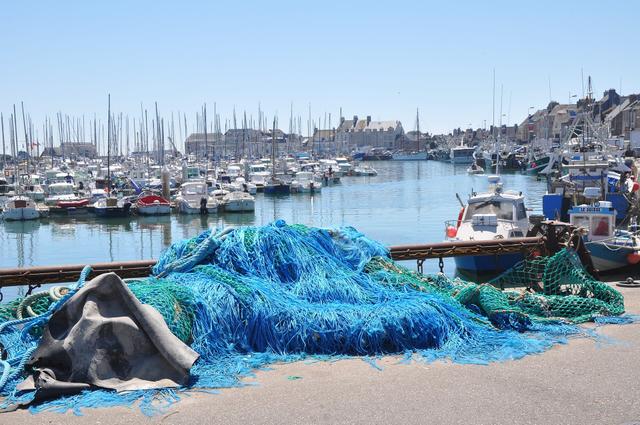
There is no restaurant at the cemetery. Colleville and Saint-Laurent have a few places in season, and Port-en-Bessin, a few minutes away, has several restaurants around its fishing harbor. To stay the night, Bayeux has the most choice and lets you see the Tapestry the next day; Port-en-Bessin is closer to the coast. See also: Normandy
FAQ
Is there an entrance fee at the Normandy American Cemetery?
No, entry is free and will stay free, according to the ABMC.
Do I need to book to visit the Normandy American Cemetery?
Not yet. The ABMC plans compulsory pre-registration for all visitors, with reservations starting in summer 2027. Families of those buried here will still be able to visit freely.
What are the opening hours?
9 a.m. to 6 p.m. from April 1 to September 30, 9 a.m. to 5 p.m. the rest of the year. Closed on December 25 and January 1. Last admission 30 minutes before closing.
Can you walk down to Omaha Beach from the cemetery?
No, the path has been closed since 2016. Drive to the beach via Saint-Laurent-sur-Mer or Colleville-sur-Mer.
How many soldiers are buried at the Normandy American Cemetery?
9389, and 1557 names of the missing are inscribed on the wall of the Garden of the Missing.
What time is the flag ceremony?
One hour before closing: around 5 p.m. in season, around 4 p.m. in winter.
Are dogs allowed?
No, except service animals.
Practical information
Opening hours 2026
| 1 April 2026 to 30 September 2026 | 9:00 – 18:00 |
|---|---|
| 1 October 2026 to 31 March 2027 | 9:00 – 17:00 |
Closed: 25 December 2026 and 1 January 2027
Official ticket-office prices 2026
Free admission
Address
Normandy American Cemetery and Memorial, 14710 Colleville-sur-Mer, France
Directions
On site and nearby
- Nearest shops and pharmacy: Trévières, 6 km away Straight-line distance, based on OpenStreetMap.
- Emergencies: 112 (all emergencies, free from any phone), 15 (SAMU, medical emergency)
Around the site, on Google Maps
With children
Family days out nearby: Omaha Beach Memorial Museum (3 km), Longues-sur-Mer Battery (12 km), MAHB, Baron Gérard Museum of Art and History (14 km)
Swimming pools and play areas nearby, on Google Maps
Facts checked on 29 October 2026. Sources: abmc.gov, abmc.gov, abmc.gov, abmc.gov, fr.wikipedia.org, en.wikipedia.org
Map
In the same region