The D-Day beaches in Normandy: how to plan your visit
On 6 June 1944, the Allies landed on five beaches in Normandy, along some 80 km of coast between the Cotentin peninsula and the mouth of the Orne. The memorial sites are spread out, and without a plan you spend the day in the car. This guide covers the five beaches from west to east, what is worth stopping for on each, two itineraries for one and two days, options without a car and the dates to avoid.
At a glance
- Five beaches, west to east: Utah and Omaha (American), Gold (British), Juno (Canadian), Sword (British, with French commandos).
- If you only have one day: the American sector (Pointe du Hoc, Omaha Beach, the American Cemetery) and Arromanches.
- Best base: Bayeux, in the middle of the coast, with a station linked to Paris-Saint-Lazare.
- Without a car: a minibus tour from Bayeux or Caen, or the Nomad summer bus in July and August.
- Admission: free at the American Cemetery, Pointe du Hoc and on the beaches; the museums charge admission.
- Good to know: the Saint-Cloud tunnel (A13) is closed in the Paris to Normandy direction from 16 November 2026 to the end of August 2027, and the American Cemetery plans to require reservations from summer 2027.
The five beaches compared
| Beach | Army | Where | Top sights |
|---|---|---|---|
| Utah | American | Sainte-Marie-du-Mont, east side of the Cotentin | Utah Beach Museum, Sainte-Mère-Église |
| Omaha | American | Vierville-sur-Mer to Colleville-sur-Mer | American Cemetery, Pointe du Hoc (to the west) |
| Gold | British | Arromanches to Ver-sur-Mer | Mulberry harbour and Arromanches museum, Longues-sur-Mer battery |
| Juno | Canadian | around Courseulles-sur-Mer | Juno Beach Centre |
| Sword | British and French | Lion-sur-Mer to Ouistreham | Pegasus Bridge and the Pegasus Memorial |
Around 156,000 Allied troops set foot in Normandy on 6 June. During the night, American paratroopers had jumped over the Cotentin and British airborne troops had landed east of the Orne, to protect both flanks.
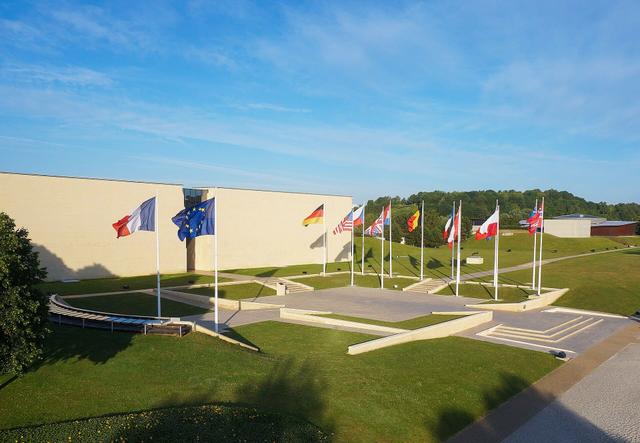
Our tip: if you have time, start with the Caen Memorial. It gives you the wider context in half a day, and the beaches make more sense afterwards. See also: Caen Memorial
Utah Beach and Sainte-Mère-Église
Utah is the westernmost beach, at the foot of the Cotentin. The US 4th Infantry Division landed there on the morning of 6 June. Pushed by the current, the first boats came ashore further south than planned, on a less defended stretch, and losses were far lower than at Omaha.
The Utah Beach Landing Museum, at Sainte-Marie-du-Mont, stands on the beach itself, on the remains of a German strongpoint. It tells the story of the landing and houses a B-26 Marauder bomber. The beach right in front is open to all.
Sainte-Mère-Église, about ten kilometres inland, was one of the first towns liberated, in the early hours of 6 June, by paratroopers of the 82nd Airborne Division. A paratrooper dummy hangs from the church steeple, in memory of John Steele, who was caught there during the fighting. Opposite, the Airborne Museum is devoted to the American paratroopers, with a glider and a C-47 aircraft.
Utah is out on a limb, about 40 minutes' drive from Pointe du Hoc: with only one day, leave it out.
Omaha Beach, Pointe du Hoc and the American Cemetery
This is the heart of American remembrance. At Omaha, the 1st and 29th Infantry Divisions ran into intact defences, below bluffs and in rough seas. Losses on the first day were the heaviest of the whole landing.
The beach is reached from Vierville-sur-Mer, Saint-Laurent-sur-Mer or Colleville-sur-Mer. At Saint-Laurent, the steel sculpture "Les Braves" stands on the sand.
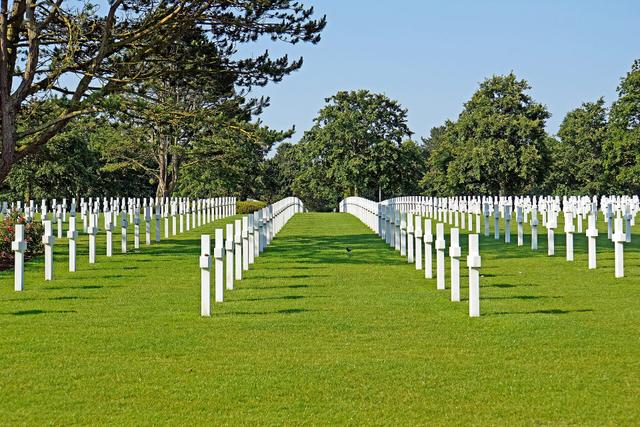
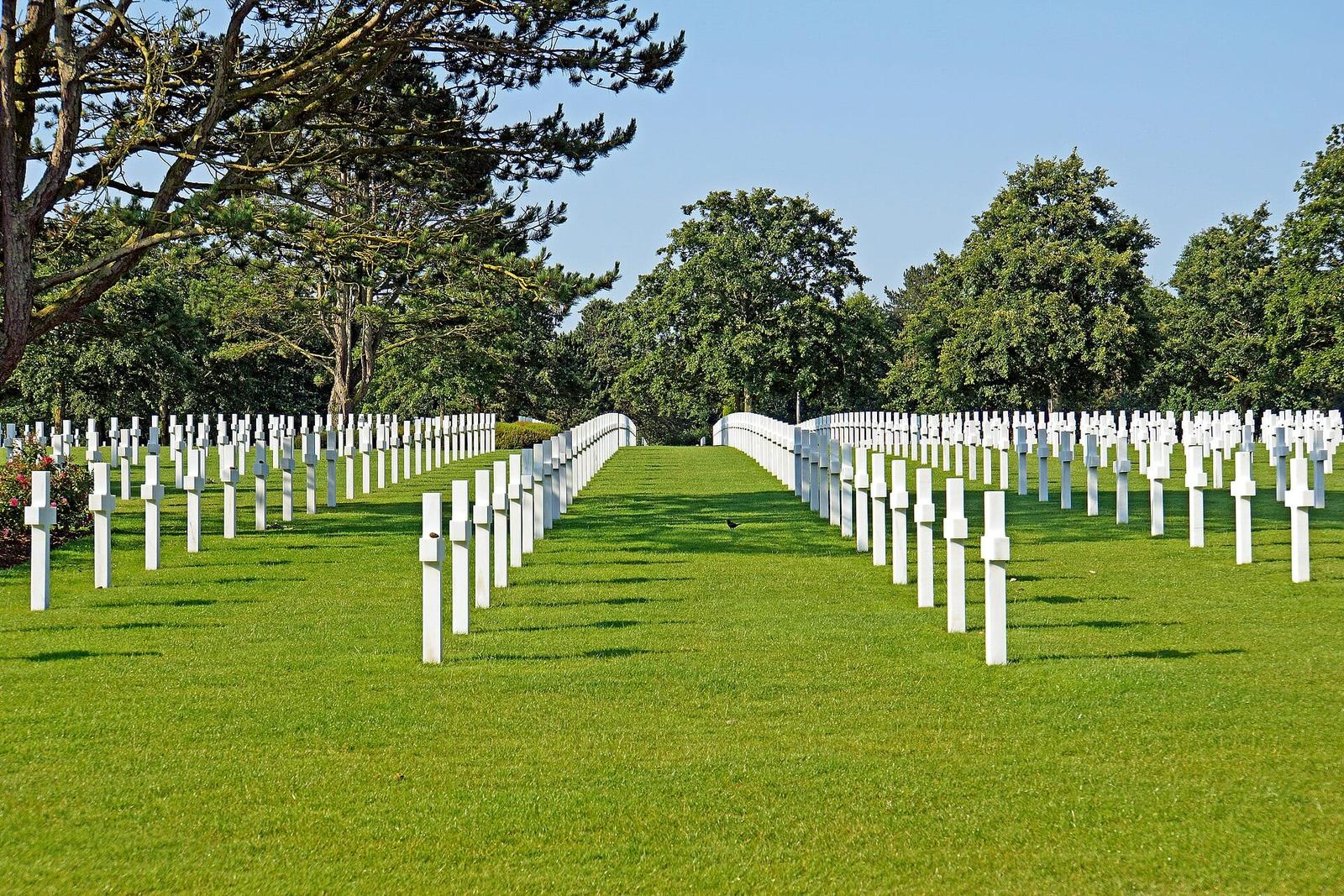
The Normandy American Cemetery at Colleville, on the bluff, holds 9389 graves. Admission is free. Hours: 9:00 – 18:00 from April to September, 9:00 – 17:00 from October to March, closed on 25 December and 1 January. Allow 1 h 30 à 2 h, including the visitor center. The path that led down to the beach has been closed since 2016: drive to reach the sand. See also: Normandy American Cemetery
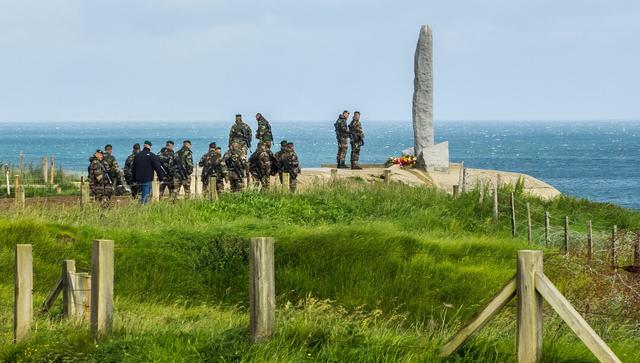
Pointe du Hoc, about fifteen kilometres west, keeps its bomb craters and the casemates taken by the Rangers, who climbed the cliff on 6 June. The site is free but under restoration until mi-2027: the visitor center is closed and some areas may be off limits. See also: Pointe du Hoc
La Cambe German war cemetery, beside the N13 between Bayeux and Carentan, holds more than 21,000 German soldiers who died in Normandy. It is cared for by the Volksbund, the German war graves commission. Allow half an hour, on the way to Utah.
Gold Beach and Arromanches
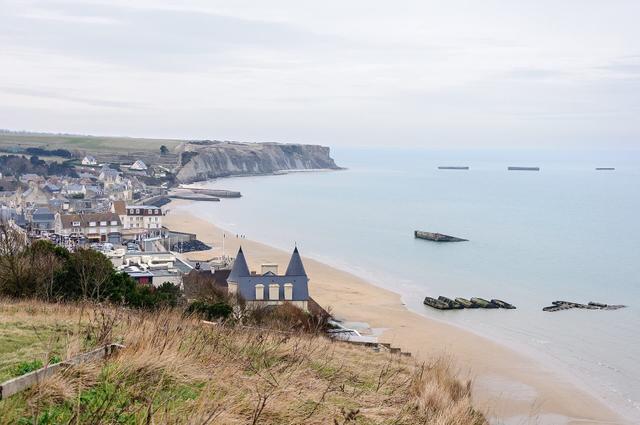
Gold was the beach of the British 50th Division, from Arromanches to Ver-sur-Mer. Its best-known site is out at sea: the remains of the artificial harbour, Mulberry B, which the British towed across from England to land troops and supplies.
The D-Day Museum in Arromanches, on the seafront, explains how the harbour was built and used. Admission is €12.90 for an adult, audio guide included, tickets sold on site only. Allow 1 h 30, then climb the east cliff for the overall view of the caissons. The Arromanches 360 circular cinema up there shows an archive film about the Battle of Normandy. See also: Arromanches D-Day Museum
The Longues-sur-Mer battery, between Arromanches and Port-en-Bessin, is the only German battery on this coast that still has its guns in their casemates. The open-air site takes half an hour on foot.
The British Normandy Memorial at Ver-sur-Mer, opened in 2021, bears the names of more than 22,000 servicemen and women under British command who died during the landings and the Battle of Normandy.
Juno Beach
Juno is the Canadian beach, around Courseulles-sur-Mer, Bernières and Saint-Aubin. The 3rd Canadian Infantry Division landed there under heavy fire, then pushed further inland than any other force that day.
The Juno Beach Centre in Courseulles is Canada's D-Day museum, opened in 2003 on the initiative of veterans. It covers Canada's role in the whole war, with guided tours of the fortifications in front of the building. Juno is quieter than the American sector.
Sword Beach and Pegasus Bridge
Sword is the easternmost beach, from Lion-sur-Mer to Ouistreham. The British 3rd Division landed there with Commander Kieffer's 177 French commandos, the only French troops to come ashore on the beaches that morning.
Pegasus Bridge, at Bénouville on the Caen canal, was taken shortly after midnight by British soldiers who landed by glider a few dozen metres from it. It was one of the first actions of D-Day. The original bridge, replaced in 1994, is displayed in the grounds of the Pegasus Memorial at Ranville, which tells the story of the British 6th Airborne Division. Sword is a quarter of an hour from Caen, the easiest beach to pair with the Memorial.
The D-Day beaches in 1 day
One day is not enough to see everything. The best plan is to focus on the middle of the coast, starting from Bayeux.
- 9 am: Pointe du Hoc. Arrive at opening time, before the coaches. Allow an hour.
- 10:30 am: Omaha Beach, via Vierville or Saint-Laurent, to walk on the beach and see "Les Braves".
- 11:30 am: the American Cemetery. Visitor center, orientation table, memorial and graves.
- 1 pm: lunch in Port-en-Bessin, on the fishing harbour.
- 2:30 pm: Longues-sur-Mer battery.
- 3:30 pm: Arromanches, the museum and then the east cliff.
- Back to Bayeux, a quarter of an hour away.
From Caen, reverse it: the Caen Memorial in the morning (€20.80, allow 4 h), then Arromanches, Longues and the American Cemetery in the afternoon. The cemetery closes at 5 pm from October to March: if you are running late, go there first. See also: Normandy in 3 days
The D-Day beaches in 2 days
Two days let you see both sectors without rushing.
Day 1, the American sector. Sainte-Mère-Église and the Airborne Museum in the morning, then the Utah Beach Museum. Lunch in Sainte-Marie-du-Mont or Carentan. In the afternoon, stop at La Cambe German cemetery, then Pointe du Hoc and Omaha Beach. End at the American Cemetery: the flag-lowering ceremony takes place an hour before closing. Night in Bayeux.
Day 2, the British and Canadian sectors. In the morning, the Longues-sur-Mer battery, then Arromanches, its museum and the cliff. After lunch, the British Normandy Memorial at Ver-sur-Mer, then the Juno Beach Centre in Courseulles. Finish at Pegasus Bridge and the Pegasus Memorial, east of Caen. Alternative: swap Juno and Pegasus for the Caen Memorial.
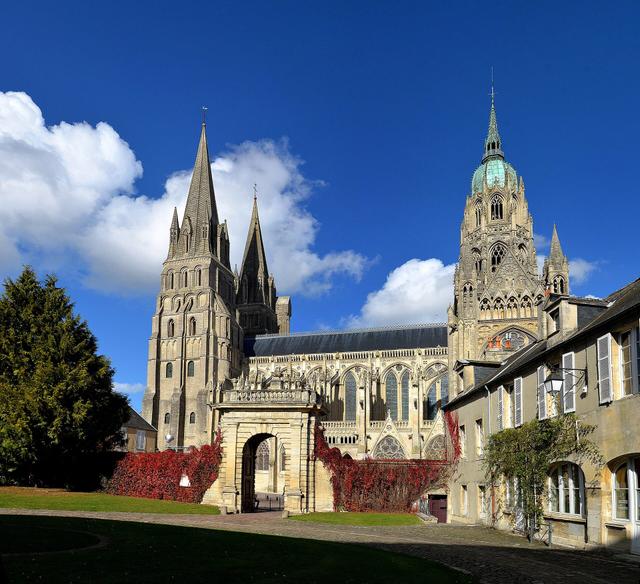
Our tip: an evening in Bayeux lets you see its cathedral, which is free, and the British war cemetery with 4648 graves. The Tapestry itself is on loan to the British Museum in London until 11 July 2027. See also: Bayeux Cathedral
Getting there and around by car
This is the simplest option: the sites are 10 to 40 minutes' drive apart. From Paris, take the A13 to Caen, then the N13 towards Bayeux and Cherbourg, which runs a few kilometres inland.
A13 roadworks. The northbound bore of the Saint-Cloud tunnel, in the Paris to Normandy direction, is closed from 16 November 2026 to the end of August 2027. Bison Futé, the French traffic service, signposts diversions via the A86 or the A14 to rejoin the A13 further west. The Normandy to Paris direction stays open.
Renting a car. If you arrive by train, rental agencies are in Bayeux and Caen, near the stations. For three or four people it is often cheaper than a tour.
Partner links: if you book through these links, we earn a commission at no extra cost to you. Partner links · Learn more
Visiting the beaches without a car
The train. Paris-Saint-Lazare serves Caen and Bayeux, in 2 h 12 for the fastest direct trains to Bayeux.
Minibus tours. This is the most popular option. Tours leave from Bayeux or Caen, for half a day or a full day, with a driver-guide. American sector tours usually cover Omaha Beach, the cemetery and Pointe du Hoc; others focus on Arromanches, Juno and the British beaches. The Caen Memorial runs its own tours in 7-seat minibuses, museum admission included, from €150. Book a few days ahead in summer.
The bus. Nomad line 121 runs from Bayeux station to Arromanches in about thirty minutes, then on to Courseulles-sur-Mer, except on Sundays and public holidays. In summer, line 125 runs along the coast every day between Grandcamp-Maisy and Courseulles, stopping at Pointe du Hoc, the American Cemetery and Arromanches. In 2026 it ran from 5 July 2026 to 31 August 2026. Utah Beach and Sainte-Mère-Église have no practical bus: take a tour or a taxi. See also: Normandy without a car
Where to stay: Bayeux, Caen or Arromanches?
Bayeux is the best base. The town is in the middle of the coast, about twenty minutes from both Omaha and Arromanches. Minibus tours leave from here, the station is 15 minutes' walk from the centre, and there is a wide choice of hotels and B&Bs.
Caen suits you if you arrive by train and want to see the Memorial and the eastern beaches (Sword, Pegasus Bridge, Juno). Livelier in the evening, but further from Omaha and Utah.
Arromanches lets you sleep facing the sea and the Mulberry harbour. Rooms are few and fill up fast in summer. For Utah, Carentan or Sainte-Mère-Église itself are more convenient.
6 June and the commemorations
Every year, 6 June and the days around it draw veterans, families, enthusiasts in period uniform and large crowds. Official ceremonies at the American Cemetery, Pointe du Hoc and the coastal villages, parachute drops and re-enactments are spread over several weeks. Keep in mind:
- Hotels are full months in advance, and prices go up.
- Access is restricted at the sites of official ceremonies, which are sometimes closed to the public. The ABMC posts notices on its website.
- Roads are congested, with diversions and security zones in major anniversary years.
If you are looking for quiet and reflection, choose May, September or October. Also note that the ABMC plans mandatory pre-registration at the American Cemetery from summer 2027: check its website before a trip in 2027.
How to behave at the memorial sites
People swim on these beaches today. The cemeteries and monuments call for a different attitude.
- In the cemeteries, keep your voice down, stay on the paths, do not sit on the graves and keep picnics outside.
- During the flag-lowering at the American Cemetery, stop and stay silent.
- At battle sites such as Pointe du Hoc, stay on the marked paths and do not climb on the casemates or go near the cliff edge.
- No drones without permission: ABMC sites require one.
- Do not pick anything up. Wartime munitions still sometimes surface on the beaches and in the fields. Do not touch them and call 17 (police).
Dogs are not allowed at the American Cemetery or Pointe du Hoc, except assistance dogs. See also: Normandy
FAQ
How long do you need to visit the D-Day beaches?
One day is enough for the American sector and Arromanches. Two days for all five beaches.
Which D-Day beach should you see first?
Omaha Beach, with the American Cemetery and Pointe du Hoc nearby, then Arromanches for the Mulberry harbour.
Can you visit the D-Day beaches without a car?
Yes, on a minibus tour from Bayeux or Caen, the simplest option. In July and August, Nomad summer bus 125 serves Pointe du Hoc, the American Cemetery and Arromanches.
Where should you stay to visit the D-Day beaches?
In Bayeux, in the middle of the coast and well served by train.
Do the sites charge admission?
The beaches, the American Cemetery and Pointe du Hoc are free. The museums charge: €12.90 in Arromanches and €20.80 at the Caen Memorial for an adult.
Should you avoid 6 June?
Not necessarily, but hotels are booked up months ahead and some sites close during the ceremonies.
Is the A13 closed for driving to Normandy?
The Saint-Cloud tunnel is closed in the Paris to Normandy direction from 16 November 2026 to the end of August 2027. Diversions run via the A86 or the A14.
Tickets to book online
Partner links: if you book through these links, we earn a commission at no extra cost to you. Partner links · Learn more