René of Anjou, Good King René
- Born
- 16 January 1409
- Died
- 10 July 1480
- Reign
- 1434 – 1480
- Family
- House of Anjou
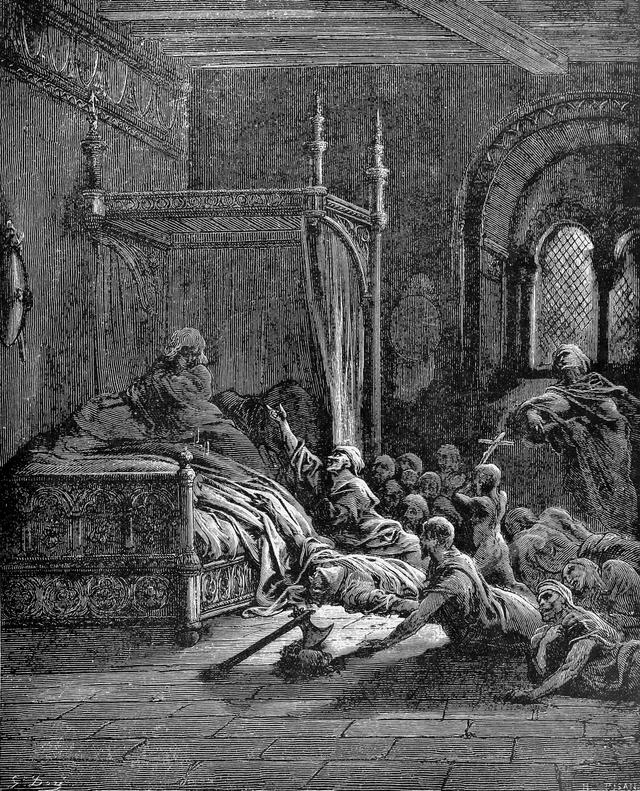
He held half a dozen crowns, including those of Naples, Sicily and Jerusalem, but only really ruled Anjou and Provence. Taken prisoner, driven out of Naples, stripped of Anjou by his nephew Louis XI, René of Anjou is remembered as a cultured prince who wrote romances, organised tournaments and called Saumur his “castle of love”.
René of Anjou in dates
| Date | Event |
|---|---|
| 16 January 1409 | Born at the Château d'Angers, son of Louis II of Anjou and Yolande of Aragon |
| 1420 | Marries Isabella of Lorraine, heiress to the duchy |
| 1431 | Captured by the Duke of Burgundy at the Battle of Bulgnéville; released for a ransom in 1437 |
| 1434 | Becomes Duke of Anjou and Count of Provence on his brother's death |
| 1435-1442 | King of Naples, which he loses to Alfonso of Aragon |
| 1445 | His daughter Margaret marries King Henry VI of England |
| 1454 | A widower, marries Jeanne de Laval |
| 1457 | Writes the Book of the Love-Smitten Heart (Livre du cœur d'amour épris) |
| Around 1472 | Leaves Anjou for Aix-en-Provence |
| 10 July 1480 | Dies at Aix; buried in Angers Cathedral |
The prince of many crowns
René was the second son of Louis II of Anjou and Yolande of Aragon, a strong-minded woman who protected her son-in-law, the future Charles VII, and supported Joan of Arc. His sister Marie married the king: René was therefore Charles VII's brother-in-law and Louis XI's uncle. See also: Charles VII
Through a series of inheritances, he collected titles: Duke of Bar, Duke of Lorraine through his wife, then Duke of Anjou, Count of Provence and King of Naples. He held Naples for only a few years and returned to France in 1442 with nothing left but the title of king. That is where the nickname “King René” comes from. A young woman from his wife's household, Agnès Sorel, would become Charles VII's favourite. See also: Agnès Sorel
Angers: the castle of his birth
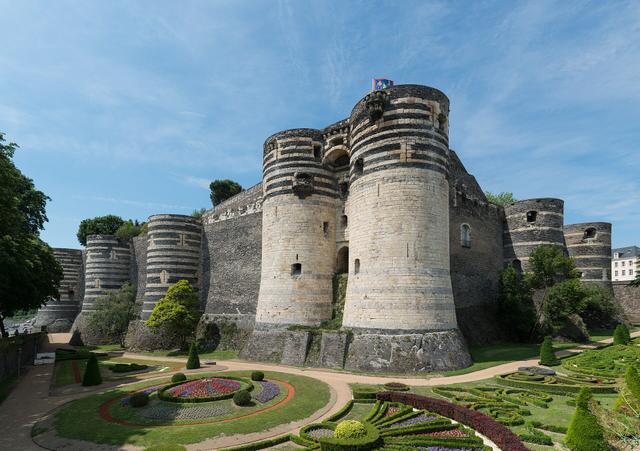
René was born in 1409 in the fortress with 17 towers, which the Dukes of Anjou were then turning into a residence. His mother had the chapel built; he added the gallery that bears his name, between 1435 and 1453, then the gatehouse of the lord's courtyard.
He also inherited the Apocalypse Tapestry, woven for his grandfather Louis I between 1375 and 1382. He left it to Angers Cathedral. Today it is displayed at the château, in a gallery built for it. See also: Château d'Angers
What to see: the Apocalypse Tapestry, King René's gallery, the Chapel of Saint John the Baptist, the royal lodgings and the wall walk.
Saumur, the “castle of love”
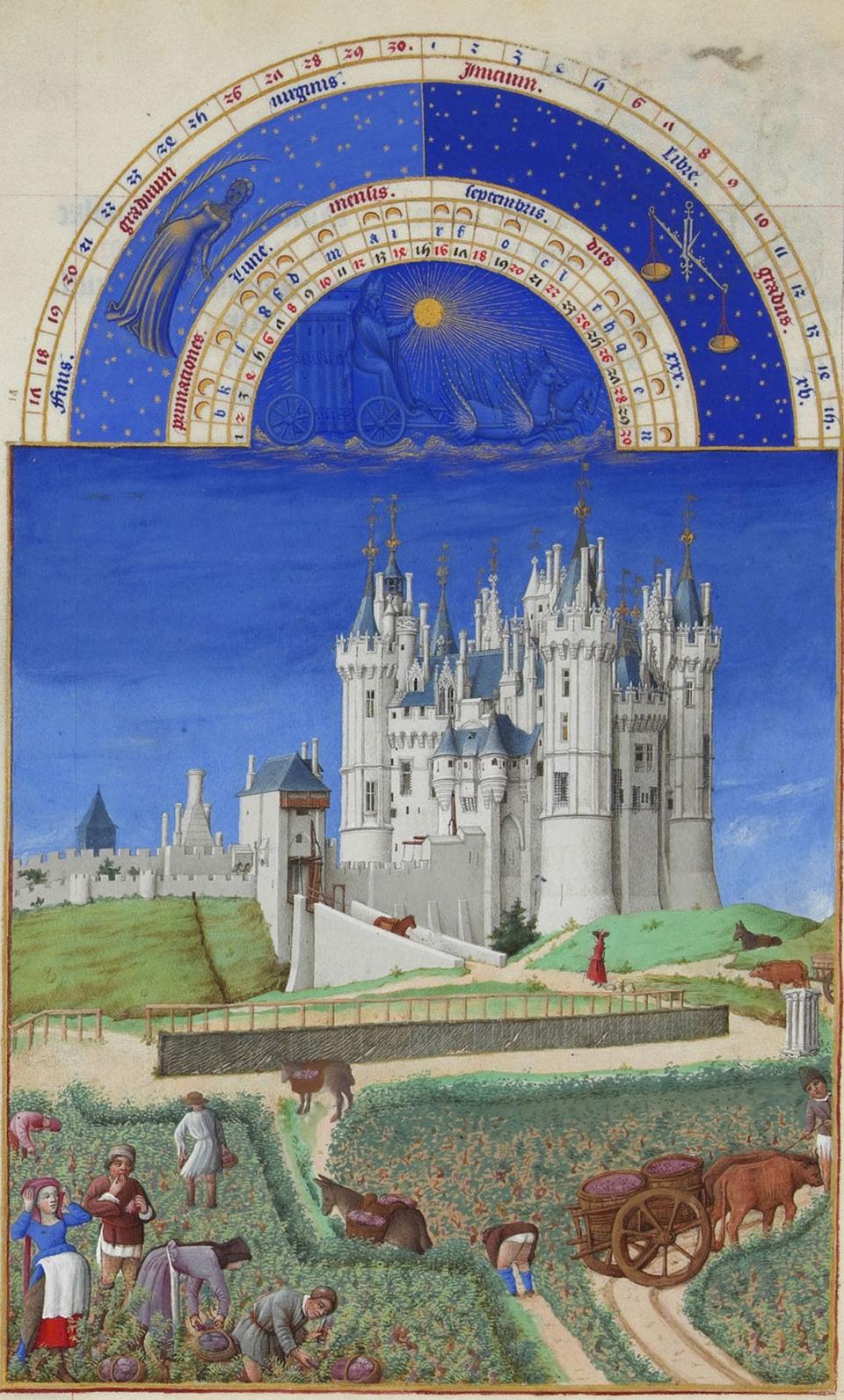
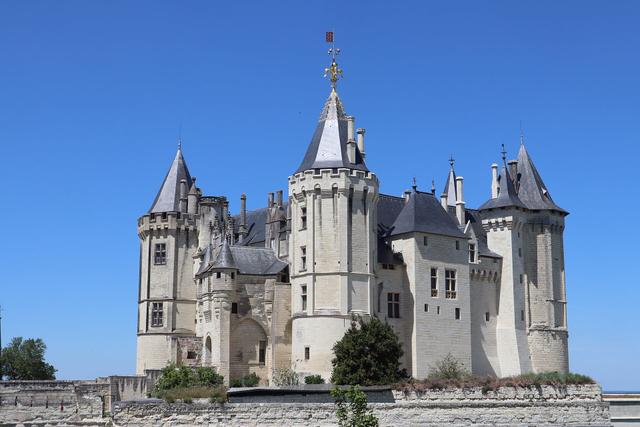
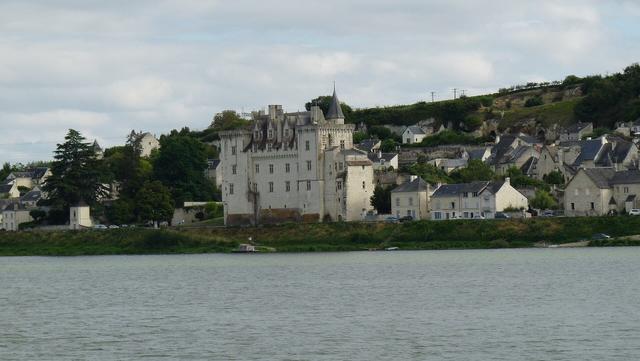
After his second marriage, to Jeanne de Laval, René liked to stay at Saumur. The white château above the Loire, bristling with towers, is the one shown on the September page of the Très Riches Heures du Duc de Berry, above the grape harvest. René called it his “castle of love”. On his death in 1480, the château passed to the royal domain. See also: Château de Saumur
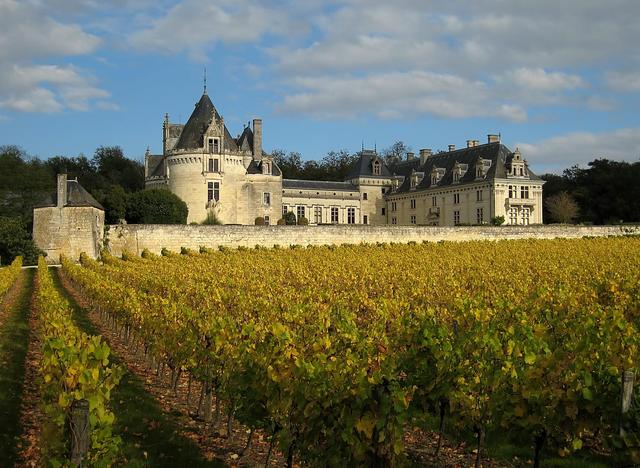
He was also a lord who allowed his vassals to fortify their homes: in 1448, Gilles de Maillé-Brézé obtained from him the right to dig moats around the Château de Brézé, very close to Saumur. See also: Château de Brézé
What to see: at Saumur, the château and its view over the Loire; at Brézé, the dry moats and the underground castle.
The poet and the painter
René wrote, drew and commissioned works. He was the author of a treatise on how to organise tournaments and of the Book of the Love-Smitten Heart, an allegorical romance whose illuminated manuscript is one of the finest of the 15th century. He supported painters such as Barthélemy d'Eyck and Nicolas Froment.
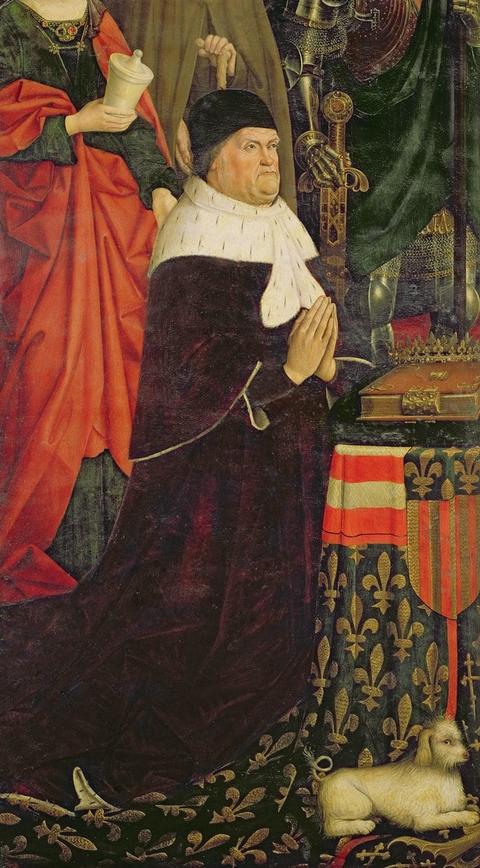
On the Burning Bush triptych, painted by Froment for Aix Cathedral, he is shown kneeling in prayer. It was in Aix that he ended his life, after leaving Anjou to his nephew Louis XI, who annexed it to the kingdom. See also: Louis XI
In his footsteps: Anjou
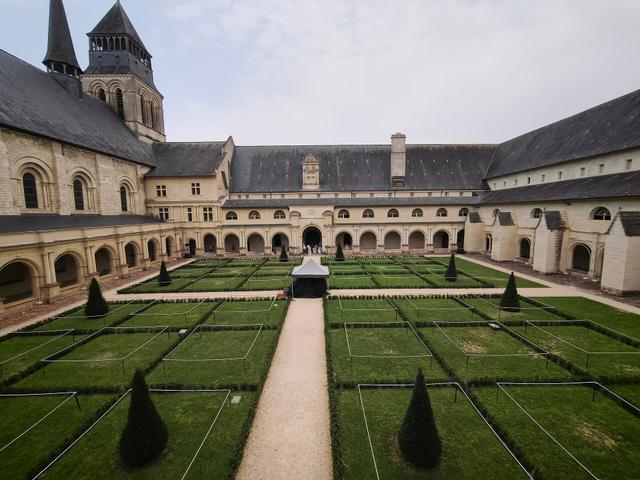
The Château d'Angers is a 15-minute walk from Angers-Saint-Laud station. Saumur is 20 minutes from Angers by train, and Brézé a few kilometres to the south. Fontevraud rounds off the day. See also: Fontevraud Abbey
Partner links: if you book through these links, we earn a commission at no extra cost to you. Partner links · Learn more
FAQ
Why is René of Anjou called “King René”?
Because he was King of Naples from 1435 to 1442, and kept the title of king, along with those of Sicily and Jerusalem, after losing that kingdom.
Where was King René born?
At the Château d'Angers, on 16 January 1409.
What is the link between King René and the Apocalypse Tapestry?
He inherited it from his grandfather, Louis I of Anjou, who had commissioned it, and left it to Angers Cathedral. It is now displayed at the château.
Why is Saumur the “castle of love”?
That is what René called the château, where he liked to stay with his second wife, Jeanne de Laval.
Where is King René buried?
In Saint-Maurice Cathedral in Angers, beside his first wife, Isabella of Lorraine. He died in Aix-en-Provence on 10 July 1480.
Sources: fr.wikipedia.org (René d'Anjou), chateau-angers.fr
Tickets to book online
Partner links: if you book through these links, we earn a commission at no extra cost to you. Partner links · Learn more