Rabelais, the giant of the Chinon country
- Born
- c. 1494
- Died
- 1553
- Active years
- 1532 – 1553
- Family
- Artists, saints and favourites
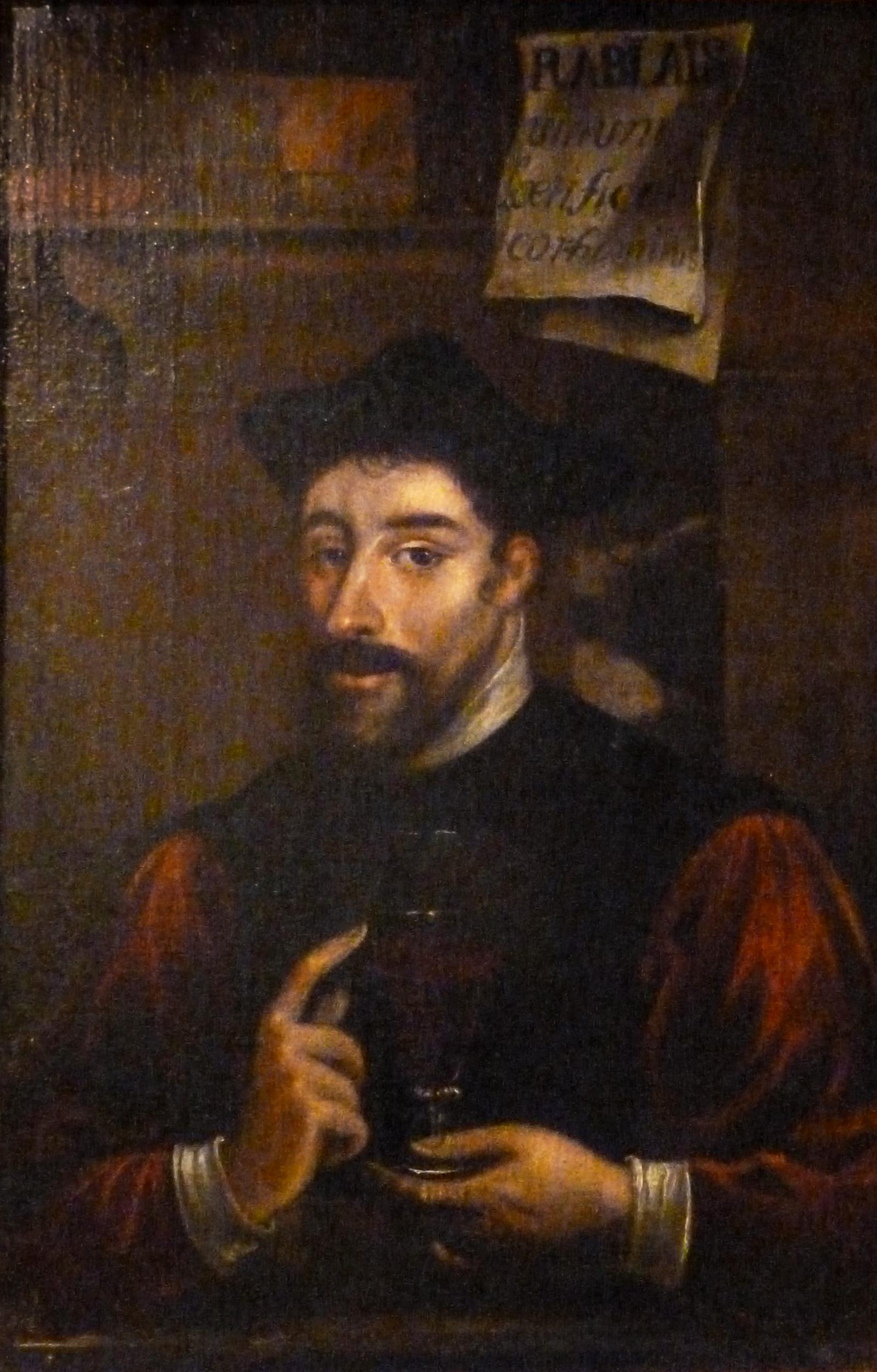
The most famous war in French literature begins with a quarrel between shepherds and cake sellers, a few kilometres from Chinon. François Rabelais set Gargantua's battles in the fields and villages of his childhood, around the family farm of La Devinière. Monk, doctor and humanist, he made the France of Francis I laugh and scandalised it too. His Chinon country can still be explored, book in hand.
Rabelais in dates
| Date | Event |
|---|---|
| Around 1494 | Born at La Devinière, near Chinon (perhaps as early as 1483) |
| Around 1520 | Franciscan friar at Fontenay-le-Comte, in Poitou |
| 1524 | Moves to the Benedictines of Maillezais |
| 1530 | Studies medicine at Montpellier |
| 1532 | Physician at the Hôtel-Dieu in Lyon; publishes Pantagruel |
| 1534 or 1535 | Gargantua |
| 1534 | First journey to Rome with Jean du Bellay |
| 1546 | The Third Book, signed with his own name |
| 1551 | Given the parish of Meudon |
| 1552 | The Fourth Book, condemned by the Sorbonne |
| 1553 | Dies in Paris |
The son of a Chinon lawyer
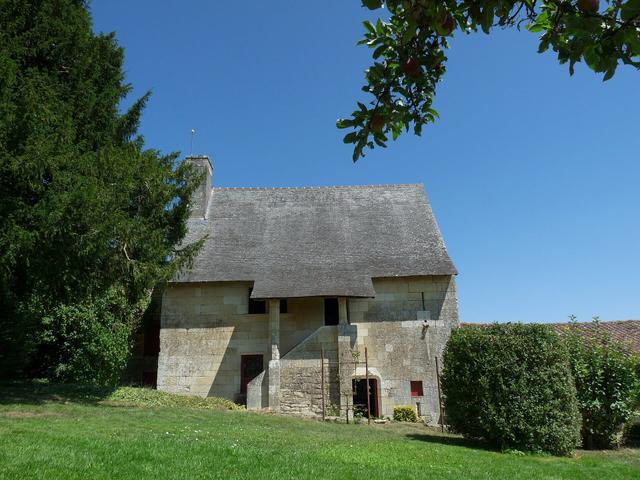
François Rabelais was born at La Devinière, a farm in the parish of Seuilly owned by his father, Antoine, a lawyer in Chinon. The exact date is unknown. He joined the Franciscans young, at Fontenay-le-Comte, where he learned Greek with another friar. His superiors, who distrusted the language, confiscated his books. He got permission to move to the more open-minded Benedictines of Maillezais, then left the religious habit to study medicine at Montpellier.
The doctor who wrote
In 1532 he was a physician at the Hôtel-Dieu in Lyon, the great printing city. The same year Pantagruel came out, under the pen name Alcofrybas Nasier, an anagram of his name. It was a huge success. Gargantua followed, the story of Pantagruel's father: a giant born shouting "Drink!" ("À boire !"), brought up by absurd tutors and then by a humanist, who ends up founding the Abbey of Thélème, whose rule fits in one sentence: "Do what you will" ("Fais ce que voudras").
He travelled to Rome several times as physician to Cardinal Jean du Bellay, and published the Third Book in 1546 and the Fourth Book in 1552. The Sorbonne condemned his books, but he kept powerful protectors, up to the king himself. See also: Francis I
The Picrocholine War, around La Devinière
In Gargantua, war breaks out over fouaces, flat cakes that the bakers of Lerné refuse to sell to the shepherds of Seuilly. King Picrochole, furious and vain, invades the country. Everything happens within a few kilometres of La Devinière: Seuilly Abbey, where Friar John of the Funnels (frère Jean des Entommeures) defends the vineyard with a stick, the ford at Vède, La Roche-Clermault. Rabelais turned a quarrel between neighbours into a war of giants.
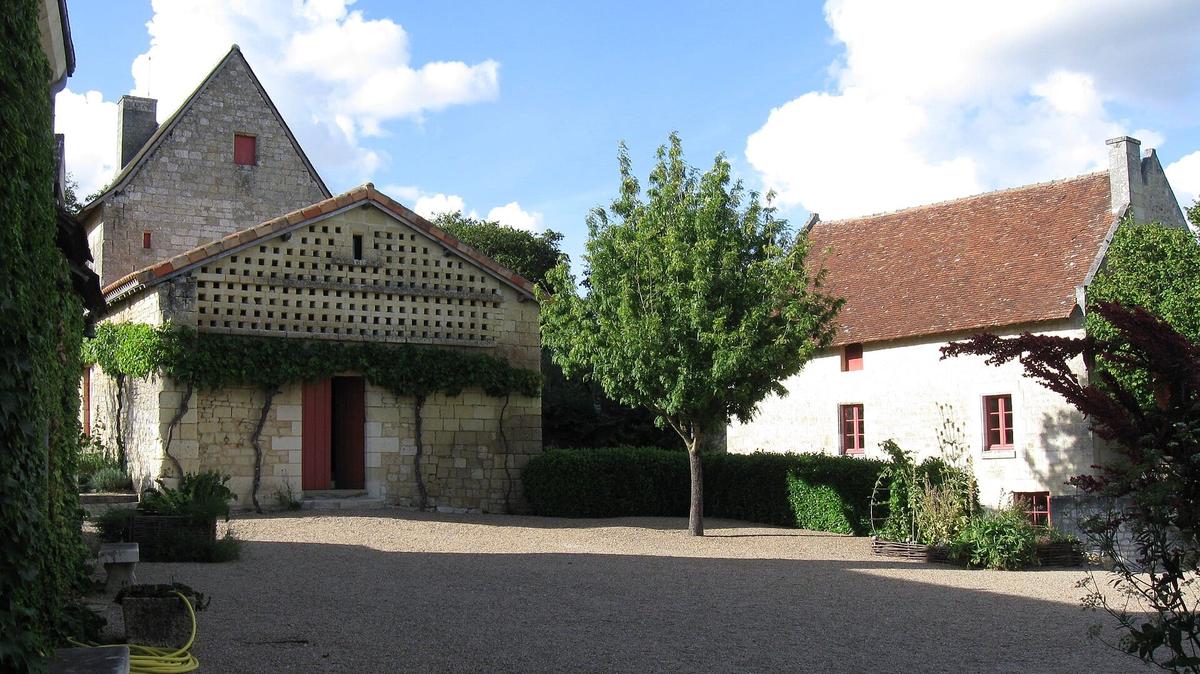
Today the house at La Devinière is a museum devoted to Rabelais, surrounded by vineyards, a few kilometres from Chinon. See also: Musée Rabelais – La Devinière
Le Rivau, Gargantua's gift
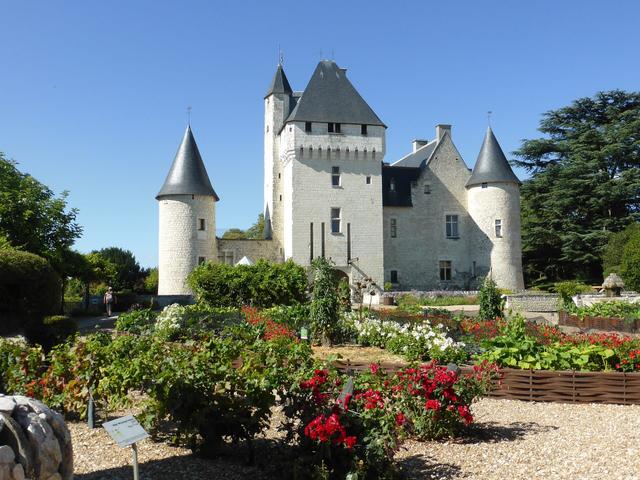
At the end of the war, Gargantua rewards his captains by giving them châteaux in the region. One of them receives Le Rivau, a 15th-century fortress fortified in 1442 by Pierre de Beauvau, with its moats, drawbridge and towers. The château still exists, 15 km from Chinon. See also: Château du Rivau
What to see: at Le Rivau, the château and its 15 fairy-tale gardens, with a kitchen garden, a rose collection and contemporary artworks along the paths.
Chinon, "small town, great renown"
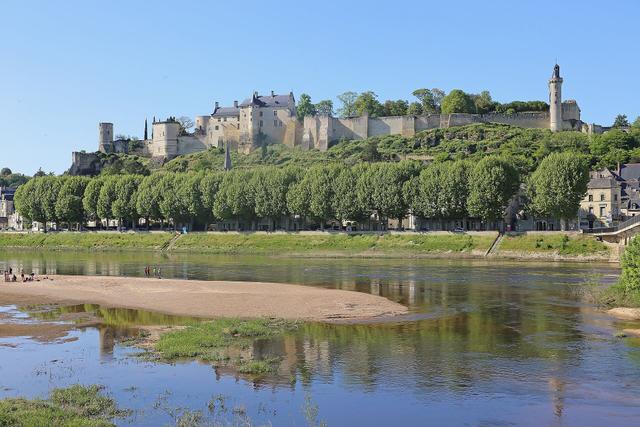
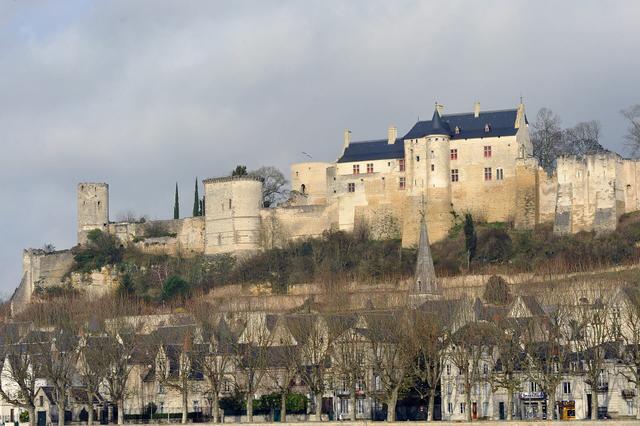
Chinon appears again and again in his work. The Fifth Book, published after his death and attributed to him, praises it: "Chinon, Chinon, Chinon, small town, great renown, set on ancient stone, the woods above, the Vienne below" ("Chinon, Chinon, Chinon, petite ville, grand renom, assise sur pierre ancienne, au haut le bois, au pied la Vienne"). The fortress that towers over the town, the fortress of the Plantagenets and of Joan of Arc, was already old in Rabelais's day. See also: Royal Fortress of Chinon, Joan of Arc
What to see: in Chinon, the Royal Fortress and its ramparts, the medieval streets of the old town and the cellars dug into the tufa stone, where you can taste the Chinon wine that Rabelais celebrated.
In his footsteps: Gargantua country
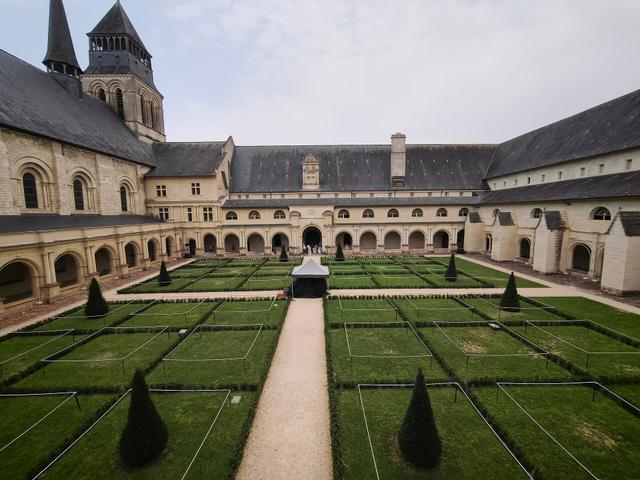
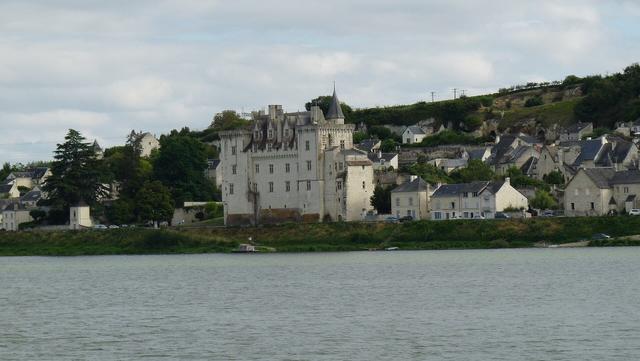
La Devinière is about ten minutes from Chinon by car, and Le Rivau 15 km away. Fontevraud and Ussé are close too: in a single day you can see Rabelais country and the abbey of the Plantagenets. See also: Fontevraud Abbey, Château d'Ussé
Partner links: if you book through these links, we earn a commission at no extra cost to you. Partner links · Learn more
Guided tours and day trips on GetYourGuide
FAQ
Where was Rabelais born?
At La Devinière, a farm in the commune of Seuilly, near Chinon, around 1494. The house is now the Rabelais museum.
What is the Picrocholine War?
The episode in Gargantua in which King Picrochole invades the country over a quarrel about cakes. The places are real: Seuilly, Lerné, La Devinière, around Chinon.
Which château does Gargantua give away in the book?
Several, to his captains. Le Rivau is one of them, and it can still be visited, along with its gardens.
What does "Do what you will" mean?
It is the only rule of the Abbey of Thélème, founded by Gargantua at the end of the book: free, well-educated people, Rabelais believed, behave well of their own accord.
Was Rabelais a doctor?
Yes. He studied at Montpellier and practised at the Hôtel-Dieu in Lyon, where he published his first books.
Sources: fr.wikipedia.org (François Rabelais)
Tickets to book online
Partner links: if you book through these links, we earn a commission at no extra cost to you. Partner links · Learn more