Eleanor of Aquitaine, Queen of Two Kingdoms
- Born
- c. 1124
- Died
- 1 April 1204
- Reign
- 1137 – 1204
- Family
- Plantagenets
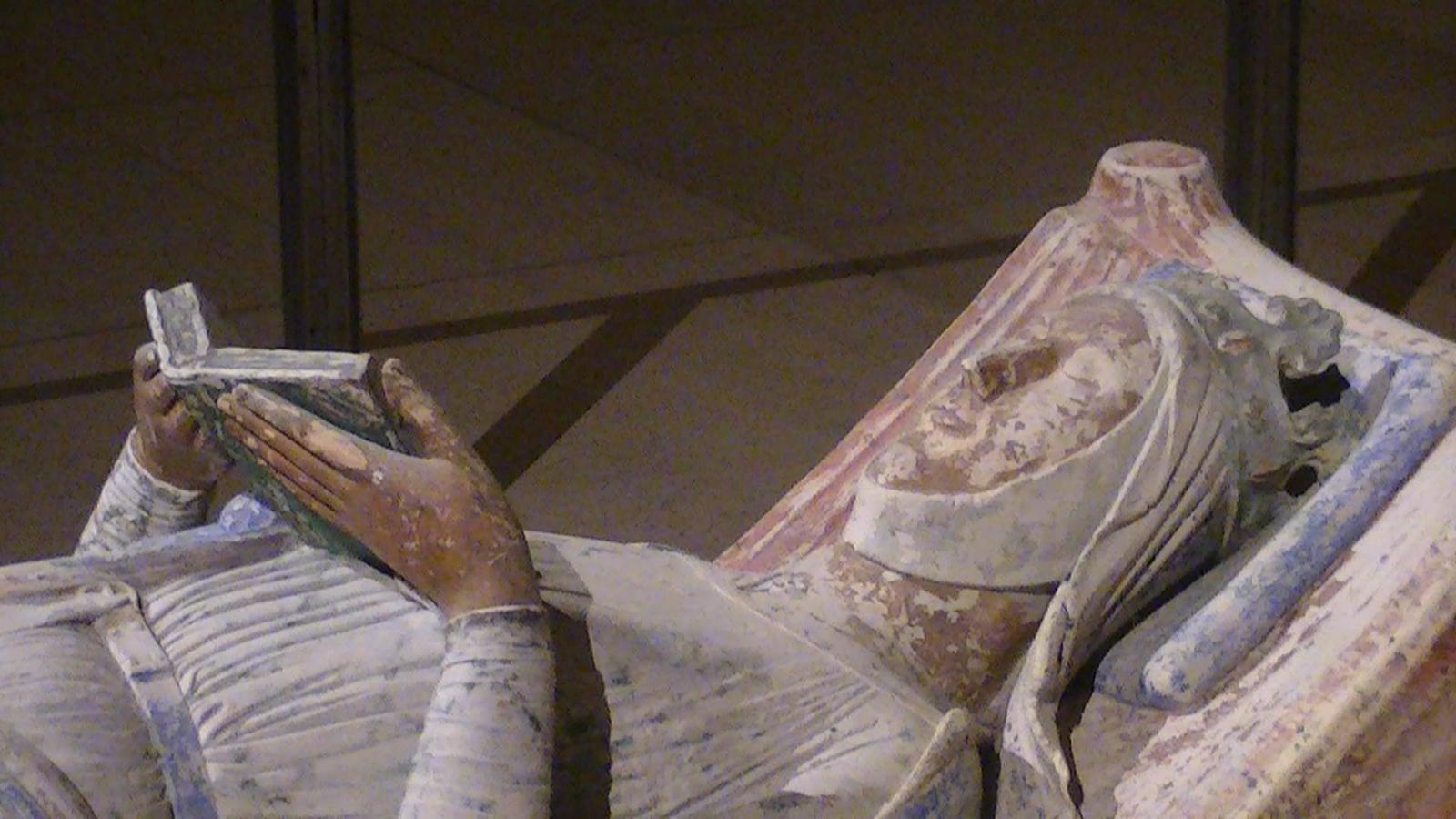
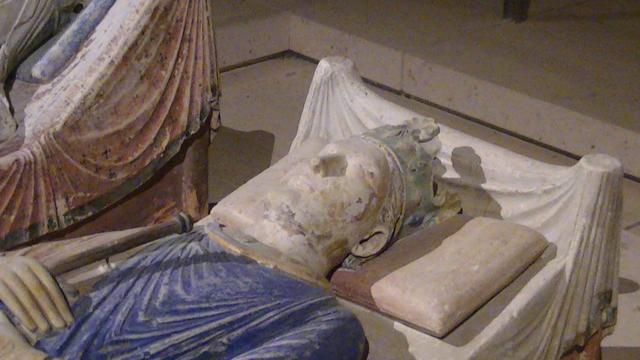
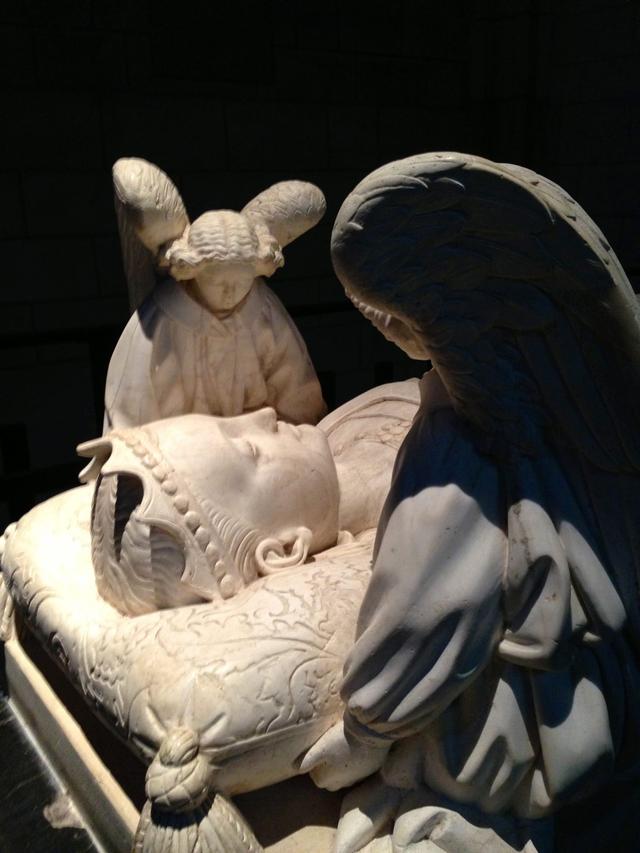
She married the King of France, left him, then married the future King of England: Eleanor of Aquitaine wore two crowns, went on crusade, spent fifteen years as her husband's prisoner and lived to the age of eighty. Her tomb effigy, a book in her hands, lies in Fontevraud Abbey.
Eleanor of Aquitaine in dates
| Date | Event |
|---|---|
| c. 1124 | Born, eldest daughter of William X, Duke of Aquitaine |
| 1137 | Becomes Duchess of Aquitaine on her father's death; marries the future Louis VII in Bordeaux and becomes Queen of France |
| 1147-1149 | Goes on crusade with the king, as far as Antioch and Jerusalem |
| 1152 | Marriage annulled at the Council of Beaugency; eight weeks later, marries Henry Plantagenet |
| 1154 | Henry becomes King of England, and Eleanor a queen for the second time |
| 1173 | Backs her sons' revolt against their father; arrested, she remains a captive for about fifteen years |
| 1189 | Freed by her son Richard, now king |
| 1199 | Richard dies; at seventy-five, she is still travelling her lands for her last son, John |
| 1204 | Dies and is buried at Fontevraud Abbey |
The richest heiress in Europe
At thirteen, Eleanor inherited Aquitaine, a huge duchy stretching from the Loire to the Pyrenees, far larger than the King of France's own domain. On the very day her father died, her future was settled: she would marry the king's son, Louis. A few weeks after the wedding in Bordeaux, Louis VI died, and she found herself Queen of France.
The couple did not get on. Eleanor, raised at a court where poets sang of courtly love, found her husband "more monk than king". During the crusade, at Antioch, they fell out. In 1152, a council held at Beaugency annulled their marriage, on the grounds that they were related. Eleanor got Aquitaine back.
Henry Plantagenet and the empire of the West
Eight weeks later, in Poitiers, she married Henry Plantagenet, Count of Anjou and Duke of Normandy, eleven years her junior. Two years after that, Henry became King of England. With Eleanor's Aquitaine, the couple ruled from Scotland to the Pyrenees: this is what is called the Angevin or Plantagenet empire. See also: Henry II of England
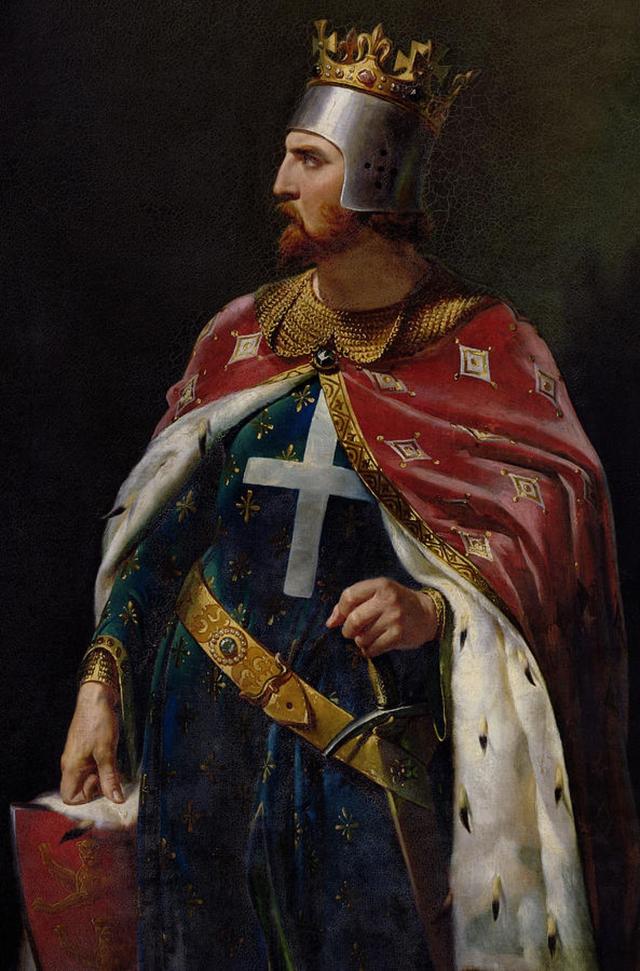
They had eight children, including two kings of England, Richard the Lionheart and John. But Henry was unfaithful and domineering. In 1173, Eleanor pushed her sons to rebel. The revolt failed. She was arrested while trying to reach the King of France, dressed as a man according to one chronicler, and spent about fifteen years under guard, mostly in England. See also: Richard the Lionheart
Chinon: the heart of the empire
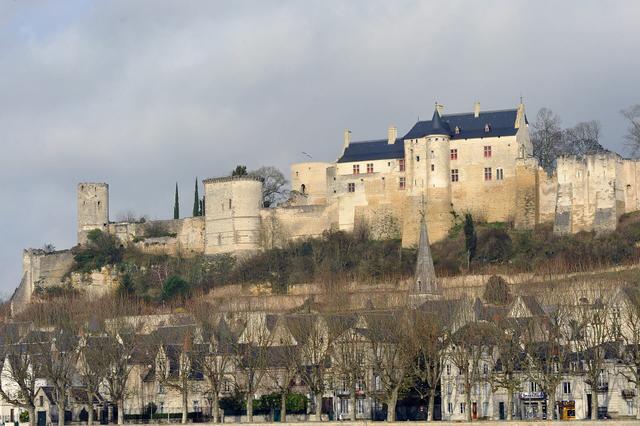
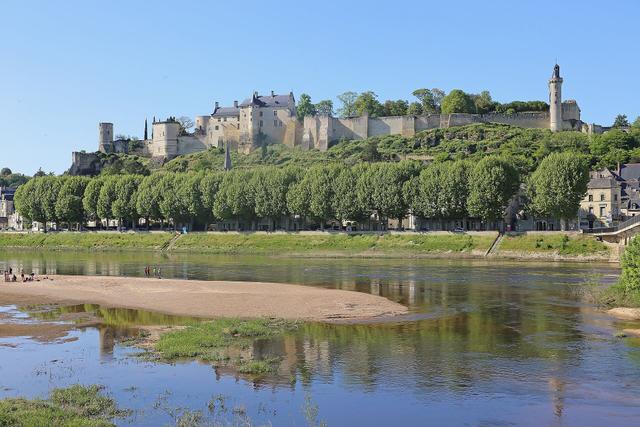
Chinon was Henry II's favourite fortress, where he kept his treasury and gathered his court on the Continent, between Anjou, Touraine and Eleanor's Poitou. The couple stayed there several times, and it was there that Henry died, in 1189, abandoned by his sons.
The fortress, stretched out along its spur above the Vienne, still has a large part of its ramparts from this period, and Fort Saint-Georges, where Henry had his palace built. See also: Royal Fortress of Chinon
What to see: the ramparts above the Vienne, Fort Saint-Georges, and the royal lodge with the tablet that recreates the rooms as they were.
Fontevraud: the retreat and the effigy
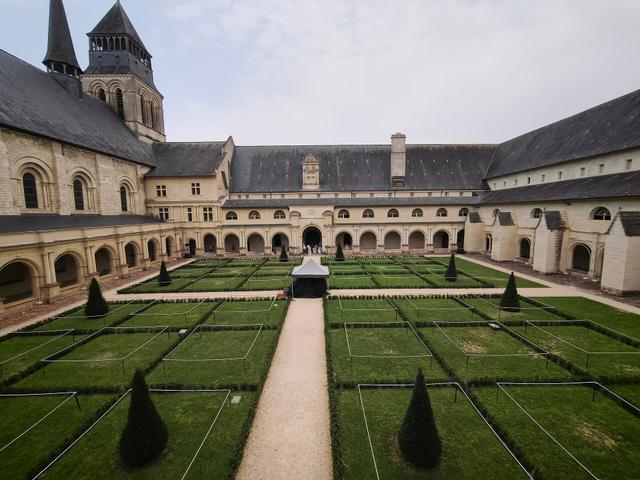
Fontevraud Abbey, founded in 1101, was a double monastery, for men and women, run by an abbess. The Plantagenets made it their family burial place. Henry II was buried there in 1189, Richard in 1199. Eleanor, widowed and elderly, retired there and died in 1204.
Her painted stone effigy shows her lying down, her head on a cushion, holding an open book. It is one of the earliest images of a woman reading in funerary sculpture. It is still in the nave of the abbey church, beside those of Henry II, Richard and Isabella of Angoulême. The bodies themselves disappeared during the Revolution. See also: Fontevraud Abbey
What to see: the four Plantagenet effigies, the Romanesque kitchen, the cloister, and the modern art museum housed in the abbey.
A travelling queen to the very end
Well past seventy, Eleanor was still active. While Richard was in captivity, she governed for him and raised his ransom. In 1200, at almost eighty, she crossed the Pyrenees to fetch her granddaughter Blanche from Castile and married her to the future King of France, Louis VIII. Blanche of Castile would be the mother of Saint Louis. The two kingdoms Eleanor had ruled in turn were thus linked through her descendants.
In her footsteps: Fontevraud and Chinon
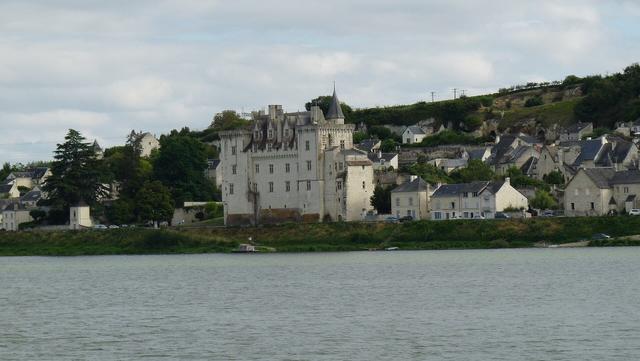
Fontevraud and Chinon are about twenty minutes apart by road. Start with Chinon in the morning, have lunch in the old town, then head to Fontevraud in the afternoon: the light in the abbey church is at its best late in the day. Saumur, 15 minutes away, is the most convenient town to stay in. See also: Château de Saumur
Partner links: if you book through these links, we earn a commission at no extra cost to you. Partner links · Learn more
Guided tours and day trips on GetYourGuide
FAQ
Where is Eleanor of Aquitaine buried?
At Fontevraud Abbey, in Maine-et-Loire, where her effigy can be seen in the abbey church. Her remains were scattered during the Revolution.
How many times was Eleanor of Aquitaine queen?
Twice: Queen of France through her marriage to Louis VII, then Queen of England through her marriage to Henry II Plantagenet.
Who were Eleanor of Aquitaine's children?
She had two daughters with Louis VII and eight children with Henry II, including Richard the Lionheart and John, both kings of England.
Why was Eleanor of Aquitaine imprisoned?
For backing her sons' revolt against their father, Henry II, in 1173. She remained a captive until the king's death in 1189.
Why is Eleanor holding a book on her effigy?
The book recalls her learning and her piety. She grew up at a court of poets, that of the troubadours of Aquitaine.
Sources: fr.wikipedia.org (Aliénor d'Aquitaine), fontevraud.fr
Tickets to book online
Partner links: if you book through these links, we earn a commission at no extra cost to you. Partner links · Learn more
Places to visit
Related guides