Sully, Henry IV's man of accounts
- Born
- 13 December 1559
- Died
- 22 December 1641
- Active years
- 1598 – 1611
- Family
- Artists, saints and favourites
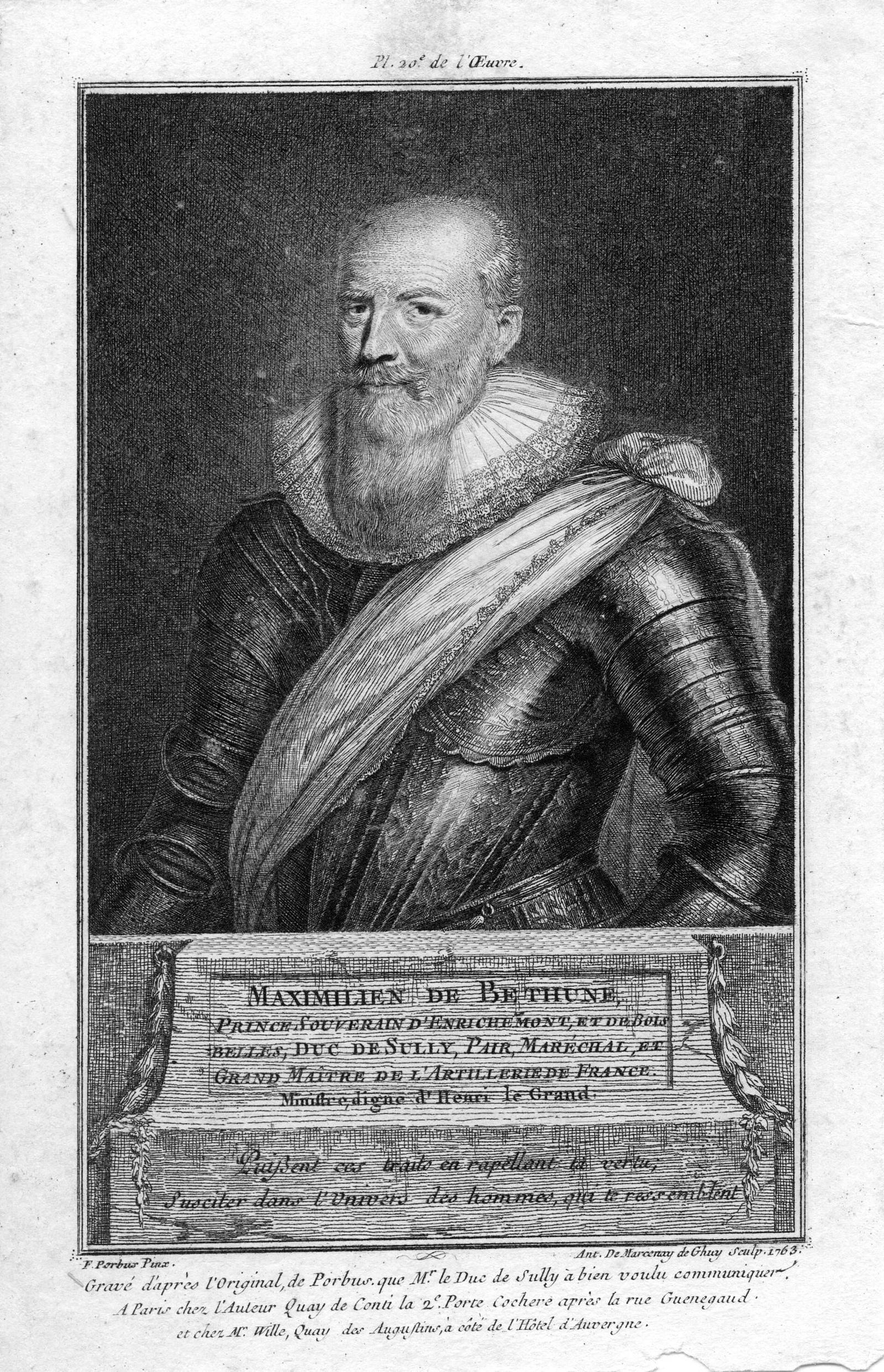
He survived the St Bartholomew's Day massacre with a book of hours under his arm, followed Henry of Navarre onto every battlefield, then put back in order the finances of a kingdom ruined by thirty years of civil war. Maximilien de Béthune, Duke of Sully, took his title from the château he bought on the Loire, where, after his fall from favour, he wrote the memoirs of the reign he had shared with the king.
Sully in dates
| Date | Event |
|---|---|
| 13 December 1559 | Born at the Château de Rosny, on the Seine, into a Protestant family |
| 1572 | Escapes the St Bartholomew's Day massacre in Paris |
| 1576 | Joins Henry of Navarre, the future Henry IV |
| 1590 | Wounded at the Battle of Ivry |
| 1598 | Superintendent of Finances |
| 1602 | Buys the Château de Sully-sur-Loire |
| 1606 | Made Duke of Sully and peer of France |
| 1610 | Henry IV is assassinated; Sully leaves office the following year |
| 22 December 1641 | Dies at the Château de Villebon, in the Perche |
The St Bartholomew's survivor
Maximilien de Béthune was twelve when he arrived in Paris for his studies in 1572, just as Henry of Navarre was marrying Margaret of Valois. On the night of 24 August, Catholics massacred the Protestants who had come for the wedding. The boy crossed the city with a book of hours in his hand, to pass as a Catholic, and found shelter at the Collège de Bourgogne.
He then attached himself to Henry of Navarre, leader of the Protestant party, and followed him through all the Wars of Religion. He was wounded at Ivry in 1590. When Henry converted to Catholicism to enter Paris, Sully remained a Protestant all his life.
The kingdom's finances
Once king, Henry IV appointed him Superintendent of Finances in 1598. Sully hunted down fraud, reduced the debt and built up a war chest in the Bastille. As Grand Voyer (head of roads) of France, he had roads repaired and elms planted along them; some old village trees are still called “sullys”. He held several posts at once: Grand Master of the Artillery, Superintendent of Fortifications. He is remembered for a famous line: “Ploughing and grazing are the two breasts that feed France” (« Labourage et pâturage sont les deux mamelles dont la France est alimentée »). See also: Henry IV
Sully-sur-Loire, his duchy
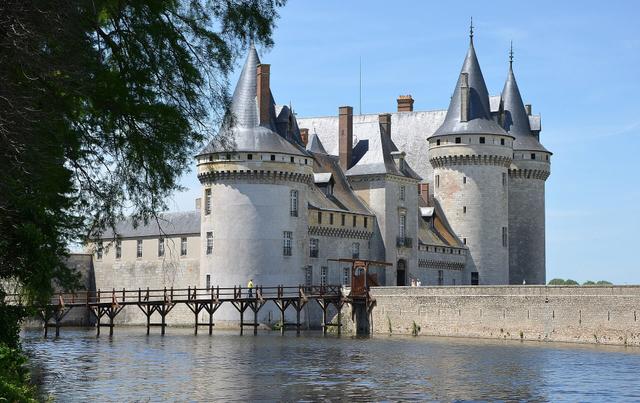
In 1602, he bought the Château de Sully on the banks of the Loire, a late 14th-century fortress surrounded by moats. The king made it a duchy in 1606, and Maximilien de Béthune became the Duke of Sully. That same year, he had an artillery tower built, remodelled the small château and laid out the park. See also: Château de Sully-sur-Loire
After Henry IV was assassinated in 1610, he fell out with the regent, Marie de' Medici, and left court. Withdrawn to his estates, he wrote his memoirs, the Économies royales, in praise of the king and of himself. He died at Villebon in 1641, aged eighty-two. See also: Marie de' Medici
What to see: the keep and its medieval oak roof frame, the rooms devoted to the duke and his career, the water-filled moats and the park.
In his footsteps: the Loire above Orléans
Sully-sur-Loire is 45 minutes from Orléans. The abbey of Saint-Benoît-sur-Loire is about ten kilometres away, and Gien a little further upstream. See also: Fleury Abbey (Saint-Benoît-sur-Loire), Château de Gien The Loire à Vélo cycle route links all three.
Partner links: if you book through these links, we earn a commission at no extra cost to you. Partner links · Learn more
Guided tours and day trips on GetYourGuide
Places to stay near Sully-sur-Loire
FAQ
Who was the Duke of Sully?
Maximilien de Béthune, Henry IV's companion in arms and then his finance minister. The king made him Duke of Sully in 1606.
Who said “Ploughing and grazing are the two breasts of France”?
Sully. The full phrase is: “Ploughing and grazing are the two breasts that feed France” (« Labourage et pâturage sont les deux mamelles dont la France est alimentée »).
Did the Château de Sully-sur-Loire belong to Sully?
Yes. He bought it in 1602 and transformed it. His ducal title comes from the château, not the other way round.
Was Sully a Protestant?
Yes, all his life, even after Henry IV converted to Catholicism.
Where is Sully buried?
At Nogent-le-Rotrou, in the Perche, near his Château de Villebon, where he died in 1641.
Sources: fr.wikipedia.org (Sully (ministre)), chateausully.fr