Voltaire, the exile of Sully-sur-Loire
- Born
- 21 November 1694
- Died
- 30 May 1778
- Active years
- 1716 – 1778
- Family
- Artists, saints and favourites
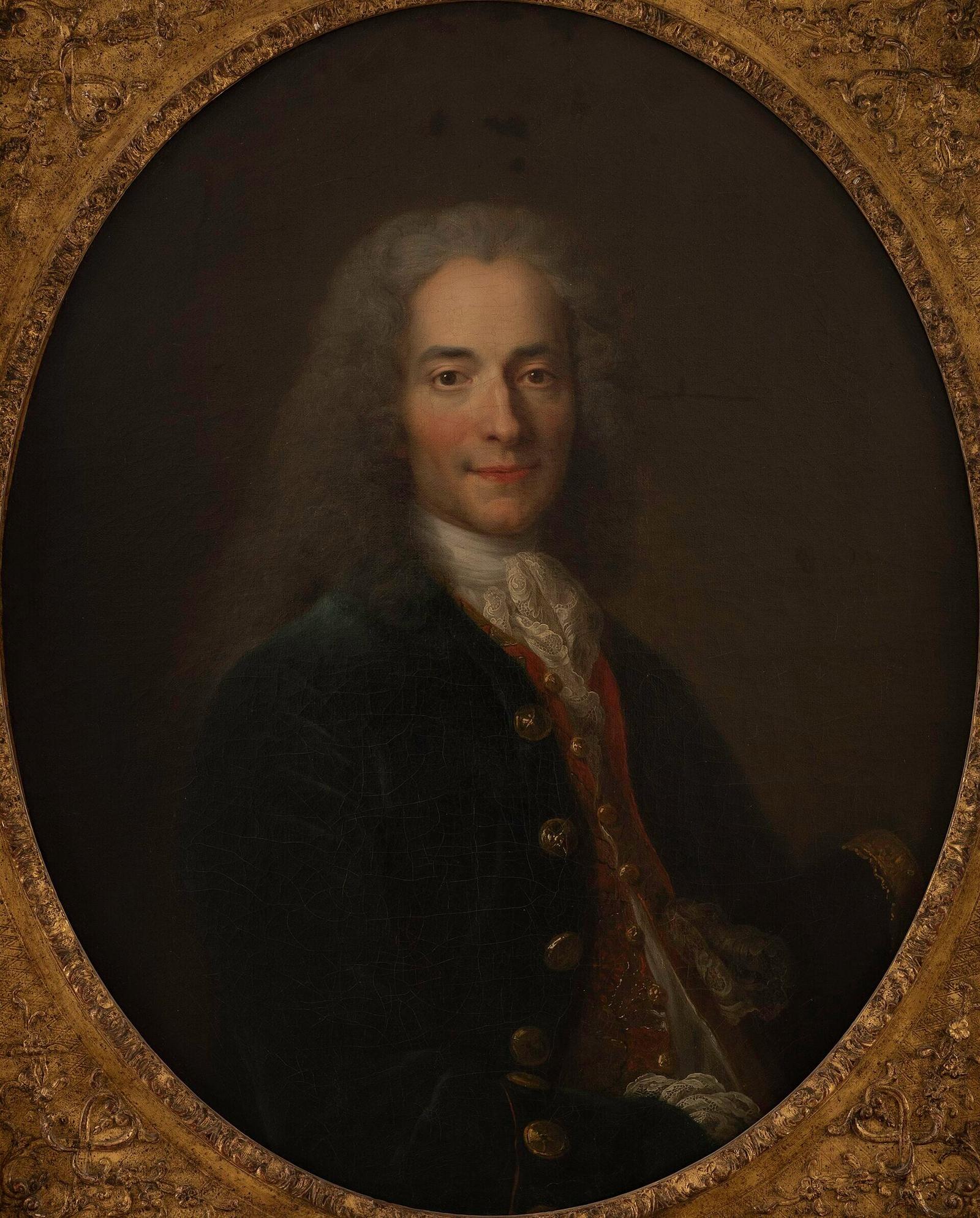
At twenty-one, François-Marie Arouet already had enough wit to irritate the Regent. Punished for satirical verses, he was sent away from Paris to the Château de Sully-sur-Loire, home of a duke who loved poets and suppers. The exile felt like a holiday. He would come back, then spend time in the Bastille, take the name Voltaire and become, from one exile to the next, the most famous writer in Europe.
Voltaire in dates
| Date | Event |
|---|---|
| 21 November 1694 | François-Marie Arouet is born in Paris |
| 1716 | Exiled to the Château de Sully-sur-Loire for verses against the Regent |
| 1717-1718 | Eleven months in the Bastille; he writes Oedipus there |
| 1718 | Oedipus is a triumph; from now on he signs himself Voltaire |
| 1719 | Another enforced stay at Sully |
| 1726-1728 | Exile in England after a quarrel with the Chevalier de Rohan |
| 1734 | The Philosophical Letters are condemned; he takes refuge at Cirey with Émilie du Châtelet |
| 1750-1753 | At the court of Frederick II of Prussia |
| 1759 | Candide; settles at Ferney, near Geneva |
| 1762-1765 | Wins the rehabilitation of Jean Calas, a Protestant wrongly executed |
| 30 May 1778 | Dies in Paris, after a triumphant return |
| 1791 | His ashes are moved to the Panthéon |
The young Arouet
François-Marie Arouet was the son of a Paris notary. A pupil of the Jesuits at the Collège Louis-le-Grand, he started very early to frequent the salons where people loved light verse and cruel jokes. After the death of Louis XIV in 1715, the Regent, Philippe d'Orléans, governed in the name of the young Louis XV. Epigrams against him were circulating, and several were attributed to the young poet. See also: Louis XV
The exile at Sully
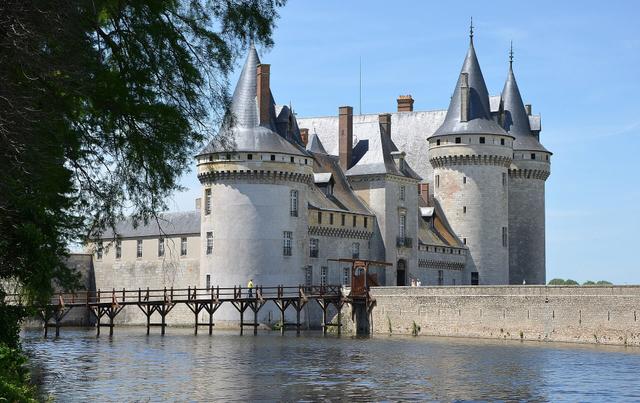
In 1716, a lettre de cachet (a royal order) sent him away from Paris. He managed to be sent to the Château de Sully-sur-Loire, home of the Duke of Sully, a descendant of Henry IV's minister, who kept a small court of witty people. The young exile wrote verse there and mixed with the duke's guests; the exile was nothing like a prison. See also: Château de Sully-sur-Loire, Sully
Back in Paris, he was accused of writing new verses against the Regent and spent eleven months in the Bastille. There he worked on his first tragedy, Oedipus, staged in 1718 with great success. It was then that he took the name Voltaire. In 1719, he was once again sent away to Sully.
He stopped coming in the 1720s. In 1726, the Chevalier de Rohan had his lackeys beat him with sticks outside the Duke of Sully's town house in Paris, and the duke refused to stand by him. Voltaire wanted to fight a duel; he was the one sent to the Bastille, then to England.
What to see: at Sully-sur-Loire, the 14th-century keep and its timber roof frame, the château's apartments and the water-filled moats, which the young poet knew.
The Enlightenment philosopher
In England, Voltaire discovered Newton, Locke and religious tolerance. From this he drew the Philosophical Letters, condemned to be burned in 1734. He took refuge at Cirey, in Champagne, with Émilie du Châtelet, a mathematician and physicist. He wrote tragedies, history and tales, including Zadig and Candide. After a stormy stay in Prussia, he settled in 1759 at Ferney, on the Swiss border, from where he could flee if anyone came to arrest him.
From Ferney he fought his battles against intolerance. The Calas affair, about a Protestant from Toulouse broken on the wheel in 1762 after being wrongly accused of killing his son, became his great cause: he won his rehabilitation in 1765. "Crush the infamous thing" ("Écrasons l'infâme"), he repeated in his letters.
The Houdon bust
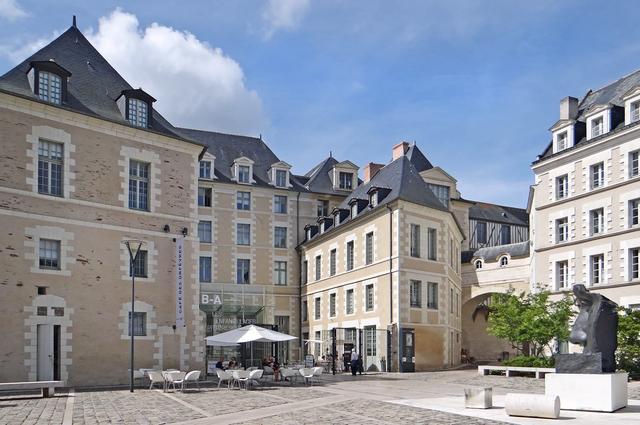
In February 1778, at eighty-three, Voltaire returned to Paris after twenty-eight years away. The city gave him a hero's welcome. The sculptor Jean-Antoine Houdon then made his portrait, which fixed forever the face of the old man with the ironic smile. Voltaire died on 30 May 1778. A bust of Voltaire by Houdon is on display at the Angers Museum of Fine Arts, alongside the 18th-century painters. See also: Angers Museum of Fine Arts (Musée des Beaux-Arts)
What to see: at the Angers Museum of Fine Arts, the bust of Voltaire and the 18th-century rooms, with Watteau, Boucher, Fragonard and Chardin.
In his footsteps: Sully-sur-Loire
The Château de Sully-sur-Loire is 45 minutes from Orléans, served by coach from Orléans (line 3A of the Rémi network). Fleury Abbey at Saint-Benoît-sur-Loire is about ten kilometres away, and the Loire à Vélo cycle route runs past the château. See also: Fleury Abbey (Saint-Benoît-sur-Loire)
Partner links: if you book through these links, we earn a commission at no extra cost to you. Partner links · Learn more
Guided tours and day trips on GetYourGuide
Places to stay near Sully-sur-Loire
FAQ
Why was Voltaire exiled to Sully-sur-Loire?
In 1716 he was accused of writing satirical verses against the Regent, Philippe d'Orléans. A lettre de cachet sent him away from Paris, and the Duke of Sully welcomed him at the château.
Why is he called Voltaire?
It is a name he gave himself around 1718, at the time of Oedipus. His real name was François-Marie Arouet. The origin of the pen name is still debated.
Was Voltaire imprisoned in the Bastille?
Yes, twice: eleven months in 1717-1718, then a few days in 1726, before he left for England.
Where is Voltaire buried?
In the Panthéon, in Paris, since 1791. He had first been buried in an abbey in Champagne, as the Church had refused him a burial in Paris.
Where can you see a portrait of Voltaire by Houdon?
The Angers Museum of Fine Arts displays a bust of Voltaire by Houdon. The most famous seated statue is at the Comédie-Française in Paris.
Sources: fr.wikipedia.org (Voltaire)