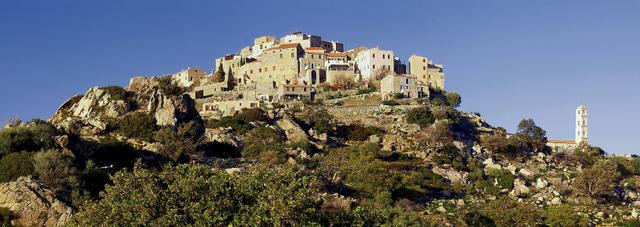
Cargèse churches: visiting the Greek and the Latin church
Cargèse Greek and Latin churches at a glance
- Admission
- Free
- Time needed
- about 30 min
- Where
- Cargèse
Facts checked on 12 November 2026. Full opening hours, reduced prices and access
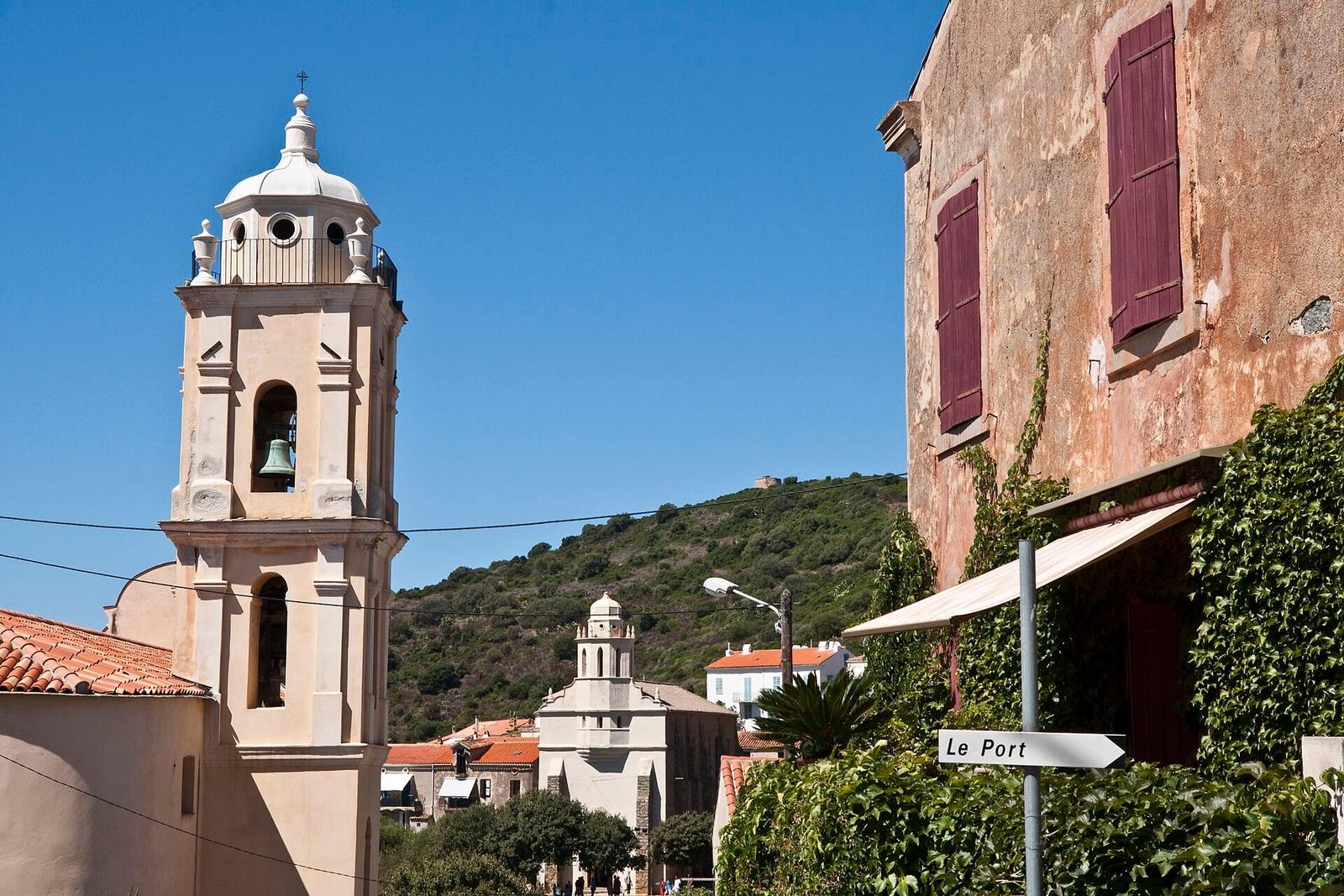

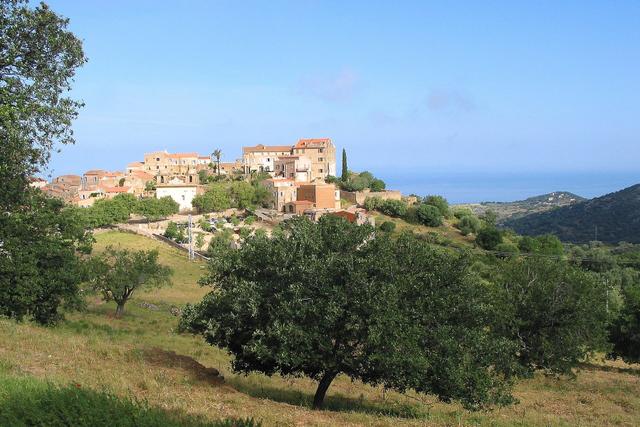
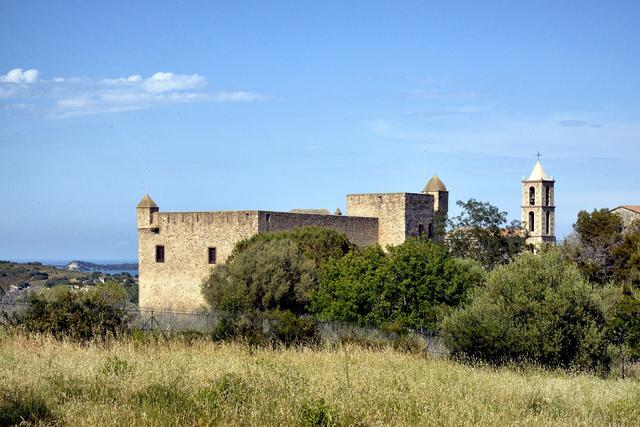
In Cargèse, on the west coast of Corsica, two Catholic churches face each other across a small valley: one follows the Latin rite, the other the Greek rite. Together they tell the story of families who came from the Peloponnese 350 years ago. Here is what you need to know to visit them: access, services, festivals, what to look at and what to do nearby.
Cargèse churches at a glance
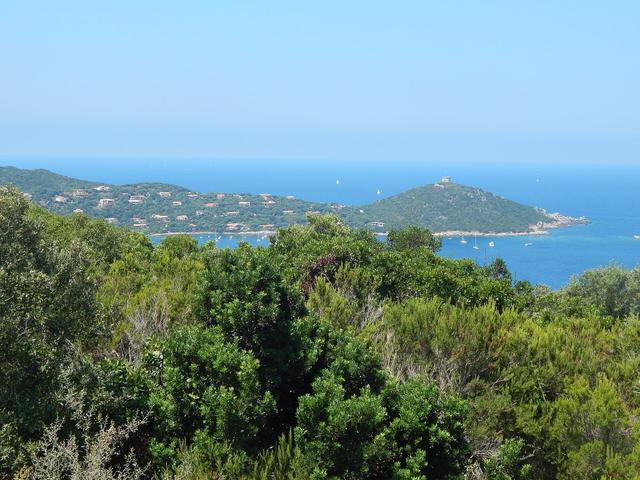
- Where: in the heart of the village of Cargèse (Corse-du-Sud), on the heights above the harbour and the Gulf of Sagone, an hour's drive north of Ajaccio.
- Price: free entry to both churches.
- Open: no official opening hours are published. The churches are places of worship: avoid service times and call the parish if you really want to see inside.
- Time needed: allow 30 minutes for both churches, a little more with a walk around the village.
- Best for: anyone curious about history and religion, photographers, and families on their way to Piana and its calanques.
- Good to know: the best times to come are Easter, the feast of Saint Spyridon on 12 December and the feast of the Holy Cross on 14 September.
Why Cargèse has two churches facing each other
Cargèse was born of exile. In 1676, around 600 Greeks left Vitylo (Oitylo), in the Mani peninsula in the south of the Peloponnese, to escape Ottoman rule. The Corsican tourist board speaks of some 700 migrants landing on 14 March 1676. Genoa, which then ruled Corsica, gave them land at Paomia, in the hills about 2 km east of present-day Cargèse. In return, they had to recognise the authority of the Pope: they kept the Byzantine rite, but became Catholics.

Relations with the Corsicans went badly. The newcomers were seen as allies of Genoa. In 1731, during the Corsican revolt, 127 Greeks held out for three days in the tower of Omigna, on the coast, before breaking free. The colony withdrew to Ajaccio, where it lived for more than forty years.
When Corsica became French, the Comte de Marbeuf, governor of the island, granted them the land of Cargèse. From 1775, 97 families, or 259 people, settled there. Marbeuf became Marquis of Cargèse.
Over time, Corsican families also moved to the village. Each community wanted its own church. The Corsicans built the Latin church in the 19th century; the Greeks replaced their small chapel of 1775 with a larger church. The result: two Catholic churches, two rites, two bell towers looking at each other. The Latin church is the parish church of the diocese of Ajaccio; the Greek church is served by Catholic clergy of the Byzantine rite.
2026 is a special year. It marks 350 years since the Greeks arrived in Corsica and 250 years of Cargèse. A local group, Agora Cargèse 2026, organised more than 20 concerts in the two churches this summer, and the main commemoration took place on 10 and 11 October 2026, according to Corse Net Infos.
Do you have to pay to visit the Cargèse churches?
No. Entry is free to both churches: the Corsican tourist board lists the Greek church as free, and the Latin church is a parish church open to the public. There is no ticket office and no paid tour advertised.
Official sources do not mention any regular guided tour of the churches. For a guided group visit, contact the Ouest Corsica tourist office.
If you want an organised activity in the area, most trips leave from Cargèse harbour: boat trips to the Calanques de Piana and the Scandola nature reserve, and sunset cruises.
Partner links: if you book through these links, we earn a commission at no extra cost to you. Partner links · Learn more
When are the churches open?
Neither the parish nor the tourist office publishes opening hours for 2026. These are working churches, not museums. In practice:
- You can see the outside at any time. The two façades and the viewpoint between the churches are freely accessible.
- The inside depends on the parish. To be sure of seeing the iconostasis in the Greek church, call the Cargèse parish on +33 4 95 26 41 31, the number given by the Corsican tourist board.
- During services, stay at the back or come back later. Services in the Greek church are held in ancient Greek; the missals give a French translation.
Best time for photos. Both churches overlook the Gulf of Sagone. In the late afternoon, the light comes off the sea and falls on the façades. It is also when the village is at its most pleasant in summer.
Greek Easter in Cargèse: the festival not to miss
The Easter ceremonies are the highlight of the year. They bring together both rites and both churches. The 2026 programme, as published by Corse Net Infos:
- Maundy Thursday (2 April 2026): mass at 21:30 in the Latin church, followed by a procession through the village.
- Good Friday (3 April 2026): lamentation for Christ at 21:30 in the Greek church, then a procession.
- Holy Saturday (4 April 2026): Easter vigil at 23:45 in the Greek church.
- Easter Sunday (5 April 2026): mass at 9:30 in the Latin church.
The Corsican tourist board describes how it unfolds. On Friday evening, the Greek church is plunged into darkness and the Epitaphios, an embroidered cloth showing Christ laid in the tomb, is carried in procession. During Saturday night, the light returns and the congregation sings "Christos anesti" ("Christ is risen"). On Easter Monday, a procession crosses the village with the confraternities, and an icon of the Greek colony is turned towards the four points of the compass to bless the fields.
In 2026, Cargèse celebrated Easter on the same dates as the Latin Church. For next year, look out for the programme published by the parish and the tourist board in early spring.
Other festivals. The feast of Saint Spyridon, patron of the Greek church, falls on 12 December. On 14 September, for the feast of the Holy Cross, basil carried in procession is blessed. And on the Friday after Ash Wednesday, the day of the dead, worshippers bring boiled wheat or sweet rice, called kolyva, to mass, and share it at the end of the service.
How long do you need?
Allow 30 minutes to see both churches, inside included. Add an hour to wander around the village, walk down to the harbour and go on to a viewpoint over the gulf. On a festival day, keep the whole evening free.

What to see in the Greek church of Saint Spyridon
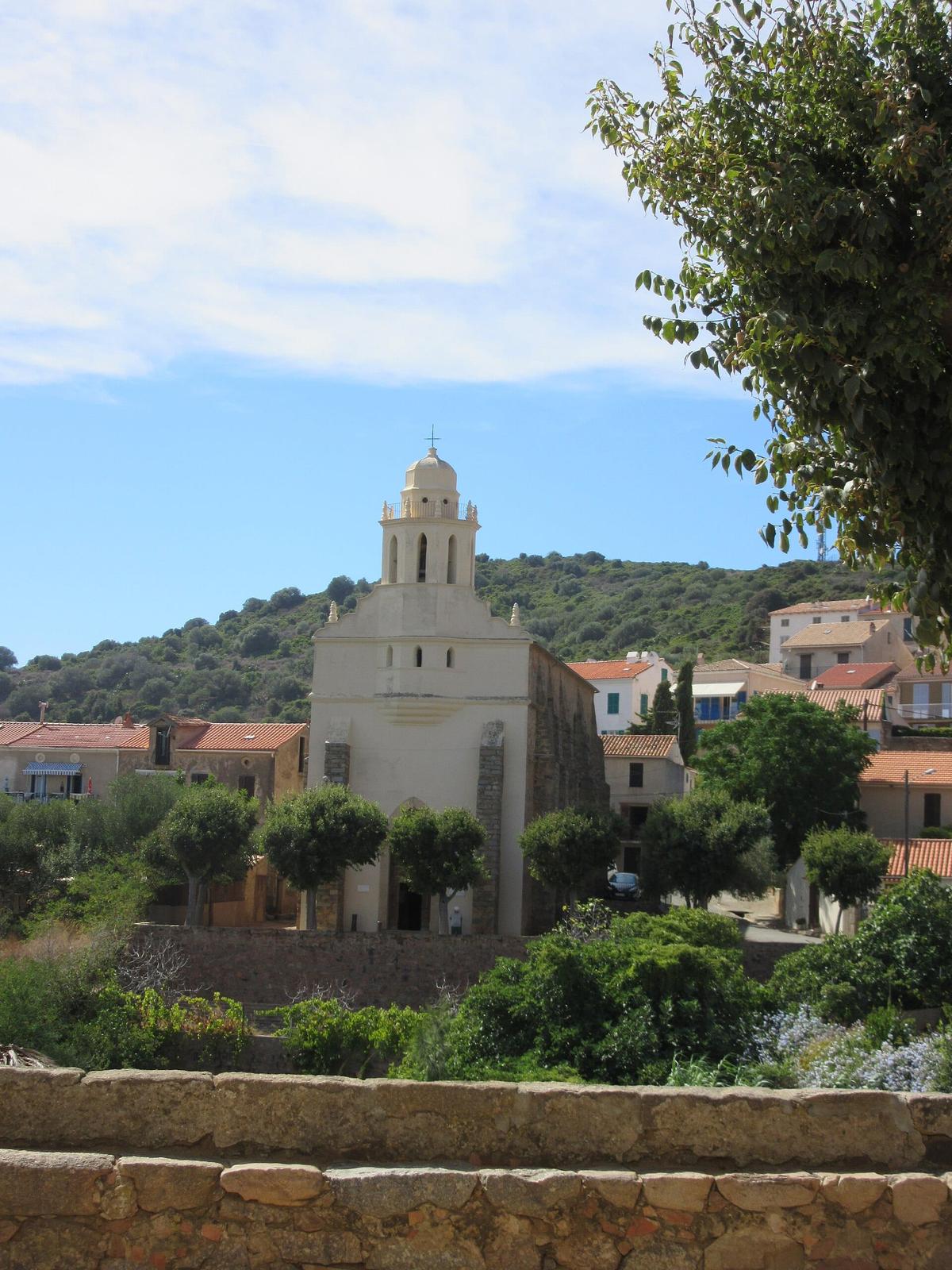
According to the French heritage inventory, as quoted by Wikipedia, the villagers built it from 1868 to 1874, in Gothic Revival style: a single nave, a flat east end, a bell tower on the façade. The Corsican tourist board dates the start of work earlier, around 1852, and says the faithful worked on it on Sundays, after mass, until nightfall.
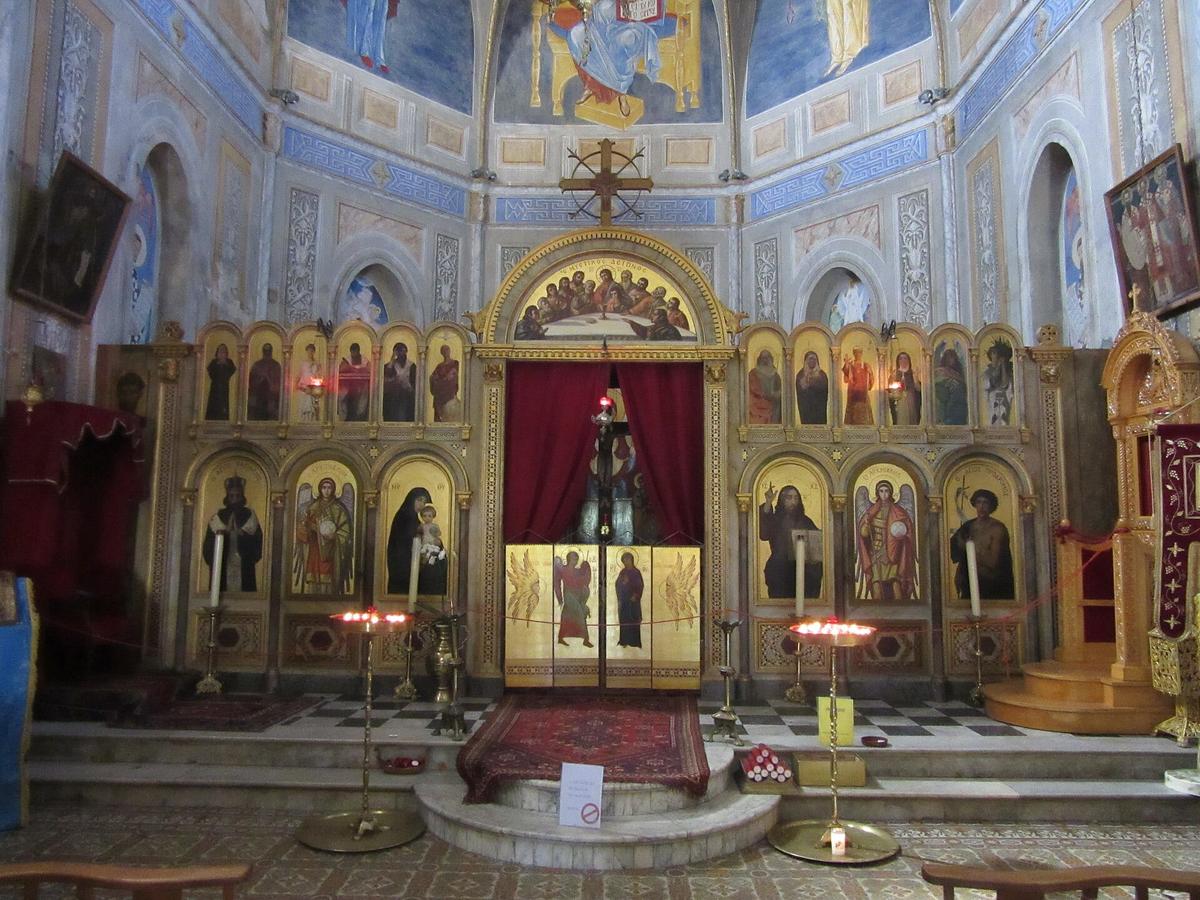

The iconostasis
This is the centrepiece. As in Eastern churches, a wooden screen covered with holy images on a gold background separates the sanctuary from the nave. It was made by a Roman workshop for the monastery of Grottaferrata, near Rome, then given to Cargèse in 1886. Step closer to look at the faces of the saints and the Greek inscriptions.
The icons of the first settlers
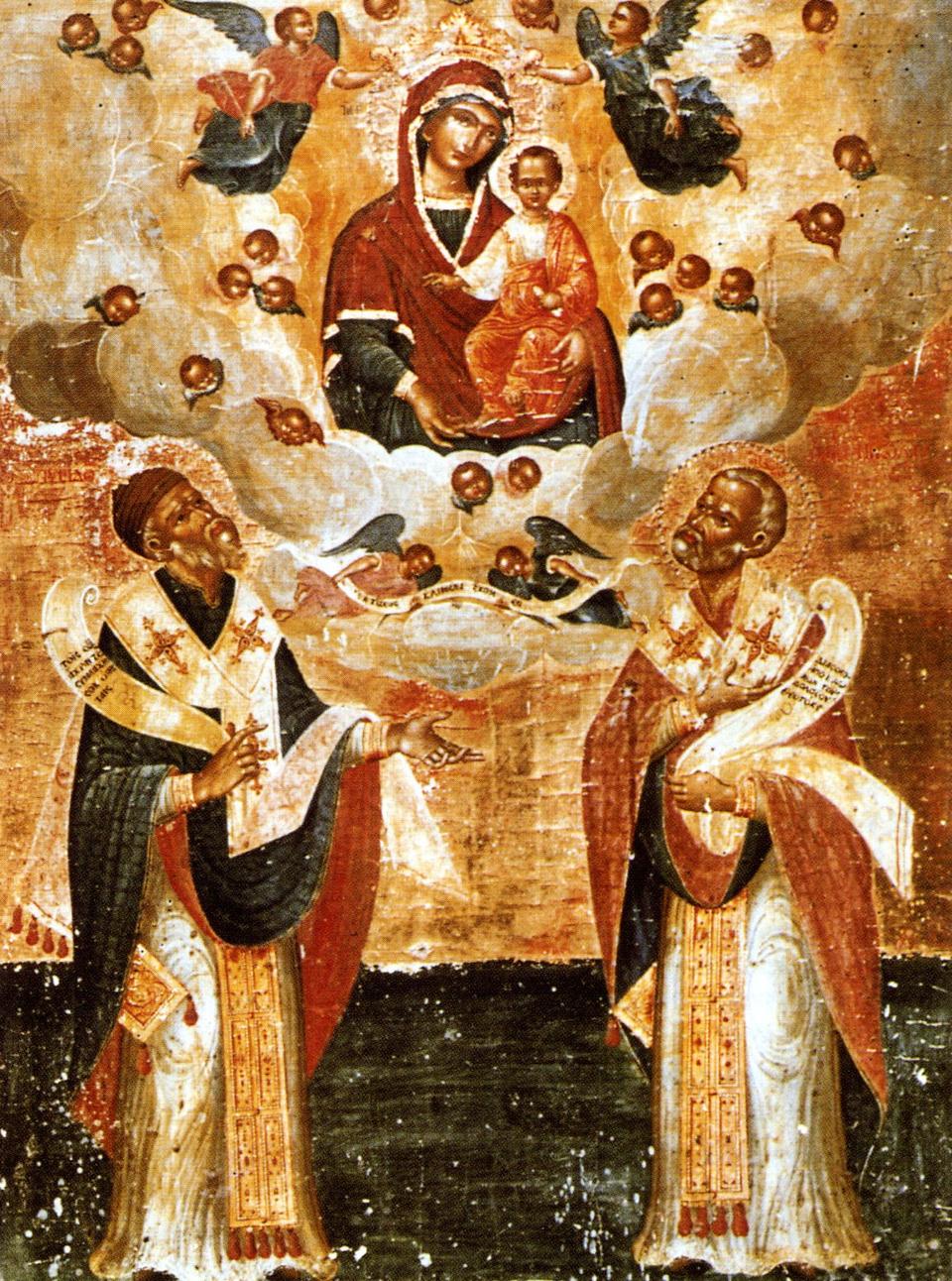
The church keeps icons brought from the Peloponnese by the families of 1676. They are smaller and darker than the iconostasis, but they are the objects most charged with history in the village. Two side niches are dedicated to the Panaghia (the Virgin), on the right, and to Saint Spyridon, on the left.
A detail. The liturgy follows the rite of Athens and Constantinople almost entirely. Baptism is by triple immersion and communion is given in both kinds, bread and wine. The tourist board counts about 300 parishioners of the Greek rite.
The Greek church has been listed as a French historic monument since 1990.
What to see in the Latin church
Opposite stands the Church of the Assumption, known as the "Latin" church, which is a little older. Corsican heads of family launched a subscription in 1817 and building lasted from 1822 to 1828. The wind blew the roof off in 1835, and the bell tower was only begun in 1847. This bell tower has been a listed historic monument since 1989.
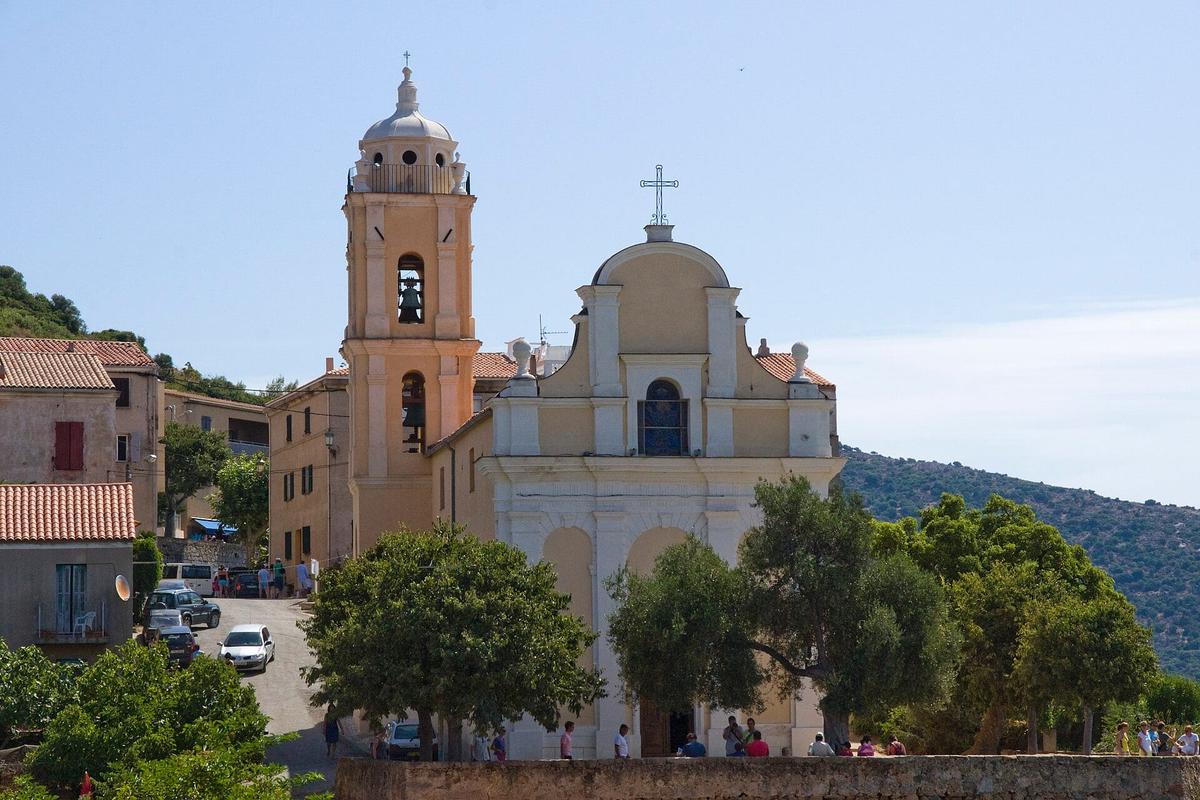

The façade
It is plain: flat pilasters, a curved pediment and a bell tower topped with a lantern. Its bells were cast in 1887. From the church square, the view over the Greek church and the gulf is the best-known in Cargèse.
The trompe-l'oeil decoration
The interior is a surprise, with its Baroque decoration. The fake reliefs, columns and mouldings are all painted in trompe-l'oeil. The nave decoration dates from the 1970s. The choir was painted between 1992 and 1997 by two Russian artists, Anastassiya Sokolova and Valeri Tchernoritski. Look at the vaulted ceiling from the entrance: the illusion of depth works better from a distance.
More stories from Cargèse
Marbeuf and Letizia Bonaparte. The Marquis of Cargèse built a château in the village, where for several summers he hosted the mother of the future Napoleon. The château was destroyed in 1789. Rumours of an affair have never been proven.
The submarine Casabianca. On the night of 14 to 15 December 1942, the submarine landed men and equipment in the cove of Topiti, in Chiuni Bay, north of Cargèse. It was the first mission to support the Corsican Resistance.
A Nobel laureate as honorary citizen. The physicist Georges Charpak, Nobel Prize winner in 1992, was made an honorary citizen of Cargèse in 1993.
Visiting the Cargèse churches with kids
The visit is short, which suits children well. To get them interested, show them the difference between the two churches: on one side a wall of golden images (the iconostasis), on the other painted columns that look three-dimensional. Ask them to work out what is real and what is painted.
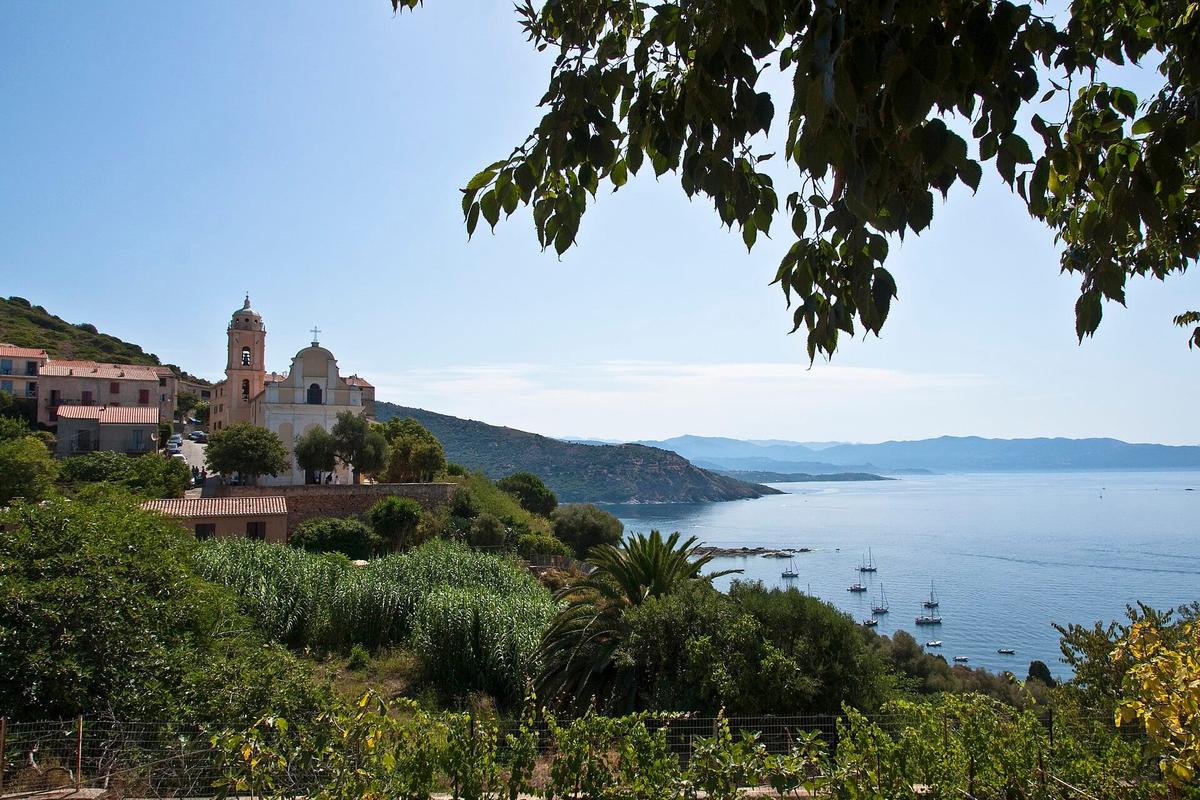

Afterwards, the harbour and the beaches of Cargèse are a few minutes away. Boat trips to the Calanques de Piana leave from the harbour in season.
How to get to Cargèse
By car. Cargèse is on the coast road linking Ajaccio with Piana and Porto. Allow about an hour from Ajaccio, on a winding road. A car is the easiest option: the west coast has little public transport, and the sites worth combining are far apart.
By plane or ferry. The nearest airport and ferry port are in Ajaccio. That is where to rent a car to drive up to Cargèse, Piana and Porto.
By private boat. Cargèse harbour welcomes visiting yachts. The two churches are a short walk uphill.
What to see near Cargèse on the same day
| Also worth seeing | Distance | Travel time |
|---|---|---|
| Calanques de Piana | 20 km | 30 min by car |
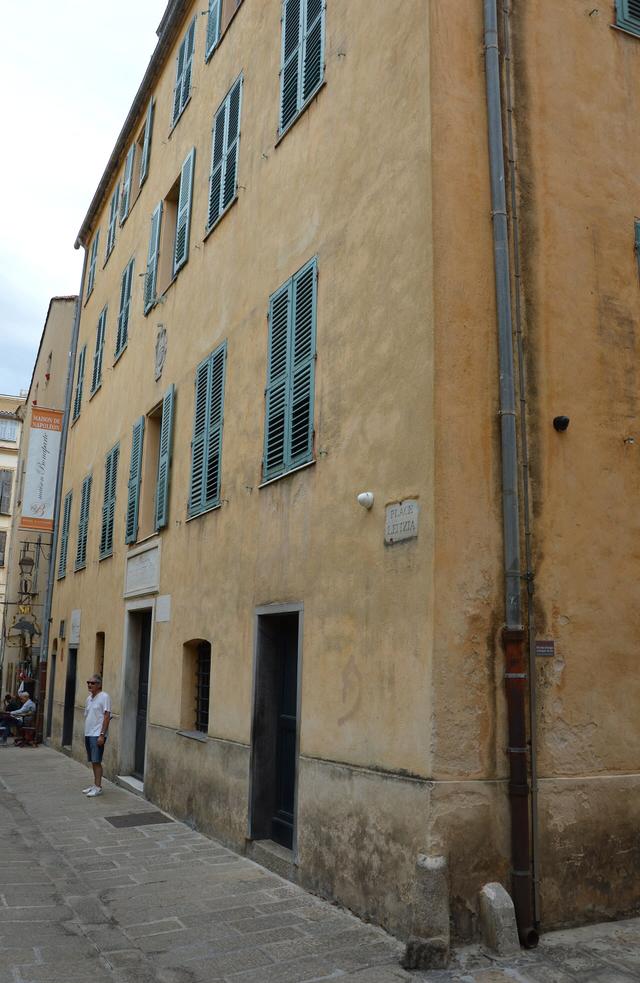
| Maison Bonaparte | 51 km | 65 min by car |
| Pointe de la Parata and Sanguinaires Islands | 55 km | 70 min by car |
Approximate road distances and travel times.
To the north, the Calanques de Piana are the obvious next step: a 30-minute drive to one of the most spectacular landscapes in Corsica. See also: Calanques de Piana Further on, the Scandola nature reserve can be visited by boat. See also: Scandola Nature Reserve
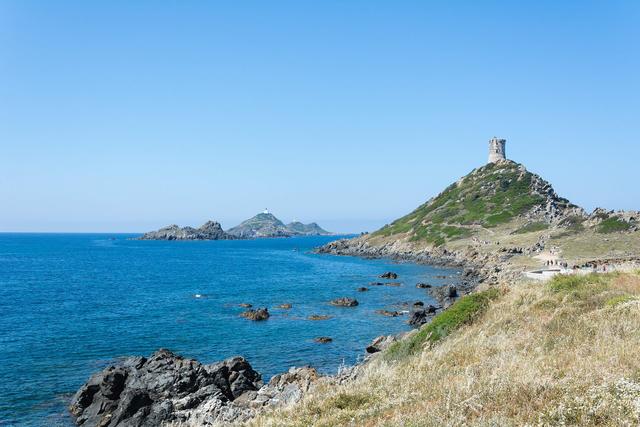
To the south, Ajaccio has Napoleon's birthplace and the Pointe de la Parata, facing the Sanguinaires islands, ideal at sunset. See also: Maison Bonaparte, Pointe de la Parata and Sanguinaires Islands
If you are interested in Corsican churches, the Pisan Romanesque churches of the north belong to another era and another style: the Trinity church in Aregno in the Balagne, San Michele de Murato and the Nebbio cathedral. See also: Church of the Trinity and San Giovanni, Aregno, San Michele de Murato Church, Nebbio Cathedral (Santa Maria Assunta) On the mainland, Tournus Abbey, in Burgundy, shows Romanesque architecture at its boldest. See also: Saint-Philibert Abbey, Tournus, Corsica
Where to eat and stay in Cargèse
The village has restaurants around the harbour and along the main street, serving fish and Corsican specialities. In summer, book for dinner: Cargèse is a busy seaside resort.
Cargèse is a good base for exploring the west coast, between Ajaccio, Piana and Porto. The village has 1193 permanent residents (2022), but many more in summer: accommodation books up fast in July and August.
FAQ
Why are there two churches in Cargèse?
Because the village was founded by Greeks from the Mani, Catholics of the Byzantine rite, and later joined by Corsican families of the Latin rite. Each community built its own church in the 19th century.
Is it free to visit the Cargèse churches?
Yes, entry is free to both churches.
Is the Greek church in Cargèse Orthodox?
No. It is Catholic, in communion with Rome, but follows the Byzantine rite, with a liturgy in ancient Greek.
When can you see Greek Easter in Cargèse?
During Holy Week. In 2026, the ceremonies ran from 2 April 2026 to 5 April 2026, with the Easter vigil in the Greek church on Saturday night.
Are the churches open every day?
No official opening hours are published. Call the parish on +33 4 95 26 41 31 before you come if you want to see inside.
How long does the visit take?
About 30 minutes for both churches.
Practical information
Official ticket-office prices 2026
Free admission
Address
Église Saint-Spyridon, rue de Grèce, 20130 Cargèse, France
Directions · Phone+33 4 95 26 41 31
On site and nearby
- Nearest shops and pharmacy: Cargèse, less than 1 km away Straight-line distance, based on OpenStreetMap.
- Emergencies: 112 (all emergencies, free from any phone), 15 (SAMU, medical emergency)
Around the site, on Google Maps
With children
Family days out nearby: Calanques de Piana (14 km), Scandola Nature Reserve (25 km), Pointe de la Parata and Sanguinaires Islands (27 km)
Swimming pools and play areas nearby, on Google Maps
Facts checked on 12 November 2026. Sources: visit-corsica.com, visit-corsica.com, fr.wikipedia.org, visit-corsica.com, waymarking.com, corsenetinfos.corsica
Map
In the same region
- Parc Galeafrom €10Free under 3