Pigna: visiting Balagne's village of craftspeople and music
Pigna at a glance
- Admission
- Free
- Time needed
- about 1 h
- Where
- Pigna
Facts checked on 12 November 2026. Full opening hours, reduced prices and access
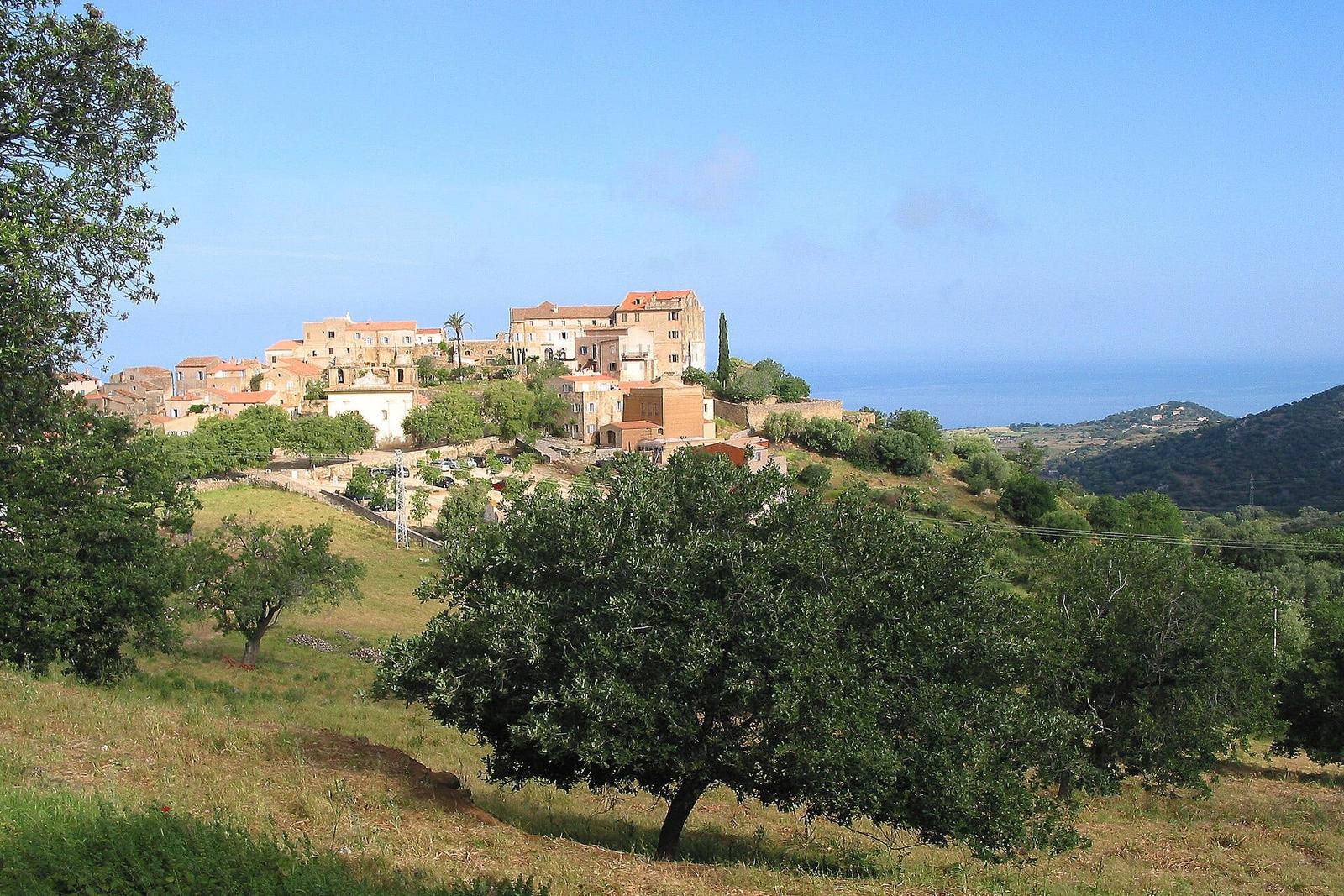

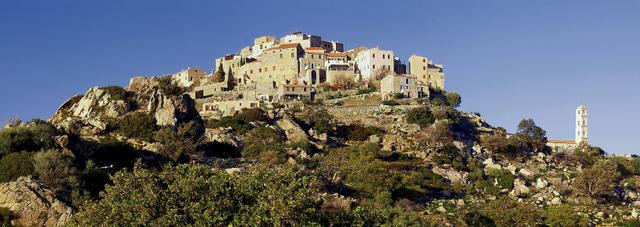
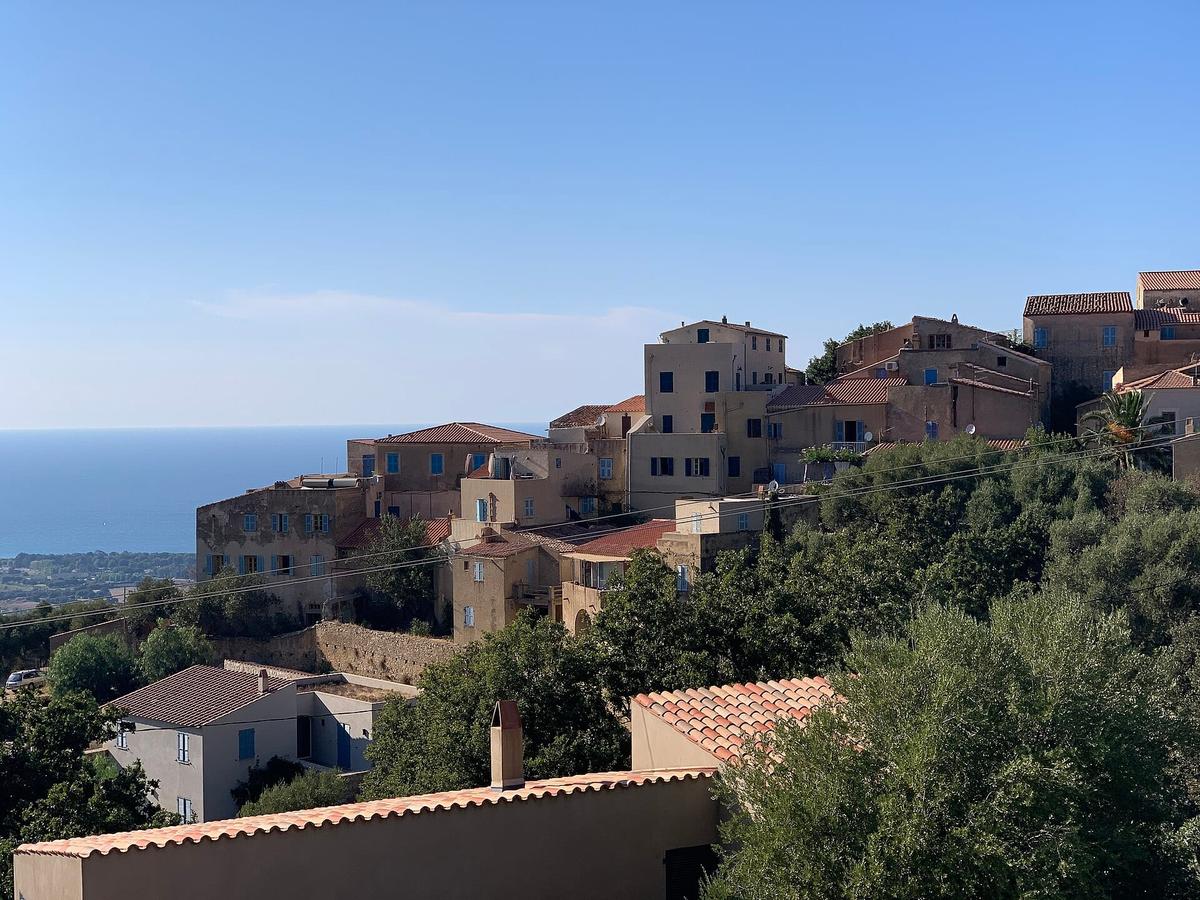
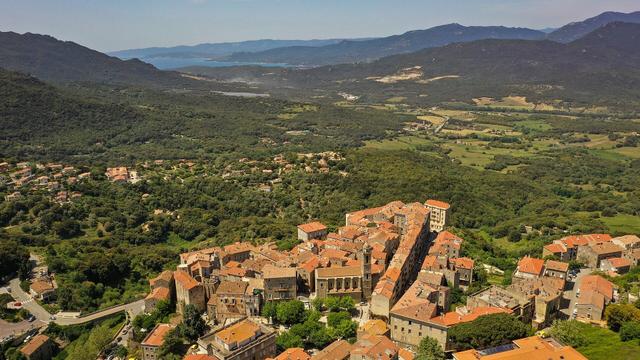
Above L'Île-Rousse, Pigna sits on a rocky spur 224 metres above sea level. Almost deserted in the 1960s, the village was brought back to life by craftspeople and musicians. People come for its stone lanes, its workshops, its church with two bell towers and its concerts. Entry is free; here is where to park, what to see and when to come.
Pigna at a glance
- Where: in Balagne (Haute-Corse), on a hill 8.5 km from L'Île-Rousse and half an hour's drive from Calvi.
- Price: free. The village, its lanes and its church are open to all, all year round.
- Time needed: 60 minutes to walk around the village, two and a half hours with a meal.
- Best time: morning or late afternoon. Sunset from the west-facing Place a l'Olmu is the moment everyone is after.
- Good to know: the heart of the village is pedestrian, steep and cobbled. Wear good shoes. In July and August, the car park fills up quickly.
- Highlight: the Festivoce festival, in mid-July, turns the squares and lanes into concert stages.
Why visit Pigna?
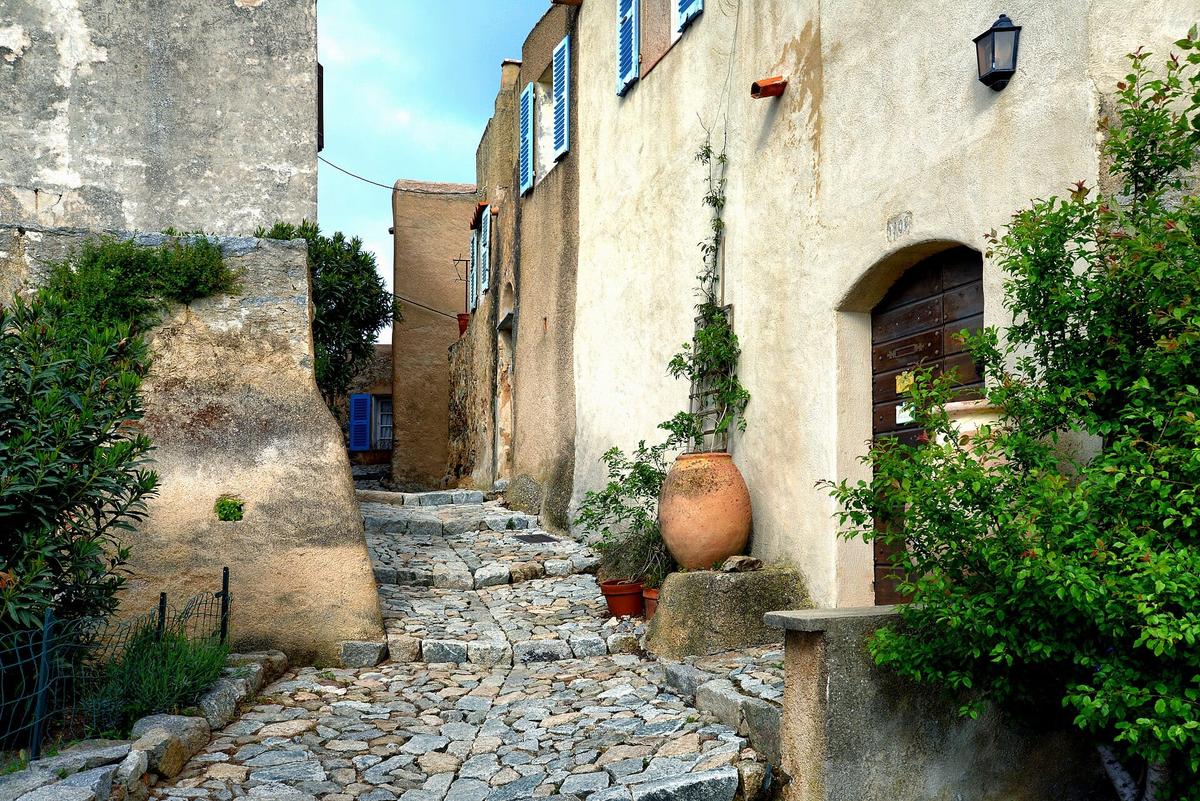
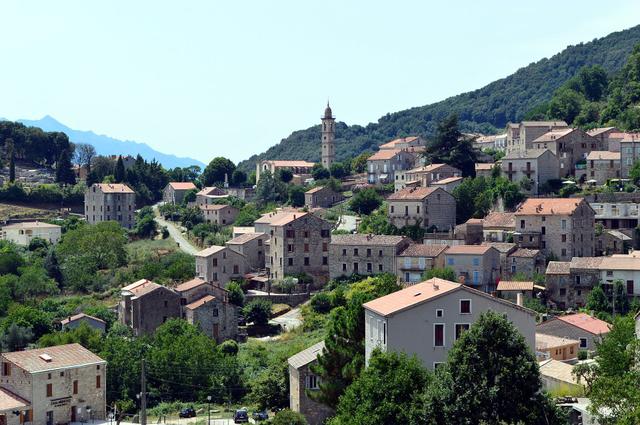
Pigna is a small village: 128 inhabitants at the 2023 census. It stands on top of a rocky spur overlooking the Balagne plain and the sea, between Corbara and Sant'Antonino. The houses are packed tightly together, linked by steps, vaulted passages and small squares.

Tradition dates its founding to the year 816, by a certain Consalvo Romano. In the 17th century, the village was at the centre of a vendetta: in 1680, a murder between two branches of the same family led the Genoese government to banish the culprits and seize their property, before pardoning them.
What sets Pigna apart from the other hilltop villages of Balagne is its recent history. After the Second World War, rural flight emptied it almost completely: the French statistics office counted only 60 inhabitants in 1968. A few years earlier, in 1964, a craft cooperative called Corsicada had settled in the village to revive traditional skills. Potters, engravers and musicians followed. According to the Corsican tourism agency, they are the ones who restored the houses and gave the village a new life.
Today, Pigna lives first and foremost from music and crafts. The village also features in Stéphane Bern's book on France's "favourite village".
What to see in Pigna

The lanes and squares
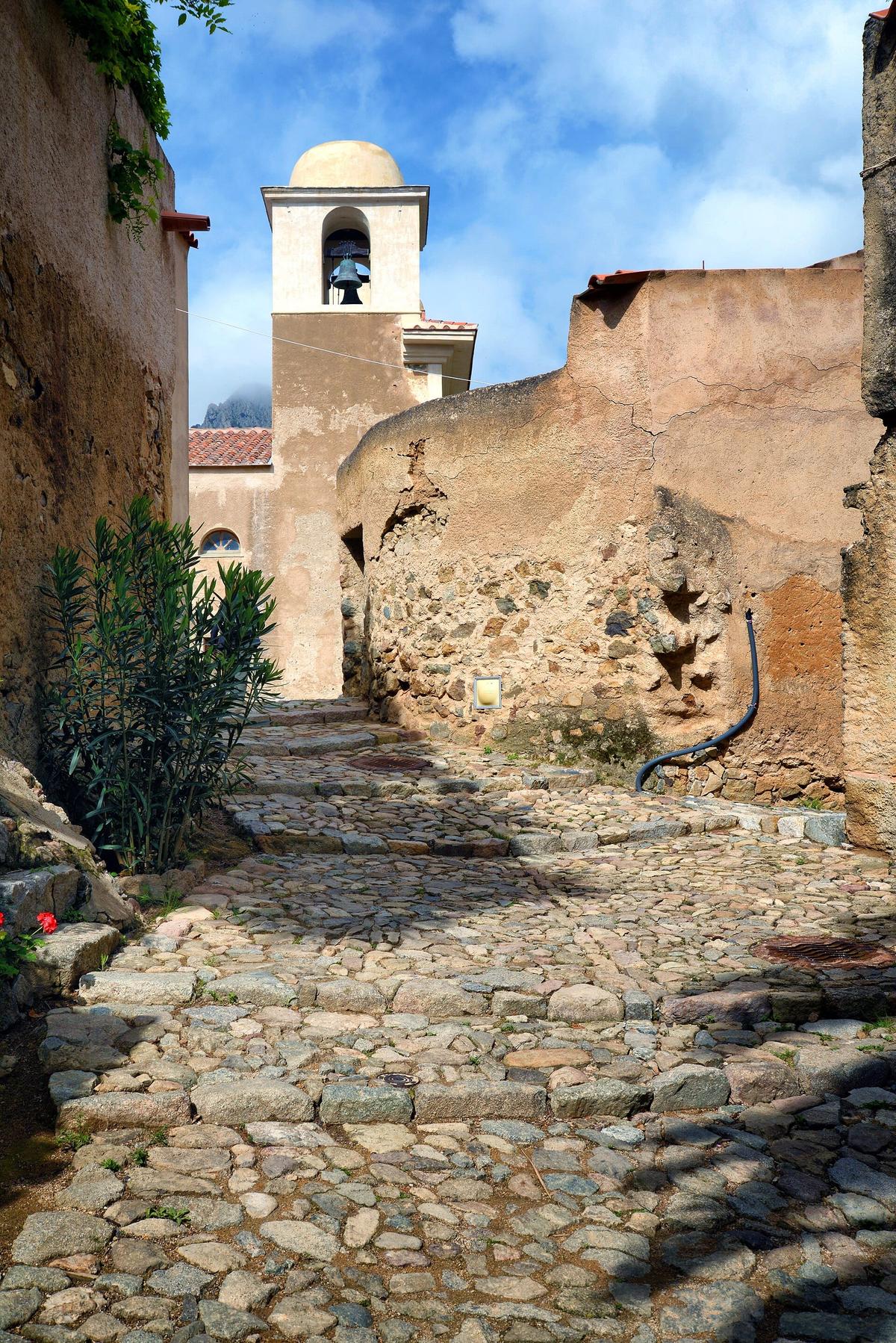
The visit starts on foot, right from the car park. The village makes a loop: you walk up, then come back down by other lanes. There is no single signposted route, so just follow the steps.
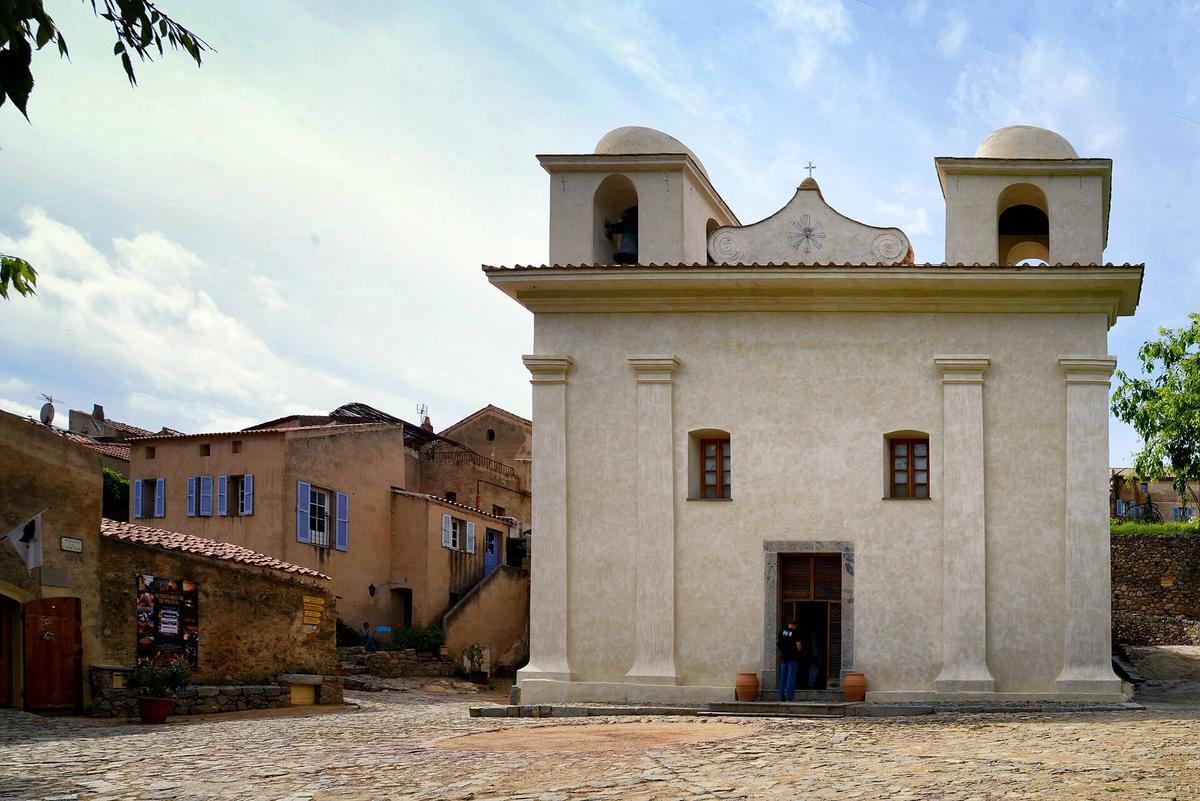
Two squares give the village its shape. The church square, in front of the Immaculate Conception, is the centre of village life and the natural starting point. Place a l'Olmu, to the west, is the one people look for at the end of the day: it faces the setting sun and the sea, with the village of Corbara opposite.
A word of advice: the houses are lived in. The lanes are open to visitors, the courtyards and half-open doors are not.
The Church of the Immaculate Conception
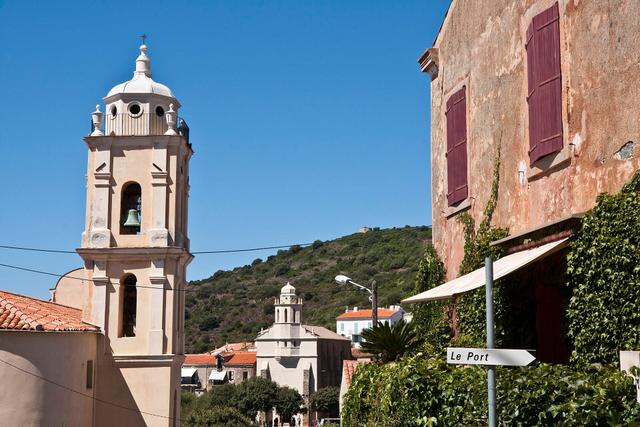
With its two rounded bell towers, the parish church is easy to spot from a distance. The core of the building dates from the 17th century; it was altered in the 18th and again in the 20th century. Inside, look out for the fresco painted in 1971 by the artist Toni Casalonga, one of the figures behind the village's revival, and the organ attributed to the organ builder Antonio Massoni.
The church holds two paintings listed as historic objects: a Last Supper from the early 17th century and a Brawl between peasants, also from the 17th century. Wikipedia reports that the church is being restored: depending on how the work is going, part of the interior may be closed off. Opening hours are not published; the Corsican tourism agency says the church welcomes visitors, but it may be closed outside services.
The earth auditorium
Right next to the church, a small building with earthen walls comes as a surprise in a stone village. This is the Pigna auditorium, built between 1998 and 2000 by the architects Paul and François Casalonga, following the principles of the Egyptian architect Hassan Fathy, a pioneer of earth building. It has 110 seats.
The auditorium is run by the Voce music centre, which rehearses, records and gives concerts there all year round. The centre puts on more than 100 concerts a year. Outside concerts, you can only see the building from the outside.
A Vaccaghja, the open-air amphitheatre
A former cattle pen, a Vaccaghja, has been turned into a 220-seat amphitheatre. It is a listed historic monument and serves as the main stage in summer, especially during Festivoce.
MuseuMusica, the musical instrument museum
At the entrance to the village, on the left just before the square, the Voce centre shows a collection of Corsican and Mediterranean instruments, including reconstructions of lost instruments, with an audiovisual area and a record shop. According to the Balagne tourist office, it opens from mid-April to the end of October, on weekdays, with a small entry fee and free entry for young children. The 2026 opening times are not published on an up-to-date official page, so check before making a special trip.
Pigna's craft workshops
For many visitors, this is the reason to come. According to the village's Wikipedia page, Pigna has a potter, an engraver, an intaglio printer, an instrument maker, a flute maker, a maker of aromatic wines and a shop selling crafts and local produce. The Corsican tourism agency also mentions a jeweller and a delicatessen.

The workshops are scattered through the lanes and marked with small signs. You can watch the craftspeople at work and buy on the spot: ceramics, prints, instruments, jewellery, wines and liqueurs, Corsican produce.
A few tips:
- Opening times are not published. Each workshop opens to its maker's rhythm. In the low season, some may be closed: if you have a particular workshop in mind, call ahead.
- Don't mistake a home for a workshop. The craftspeople often live on site; only go in where the door is open and the sign is visible.
- Save some time for music. The Voce centre shop sells records by the musicians who play in the village.
The Casa Musicale
The Casa Musicale is the best-known address in the village. Set in an old manor house, it is a hotel and restaurant with a terrace facing the sea. According to the Balagne tourist office, it was started in 1985 by a group of friends brought together by singing, cooking and hospitality. Concerts and musical evenings take place there through the seasons.
The tourist office says it opens from late March to mid-December. In high summer, book your table: the terrace at sunset is in great demand.
Festivoce: Pigna's music festival
Festivoce is the Voce centre's music festival and one of the oldest in Corsica. In 2026, its 34th edition ran from 15 July 2026 to 18 July 2026. There are three concerts a day, free workshops in the morning and, on the last evening, concerts in six places around the village at once: Corsican polyphony, jazz, Mediterranean and Eastern music.
The four-day pass cost €110 in 2026, with reductions for residents and jobseekers, and free entry for under-10s. The dates of the next edition are published by the Voce centre.
During the festival, the village is very busy in the evening. If you want to see the lanes when they are quiet, come in the morning; if you want music, it is the best week of the year.
Where to park in Pigna
This is the most important practical question. Cars cannot enter the village. A large car park has been laid out below the village, on the access road. It is enough out of season, but not always in July and August.
- Car park P1 is for residents only. Do not park there.
- Along the road, there are a few spaces, but some are private. Read the signs, and do not park on the carriageway: the road is narrow.
- Cost: Wikipedia mentions a private paying car park. No official rate is published; bring some change.
In summer, arrive before 10 am or after 5 pm. In between, you may spend a long time looking for a space.
How long to spend in Pigna
Allow 60 minutes to walk around the village, go into the church and look into a few workshops. With a meal on a terrace and the sunset, plan on two and a half hours. If you combine it with Sant'Antonino, half a day is enough for both villages.
How to get to Pigna
By car. This is the easiest way. From L'Île-Rousse, allow 15 minutes; from Calvi, about 30 minutes. The road climbs up from the main road along the coast.
By train. The small Balagne train links Calvi and L'Île-Rousse along the coast. L'Île-Rousse station is 8.5 km from the village: you then need a taxi or a good uphill walk.
On foot from L'Île-Rousse. Hikers walk up in about two hours, with 400 metres of ascent. Set off early in summer.
By plane or boat. Calvi-Sainte-Catherine airport is 22 km away and L'Île-Rousse ferry port less than ten kilometres. Once there, a car is still essential to get around the villages of Balagne.
Partner links: if you book through these links, we earn a commission at no extra cost to you. Partner links · Learn more
Walks from Pigna
Pigna is on the network of footpaths linking the villages of Balagne. Three ideas, from shortest to longest:

- Pigna to Sant'Antonino: about 45 minutes' walk one way, on a waymarked path.
- The San Ciprianu loop: about two and a half hours, with more shade than the others. It is the best option in summer.
- The Toru loop or the Monte Sant'Anghjulu loop: about three and a half hours, with 470 to 500 metres of ascent and wide views over the coast.
Take water and set off early: in summer, it gets hot quickly on these sunny slopes.
Guided tours in Balagne
You can explore Pigna on your own, without a guide. If you want to discover Balagne without driving, day trips leave from Calvi: hilltop villages, the coast, and the Scandola nature reserve by boat.
Visiting Pigna with children
Pigna appeals to children who like walking and exploring: steps, vaulted passages, workshops where they can watch a potter at work. The village has no playground or children's activities. Leave the pushchair behind, as the lanes are cobbled and steep: bring a baby carrier.
Accessibility
The centre of the village is pedestrian and sloping, with steps and uneven cobbles. It is difficult in a wheelchair. The auditorium has step-free access and accessible parking spaces, according to its Acceslibre listing; for the rest of the village, ask the tourist office.
Where to eat and stay in Pigna
For a village of around a hundred people, Pigna has several places to eat. The Casa Musicale, mentioned above, has the best-known terrace. U Palazzu has a restaurant and a café with a garden. Cantina A Moresca, at the back of the village, looks out over Corbara. A Casarella Caffè serves tapas at the bottom of the village, and A Mandria di Pigna is on the access road. In July and August, book ahead.
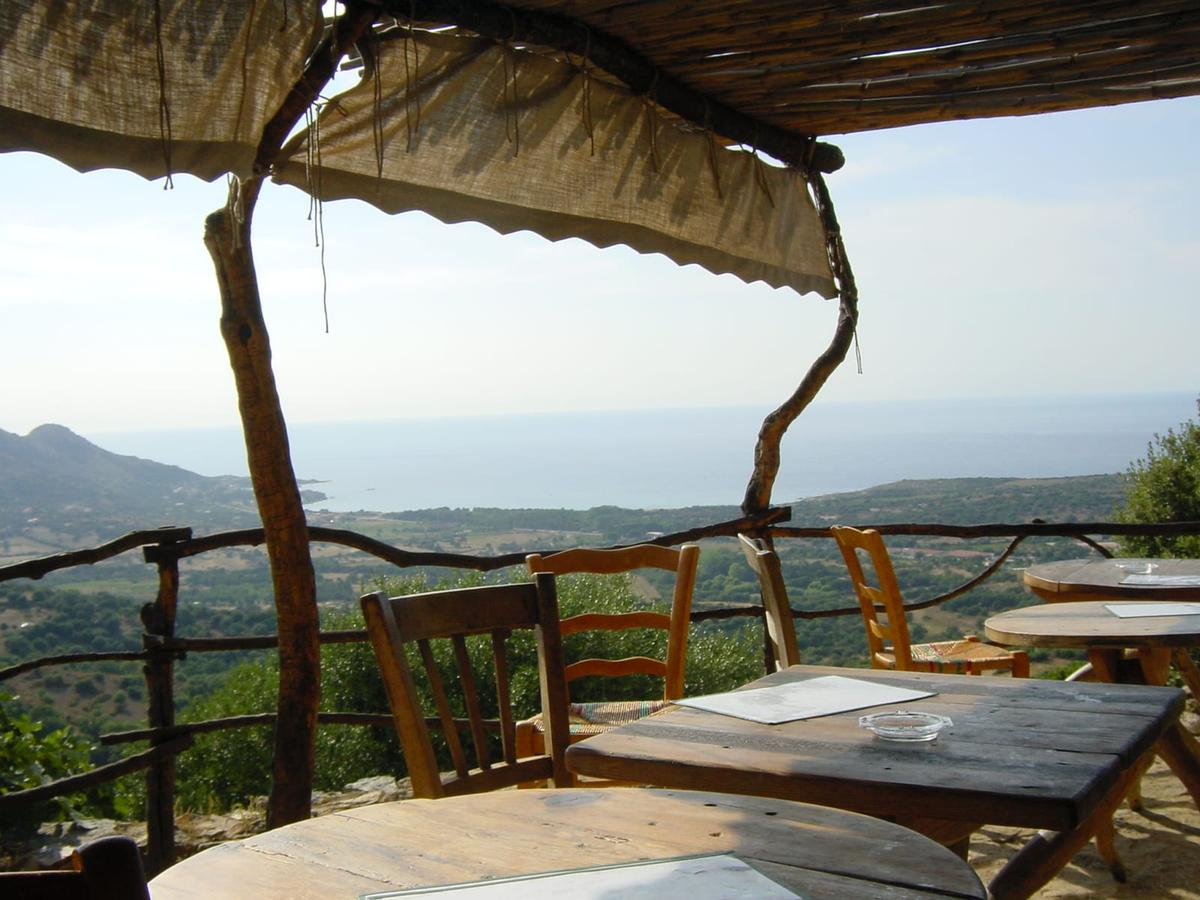

To stay the night, the Casa Musicale has rooms in the village. Otherwise, L'Île-Rousse, a quarter of an hour away, has the widest choice of hotels and holiday rentals by the sea.
Places to stay near L'Île-Rousse
What to combine with Pigna on the same day
| Also worth seeing | Distance | Travel time |
|---|---|---|
| Sant'Antonino | 5 km | 15 min by car |
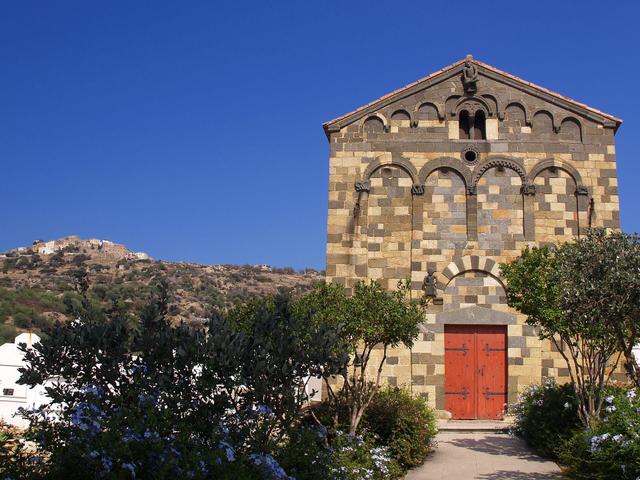
| Church of the Trinity and San Giovanni, Aregno | 4 km | 10 min by car |
| Calvi Citadel | 23 km | 30 min by car |
Approximate road distances and travel times.
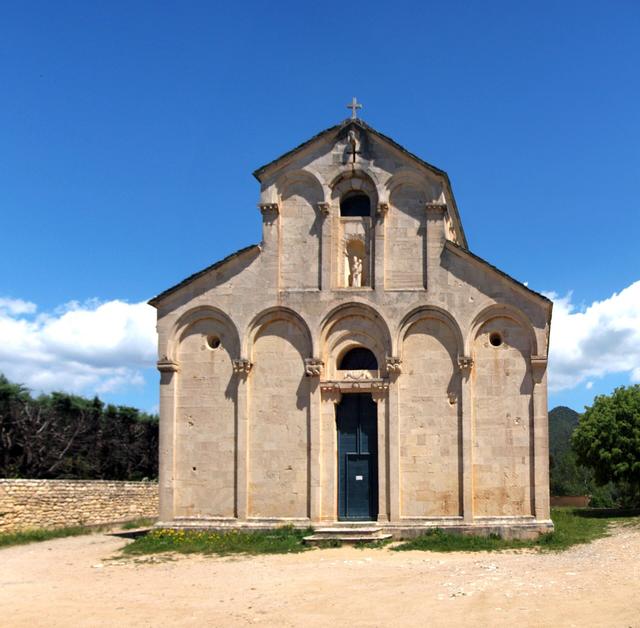
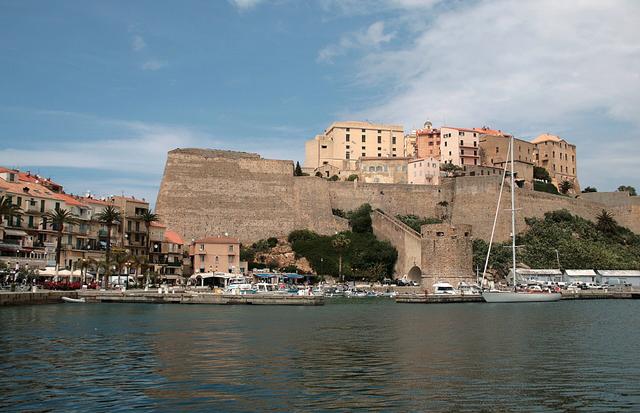
Sant'Antonino, Balagne's other hilltop village, can be seen from Pigna: a quarter of an hour by road or three quarters of an hour on foot. See also: Sant'Antonino Below, the Church of the Holy Trinity in Aregno is one of the finest Romanesque churches in Corsica, with its façade of coloured stone. See also: Church of the Trinity and San Giovanni, Aregno To end the day by the sea, Calvi citadel is half an hour away. See also: Calvi Citadel
Further afield, the Agriates desert stretches along the coast towards Saint-Florent, and the Scandola reserve can be seen by boat from Calvi. See also: Agriates Desert, Scandola Nature Reserve On Cap Corse, Nonza is another hilltop village not to miss. See also: Nonza, Corsica
FAQ
Do you have to pay to visit Pigna?
No. The village and the church are free to visit all year round. Only parking, concerts and the instrument museum are paid.
Where do you park in Pigna?
In the car park below the village. Car park P1 is for residents only, and some spaces along the road are private. In summer, arrive before 10 am.
How long does it take to visit Pigna?
About 60 minutes for the village, two and a half hours with a meal.
When is Festivoce?
In mid-July. In 2026, the festival ran from 15 July 2026 to 18 July 2026.
Can you walk from Pigna to Sant'Antonino?
Yes, on a path of about 45 minutes each way. Take water and good shoes.
Are the workshops open all year?
Their opening times are not published and depend on each craftsperson. In the low season, call ahead if you have a particular workshop in mind.
Practical information
Official ticket-office prices 2026
Free admission
Address
Piazza a Chjesa, 20220 Pigna, Corse, France
Directions
On site and nearby
- Nearest shops and pharmacy: L'Île-Rousse, 5 km away Straight-line distance, based on OpenStreetMap.
- Emergencies: 112 (all emergencies, free from any phone), 15 (SAMU, medical emergency)
Around the site, on Google Maps
With children
Family days out nearby: Calvi Citadel (13 km), Agriates Desert (29 km), Scandola Nature Reserve (39 km)
Swimming pools and play areas nearby, on Google Maps
Facts checked on 12 November 2026. Sources: visit-corsica.com, corsenetinfos.corsica, fr.wikipedia.org, en.wikipedia.org, corsicalovers.fr, en.balagne-corsica.com, acceslibre.beta.gouv.fr
Map
In the same region
- Parc Galeafrom €10Free under 3