Aleria archaeological site and museum: visiting ancient Alalia
Aleria Roman site at a glance
- High season
- 10:00 – 18:00
- Low season
- 9:00 – 17:00
- Full price
- €4
- Free
- under 10
- Time needed
- about 2 hours (museum and site)
- Where
- Aléria
Official ticket-office prices, checked on 4 November 2026. Full opening hours, reduced prices and access
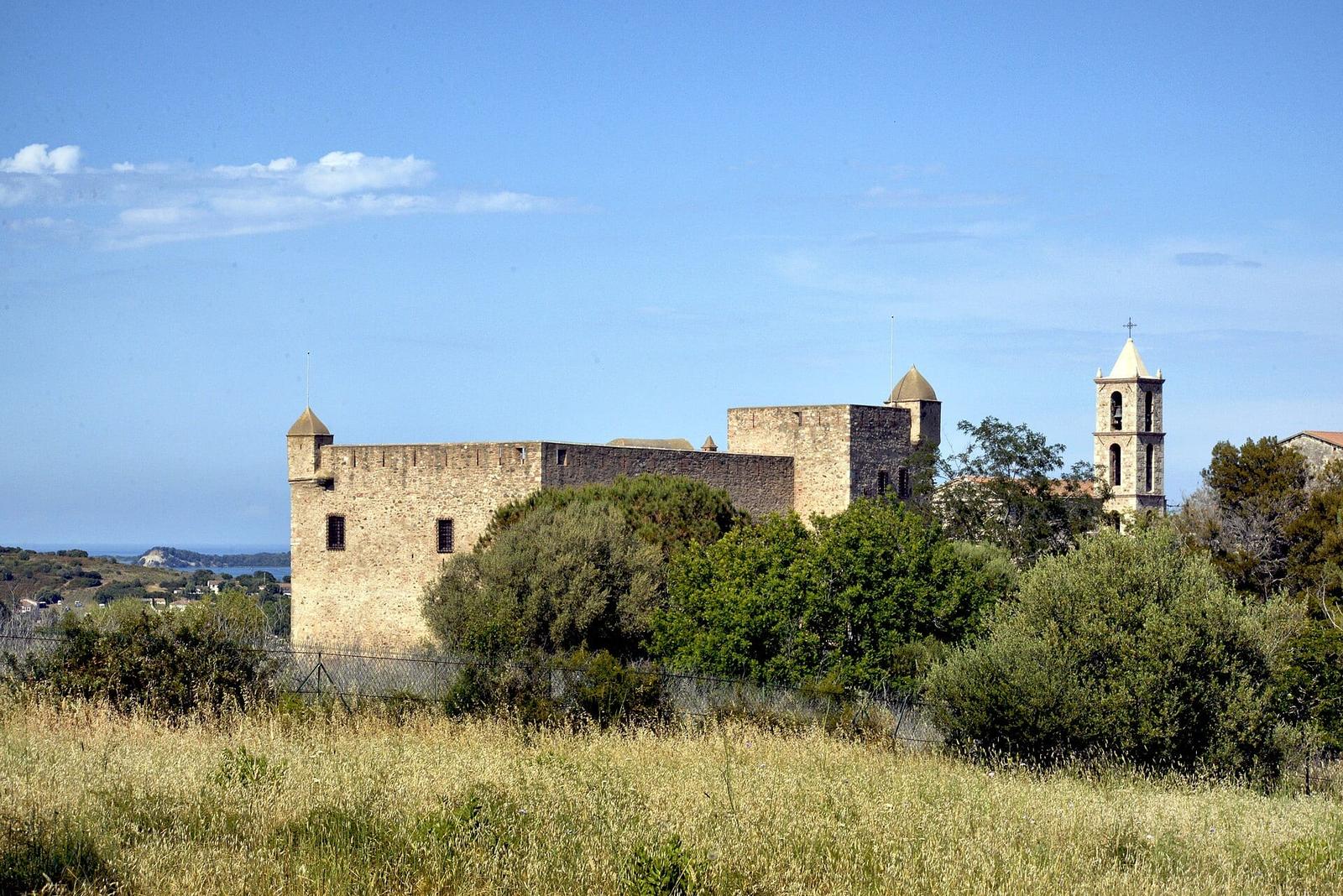

On the east coast of Corsica, between Bastia and Porto-Vecchio, Aleria holds the ruins of an ancient city founded by Greeks. From the Greeks of Phocaea to the Romans, it was a major Mediterranean port. Today you can walk around the forum and the Roman quarters on their plateau, then visit the museum in the Genoese Fort de Matra, with its Greek and Etruscan pottery. One ticket covers both. Here are the prices, the opening hours, the time to allow and our tips for not finding the doors closed.
Aleria at a glance
- Where: in Aléria, on the eastern plain of Haute-Corse, 72 km south of Bastia and 48 km east of Corte.
- Price: a combined site and museum ticket at €4, €3 reduced or family rate, free for under-10s.
- Tickets: sold at the museum, in the Fort de Matra, not at the entrance to the ruins.
- Opening hours: 10:00 – 18:00 from 05-16 to 09-30, 9:00 – 17:00 the rest of the year. Last entry half an hour before closing.
- Time needed: allow about 2 hours (museum and site).
- Best for: fans of ancient history, and families looking for a visit out of the midday sun (the museum) before or after the beach.
What is Aleria?
Aleria is first of all a very old name. The Greeks called it Alalia. According to the museum, the town was in turn a colony of the Greeks of Phocaea, then of the Carthaginians, then of the Romans, before being destroyed by the Vandals in the 5th century.
The site lies on a plateau overlooking the river and the eastern plain. From this headland you could see the sea, the river and the plain all at once. Once you are up there, it is easy to understand why so many peoples wanted to settle here.
According to the Collectivité de Corse, the regional authority that runs the site, the Roman presence may go back to the late 3rd century BC. The town then received three waves of settlers, attributed to Sulla (around 81 BC), Caesar (46 BC) and Octavian (around 32 BC). The Roman city covered about 11 hectares, surrounded by a wall with gates to the south, west and north-east.
The decline began in the 4th century, without the town being completely abandoned. At the end of the 6th century, a letter from Pope Gregory the Great still mentions a bishopric in Aleria.
The ancient site has been a listed historic monument since 18 December 1990.
Aleria site and museum ticket prices
The site and the museum share a combined ticket office. You pay at the museum, in the Fort de Matra, then walk to the ruins. Prices published by the Collectivité de Corse:
- Full rate: €4.
- Reduced and family rate: €3. The Oriente tourist office mentions students, children and groups of 10 or more.
- Children under 10: free.
You can pay by bank card, cheque or cash, according to the tourist office.
At this price, it is one of the cheapest heritage visits on the island. There are no online tickets and no booking for individual visitors: you buy on the spot.
Aleria site and museum opening hours
Opening hours published by the Collectivité de Corse, valid for both the site and the museum:
- From 05-16 to 09-30: 10:00 – 18:00, last entry at 17:30.
- From 10-01 to 05-15: 9:00 – 17:00, last entry at 16:30.
- Annual closures: 1 and 2 January, 1 May, 1 and 11 November, 24, 25 and 31 December.
Watch out for closing days. The official page says the site is closed on Sundays and Mondays, without saying whether this applies all year. The tourist offices, on the other hand, say it is open every day in summer and closed only on Sundays the rest of the year. If you are coming on a Sunday or a Monday, call the museum before you set off, on +33 4 95 57 00 92.
Out of season, the Collectivité de Corse also warns that some parts of the museum, including the "Luce Etrusca" exhibition, may be temporarily closed because of staff shortages. It advises checking by email (aleria.antica@isula.corsica) or by phone before your visit.
Our tip: in summer, start with the ruins at opening time, while the plateau is still cool, and keep the museum for late morning. The site is in the open air, with very little shade. Bring water and a hat.
Do you need to book?
No, not for an individual visit. You buy your ticket at the museum when you arrive. Aleria is a quiet site compared with Bonifacio or the Calanques de Piana, and there is rarely a wait.
Groups get a reduced rate and are welcome; it is best to let the museum know in advance if you are coming as a party of several dozen.
As far as we know, there is no guided tour of Aleria sold online. Organised trips on the east coast tend to go to Bastia, Porto-Vecchio and Bonifacio. For Aleria, a car is still the easiest option.
What to see at the ancient site
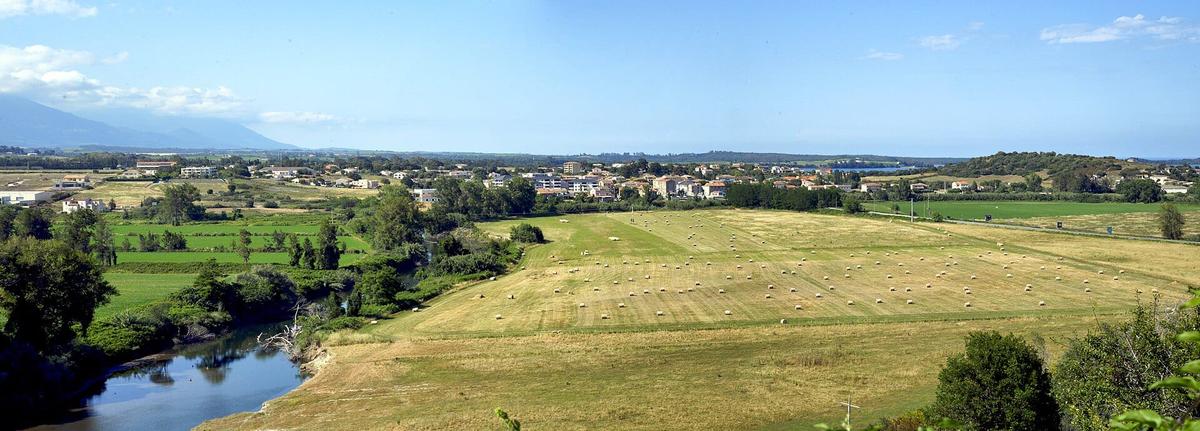

The site is an open-air museum on a flat-topped plateau. It shows the centre of the ancient town.
The forum. This was the main public square of the Roman city, at the heart of the excavations. Between 1955 and 1960, the archaeologist Jean Jehasse uncovered the forum and the surrounding quarters, on the headland above the river.
The temple and the capitol. Around the forum, you can still make out the plan of the Roman town's religious and public buildings. The view over the plain and the sea helps you picture the port as it once was.
The pre-Roman necropolis. Before the Romans, the town had its necropolis, where excavations uncovered about 200 tombs, according to the Corsican tourist board. Most of the Greek and Etruscan objects in the museum come from there.
Ongoing research. The site is not frozen in time. Studies resumed in 2010, with a survey of the buildings between 2011 and 2013, then a geophysical survey in 2016 and 2017, carried out by the Arkemine team with the Collectivité de Corse's archaeologists.
The ruins are mostly low walls and ground plans. To appreciate them, visit the museum before or after: the objects bring to life what you see on the plateau.
The archaeology museum in the Fort de Matra

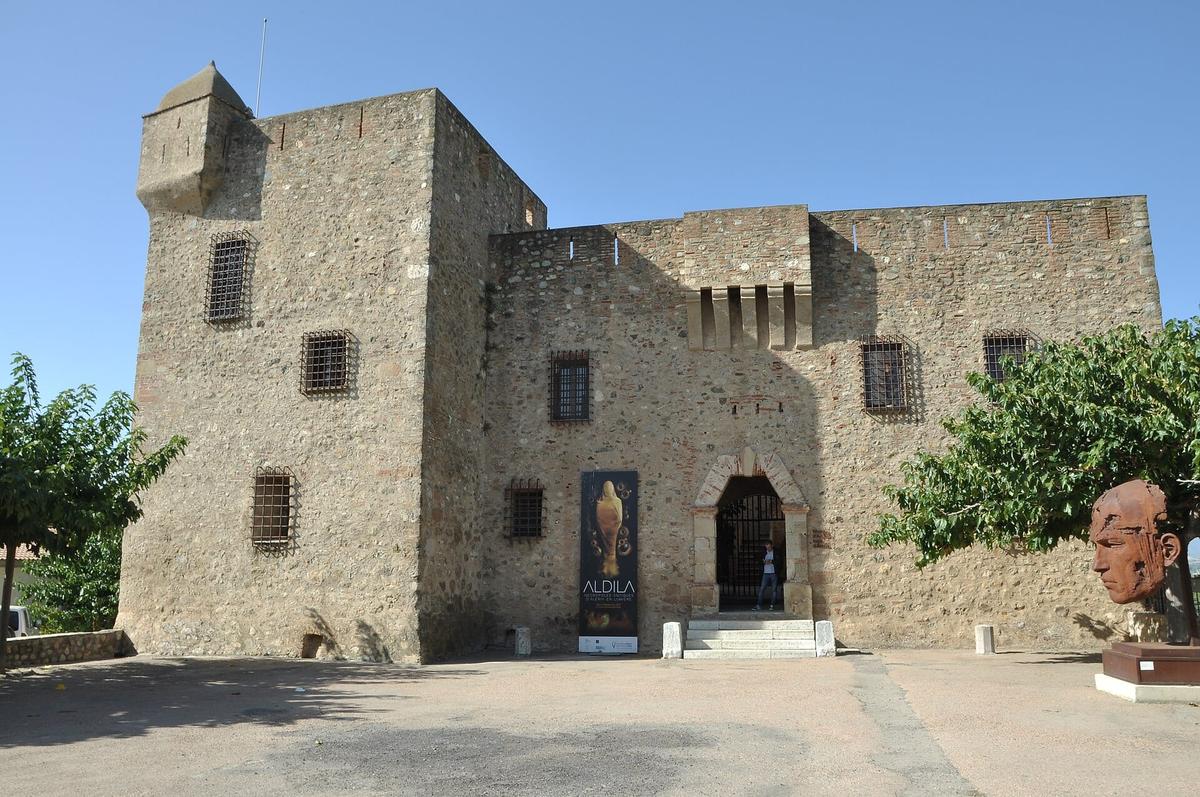

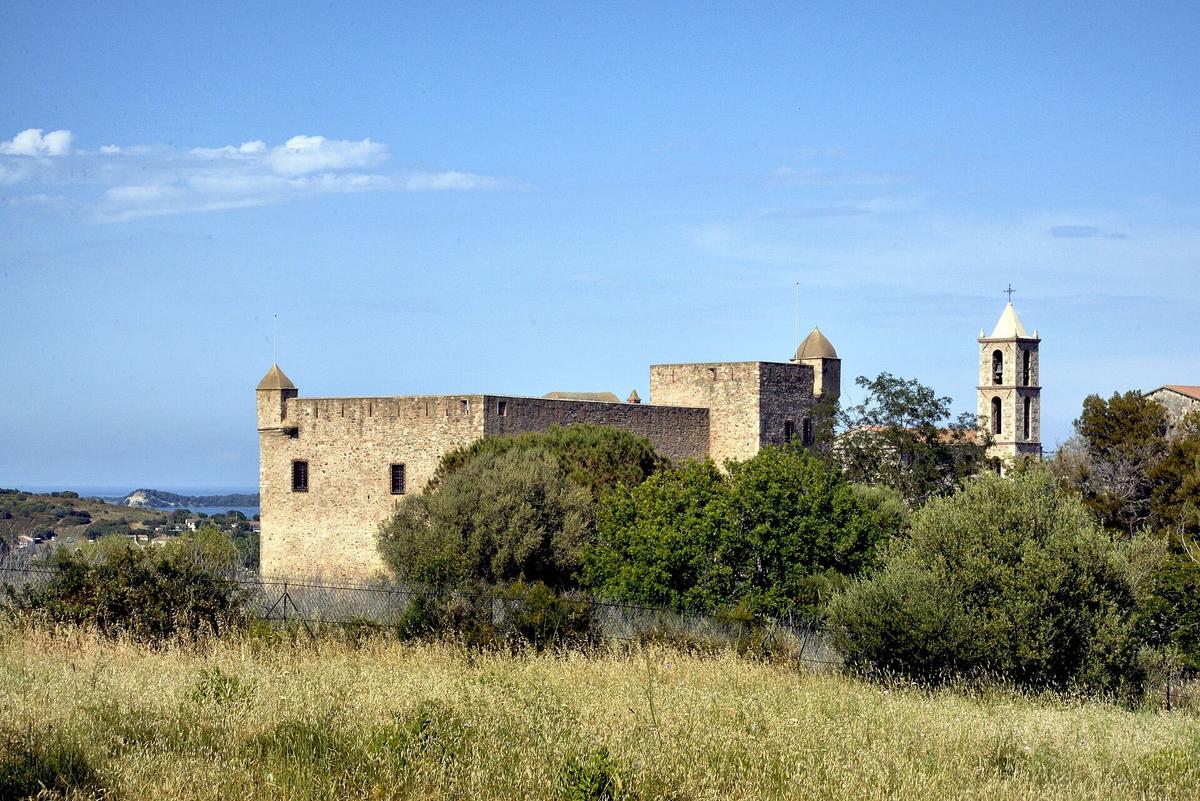
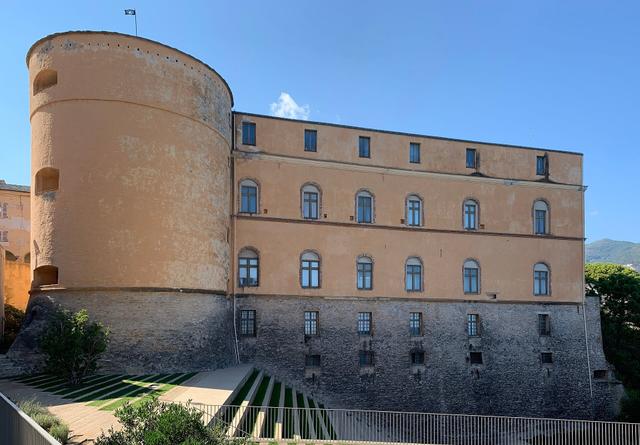
The museum is housed in the Fort de Matra, a 14th-century Genoese fortress at the foot of the plateau. According to Wikipedia, the fort housed a cavalry squadron that kept watch over the east coast and the lagoons. Corsican insurgents partly destroyed it in 1729, because the Genoese stored weapons there. Rebuilt, it then belonged to the powerful Matra family, who gave it its name.
The fort was listed as a historic monument in 1962. From 1963, it served as a store for the finds from Aleria. It became the departmental archaeology museum in 1978, named after the historian Jérôme Carcopino, and the Haute-Corse department bought it in 1979. The museum now holds the official "Musée de France" label.
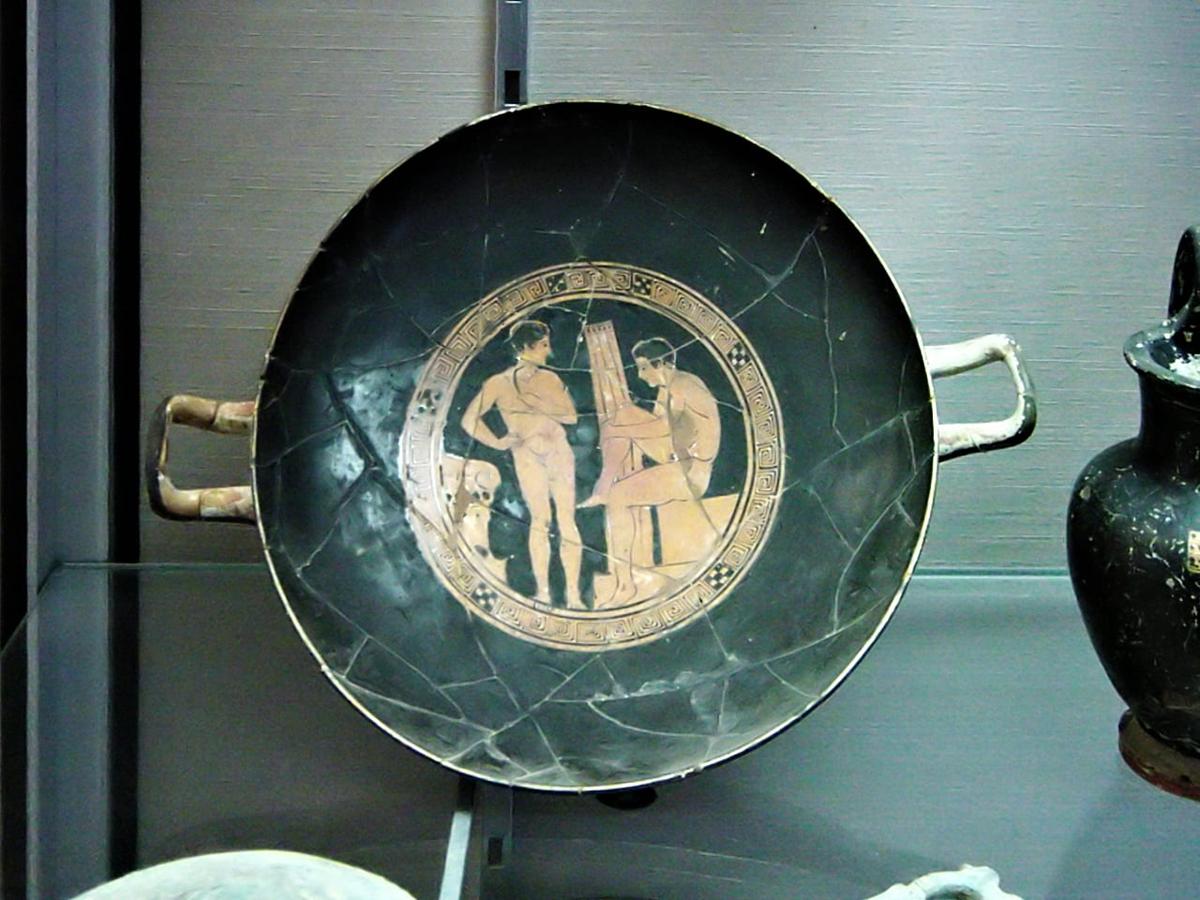
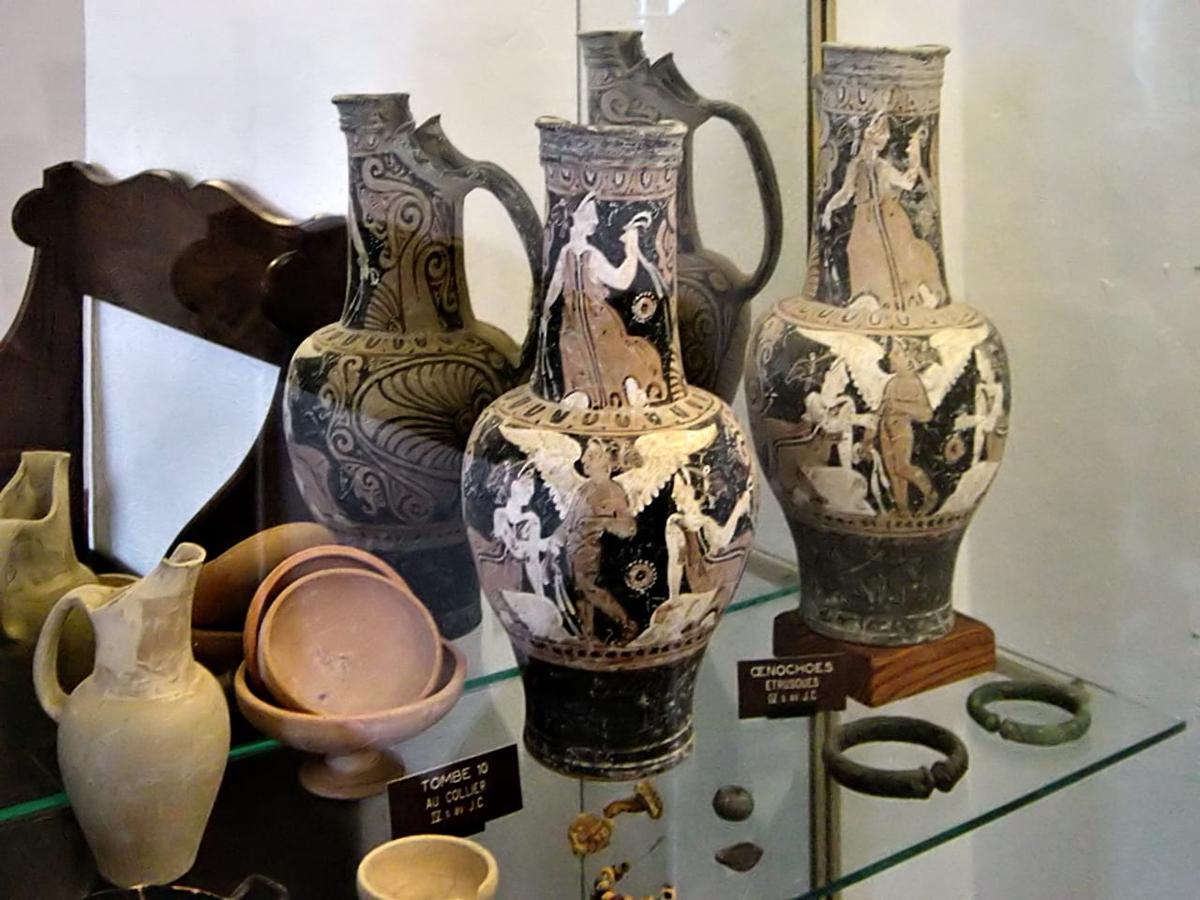
The collections. They cover a period from the 10th century BC to the 5th century AD. You will see Greek, Etruscan and Roman pottery, bronze weapons, amphorae, coins and everyday objects.
Pieces not to miss.
- Two Greek rhyta, very rare animal-shaped drinking vessels: one has a dog's head, the other the head of a mule or a horse.
- A dish decorated with a war elephant, linked to the time of Hannibal.
- The Etruscan pottery, alongside the Greek and Roman vases.
The museum is small. You can see it all in under an hour, but this is where you will find most of what makes Aleria unique.
How long does the visit take?
Allow about 2 hours (museum and site) for the museum and the ruins, without rushing. Half a day is more than enough, which leaves the rest of the day for the beach or the drive to Corte.
If you can only do one of the two, choose the museum: for a first encounter, the objects say more than the ruins. But it is the same ticket, so you might as well do both.
Visiting Aleria with children
Entry is free for under-10s, and the family rate brings down the cost for everyone else. Children usually like the animal-head vases and Hannibal's elephant in the museum. On the site, the plateau is large and open: they can walk between the walls of the forum.
Avoid mid-afternoon in July and August. There is almost no shade on the ruins, and the plateau is very exposed to the sun. In the morning, the visit goes well with an afternoon on the beach, a few kilometres away.
How to get to Aleria
By car. This is the easiest way. Aléria is on the main east coast road, between Bastia and Porto-Vecchio. According to the Collectivité de Corse, the site is 72 km from Bastia, 100 km from Bonifacio and 48 km from Corte, heading east. From Ajaccio, the road crosses the island via Corte.
On site. Tickets are sold at the museum in the Fort de Matra. The ancient site is very close, on the plateau, and you can walk there.
Without a car. Coaches run along the east coast, but their timetables change with the seasons: ask the Oriente tourist office.
Renting a car. In Corsica, a car is still the most practical way to see several sites. Rental companies are at the airports, in Bastia and Ajaccio, and at the ports.
Partner links: if you book through these links, we earn a commission at no extra cost to you. Partner links · Learn more
What to combine with Aleria
| Also worth seeing | Distance | Travel time |
|---|---|---|
| Corte Citadel and Museum of Corsica | 48 km | 55 min by car |
| Bonifacio Citadel | 100 km | 100 min by car |
Approximate road distances and travel times.
Corte and the Museum of Corsica. 48 km to the west, Corte's citadel and the Museum of Corsica tell the island's story after Antiquity. Aleria in the morning, Corte in the afternoon: a day that hangs together well. See also: Corte Citadel and Museum of Corsica
Filitosa. To go further back in time, the statue-menhirs of Filitosa, in the south-west, show prehistoric Corsica. The two sites complement each other, but they are too far apart for the same day. See also: Filitosa
Bavella and Bonifacio. Heading down the east coast, the Bavella needles and Bonifacio's citadel make a fine continuation of a stay in the south. See also: Bavella Needles, Bonifacio Citadel
The whole region: See also: Corsica
Fun facts

- Mérimée was here. The ruins of Aleria were first described by Prosper Mérimée, the inspector of historic monuments (and author of Carmen), after his tour of Corsica in 1839, according to the Collectivité de Corse.
- A town turned into lime. From the 14th century, under the Republic of Genoa, the ruins were used as a quarry. The stones were burnt to make lime or reused in buildings, and this went on until the 19th century. It is one of the reasons why mostly low walls remain.
- A king in the fort. According to Wikipedia, the Fort de Matra hosted Theodore I, the short-lived king of Corsica, during his very brief reign.
Where to eat and stay near Aleria
Eating. The village of Aléria and the nearby coast have restaurants and beach bars in season. Out of season, many close: bring a picnic.
Staying. Aléria and the eastern plain have campsites, holiday residences and hotels near the beaches. It is a good stop between Bastia and Porto-Vecchio, and a base for going up to Corte. In July and August, book early.
FAQ
How much does it cost to visit the Aleria site?
The combined site and museum ticket costs €4 full rate and €3 reduced or family rate. It is free for under-10s.
Where do I buy the ticket?
At the archaeology museum, in the Fort de Matra. The same ticket gives access to the ancient site.
Is the Aleria site open on Sundays?
It is not certain. The official page says it is closed on Sundays and Mondays, while the tourist offices say it is open every day in summer. Call the museum before coming on one of those days.
How long does it take to visit Aleria?
Allow about 2 hours (museum and site) for the museum and the ruins.
Do I need to book a visit to Aleria?
No, you buy your ticket on the spot, at the museum. Only groups need to let the museum know.
Is the site open in winter?
Yes, 9:00 – 17:00 from 10-01 to 05-15, except on closing days. Some rooms may be closed at that time.
Practical information
Official ticket-office prices 2026
| Full price | €4 |
|---|---|
| Reduced rate | €3 |
| Free | under 10 |
Address
Musée d'archéologie d'Aleria, fort de Matra, 20270 Aléria, France
Directions · Phone+33 4 95 57 00 92
On site and nearby
- Nearest shops and pharmacy: Aléria, 1 km away Straight-line distance, based on OpenStreetMap.
- Emergencies: 112 (all emergencies, free from any phone), 15 (SAMU, medical emergency)
Around the site, on Google Maps
With children
Family days out nearby: Parc Galea (37 km), Bavella Needles (42 km), La Canonica and Mariana archaeological site (48 km)
Swimming pools and play areas nearby, on Google Maps
Facts checked on 4 November 2026. Sources: isula.corsica, tourisme-oriente.corsica, visit-corsica.com, fr.wikipedia.org, en.wikipedia.org
Map
In the same region
- Parc Galeafrom €10Free under 3