Spin'a Cavallu: visiting the 'Genoese' bridge over the Rizzanese
Spin'a Cavallu Genoese Bridge at a glance
- Admission
- Free
- Time needed
- about 45 min
- Where
- Sartène
Facts checked on 11 November 2026. Full opening hours, reduced prices and access
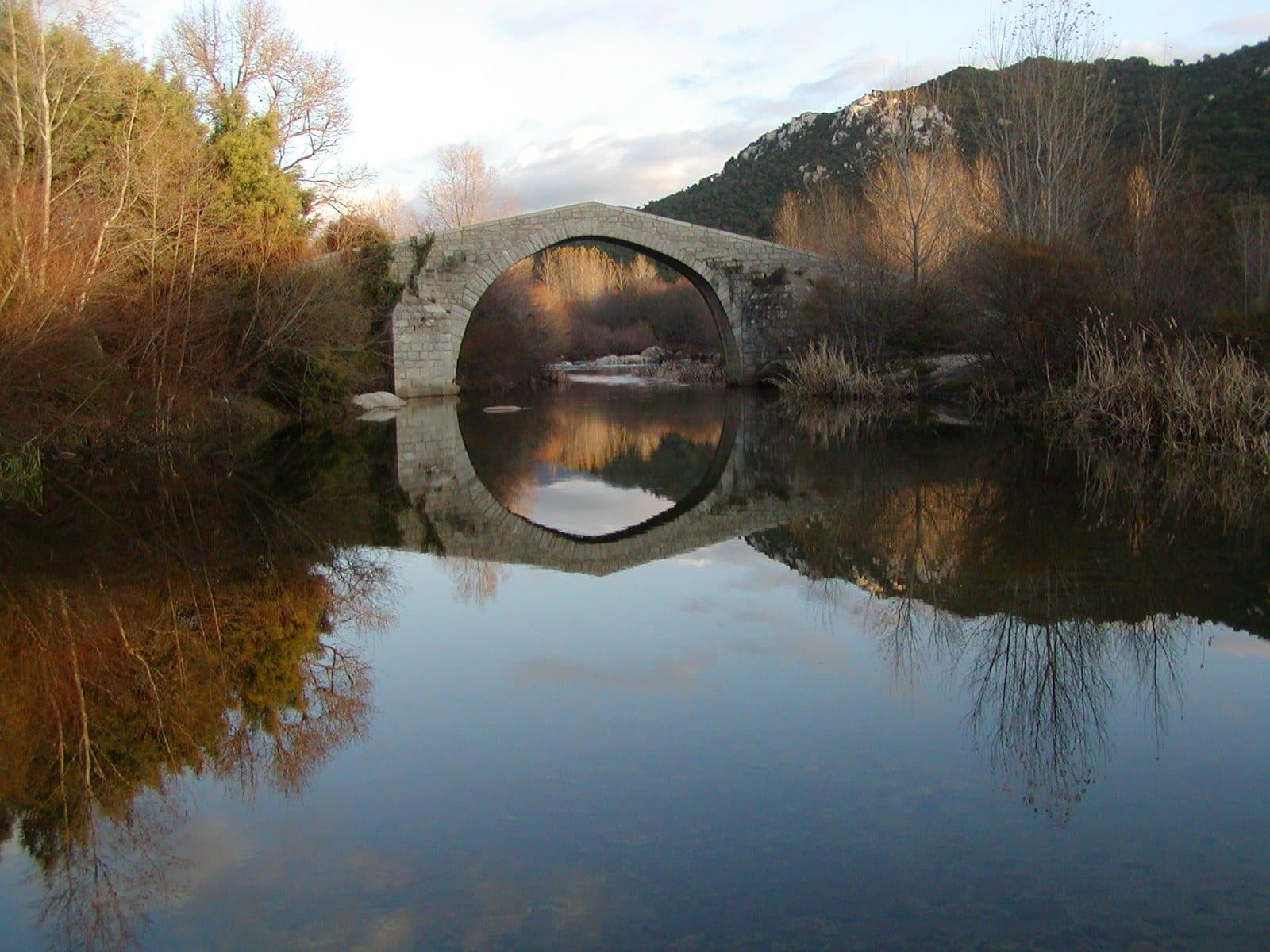

Between Propriano and Sartène, a humpbacked granite bridge crosses the Rizzanese river in a single arch. It is called the Genoese bridge, but it is probably Pisan and may date back to the 13th century, which makes it one of the oldest in Corsica. Access is free, and in summer the river is a popular swimming spot. Here is how to get there, what to look at and what you need to know about the water.
Spin'a Cavallu bridge at a glance
- Where: on the Rizzanese river, between Sartène and Arbellara (Corse-du-Sud), beside the D268, the road to Sainte-Lucie-de-Tallano.
- Price: free. The bridge is open access, with no ticket office.
- Open: all year, with no set hours.
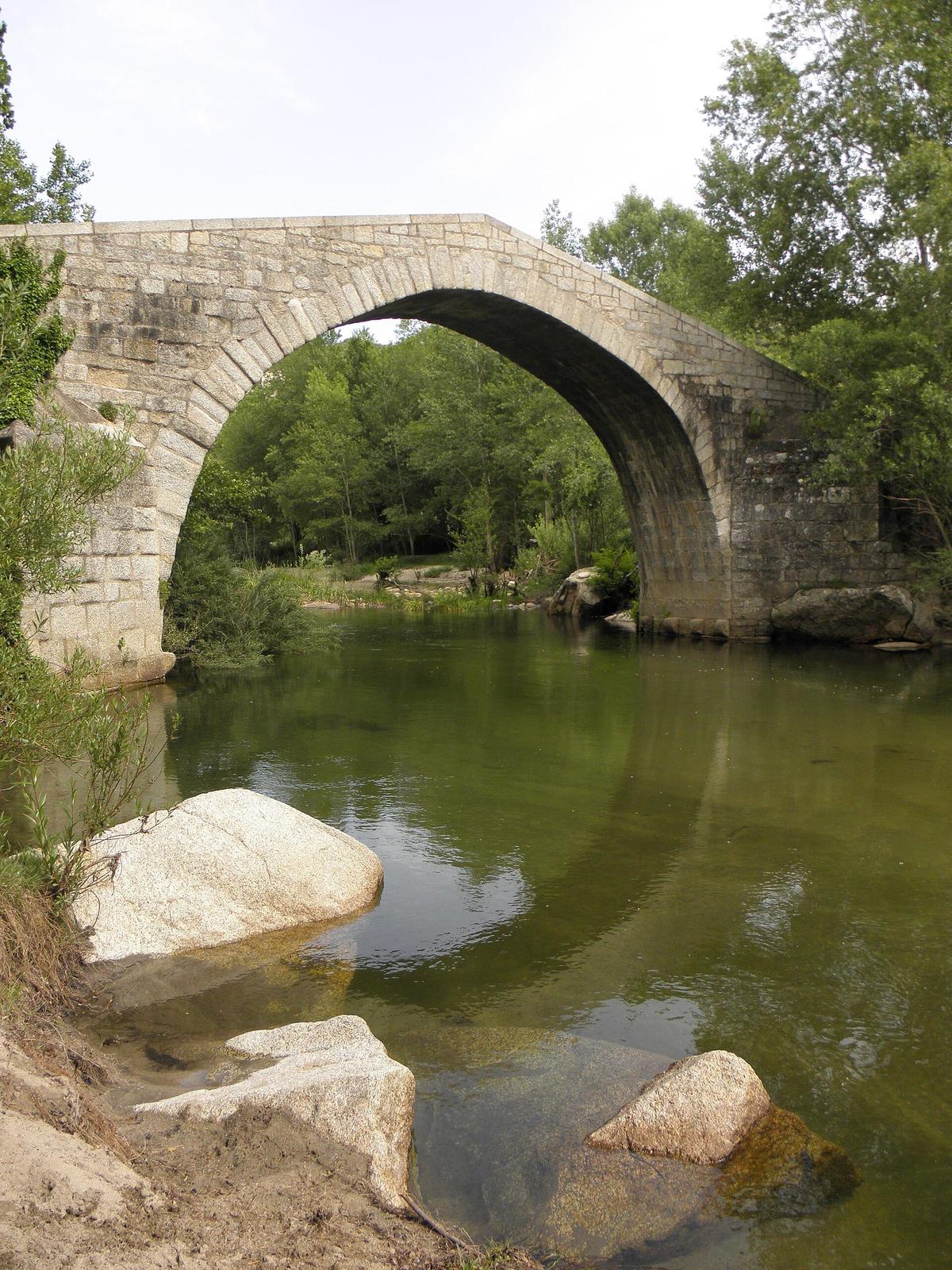
- What you see: a granite bridge 64 m long and 2.6 m wide, with a single arch rising about 7.7 m above the water.
- Time needed: allow 30 minutes to 1 hour, much longer if you swim.
- Good to know: the site has no facilities for visitors with reduced mobility. Bathing water quality has been poor in recent summers: read the swimming section before you dive in.
Why see the Spin'a Cavallu bridge?
It is a short, easy detour, ten minutes off the main road through southern Corsica. The bridge is the best-known image of the Rizzanese, the river that runs down from the Alta Rocca to the Gulf of Valinco. Its steeply arched deck, rising sharply to the top of the arch and dropping down again, strikes you as soon as you arrive. That shape gave it its name: spin'a cavallu means "horse's back" in Corsican.
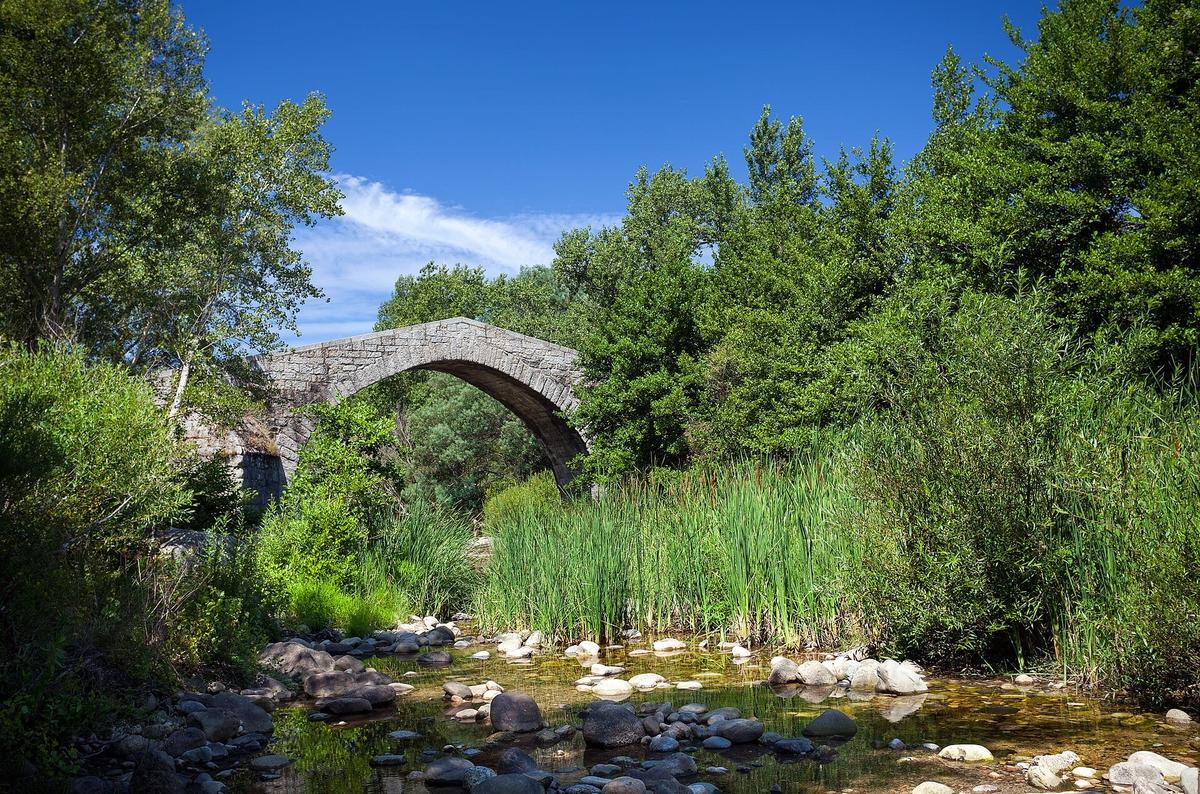
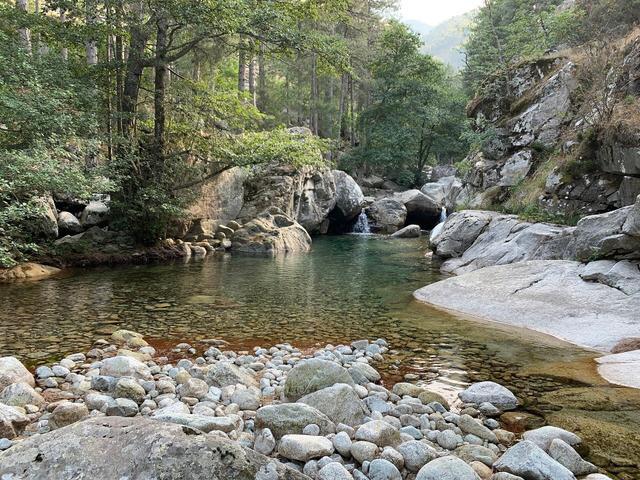
Around it, the river flows between granite boulders and pebble beaches. In summer it is a swimming spot popular with local families. Out of season, it is a quiet photo stop between Propriano, Sartène and the villages of the Alta Rocca.
The bridge has been a listed historic monument since 1976. It belongs to the municipality.
A Genoese bridge that is probably Pisan
Signs and maps say "Genoese bridge". That is the name that stuck, and many old Corsican bridges carry it. But Visit Corsica, the island's tourist board, describes it as a bridge of Pisan origin, from the 13th century. The official historic monuments record gives a construction date in the 13th and 15th centuries.
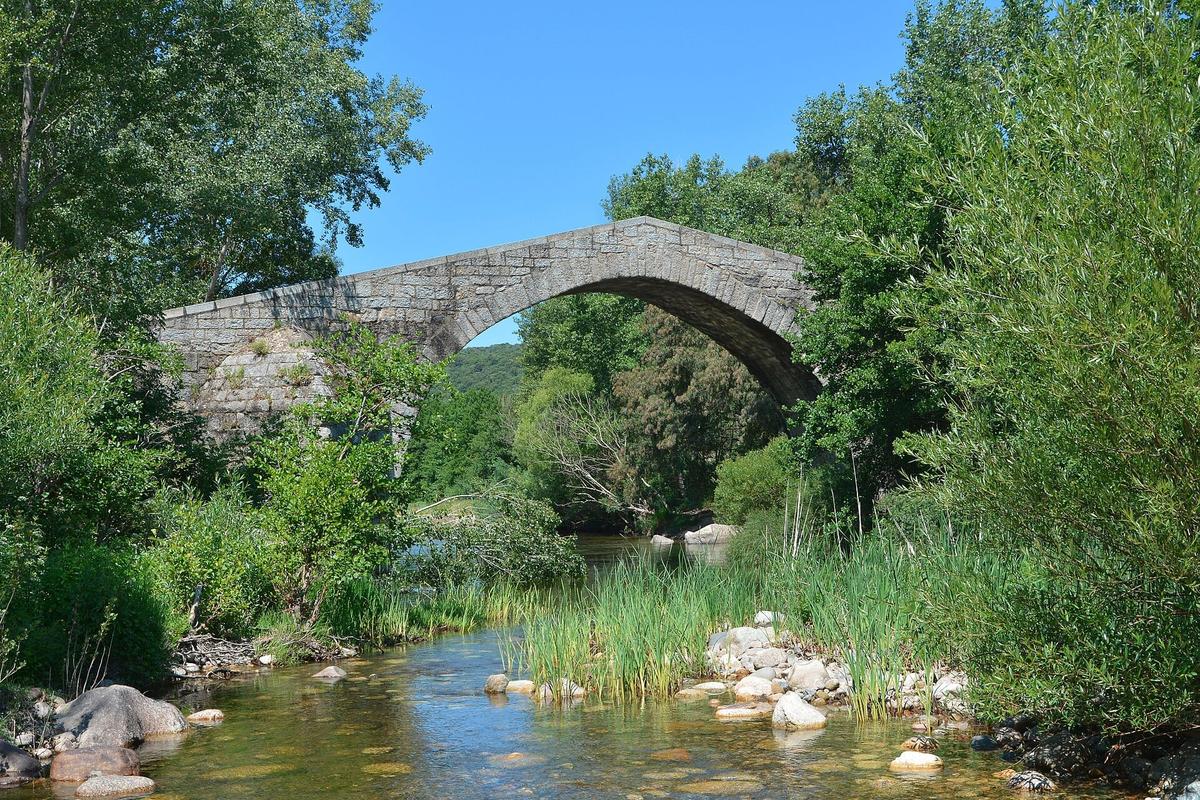

An architect known by name. Tradition credits the bridge to Maestro Maternato (Masciu Maternato in Corsican), a builder from mainland Italy who settled in Sorbollano, in the Alta Rocca. He is also credited with the bell tower of the church at Carbini, another building from the Pisan period.
An old route. The bridge once linked the pievi (parishes) of the Rocca and Sartène, that is, the mountainous hinterland and the town. At only 2.6 m wide, it was built for people on foot and pack animals, not for cars.
The 1993 flood. In 1993, a violent flood of the Rizzanese and its tributary, the Fiumicicoli, almost swept it away. The bridge held. It was restored in 1995, after earlier work in the 18th and 19th centuries.
What to look at on the bridge
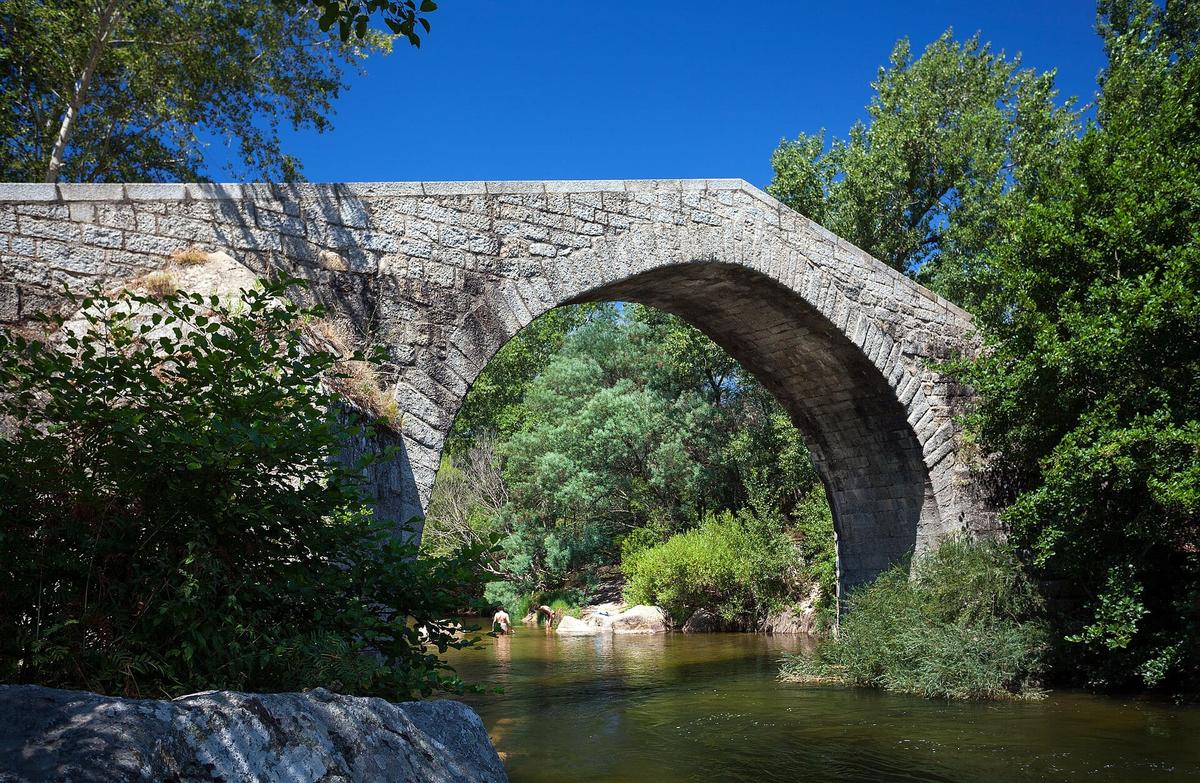
The shape of the deck. Stand on the bank, a little downstream, to see the humpbacked profile. The deck rises towards the centre so that floodwater can pass under the arch.
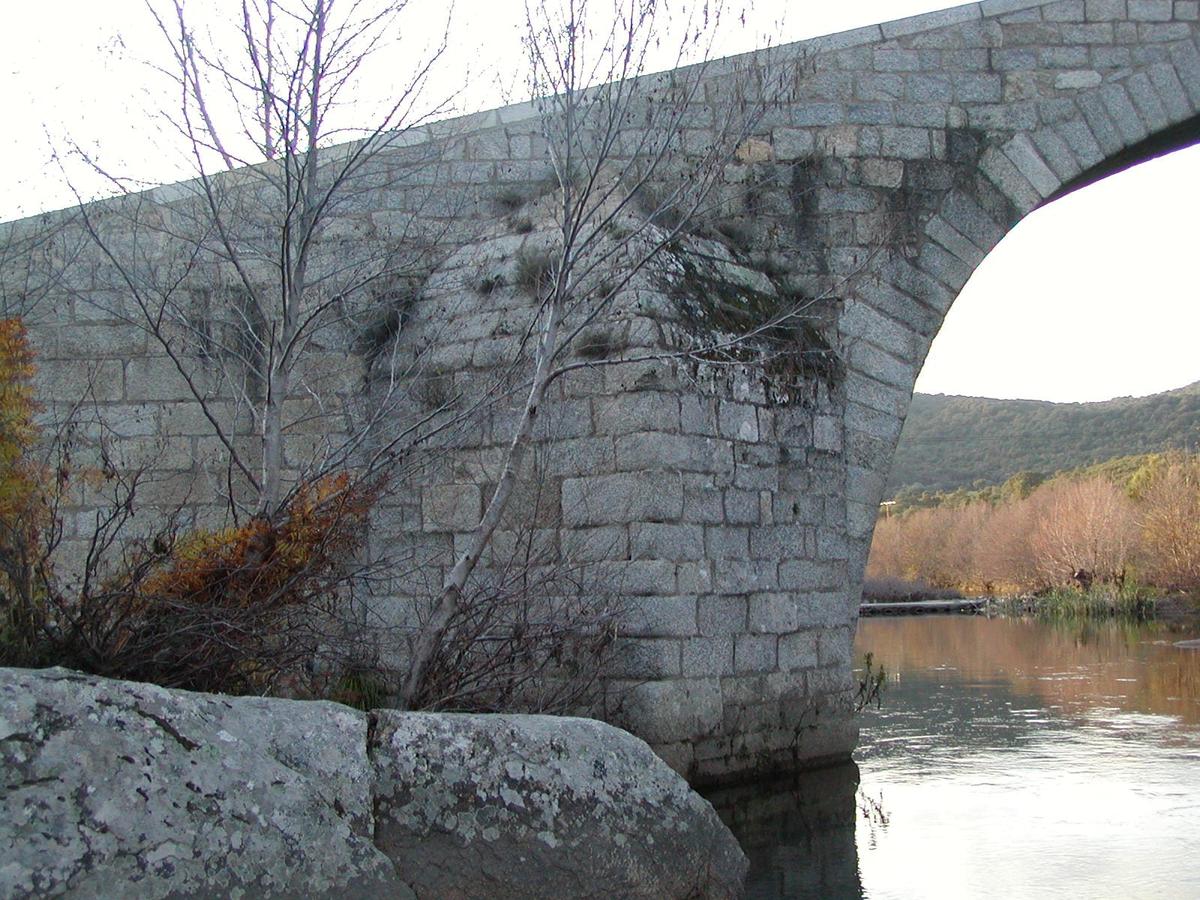

The single arch. It is a round arch, a perfect semicircle. Its span is about 14 m. One arch over the main riverbed means floodwater can pass without hitting a pier.
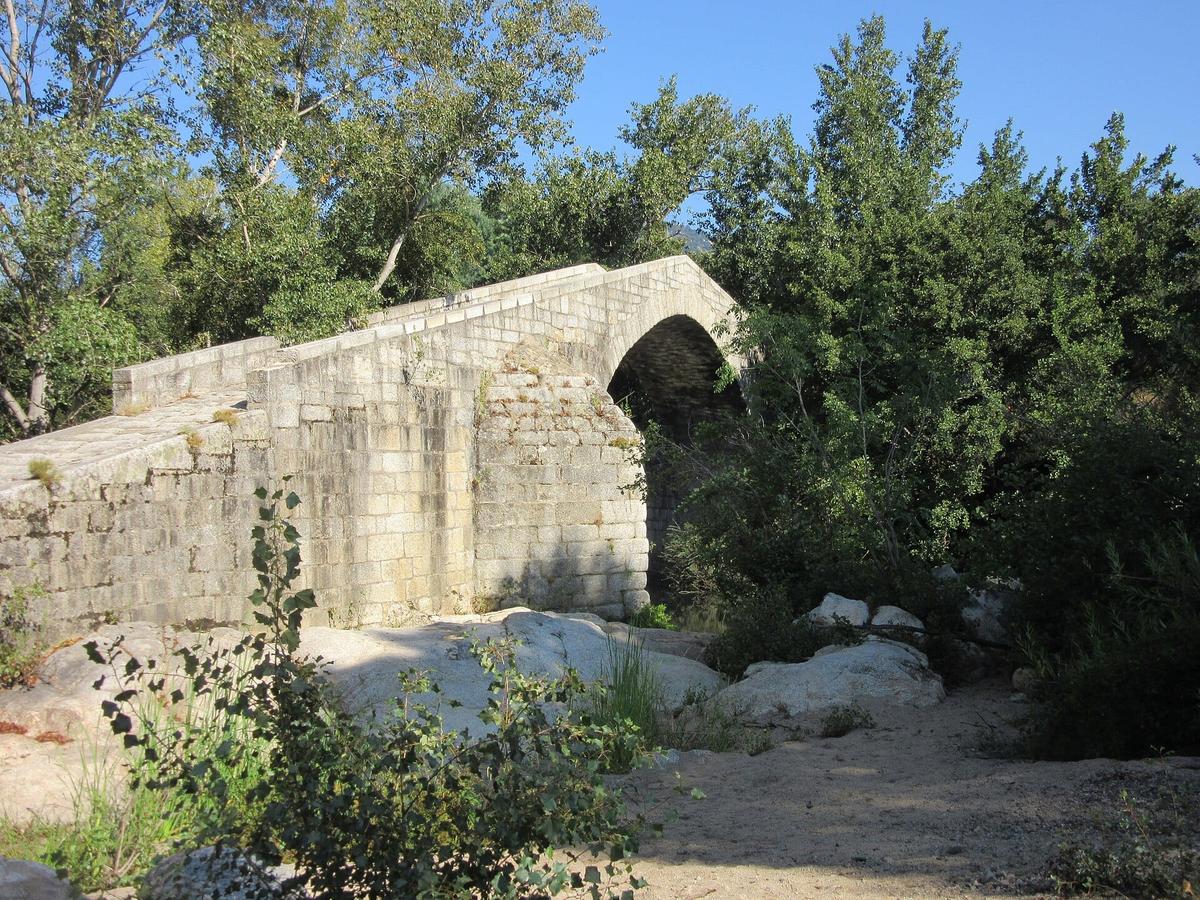
The cutwaters. The piers are protected by 4 pointed cutwaters in grey granite masonry. Their tips face upstream to split the current and protect the foot of the bridge.
The granite. The blocks are carefully cut and fitted, with no decoration. Look closely at how regular the stones of the arch are.
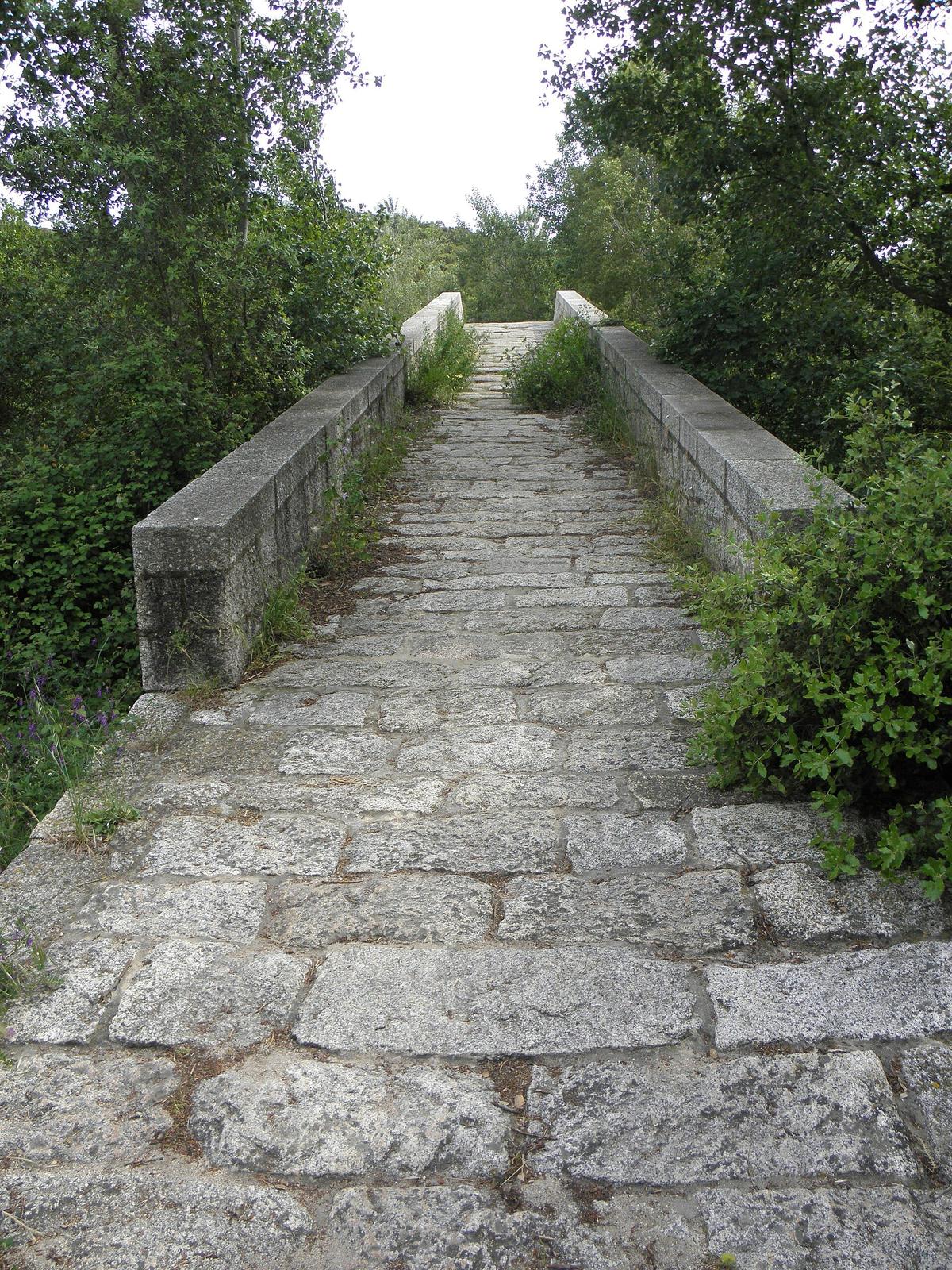
Walking across. The bridge is no longer used by traffic: the historic monuments record describes it as disused, and the road runs alongside. The deck is steep and the paving uneven: wear good shoes and hold children by the hand.
Can you swim at the Spin'a Cavallu bridge?
Yes, swimming is possible and the river is easy to reach. The banks form small pebble beaches and pools of clear water, and the spot also draws kayaks and paddleboards.

Water quality. The bathing spot at the bridge is monitored by the health authorities in summer, from 15 June to 31 August in 2026. The published results are not good: the water was rated "temporarily polluted" in 2024 and 2025, and several samples in summer 2026 were of average quality. Before you swim, check the latest results on the French Ministry of Health's official site, baignades.sante.gouv.fr. Avoid putting your head under water or swallowing any, especially after a storm.
Safety. There is no lifeguard. A hydroelectric dam sits upstream on the Rizzanese, and the river level can rise quickly after rain. The rocks are slippery. Do not dive from the bridge.
How to get to the Spin'a Cavallu bridge
By car, the only practical way. From Propriano, take the road to Sartène (T40). Before it climbs to Sartène, turn left onto the D268 towards Sainte-Lucie-de-Tallano and Levie. The bridge is about 3 km from the junction.

From Sartène, drive down towards Propriano on the T40 and take the same D268. Allow about fifteen minutes from either town.
Parking. There is a parking area near the bridge. In July and August it fills up with swimmers: come in the morning or late in the day.
Without a car, no regular bus stops at the bridge. You would need a taxi from Propriano or Sartène.
Renting a car. Ajaccio and Figari airports are the nearest. A car lets you combine the bridge with Sartène, the Cauria menhirs, Filitosa or the Alta Rocca.
How long do you need?
Half an hour is enough to see the bridge and take a few photos from both banks. Allow 30 minutes to 1 hour with a short walk along the river, and half a day if you come to swim and picnic. The bridge fits easily between two other visits on the road to the Alta Rocca.

Mistakes to avoid
- Looking for the bridge on the T40. It is not on the main Propriano to Sartène road, but on the D268. If you are climbing towards Sartène and have not turned off, you have gone past it.
- Mixing it up with other "Genoese bridges". Several old bridges in Corsica have that name. In the south, Spin'a Cavallu is the one with the very pointed deck.
- Parking on the verge of the D268. The road is narrow. If the car park is full, come back later rather than block the road.
- Coming to swim without checking the water. Given the results of recent summers, look at the latest sample before you set off.
- Forgetting water and shade. There are no facilities on site, and the rocks heat up fast in midsummer.
Is it worth the detour?
Yes, if you are passing between Propriano and Sartène: the detour is short and free, and the bridge is one of the finest sights inland in southern Corsica. No, if you would have to drive a long way just for it. The easiest plan is to make it part of a day of prehistory and the Alta Rocca: Cauria in the morning, the bridge at midday for a picnic, then Sainte-Lucie-de-Tallano and Cucuruzzu in the afternoon.
When to visit
In summer, it is swimming season, but also the season of crowds and full car parks. Mornings are quieter.

In spring and autumn, the river has more water, the light is soft and the site is almost deserted. This is the best time for photos.
After heavy rain, the Rizzanese can flood. Admire the bridge from the road and do not climb down onto the rocks.
Visiting with children
Children like the bridge: walking over it is like climbing an upside-down slide, and the river pebbles make a great playground. It is free and there is no long walk to reach it. Bring water shoes, watch them closely by the water, and take the water quality into account before letting them swim. There are no facilities on site: bring food and drink.

Guided tours and day trips around Sartène
The bridge is visited on your own, with no guide. Operators in Sartène and Propriano run day trips around the Sartenais and the Valinco area, combining prehistoric sites, the coast and the villages.
Partner links: if you book through these links, we earn a commission at no extra cost to you. Partner links · Learn more
What to combine with the bridge on the same day
| Also worth seeing | Distance | Travel time |
|---|---|---|
| Cauria megalithic site | 25 km | 35 min by car |
| Filitosa | 35 km | 45 min by car |
| Cucuruzzu and Capula | 28 km | 40 min by car |
Approximate road distances and travel times.
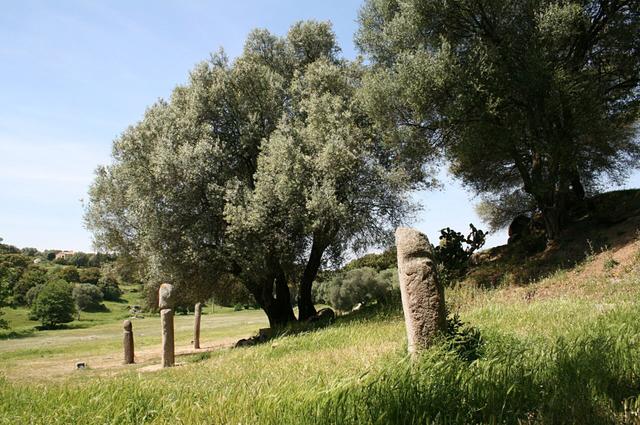
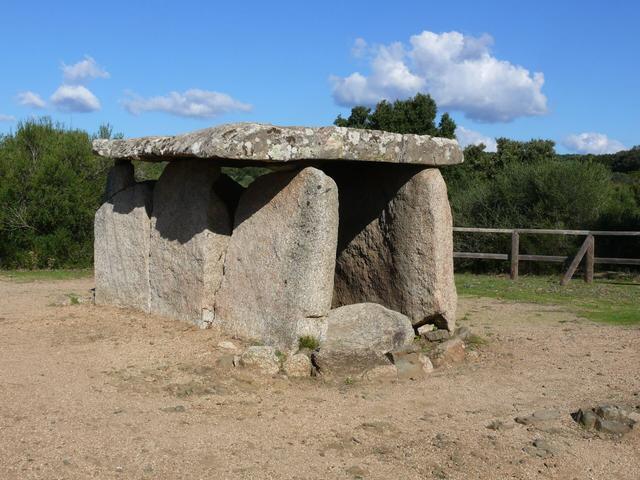
The bridge lies on the route of southern Corsica's great prehistoric sites. South of Sartène, the statue-menhirs of I Stantari and the dolmen of Funtanaccia, on the Cauria plateau, are also free. See also: Cauria megalithic site Across the Gulf of Valinco, Filitosa and its statue-menhirs with carved faces are less than an hour away. See also: Filitosa Carrying on along the D268 towards the Alta Rocca, the castellu of Cucuruzzu is a Bronze Age fortress set among the rocks. See also: Cucuruzzu and Capula
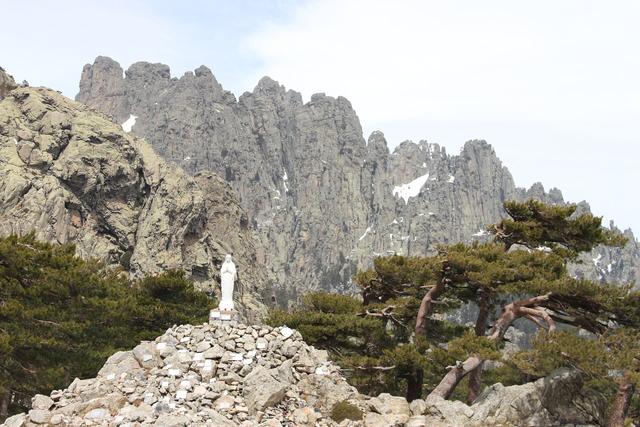
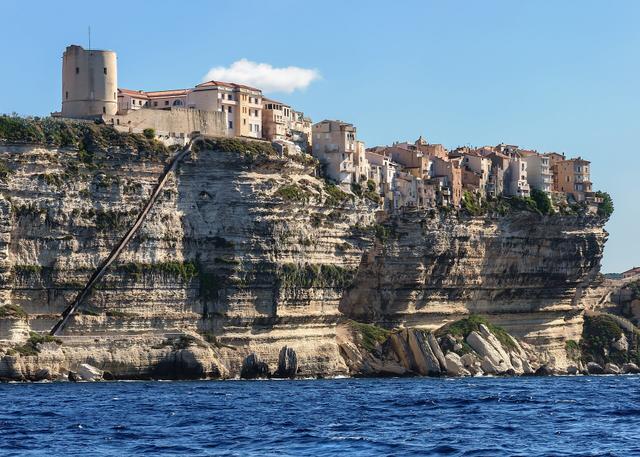
Further afield, the Bavella needles and Bonifacio complete a tour of the south. On Cap Corse, at the other end of the island, Nonza is another free, open-access site. See also: Bavella Needles, Bonifacio Citadel, Nonza, Corsica
Where to eat and stay
There is no restaurant or snack bar at the bridge. For lunch, Propriano and Sartène are a quarter of an hour away, and Sainte-Lucie-de-Tallano, further up the D268, has a few village restaurants.
To stay, Propriano is the most convenient base in summer, with its harbour, the beaches of the Gulf of Valinco and the widest choice of hotels. Sartène, quieter, suits you better if you are mainly visiting the prehistoric sites.
FAQ
Is there a fee to see the Spin'a Cavallu bridge?
No. The bridge and the banks of the Rizzanese are free and open access, all year round.
Where is the Spin'a Cavallu Genoese bridge?
On the Rizzanese river, between Propriano and Sartène, beside the D268 towards Sainte-Lucie-de-Tallano, about 3 km from the T40.
Is the bridge really Genoese?
It is called Genoese by custom, but it is probably of Pisan origin and dates from the 13th century. The historic monuments record mentions work in the 13th and 15th centuries.
Can you swim under the Spin'a Cavallu bridge?
Yes, but there is no lifeguard and the water was rated temporarily polluted in 2024 and 2025. Check the health authority results before swimming.
What does Spin'a Cavallu mean?
"Horse's back" in Corsican, because of the strongly arched shape of the deck.
How long does it take to see the bridge?
Half an hour for the bridge, 30 minutes to 1 hour with a walk along the river, half a day with a swim.
Practical information
Official ticket-office prices 2026
Free admission
Address
Pont de Spin'a Cavallu, D268 (route de Sainte-Lucie-de-Tallano), 20100 Sartène, France
Directions
On site and nearby
- Nearest shops and pharmacy: Sartène, 4 km away Straight-line distance, based on OpenStreetMap.
- Emergencies: 112 (all emergencies, free from any phone), 15 (SAMU, medical emergency)
Around the site, on Google Maps
With children
Family days out nearby: Sartène Museum of Prehistory and Archaeology (4 km), Alta Rocca Museum (13 km), Cucuruzzu and Capula (14 km)
Swimming pools and play areas nearby, on Google Maps
Facts checked on 11 November 2026. Sources: visit-corsica.com, routard.com, fr.wikipedia.org, pop.culture.gouv.fr, guide-tourisme-france.com
Map
In the same region
- Parc Galeafrom €10Free under 3