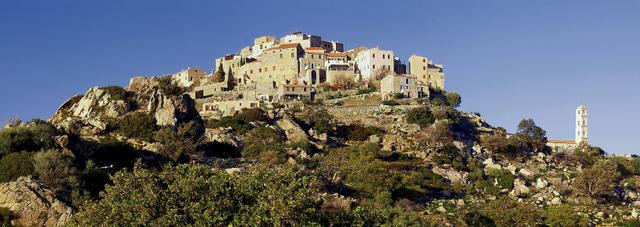
Cauria: visiting the Stantari menhirs and the Funtanaccia dolmen
Cauria megalithic site at a glance
- Admission
- Free
- Time needed
- about 1 h 30 min
- Where
- Sartène
Facts checked on 11 November 2026. Full opening hours, reduced prices and access
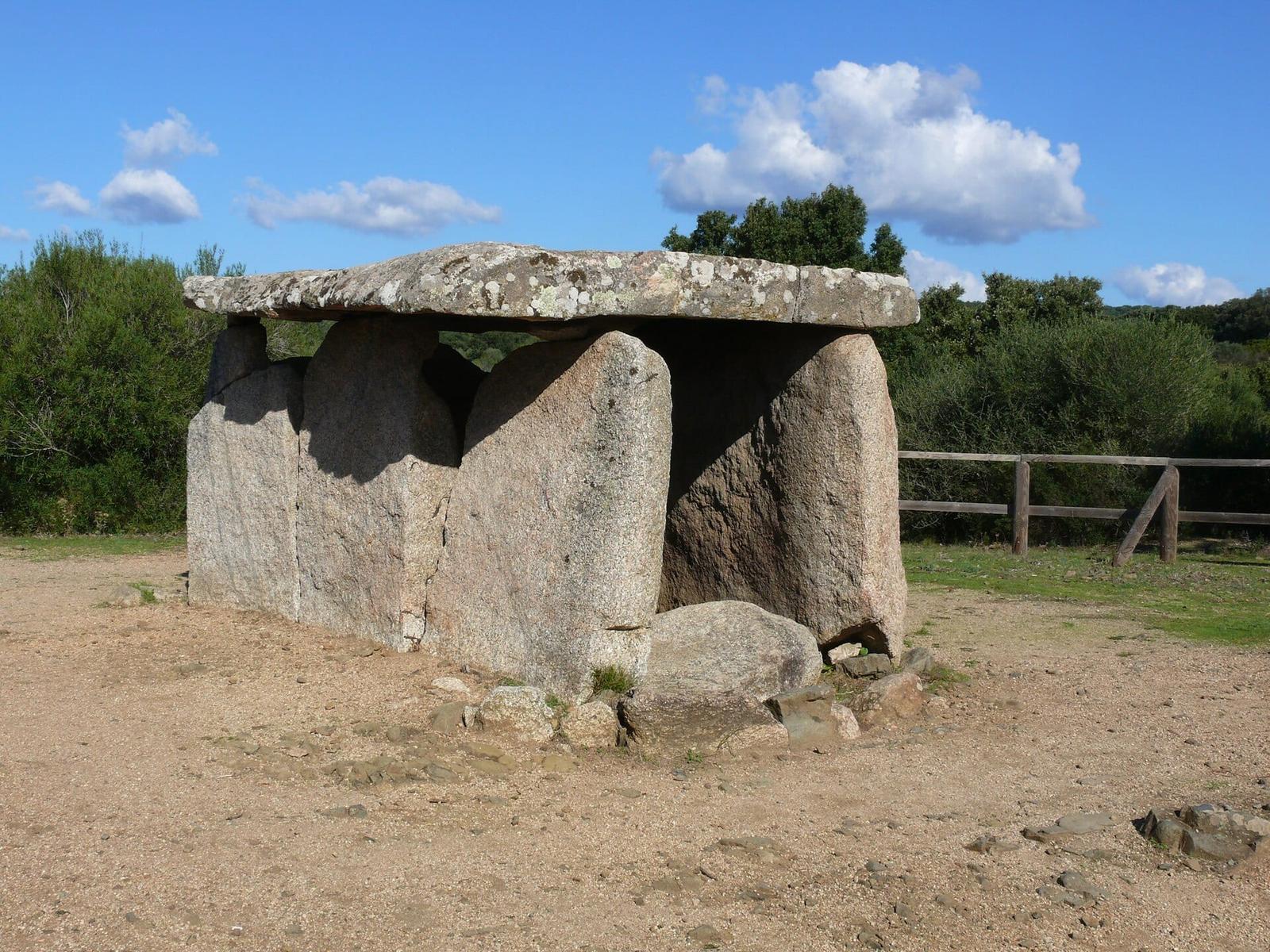

South of Sartène, a few kilometres from the sea, the Cauria plateau brings together three of the best-known prehistoric monuments in Corsica: the armed statue-menhirs of I Stantari, the Rinaghju alignment and the Funtanaccia dolmen, the best preserved on the island. Entry is free and open, at the end of a small road and a short walk. Here is how to get there, what to look for and how to plan your visit.
Cauria at a glance
- Where: on the Cauria plateau, in the commune of Sartène (Corse-du-Sud), about 2 km from the sea, on the road to Tizzano.
- Price: free. All three sites are open to visit on your own, with no ticket office.
- Opening: an open-air site, accessible all year. Avoid the hottest hours in summer.
- What you see: 3 sites spread over about 60 hectares: the I Stantari alignment and its statue-menhirs, the Rinaghju alignment and the Funtanaccia dolmen.
- Getting there: about 10 km by road from Sartène, then a dirt track and about 10 minutes on foot to the first menhirs.
- Time needed: allow 1 to 1.5 hours to see all three sites, according to the Corsican regional authority.
- Management: the site belongs to the Collectivité de Corse, the regional authority, whose archaeologists look after and study it. The monuments are listed historic monuments.
Why visit Cauria?
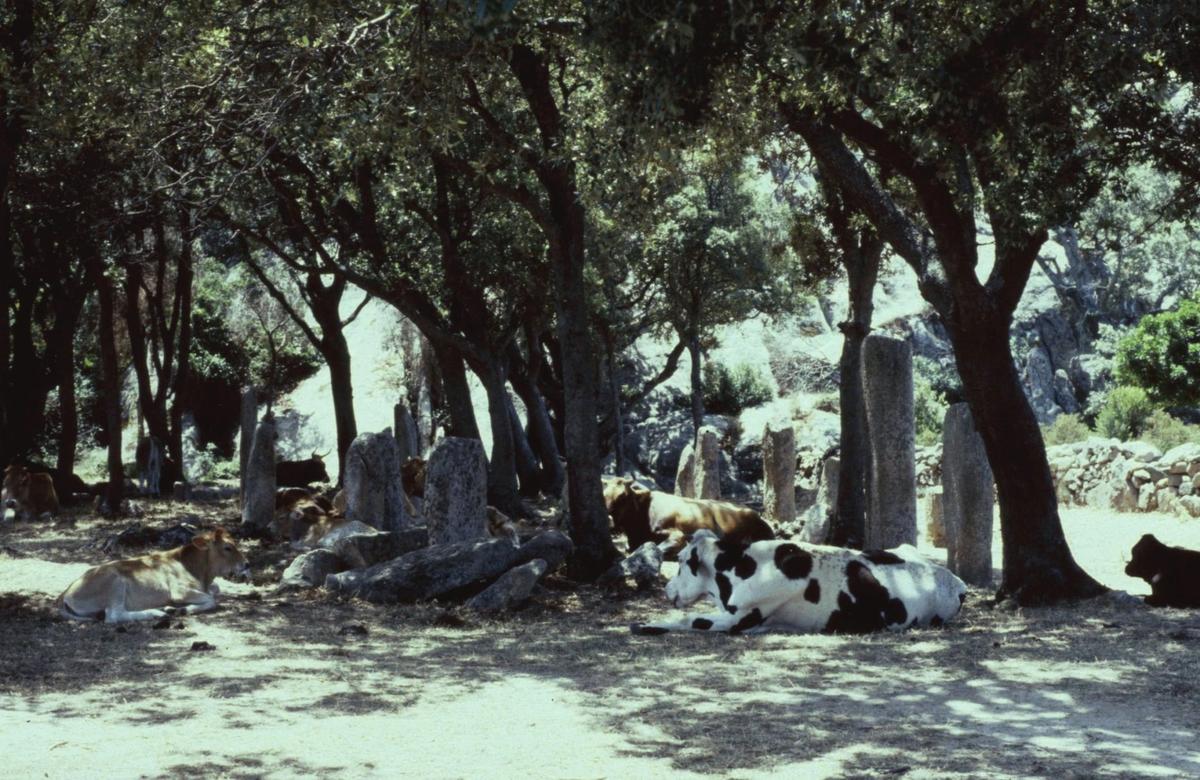
Southern Corsica is one of the great megalithic regions of the Mediterranean. Visit Corsica counts more than 900 menhirs on the island, mostly in the south and around Sartène. Cauria is the best place to understand this history, because one plateau holds all three types of monument: rows of standing stones, carved statue-menhirs and a dolmen.
The plateau was settled very early. According to the regional authority, human presence is recorded around 5700 BC. The number of menhirs then grew over the millennia: about 60 around 4500 BC, and about 180 in the first millennium BC.
What sets Cauria apart is the faces. The I Stantari statue-menhirs are not just standing stones: some have a face, arms and a sword carved on the chest. They are among the most decorated in Corsica.
How much does it cost to visit Cauria?
Nothing. The I Stantari and Rinaghju alignments and the Funtanaccia dolmen are open and free. There is no ticket office, no gate and no opening hours. The regional authority simply lists it as a self-guided visit.

This is a big difference from Filitosa, the other major prehistoric site in the south, which charges admission and has set opening hours. On a tight budget, Cauria gives a very good idea of Corsican statue-menhirs without spending a cent. See also: Filitosa
How to get to Cauria from Sartène
By car, the only practical option. The route published by the regional authority:
- South of Sartène, take the RT 40 towards Bonifacio.
- After about 10 km, turn right onto the D48 towards Tizzano.
- Then follow the signs to Stantari and Funtanaccia, via Rinaghju, on the D48a.
- Take the track on the right to the small car park.
- The sites are reached on foot, in about 10 minutes.
The road gets narrow towards the end. Drive slowly, as passing other cars is tricky. The track is fine for an ordinary car in dry weather; after heavy rain, park lower down if it is rutted.
By public transport, no bus serves the plateau. Without a car, you would need a taxi from Sartène.
Renting a car. Ajaccio and Figari airports are the closest. A car lets you combine Cauria with Sartène, Tizzano beach, Filitosa or Bonifacio on the same day.
What to see on the Cauria plateau
The three sites are close together. The I Stantari alignment is about 300 m from the dolmen, and Rinaghju about 300 m south of Stantari. You can see everything on foot in a single loop.

The I Stantari alignment and its statue-menhirs
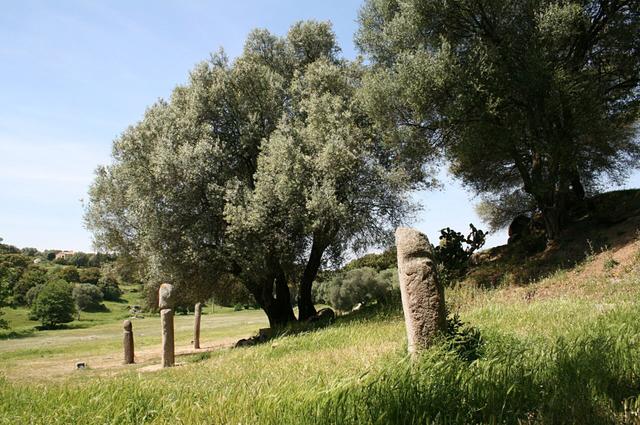
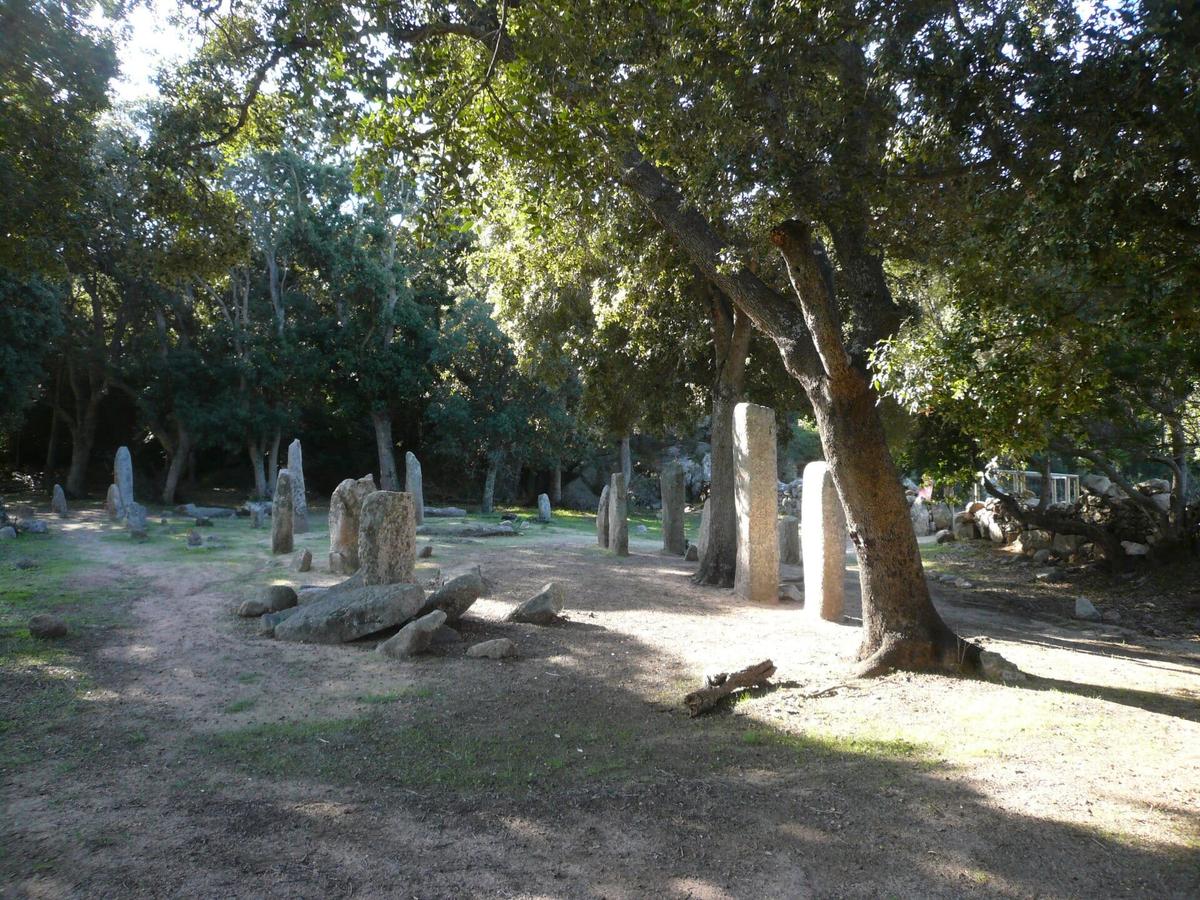
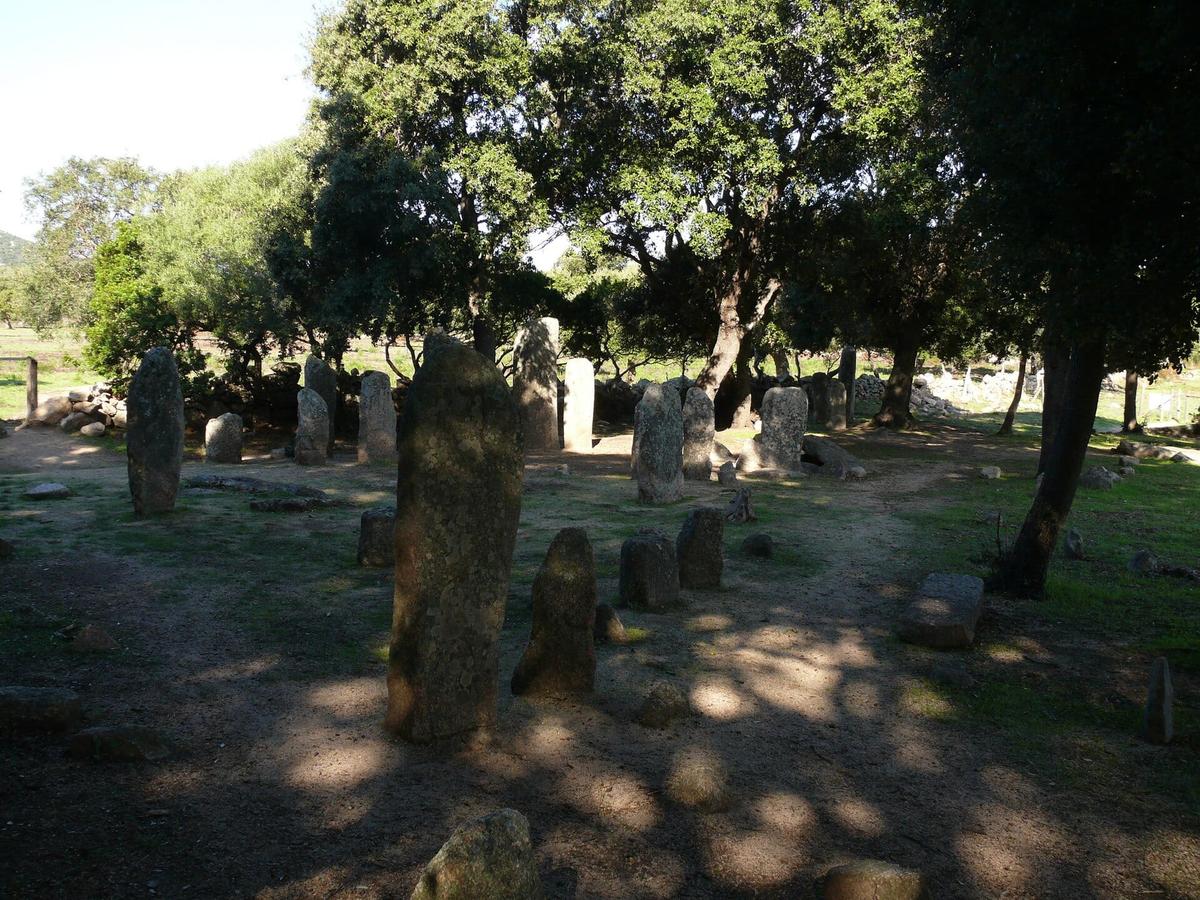
This is the most famous site. Stantari means "the standing stones" in Corsican. There are 55 monoliths, 23 of them still standing, set out in three straight rows: 2 statue-menhirs and 21 stele-menhirs, according to Wikipedia.
What to look for. The statues have a face carved in relief and small hollows at the temples. Their arms and hands are sculpted, a detail found on only 6 statue-menhirs in Corsica. A long sword hangs from a baldric slung around the neck. On the back, the shoulder blades stand out in relief and the spine is engraved. Walk around the stones: the back is often as interesting as the front.
Dating. The statues themselves cannot be dated directly. Archaeologists rely on what was found around them and on the carved details. The site's most active phase is radiocarbon dated to between 1415 and 880 BC.
Found in a wall. In July 1964, the archaeologist Roger Grosjean spotted the back of a statue-menhir's head built into a nearby dry-stone wall. He started a dig and uncovered 7 statue-menhirs and 15 menhirs. Some had been knocked down, moved or reused over the centuries.
The sea warriors theory. Grosjean believed the statues wore horned helmets, and linked them to the Shardana, one of the Sea Peoples mentioned in Egyptian texts. This theory has since been dropped. You may still read it in old guidebooks, but archaeologists no longer accept it.
Good to know. The regional authority plans to remove the original statues to protect them and replace them on site with copies. No date has been announced. Depending on when you visit, you will see either the originals or replicas.
The Rinaghju alignment
Less striking than Stantari, this alignment is reached by the same network of paths. Roger Grosjean counted 45 menhirs here. It was listed as a historic monument in 1975, at the same time as Stantari.
The Funtanaccia dolmen
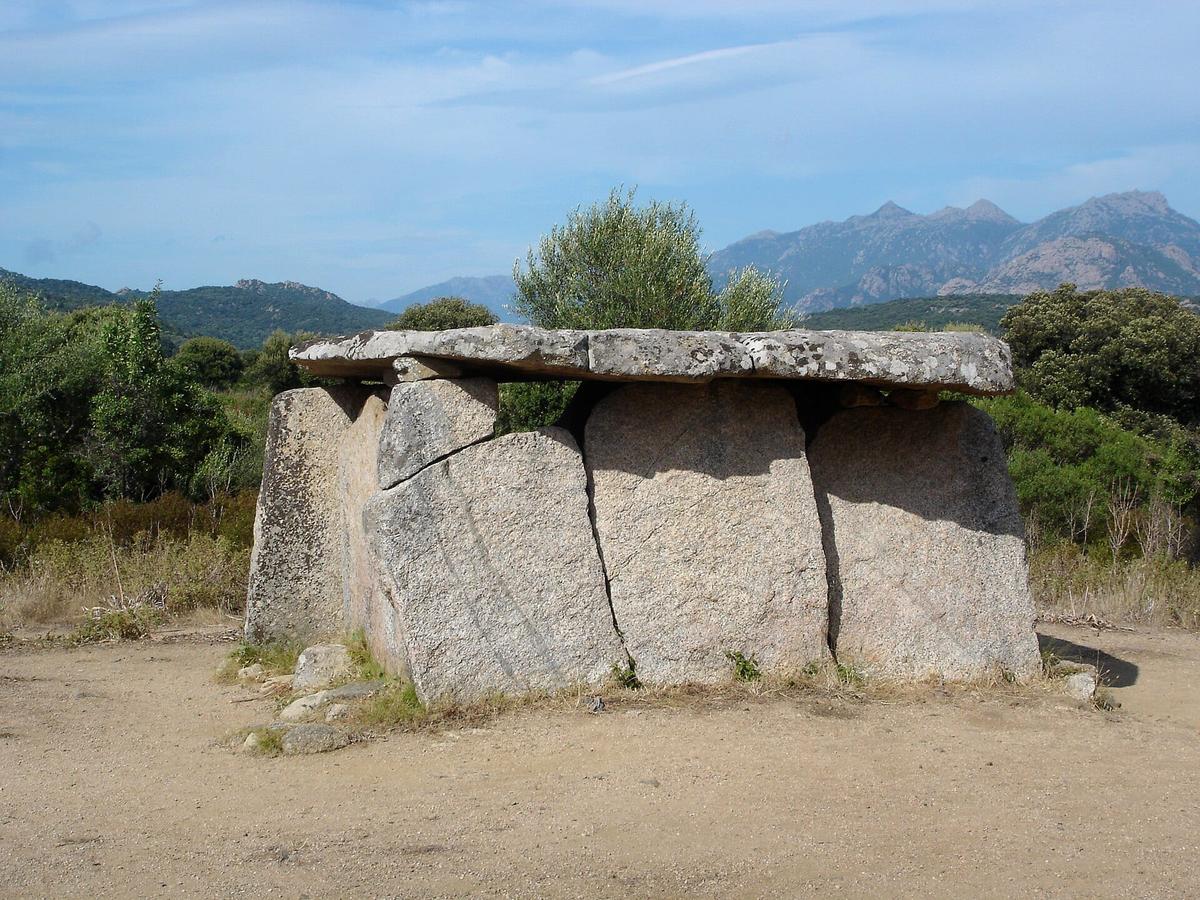
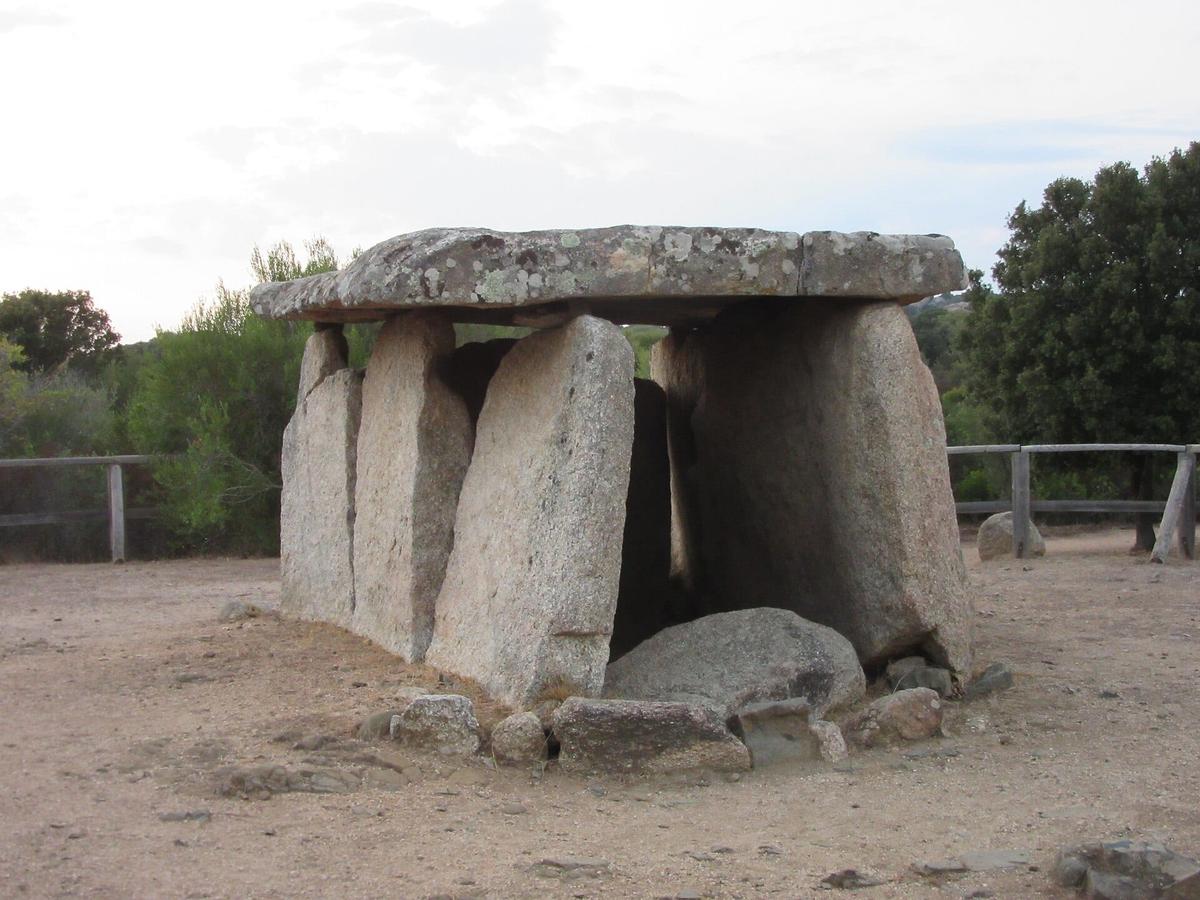
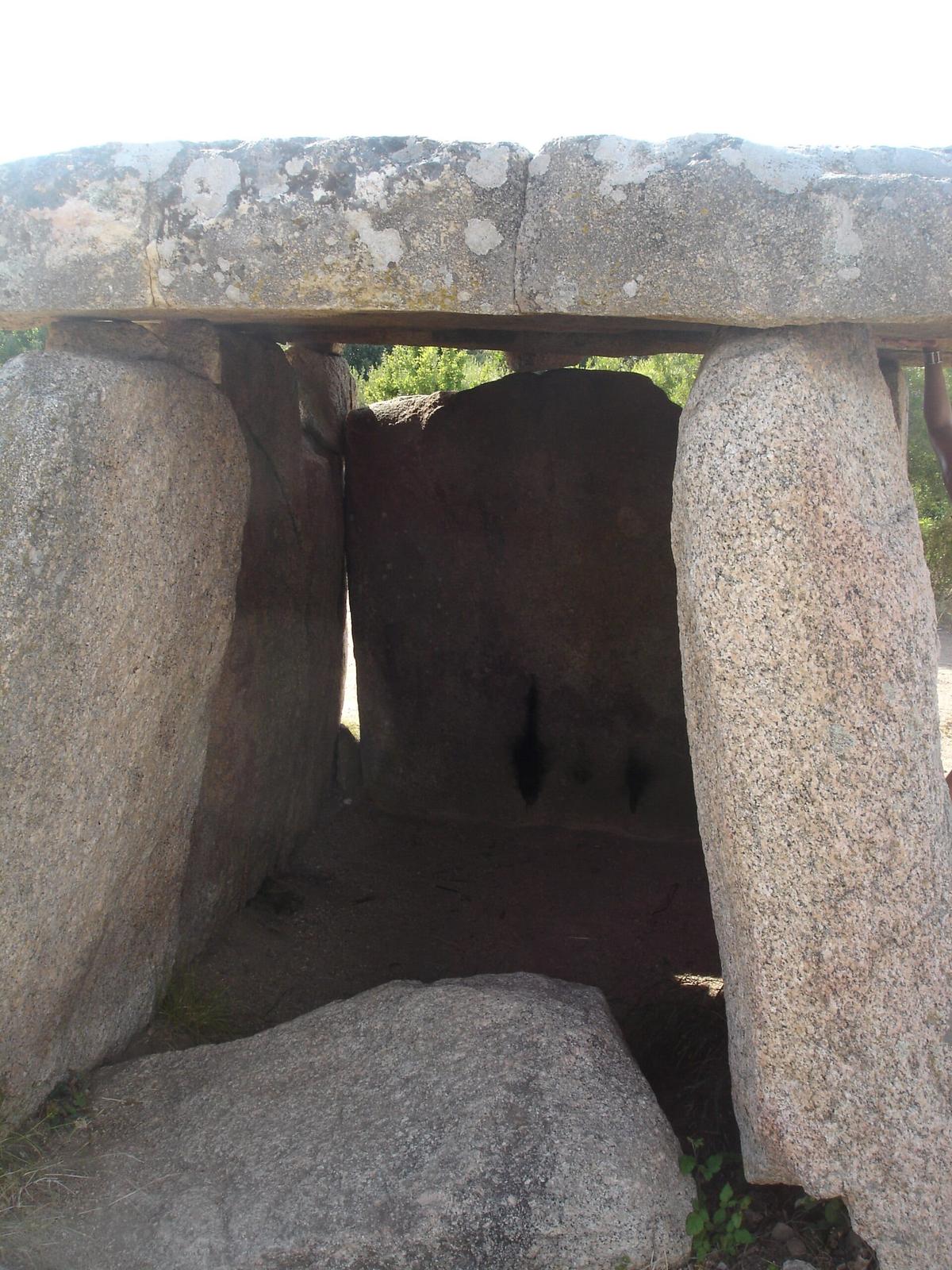
This is the best-known and best-preserved dolmen in Corsica. A large granite slab measuring 3.4 m by 2.9 m rests on 6 upright stones and covers a burial chamber about 2.6 m long and up to 1.7 m high. The whole structure weighs about 15 tonnes. It faces north-south and is thought to date from the second millennium BC, according to the regional authority.
The devil's forge. Prosper Mérimée, inspector of historic monuments (and author of Carmen), described it as early as 1840 in his Notes d'un voyage en Corse, under the name "Stazzona del Diavolo", the devil's forge. That was what local people called the dolmen. In 1883, the prehistorian Adrien de Mortillet called it "the most beautiful and best preserved of the dolmens of Corsica". It has been a listed historic monument since 1889.
A geological puzzle. The slabs are granite, whereas the bedrock of the plateau is dolerite. The builders must have brought the stone from elsewhere.
Do not climb on it. The capstone has a recent crack, and ways of strengthening it are being studied. Look and take photos, but do not sit on the dolmen.
How long does it take to visit Cauria?
The regional authority gives 1 to 1.5 hours for the three sites. That is realistic if you walk calmly from one to the next and take time to look at the statues. With the drive from Sartène, allow half a morning.

If you are short of time, go to I Stantari first, then the dolmen. Rinaghju is the one you can skip.
When to go
In spring and autumn, the plateau is pleasant all day. This is the best time.

In summer, come early in the morning or late in the afternoon. The plateau is exposed to the sun and very hot at midday. The low evening light also brings out the carved faces on the statues.
In winter, the site stays open. After heavy rain, the track and paths can be muddy.
Fire risk. In summer, when the fire risk is very high, the prefecture can restrict access to natural areas in Corsica. Check with the Sartène tourist office the day before.
Visiting with children
Cauria is a good family outing: it is free, short, and children enjoy looking for the faces and swords on the stones. The walk of about 10 minutes is easy for children who walk well. A pushchair will struggle on the track and paths: bring a baby carrier instead.

A few tips:
- Bring water and hats, as there are no facilities on site.
- Wear closed shoes: the scrub scratches and the ground is stony.
- Explain what a statue-menhir is before you set off. Children will look more closely.
The Sartène museum, the ideal complement
Some of the finds from Cauria, including pottery and the statue-menhir Cauria VIII, are in the Museum of Corsican Archaeology in Sartène. A dig in 2006 also revealed a Neolithic dwelling of about 20 m² on the plateau. The museum shows what the site no longer does: tools, pottery and the story of the people who raised these stones. Visit Corsica recommends combining the two. Check the museum's opening hours before you go, as they change with the season.

Guided tours and excursions
The site is self-guided, with no guide on site. Operators around Sartène run day trips in the Sartenais area, sometimes combining prehistoric sites, the coast and villages. During the European Heritage Days, the regional authority sometimes organises activities on the site, such as a treasure hunt.
Partner links: if you book through these links, we earn a commission at no extra cost to you. Partner links · Learn more
What to combine on the same day
| Also worth seeing | Distance | Travel time |
|---|---|---|
| Filitosa | 50 km | 60 min by car |
| Bonifacio Citadel | 55 km | 60 min by car |
| Cucuruzzu and Capula | 45 km | 55 min by car |
Approximate road distances and travel times.
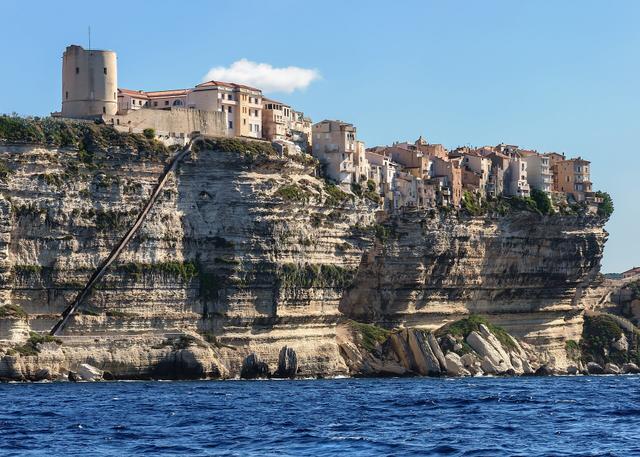
To round off Corsican prehistory, Filitosa and its statue-menhirs with faces are about an hour's drive north. See also: Filitosa In the Alta Rocca, the Castellu de Cucuruzzu is a Bronze Age fortress set among the rocks. See also: Cucuruzzu and Capula To the south, Bonifacio and its old town above the cliffs are about an hour away. See also: Bonifacio Citadel
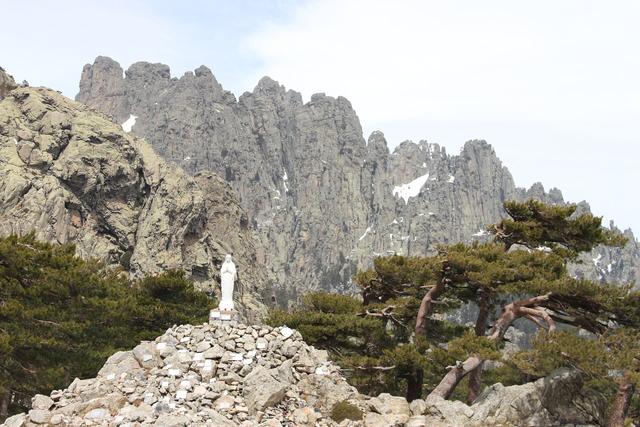
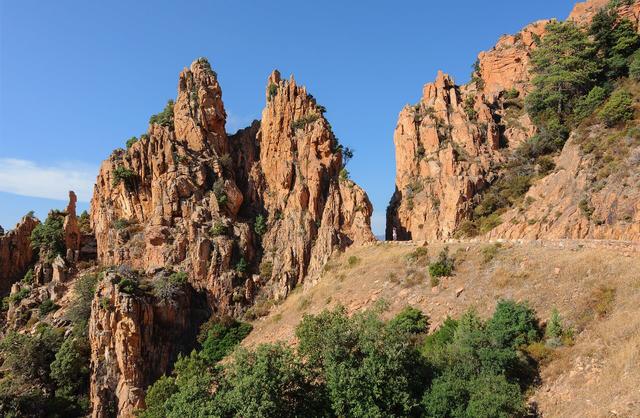
The Bavella needles and the ancient site of Aléria complete a tour of the south and east of the island. In the north, the Agriates Desert offers a completely different landscape of scrubland and beaches. See also: Bavella Needles, Aleria Roman site, Palais Fesch, Agriates Desert, Corsica
Where to eat and stay
There is no restaurant or snack bar on the plateau. The seaside hamlet of Tizzano is the nearest place for lunch in summer. Otherwise, bring a picnic.
To stay, Sartène is the most practical base: the town is about twenty minutes from the site, with hotels, B&Bs and restaurants. Propriano, on the Gulf of Valinco, offers more choice if you want to combine the visit with the beach.
FAQ
Is there an entry fee at Cauria?
No. The I Stantari and Rinaghju alignments and the Funtanaccia dolmen are open and free all year.
How do you get to the Cauria menhirs?
From Sartène, take the RT 40 south for about 10 km, then the D48 towards Tizzano and the D48a towards Stantari and Funtanaccia. A track leads to the car park, then it is about 10 minutes on foot.
How long does it take to visit Cauria?
Allow 1 to 1.5 hours for the three sites, plus the drive from Sartène.
What is the difference between Cauria and Filitosa?
Cauria is in the open, free and has no visitor facilities. Filitosa charges admission and has a laid-out trail and a small museum. Both have statue-menhirs with faces.
Why is the Funtanaccia dolmen called the devil's forge?
Local people called the dolmen "Stazzona del Diavolo", the devil's forge, a name recorded by Prosper Mérimée in 1840.
Are the Stantari statues originals?
For now, yes. The regional authority plans to move them to safety and replace them with copies on site, with no date announced.
Practical information
Official ticket-office prices 2026
Free admission
Address
Plateau de Cauria, route de Tizzano (D48a), 20100 Sartène, France
Directions
On site and nearby
- Nearest shops and pharmacy: Sartène, 11 km away Straight-line distance, based on OpenStreetMap.
- Emergencies: 112 (all emergencies, free from any phone), 15 (SAMU, medical emergency)
Around the site, on Google Maps
With children
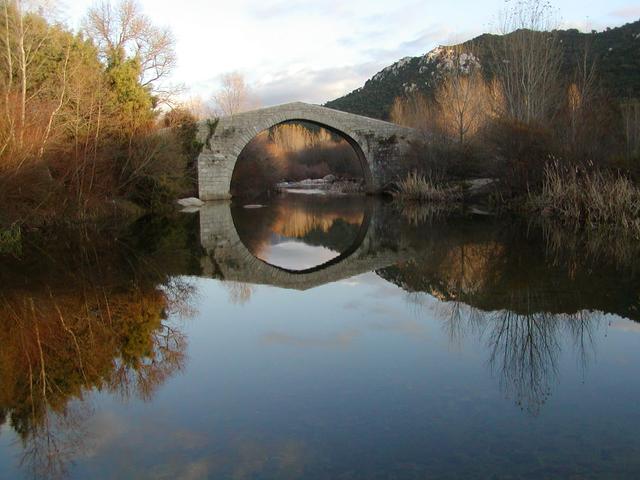
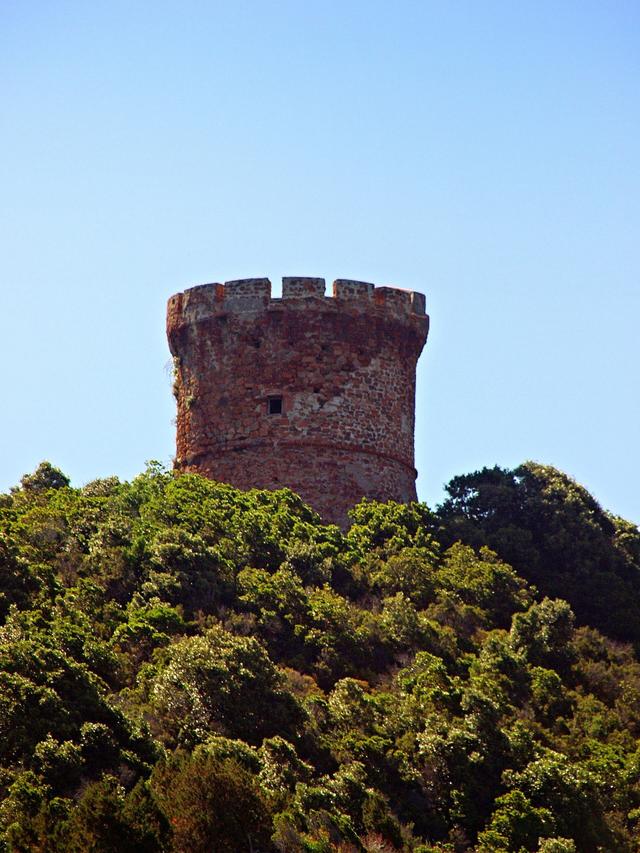
Family days out nearby: Sartène Museum of Prehistory and Archaeology (11 km), Spin'a Cavallu Genoese Bridge (15 km), Campomoro Genoese tower (15 km)
Swimming pools and play areas nearby, on Google Maps
Facts checked on 11 November 2026. Sources: isula.corsica, fr.wikipedia.org, fr.wikipedia.org, en.wikipedia.org, visit-corsica.com
Map
In the same region
- Parc Galeafrom €10Free under 3