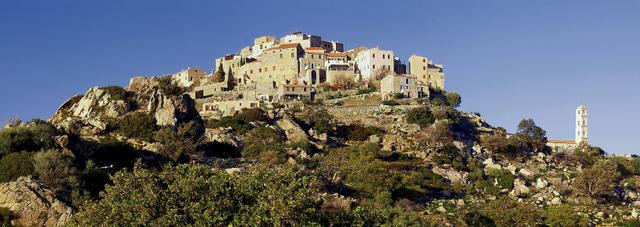
Nebbio Cathedral: visiting Santa Maria Assunta in Saint-Florent
Nebbio Cathedral (Santa Maria Assunta) at a glance
- Full price
- €1.50
- Free
- under 12
- Time needed
- about 30 min
- Where
- Saint-Florent
Official ticket-office prices, checked on 11 November 2026. Full opening hours, reduced prices and access
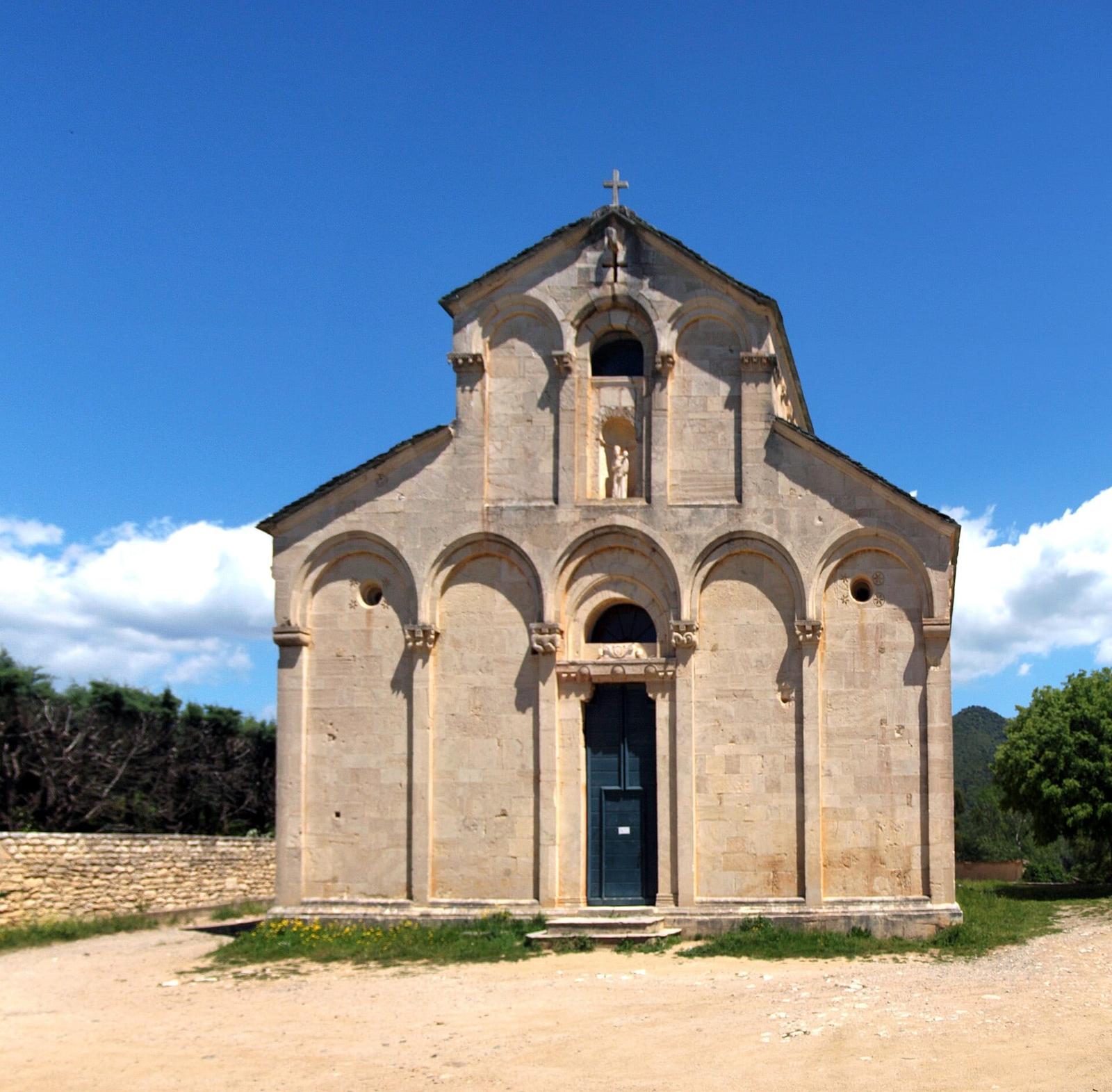

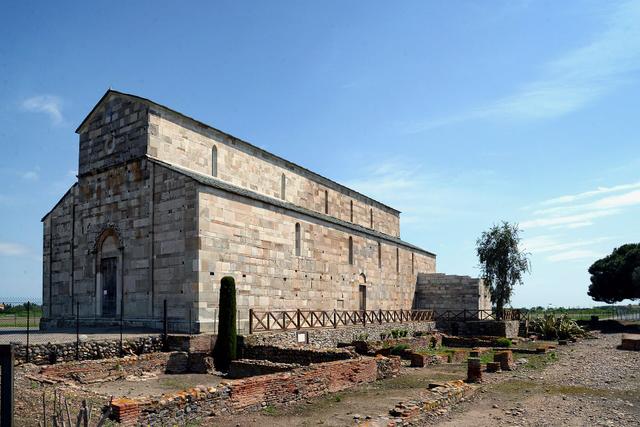
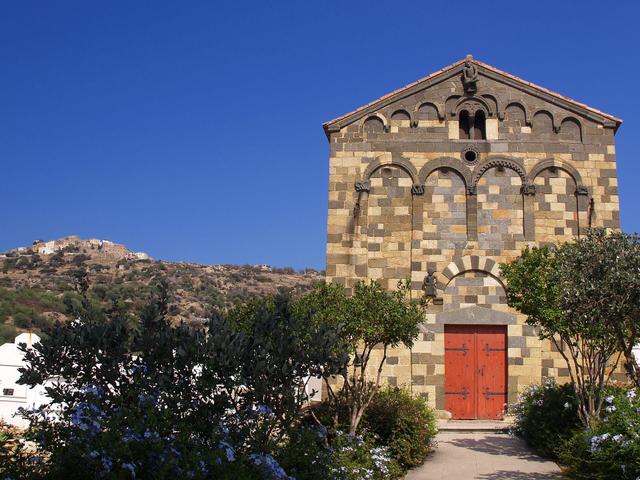
About 800 metres from the harbour in Saint-Florent, at the edge of a field, stands the old Nebbio Cathedral, a 12th-century Romanesque church built of white limestone. Many visitors walk past without going in because they do not know when it is open. Here are the summer opening hours published by the tourist office, the entry price, the way from the town centre and what to look for once inside.
Nebbio Cathedral at a glance
- Where: on the edge of Saint-Florent (Haute-Corse), about 800 metres from the centre, on the road to Poggio-d'Oletta.
- Price: €1.50, free for children under 12.
- Open: in summer, Monday to Saturday 9:30 – 19:30, Sunday 14:00 – 19:30. Out of season, ask the tourist office.
- Time needed: allow 30 minutes inside, or an hour including the walk there and back from the harbour.
- Best for: lovers of Romanesque art, holidaymakers in Saint-Florent looking for a break from the sun, and anyone following the Pisan churches of the Nebbio.
- Good to know: no opening hours are published outside the summer season. You can see the outside at any time.
What is the Nebbio Cathedral?
It is the former cathedral of the diocese of Nebbio, the hilly area around the Gulf of Saint-Florent. It is dedicated to the Virgin of the Assumption, hence its Corsican and Italian name, Santa Maria Assunta. Guides also call it the "Nebbiu Cathedral", after the Corsican name of the area.
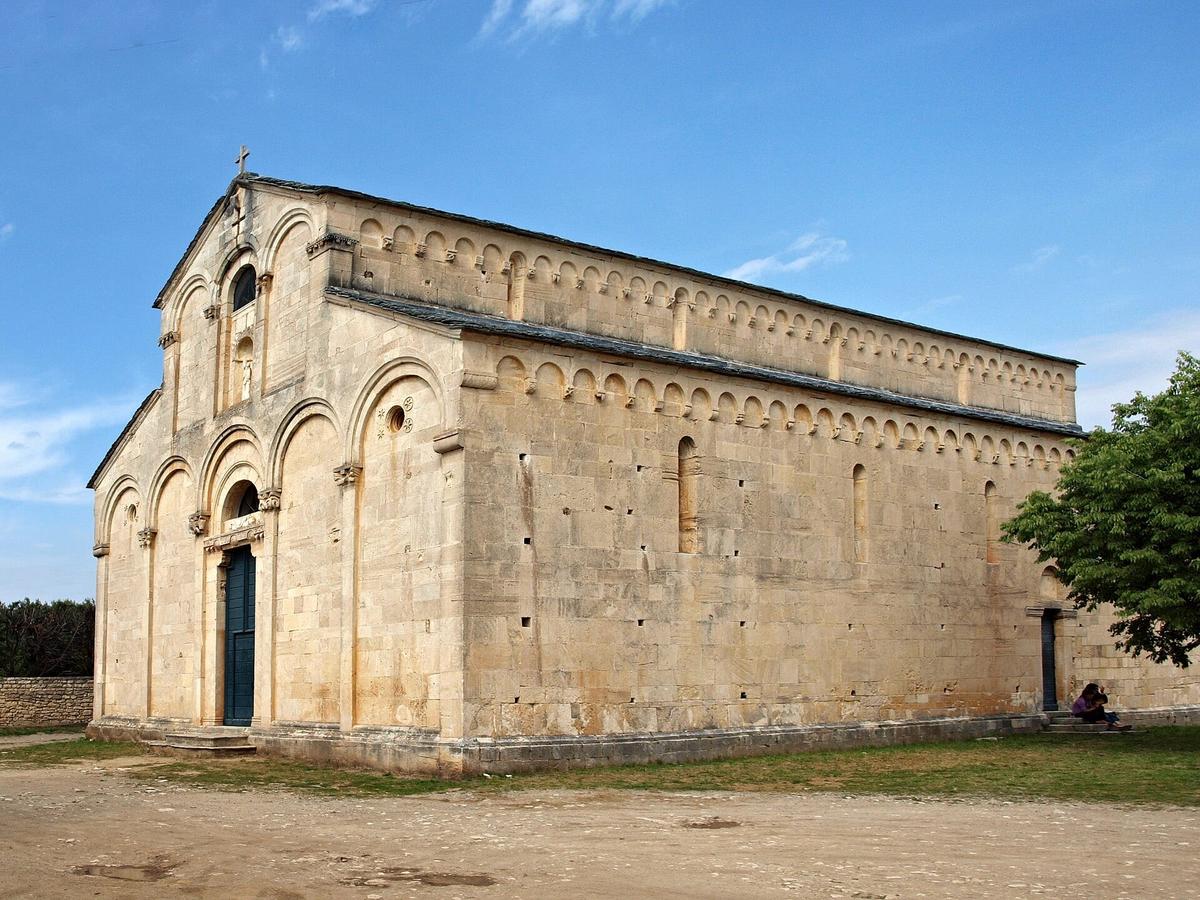

It was probably built in the first quarter of the 12th century, most likely on the ruins of an early Christian basilica. The first document to mention it dates from 1144, according to the tourist office and the Collectivité de Corse. At that time Corsica came under the archbishopric of Pisa, so the churches of the period are called "Pisan". It was on the very first list of French historic monuments, in 1840, along with its neighbour San Michele de Murato. Today it belongs to the town of Saint-Florent.
Why is the cathedral outside the town? Because today's town is younger. The cathedral stood in the old city of Nebbio, on the plain. Saint-Florent grew up later around its Genoese citadel, by the water. The church was left among the fields.
A history of abandonment
The building's story is one of a place often deserted. According to Wikipedia, the bishops left the cathedral several times because of insecurity on the coast and the malaria that plagued the nearby marshes.

- Late 13th century: the church is already abandoned, according to the Collectivité de Corse.
- Early 16th century: Bishop Agostino Giustiniani, a Genoese humanist, has it repaired. A bell tower is mentioned for the first time in 1531.
- 1576: on his visit, Bishop Sauli of Aléria finds it without a roof.
- 1748: Genoese troops occupy the cathedral and the neighbouring bishop's palace.
- 1801: the last bishop, Monsignor Santini, leaves office. The diocese of Nebbio is merged into that of Ajaccio and the church loses its cathedral status.
It was then restored from 1858 to 1886. The restorers pulled down the bell tower in 1888, which is why the church no longer has one. Further work took place in 1984 and 1990.
How much does it cost to visit?
Entry costs €1.50, according to the Saint-Florent tourist office. It is free for children under 12. There is no booking: you pay on the spot to the person on duty. Bring some coins.
This small fee pays for an attendant during the summer. The town of Saint-Florent organises this so that the church can stay open.
If you are looking for a guided activity around Saint-Florent, most leave from the harbour: boats to the beaches of Saleccia and Lotu, in the Agriates Desert, or hikes along the coastal path.
Partner links: if you book through these links, we earn a commission at no extra cost to you. Partner links · Learn more
2026 opening hours: when is the cathedral open?
Opening hours published by the Saint-Florent tourist office for the summer season:
- Monday to Saturday: 9:30 – 19:30.
- Sunday: 14:00 – 19:30.
The tourist office does not give exact start and end dates for the season. Nor does it publish hours for autumn and winter. If you come between October and May, call the tourist office on +33 4 95 37 06 04 before you go. It is in the town centre, on the Route de la Citadelle.
Best time to go. Come in the morning, at opening time, or in the late afternoon. The walk from the harbour is in full sun, with little shade. Late in the day, the low light brings out the white limestone of the facade and the relief of the carvings.
Concerts. The tourist office mentions evening concerts of Corsican polyphonic singing in the cathedral. The acoustics of the nave suit them well. Dates change every year: check the tourist office's events listing during your stay.
How long does it take to visit?
Allow 30 minutes for the church itself: a walk around the outside, the nave, the capitals and the reliquary of Saint Flor. Add about twenty minutes for the walk there and back from the harbour if you come on foot. Together with the citadel and the lanes of old Saint-Florent, it easily fills a morning.
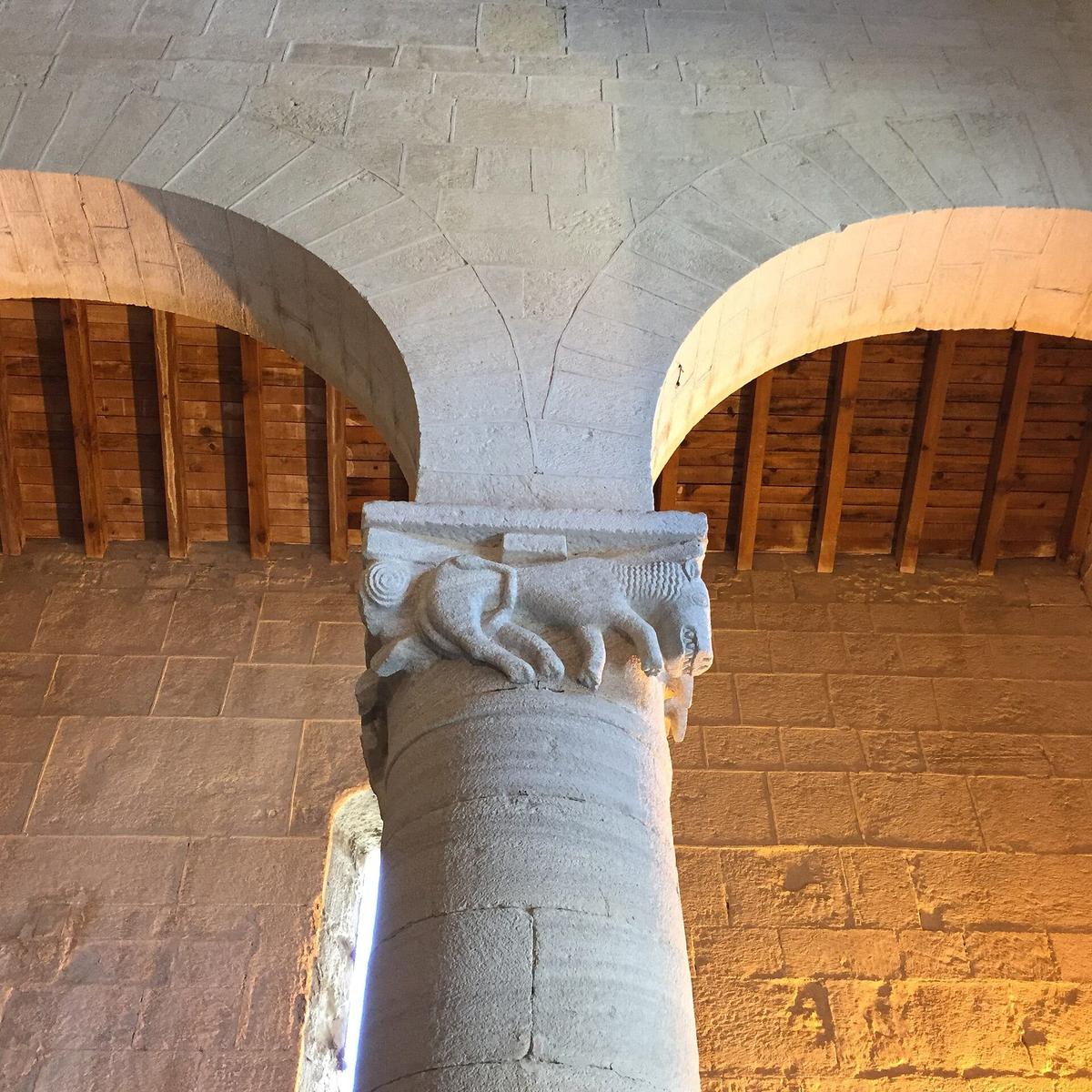

What to see at the Nebbio Cathedral
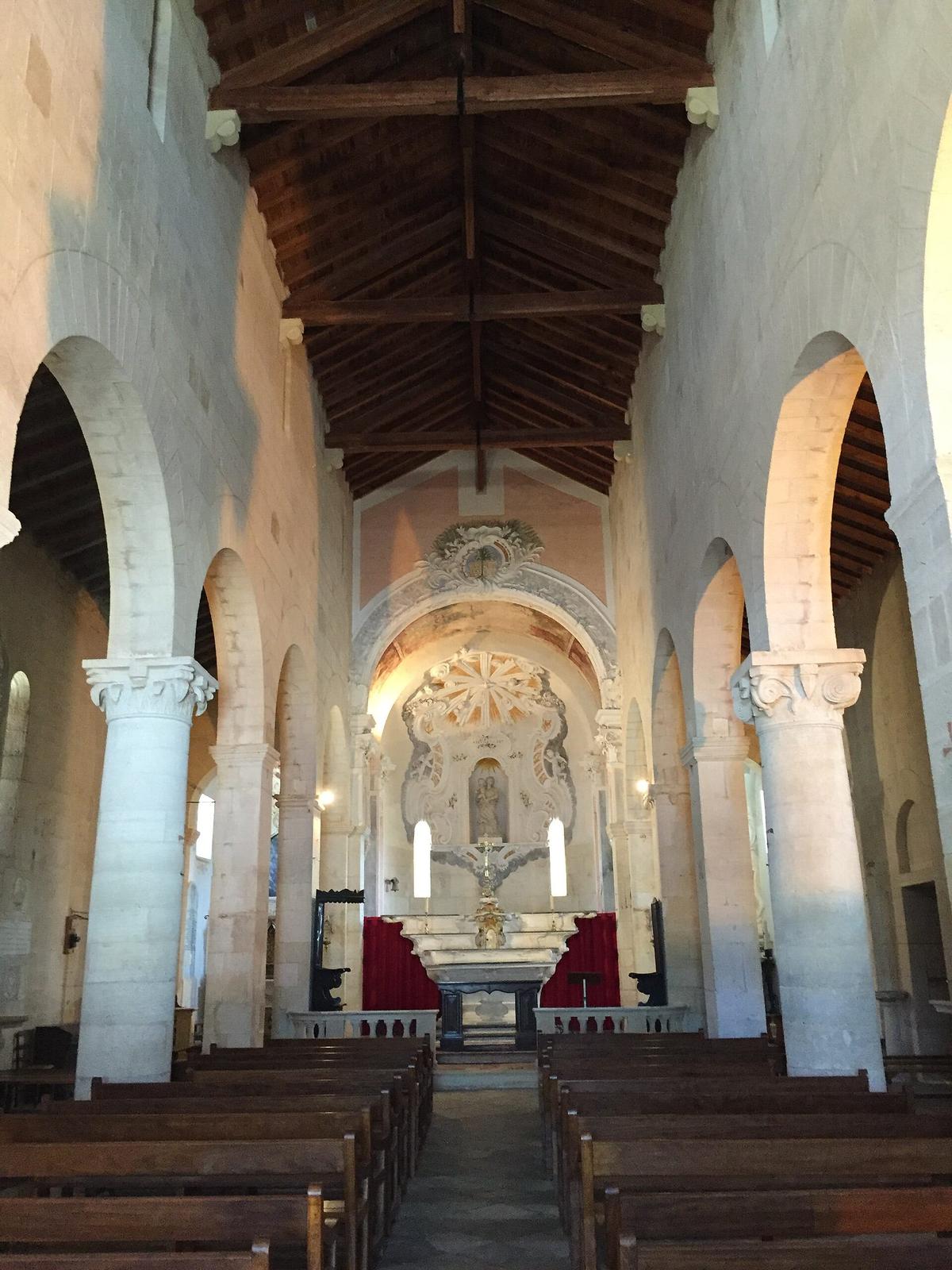

The white limestone exterior
Start by walking around the building. The walls are of white limestone, in regular dressed stone, as in the great Pisan churches of Tuscany. The contrast with San Michele de Murato, striped green and white, is striking: the two churches are close in date and distance, but take very different approaches.
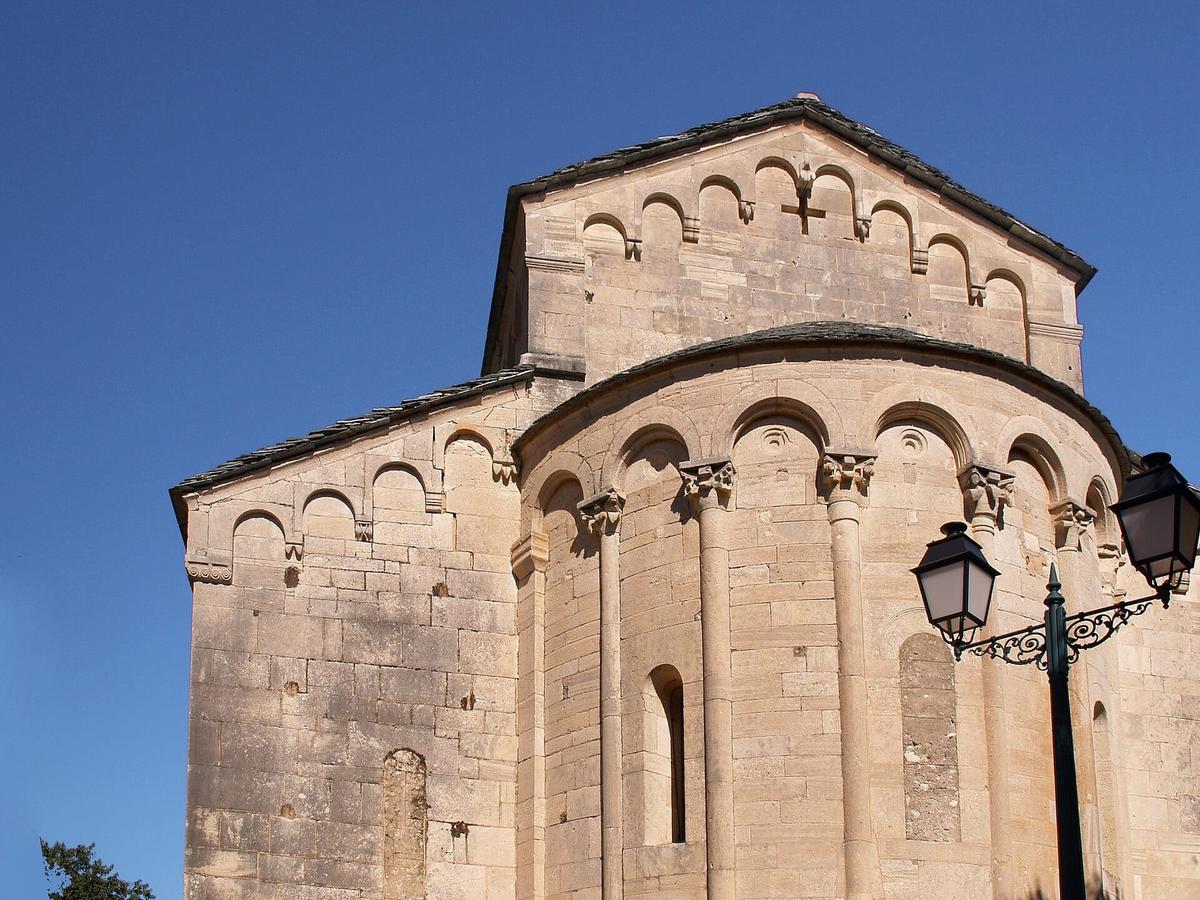
The present roof is grey granite. Look also at the apse, on the east side: it is semicircular, with fine masonry. It is often the most photographed part.
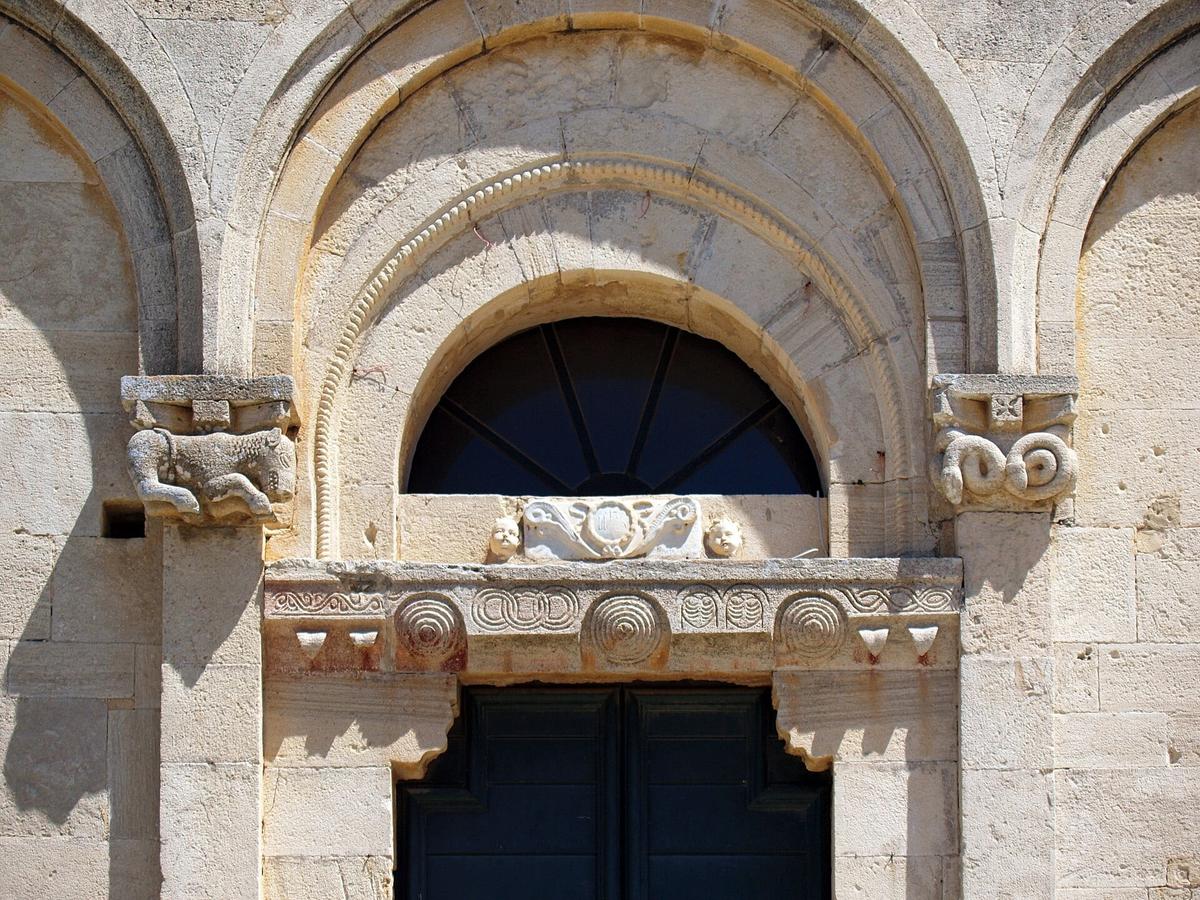
The facade carries carvings. The Lonely Planet guide points out snakes and wild beasts. Take time to find them: as at Murato, Corsican Romanesque decoration mixes animals, human figures and motifs whose meaning is partly lost.
The nave and its capitals
Inside, the church has a basilica plan: a central nave flanked by two aisles, separated by massive pillars. The ceiling is an exposed timber roof. At the far end, the apse is covered by a half-dome.
Look up at the tops of the pillars. The capitals are carved. The Collectivité de Corse also mentions 18th-century wall paintings and stucco, added when the church was still a cathedral.
The reliquary of Saint Flor
This is the most surprising piece. The cathedral keeps, in a reliquary, the relic of Saint Flor, a young Roman soldier martyred in the 3rd century. According to the diocese of Corsica, he was about 15 or 16 years old. His body came from the catacombs of Saint Sebastian in Rome.
The story. The bishop of Nebbio, Monsignor Guasco, asked Pope Clement XIV for the relic. It travelled by sea from Ostia and was landed in 1771 on the beach of La Marana, south of Bastia, on Whit Monday. On the reliquary, the initials C.S.F.M. stand for "Clement to Saint Flor, martyr".
Do not confuse Saint Flor with Saint Florent. The diocese is clear on this: Saint Florent, who gave the town its name, was an African bishop exiled to Corsica. Saint Flor is the Roman soldier whose relic rests here.
The three-yearly festival. Every three years, on Whit Monday, the reliquary is carried in procession through the streets of Saint-Florent, to the sound of a brass band, as far as the church of Sainte-Anne. The town is decorated with arches of greenery and garlands for the whole weekend. If your stay falls at that time, ask the parish or the tourist office whether it is a festival year.
Visiting with children
The visit is short and cheap, and children under 12 go in free. Children usually enjoy the story of the young Roman soldier who arrived by boat in his reliquary. Ask them to find the snakes and wild beasts on the facade before you go in.

In summer, the walk from the harbour is in full sun: bring water and a hat. Combine it with the citadel of Saint-Florent, where the view over the gulf pleases young and old alike.
How to get to the Nebbio Cathedral
On foot from the centre. This is the easiest way if you are staying in Saint-Florent. Allow about ten minutes' walk from the Place des Portes and the harbour. The tourist office has a town discovery trail that ends at the cathedral.
By car. The cathedral is beside the road to Poggio-d'Oletta, on the east side of town. In summer, the centre of Saint-Florent is very busy: if you have already parked near the harbour, leave the car there and walk.
From Bastia. Saint-Florent is about half an hour from Bastia over the Col de Teghime. Bastia is also the nearest arrival point, by ferry or via Bastia-Poretta airport.
Renting a car. To combine Saint-Florent, Murato, Cap Corse and the Agriates, a car remains the most practical option.
What to see nearby on the same day
| Also worth seeing | Distance | Travel time |
|---|---|---|
| San Michele de Murato Church | 13 km | 20 min by car |
| Nonza | 20 km | 30 min by car |
| Agriates Desert | 10 km | 15 min by car |
Approximate road distances and travel times.
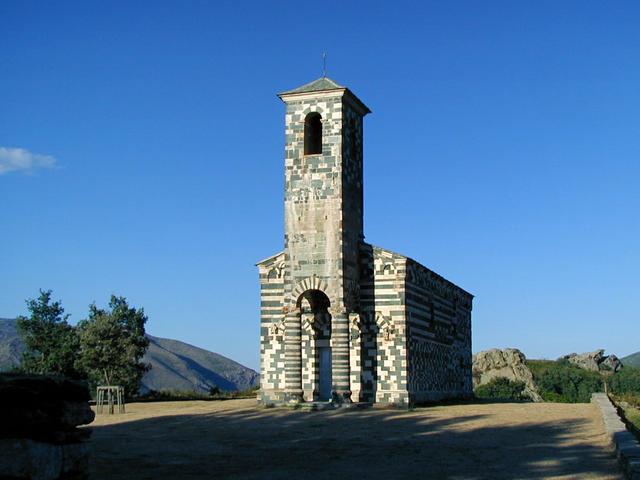
San Michele de Murato. About twenty minutes to the south, on the road up into the Nebbio, stands the region's other great Pisan church, with its green and white striped walls. Seeing both on the same day lets you compare two styles from the same period. See also: San Michele de Murato Church
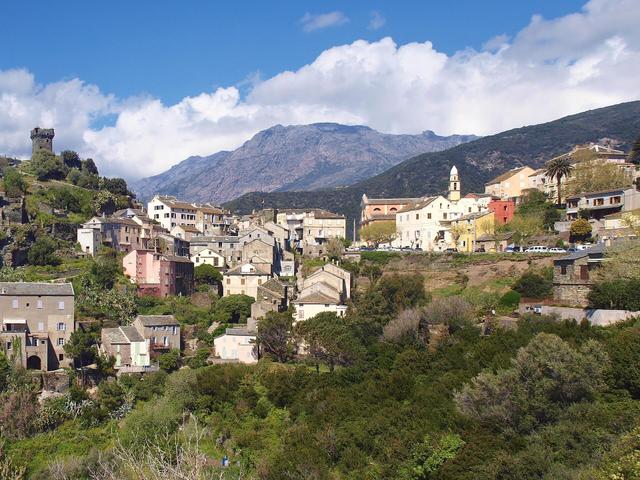
Nonza. The clifftop village of Cap Corse and its black pebble beach are half an hour to the north, along the road down the west coast of the Cape. See also: Nonza
The Agriates Desert. It begins west of Saint-Florent. Boat shuttles to Saleccia and Lotu leave from the harbour. See also: Agriates Desert
Bastia. The museum in the Governors' Palace tells the story of the town and of the Genoese presence. See also: Bastia Museum
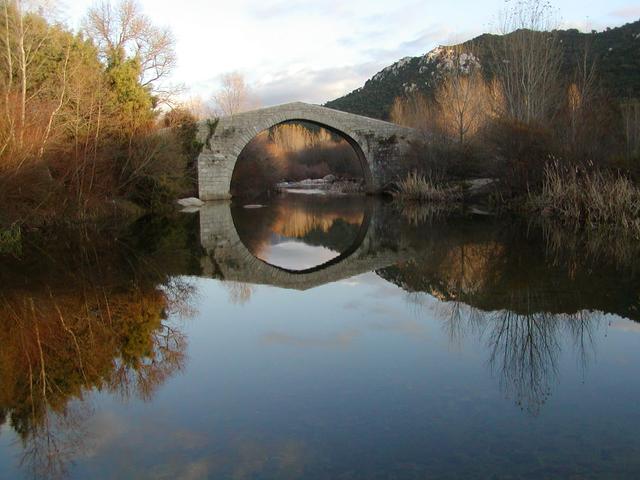
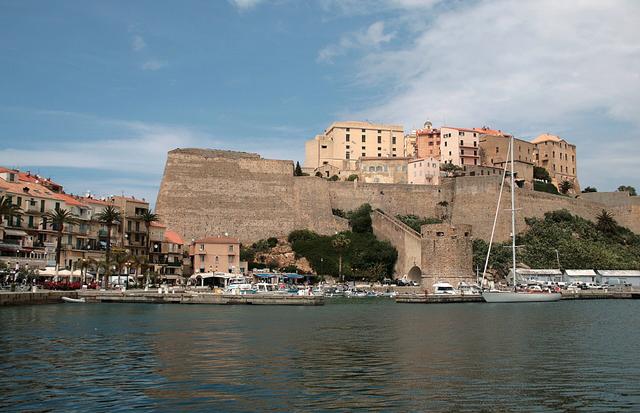
If you are touring the island: See also: Calvi Citadel, Spin'a Cavallu Genoese Bridge, Alta Rocca Museum, Corsica
Where to eat and stay
Eating. There is no café at the cathedral. The harbour of Saint-Florent, ten minutes' walk away, has most of the town's restaurants. The Patrimonio vineyards start a few kilometres away, and many estates open their cellars to visitors.
Staying. Saint-Florent is the best base for the Nebbio, Murato, Cap Corse and the Agriates. In July and August, book early: the town fills up fast. Bastia is an alternative if you arrive late on the ferry.
Places to stay near Saint-Florent
FAQ
Is the Nebbio Cathedral free?
No. Entry costs €1.50 during the summer season. It is free for children under 12.
What are the opening hours of Saint-Florent Cathedral?
In summer, Monday to Saturday 9:30 – 19:30 and Sunday 14:00 – 19:30. No hours are published out of season: call the tourist office on +33 4 95 37 06 04.
Where is the Nebbio Cathedral?
About 800 metres from the centre of Saint-Florent, on the road to Poggio-d'Oletta. It is about ten minutes' walk from the harbour.
How old is the cathedral?
It was built in the early 12th century. The first document to mention it dates from 1144. It has been a listed historic monument since 1840.
Why is it called a cathedral if it is no longer one?
It was the seat of the diocese of Nebbio until 1801. The diocese was then merged into that of Ajaccio, but the name stuck.
Who was Saint Flor?
A young Roman soldier martyred in the 3rd century, whose relic arrived from Rome in 1771. His reliquary is kept in the cathedral.
Practical information
Official ticket-office prices 2026
| Full price | €1.50 |
|---|---|
| Free | under 12 |
Address
Cathédrale Santa Maria Assunta, lieu-dit Piani, 20217 Saint-Florent, France
Directions · Phone+33 4 95 37 06 04
On site and nearby
- Nearest shops and pharmacy: Saint-Florent, less than 1 km away Straight-line distance, based on OpenStreetMap.
- Emergencies: 112 (all emergencies, free from any phone), 15 (SAMU, medical emergency)
Around the site, on Google Maps
With children
Family days out nearby: Agriates Desert (10 km), La Canonica and Mariana archaeological site (22 km), Parc Galea (33 km)
Swimming pools and play areas nearby, on Google Maps
Facts checked on 11 November 2026. Sources: corsica-saintflorent.com, isula.corsica, en.wikipedia.org, pop.culture.gouv.fr, corse.catholique.fr, visit-corsica.com
Map
In the same region
- Parc Galeafrom €10Free under 3