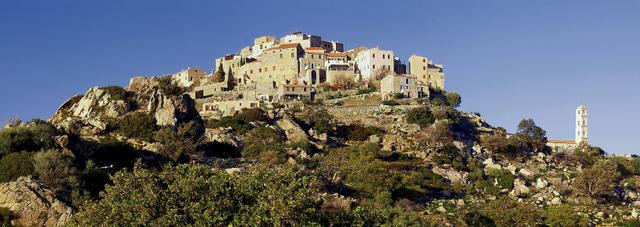
Calvi Citadel: exploring the Genoese upper town
Calvi Citadel at a glance
- Admission
- Free
- Where
- Calvi
Facts checked on 4 November 2026. Full opening hours, reduced prices and access
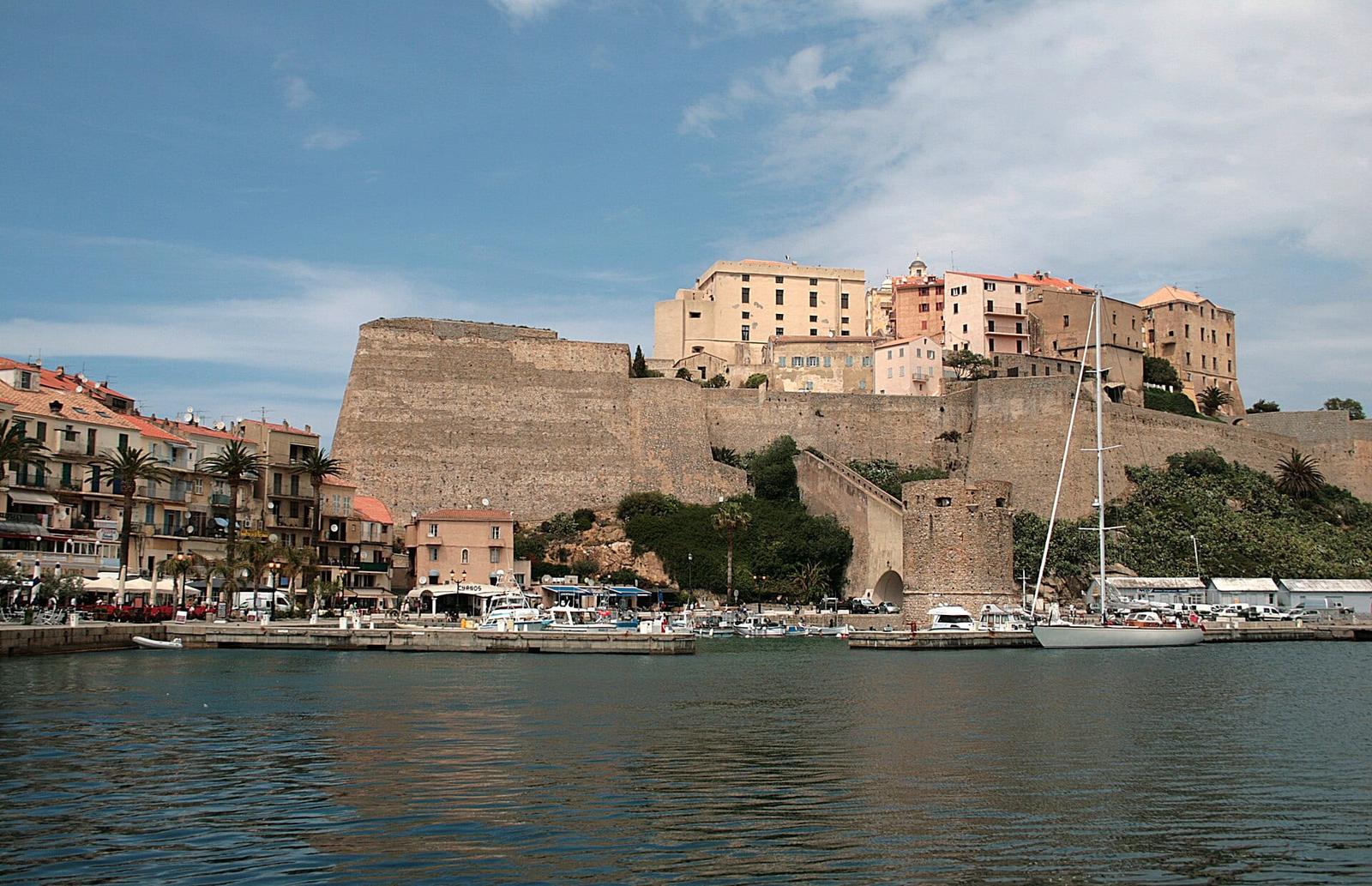

On its rock at the edge of the bay, Calvi's citadel has towered over the harbour and the beach since the late 13th century. Entry is free, through a single gate, and you follow cobbled lanes between the cathedral, the former palace of the Genoese governors and the ramparts. Here is what to see, how long to allow, how to get there and the stories behind its fame: the motto of loyalty to Genoa, Nelson's eye and the house of Christopher Columbus.
Calvi Citadel at a glance
- Where: on the rocky headland that closes off Calvi harbour, in the Balagne, in north-west Corsica.
- Price: entry to the citadel is free and open to all.
- Opening hours: the upper town is open at all times. The churches and the oratory have their own opening hours.
- Time needed: one to two hours to walk round the ramparts and the lanes without rushing.
- Getting there: on foot from the harbour and the marina. Calvi has a railway station, a ferry port and an airport.
- Best for: everyone, including children, but expect climbs and cobbles.
What is Calvi Citadel?
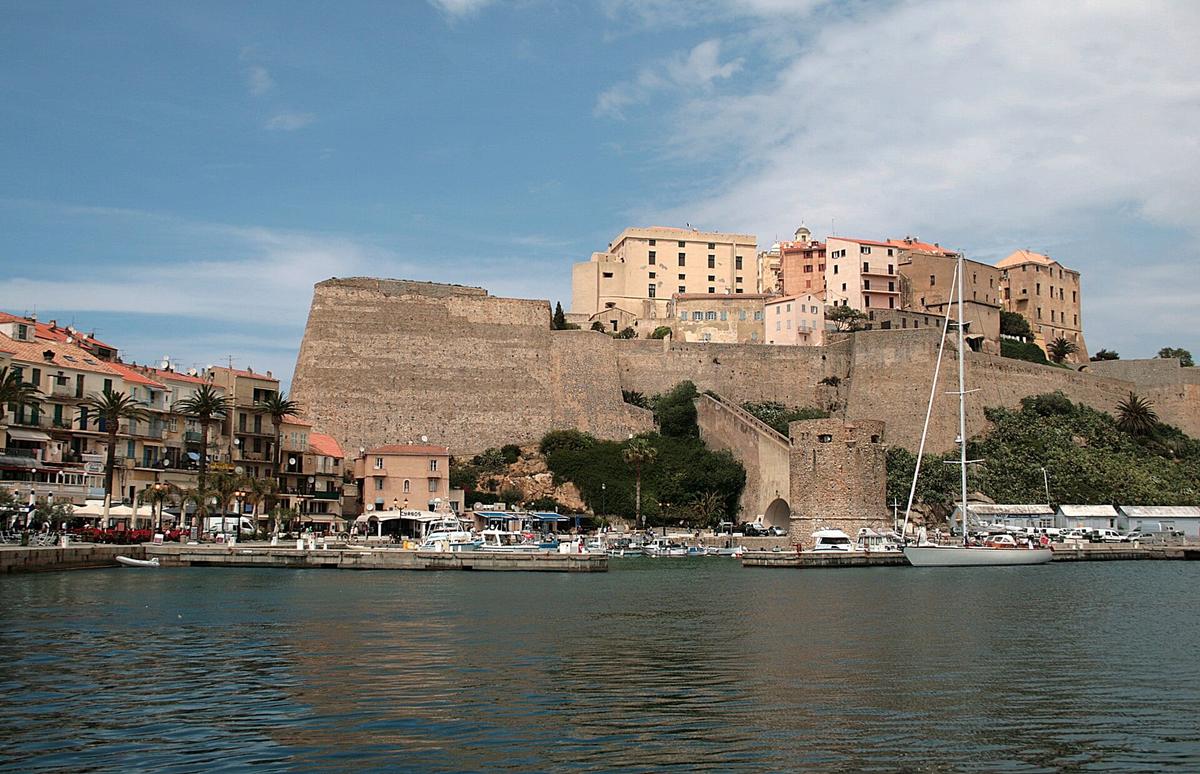
Calvi has two faces. Down below, the marina, the quays and the long beach. Up above, on a rocky headland jutting into the sea, the fortified upper town. This is what people call the citadel: a whole neighbourhood enclosed by ramparts, with its streets, houses, churches and a barracks.
The upper town was built in the late 13th century, amid wars between Corsican lords. In 1278, Calvi placed itself under the protection of Genoa. It stayed loyal to the Republic for about five centuries. In 1453, the Bank of Saint George, the Genoese bank that then ran Corsica, took control of the town and surrounded it with ramparts. The fortifications were strengthened in the late 15th century, then in 1545 against the threat of French and Turkish fleets, and completed in the 17th century.
You can see the result clearly from the harbour: 4 large bastions linked by walls, built straight onto the rock. The citadel ramparts and the Tour du Sel have been listed historic monuments since 1992.
How much does it cost to visit the citadel?
Nothing. The citadel is a part of town and you walk in freely, without a ticket. There is no ticket office and no compulsory paid route.
What you may pay for are the extras: a guided tour, an audio guide or a booklet from the tourist office. The Calvi tourist office offers a walking route around the citadel. Its 2026 prices are not clearly published online, so ask at the tourist office, near the harbour.
Do you need to book?
No, not for the citadel itself. You can walk up whenever you like.
Only book if you want a guided tour in summer, especially for a group or in a language other than French. Official guides from Calvi and the Balagne offer guided tours. On busy days in July and August, places go quickly.
Our tip: go up early in the morning or late in the afternoon. In high summer, the stone of the ramparts gives off heat and there is little shade on the wall walk. Late in the day, the light on the bay and the Balagne mountains is at its best, and the cruise ships have often left.
How long does the visit take?
Allow an hour for a first look: the gate, the cathedral, the parade ground and part of the ramparts. Allow two hours if you walk the whole of the ramparts, go into the churches and stop for the views.
The citadel is not big, but it is uphill. The streets are cobbled, sometimes steep, with steps. Wear good shoes, not flip-flops.
With a pushchair it is doable but tiring. For wheelchair users access is difficult: slopes, cobbles and steps. Ask the tourist office before you come.
What to see in Calvi Citadel
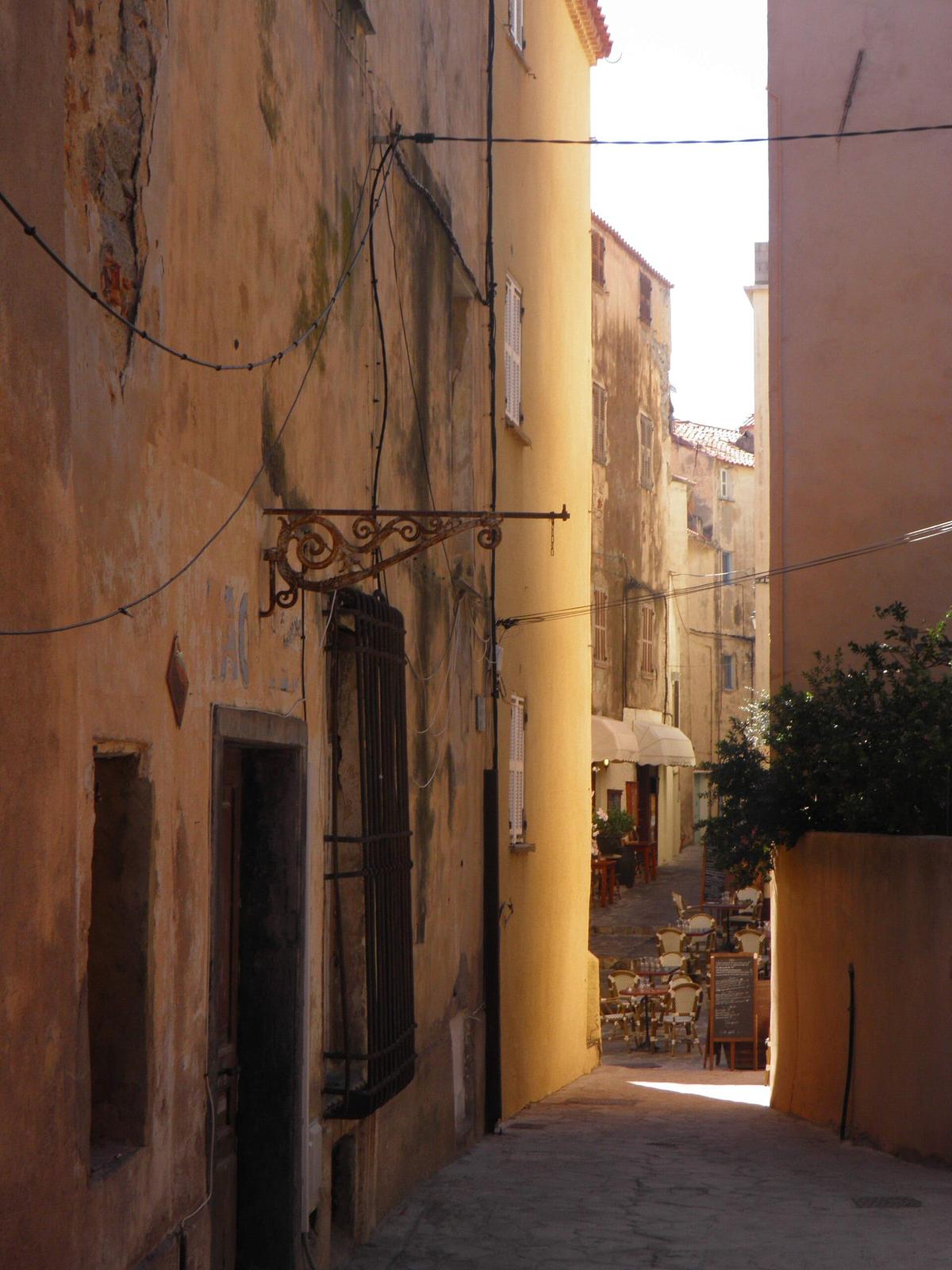

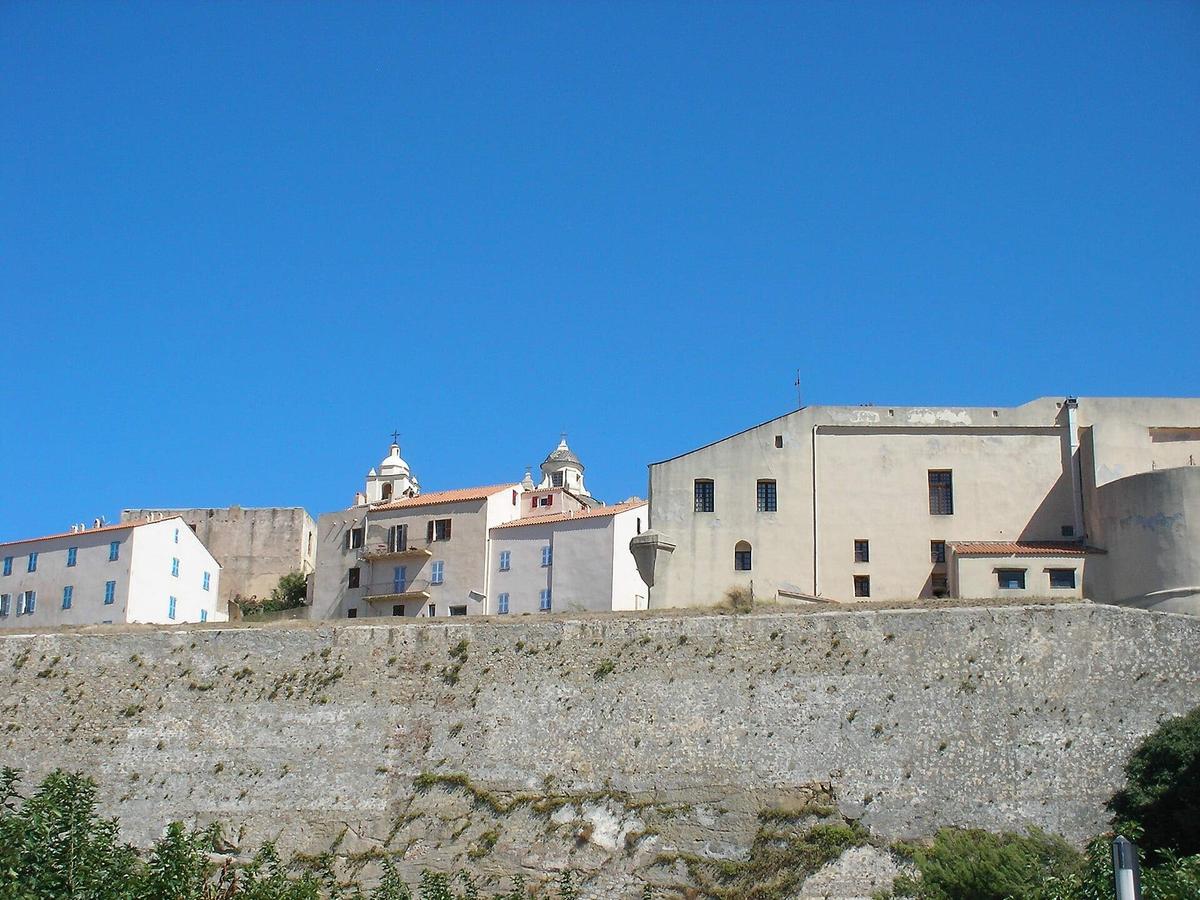

The gate and its motto. There is only one way into the citadel. It was once protected by a moat, a drawbridge and a portcullis. Above it, read the inscription "Civitas Calvi semper fidelis", "Calvi, ever-faithful city". According to tradition, Genoa gave the town this motto after the siege of 1555, to thank its people for not betraying it.
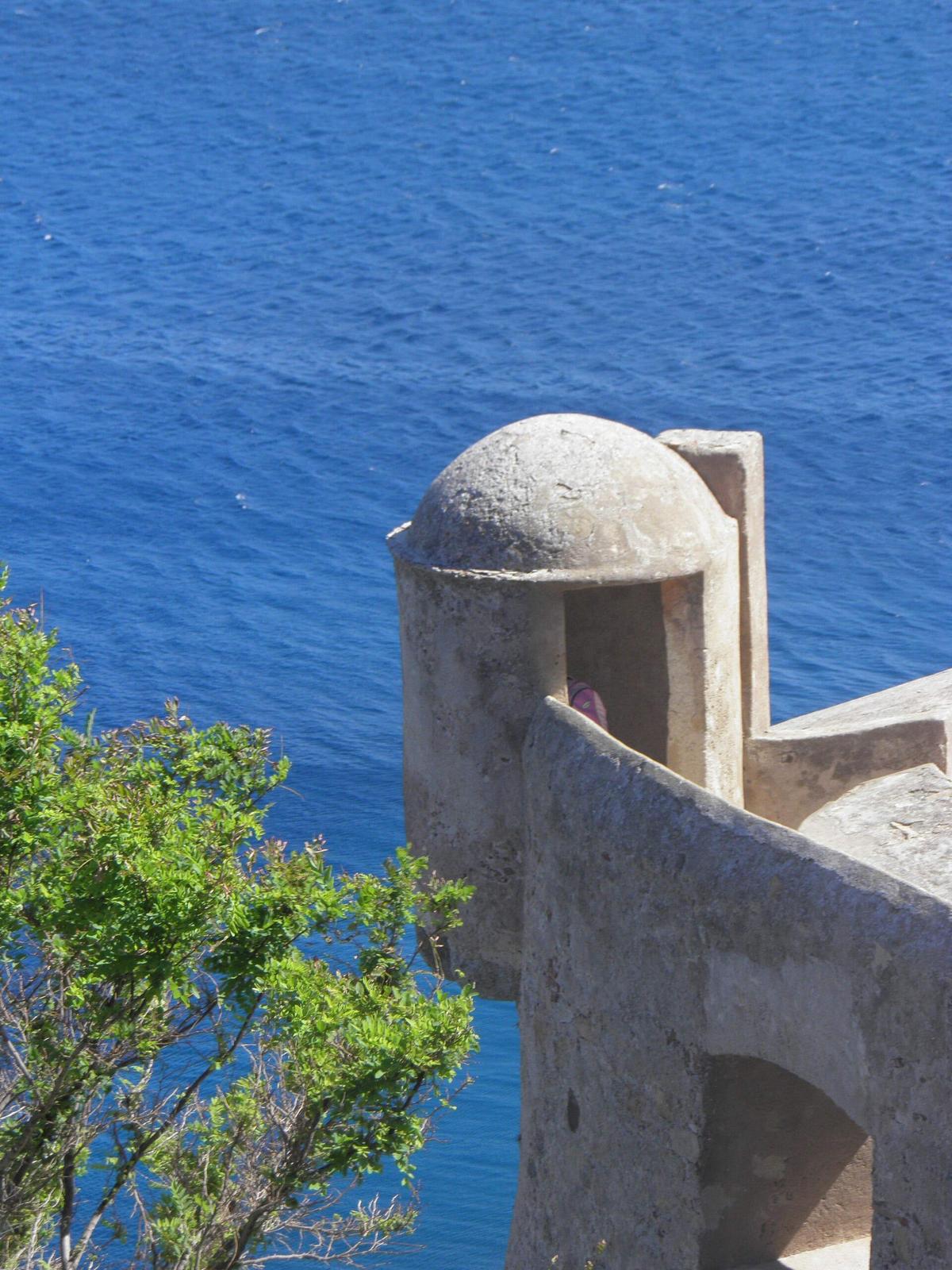
The ramparts and the wall walk. This is the main reason to go up. From the bastions, the view takes in the whole of Calvi bay, the beach, the pine wood and the Balagne mountains. The bastions have names: San Ghjorghju, Sant'Antonu d'Altu, Teghiale and Celle.
Saint John the Baptist Cathedral. It stands on the highest point of the citadel, surrounded by narrow lanes. Go in if it is open, outside services, and dress respectfully.
The Oratory of Saint Anthony. This small confraternity chapel is inside the citadel. It sometimes hosts concerts, especially in summer.
The former palace of the Genoese governors. This large building is the Castel Nuovo, built between 1490 and 1492. The Genoese governors lived here in the 16th and 17th centuries. Today it is known as the Sampiero barracks. It belongs to the army: it houses the officers' mess of the French Foreign Legion's 2nd Parachute Regiment and is not open to visitors. You can see it from the outside.
The powder magazine and the historic houses. As you wander the lanes, look out for the powder magazine, the so-called house of Christopher Columbus and the house of Laurent Giubega, where Napoleon is said to have stayed in 1793.
The Tour du Sel, down below. Before or after the climb, take a look at the Tour du Sel (Salt Tower), near the commercial port. Built in 1495, it was used as a lookout post, then as a warehouse for salt, on which a tax was levied. It is linked to the citadel by a double fortified wall.
Stories from the citadel

Nelson's eye. In 1794, Pasquale Paoli and his British allies besieged Calvi, then held by the French. Among the British officers was Horatio Nelson, the future victor of Trafalgar. It was during this siege that he lost the sight of one eye. The town held out for about 2 months before surrendering.
Two sieges in the 16th century. In 1553, during the war between France and Genoa, Calvi was besieged. The town held out, and the fleet of the Genoese admiral Andrea Doria came to its rescue. Two years later, a new siege led by Marshal de Thermes also failed. The motto above the gate comes from this resistance.
Was Christopher Columbus born in Calvi? The town says so: signs at its entrances announce that he was born here, a memorial stone stands at the foot of the ramparts and a house in the citadel bears his name. Historians do not agree. No document confirms a birth in Calvi, and most place his birth in Genoa. See the house as a piece of local legend, not as a proven historic site.
A revolt against Aragon. In 1420, King Alfonso V of Aragon took Calvi. The following year, the people rose up and massacred the Spanish garrison, then went back to the Genoese side.
The Foreign Legion. Since 1967, Calvi has been home to the French Foreign Legion's 2nd Parachute Regiment, more than a thousand men stationed at Camp Raffalli, outside the citadel. You will often see legionnaires in town, and the former governors' palace is their mess.
Visiting the citadel with children
For children, the citadel is a real fortress: a single gate, high walls, cannons to imagine, stepped lanes and a view of the boats. Tell them the story of Nelson's siege before you go up, then let them find the motto above the gate.
Take care on the ramparts: the parapets are not always at child height. Hold little ones by the hand near the edges.
Bring water, a cap and plan a break. After the visit, Calvi beach is a few minutes' walk away, which makes a good reward.
How to get to Calvi Citadel
On foot. The citadel is at the end of the harbour. From the marina and Quai Landry, it is a few minutes' walk up. This is the only way into the upper town, whose streets are too narrow for traffic.
By train. Calvi is linked by train to Bastia and Ajaccio, with a change on some journeys. It is a good option without a car: from Calvi station you can walk to the citadel, and boats leave from the harbour for the Scandola nature reserve.
By boat. Calvi has a ferry port with seasonal links to mainland France.
By plane. Calvi-Sainte-Catherine airport is close to the town.
By car. Park in a car park in the centre or at the harbour and walk the rest of the way. In summer, central Calvi is busy, especially in the late morning. To explore the Balagne, its hilltop villages and the coast towards Galéria, a car is still the easiest option: buses are rare and roads are slow.
Partner links: if you book through these links, we earn a commission at no extra cost to you. Partner links · Learn more
What to combine with Calvi Citadel
| Also worth seeing | Distance | Travel time |
|---|---|---|
| Scandola Nature Reserve | 50 km | 75 min by car |
| Corte Citadel and Museum of Corsica | 88 km | 90 min by car |
| Calanques de Piana | 80 km | 150 min by car |
Approximate road distances and travel times.
The Scandola nature reserve. Boat trips leave Calvi harbour for the red cliffs of Scandola and the hamlet of Girolata. The trip is longer than from Porto or Galéria, but you avoid the road. Half a day at sea and an hour in the citadel make a great day. See also: Scandola Nature Reserve
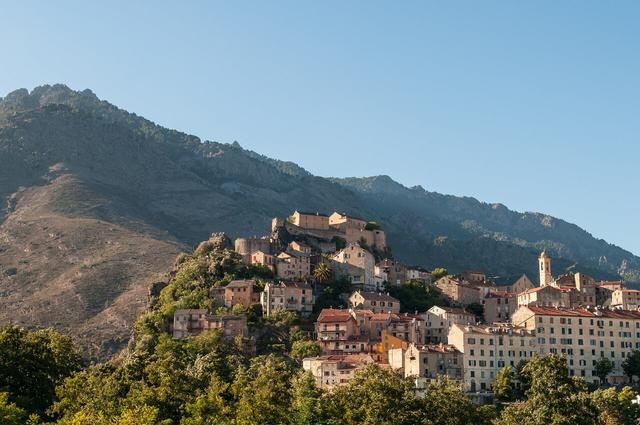
Corte and its citadel. Inland, Corte's citadel watches over the mountains rather than the sea. It is the perfect comparison with Calvi, and the Museum of Corsica explains the island's history. See also: Corte Citadel and Museum of Corsica
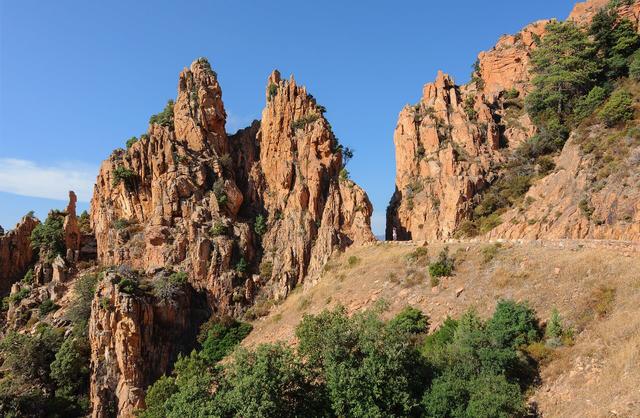
The Calanques de Piana. Further south, the red cliffs of Piana are reached by a narrow, winding coast road. Set off early and allow a full day. See also: Calanques de Piana
To compare with the island's other great fortified town by the sea, see also Bonifacio, at the other end of Corsica. See also: Bonifacio Citadel, Corsica
Where to eat and stay in Calvi
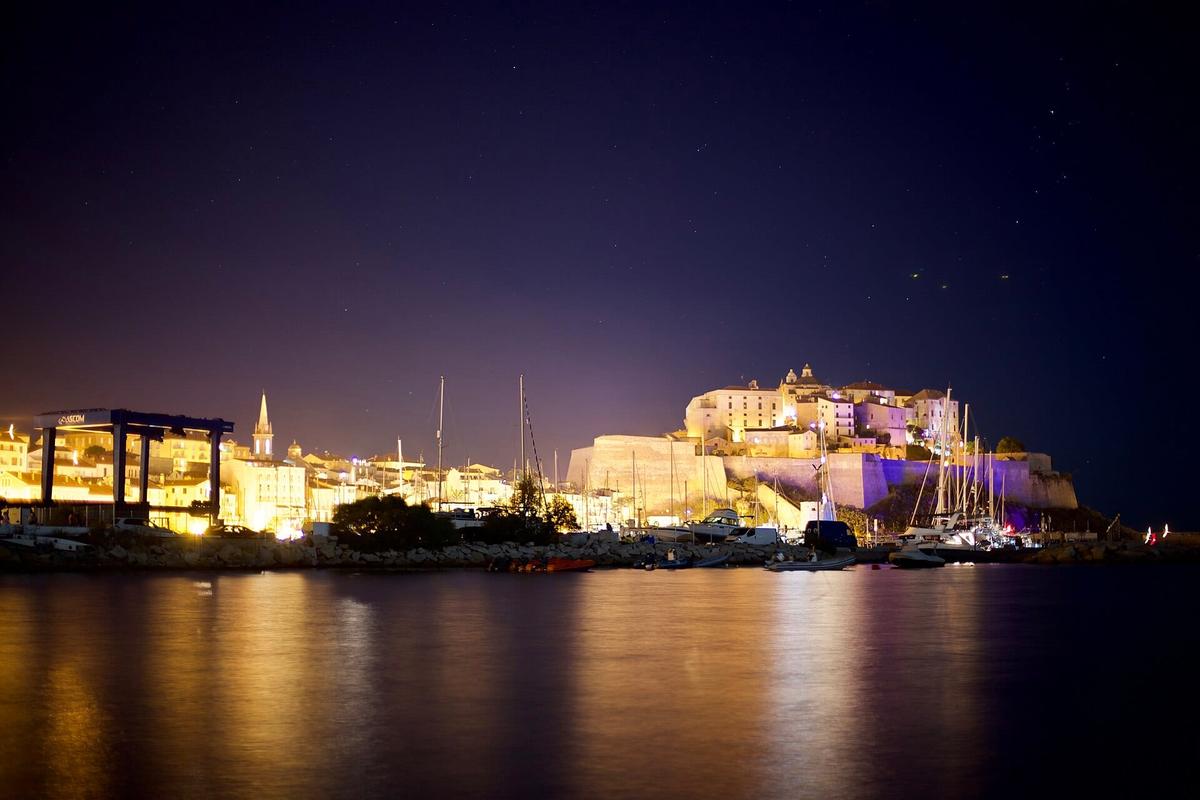

Eating. Most restaurants are down below, on the harbour and in the streets of the lower town. Inside the citadel, the choice is smaller. For a picnic, the pine wood behind the beach gives shade.
Staying. Calvi has the widest choice of accommodation in the Balagne. The centre and the harbour let you do everything on foot, including the train and the boats to Scandola. Places by the beach or in the villages above the town are quieter, but you need a car. Book early for July and August, and for the dates of the Calvi Jazz Festival.
FAQ
Do you have to pay to visit Calvi Citadel?
No. Entry to the citadel is free. Only guided tours and audio guides cost money.
How long does it take to visit the citadel?
An hour for a first look, two hours to walk the whole of the ramparts and go into the churches.
Was Christopher Columbus born in Calvi?
The town claims him and a house in the citadel bears his name, but no document proves it. Most historians say he was born in Genoa.
Where did Nelson lose his eye?
At the siege of Calvi, in 1794, when the British, allied with Pasquale Paoli, besieged the town.
Can you visit the former governors' palace?
No. Now the Sampiero barracks, it belongs to the army and houses the officers' mess of the Foreign Legion's 2nd Parachute Regiment. You can see it from the outside.
Can you get to Calvi without a car?
Yes. Calvi is served by train from Bastia and Ajaccio, and the citadel is a walk from the harbour.
Practical information
Official ticket-office prices 2026
Free admission
Address
Citadelle (haute ville), 20260 Calvi, Corse, France
Directions
On site and nearby
- Nearest shops and pharmacy: Calvi, less than 1 km away Straight-line distance, based on OpenStreetMap.
- Emergencies: 112 (all emergencies, free from any phone), 15 (SAMU, medical emergency)
Around the site, on Google Maps
With children
Family days out nearby: Scandola Nature Reserve (28 km), Calanques de Piana (36 km), Agriates Desert (41 km)
Swimming pools and play areas nearby, on Google Maps
Facts checked on 4 November 2026. Sources: fr.wikipedia.org, france.fr
Map
In the same region
- Parc Galeafrom €10Free under 3