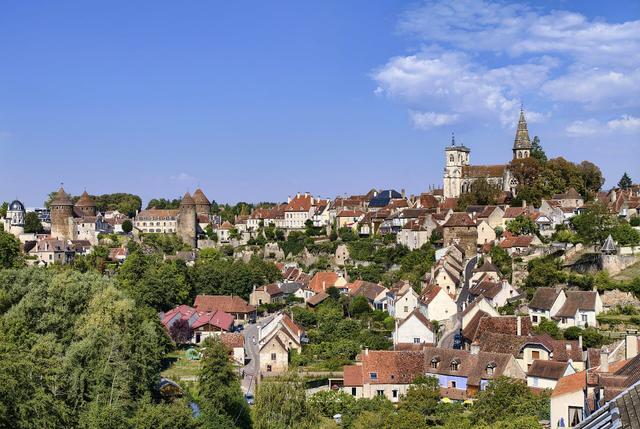
Tournus Abbey (Saint-Philibert): planning your visit
Saint-Philibert Abbey, Tournus at a glance
- High season
- 8:00 – 19:00
- Low season
- 9:00 – 18:00
- Admission
- Free
- Time needed
- about 1 h
- Visitors per year
- about 200,000 (2020)
- Where
- Tournus
Facts checked on 12 November 2026. Full opening hours, reduced prices and access
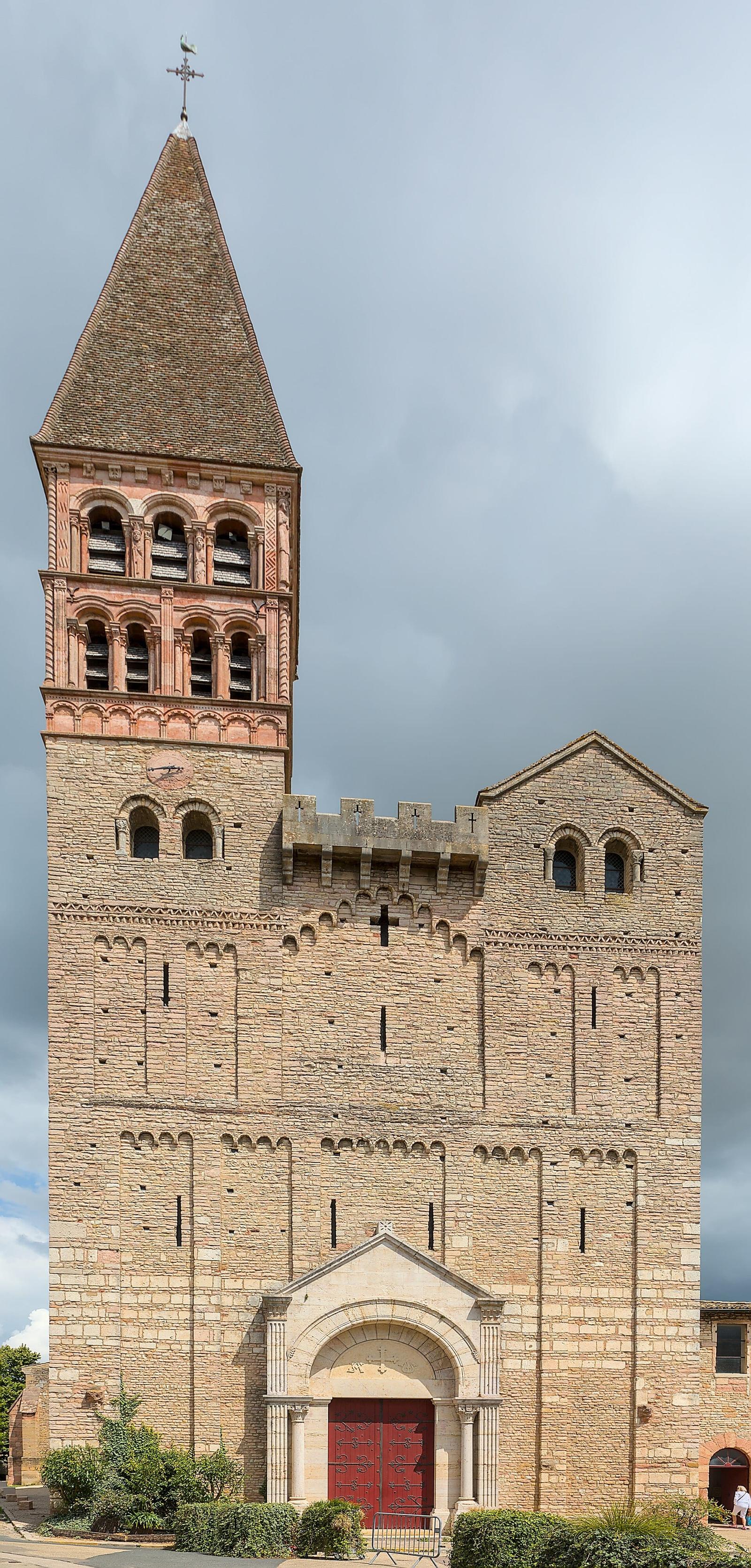

On the banks of the Saône, between Chalon and Mâcon, the abbey church of Saint-Philibert is one of the great Romanesque churches of France, built around the year 1000. Entry is free, every day. Here are the opening hours, the price of guided tours, the things not to miss (crypt, St Michael's chapel, calendar mosaic) and how to plan your stop in Tournus.
Tournus Abbey at a glance
- Where: in the centre of Tournus (Saône-et-Loire), place de l'Abbaye, a short walk from the Saône and the tourist office.
- Price: free entry. Guided tours from €10, free for children under 6.
- Open: every day, all year: 8:00 – 19:00 from April to October, 9:00 – 18:00 from November to March.
- Time needed: about 60 minutes for the church, the crypt and the cloister; longer if you add the monastic buildings.
- Best for: lovers of Romanesque art, history buffs, and travellers driving south on the A6 who want a break.
- Good to know: no visits during services, especially on Sunday mornings. Animals are not allowed.

Why visit Tournus Abbey
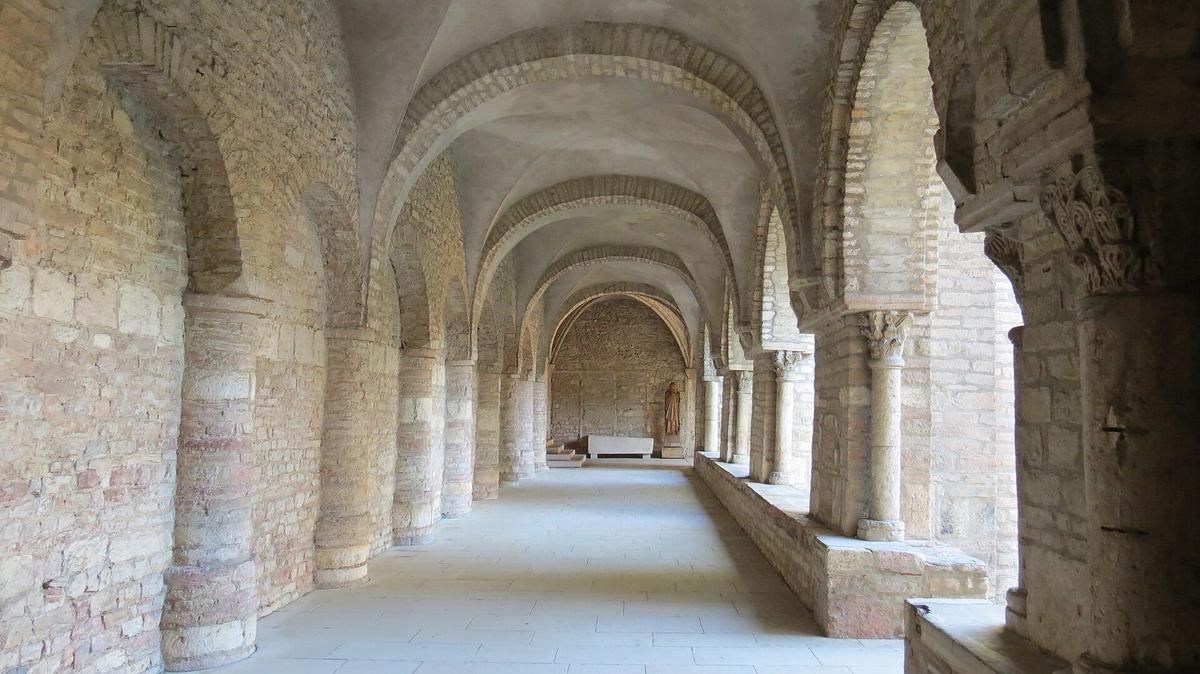
Saint-Philibert is a rare case: a large Romanesque abbey that is almost complete, with its church, cloister, chapter house, refectory and cellar, still in the heart of a small town. You can read a thousand years of building work in an hour.
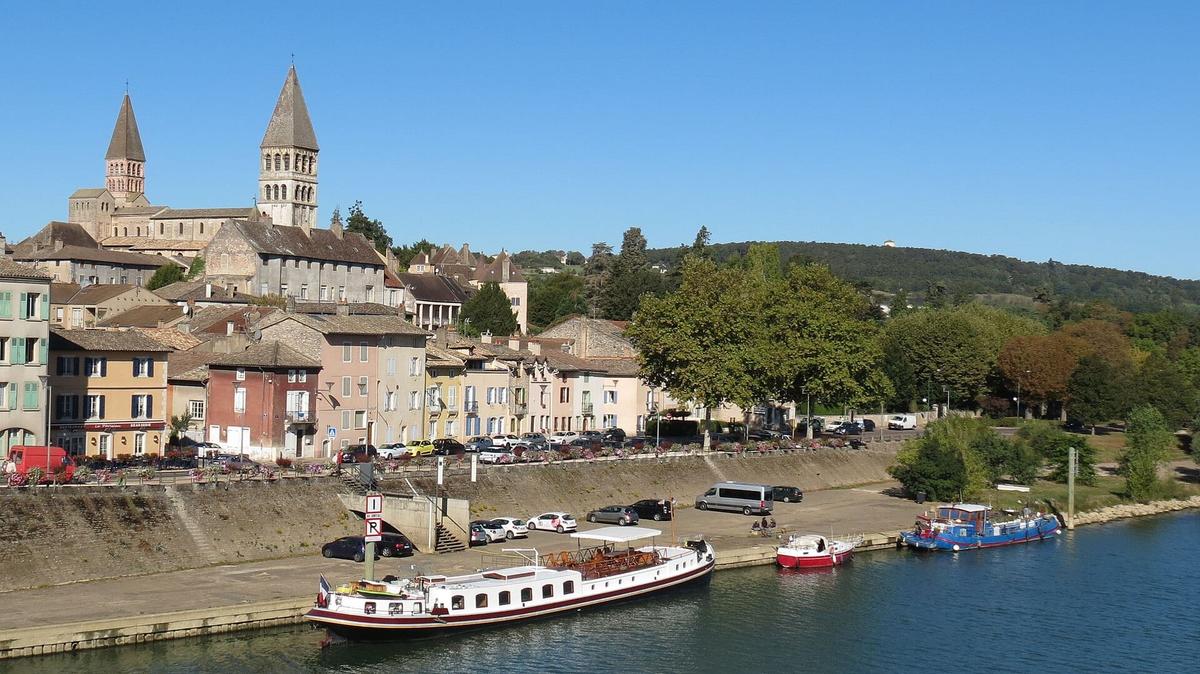

The story starts well before the abbey. According to tradition, Saint Valerian was martyred in Tournus in 178 and buried where the crypt stands today. An oratory was later built over his tomb.
The turning point came in the 9th century. Monks from the island of Noirmoutier, fleeing Viking raids, left the Vendée coast with the relics of Saint Philibert, the founder of their monastery. After decades on the move, they settled in Tournus around 875, on land given by Charles the Bald. The abbey took the name of their saint.
The Hungarian raids of 937 and then a great fire in 1006 forced the monks to rebuild. The choir was consecrated in 1019, and Tournus celebrated the millennium in 2019. Work on vaulting the nave began in 1066.
In 1627, the monks were replaced by a college of canons. During the French Revolution, the church became a "Temple of Reason", which saved it from being sold or pulled down. It was returned to worship in 1802 and appeared on the very first list of French historic monuments, in 1840.
According to Wikipedia, the abbey receives about 200,000 visitors a year. It is one of the most visited sites in Saône-et-Loire, but the church is large and rarely feels crowded.
Is Tournus Abbey free to visit?
Yes. The abbey church, the crypt and the cloister are open to all, with no ticket. Regional tourism guides confirm it: "free entry".
What you pay for:
- The guided tour: from €10 per adult, from €5 for students and jobseekers, free for children under 6.
- The guided tour combined with the Hôtel-Dieu of Tournus: from €18. It only runs in season.
- The audio guide: sold at the tourist office, right next to the abbey, and through its online ticket shop. It comes in French, English, German, Dutch and Italian, with a version for children. The price is not shown on the tourist office page, so ask at the desk.
A donation in the church box helps with upkeep, which is paid for by the town, owner of the building since 1790.
Do you need to book a guided tour?
To look around on your own, no. For a guided tour, yes: the Tournus tourist office runs tours on a booking schedule, online (Billetweb ticket shop) or by phone. The slot published for 2026 is 10:30 – 11:30, Monday to Friday, during French school holidays. The tour lasts about 60 minutes. The meeting point is in front of the abbey, place de l'Abbaye.
Groups can ask for a tailor-made tour. The tourist office warns that tours may change if a ceremony is held in the church.
A guided tour is worth it for two reasons: it explains the vaulting system of the nave, which is hard to make sense of alone, and it helps you read St Michael's chapel, the oldest and most mysterious part of the building.
No activity bookable online covers the abbey itself. Tours and trips around Mâcon, half an hour away, can round off your stay (Mâconnais vineyards, Beaujolais, Cluny).
Partner links: if you book through these links, we earn a commission at no extra cost to you. Partner links · Learn more
Opening hours 2026 and best time to go
Opening hours published by the Burgundy tourist board:
- April to October: 8:00 – 19:00, every day.
- November to March: 9:00 – 18:00, every day.
The abbey is open all year. The only real constraint is services: the church cannot be visited during celebrations, especially on Sunday mornings. If you are passing through on a Sunday, come in the afternoon.
Best time. On weekday mornings the church is quiet and light pours in through the high windows of the nave. The tourist office singles out this light as one of the pleasures of the visit. In summer the interior stays cool, which makes it a good stop in the hottest hours.
Concerts. The organ, dated 1629 and with 32 stops, is the oldest in the diocese of Autun. A festival, "Orgue en Ascension", is held every spring, and concerts are scheduled in summer. The programme is published by the tourist office.
How long does it take to visit Tournus Abbey?
Allow about 60 minutes to see the narthex, the nave, the crypt, St Michael's chapel and the cloister. Add half an hour if you go into the cellar and the chapter house when they are open, or if you take the audio guide. With a guided tour and a walk through the lanes around the abbey, half a day in Tournus goes by quickly.

What to see at Saint-Philibert Abbey

The narthex
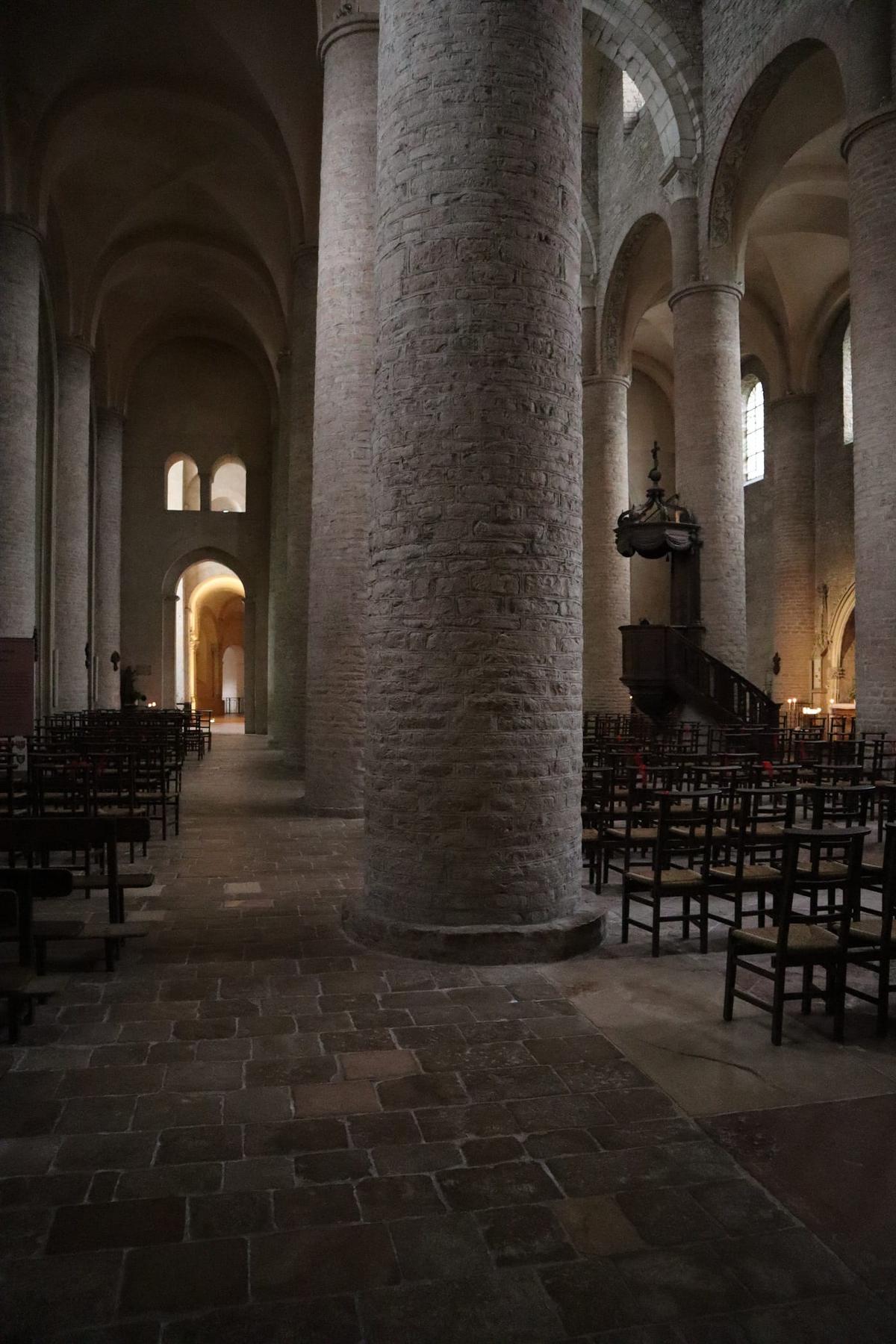
You enter through a kind of church before the church: massive, dark, with huge pillars. This is the narthex, built in the first half of the 11th century. Wikipedia describes it as a reduction, at about one fifth, of the Basilica of Maxentius in Rome. It still has a fragment of fresco. Its fortified look is a reminder that the abbey was looted and burned several times.
St Michael's chapel
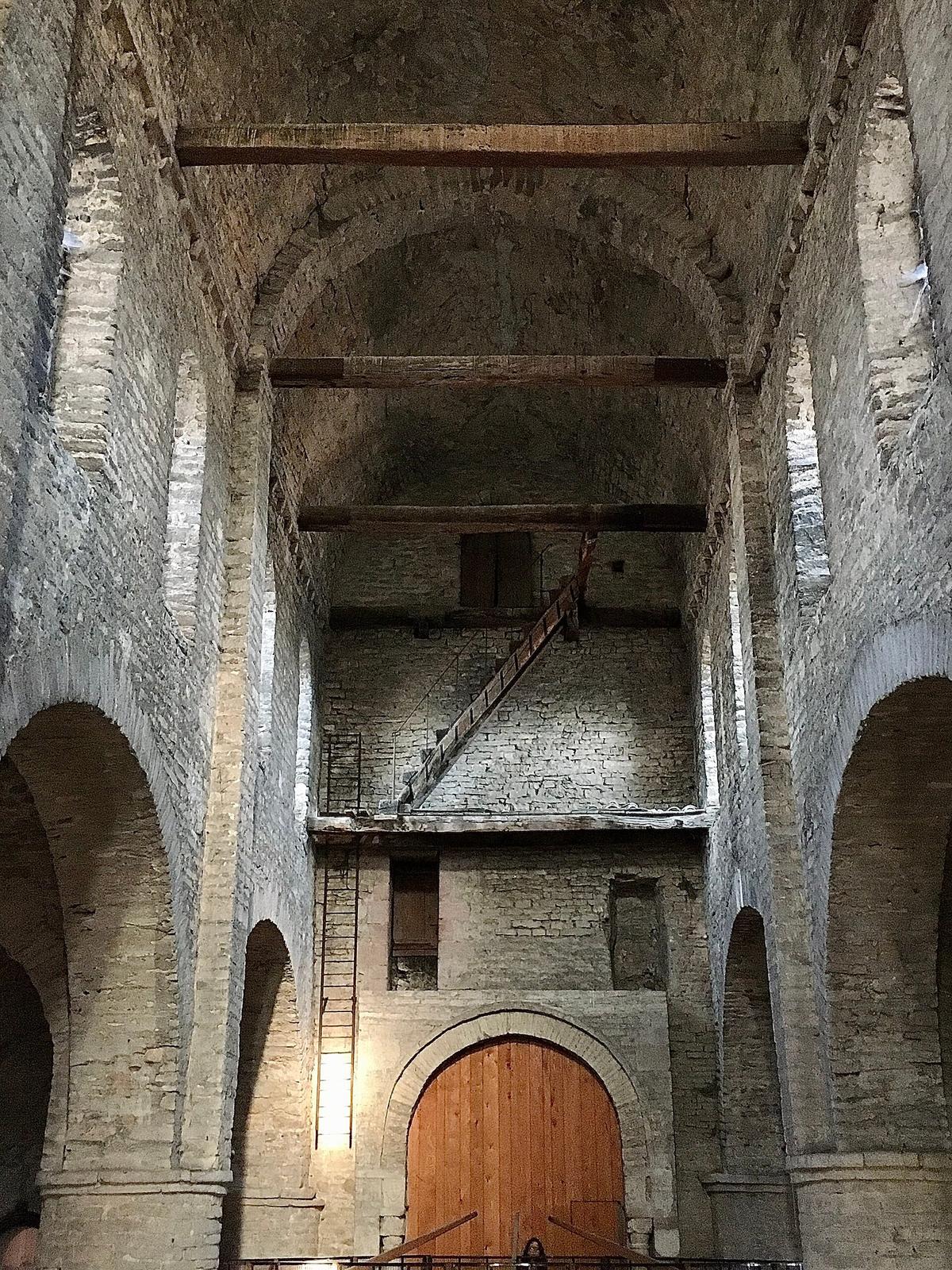
It fills the upper floor of the narthex. You reach it by a staircase, and the tourist office warns you to mind your head. Its central nave rises to more than 12 metres. Look for the "Gerlannus arch", which bears a name carved in the stone, and, in the north tower, the column statues of Saint Philibert and Saint Valerian.
The nave and its transverse vaults
This is what makes Tournus unique. Instead of a single barrel vault running the length of the nave, the nave is covered by a row of barrel vaults set crosswise, one per bay, over 5 bays. Their crowns rise to about 18 metres. This system, almost unique in Romanesque architecture, allowed large high windows: hence the brightness of the church. Look up and walk slowly down the central aisle to see the arches alternate.
The great round pillars that carry these arches are the other signature of the nave.
The calendar mosaic
In the ambulatory, a walkway lets you see a fragment of mosaic from the late 12th century. It showed the signs of the zodiac and the labours of the months. 4 medallions survive: Gemini, Cancer, a horseman holding a falcon and a haymaking scene.
A story. The mosaic was recorded as early as the 18th century, then forgotten. It was found again in the early 2000s during work in the choir: according to Wikipedia, while electrical cables were being laid.
The crypt
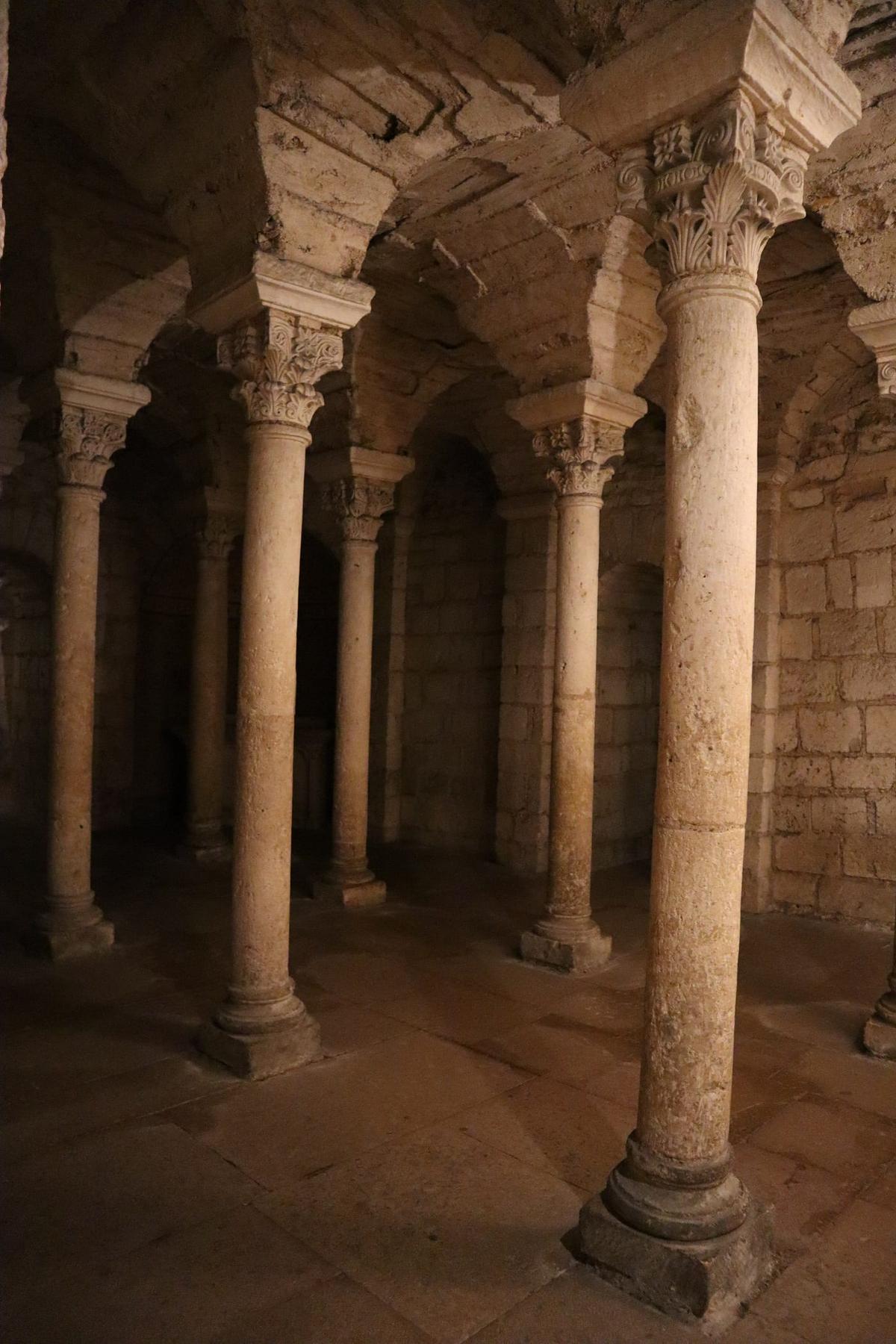
Beneath the choir, the early 11th-century crypt is one of the oldest of its kind in France. A central room with three aisles is surrounded by 7 chapels. It holds the sarcophagus attributed to Saint Valerian. Its plan is thought to copy that of the crypt in Noirmoutier, which the monks had left behind.
Notre-Dame la Brune
In a chapel off the choir, this cedarwood Virgin dates from the second half of the 12th century. It was hidden during the Revolution and put back in place in 1802.
The cloister and monastic buildings
Of the 11th-century cloister, the north walk remains, with a well in the middle of the garth. Around it you pass the chapter house, built in 1239, the refectory and the cellar. The cellar, known as the Grandes Caves, is more than 30 metres long and dates back to the 11th century.
Another story. The reliquary of Saint Philibert was hit twice: Huguenots destroyed part of the relics in 1562, and the saint's head was stolen in the late 20th century. It has never been found.
Visiting Tournus Abbey with kids
The tourist office offers a children's version of the audio guide. To keep them busy, ask them to spot the mosaic medallions from the walkway, count the vaults of the nave, or find the well in the cloister. The crypt, dark and low, is often a hit with younger children.

Guided tours are free for children under 6. Bring a baby carrier rather than a pushchair if you want to go up to St Michael's chapel or down into the crypt, as both are reached by stairs.
Wheelchair access
Regional tourism guides do not give details on wheelchair access. The nave is on one level, but the crypt and St Michael's chapel can only be reached by steps. Call the tourist office to plan your visit. Animals are not allowed in the abbey.
The Burgundy tourist board lists toilets and Wi-Fi on site.
How to get to Tournus Abbey
By car. Tournus is on the A6 motorway, exit 27, or on the D906 (the old N6). The tourist office mentions two car parks near the abbey: place de l'Abbaye and place des Arts. Allow about an hour from Dijon and 1 hour 10 minutes from Lyon, according to the tourist office.
By train. Tournus station is on the Dijon-Lyon line, with TER regional trains that also stop at Chalon-sur-Saône and Mâcon. The abbey is a few minutes' walk from the station, through the old town.
By bus. The Buscéphale regional network links Tournus with Chalon and Mâcon (line 14) and with Louhans and Cuisery (line 11).
By bike. La Voie Bleue, the cycle route along the Saône, runs through Tournus. From Mâcon or Chalon, it is an easy, flat ride.
Renting a car. To combine Tournus, Brancion, Cormatin and Cluny in one day, a car is the simplest option: public transport between these sites is poor.
What to see near Tournus on the same day
| Also worth seeing | Distance | Travel time |
|---|---|---|
| Brancion Castle | 14 km | 20 min by car |
| Château de Cormatin | 25 km | 30 min by car |
| Cluny Abbey | 35 km | 40 min by car |
Approximate road distances and travel times.
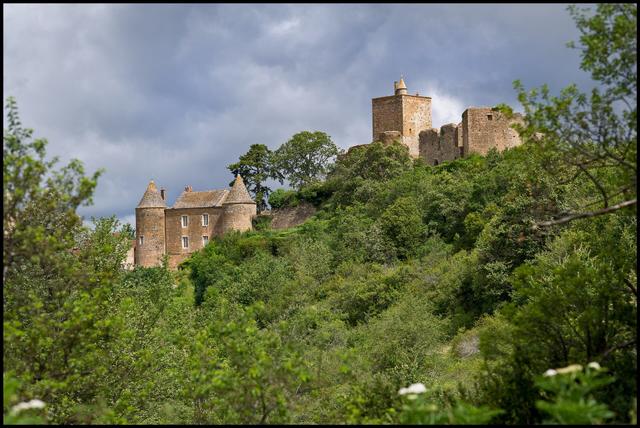
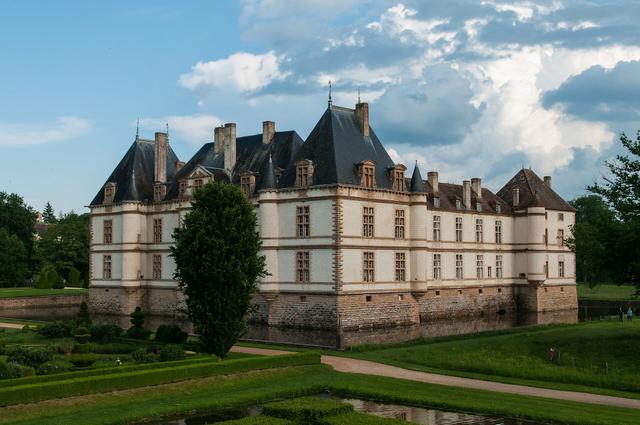
West of Tournus, the road to Cluny crosses the Tournugeois hills. First stop: Brancion, a hilltop medieval village with its castle and Romanesque church. See also: Brancion Castle Further on, the Château de Cormatin and its gardens. See also: Château de Cormatin Then Cluny, the abbey that dominated medieval Christendom: Tournus and Cluny go well together, one almost intact, the other largely destroyed. See also: Cluny Abbey
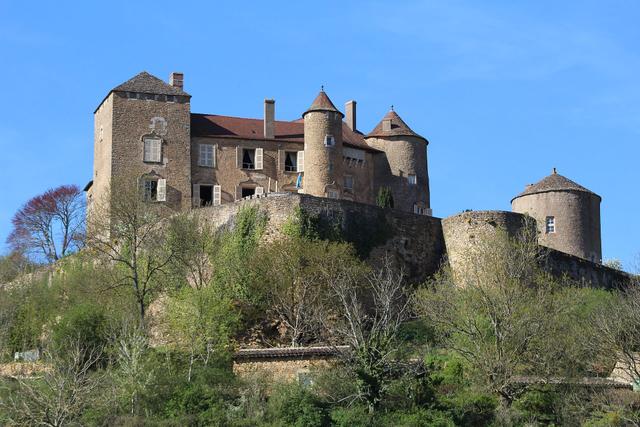
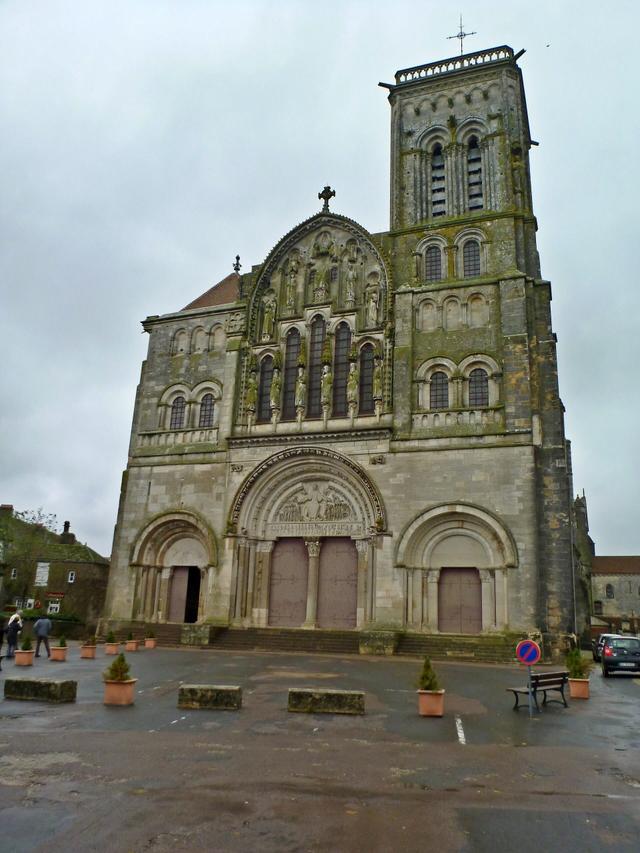
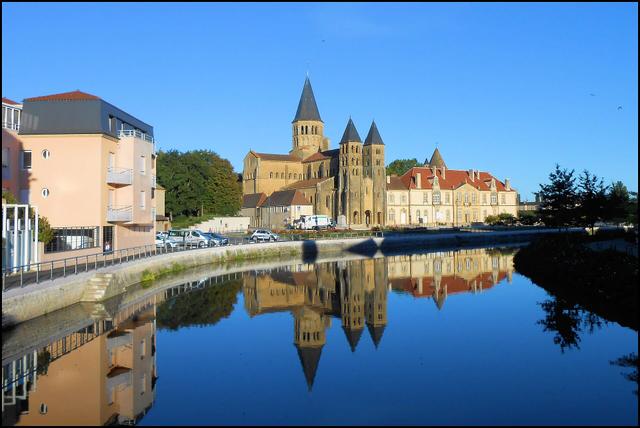
To the south, the Château de Berzé-le-Châtel guards the road from Cluny to Mâcon. See also: Château de Berzé-le-Châtel Fans of Romanesque art can also head for Paray-le-Monial, Fontenay or Vézelay. See also: Basilica of the Sacred Heart, Paray-le-Monial, Fontenay Abbey, Vézelay Abbey (Basilica of Sainte-Marie-Madeleine)
For a different side of religious heritage, at the other end of the country, the Greek and Latin churches of Cargèse, in Corsica, tell the story of two rites facing each other. See also: Cargèse Greek and Latin churches, Burgundy
Where to eat and stay in Tournus
Several restaurants line the streets around the abbey and the Saône quays. For a simple meal, the cafés on place de l'Abbaye are close by.
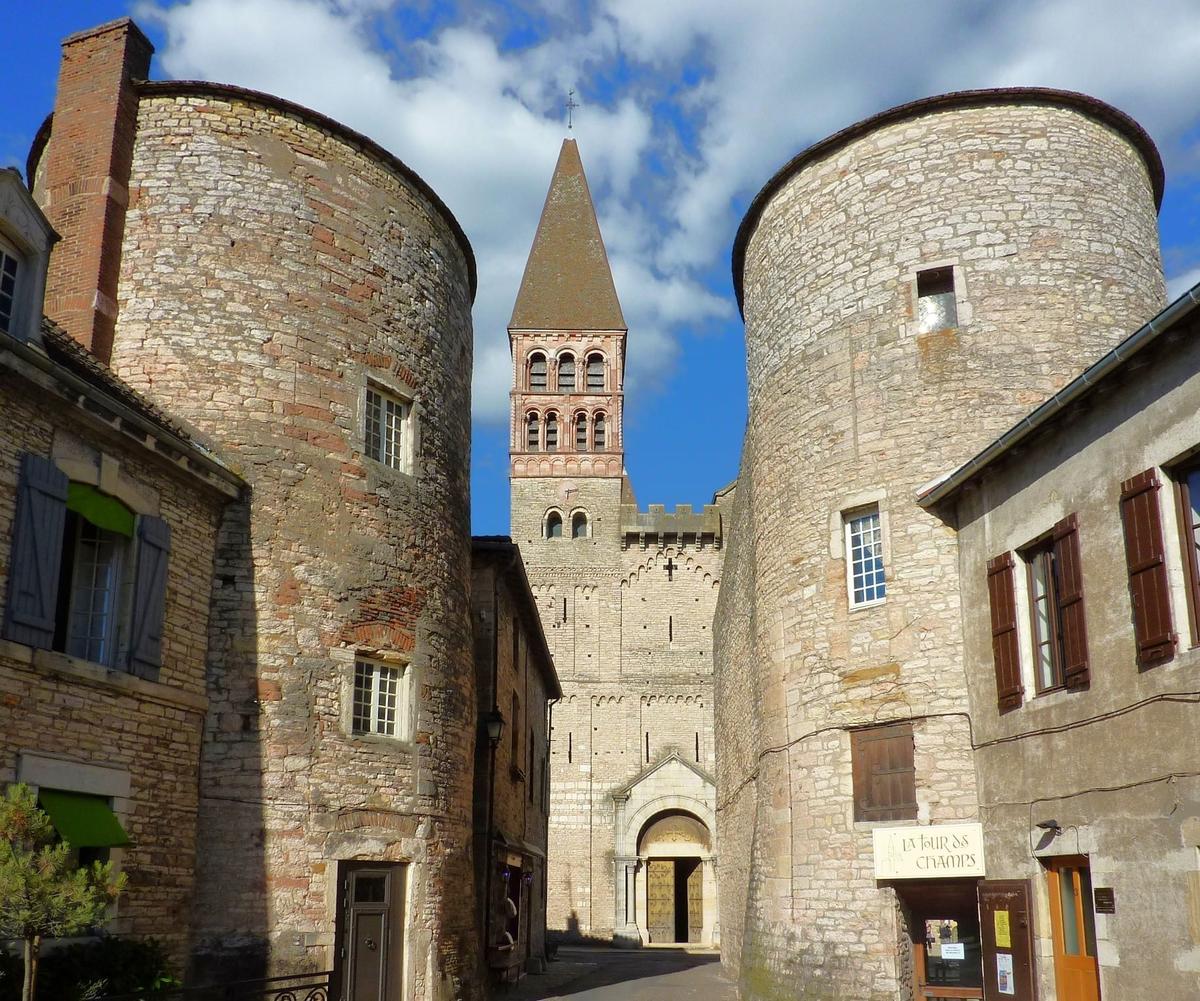

Tournus makes a good base for southern Burgundy: Cluny, the Mâconnais and the Bresse are all less than an hour away. Chalon-sur-Saône and Mâcon have a wider choice of hotels.
FAQ
Is Tournus Abbey free?
Yes, entry to the abbey church, the crypt and the cloister is free. Only the guided tour (from €10) and the audio guide are paid.
What are the opening hours of Saint-Philibert Abbey?
It is open every day, 8:00 – 19:00 from April to October and 9:00 – 18:00 from November to March. No visits during services, especially on Sunday mornings.
How long does it take to visit Tournus Abbey?
About 60 minutes for the highlights. The guided tour lasts about 60 minutes.
Can you visit the abbey on a Sunday?
Yes, but preferably in the afternoon: the church cannot be visited during Sunday morning mass.
How do I get to Tournus without a car?
By TER train on the Dijon-Lyon line: Tournus station is a few minutes' walk from the abbey. You can also cycle in from Mâcon or Chalon on La Voie Bleue.
Are dogs allowed?
No, animals are not allowed in the abbey.
Practical information
Opening hours 2026
| 1 April 2026 to 31 October 2026 | 8:00 – 19:00 |
|---|---|
| 1 November 2026 to 31 March 2027 | 9:00 – 18:00 |
Official ticket-office prices 2026
Free admission
Address
Abbaye Saint-Philibert, place de l'Abbaye, 71700 Tournus, France
Directions · Phone+33 3 85 27 00 20
On site and nearby
- On site: Toilets and wifi
- Nearest shops and pharmacy: Tournus, less than 1 km away Straight-line distance, based on OpenStreetMap.
- Emergencies: 112 (all emergencies, free from any phone), 15 (SAMU, medical emergency)
Around the site, on Google Maps
With children
Family days out nearby: Brancion Castle (9 km), Château de Cormatin (17 km), Château de Berzé-le-Châtel (26 km)
Swimming pools and play areas nearby, on Google Maps
Facts checked on 12 November 2026. Sources: tournus-tourisme.com, burgundy-tourism.com, tournus-tourisme.com, fr.wikipedia.org, pop.culture.gouv.fr, beaune-tourism.com
Map
In the same region
- Cassissium