Semur-en-Auxois: visiting the medieval town
Semur-en-Auxois at a glance
- Admission
- Free
- Time needed
- about 2 h
- Where
- Semur-en-Auxois
Facts checked on 12 November 2026. Full opening hours, reduced prices and access
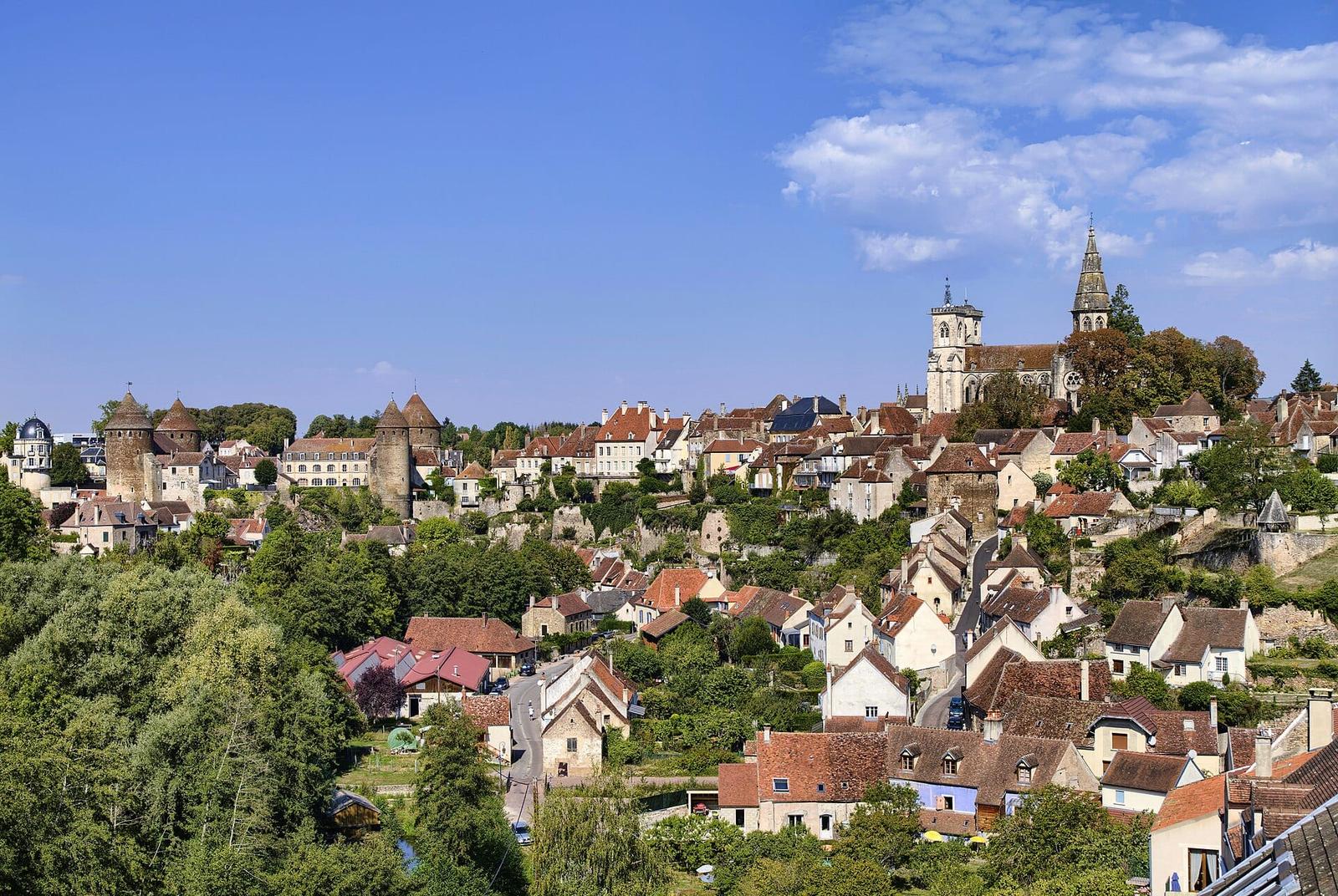

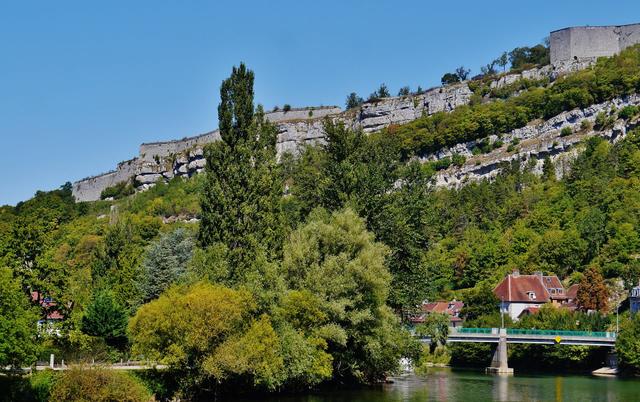
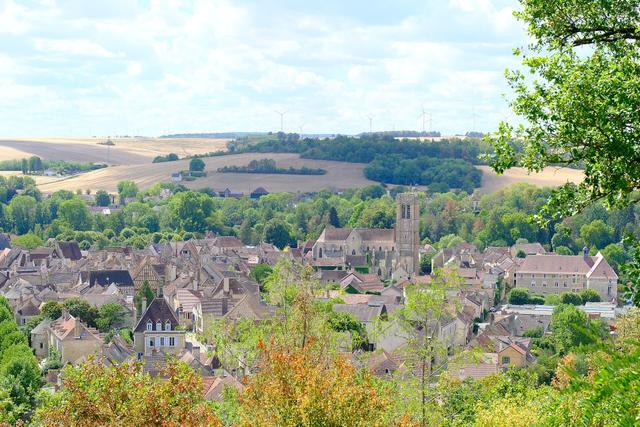
Set on a spur of pink granite in a loop of the Armançon river, Semur-en-Auxois has kept its massive round towers, a Gothic collegiate church with a 58-metre bell tower and streets you can explore in a morning. The town is free to visit. Here is what to see, where to take the photo from Pont Joly, the state of the museum in 2026 and our tips for planning your visit.
Semur-en-Auxois at a glance
- Where: in the Auxois, in western Côte-d'Or, about an hour from Dijon and some twenty kilometres from Montbard.
- Price: the town, the ramparts and the Collegiate Church of Notre-Dame are free and open to all.
- Town museum: closed for renovation since 21 September 2026.
- Time needed: about 120 minutes on foot for the highlights, a full day if you add Fontenay, Flavigny or Bussy-Rabutin.
- What to see: Pont Joly and the view of the keep, the Tour de l'Orle d'Or, the collegiate church and its Porte des Bleds, the Porte Sauvigny and Rue Buffon.
- Tourist office: 2 Place Gaveau, open Monday to Saturday, 9:30 – 12:15 and 14:00 – 18:00 (closed Thursday afternoon).
Why visit Semur-en-Auxois
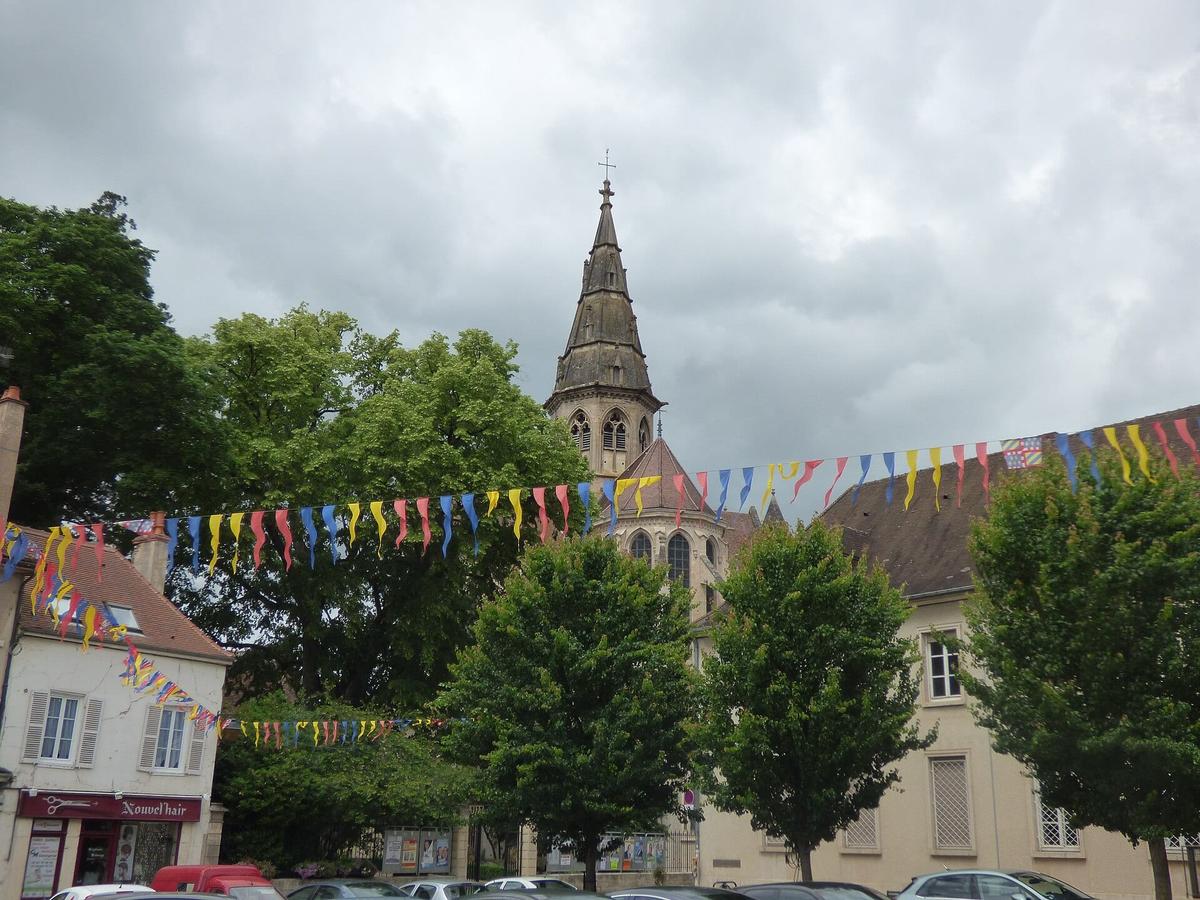
Semur is the most spectacular town in the Auxois when you arrive by the Montbard road. It is built on a promontory of pink granite almost entirely circled by the Armançon. Above the river rise the four massive round towers of the old keep, and behind them the bell tower of the collegiate church. The Terres d'Auxois tourist office describes the town as a "site patrimonial remarquable" (a protected heritage area), and the region has given it the "Cité de caractère de Bourgogne-Franche-Comté" label.
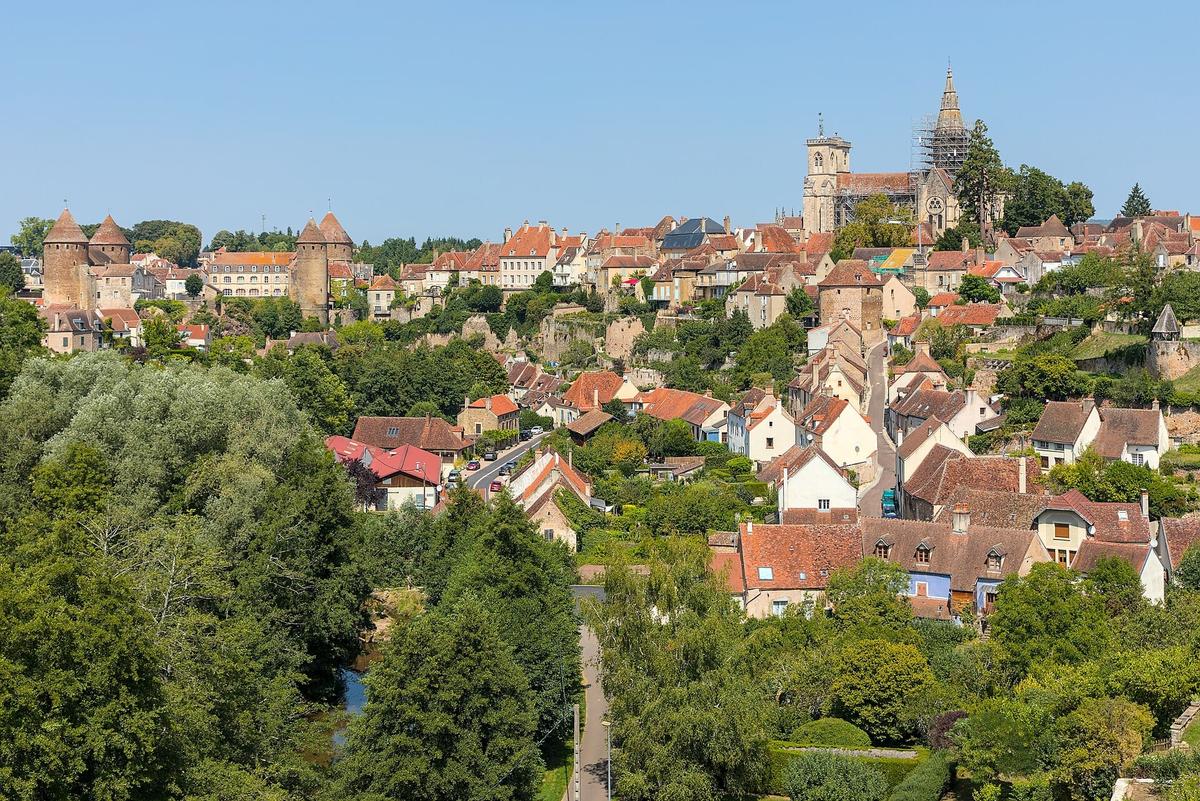

It is a small town of 4027 people (2022 census), with no big paying monument. People come here to walk: the ramparts, the cobbled lanes, the stairs leading down to the river, the bridges. The visit is free, which makes it an easy stop on a Burgundy road trip, between the A6 motorway and Fontenay Abbey.
A short history of Semur
"Old walls". The name Semur is said to come from the Latin sene muro, old walls. According to Wikipedia, the first written record of the town dates from 606, in the founding charter of the nearby abbey of Flavigny-sur-Ozerain. In the 11th century, Semur became the capital of the county of Auxois, in the Duchy of Burgundy. In 1276, Duke Robert II granted it a town charter.

A ducal stronghold. In the 14th century, Philip the Bold strengthened the defences: a town wall, towers and the keep. Semur was then one of the strongest fortresses in the duchy. In 1478, after the death of Charles the Bold, Louis XI's troops occupied the town.
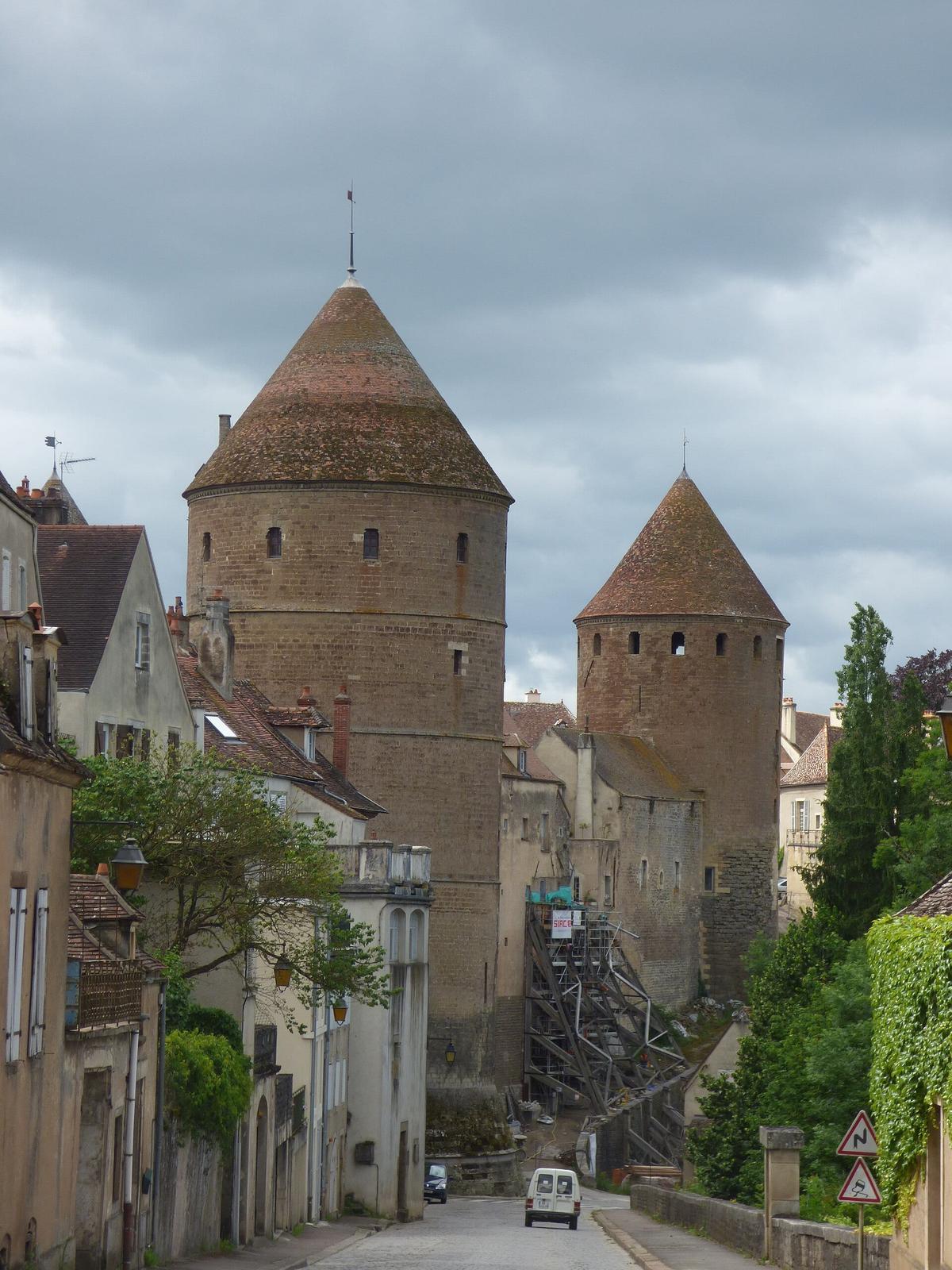
The dismantling of 1602. After the Wars of Religion, Henri IV ordered the fortifications to be dismantled. The curtain walls linking the towers were pulled down. The Tour de l'Orle d'Or still bears a visible scar: according to the tourist office, it has been cracked from top to bottom since 1602. It never fell.
Viollet-le-Duc in Semur. In the 19th century, the architect restored the ramparts between 1843 and 1850, then the Collegiate Church of Notre-Dame. Part of what you see today owes something to his work.
Things to do in Semur-en-Auxois

Pont Joly and the view of the keep
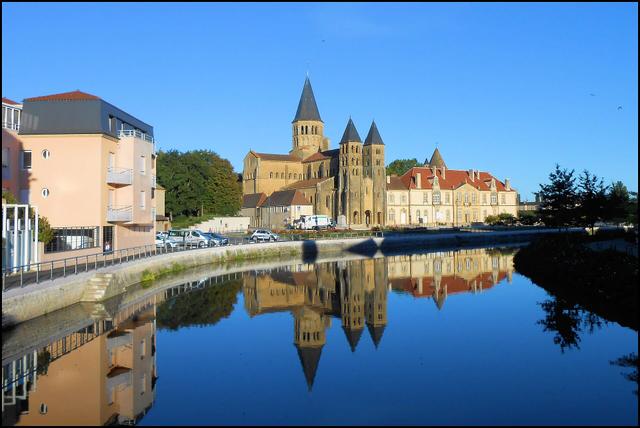
This is Semur's postcard view. From Pont Joly, which crosses the Armançon below the town, you see the towers of the keep and the houses clinging to the rock, with the collegiate bell tower behind. Walk down a little to the riverbank to get the water in the foreground. In the morning, the light falls straight onto the pink granite.
The tourist office also names Pont Pinard as the most photogenic viewpoint in town. Its name is said to come from a wealthy resident, a certain "Monsieur Pignar", distorted over time. On Quai Baudon, the restored wash house is lit up in the evening.
The Tour de l'Orle d'Or
The former main entrance to the town, it is the tallest of the 4 towers of the keep, at 44 metres. Look at the large crack running all the way up. It houses the collections of the Société des sciences de Semur and has a 360-degree view over the town and the Auxois. But it only opens a few weeks a year, with no dates published in advance on the tourist office website. If you want to climb it, ask before you come, especially around the European Heritage Days.
The other towers have names that tell their past. The Tour de la Géhenne, once the Butchery Tower, was used as a salt store. The Tour du Pin was also known as the Prison Tower. The Tour Margot adjoins the town theatre.
The Collegiate Church of Notre-Dame
This is the town's main monument, and entry is free. The tourist office says it is open all year round. The present church was begun in 1225, and its octagonal bell tower, above the transept crossing, rises to 58 metres.
A church born of a murder. According to the tradition reported by Wikipedia, Duke Robert I of Burgundy had it built to atone for the murder of his father-in-law, Dalmace de Semur.
A tall, narrow nave. This is the first thing you notice on entering: the nave is very narrow for its height, which makes it soar. In the choir, look up at the triforium: heads of figures from 13th-century society are carved there.
The Porte des Bleds. On the north side, this 13th-century doorway takes its name from the wheat fields (blés) it once faced. Its tympanum tells the story of Doubting Thomas and the spreading of the Gospel to India. The door's ironwork was restored in 1846.
The guild windows. Two chapels have 16th-century stained glass given by the town's trades. In the drapers' chapel, the panels show cloth-making, from shearing the sheep to combing the wool. In the butchers' chapel, you see an ox being slaughtered and the meat being prepared. Such working scenes are rare in a church.
The Entombment. In the Holy Sepulchre chapel, a carved and painted group from the late 15th century shows the burial of Christ. It is attributed to Antoine Le Moiturier.
The American soldiers' window. This is Semur's most surprising story. In the same chapel, a stained-glass window shows First World War soldiers. It was unveiled in 1927 and given by American veterans of the 78th Infantry Division, whose headquarters were in Semur from August 1918 to May 1919, according to the tourist office.
The organ and the choir stalls. The organ, a listed historic monument, has 35 stops on three keyboards and a pedalboard. The choir stalls date from 1728.
The Porte Sauvigny and Rue Buffon
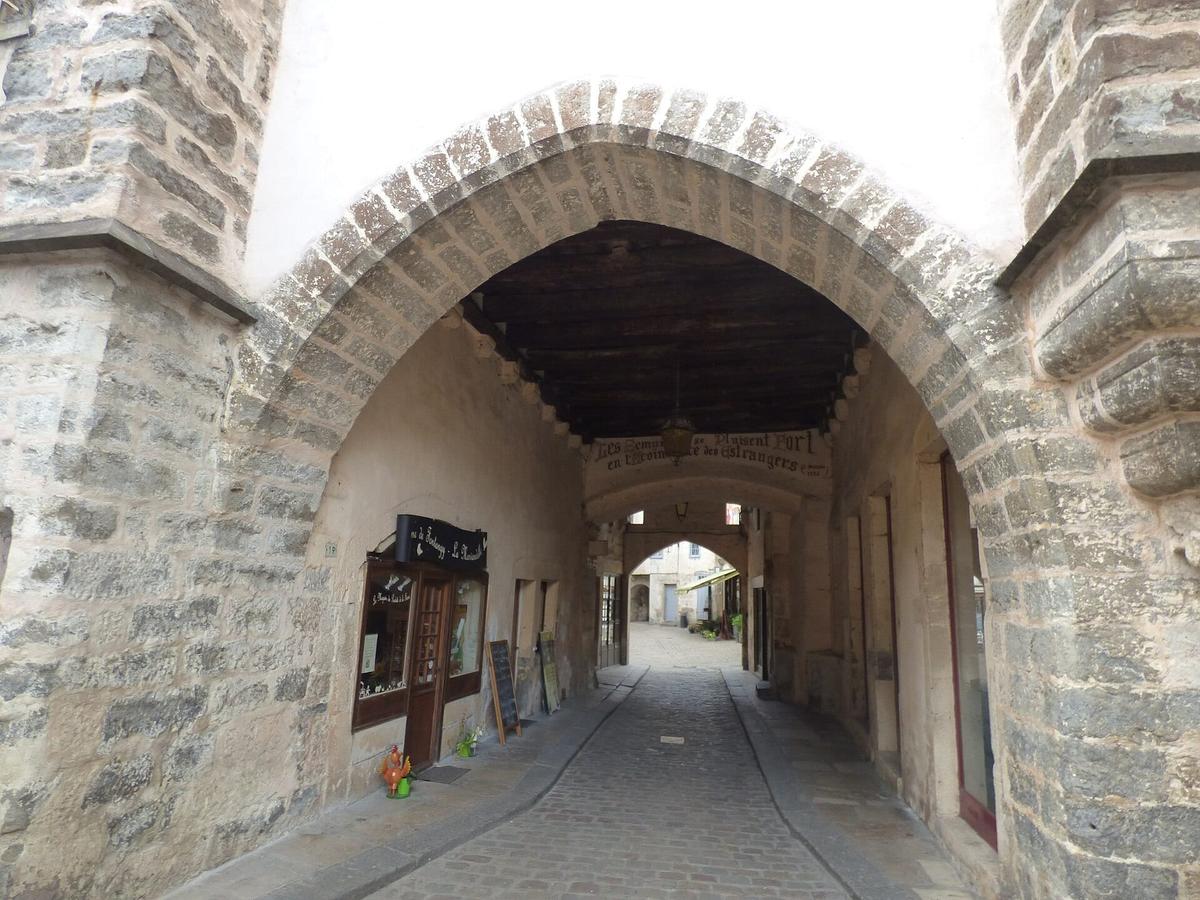
Coming from Place Gaveau, the Porte Sauvigny marks the entrance to the old town. The street beyond leads to the collegiate church between old houses, shops and half-timbered fronts. Then take the streets down towards the Armançon: the tourist office offers a signposted trail linking the gates, bridges, stairways and towers.
The three town walls trail
Semur had several lines of walls, one inside the other. The "parcours des 3 enceintes" (three walls trail), described by the tourist office, lets you spot them on foot. It is the best way to understand why the town is shaped like a fortified peninsula.
Is Semur-en-Auxois free to visit?
Yes, for the most part. The streets, ramparts, bridges and the Collegiate Church of Notre-Dame are open to all. There is no ticket to enter the town.
The only possible costs are the tourist office's guided tours, which can be booked online, and occasional events. For example, the "Un mois, une œuvre" (one month, one work) session, devoted to an item from the museum collections, costs €4 (free for library members). The next one takes place on 14 November 2026 at 14:30, at the library, Rue Jean-Jacques-Collenot.
Is the Semur-en-Auxois museum open?
No. The Semur-en-Auxois town museum has been closed for renovation since 21 September 2026, according to Burgundy Tourism. No reopening date has been published.
That is a pity, because its collections are surprising for a town this size: palaeontology, stuffed animals and archaeology, displayed in a 19th-century setting that feels like a cabinet of curiosities. The tourist office says its ammonite collection is one of the richest in Europe. The museum also has a picture gallery with artists linked to the town. Until it reopens, the "Un mois, une œuvre" sessions are the only way to see part of the collections.
Guided tours
Local guides lead tours of the medieval lanes and places that are usually closed, with stories about the town. Bookings are made online from the Terres d'Auxois tourist office website, which does not publish the calendar or prices on its presentation page. For groups, the office arranges tours all year round, on request.

Activities around Semur and the Auxois can also be booked online:
Partner links: if you book through these links, we earn a commission at no extra cost to you. Partner links · Learn more
How long does it take to visit Semur-en-Auxois?
Allow about 120 minutes for a walk round: the Porte Sauvigny, the collegiate church, the ramparts, the walk down to the Armançon and Pont Joly. Add half an hour if you follow the whole three walls trail.
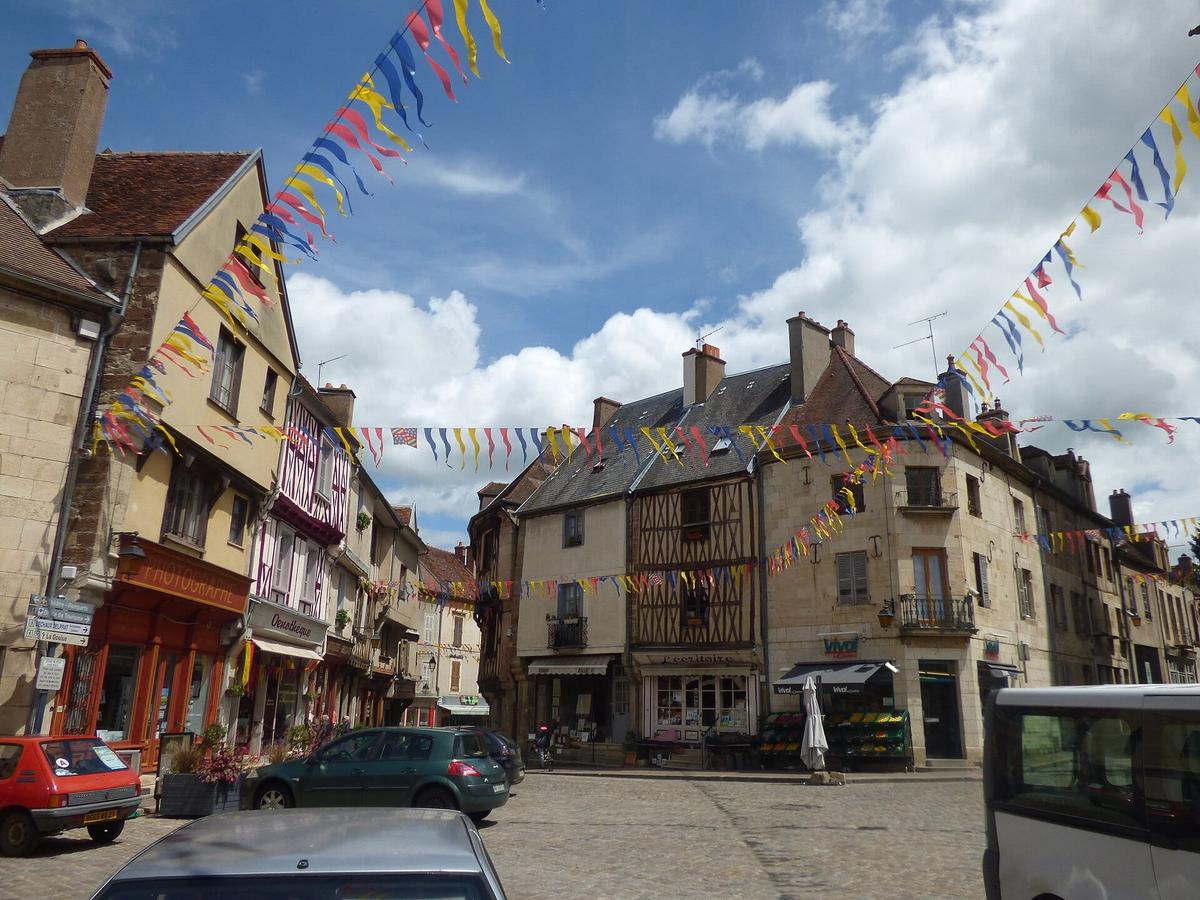

The town is small, but it is hilly. Between the top of the town and the river there are stairs and steep streets. Wear good shoes.
Our tip: visit the collegiate church first, in the morning, then go down to the river. Come back up by a different route to see the keep from several angles. If you are staying the night, return to Pont Joly at dusk: the towers are lit up and the view changes completely.
Visiting Semur with kids
The tourist office has "S'murot le dragon" activity booklets for discovering the town by solving puzzles. There are two versions: one for ages 4 to 7 and one for ages 7 to 11. Ask for them at the Place Gaveau office.
Children usually love the ramparts, the big towers and the walk down to the river. On the other hand, stairs and cobbles make a pushchair hard work in the lower part of town: a baby carrier is more practical.
The Lac de Pont, a few kilometres away, is the other good idea in summer for ending the day by the water.
Semur's festival: the Course de la Bague
Semur holds one of the oldest horse races in France. According to Wikipedia, a foot race, the "course des chausses", already existed in 1566. At the request of the governor's wife, it was replaced by a horse race, created in 1639. Since 1651, the winner has received a gold ring (bague), hence the name. The horses run 2,112 metres in a straight line, on a dirt track, in under two minutes. The dates of each edition are announced by the town and the tourist office.
Semur in films
The town has been used as a film set many times. The best known is Ni vu, ni connu (1958), with Louis de Funès, where Semur becomes "Montpaillard, the quietest town in France". It also appears in The Three Musketeers (1961), Dames galantes (1990) and Jacques Rivette's Joan the Maiden. Another story reported by Wikipedia: Voltaire came to Semur to visit Émilie du Châtelet, whose husband was governor of the town.
How to get to Semur-en-Auxois
By car. This is the easiest option. From the A6 motorway, take the Bierre-lès-Semur exit (exit 23) or the Pouilly-en-Auxois exit (exit 24), then follow the D980, D970 or D954, according to the tourist office. Park outside the narrow streets of the old town and walk in through the Porte Sauvigny.
By train. The most convenient station is Montbard, served by TGV from Paris and by TER regional trains. Les Laumes-Alésia station is served by TER. From either, it is still about twenty kilometres to Semur.
By coach. Mobigo lines 119 to 122 serve Semur, according to the tourist office. Check the timetables, which are often limited, on the network's website.
Renting a car. Without a car, it is hard to link Semur, Fontenay and Bussy-Rabutin. A rental from Dijon lets you do the circuit in a day.
What to see near Semur-en-Auxois on the same day
| Also worth seeing | Distance | Travel time |
|---|---|---|
| Anis de Flavigny factory | 17 km | 25 min by car |
| Château de Bussy-Rabutin | 20 km | 25 min by car |
| Fontenay Abbey | 25 km | 30 min by car |
Approximate road distances and travel times.
The Auxois packs several major sights within half an hour. The Anis de Flavigny factory, in the abbey of the hilltop village of Flavigny-sur-Ozerain, is the closest. See also: Anis de Flavigny factory The Château de Bussy-Rabutin and its portrait-lined rooms are right next door. See also: Château de Bussy-Rabutin Fontenay Abbey, a UNESCO World Heritage Site, is half an hour away, near Montbard. See also: Fontenay Abbey
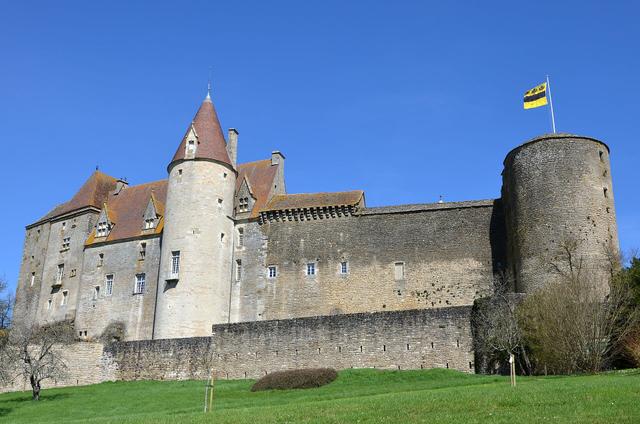
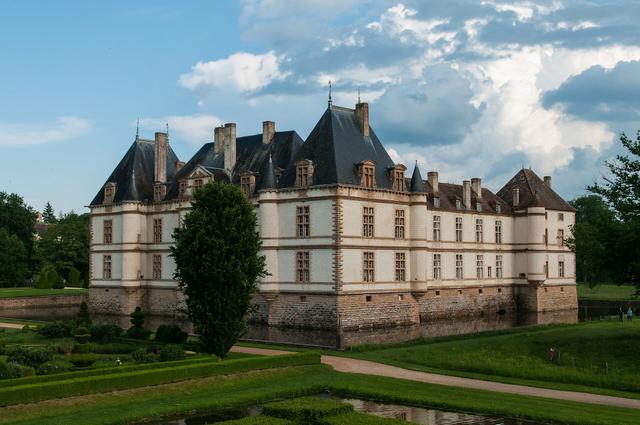
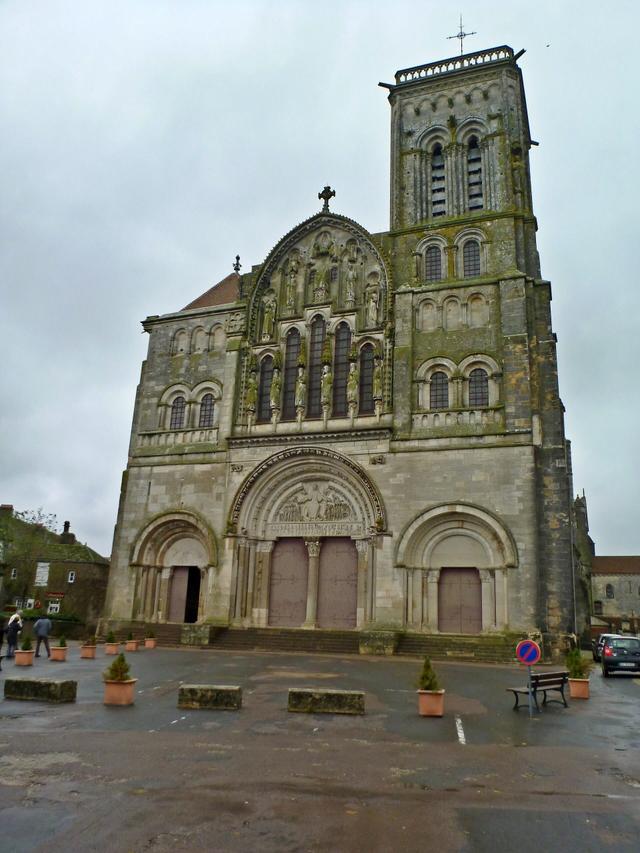
Towards Dijon, the fortified village and castle of Châteauneuf-en-Auxois overlook the Burgundy Canal. See also: Château de Châteauneuf-en-Auxois The Château de Commarin is on the same road. See also: Château de Commarin Towards the Yonne, Noyers-sur-Serein is another small medieval town that pairs well with Semur over a weekend. See also: Noyers-sur-Serein Further afield, Vézelay and its basilica are just over an hour away. See also: Vézelay Abbey (Basilica of Sainte-Marie-Madeleine), Burgundy
Where to eat and stay in Semur-en-Auxois
The old town has several restaurants and cafés, mainly between the Porte Sauvigny and the collegiate church. The tourist office also mentions two local producers in Semur, the Bon Vivant biscuit makers and the Biscuiterie du Mistral, for a souvenir to take home.
To stay, Semur is a good base for exploring the Auxois over two days. The tourist office mentions the Hôtel des Cymaises, the Hostellerie d'Aussois and the Hôtel Relais de la Côte d'Or. There are plenty of B&Bs in the surrounding villages.
Places to stay near Semur-en-Auxois
FAQ
Do you have to pay to visit Semur-en-Auxois?
No. The town, the ramparts and the Collegiate Church of Notre-Dame are free and open to all. Only guided tours and some events are charged.
Is the Semur-en-Auxois museum open?
No, it has been closed for renovation since 21 September 2026, with no reopening date announced.
Can you climb the Tour de l'Orle d'Or?
Only for a few weeks a year. The dates are not published in advance: ask at the tourist office.
How long does it take to visit Semur?
About 120 minutes on foot for the highlights, half a day if you take your time and follow the three walls trail.
Where to park in Semur-en-Auxois?
Leave the car outside the old town, around Place Gaveau and the tourist office, and walk the rest: the streets of the old town are narrow.
When is the tourist office open?
Monday to Saturday, 9:30 – 12:15 and 14:00 – 18:00, except Thursday afternoon. It is closed from 24 December 2026 to 3 January 2027.
Practical information
Official ticket-office prices 2026
Free admission
Address
Office de tourisme, 2 place Gaveau, 21140 Semur-en-Auxois, France
Directions · Phone+33 3 80 97 05 96
On site and nearby
- Nearest shops and pharmacy: Semur-en-Auxois, less than 1 km away Straight-line distance, based on OpenStreetMap.
- Emergencies: 112 (all emergencies, free from any phone), 15 (SAMU, medical emergency)
Around the site, on Google Maps
With children
Family days out nearby: Anis de Flavigny factory (15 km), Château d'Ancy-le-Franc (34 km), Noyers-sur-Serein (34 km)
Swimming pools and play areas nearby, on Google Maps
Facts checked on 12 November 2026. Sources: terres-auxois.fr, terres-auxois.fr, terres-auxois.fr, fr.wikipedia.org, fr.wikipedia.org
Map
In the same region
- Cassissium