Basilica of the Sacred Heart, Paray-le-Monial: planning your visit
Basilica of the Sacred Heart, Paray-le-Monial at a glance
- Admission
- Free
- Visitors per year
- about 450,000
- Where
- Paray-le-Monial
Facts checked on 11 November 2026. Full opening hours, reduced prices and access
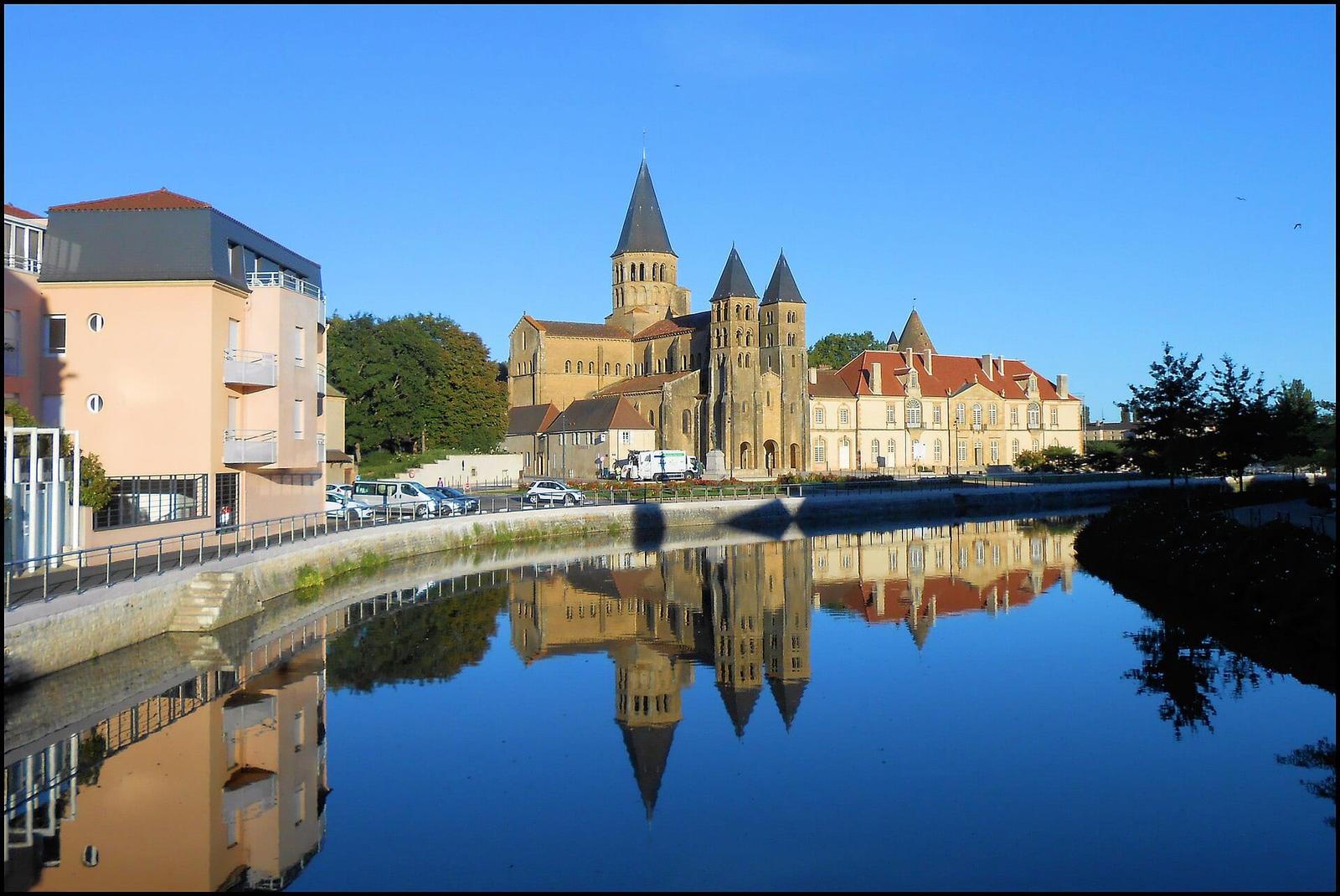
On the banks of the Bourbince, in the Charolais region, the basilica of Paray-le-Monial is a large Romanesque church built on the model of the abbey church of Cluny. It is also one of the great pilgrimage sites in France, linked to the apparitions of the Sacred Heart. Here is how to visit it, what to see and our practical tips.
Paray-le-Monial Basilica at a glance
- Where: in the centre of Paray-le-Monial, Saône-et-Loire, on Avenue Jean-Paul II, between Charolles and Digoin in southern Burgundy.
- Price: entry is free. The tourist office's guided tour costs €6 per adult.
- Opening: the basilica is a parish church and a shrine, open to visitors outside services.
- Guided tours: at 14:30 every day in July and August, and on Sundays in May, June and September.
- Best for: lovers of Romanesque art, pilgrims and anyone passing through southern Burgundy.
- Good to know: Masses and ceremonies take place several times a day. The tourist office advises contacting it before coming with a group.
Why visit Paray-le-Monial Basilica
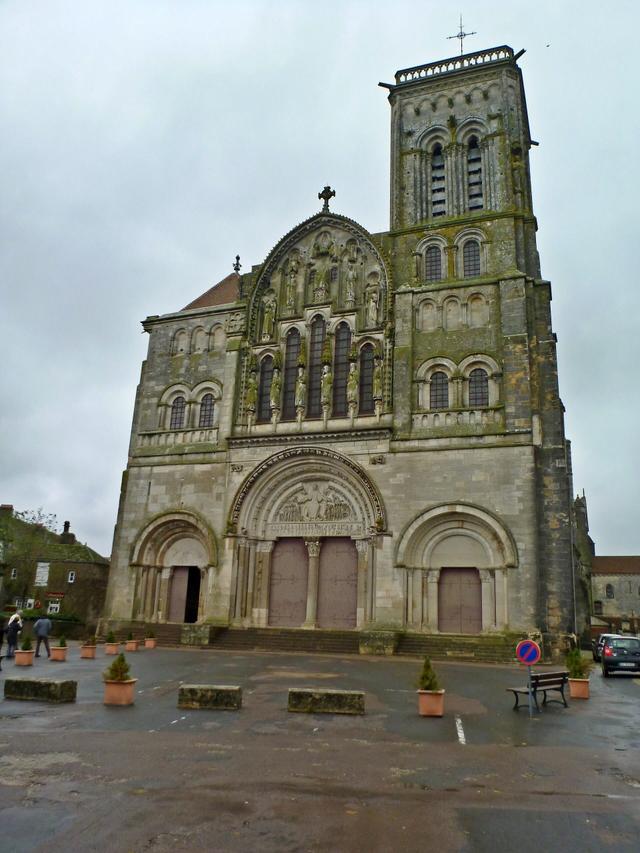
The basilica is considered a scaled-down version of the great abbey church of Cluny, destroyed after the French Revolution. The plan is the same, only smaller: three aisles instead of five, one transept instead of two, three chapels around the choir instead of five. If you want to picture what Cluny was like, Paray is the most telling place to do it.
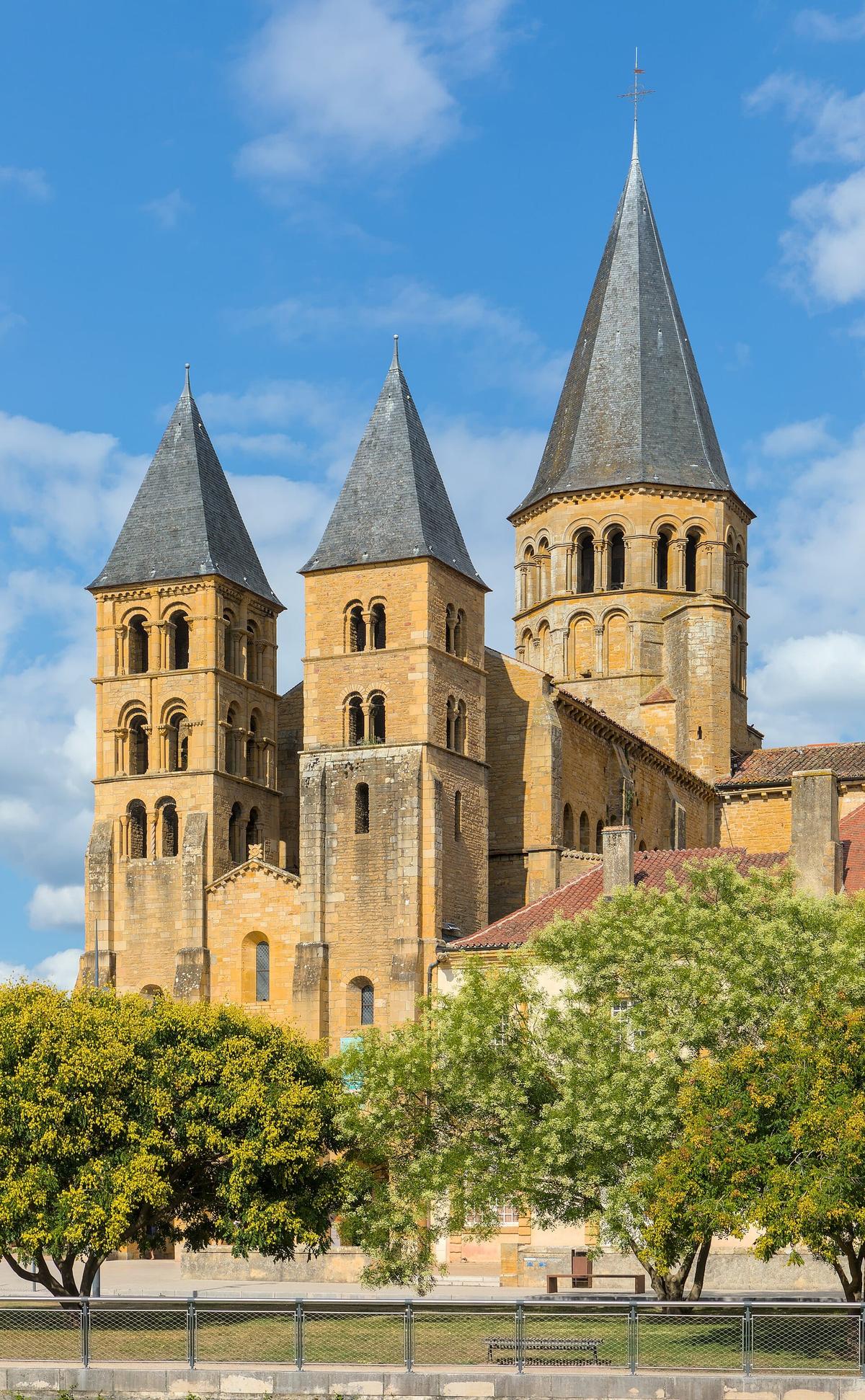
The present church was begun in 1092, under Abbot Hugh of Semur, one of the great abbots of Cluny. The site had been chosen as early as 973, when a local lord founded a monastery here with the support of Abbot Majolus of Cluny.
The figures give an idea of its scale: 63.5 metres long, a central nave 22 metres high and a transept measuring 40.5 metres from end to end. The tourist office calls it one of the finest examples of Burgundian Romanesque art. The building has been a listed historic monument since 1846.
It is also a shrine. Between 1673 and 1675, a nun at the Visitation convent, Margaret Mary Alacoque, said she had received apparitions of Christ showing her his heart. Devotion to the Sacred Heart spread from here. The church was given the title of basilica in 1875 by Pope Pius IX. According to Wikipedia, about 450,000 worshippers and tourists come every year, making it the most visited site in Saône-et-Loire.
How much does it cost to visit?
Entry is free for a self-guided visit. You can walk in and go round the nave and the choir without a ticket.
The tourist office's guided tour. The tourist office runs a tour combining the basilica, the cloister, the historic centre and the Hiéron Museum. 2026 prices:
- Adult: €6.
- Reduced rate: €3.
- Children under 12: free.
The unusual tours. A few evenings a year, multi-voice tours take place at nightfall. They cost €10 per adult and €5 for under-12s. In 2026, they were scheduled for late May, two summer Mondays and mid-September.
Audio guides. The tourist office rents out audio guides all year round. They cover the basilica and the cloister in 8 languages. This is a good option if you come outside the guided tour dates.
European Heritage Days. In September, the tourist office opens places that are usually closed, free of charge.
Do you need to book?
Not for a self-guided visit of the basilica. For the guided tour, tickets are sold at the tourist office, on the same avenue as the basilica, or on its online ticket office. Booking is useful in July and August, and essential for the evening unusual tours, which have limited places. Some free themed tours require registration at the tourist office.
Partner links: if you book through these links, we earn a commission at no extra cost to you. Partner links · Learn more
Guided tours and day trips on GetYourGuide
Opening times, Mass times and best time to visit
The basilica is first and foremost a working church. Masses, services and pilgrim gatherings set the rhythm of the day. During services, sightseeing is not appropriate: stay at the back of the nave or come back later.
In the basilica, the shrine lists a Mass on Sundays at 11:00 and Tuesday to Friday at 18:30. The other Masses of the day are held in the nearby chapels (the Chapel of the Apparitions, the La Colombière chapel). The shrine does not publish opening hours for the basilica on its website: if you plan to come early in the morning or in the evening, call the shrine's welcome desk, open 9:45 – 12:00 and 15:00 – 17:00.
The tourist office, which runs the tours and rents out audio guides, is open Monday to Saturday, 9:30 – 12:30 and 14:00 – 17:30, with longer hours in summer.
In summer, the town changes. In July and August, Paray hosts large pilgrimage sessions. The basilica and the town are then very busy, especially around services. If you are coming for the architecture, choose spring or autumn, on a weekday.
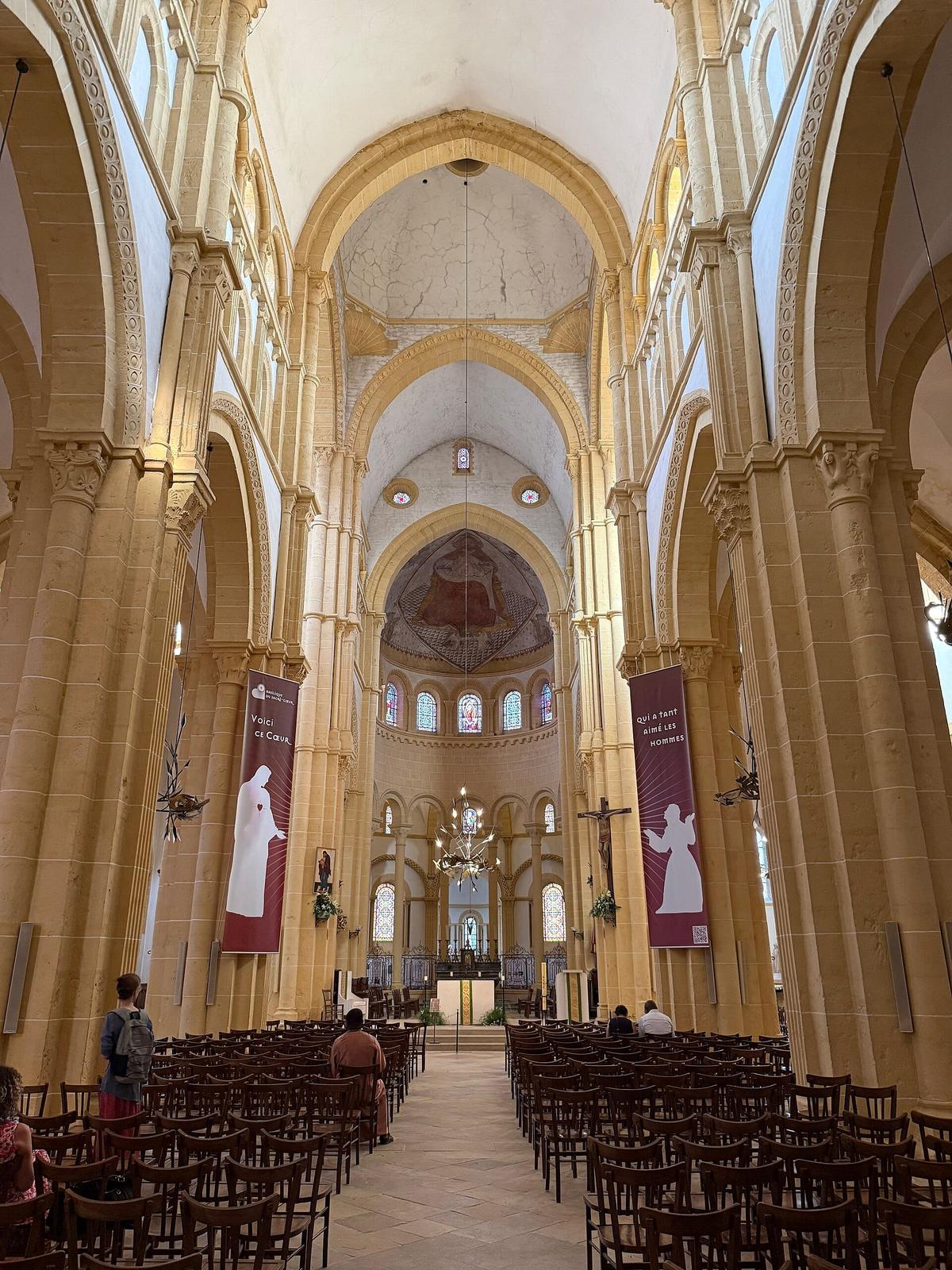
Our tip: come in the morning on a clear day. The interior restoration carried out from 1999 to 2007 gave the nave back its pale stone, and the morning light streams through the choir. On a Sunday afternoon in May, June or September, you can follow on with the 14:30 guided tour.
How long does it take to visit?
The tourist office does not publish a visiting time. For the basilica alone, half an hour is enough to go round the nave, the choir and the ambulatory. Allow an hour if you add the cloister garden and the Chapel of the Apparitions, and half a day for the full guided tour with the historic centre and the Hiéron Museum.
What to see in and around the basilica
The facade and porch tower. You enter through a massive narthex topped by two towers. In the 19th century, the architect Eugène Millet rebuilt the bell tower and restored the porch.
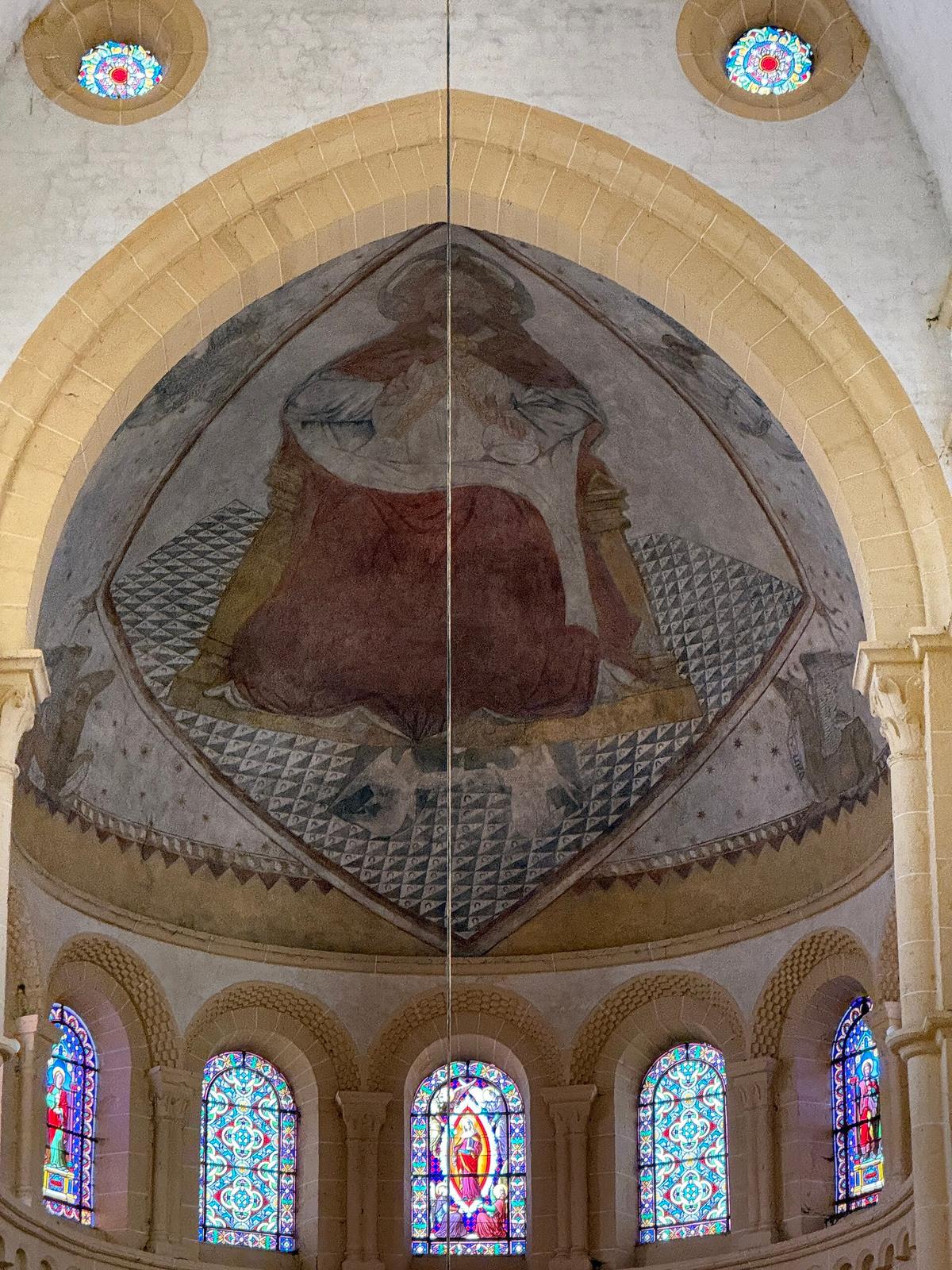
The nave and the choir. The interior is striking for its height and brightness. The choir is surrounded by an ambulatory and three radiating chapels, as at Cluny. At the far end, the choir vault bears a painting that had been hidden under layers of plaster. It was Father Dargaud, parish priest from 1908 to 1938, who had the plaster removed and brought it back to light.
The capitals. Take time to look up: the carved capitals show animals. Wikipedia counts two eagles, seven lions and three griffins.
The north portal. Recently restored, it faces the town. It has no tympanum carved with figures, but its geometric decoration is inspired by Islamic art, as the tourist office points out. It is one of the most unusual details of the basilica.
The cloister garden. Next to the basilica, this medieval-style garden lets you see the east end and the volumes of the church from another angle.
The Chapel of the Apparitions. A few minutes' walk away, in the Visitation convent, this is where Margaret Mary Alacoque experienced her apparitions. She was canonised by Pope Benedict XV in 1920. Her confessor, the Jesuit Claude La Colombière, was canonised in 1992.
A revolutionary story. During the French Revolution, worship was abolished in 1793. The church stood partly open to the sky for 16 years and was used as a warehouse. Worship only resumed in 1802.
Another story. In 1873, a great national pilgrimage brought more than 200,000 pilgrims to Paray, according to the tourist office. In 1986, Pope John Paul II came in his turn. The Drapier-Moulin Liron park, on the banks of the Bourbince, was laid out for the occasion.
Visiting with children
The self-guided visit is free and short, which makes it easy with children. The guided tour is free for under-12s. To keep them busy in the basilica, ask them to find the lions and griffins on the capitals.
After the visit, the park by the Bourbince and the cloister garden are good places to stretch your legs. The tourist office lists a picnic area.
Accessibility and visitor etiquette
The tourist office publishes a page on accessibility in the town. Call it to find out exactly how to reach the basilica in a wheelchair. Animals are not allowed.
As in any working church, appropriate dress is expected, and silence is requested during services. Coach parking is provided for groups.
How to get to Paray-le-Monial
By car. Paray-le-Monial is in the west of Saône-et-Loire, on the RCEA (Route Centre-Europe Atlantique) road, between Mâcon and Moulins. Allow about an hour from Mâcon and less than two hours from Lyon. The basilica is right in the town centre.
By train. Paray-le-Monial has a railway station, served by regional Bourgogne-Franche-Comté trains. From the station, you can walk to the basilica.
Renting a car. To combine Paray with Cluny and the castles of the Mâconnais, a car picked up in Lyon or Mâcon is the most practical option.
What to combine with Paray-le-Monial on the same day
| Also worth seeing | Distance | Travel time |
|---|---|---|
| Cluny Abbey | 55 km | 55 min by car |
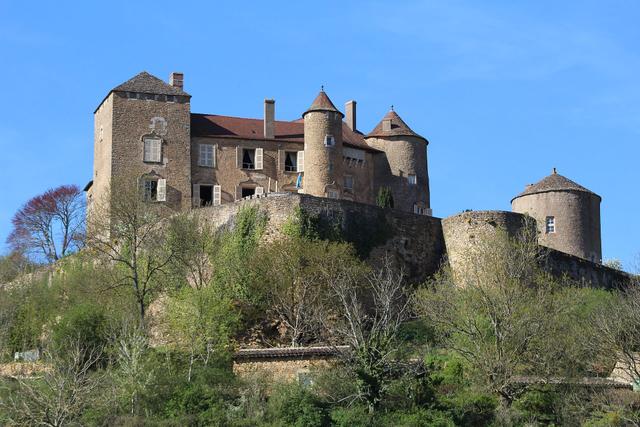
| Château de Berzé-le-Châtel | 60 km | 60 min by car |
Approximate road distances and travel times.
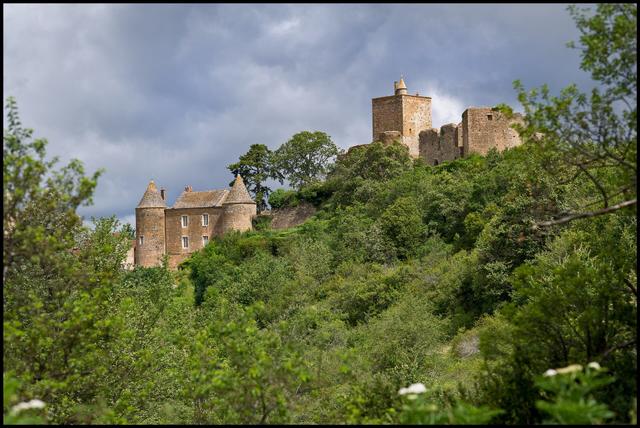
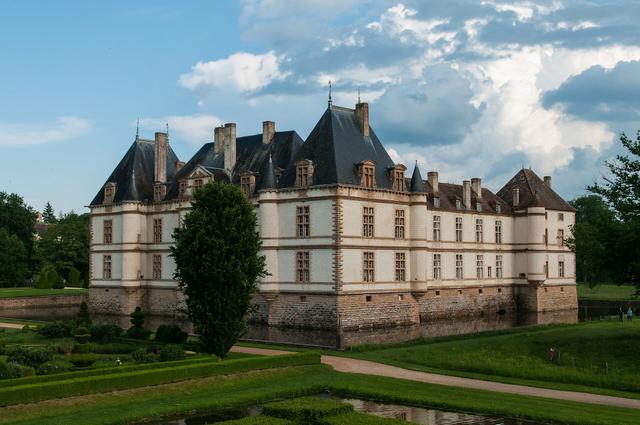
After Paray, the logical next step is Cluny, less than an hour to the east: you will see what remains of the great abbey church of which Paray is the scaled-down copy. See also: Cluny Abbey On the way, the Château de Berzé-le-Châtel guards the entrance to the Mâconnais. See also: Château de Berzé-le-Châtel Further north, the Château de Cormatin and the medieval village of Brancion round off a day in southern Burgundy. See also: Château de Cormatin, Brancion Castle
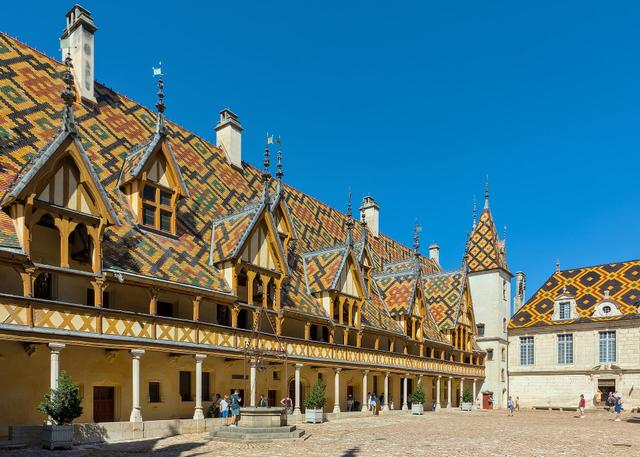
If you are following the great Romanesque churches of Burgundy, Vézelay Basilica is the other major stop. See also: Vézelay Abbey (Basilica of Sainte-Marie-Madeleine) For a detour into the Côte-d'Or, the Hospices de Beaune are less than two hours away. See also: Hospices de Beaune (Hôtel-Dieu), Burgundy
Where to eat and stay in Paray-le-Monial
Paray-le-Monial is in the heart of the Charolais, the home of Charolais cattle: beef is the speciality of the town's restaurants. Restaurants and cafés are concentrated in the centre, a short walk from the basilica.
To stay, the town has hotels and guest houses, as well as pilgrim hostels. In summer, during the pilgrimage sessions, accommodation fills up fast: book early.
Places to stay near Paray-le-Monial
FAQ
Do you have to pay to enter Paray-le-Monial Basilica?
No, entry is free. Only the tourist office's guided tour is charged: €6 per adult, free under 12.
When are the guided tours?
At 14:30, every day in July and August, and on Sundays in May, June and September.
Why is Paray called a "little Cluny"?
Its plan follows that of the great abbey church of Cluny, on a smaller scale: three aisles instead of five, one transept instead of two.
Who was Margaret Mary Alacoque?
A Visitation nun in Paray who, between 1673 and 1675, experienced the apparitions that gave rise to devotion to the Sacred Heart. She was canonised in 1920.
Can you visit during Mass?
No. The basilica is a place of worship: avoid Sundays at 11:00 and the weekday evening Mass at 18:30.
Can I bring my dog?
No, the tourist office says animals are not allowed.
Practical information
Official ticket-office prices 2026
Free admission
Address
Avenue Jean-Paul II, 71600 Paray-le-Monial, France
Directions · Phone+33 3 85 81 10 92
On site and nearby
- On site: Toilets and picnics allowed
- Nearest shops and pharmacy: Paray-le-Monial, less than 1 km away Straight-line distance, based on OpenStreetMap.
- Emergencies: 112 (all emergencies, free from any phone), 15 (SAMU, medical emergency)
Around the site, on Google Maps
With children
Family days out nearby: Le PAL (39 km), Château de Berzé-le-Châtel (44 km), Château de Cormatin (44 km)
Swimming pools and play areas nearby, on Google Maps
Facts checked on 11 November 2026. Sources: tourisme-paraylemonial.fr, tourisme-paraylemonial.fr, tourisme-paraylemonial.fr, fr.wikipedia.org, tourisme-paraylemonial.fr, tourisme-paraylemonial.fr, beaune-tourism.com
Map
In the same region
- Cassissium