Dijon Museum of Fine Arts: planning your visit
Dijon Museum of Fine Arts at a glance
- 1 October 2026 to 31 December 2026
- 9:30 – 18:00 (closed on Tuesday)
- Admission
- Free
- Visitors per year
- 290,458 (2023)
- Where
- Dijon
Facts checked on 29 October 2026. Full opening hours, reduced prices and access
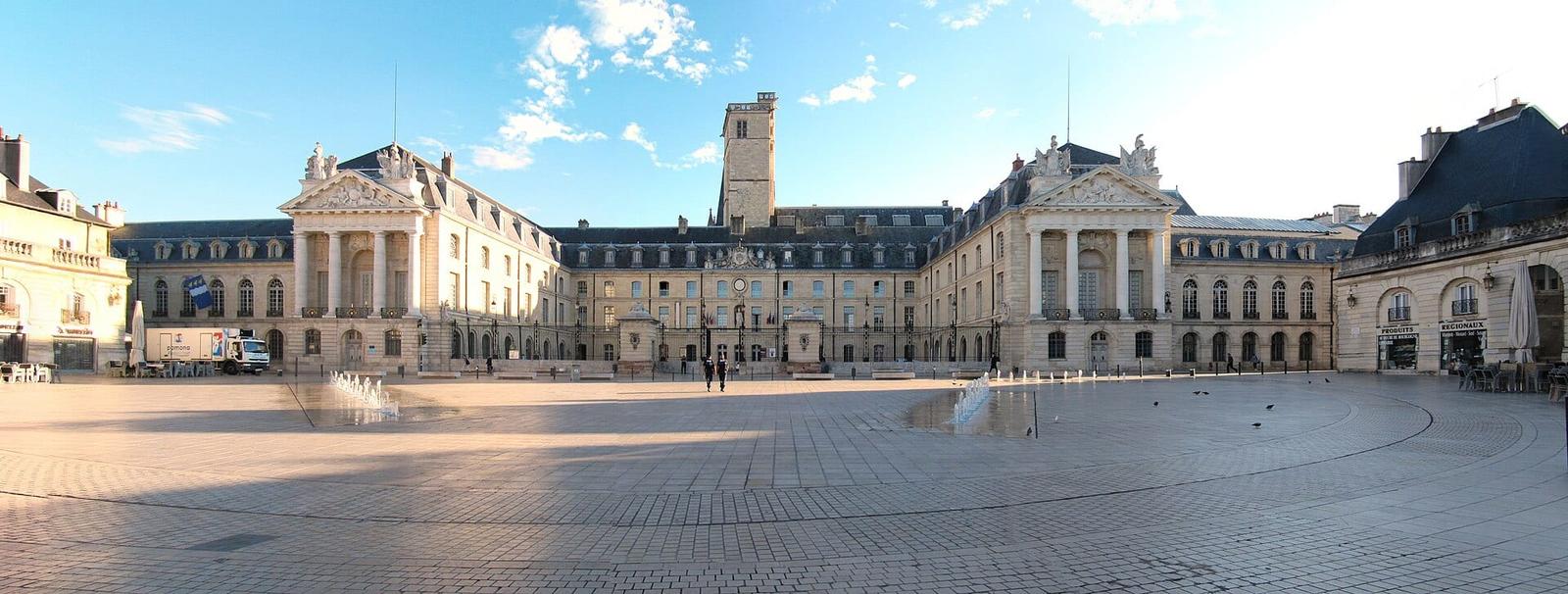
Housed in the Palace of the Dukes and States of Burgundy, the Musée des Beaux-Arts in Dijon is one of the great museums of France, and its permanent collections are free. Here you will see the tombs of the Dukes of Burgundy, carved at the end of the Middle Ages, and paintings from the Middle Ages to the 20th century. Here are the opening hours, how long to allow, what not to miss and how to combine it with the Philip the Good Tower and the rest of Dijon.
Dijon Museum of Fine Arts at a glance
- Where: in the heart of Dijon, in the Palace of the Dukes and States of Burgundy, facing Place de la Libération.
- Price: the permanent collections are free. Only temporary exhibitions are charged (€9, reduced €5).
- Open: every day except Tuesday. 10:00 – 18:30 from June to September, 9:30 – 18:00 from October to May.
- Time needed: two hours for the main rooms, half a day to see everything.
- Getting there: on foot from Dijon-Ville station, through the historic centre.
- Best for: art and history lovers, but also visitors passing through: free entry means you can come for just an hour.
A museum in the Palace of the Dukes of Burgundy
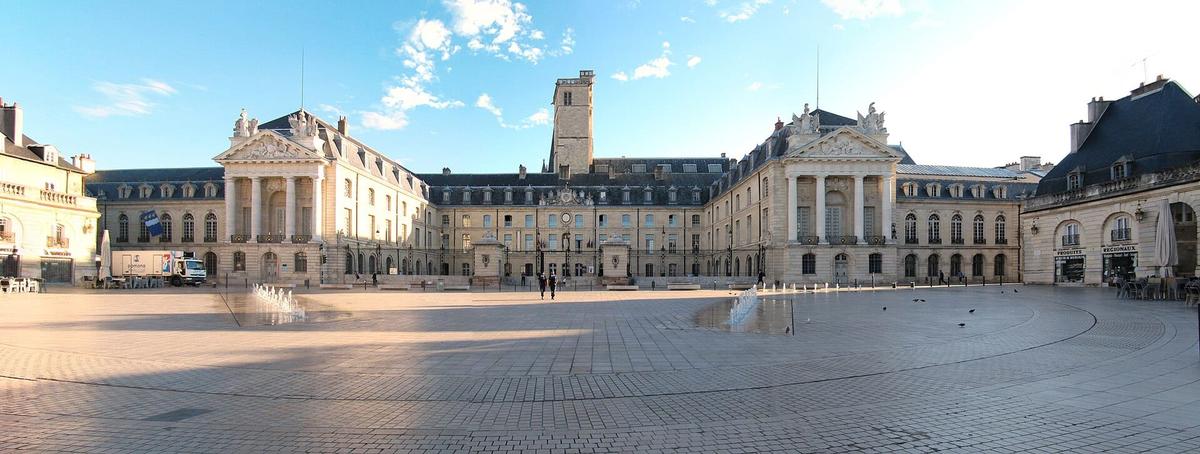
The palace was the residence of the Dukes of Burgundy, then the seat of the States of Burgundy, the province's assembly. Today it houses both Dijon's city hall and the Musée des Beaux-Arts. The museum project dates from 1783, when the States of Burgundy decided to open a gallery of paintings and sculpture.
The museum has been fully renovated. It reopened in its complete form in May 2019, with about 1500 works shown in 50 rooms. Its stores hold some 130,000 works.
The route is chronological: the Middle Ages and Renaissance, then the 17th and 18th centuries, then the 19th and 20th centuries. It runs through the old rooms of the palace, so you see the building as much as the collections.
Is entry really free?
Yes. The Dijon museums' website says so clearly: entry to the permanent collections is free for everyone, with no booking, whatever your nationality. You can walk in, see the tombs and walk out again.
Only temporary exhibitions are charged: €9 full price and €5 reduced.
Our tip: since entry is free, there is no need to see everything at once. If you spend two days in Dijon, do the Middle Ages one day and the modern paintings the next.
The museum offers a multimedia guide, called Nomade, to go with your visit.
Opening hours and best time to visit
2026 opening hours published by the Dijon museums:
- 1 June to 30 September: 10:00 – 18:30.
- 1 October to 31 May: 9:30 – 18:00.
- Closed on Tuesdays, all year.
- Closed on these public holidays: 1 January, 1 May, 8 May, 14 July, 1 and 11 November, 25 December.
The Tuesday trap. The closing day is Tuesday, not Monday. If your stay includes a Tuesday, keep that day for the old town or a trip to Beaune.
Our tip: weekday mornings are the quietest. The tomb room is the busiest: start there at opening time, or save it for the end of the day.
How long does it take to visit?
For the tomb room and the medieval and Renaissance collections, allow an hour. For a full tour, with the paintings of later centuries, plan at least two hours, or half a day if you like to take your time.
If you are short of time, head straight for the Salle des Gardes (Guards' Room). This is the room everyone comes to see.
What to see at the Dijon Museum of Fine Arts
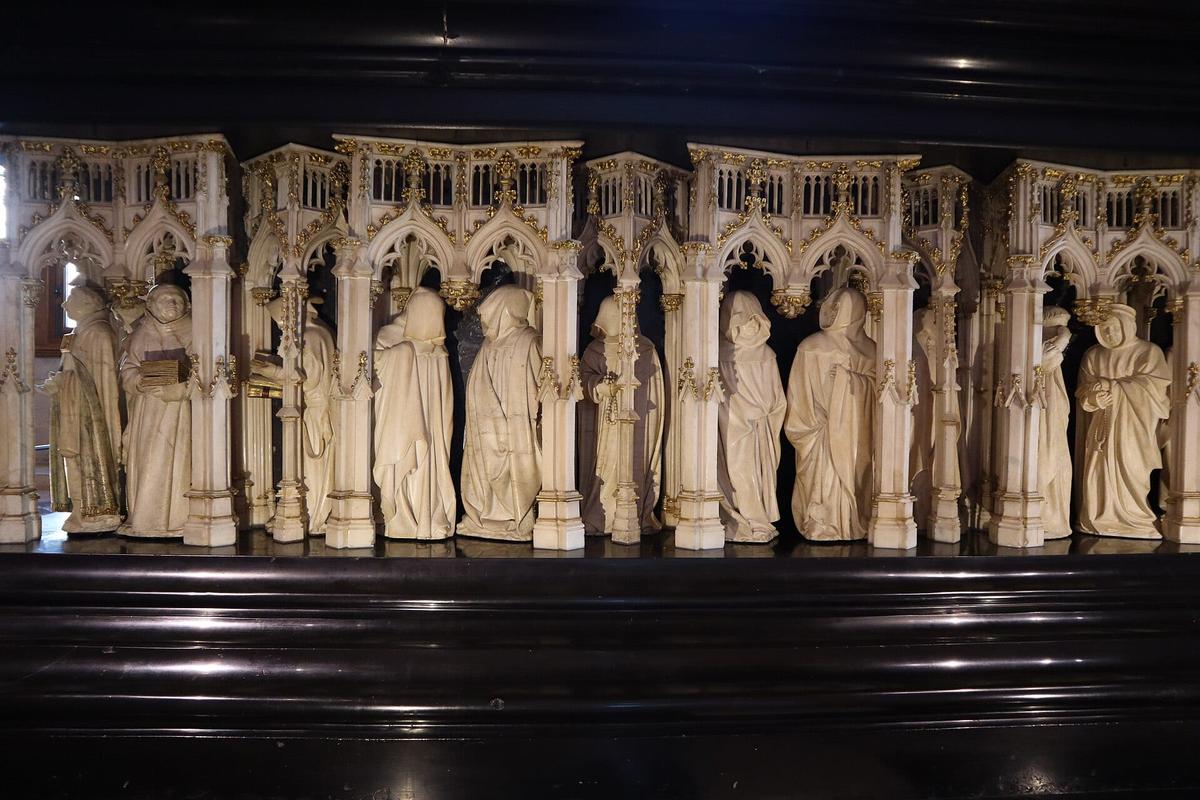
The tombs of the Dukes of Burgundy. They fill the Salle des Gardes. They come from the Chartreuse de Champmol, a charterhouse founded in 1383 by Duke Philip the Bold just outside Dijon as a burial place for his family. The tomb of Philip the Bold was made by the workshop of sculptors led by Claus Sluter. The tomb of his son John the Fearless and his wife Margaret of Bavaria follows the same model. It is one of the most famous funerary monuments of the late Middle Ages.
The mourners. Below the effigies, small alabaster statues file past under arches: these are the mourners, monks and members of the funeral procession, their heads often hidden under their hoods. Get close and walk round the tombs: each figure has a different pose.
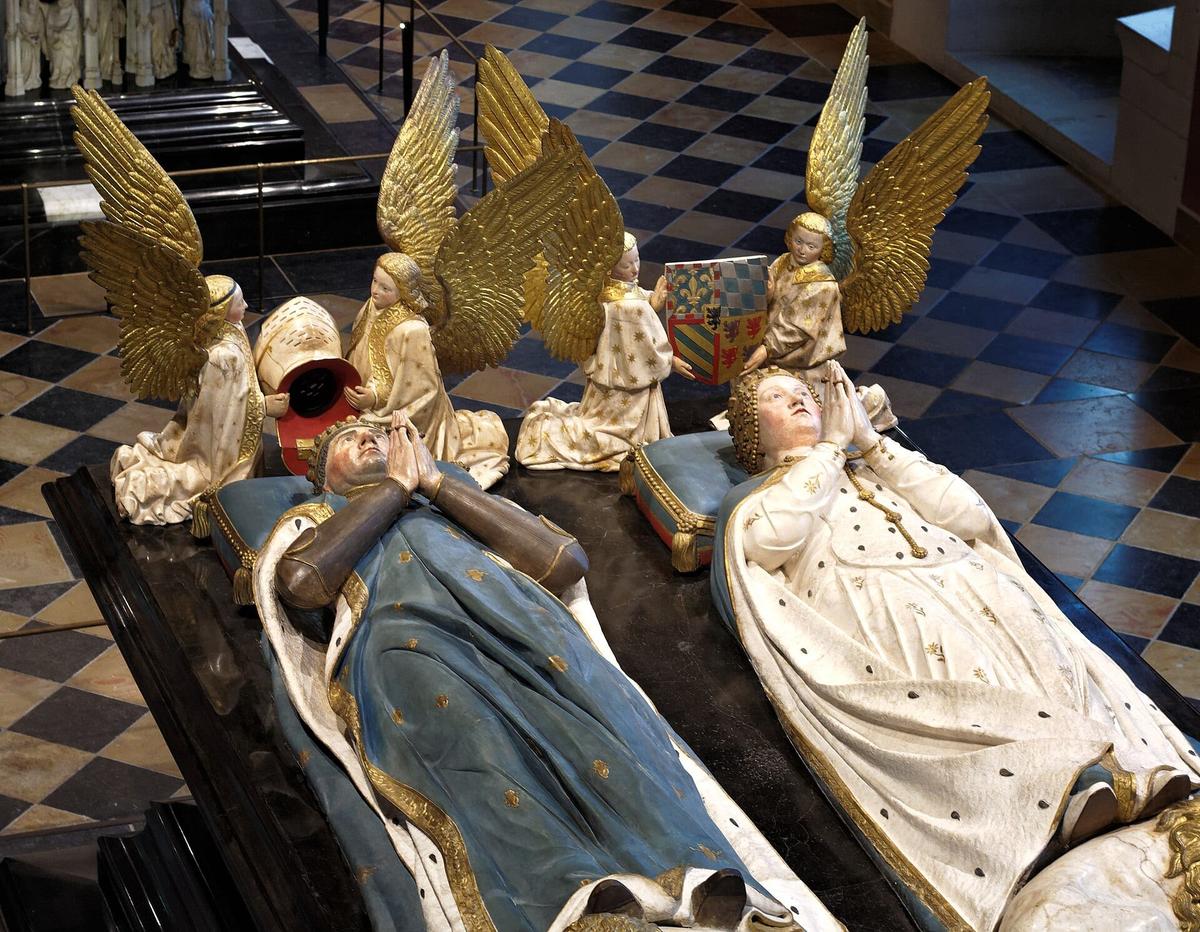
The Middle Ages and Renaissance. Altarpieces, sculptures and religious paintings show the wealth of the Burgundian court, one of the most brilliant in Europe in the 15th century.
Paintings of later centuries. The 17th and 18th century rooms show French and European painting. The route ends with the 19th and 20th centuries.
The palace itself. The state rooms, staircases and views over the main courtyard are part of the visit.
Can you climb the Philip the Good Tower?
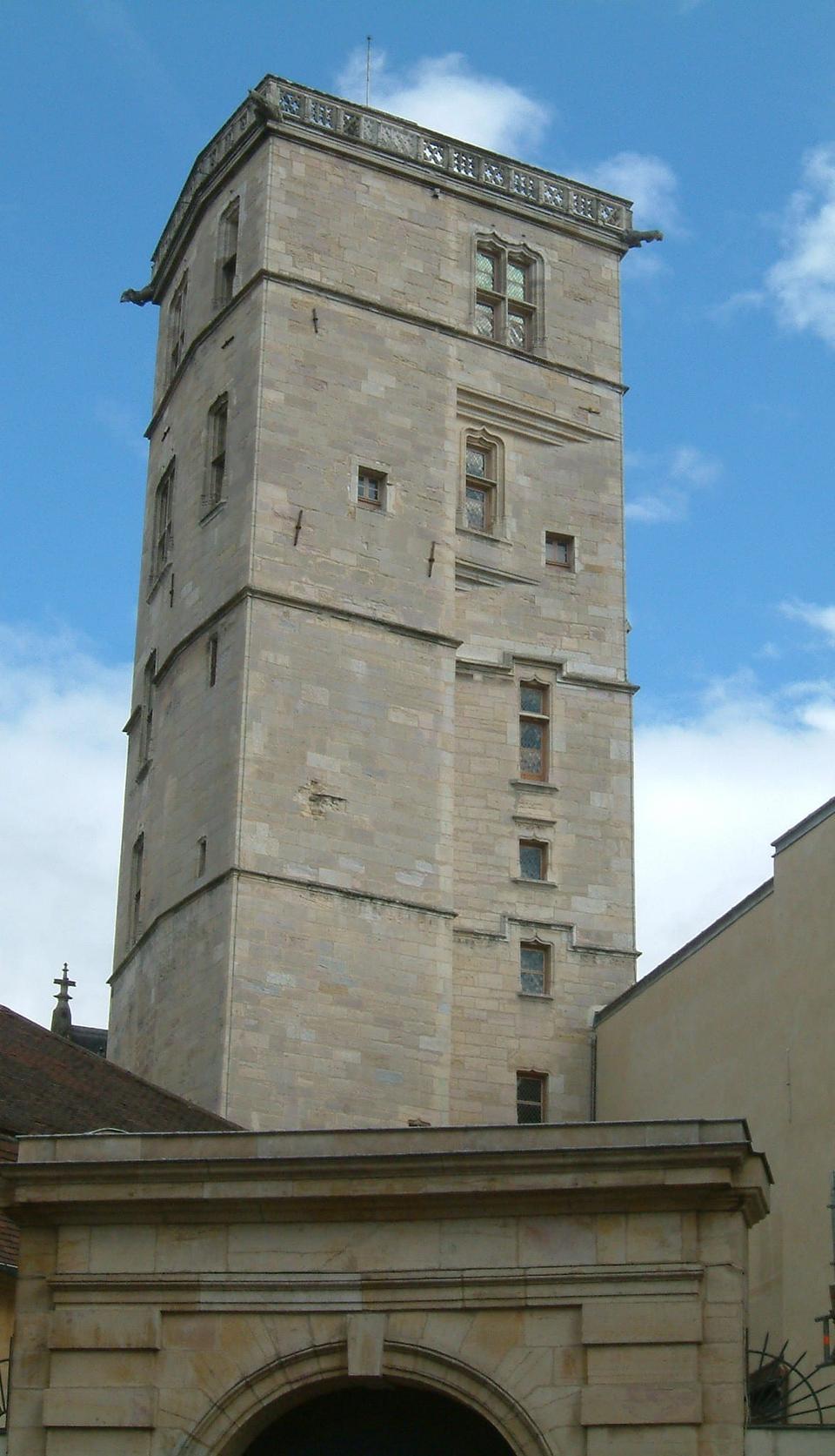
The Tour Philippe le Bon towers over the palace. It is 46 m high and gives a view over the roofs of Dijon and, on a clear day, beyond.
The tower is not part of the museum visit. Climbs are run by the Dijon tourist office. We could not check the 2026 price or times: ask the tourist office before you come and book your slot.
Partner links: if you book through these links, we earn a commission at no extra cost to you. Partner links · Learn more
Guided tours and day trips on GetYourGuide
Guided tours of Dijon pass in front of the palace and tell the story of the dukes. They go well with a visit to the museum.
How to get to the Dijon Museum of Fine Arts
By train. Dijon is linked to Paris-Gare-de-Lyon by TGV. From Dijon-Ville station, walk to the Palace of the Dukes through the historic centre, via Place Darcy and Rue de la Liberté, the main shopping street.
By car. Much of central Dijon is pedestrianised. Park in a city-centre car park and walk the rest of the way.
From Beaune. The TER regional train links Beaune and Dijon in about thirty minutes. It is the easiest way to see both towns. See also: Hospices de Beaune (Hôtel-Dieu)
Renting a car. To go on to Fontenay Abbey, the Château de Bussy-Rabutin or the Côte de Nuits vineyards, a car is essential: these sites are poorly served by public transport. Rental companies are in Dijon.
Visiting with children
Free entry changes everything: you can fit the length of the visit to their patience, leave and come back.
What children like best: the mourners on the tombs, which they can count and compare, and the angels with gilded wings on the effigies. Ask them to find two mourners in the same pose. For older children, climbing the Philip the Good Tower is a good extra, if the tourist office has a slot that day.
For the rest of the day, the Owl Trail (Parcours de la Chouette), marked on the pavement in the old town, turns a walk round Dijon into a treasure hunt.
Accessibility
The Dijon museums' website says the museum is fully accessible to visitors with reduced mobility. For the Philip the Good Tower, ask the tourist office about access.
For pets, left luggage and other services, ask at the front desk: the official page does not give details.
What to see nearby
| Also worth seeing | Distance | Travel time |
|---|---|---|
| Hospices de Beaune (Hôtel-Dieu) | 45 km | 40 min by public transport |
| Château de Bussy-Rabutin | 65 km | 55 min by car |
| Fontenay Abbey | 80 km | 60 min by car |
Approximate road distances and travel times.
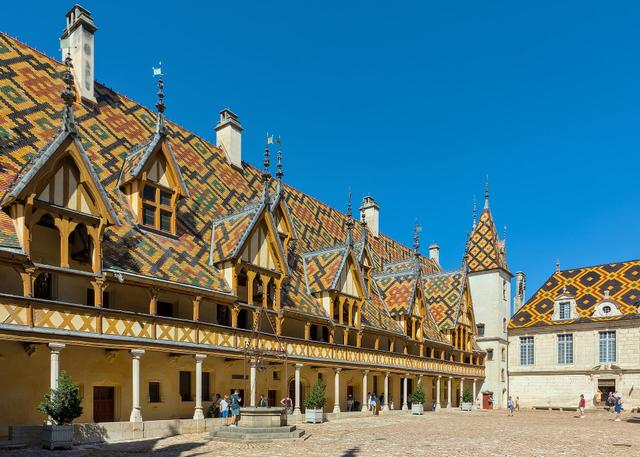
Beaune and the Hôtel-Dieu. Half an hour away by train, the Hospices de Beaune and their glazed tile roofs are the other great visit in the Côte-d'Or. Do Dijon in the morning and Beaune in the afternoon, or the other way round. See also: Hospices de Beaune (Hôtel-Dieu)
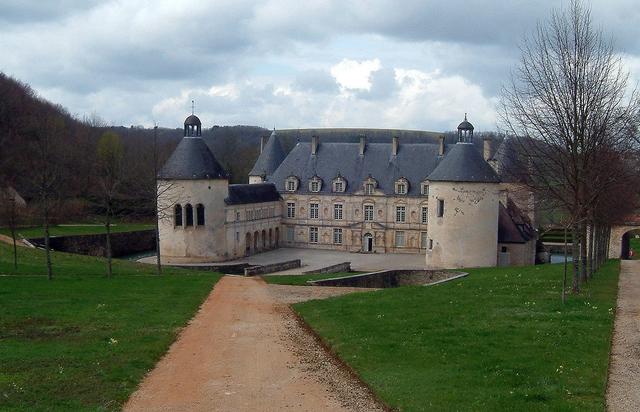
The Auxois by car. To the north-west, the Château de Bussy-Rabutin and Fontenay Abbey are less than 20 km apart and can be visited on the same day. See also: Château de Bussy-Rabutin, Fontenay Abbey
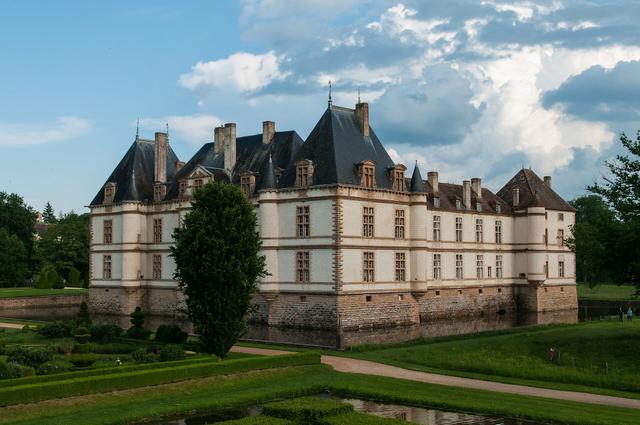
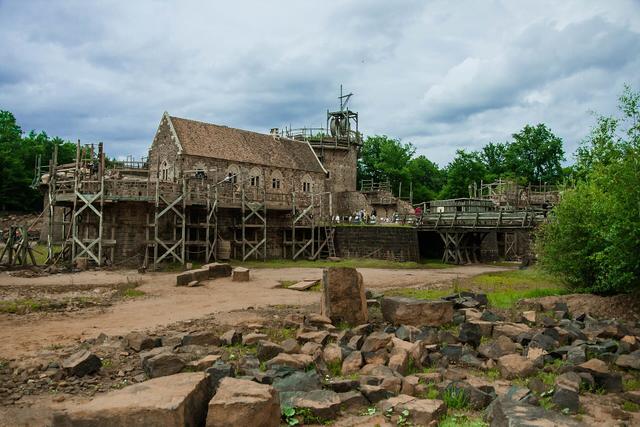
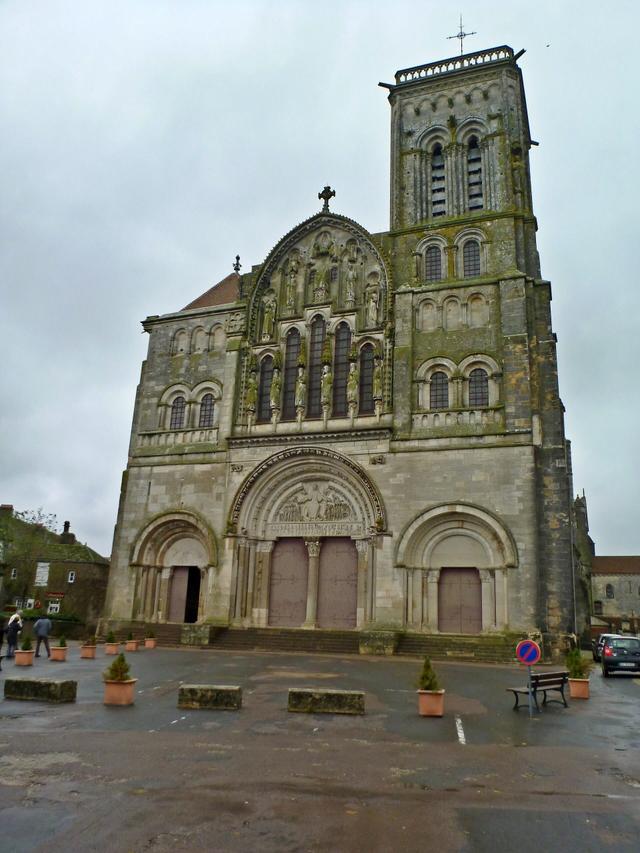
For a longer trip. Vézelay Basilica, Cluny Abbey, the Château de Cormatin and the Guédelon building site round off a stay in Burgundy. See also: Vézelay Abbey (Basilica of Sainte-Marie-Madeleine), Cluny Abbey, Château de Cormatin, Guédelon Castle, Burgundy
Facts and figures
- 290,458 visitors in 2023. In 2019, the year it reopened, the museum reached 315,000 visits.
- Tombs protected during the war. During the Second World War, works were evacuated to castles, and those that could not be moved were protected with sandbags. The curator Pierre Quarré stood in the way of German soldiers to stop them taking statues. Some of Dijon's bronzes were melted down under a 1941 law of the Vichy regime.
- An observatory in the tower. In the 18th century, the Philip the Good Tower served as an observatory. In the mid-19th century, it housed a station of the Chappe optical telegraph.
- Tombs from elsewhere. The tombs were not made for the palace: they stood in the Chartreuse de Champmol, on the edge of Dijon, and were only moved to the museum after the Revolution.
Where to eat and stay in Dijon
Around the museum. Place de la Libération, in front of the palace, and the streets of the old town around the covered market are full of restaurants and cafés. This is the place to try Burgundian food: boeuf bourguignon, oeufs en meurette (eggs poached in red wine) and jambon persillé (ham in parsley jelly).
Staying. The historic centre lets you do everything on foot, museum included. The station area is handy if you are leaving early for Beaune or Paris.
FAQ
Is the Dijon Museum of Fine Arts free?
Yes, the permanent collections are free for everyone. Only temporary exhibitions are charged.
What day is the Dijon Museum of Fine Arts closed?
Tuesday, as well as 1 January, 1 May, 8 May, 14 July, 1 and 11 November and 25 December.
How long does it take to visit?
An hour for the tombs and the Middle Ages, at least two hours for everything.
Where are the tombs of the Dukes of Burgundy?
In the museum's Salle des Gardes. They come from the Chartreuse de Champmol.
Can I climb the Philip the Good Tower with a museum visit?
No, the tower is not part of the museum. Climbs are run by the Dijon tourist office: ask them about times and booking.
Is the museum wheelchair accessible?
Yes, the museum is listed as fully accessible to visitors with reduced mobility.
Practical information
Opening hours 2026
| 1 January 2026 to 31 May 2026 | 9:30 – 18:00 (Closed: Tuesday) |
|---|---|
| 1 June 2026 to 30 September 2026 | 10:00 – 18:30 (Closed: Tuesday) |
| 1 October 2026 to 31 December 2026 | 9:30 – 18:00 (Closed: Tuesday) |
Closed: 1 January, 1 May, 8 May, 14 July, 1 November, 11 November, and 25 December
Official ticket-office prices 2026
Free admission
Address
Musée des Beaux-Arts, palais des ducs et des États de Bourgogne, place de la Sainte-Chapelle, 21000 Dijon, France
Directions · Phone+33 3 80 74 52 09
On site and nearby
- Nearest shops and pharmacy: Dijon, less than 1 km away Straight-line distance, based on OpenStreetMap.
- Emergencies: 112 (all emergencies, free from any phone), 15 (SAMU, medical emergency)
Around the site, on Google Maps
With children
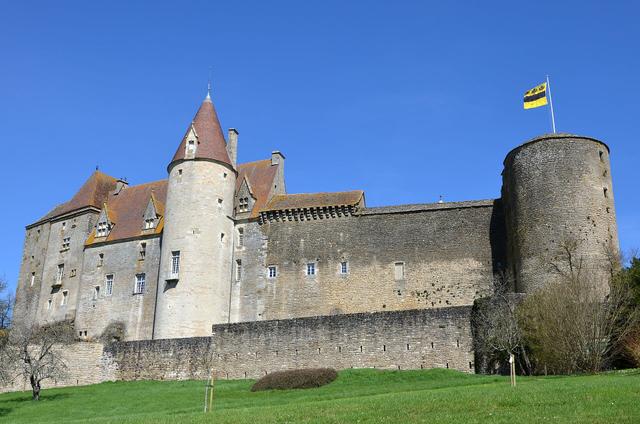
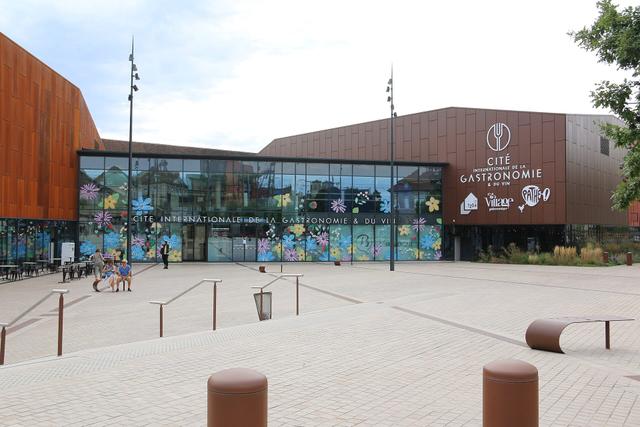
Family days out nearby: Cité internationale de la gastronomie et du vin (1 km), Château de Châteauneuf-en-Auxois (32 km), Château de Savigny-lès-Beaune (33 km)
Swimming pools and play areas nearby, on Google Maps
Facts checked on 29 October 2026. Sources: musees.dijon.fr, musees.dijon.fr, fr.wikipedia.org, en.wikipedia.org
Map
In the same region
- Cassissium