Church of Saint-Jean-Baptiste in Saint-Jean-de-Luz: planning your visit
Church of Saint-Jean-Baptiste, Saint-Jean-de-Luz at a glance
- Admission
- Free
- Time needed
- about 30 min
- Where
- Saint-Jean-de-Luz
Facts checked on 11 November 2026. Full opening hours, reduced prices and access

From Rue Gambetta, you see a white wall and a stern tower. Inside, three tiers of oak galleries surround the nave and a gilded altarpiece rises to the vault. This is the church where Louis XIV married the Infanta of Spain in 1660. Entry is free: here is what to look at, when to come, the guided tours and how to plan half a day in the town centre.
The Church of Saint-Jean-Baptiste at a glance
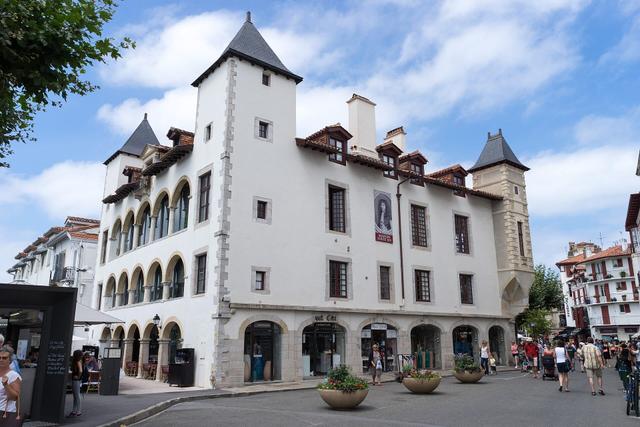
- Where: on Rue Gambetta, the pedestrian street in the centre of Saint-Jean-de-Luz, a short walk from Place Louis XIV and the harbour.
- Price: free entry. Guided tours run under the Pays d'art et d'histoire (Town of Art and History) label require registration.
- Time needed: the tourist office suggests 30 minutes for a self-guided visit.
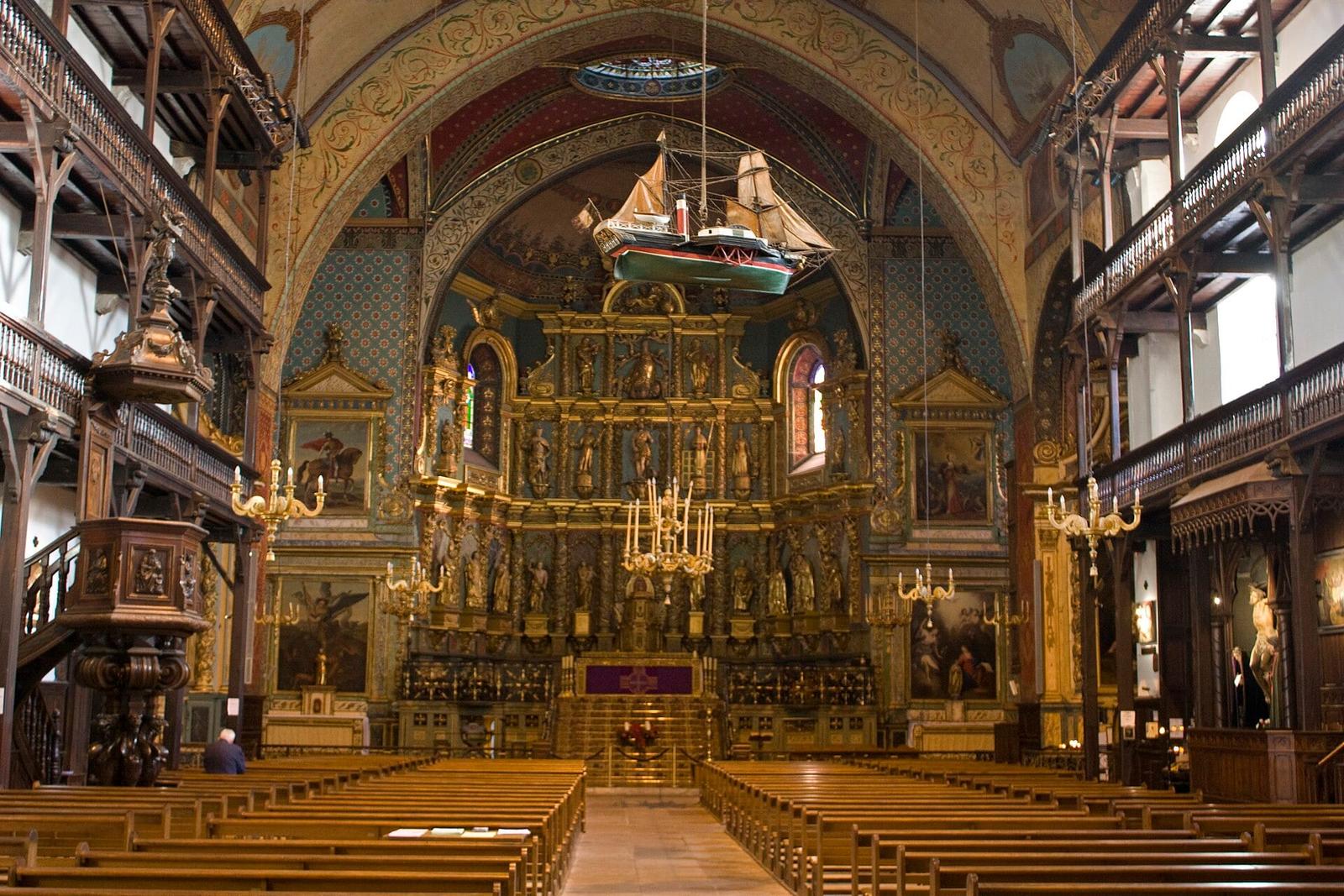
- What to see: the three tiers of wooden galleries, the altarpiece with 18 statues, the hanging votive ship, the organ, the walled-up door.
- Good to know: this is a working parish church. No visits during Mass, weddings or funerals.
Why visit the Church of Saint-Jean-Baptiste
It is the most famous of the Basque churches. In its listing notice, the French Ministry of Culture describes it as the "perfect example of the churches of the French Basque Country". It has been a listed historic monument since 7 March 1931, along with its altarpiece and organ case.
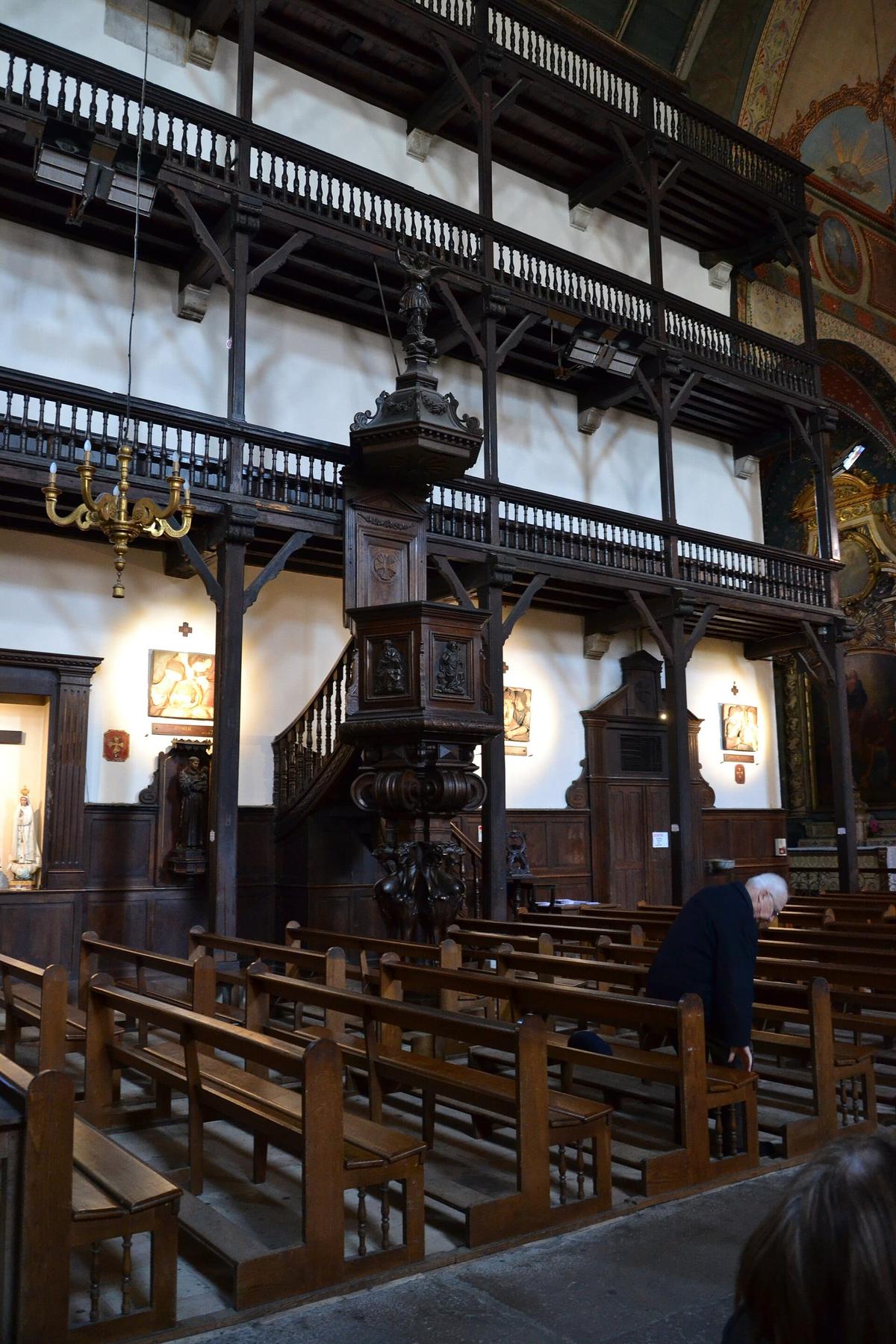

The contrast is striking. Outside, thick walls with almost no decoration, a massive porch tower, a few windows. Inside, a single, very wide nave with no pillars and a wooden ceiling, where your eye goes straight to the gilded choir. The dark oak galleries run along three sides and make the church look like a theatre.
And then there is the royal wedding. On 9 June 1660, Louis XIV, aged 22, married the Infanta Maria Theresa of Spain here. The marriage sealed the Treaty of the Pyrenees signed the year before between France and Spain. The stay of the king and his court in the town is told in our page on the house where he lodged, two streets away. See also: Maison Louis XIV (Louis XIV House)
A church still being built when the king married
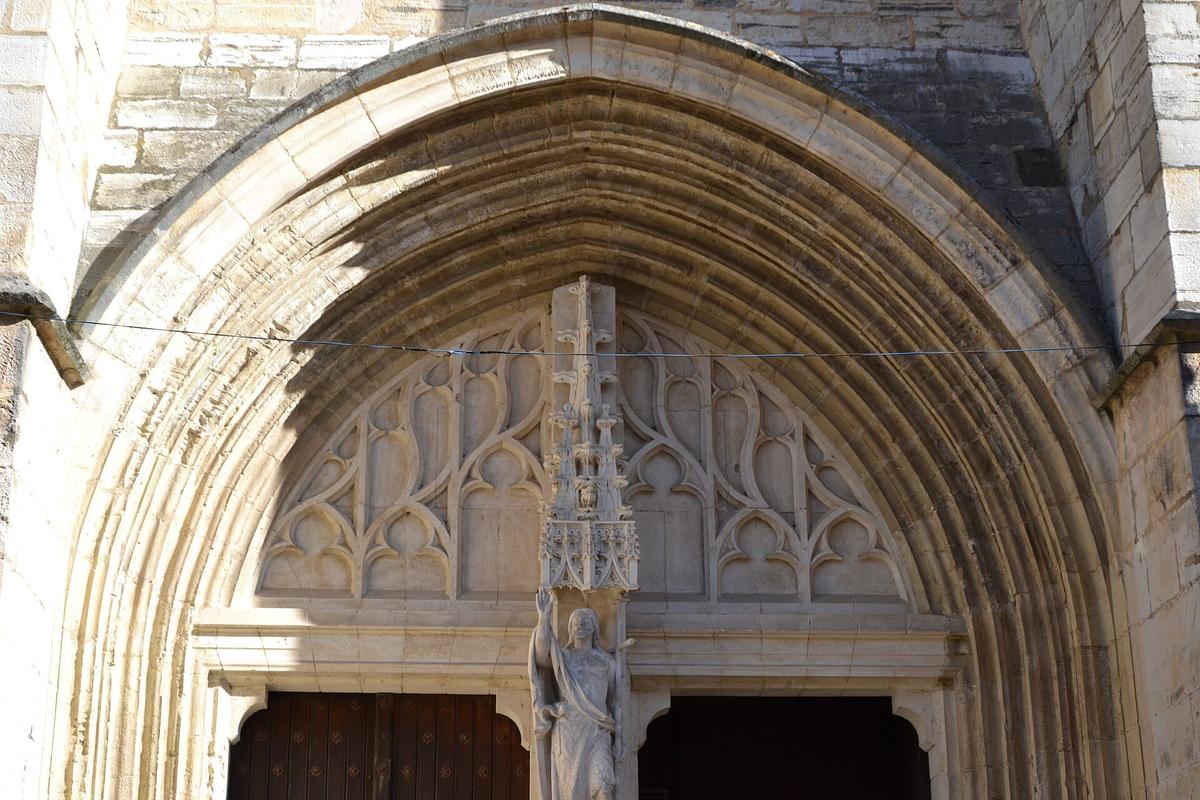
The church you visit has not always been this size. A Romanesque church already stood on the site in the 12th century. In the 15th century, a Gothic church with a single stone-vaulted nave was built. From that period, the porch tower, the south wall and a few windows on the Rue Gambetta side survive.
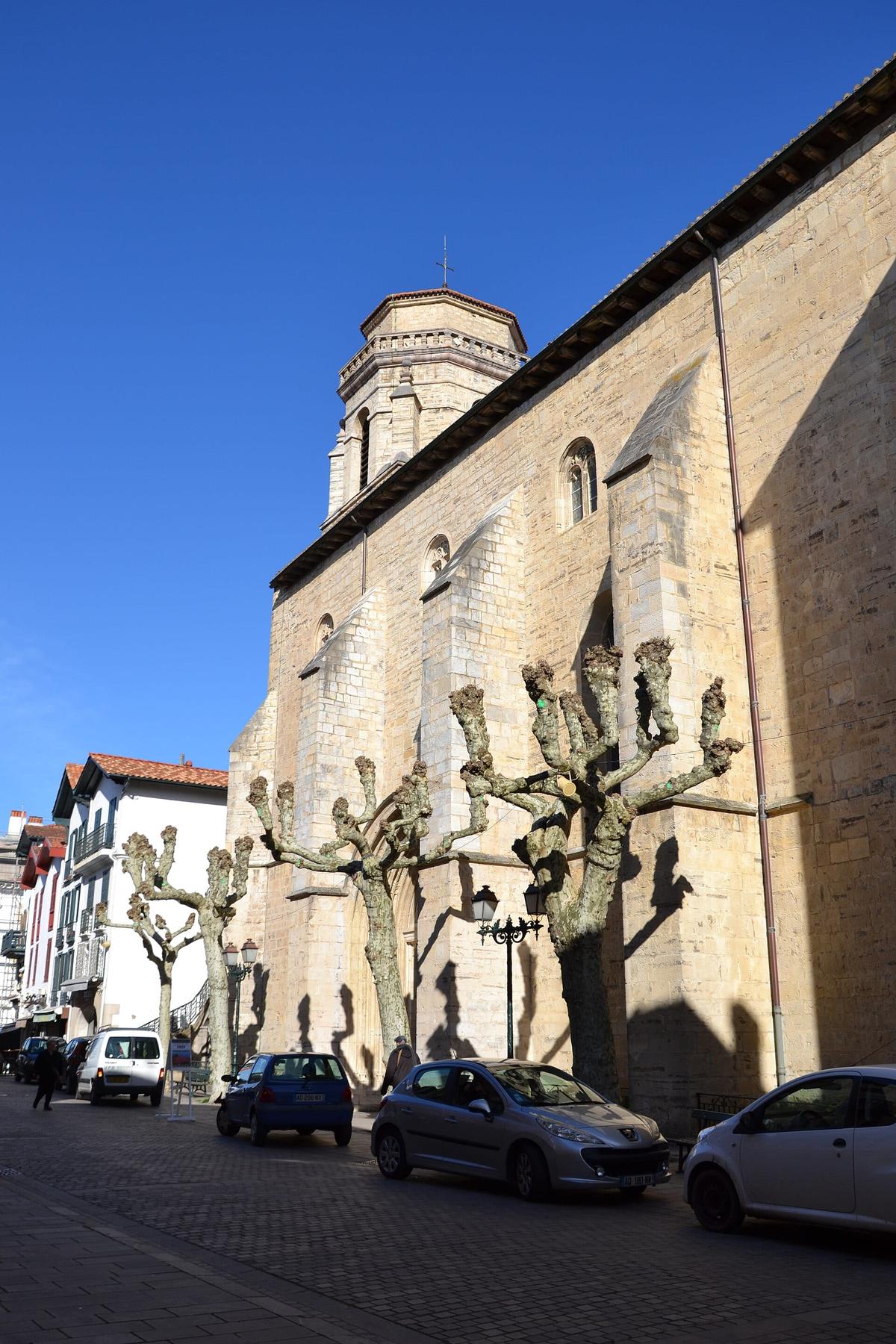

In the 17th century, the town was rich. Its shipowners made their money from whaling and cod fishing, as far as Newfoundland. A bigger church was needed. In 1649, the Bayonne architect Louis de Milhet drew up the plans for the extension. The work lasted half a century: a south door was opened in 1650, the north door in 1663, the main portal was finished in 1671, the last gap at the north-west corner was closed in 1672 and the tower was given an extra storey in 1685.
In other words, the king married in a building site. The tourist office points this out on its page: in 1660, the work was not finished. A new organ had been built the year before by Gérard Brunel, in 1659, for the ceremony.
A story about the bells. During a fire caused by lightning, the townspeople saved the bells by wrapping them in wet ship's sails. The spire of the bell tower, which was destroyed, was never rebuilt: it was replaced by the flat roof you see today.
Another about troubled times. During the Revolution and the Napoleonic wars, the church was used as a fodder store and then as a military hospital.
The walled-up door: legend and reality
This is the story everyone tells outside the church. After the king and the Infanta had passed through, the door they left by was supposedly walled up, so that no one would ever use it again.
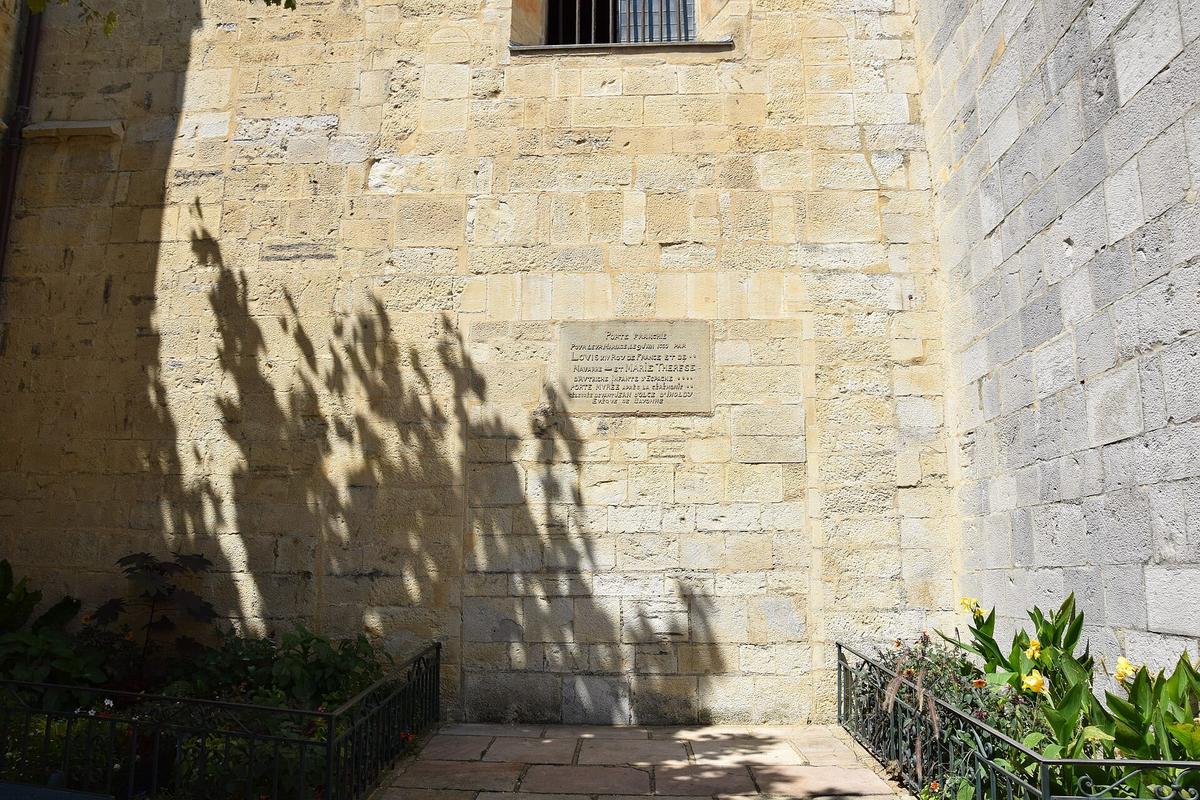

What does history say? The door was indeed walled up, around 1669, about ten years after the wedding. But the archives do not say who decided it, the parish or the Court, nor why. It may also have been closed simply because the new layout of the church made it unnecessary. It is a lovely legend, but it is not proven.
Walk around the outside of the church to see the frame of the blocked door in the wall.
Is there an entrance fee?
No. Like most churches in France, the Church of Saint-Jean-Baptiste is free to visit. No ticket is needed for a self-guided visit, and the Saint-Jean-de-Luz tourist office lists it for both self-guided and guided visits.
A donation towards upkeep is always welcome, but it is not compulsory.
Opening hours
The tourist office and the parish do not publish detailed opening hours for 2026. The church is a parish church open to the public for self-guided visits outside services. To be sure of finding it open, especially in winter, late in the day or on a religious holiday, call the parish on +33 5 59 26 08 81. The presbytery is at 11 Rue de l'Église.
Avoid Mass times. On Sunday mornings and during weddings and funerals, visits are not possible. If you would like to see the galleries full, though, attend a Mass: it is the only way to understand how the church works.
Our tip: come mid-morning on a weekday. The light comes in through the large south windows added in the 18th century and lights up the altarpiece. In July and August, Rue Gambetta is packed in the afternoon: in the morning, you will have the church almost to yourself.
Guided tours
Saint-Jean-de-Luz is part of an area with the Pays d'art et d'histoire label. Official guides offer a tour of the church, called "Église Saint-Jean-Baptiste, l'incontournable", on certain dates during the year: one took place on 23 October and the next one announced is on 21 December 2026. The tour covers the religious architecture of the Labourd, the balustered galleries and the Baroque altarpiece.

Places are limited and you register at the Récollets heritage interpretation centre (CIAP) in Ciboure, or at the tourist offices. The events listing does not give the price: ask when you register.
To place the church in the context of the town, a guided walking tour of the centre and the harbour, with the Maison Louis XIV and the shipowners' houses, is a good complement.
Partner links: if you book through these links, we earn a commission at no extra cost to you. Partner links · Learn more
How long does it take?
The tourist office suggests 30 minutes. That is just enough to walk round the nave, look closely at the altarpiece and spot the votive ship. If you like religious art or are on a guided tour, allow an hour. In half a day in Saint-Jean-de-Luz, the church fits easily between the Maison Louis XIV, the harbour and the beach.
What to see in the Church of Saint-Jean-Baptiste
The wooden galleries. This is what strikes you as you walk in. Three tiers of oak galleries surround the nave on three sides. According to Basque tradition, the men sat up there during Mass, while the women stayed in the nave, near the family graves. This custom lasted until the 1970s. The current galleries were rebuilt in 1857, with help from Napoleon III and Empress Eugénie, a regular visitor to the Basque coast. An account of the 1660 wedding already described "three very long galleries" on each side.
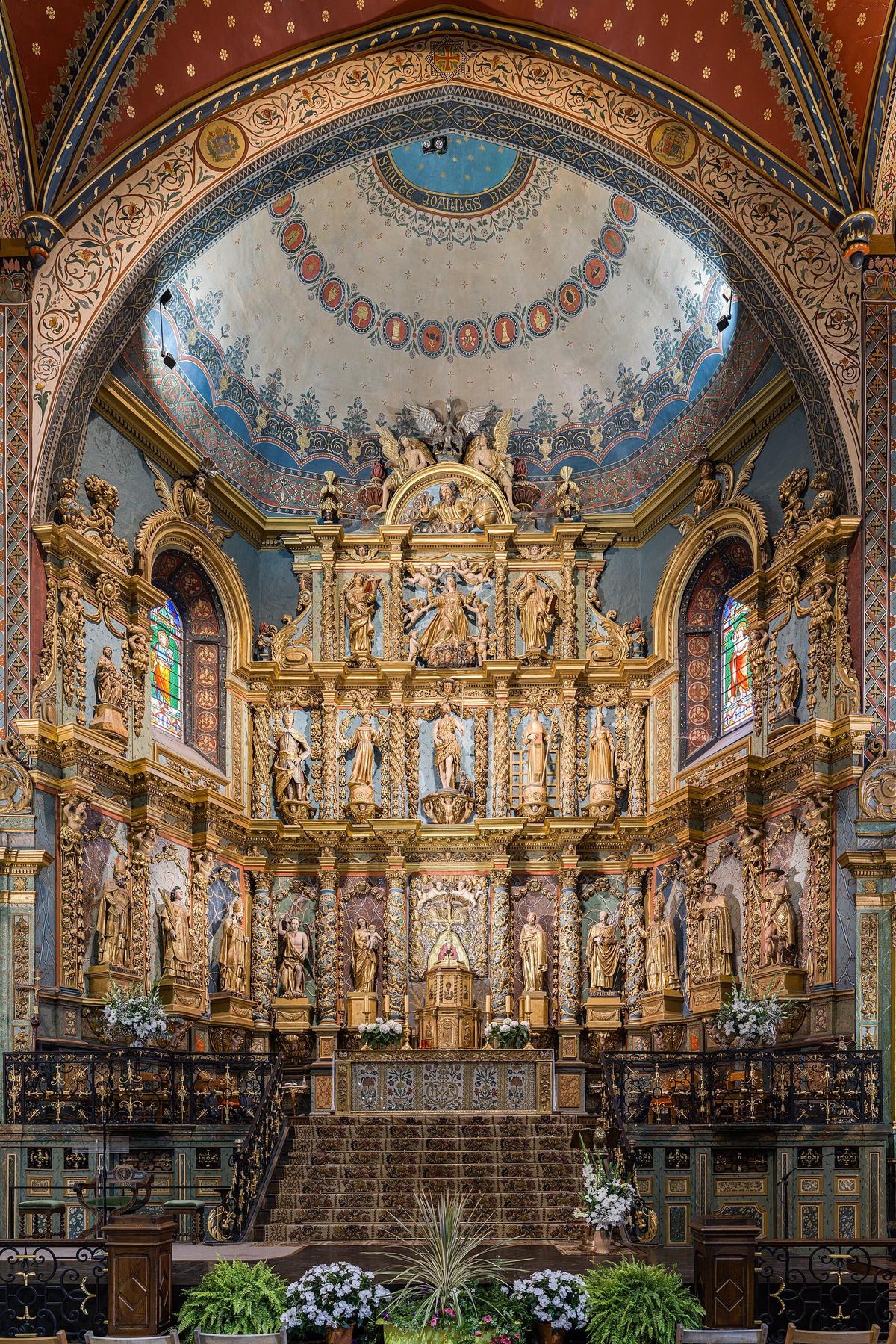

The altarpiece. It is described as the most monumental in the Basque Country. Made of gilded wood, it brings together 18 statues of saints around Saint John the Baptist, with two allegories, the dove, God the Father and the pelican. It was made by a local carpenter, Martin de Bidache, and installed in 1669. Its parts arrived from Bayonne on 5 carts. Go up close to the choir to see the details of the twisted columns and niches.
The votive ship. Look up in the nave. A model ship hangs below the ceiling. It is a sail and steam paddle-wheel dispatch boat, brought back from Newfoundland and given to the church in 1865 by the Soudre family. Its stern bears a dedication to Empress Eugénie. Votive ships are a reminder that the town lived from the sea, and from its shipwrecks.
The organ. Built for the royal wedding, it was rebuilt in 1874 and again in 1980. Its case is listed. The church regularly hosts concerts, a chance to hear it and see the interior lit up in the evening.
The pulpit. Dated 1878, it shows Saint Michael slaying the devil and wolf-headed monsters.
The painted vault. The choir was repainted in the Gothic Revival style in 1884. The nave is 48.6 metres long and 20 metres high under the vault.
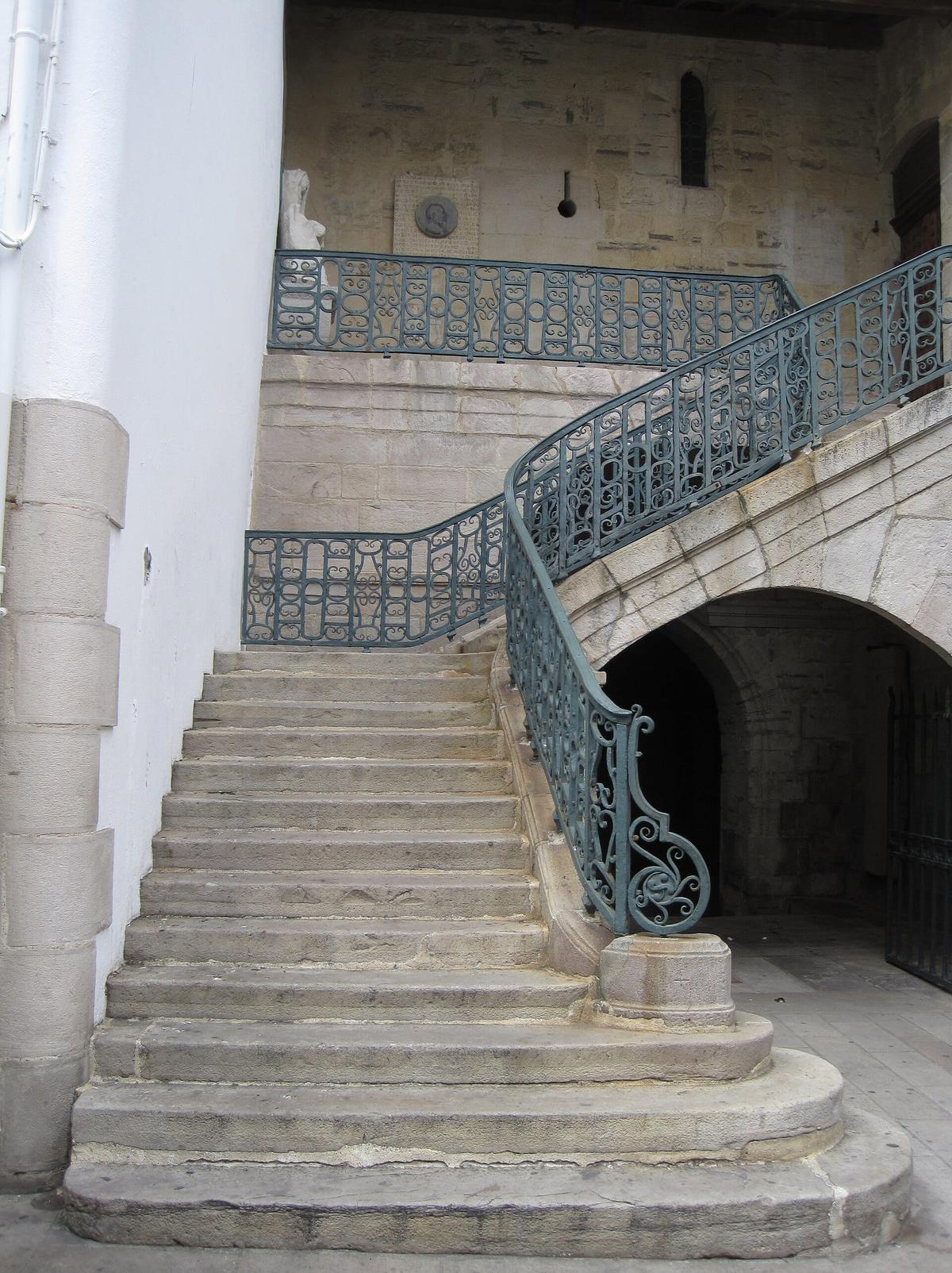
The gallery staircase. A stone staircase replaced the old wooden one in 1750, and its wrought-iron banister was added a few years later. This is the way the men went up to the galleries.
Visiting with children
The visit is short and free, which makes it easy to fit in with children. Tell them the story of the king who got married in a building site, get them to find the ship hanging from the ceiling and count the statues on the altarpiece. Remind them that the church is still a place of worship, so voices stay low.
Accessibility
The tourist office says access meets the standards for disabled visitors, without giving details of the facilities. The galleries, however, can only be reached by stairs. For a wheelchair visit, call the parish beforehand to check which entrance is the most convenient.

How to get to the Church of Saint-Jean-Baptiste
On foot. The church is in the heart of the town, on Rue Gambetta, the main pedestrian shopping street. It is a few minutes' walk from Place Louis XIV, the harbour and the main beach. Once you are in town, everything is within walking distance.
By train. Saint-Jean-de-Luz–Ciboure station, on the Bordeaux to Hendaye line, is about ten minutes' walk away.
By car. The centre is largely pedestrianised and parking is difficult. Use one of the paid car parks in the centre, near the harbour, and walk the rest of the way. In summer, arrive before late morning.
Renting a car. To combine the Basque coast, Hendaye and the inland villages, a car picked up at Biarritz airport is the simplest option.
What to visit nearby on the same day
| Also worth seeing | Distance | Travel time |
|---|---|---|
| Maison Louis XIV (Louis XIV House) | 0.2 km | 3 min on foot |
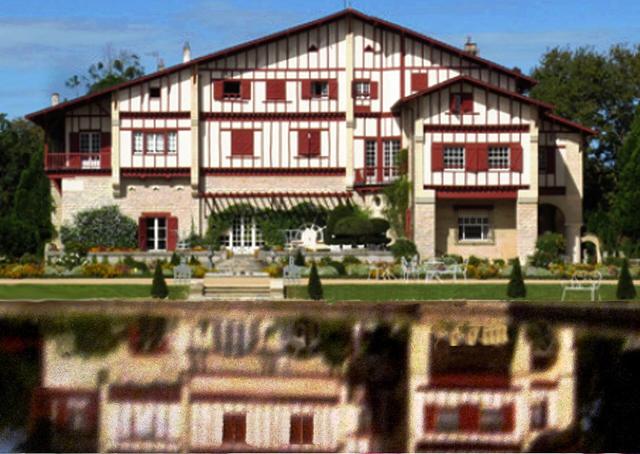
| Château d'Abbadia | 14 km | 20 min by car |
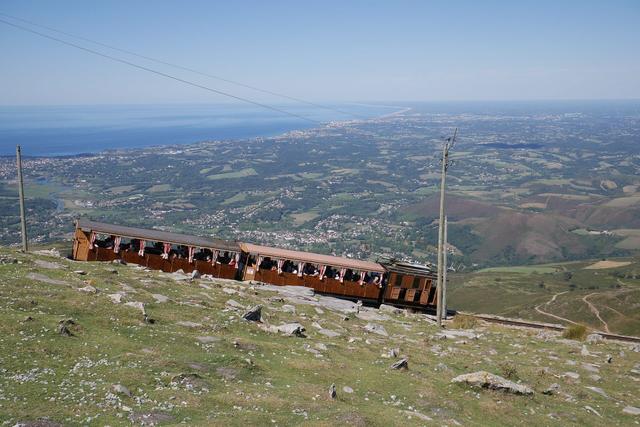
| La Rhune Train | 13 km | 20 min by car |
Approximate road distances and travel times.
The Maison Louis XIV, where the king stayed during the weeks of the wedding, is two streets away: it is mainly visited on a guided tour, from Easter to All Saints' Day. See also: Maison Louis XIV (Louis XIV House) In Hendaye, the Château d'Abbadia, built by Viollet-le-Duc for a scholar and traveller, is about twenty minutes' drive away. See also: Château d'Abbadia The little Rhune train leaves from the Col de Saint-Ignace, between Ascain and Sare. See also: La Rhune Train
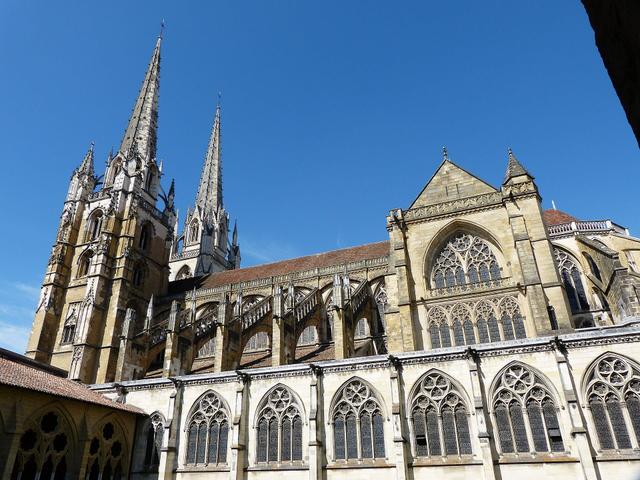
If you are interested in churches, Bayonne Cathedral, Gothic and without galleries, shows the other side of the region's religious architecture, half an hour away. See also: Bayonne Cathedral (Cathédrale Sainte-Marie) Inland, Saint-Jean-Pied-de-Port and its church on the banks of the Nive make a lovely day out. See also: Saint-Jean-Pied-de-Port, Villa Arnaga, Sare Caves, Basque Country and Pyrenees
Where to eat and stay in Saint-Jean-de-Luz
Rue Gambetta and the streets around the church are full of restaurants, pastry shops and shops selling gâteau basque. For a fish meal, head down to the harbour and Place Louis XIV. Avoid the lunchtime rush in summer, or book.
Saint-Jean-de-Luz has hotels in every category, but they are expensive and fill up quickly in summer. Ciboure, across the harbour, and the neighbouring towns have more choice.
Places to stay near Saint-Jean-de-Luz
FAQ
Is there an entrance fee for the Church of Saint-Jean-Baptiste?
No, entry is free. Only the Pays d'art et d'histoire guided tours require registration.
When did Louis XIV get married in Saint-Jean-de-Luz?
On 9 June 1660, in the Church of Saint-Jean-Baptiste, to the Infanta Maria Theresa of Spain. The church was still being built at the time.
Was the wedding door really walled up?
A door was indeed walled up around 1669, but no document proves it was so that no one could pass through after the king. It is a tradition, not an established fact.
Why do Basque churches have galleries?
They were for the men during Mass, while the women stayed in the nave. In Saint-Jean-de-Luz, the custom lasted until the 1970s.
How long does the visit take?
About 30 minutes on a self-guided visit, an hour if you take time to study the altarpiece and the galleries.
What are the opening hours?
No detailed hours are published. The church is open to visitors outside services; call the parish on +33 5 59 26 08 81 to check, especially in winter.
Practical information
Official ticket-office prices 2026
Free admission
Address
Église Saint-Jean-Baptiste, rue Gambetta, 64500 Saint-Jean-de-Luz, France
Directions · Phone+33 5 59 26 08 81
On site and nearby
- Nearest shops and pharmacy: Saint-Jean-de-Luz, less than 1 km away Straight-line distance, based on OpenStreetMap.
- Emergencies: 112 (all emergencies, free from any phone), 15 (SAMU, medical emergency)
Around the site, on Google Maps
With children
Family days out nearby: Château d'Urtubie (3 km), La Rhune Train (9 km), Cité de l'Océan (11 km)
Swimming pools and play areas nearby, on Google Maps
Facts checked on 11 November 2026. Sources: saint-jean-de-luz.com, fr.wikipedia.org, pop.culture.gouv.fr, en.wikipedia.org
Map
In the same region
- Château de Morlannefrom €7Free under 7
- Gouffre d'Esparrosfrom €12.50Free under 4