Château de Morlanne: planning your visit
Château de Morlanne at a glance
- Full price
- €7
- Free
- children under 7
- Where
- Morlanne
Official ticket-office prices, checked on 12 November 2026. Full opening hours, reduced prices and access
In northern Béarn, between Pau and the Landes, the Château de Morlanne looks down on a small village that has kept its old houses and fortified church. Gaston Fébus had it built in 1373 for his half-brother. Restored by the historian Raymond Ritter, it now houses a collection of furniture and works of art. Here are the prices, opening hours, how long to allow and what to know before you go.
Morlanne at a glance
- Where: in Morlanne, in northern Béarn (Pyrénées-Atlantiques), about forty minutes' drive from Pau.
- Tickets: €7 for a self-guided visit, €5 reduced rate (ages 7 to 18, students, jobseekers, disabled visitors), free up to age 6. Guided tour: €2 extra per person.
- Opening: from 1 April 2026 to 31 October 2026 in 2026, afternoons only, every day except Monday. The park is open all year round.
- How long: about an hour for the château, more if you add the park, the village and the audio trail.
- Best for: fans of medieval castles and decorative arts, families looking for a short visit, walkers after a view of the Pyrenees.
- Good to know: the 2026 season is over. The château will reopen next season, but the date has not been published yet.
Why visit the Château de Morlanne
Morlanne is one of the castles in the defensive network built by Gaston Fébus, Count of Foix and Viscount of Béarn, in the second half of the 14th century. It was commissioned in 1373 and designed by Sicard de Lordat, the architect of Fébus's major projects, who also worked at Pau and Montaner. Like them, it is built of brick.
Fébus entrusted it to his half-brother, Arnaud-Guilhem de Béarn. His job was to hold the centre of the defensive line facing Gascony, then held by the King of England. The castle is not huge. It is a seven-sided polygonal enclosure, reinforced by two towers, with a square keep. To the north, a semicircular water-filled moat protects the mound, which is separated from the plateau where the village stands.
Inside the walls, the lord's residence dates from the late 16th century. Over the centuries, windows were cut into the curtain wall, then blocked up again during the restoration. By the 19th century, the castle was in poor condition. When the historian Raymond Ritter bought it in 1969, it was in ruins.
Ritter and his wife restored it and furnished it with their own collection. Raymond Ritter died in 1974. The château and its collections were left to the Pyrénées-Atlantiques department, which still owns it. It is run by the Luys en Béarn group of local councils. The château has been protected as a historic monument since 1975.
The site does not publish annual visitor numbers.
Stories to know before you go
A castle sold to a favourite of Louis XI. In 1469, Catherine de Coarraze sold Morlanne to Odet d'Aydie, a Gascon lord who had made his fortune in the service of King Louis XI. He remodelled the castle in the second half of the 15th century. His heirs kept it until the mid-16th century.
A barony for a marshal. After the Montesquiou family, the castle passed to Isaac de Freixe, a marshal under Louis XIV. In 1643, he had Morlanne raised to a barony. His descendants owned it until 1816.
A village that was bigger in the Middle Ages. The 1385 general census of Béarn, ordered by Fébus, counted 72 households in Morlanne, or about 400 people. That was the village's heyday.
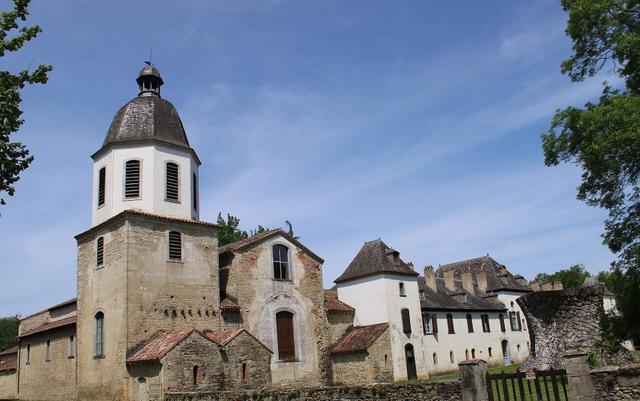
A church that looks like a fortress. The Church of Saint-Laurent, a few minutes' walk from the castle, has three bell towers. The square one is original; the other two were built as watchtowers during the Hundred Years' War. During the Wars of Religion, in 1569, the church became a real stronghold.
Château de Morlanne ticket prices
2026 prices published by the château:
- Full price, self-guided visit: €7.
- Reduced rate: €5 for ages 7 to 18, students, jobseekers and disabled visitors.
- Children up to age 6: free.
- Groups (from 10 people, by booking): €5 per person.
- Guided tour: €2 extra per person, with a minimum of two people. That makes €9 at full price and €7 at the reduced rate.
The self-guided visit includes access to the wall walk and the keep.
What is free. The park, with its French formal garden and view of the Pyrenees, is open to all year round. The "Au temps de Fébus" audio trail is free too: download it on the LISTENERS app (Google Play or App Store) and follow it in the park and around the castle, even when the château is closed.
Our view on the price. At this price, the guided tour is worth the extra: the rooms are mainly furnished with works of art, and the guide helps you understand what you are looking at. If there are two of you, book the 14:00 slot so you still have time to walk around the village afterwards.
Partner links: if you book through these links, we earn a commission at no extra cost to you. Partner links · Learn more
Do you need to book?
For a self-guided visit, no. You pay at reception. At busy times, you may be asked to wait in the courtyard or at reception before going in.
For the guided tour, yes: booking is compulsory. Call the château on +33 5 59 81 60 27. Guided tours run from April to October, Tuesday to Sunday, at 14:00, 15:30 and 17:00.
Groups also book in advance. Two themed tours are offered to them: "Les métiers d'art", on the objects in the collection and the crafts that made them, and "À nos illustres dames", on the women linked to the castle, from Countess Aliénor de Comminges to Madame Ritter.
2026 opening hours and the best time to go
Opening hours published by the château for the 2026 season:
- April and May: 14:00 – 18:00, every day except Monday.
- June to August: 14:00 – 18:30, every day except Monday.
- September and October: 14:00 – 18:00, every day except Monday.
The château says it closes on some weekends. Check the opening calendar on its website's home page before you set off.
The 2026 season ended on 31 October 2026. The château has announced it will reopen next season but has not given a date yet. In winter, only the park, the picnic area and the audio trail remain open.
The château only opens in the afternoon. There are no morning visits, except for children's workshops during the school holidays. Plan your day around this: lunch in the village or a picnic in the park, then visit at opening time.
Our tip: come on a clear day. The view of the Pyrenees from the wall walk is one of the highlights of the visit. In July and August, go for late afternoon, which is more pleasant up on the walls.
How long does it take to visit Morlanne?
The château does not publish a visit time. The site is small: allow about an hour for the rooms, the keep and the wall walk.
Add half an hour for the park and garden, and the same for the Church of Saint-Laurent and the village houses. If you want a walk, the waymarked "Morlanne: le château" loop circles the site in 2.4 kilometres, with 178 metres of climbing. The tourist office says it takes 75 minutes. It starts from the church car park and goes past the castle and the garden, then the Fontaine des Sœurs, the village's old wash house.
All in all, half a day is enough to see everything without rushing.
What to see at the Château de Morlanne
The rooms and the Ritter collection. The Ritters left the department a collection of 600 works of art, 211 of which are protected as historic monuments. It includes furniture, paintings, tapestries and sculptures. Among the highlights are a drawing by Maurice Quentin de La Tour and another by Fragonard. A bedroom from the Consulate and Empire period has two mahogany beds. One room is devoted to the painter René Morère, who died in 1942.
The optical theatres. The tour has been redesigned with new interpretation features, including 2 optical theatres. They tell the castle's story in a livelier way than the labels.
The keep and the wall walk. At 25 metres up, the wall walk looks out over the Pyrenees, the village and the Béarn countryside. It is the most spectacular part of the site.
The brick enclosure. Walk around the outside of the castle. You can clearly see the seven-sided plan, the two towers and the moat on the north side. Look out for the old blocked-up windows in the wall too.
The park. Centuries-old trees, a French formal garden and mountain views: you can walk here freely all year round.
The village. Don't leave without seeing the fortified Church of Saint-Laurent, with its protected furnishings (lectern, confessional, pulpit), and the Maison Belluix. This tower house was built in the late 15th and early 16th centuries by Aramonet de Belluix, who wanted to show off his social success. It later served as a flour mill and now houses the media library.
Visiting with kids
The castle is small and the visit is short: a good format for children who get bored quickly.
- The activity booklet. A free booklet is handed out at reception. Children have to find the motto of the "Prince of the Pyrenees", Fébus's nickname.
- The children's workshops (Rendez-vous des enfants). During French school holidays, on some Wednesdays and Fridays, the château runs workshops by booking: "Pitchouns" for ages 3 to 6 in the morning at 10:30, "Géants" for ages 7 to 11 in the afternoon at 15:00. Price: €9 per child, free for the accompanying adult, self-guided visit included.
- The audio trail. It is free and a handy way to tell children about Fébus as you walk around the park.
- Picnics. The picnic area at the foot of the castle is open to all year round. With the view of the Pyrenees, it makes a good break.
Accessibility
The department has carried out accessibility work: a reserved parking space right by the château, a lift inside and seats in the exhibition rooms. The château does not say whether the wall walk is wheelchair accessible: call before you come.
The château gives no information about dogs.
How to get there
By car. This is the easiest way. Morlanne is about 3 kilometres from the D945, which runs north from Pau. Head towards Sault-de-Navailles; at the "Poteau de Lannes" junction, turn right. In the village, turn right at the town hall: the château is at the end of the street. Allow around forty minutes from Pau.
The château's large car park takes cars, motorbikes and coaches. A disabled parking space is reserved right by the château.
By public transport. No convenient bus line serves Morlanne. Without a car, the visit is difficult.
Hiring a car. Pau, with its station and airport, is the most convenient starting point for combining Morlanne, Pau and Fébus's other castles.
What to combine on the same day
| Also worth seeing | Distance | Travel time |
|---|---|---|
| Château de Pau | 32 km | 40 min by car |
| Oloron Cathedral (Sainte-Marie) | 50 km | 55 min by car |
| Château de Montaner | 60 km | 65 min by car |
Approximate road distances and travel times.
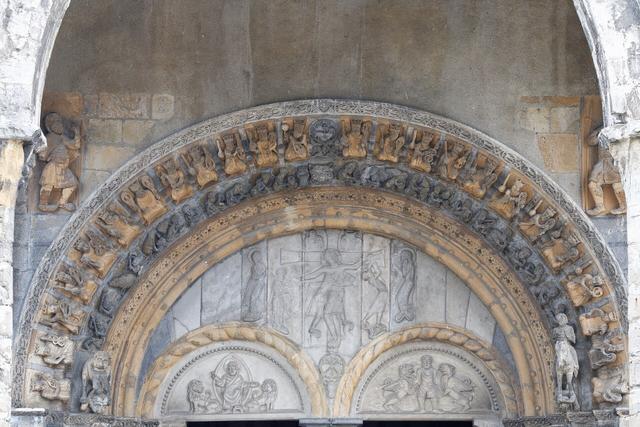
The Château de Pau, where Henry IV was born, was remodelled by Fébus with the same architect, Sicard de Lordat. Seeing both on the same day lets you compare the two projects. See also: Château de Pau To follow in Fébus's footsteps, the Château de Montaner, in eastern Béarn, also has a brick keep and a polygonal enclosure, but on a different scale. See also: Château de Montaner To the south, Oloron's Cathedral of Sainte-Marie and its Romanesque portal round off a day in Béarn. See also: Oloron Cathedral (Sainte-Marie)
Further afield, in the Hautes-Pyrénées, the Cistercian Abbey of l'Escaladieu can also be visited outside the summer. See also: Escaladieu Abbey, Bétharram Caves, Basque Country and Pyrenees
Where to eat and stay
On site. The château has no restaurant. The village has bars and restaurants, mentioned by the tourist office along the walking loop. The picnic area in the park is the easiest option in good weather.
To stay. Morlanne is a small village. Pau, around forty minutes away, has the widest choice of hotels and lets you visit the town and its château the next day.
FAQ
How much does it cost to visit the Château de Morlanne?
€7 for a self-guided visit, €5 reduced rate (ages 7 to 18, students, jobseekers, disabled visitors) and free up to age 6. The guided tour costs €2 extra per person.
Is the Château de Morlanne open in winter?
No. The 2026 season ended on 31 October 2026 and the reopening date has not been published yet. The park, the picnic area and the audio trail stay open all year round.
Do you need to book the guided tour?
Yes. It runs from April to October, Tuesday to Sunday, at 14:00, 15:30 and 17:00, by booking. The self-guided visit needs no booking.
How long should I allow?
About an hour for the château, half a day with the park, the church and the village.
Who built the Château de Morlanne?
Gaston Fébus commissioned it in 1373 for his half-brother Arnaud-Guilhem de Béarn. The architect was Sicard de Lordat.
Can you go up on the wall walk?
Yes, access to the keep and the wall walk, 25 metres up, is included in the self-guided ticket.
Practical information
Opening hours 2026
| 1 April 2026 to 31 May 2026 | 14:00 – 18:00 (Closed: Monday) |
|---|---|
| 1 June 2026 to 31 August 2026 | 14:00 – 18:30 (Closed: Monday) |
| 1 September 2026 to 31 October 2026 | 14:00 – 18:00 (Closed: Monday) |
Official ticket-office prices 2026
| Full price | €7 |
|---|---|
| Reduced rate | €5 |
| Free | children under 7 |
Address
Château de Morlanne, Carrère du Château, 64370 Morlanne, France
Directions · Phone+33 5 59 81 60 27
On site and nearby
- On site: Picnics allowed
- Nearest shops and pharmacy: Arthez-de-Béarn, 8 km away Straight-line distance, based on OpenStreetMap.
- Emergencies: 112 (all emergencies, free from any phone), 15 (SAMU, medical emergency)
Around the site, on Google Maps
With children
Family days out nearby: Château de Laàs (29 km), Château de Montaner (46 km), Bétharram Caves (53 km)
Swimming pools and play areas nearby, on Google Maps
Facts checked on 12 November 2026. Sources: chateaudemorlanne.fr, chateaudemorlanne.fr, fr.wikipedia.org, en.wikipedia.org, pop.culture.gouv.fr, chateaudemorlanne.fr, tourisme64.com, tourisme64.com, chateaudemorlanne.fr
Map
In the same region
- Gouffre d'Esparrosfrom €12.50Free under 4