Gouffre d'Esparros: visiting the cave of aragonite crystals
Gouffre d'Esparros at a glance
- Full price
- €12.50
- Free
- children under 4
- Time needed
- about 55 min
- Where
- Esparros
Official ticket-office prices, checked on 4 November 2026. Full opening hours, reduced prices and access
In the Baronnies, east of Bagnères-de-Bigorre, the Gouffre d'Esparros hides aragonite crystals so delicate that Norbert Casteret, who explored it in 1938, fought to protect them. The cave is small, the tour is guided and visitor numbers are capped each day. Here are the prices, the booking you must not forget in summer, the closure dates and our tips for combining it with the Espace Préhistoire de Labastide.
Gouffre d'Esparros at a glance
- Where: in Esparros, in the Baronnies (Hautes-Pyrénées), at 5 Chemin du Gouffre.
- Price: €12.50 per adult, €7.50 for ages 4 to 12, €8 for ages 13 to 17, free under 4.
- Tour: guided, about 55 minutes, with a staircase of 60 steps to go down and then back up.
- Booking: essential in July, August and during school holidays, recommended the rest of the year.
- Closure: from 2 November 2026 to 18 December 2026. Reopens on 19 December 2026.
- Best for: geology enthusiasts, families with children who walk well, anyone looking for a quieter cave than the big Pyrenean sites.
What is the Gouffre d'Esparros?
It is a natural cave hollowed out of the limestone of the Baronnies, a small area of hills in the Hautes-Pyrénées. You do not visit it for its size: other caves in the Pyrenees are far bigger. You come for its crystals.
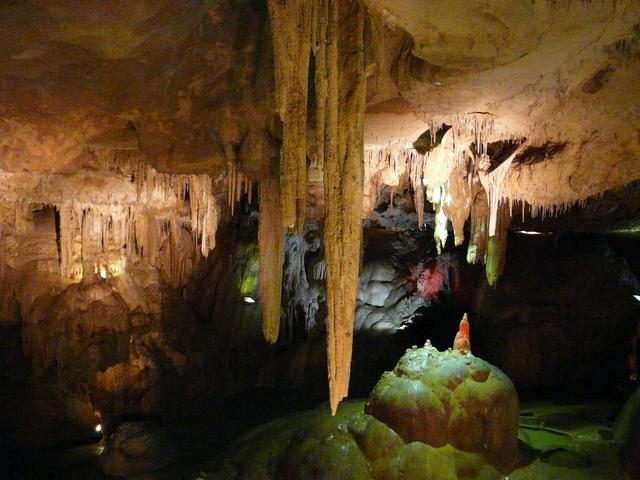
The walls are covered in aragonite, gypsum and calcite. Aragonite is a form of calcium carbonate that crystallises in fine needles. At Esparros, it forms white clusters that the site calls "stone flowers". You also see helictites (formations that grow in every direction, ignoring gravity), draperies, stalactites and pools of bluish water.
Norbert Casteret, one of the best-known French cavers of the 20th century, described the place as "a mineral blossoming of unimaginable delicacy and purity". He also wrote of the cave: "You do not describe a firework display".
The cave has been protected since 30 October 1987. It is one of the caves the French Ministry of the Environment judged a priority for protection, and it has been under scientific and climate monitoring since it opened to the public.
The cave's history, from the shepherdess to Casteret
The legend. According to a local legend told by the site, a shepherdess found the entrance while looking for a lamb that had fallen into a natural shaft. The area has many of these vertical shafts.
The first explorers. In 1913, some Austrians went down this shaft, but went no further than a few metres.
Casteret and Gattet. On 25 June 1938, after 7 years of searching, Norbert Casteret went further in with Germain Gattet. The two men explored the whole network. Casteret soon understood how fragile the crystals were and fought against looting. He was the first to call for the cave's protection.
The war. In 1942, the cave hosted the first radio report made underground. During the Second World War, Casteret hid secret documents in it. In April 1945, a mass was held in the aragonite gallery, where a statue of the Virgin Mary is fixed on a stalagmite.
Protection. In July 1983, the Ministry of the Environment listed the cave among the 12 finest caves in France to be protected as a priority. Formal protection followed in 1987.
Opening to the public. Work began in 1995. The cave opened to the public on 1 August 1997, with a visiting protocol designed not to damage the crystals. A study by the CNRS underground laboratory in Moulis concluded that limiting visitor numbers to 300 people a day did not change the conditions in the cave. That is why places are limited.
Gouffre d'Esparros ticket prices
Here is the price list displayed on the official website in November 2026. It carries no year, but the Occitanie tourist office publishes the same prices for 2026.
- Adult, 18 and over: €12.50.
- Child aged 4 to 12: €7.50.
- Young person aged 13 to 17: €8.
- Child under 4: free.
- Family pass, two adults and two children: €34.50, plus €6 per extra child according to the tourist office.
- Reduced rate: €11, for students, adult groups of 10 to 20 people and works committees.
- Disabled visitor: €6.
- Groups: €7 per child, €9 per adult.
Entry is also free, with proof, for holders of a French caving licence (FFS), tour guides, the press and tourism professionals.
You can pay in cash, by bank card or with paper ANCV holiday vouchers.
The pass with the Espace Préhistoire de Labastide. The cave offers a combined ticket with this nearby site, devoted to the life of nomadic hunters 15,000 years ago: €16.50 per adult, €12 for ages 4 to 17, €48 for a family of two adults and two children, €14 at the reduced rate. This pass cannot be bought online: book it by phone, at the cave (+33 5 62 39 11 80) or at Labastide (+33 5 62 49 14 03).
Do you need to book?
Yes, in most cases. The official website calls booking essential in July, August and during all school holidays, and strongly recommended the rest of the year. Without a booking, entry is not guaranteed: visitor numbers are capped each day to protect the crystals.
Online. The "Réservez ma visite" (book my visit) button on the official website lets you buy an e-ticket for a set time. E-tickets are not refunded, exchanged or taken back, even if lost or stolen, and the right of withdrawal does not apply. Choose your slot carefully.
By phone. This is compulsory for the pass with Labastide, for groups of more than 10 people and for disabled visitors. Organised groups of at least 20 people book a week ahead.
On the day. Arrive at least 15 minutes before your booked time. Departures are automated and do not wait: the management may give unused places to other visitors.
Opening hours and periods
The cave is open for most of the year: Christmas holidays, January and early February, winter holidays, March and early April, spring holidays, May, June and early July, July and August, September, October and the autumn half-term (Toussaint).
2026 closure. The cave is closed from 2 November 2026 to 18 December 2026 inclusive. It reopens on 19 December 2026, with the first tour from 9:45.
Tour times. Depending on the period, a tour leaves every hour or every half hour. The site does not publish the list of tour times: you see them when you book online, or by calling +33 5 62 39 11 80.
Our tip: in summer, take one of the first tours of the day, then keep the afternoon for Labastide or a walk in the Baronnies. Outside school holidays, the cave is much quieter, and it is the best time to ask the guide questions.
If it rains. The tour runs in all weathers, since it takes place underground. It is a good outing for a grey day in the Pyrenees.
What you see on the tour
The tour is guided and lasts about 55 minutes, on foot. You go down a staircase of 60 steps, then climb back up at the end.
The lake chamber. This is the lower part of the cave. The site describes pools of water with bluish reflections.
The aragonite gallery. This is the highlight. Aragonite crystals cover the walls and ceilings: fine white needles, grouped in tufts, which the site compares to flowers. They are what earned the cave its protected status.
Helictites and draperies. The guide points out the formations that grow sideways, ignoring gravity, and the draperies, thin sheets of calcite hanging from the ceiling like fabric.
Sound and light. The Occitanie tourist office presents the guided tour as a "sound and light" tour. The official website says it uses modern lighting technology.
Languages. The tourist office lists a welcome in French, English, Spanish and German. If you want a tour in a language other than French, ask when you book.
How long does the visit take?
The guided tour lasts about 55 minutes. Counting arriving early and a stop at the shop, allow about 1 hour 15 minutes on site.
With the Espace Préhistoire de Labastide, allow half a day for both sites. For a full day, add Bagnères-de-Bigorre or, if the weather is clear, a trip up the Pic du Midi.
Visiting with children
The cave appeals to children who walk well: going underground, the crystals, the lights. Entry is free under 4.
Remember the 60 steps to climb on the way back. For a 3 or 4-year-old, the climb back can feel long; a baby carrier is more practical than a pushchair on a staircase.
The cave also runs educational visits for school classes. The pass with Labastide is a good idea for children from 6 or 7: the cave in the morning, prehistory in the afternoon.
Accessibility
In a wheelchair. According to the Occitanie tourist office, the lower part, the lake chamber, is accessible to people with reduced mobility. The full tour is not possible in a wheelchair because of the 60-step staircase. Access for people with reduced mobility is by phone booking only, on +33 5 62 39 11 80. A page on the official website sets out the access conditions.
Dogs. The official website says nothing about pets. Ask when you book.
How to get to the Gouffre d'Esparros
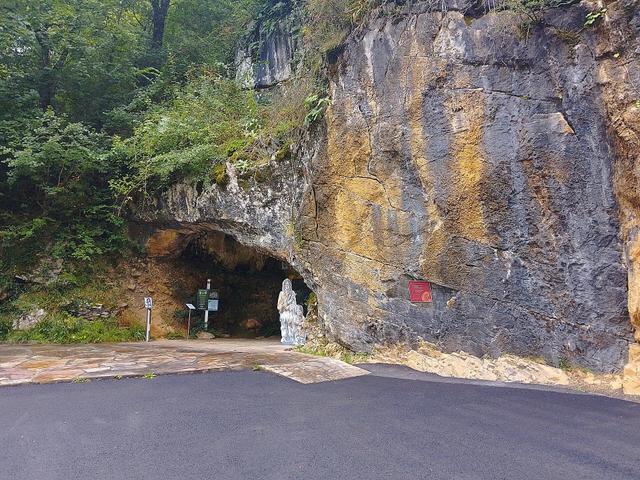
By car. This is the only practical way. The cave is at 5 Chemin du Gouffre, Esparros, in the Baronnies, east of Bagnères-de-Bigorre. Leave a margin before your booked time: tours do not wait.
Parking. The tourist office mentions a car park on site, also suitable for coaches.
Without a car. We have found no public transport to the cave. Without a car, you will need a taxi.
Hiring a car. The Baronnies are off the main roads, and the sites in the area (the cave, Labastide, the Pic du Midi, Lourdes) are spread out. Hire companies are in Tarbes, Lourdes and Pau, in town, at the station or at the airport. If you are flying in from abroad, picking up a car at the airport is the simplest option.
Partner links: if you book through these links, we earn a commission at no extra cost to you. Partner links · Learn more
What to combine nearby
| Also worth seeing | Distance | Travel time |
|---|---|---|
| Pic du Midi de Bigorre | 50 km | 60 min by car |
| Sanctuary of Our Lady of Lourdes | 55 km | 55 min by car |
| Parc animalier des Pyrénées | 65 km | 70 min by car |
Approximate road distances and travel times.
The Espace Préhistoire de Labastide. The nearby site tells the story of a group of nomadic hunters 15,000 years ago. The joint pass is booked by phone.
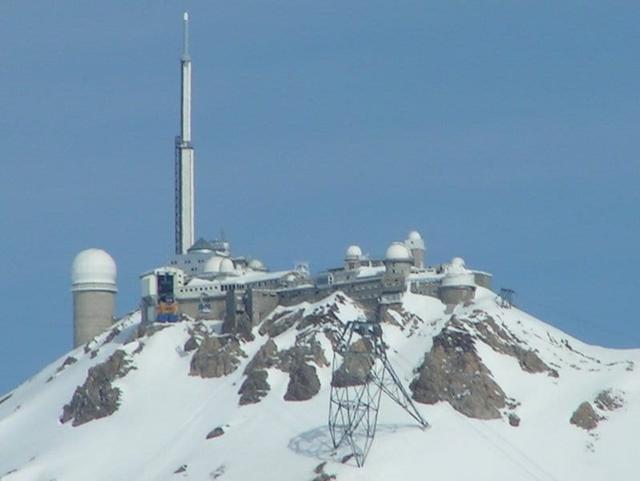
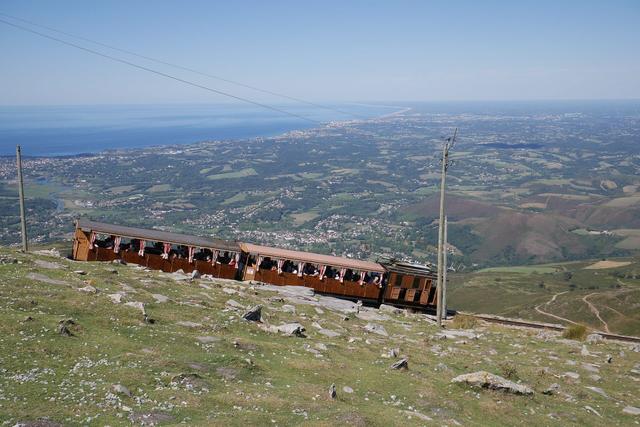
The Pic du Midi. The cable car leaves from La Mongie, about an hour's drive away. It is best to go up early on a clear day, then come down to the cave in the afternoon. See also: Pic du Midi de Bigorre
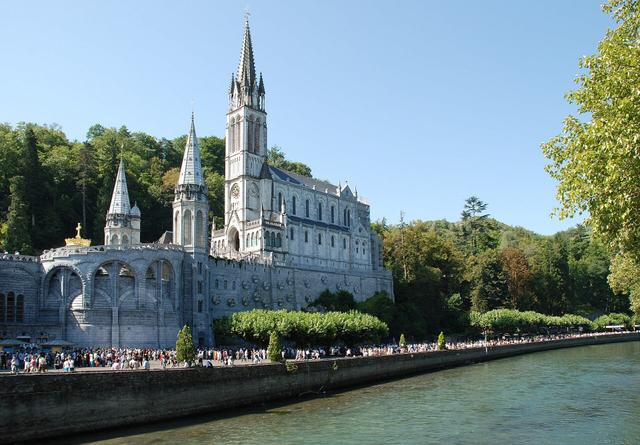
Lourdes and the Sanctuaries. A little under an hour to the west. See also: Sanctuary of Our Lady of Lourdes
Another cave. For comparison, the Bétharram caves, between Lourdes and Pau, have a much larger network, partly visited by boat. See also: Bétharram Caves
With children, the Parc Animalier des Pyrénées in Argelès-Gazost makes a good second day out. See also: Parc animalier des Pyrénées
Further afield in the region: See also: Château de Pau, Basque Country and Pyrenees
Facts and anecdotes
- The first radio broadcast underground. According to the history published on the official website, in 1942 the cave hosted the first radio report recorded in a cave.
- Documents hidden during the war. Again according to the site, Norbert Casteret hid secret documents in the cave during the Second World War.
- A mass in the aragonite gallery. In April 1945, a mass was held there. The site says a statue of the Virgin Mary was fixed on a stalagmite in the gallery.
- On television. In early November 2026, the official website announced that the French TV travel programme Échappées belles was filming a report in the cave.
Where to eat and stay near the cave
Eating. The official website does not mention a restaurant on site. Esparros is a small village: bring a picnic or have lunch in Bagnères-de-Bigorre.
Shop. The tourist office mentions a shop on site.
Staying. Bagnères-de-Bigorre is the most practical base, with its hotels, its spa and the road to the Pic du Midi. The Baronnies have quieter holiday cottages and B&Bs, a few kilometres from the cave.
Places to stay near Bagnères-de-Bigorre
FAQ
Do I need to book to visit the Gouffre d'Esparros?
Yes in July, August and during school holidays, and it is recommended all year. Places are limited each day. Arrive at least 15 minutes before your tour.
How much does the Gouffre d'Esparros cost?
€12.50 per adult, €7.50 for ages 4 to 12, €8 for ages 13 to 17, €34.50 for the family pass. It is free for under-4s.
How long does the tour take?
About 55 minutes, with a staircase of 60 steps to go down and back up.
Is the cave open in winter?
It is closed from 2 November 2026 to 18 December 2026, then reopens on 19 December 2026 for the Christmas holidays.
Is the cave wheelchair accessible?
Partly: only the lake chamber is accessible, and only by phone booking.
Who discovered the Gouffre d'Esparros?
Norbert Casteret explored it with Germain Gattet on 25 June 1938, after seven years of searching. Some Austrians had gone a few metres down the entrance shaft in 1913.
Practical information
Official ticket-office prices 2026
| Full price | €12.50 |
|---|---|
| Reduced rate | €11 |
| Child (aged 4–12) | €7.50 |
| Family ticket | €34.50 |
| Visitor with a disability | €6 |
| Free | children under 4 |
Address
Gouffre d'Esparros, 5 chemin du Gouffre, 65130 Esparros, France
Directions · Phone+33 5 62 39 11 80
On site and nearby
- Nearest shops and pharmacy: Sarrancolin, 8 km away Straight-line distance, based on OpenStreetMap.
- Emergencies: 112 (all emergencies, free from any phone), 15 (SAMU, medical emergency)
Around the site, on Google Maps
With children
Family days out nearby: Escaladieu Abbey (11 km), Château de Mauvezin (11 km), Gargas Cave (17 km)
Swimming pools and play areas nearby, on Google Maps
Swimming poolsPlaygroundsLeisure parks
Family activities around Bagnères-de-Bigorre on GetYourGuide
Facts checked on 4 November 2026. Sources: gouffre-esparros.fr, gouffre-esparros.fr, tourisme-occitanie.com, gouffre-esparros.fr
Map
In the same region
- Château de Morlannefrom €7Free under 7