Bayonne Cathedral: planning your visit
Bayonne Cathedral (Cathédrale Sainte-Marie) at a glance
- Admission
- Free
- Time needed
- about 30 min
- Where
- Bayonne
Facts checked on 11 November 2026. Full opening hours, reduced prices and access
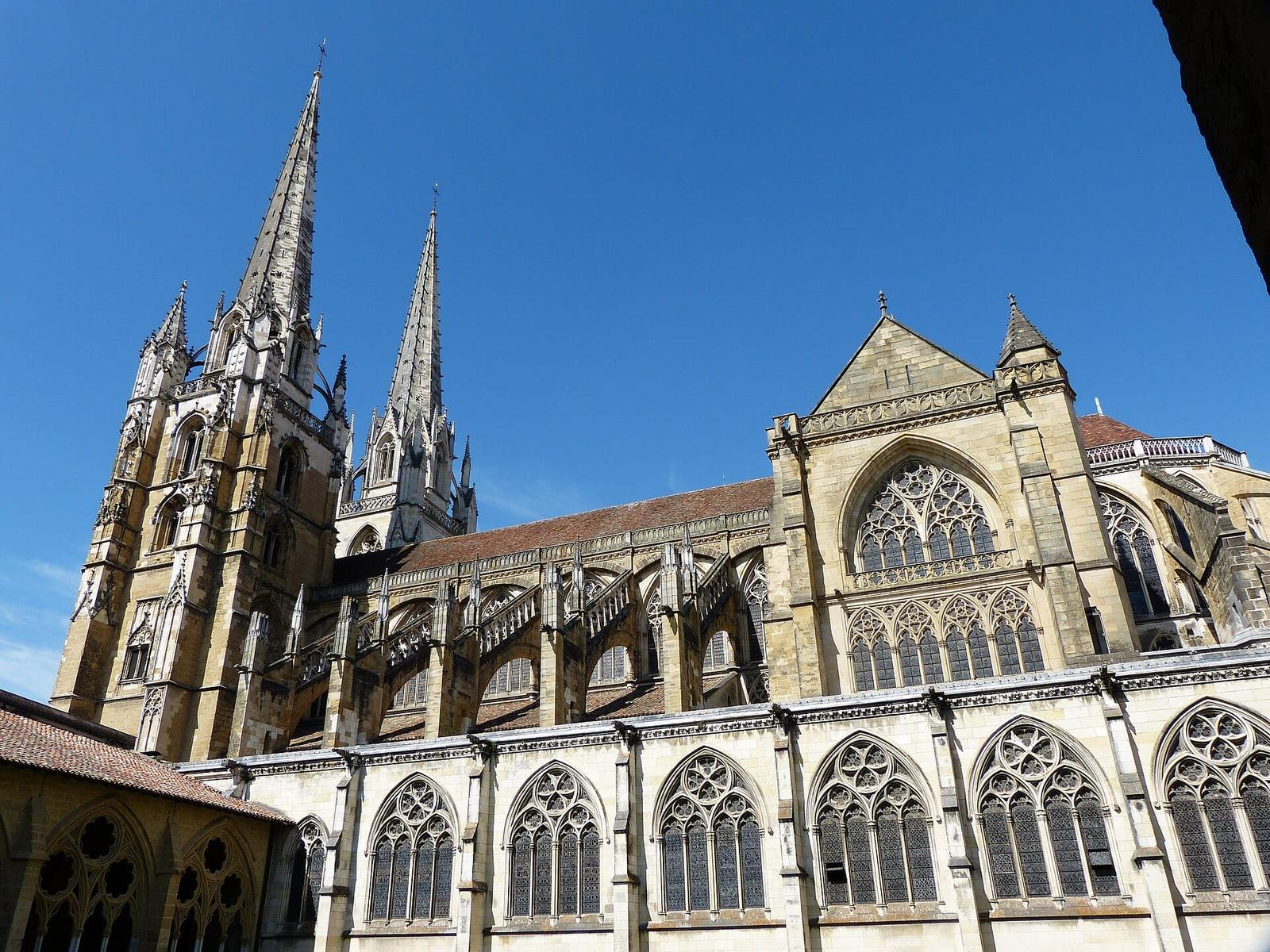

Its twin spires tower over Petit Bayonne and the banks of the Nive. Sainte-Marie Cathedral, a Gothic church begun in the 13th century when Bayonne was English, has one of the largest cloisters in France. It is a UNESCO World Heritage Site as part of the Routes of Santiago de Compostela. Entry is free: here are the opening hours, what to see, the climb up the tower and the evening show.
Bayonne Cathedral at a glance
- Where: in the heart of Grand Bayonne, on the hill above the Nive and the Adour, a few minutes' walk from the riverside.
- Price: free entry to both the cathedral and the cloister.
- Open: every day, with a break at lunchtime. Monday to Saturday, mornings 9:30 – 12:45.
- Time needed: 30 min for the cathedral, 20 more minutes for the cloister.
- Extras: a guided climb of the south tower on some days, and the Luminiscence show on summer evenings (both paid).
- Accessibility: the cloister is accessible to wheelchair users and visitors with reduced mobility.
Why visit Bayonne Cathedral
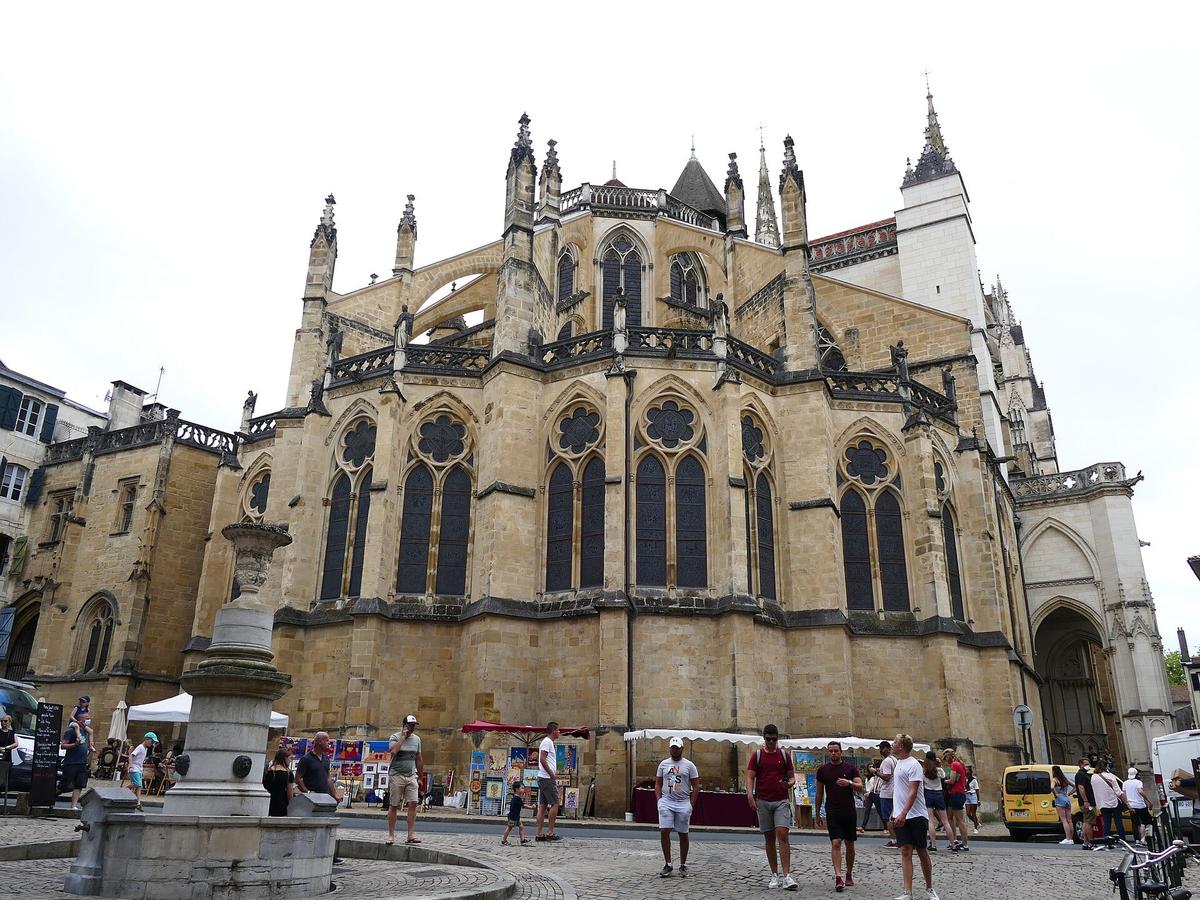
It is the city's great monument and one of the finest Gothic buildings in south-west France. It took almost three centuries to build. A first Romanesque cathedral, whose foundation stone was laid around 1140, burned down several times. The great fire of 1258, which destroyed half the town, and then lightning in 1310 finished it off. Work on the Gothic cathedral began in the 1240s; the last bay of the nave was completed in 1404.
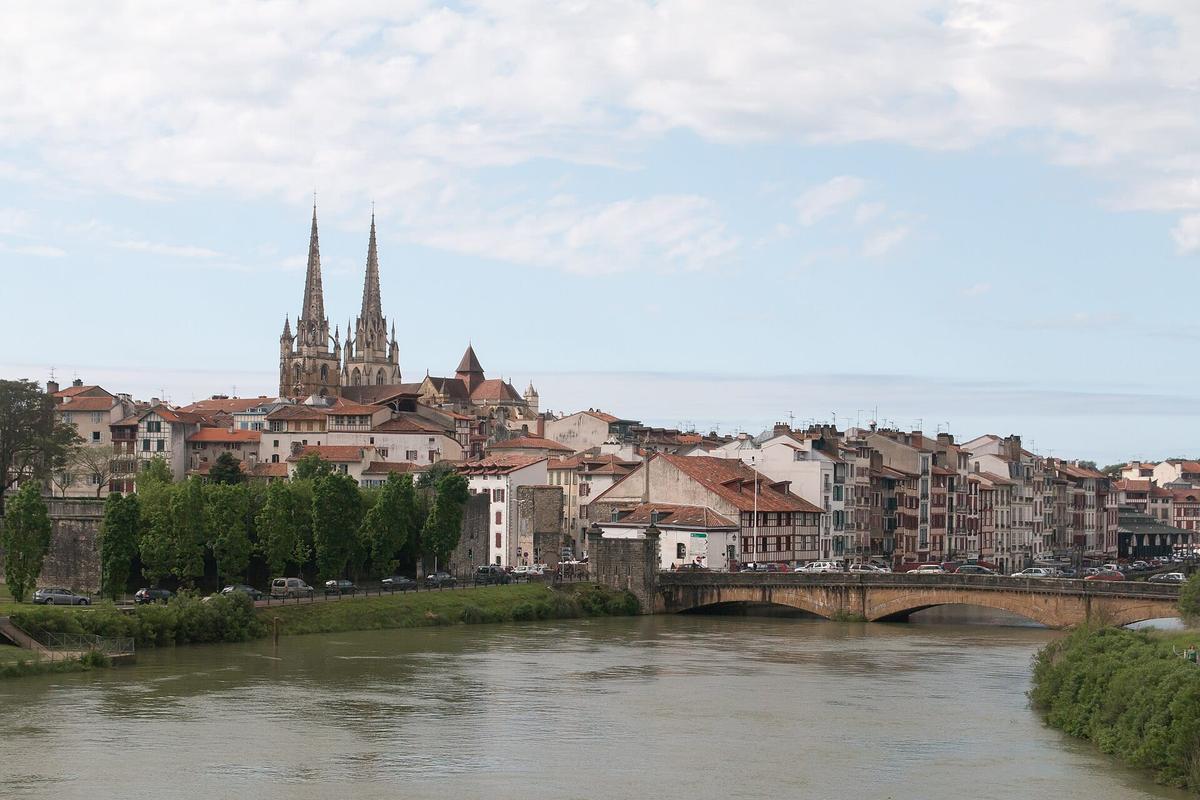

For almost all of that time, Bayonne was English. The church was nearly finished when the French took the city back in 1451. This double past can be read in the stone (see the keystones below).
The two spires, on the other hand, are recent. For centuries the facade had no spires at all. In the 19th century the architect Émile Boeswillwald, a pupil of Viollet-le-Duc, led a major restoration and had them built, helped in particular by a bequest of 40,000 gold francs from a Bayonne banker named Lormand. He also had the cathedral listed as a historic monument in 1862.
In 1998 it was added to the UNESCO World Heritage List along with the other monuments of the Routes of Santiago de Compostela in France. Bayonne is a stop for pilgrims following the coast towards Spain.
Some figures: 76.96 metres long, 33.4 metres wide, with a nave 26.5 metres high.
Is Bayonne Cathedral free to visit?
Yes. Entry to the cathedral and the cloister is free, with no booking needed. Only two activities are paid:
- The guided tour of the south tower: €10 per adult, €7 for ages 12 to 25, free under 12 (2026 prices).
- The Luminiscence show: from €10 per seat, depending on the session.
The cathedral is still a place of worship. Avoid visiting during services: on Sunday, come in the afternoon rather than the morning.
Cathedral and cloister opening hours
2026 opening hours, as published by the Bayonne tourist office.
The cathedral:
- Monday to Saturday: 9:30 – 12:45, then 15:00 – 19:00 from 6 April 2026 to 31 October 2026, and 15:00 – 18:30 the rest of the year.
- Sunday: 8:15 – 12:15, then 15:00 – 19:00 in season and 15:00 – 18:30 in winter.
The cloister (entrance from Place Pasteur, south of the cathedral):
- From 18 May 2026 to 20 September 2026: every day, 9:00 – 12:30 and 14:00 – 18:00.
- From 21 September 2026 to 31 December 2026: every day, 9:00 – 12:30 and 14:00 – 17:00.
Watch out for the lunch break. Between the end of the morning slot and the afternoon reopening, the cathedral is closed for more than two hours. Do not plan your visit for lunchtime.
Our tip: come on a weekday, mid-morning, and keep the cloister for last: it closes a little earlier than the cathedral at midday, but reopens an hour before it in the afternoon. If you arrive just after lunch, start with the cloister.
How long does it take to visit?
The tourist office suggests 30 min for an independent visit of the cathedral and 20 minutes for the cloister. Including the chapels around the ambulatory, an hour is enough to see everything without rushing. Add the Luminiscence show, about 45 minutes, if you stay for the evening.
What to see inside Bayonne Cathedral
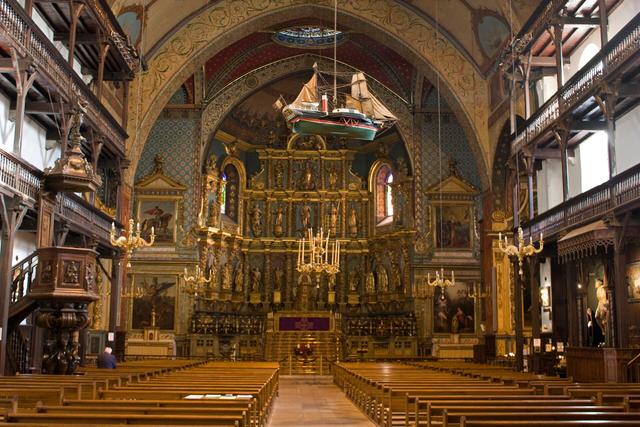
The keystones of the nave. Look up: some combine the fleur-de-lis of the kings of France with the three leopards of the kings of England, who were also dukes of Aquitaine. They are a reminder that the cathedral was built under English rule and finished under French rule.

The Canaanite Woman window. In the chapel of Saint Jerome, a Renaissance stained-glass window from 1531 shows Christ driving the demon out of the Canaanite woman's daughter. The windows in the choir date from the early 20th century.
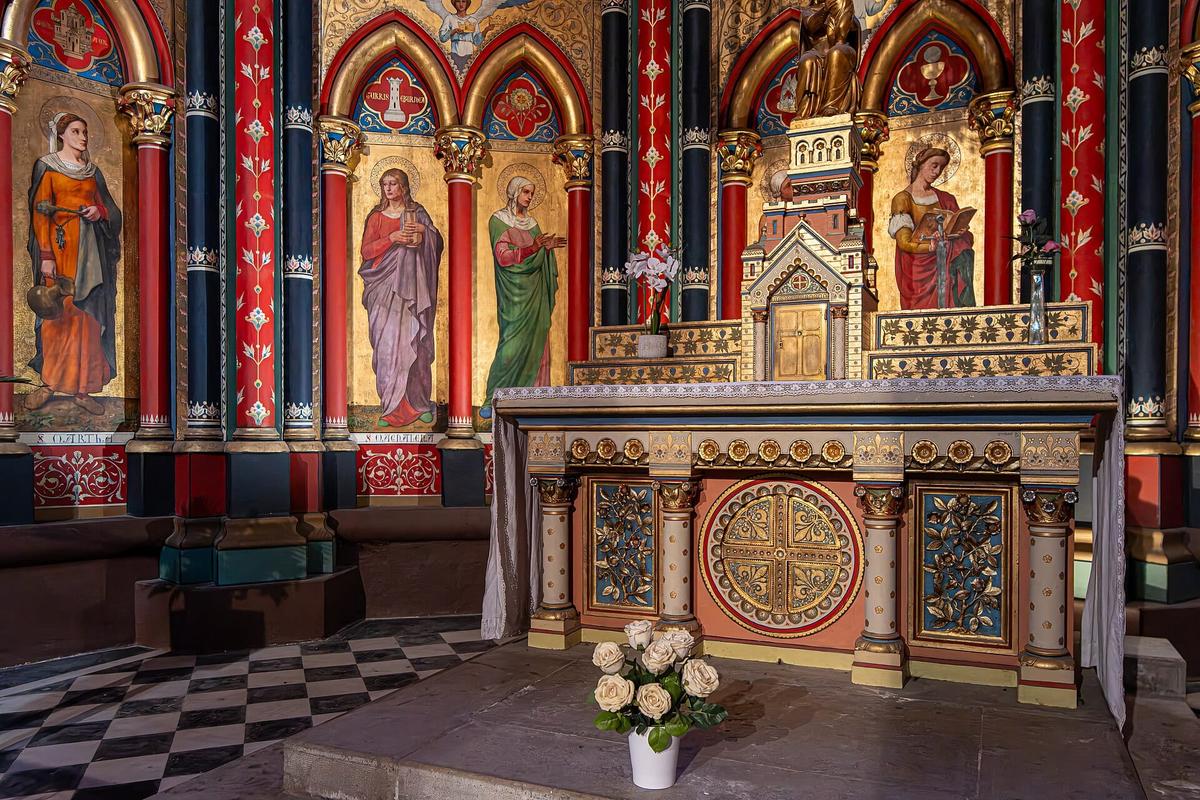
The ambulatory chapels. They are covered with wall paintings in 14th-century style, painted in the 19th century by Steinheil, with stained glass inspired by Chartres.
The pulpit and paintings. The octagonal pulpit, in Canary Islands mahogany, dates from 1760. Between 1761 and 1768 the chapter also commissioned six paintings on the life of the Virgin from Joseph Vernet; three survive.
A curiosity: in 1853, a chasuble brought back from the Third Crusade was found in a tomb in the chapel of Saint Anne.
Another one: Victor Hugo visited the cathedral in 1843 and described it in his travel notebooks, Alpes et Pyrénées.
The bells. The great bell, named Jacques, weighs about 3640 kilos. It was cast in 2003 and is painted in several colours, which is almost unique in France. The Marie bell, about 2,100 kilos, dates from 1819. They cannot be seen on a self-guided visit.
The great organ. The first organ was installed in 1488. The current instrument, by Victor Gonzalez (1935-1937), has been in poor condition since the 1970s and no longer plays as it should.
The cathedral cloister
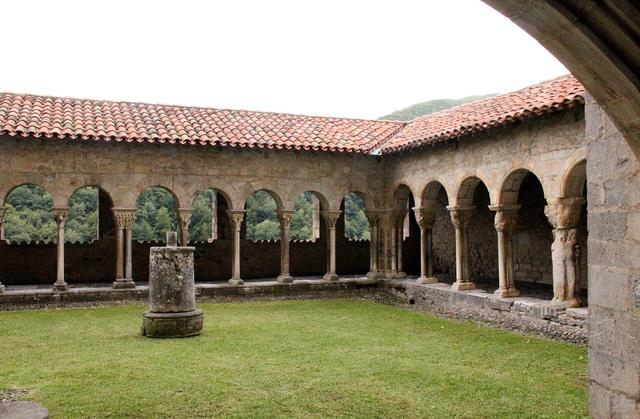
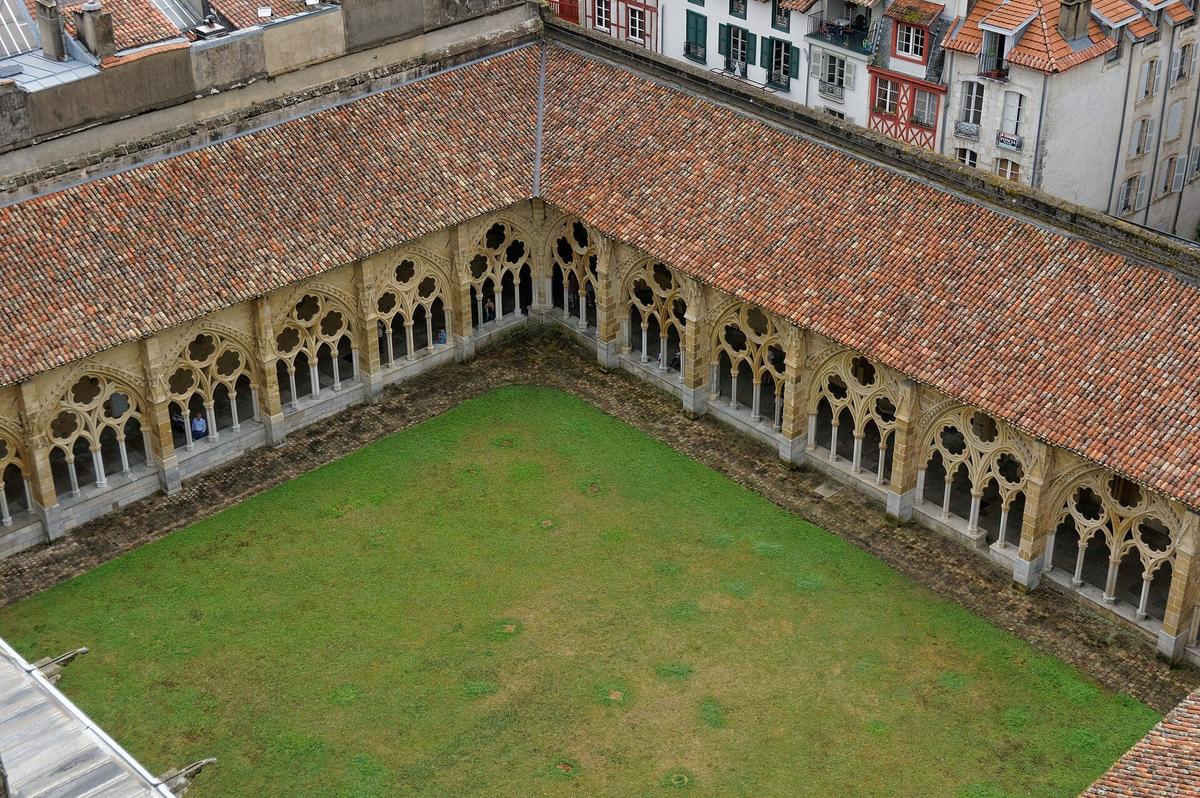
The cloister, built in the 13th and 14th centuries on the site of a Romanesque one, is among the largest in France. It was used for prayer and processions and as a cemetery, but also as a public square: local dignitaries and guilds held their meetings there. Its north gallery disappeared in the 19th century.
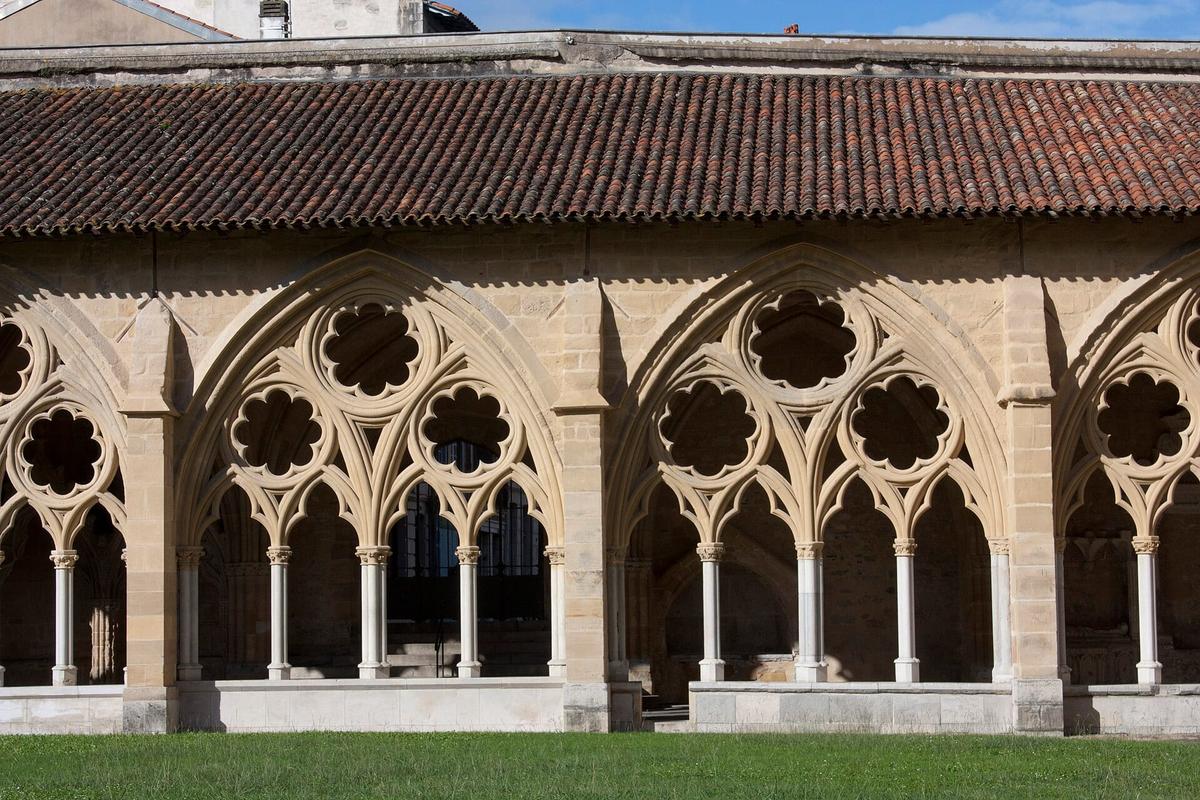

Walking round the galleries takes about twenty minutes. The entrance is separate from the cathedral's: it is on Place Pasteur, on the south side. Many visitors leave the cathedral without knowing this and miss the cloister.
The French Revolution stripped it of its ornaments, but it still has tombs and fragments of sculpture from the cathedral. Look for the medieval sundial near the entrance, still visible. From the galleries, the view of the spires and the south side of the cathedral is the best on the site.
Can you climb the cathedral tower?
Yes, but only on a guided tour, on certain dates. Bayonne's heritage department (the city is a "Ville d'art et d'histoire") runs climbs up the south tower, with more than 200 steps. The dome that once topped it dated from 1615, and a clock was installed in the bell tower in 1595. Booking is required and places are limited: check the tourist office programme before you come. The climb is not suitable for anyone who suffers from vertigo.

Other free guided tours of the cathedral take place during the year, on themes such as the great 19th-century restoration.
The Luminiscence show
In the evening, the cathedral hosts Luminiscence, a show of projections on the vaults and walls, set to music. It tells the story of the building and the soul of the Basque Country. In 2026 it ran from 22 May 2026 to 26 September 2026, with one or two sessions an evening, mainly Wednesday to Saturday. At weekends, the Chœur Bayonne Pays Basque choir sings live.
The show lasts about 45 minutes; arrive ten minutes early. Children aged 2 and under go free on an adult's lap. The venue is accessible to visitors with reduced mobility. Dates for next season had not yet been published at the time of writing.
Guided tours of Bayonne
A guided walking tour of Grand and Petit Bayonne takes in the cathedral, the ramparts and the Nive riverside. It is a good way to place the cathedral in the history of the city.
Partner links: if you book through these links, we earn a commission at no extra cost to you. Partner links · Learn more
Visiting with children
The visit is short and free, so it fits easily into a day in Bayonne. To keep children busy, ask them to find the English leopards on the keystones of the nave, then the sundial in the cloister. The Luminiscence show takes place in near darkness, with loud music at times: best for children who are not afraid of the dark.
How to get to Bayonne Cathedral
On foot. The cathedral is in the centre of Grand Bayonne. From the SNCF railway station, in the Saint-Esprit district, allow about fifteen minutes, crossing the Adour by the Pont Saint-Esprit.

By bus. Local buses link central Bayonne with Biarritz and Anglet.
By car. The historic centre is largely pedestrianised. Park in a car park on the edge of the centre or a park-and-ride, and finish on foot or by shuttle.
What to combine with the cathedral on the same day
| Also worth seeing | Distance | Travel time |
|---|---|---|
| Basque Museum and History of Bayonne | 0.4 km | 6 min on foot |
| Biarritz Aquarium | 9 km | 20 min by car |
| Maison Louis XIV (Louis XIV House) | 25 km | 30 min by car |
Approximate road distances and travel times.
The Basque Museum, on the Nive riverside, is a few minutes' walk away: it is the natural next step for understanding Basque culture. See also: Basque Museum and History of Bayonne In Biarritz, the aquarium and the Cité de l'Océan make a good afternoon. See also: Biarritz Aquarium, Cité de l'Océan In Saint-Jean-de-Luz, the house where Louis XIV stayed in 1660 tells another chapter of the coast's history. See also: Maison Louis XIV (Louis XIV House)
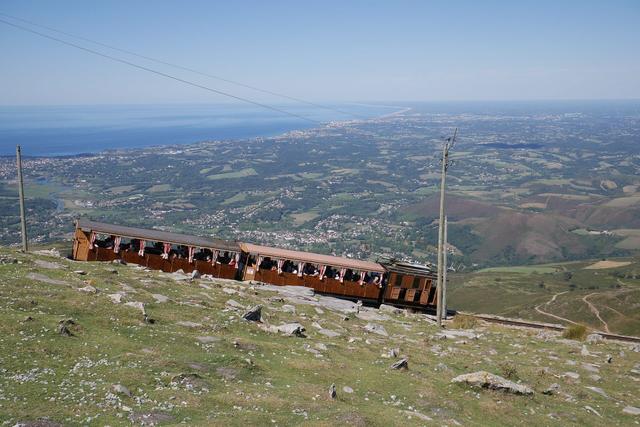
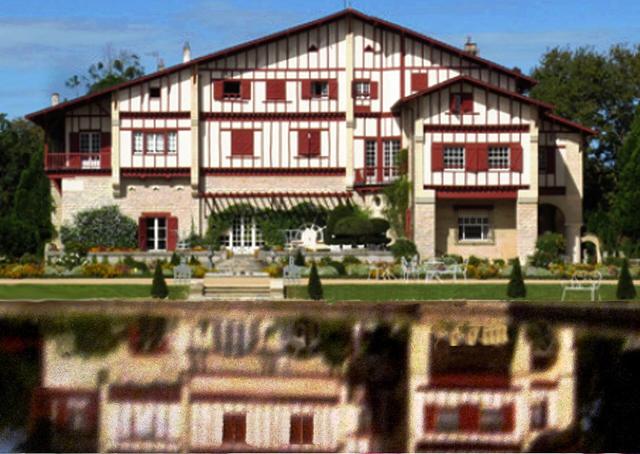
See also: Villa Arnaga, La Rhune Train, Basque Country and Pyrenees
Where to eat and stay in Bayonne
The streets around the cathedral and the Nive riverside are full of restaurants, tapas bars and chocolate makers. Chocolate has been a Bayonne speciality since the 17th century: Rue du Port-Neuf, close by, has several chocolatiers.
Staying in Grand or Petit Bayonne means you can do everything on foot, including the evening show. Biarritz, a quarter of an hour away, has more hotels facing the sea.
FAQ
Is there an entry fee for Bayonne Cathedral?
No. The cathedral and the cloister are free. Only the guided climb of the south tower and the Luminiscence show are paid.
What are the opening hours of Bayonne Cathedral?
Monday to Saturday, 9:30 – 12:45 then 15:00 – 18:30 in winter (15:00 – 19:00 in season); on Sunday, 8:15 – 12:15 and in the afternoon. It closes at lunchtime.
Is the cloister open all year?
It is open every day, 9:00 – 12:30 then 14:00 – 17:00 in autumn and winter (14:00 – 18:00 in summer).
Why is Bayonne Cathedral a UNESCO site?
It has been listed since 1998 as one of the monuments of the Routes of Santiago de Compostela in France.
Can you go up to the top of the cathedral?
Yes, on a guided tour of the south tower on certain dates, booking required, with more than 200 steps.
How long does the visit take?
About 30 min for the cathedral, 20 minutes for the cloister, and 45 minutes for the evening show.
Practical information
Official ticket-office prices 2026
Free admission
Address
Cathédrale Sainte-Marie, place Monseigneur-Vansteenberghe, 64100 Bayonne, France
Directions
On site and nearby
- Nearest shops and pharmacy: Bayonne, less than 1 km away Straight-line distance, based on OpenStreetMap.
- Emergencies: 112 (all emergencies, free from any phone), 15 (SAMU, medical emergency)
Around the site, on Google Maps
With children
Family days out nearby: Biarritz Aquarium (7 km), Cité de l'Océan (8 km), Atelier du Piment, Espelette (16 km)
Swimming pools and play areas nearby, on Google Maps
Facts checked on 11 November 2026. Sources: bayonne-tourisme.com, cirkwi.com, en-pays-basque.fr, guide-du-paysbasque.com, tourisme64.com, fr.wikipedia.org
Map
In the same region
- Château de Morlannefrom €7Free under 7
- Gouffre d'Esparrosfrom €12.50Free under 4