Sion-Vaudémont Hill: planning your visit
Sion-Vaudémont Hill at a glance
- Admission
- Free
- Time needed
- about 2 h 30 min
- Where
- Saxon-Sion
Facts checked on 11 November 2026. Full opening hours, reduced prices and access
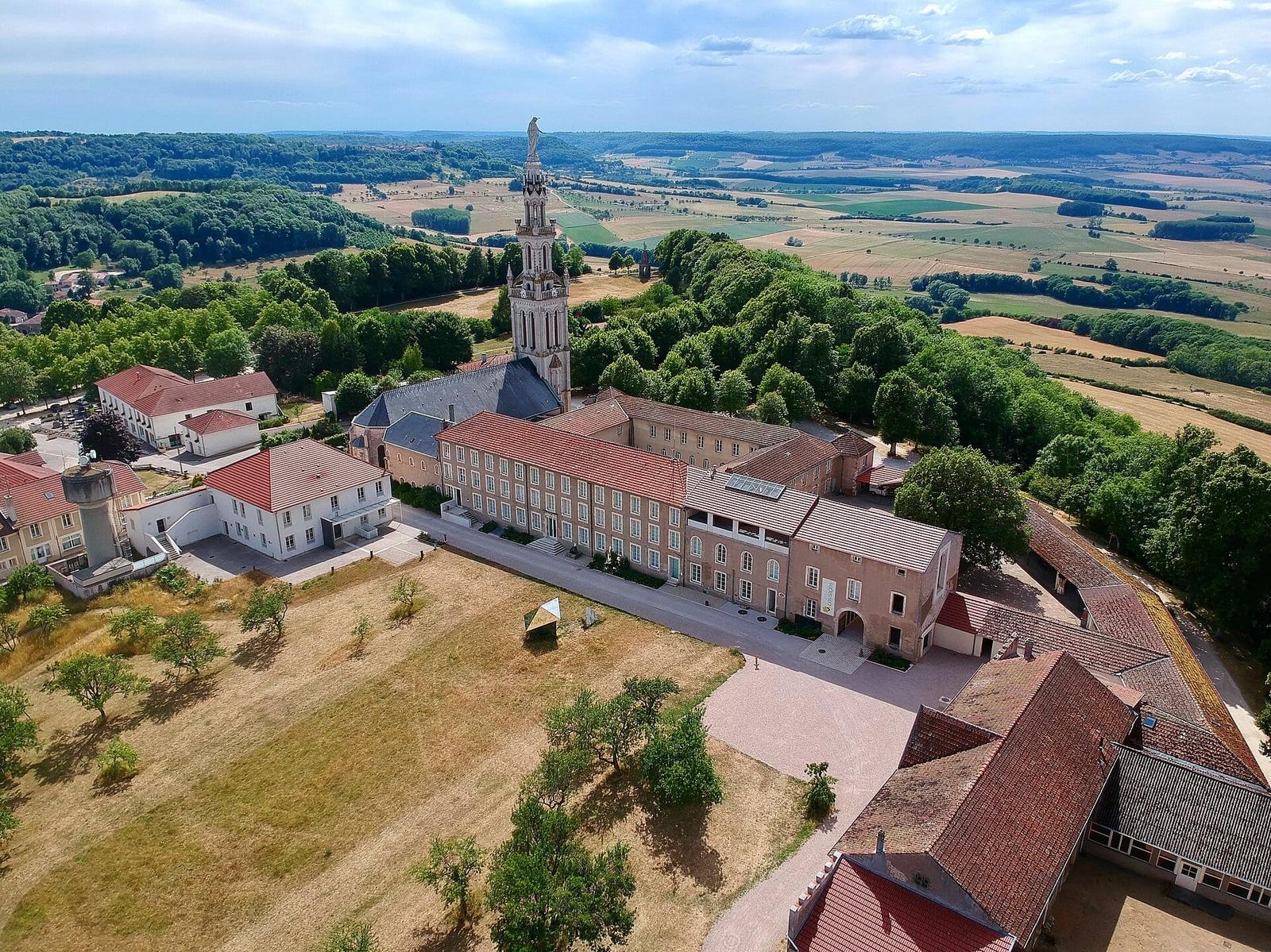

South of Nancy, a long horseshoe-shaped hill towers over the Saintois plain. At one end stand the basilica of Notre-Dame de Sion and its giant Virgin, at the other the village of Vaudémont and the Barrès monument: this is the "inspired hill" of the 1913 novel. The site is free and open to all. Here is what to see, how to get there and how to plan half a day on the hill.
Sion Hill at a glance
- Where: in Saxon-Sion and Vaudémont, Meurthe-et-Moselle, about forty minutes south of Nancy.
- Price: everything is free: the hill, the basilica and the Cité des Paysages exhibitions.
- Open: the hill is accessible all year round. The basilica is open every day. The Cité des Paysages opens in season, from 28 March 2026 to 29 November 2026 in 2026.
- Time needed: allow 2.5 hrs for the basilica, the Cité des Paysages and a walk to the Barrès monument.
- Best for: walkers, lovers of Lorraine history, families, pilgrims.
- Good to know: dogs are allowed on the hill, according to the Meurthe-et-Moselle tourist office.
Why visit Sion Hill
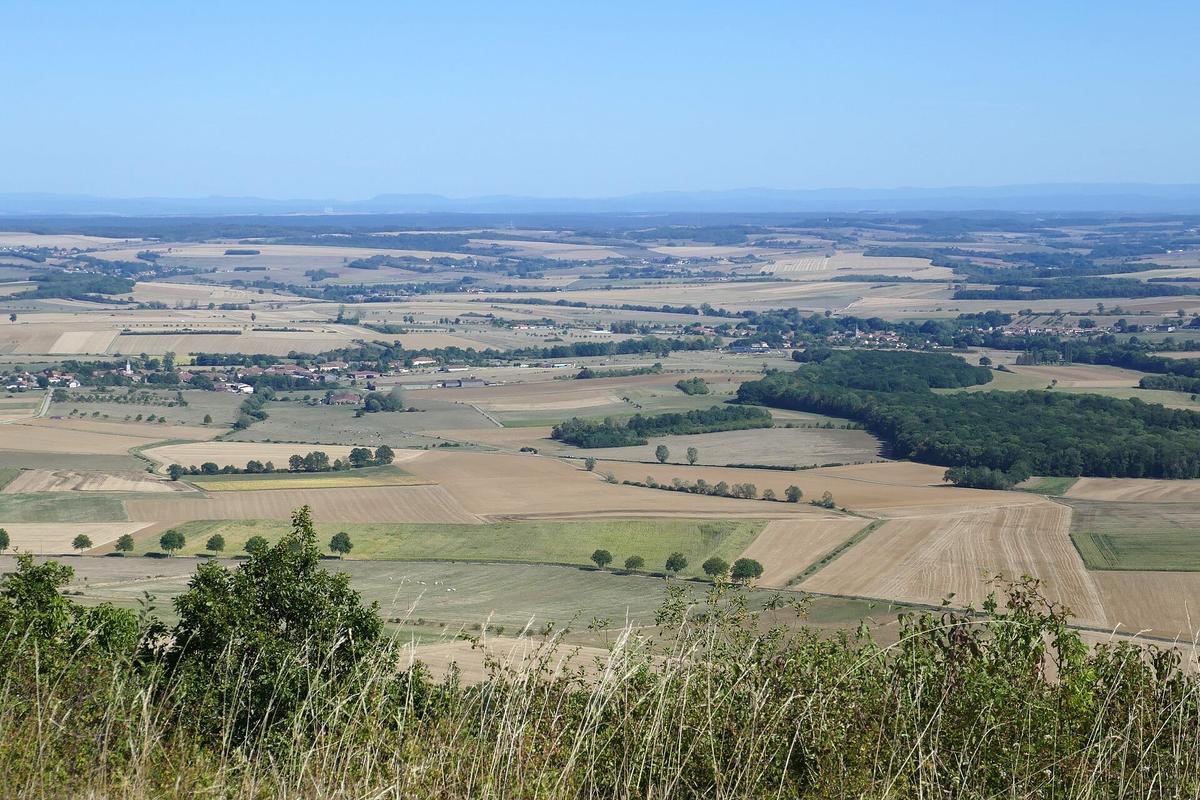
Sion-Vaudémont Hill rises to 540 metres. It is the highest point of the Moselle escarpments (côtes de Moselle), and the Barrès monument, at its southern end, is described as the highest point of the Lorraine plateau outside the Vosges mountains. On a clear day, the view stretches over the Saintois plain, its orchards and villages, all the way to the blue line of the Vosges.
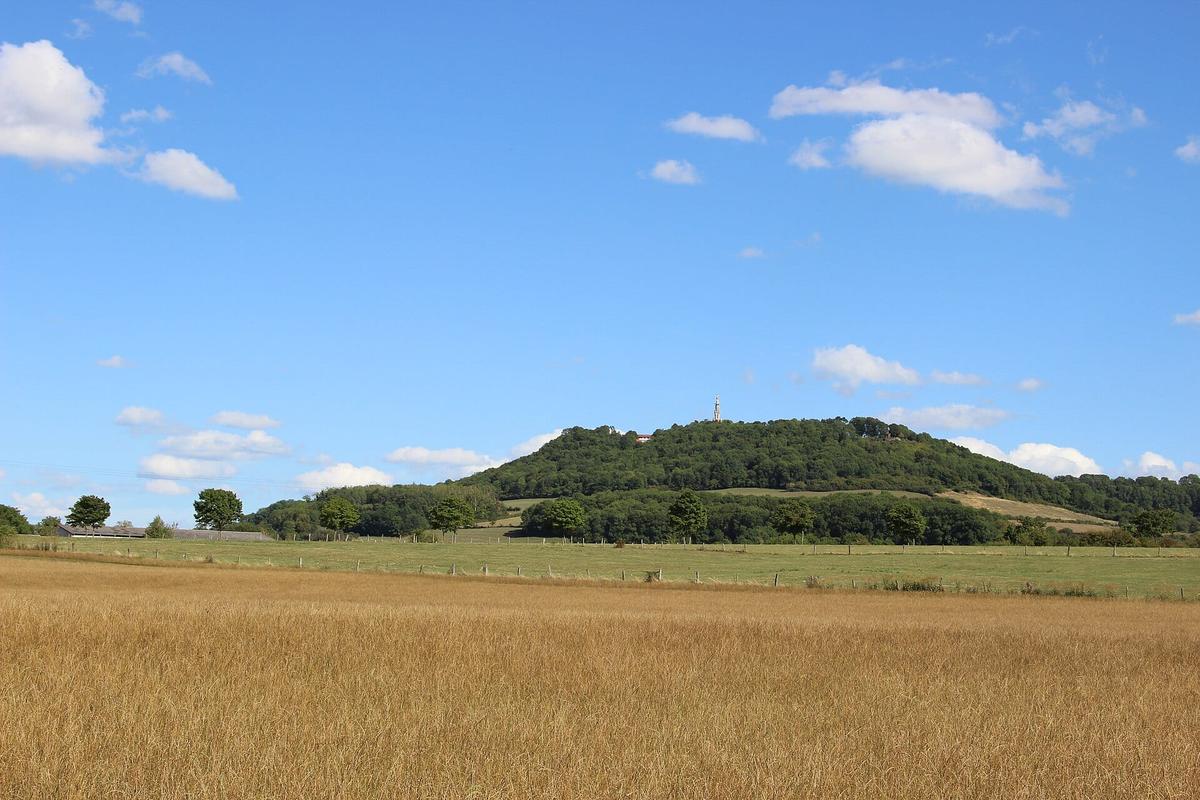

But what has drawn visitors for centuries is the symbolic weight of the place. The hill was inhabited nearly three thousand years ago, fortified by the Celts, then dedicated to the Virgin in the Middle Ages. It has remained Lorraine's great Marian pilgrimage site. And it bears the marks of every moment when Lorraine was split in two and then reunited, from 1871 to the Liberation.
Maurice Barrès made it famous. In La Colline inspirée (The Sacred Hill), published in 1913, he describes it as "a place where the spirit blows". The phrase stuck.
Sion Hill history in a few dates
Before Christianity. The hill has been occupied since the Neolithic. In Gallic times, the Sion enclosure was a stronghold of the Leuci tribe. A god of war and the goddess Rosmerta were worshipped there. The hill's archaeological site is protected as a historic monument.
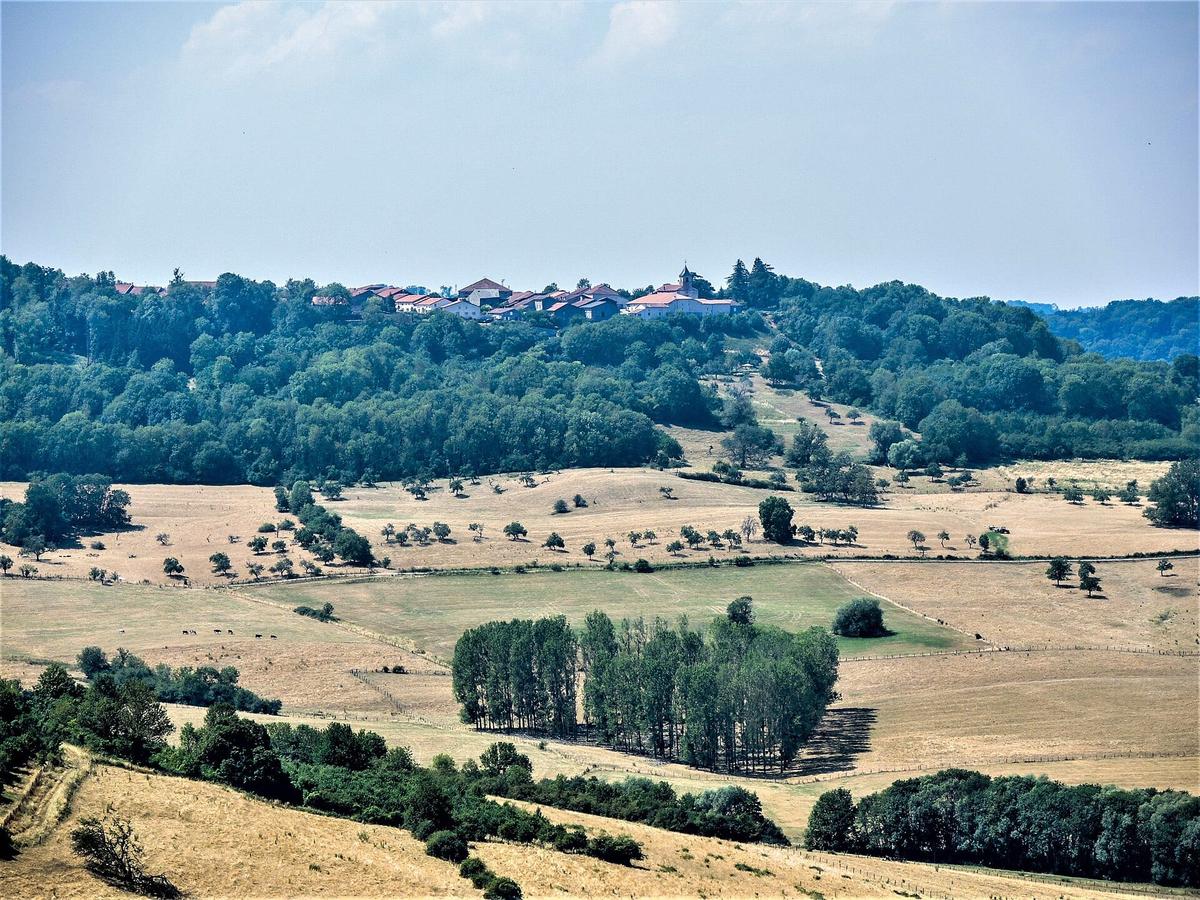

The Middle Ages. In the 10th century, Saint Gerard, Bishop of Toul, established the cult of the Virgin here. In 1477, Duke René II of Lorraine defeated Charles the Bold outside Nancy under the banner of Notre-Dame de Sion. At the other end of the hill, Vaudémont was then the capital of an independent county.
The Tiercelins and the Baillard brothers. In 1626, Tiercelin friars developed the sanctuary. They left in 1792, during the Revolution. In the 19th century, three priests, the Baillard brothers, revived the pilgrimage, then drifted into a dissident movement that led the Church to reject them. Their story is the one Barrès tells in his novel.
The broken cross of 1873. After the defeat of 1870, Moselle and Alsace were annexed by Germany. In 1873, once the Prussian troops had left, 30,000 pilgrims climbed to Sion. A plaque was put up with a broken Cross of Lorraine and the inscription in Lorraine dialect "Ce n'ame po tojo": "it is not for ever".
1920, 1946, 1973. After Alsace-Moselle returned to France, Barrès was asked in 1920 to hide the break in the cross under a golden palm. In 1946, 80,000 people attended the Unity festival, and a new cross bore "Astour hinc po tojo": "now it is for ever". In 1973, the word "Reconciliation" was added and the Peace Monument was inaugurated. These successive plaques are among the most moving things to see at Sion.
Is Sion Hill free to visit?
Yes, it costs nothing. The Meurthe-et-Moselle tourist office says visiting the hill is free for individuals, families and groups. The Cité des Paysages, run by the département, is free too, as are its exhibitions. The basilica is a place of worship with free entry.
Only some Cité des Paysages activities (workshops, nature outings, shows) require advance registration, as places are limited. They are still free.
2026 opening hours
The hill is a natural area open at all times. The trails and viewpoints can be reached at any hour.
The basilica of Notre-Dame de Sion is open every day, according to the Saintois tourist office. Exact times may vary with services: for a visit at a set time, call the Maison Notre-Dame on +33 3 83 25 12 22.
The Cité des Paysages reopened its exhibition rooms on the weekend of 28 March 2026. Its season of events on the hill and in the département's natural areas runs until 29 November 2026. The département does not publish the 2026 opening hours on the pages we checked: check them on the Cité des Paysages website before you come, or call +33 3 83 25 17 53. Outside the season, count only on the basilica and the trails.
The pilgrimage. Every September, the diocese holds its back-to-school pilgrimage at the Sion sanctuary. In 2026, it took place on 12 September 2026. On those days the hill is very busy: if you are coming as a sightseer, avoid them, or come for the atmosphere.
Our tip: choose a clear, dry day. The panorama is half the visit, and the ridge paths get slippery in the rain. In the late afternoon, the low light over the Saintois plain is at its best.
How long does the visit take?
Allow 2.5 hrs for a full visit on foot: half an hour for the basilica and its plaques, half an hour at the Cité des Paysages, then there and back along the ridge to the Barrès monument and the village of Vaudémont. For a short stop, the basilica and the nearby viewpoint take three quarters of an hour.

Walkers can spend the whole day here: 11 kilometres of waymarked trails go round the hill.
What to see on Sion Hill
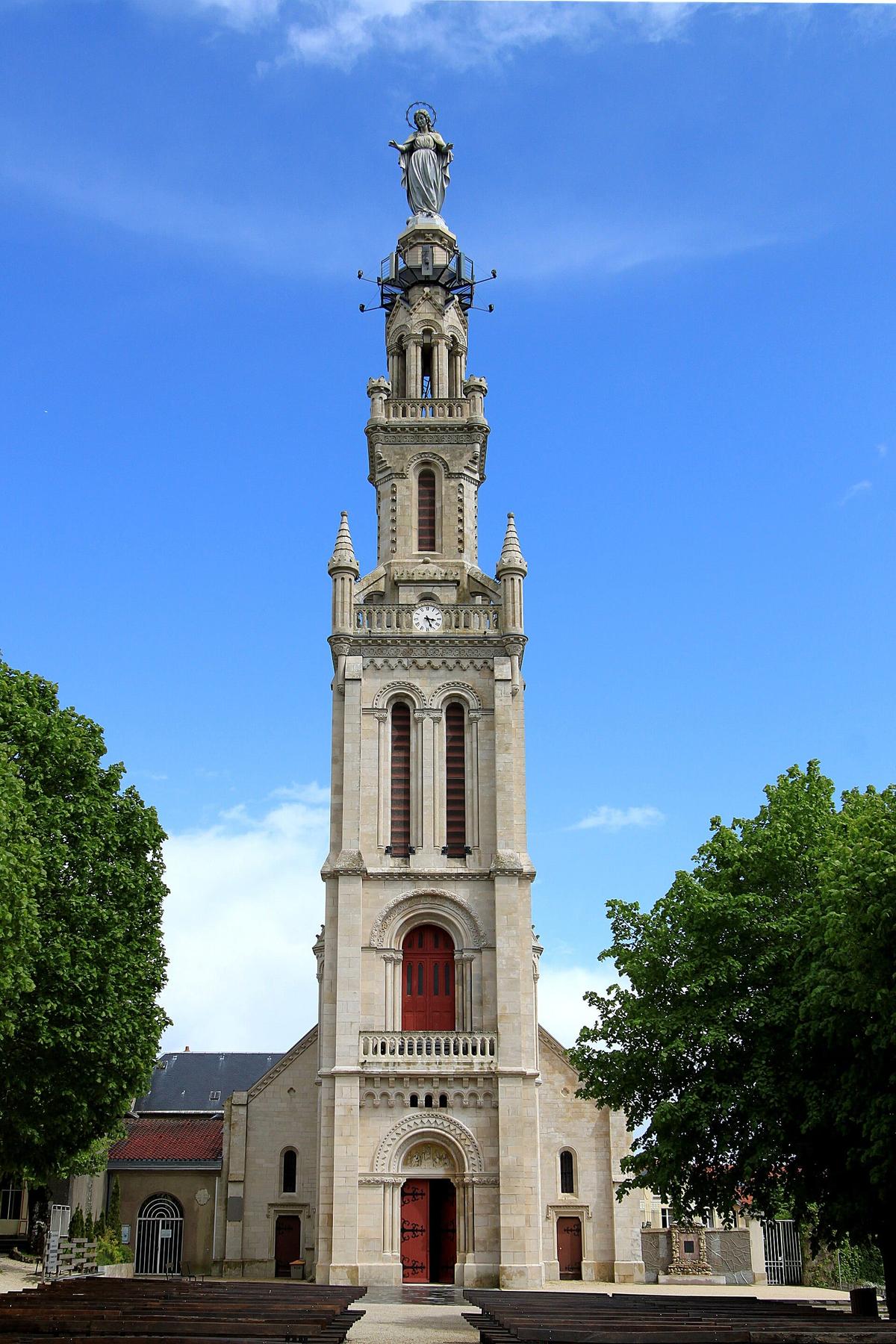

The basilica of Notre-Dame de Sion
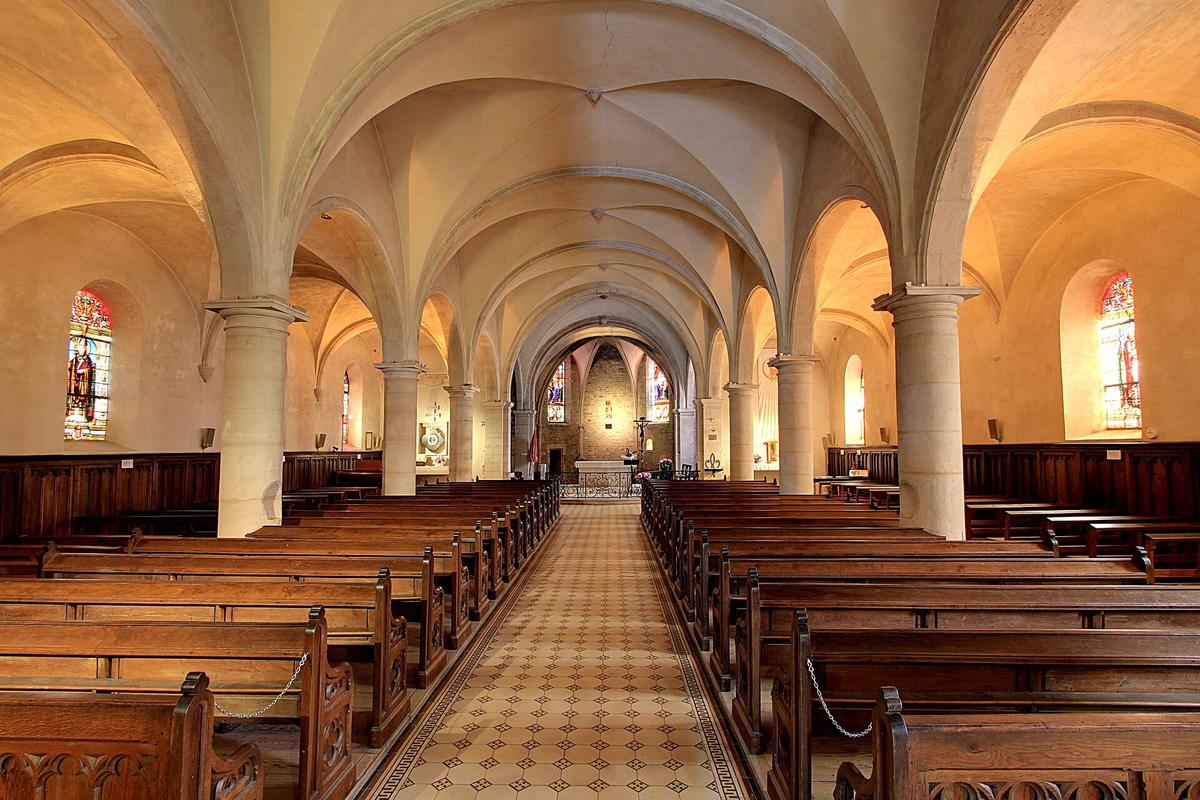
You can spot the basilica from afar by its 45-metre bell tower, topped by a 7-metre statue of the Virgin. This statue of the Immaculate Conception, from the mid-19th century, was cast at the Tusey foundry in Vaucouleurs. The building mixes periods: a 15th-century apse, an 18th-century nave and a 19th-century tower.
Inside, look at the choir screen, made in the workshops of Jean Lamour, the ironworker behind the gates of Place Stanislas in Nancy. The sanctuary also holds a 14th-century Virgin from Vaudémont and a 15th-century altar. The plaques of 1873, 1920, 1946 and 1973 tell the story of Lorraine divided and then reunited.
The 2003 fire. On 8 November 2003, a fire ravaged the bell tower. The four bells were destroyed, but the fire spared the nave. The paradox: until then, the basilica had no historic monument protection. The Minister of Culture then requested it, and it was granted by an order of 30 December 2003, together with the roofs and facade of the former convent next door. The statue, which had been taken down, was put back on top on 13 October 2007, the same day four new bells were blessed.
The Cité des Paysages
The former Oblate convent, next to the basilica, has for several years housed the Cité des Paysages, a centre run by the département and devoted to landscapes, biodiversity and the ecological transition. Its 800 square metres hold a permanent exhibition on the landscapes of Meurthe-et-Moselle and temporary exhibitions that change every two years.
In 2026, the main exhibition is called "Nos empreintes, l'histoire de Sion révélée par l'archéologie" (Our footprints: the history of Sion revealed by archaeology). The season has around 150 events: workshops, talks, shows and guided walks. An outdoor terrace offers a 360-degree view over the orchards, meadows and limestone grasslands.
The Barrès monument and the Signal de Vaudémont
At the southern end of the hill, the monument to Maurice Barrès was inaugurated on 23 September 1928. It is the widest viewpoint on the site. The ridge path leading there from Sion is the finest walk on the hill.
The village of Vaudémont
The village was the capital of an independent county in the Middle Ages. It still has the ruins of the Brunehaut tower and part of the west rampart. It makes a quiet stop, away from the crowds at the basilica on pilgrimage days.
Curiosities of the hill
- The "stars of Sion". These are star-shaped fossils of sea lilies (crinoids), found in the soil of the hill.
- The Saut de la Pucelle (Maiden's Leap). A wooded cliff linked to a legend about a rider.
- Colonel Blanchet's gesture. On 18 June 1940, this colonel burned his regiment's flag on the hill so that it would not fall into German hands.
- Paragliding. The hill is used as a take-off point. On days with a favourable wind, colourful wings are part of the scenery.
Sion Hill with kids
The hill is a good family outing, as long as you are happy to walk a little. Most Cité des Paysages activities are aimed at children: check the recommended age in the programme and sign up online. Hunting for "stars of Sion" is great fun for younger children.

A few tips:
- The ridge paths are earth tracks: wear good shoes, and bring an all-terrain pushchair rather than a city one.
- The plateau is exposed to the wind: a windproof jacket is useful even in summer.
- Nothing costs a penny: it is an ideal day out for a family on a budget.
Accessibility
The areas around the basilica and the Cité des Paysages are easy to visit. For nature outings, the Cité des Paysages lends joëlettes, all-terrain wheelchairs pulled by helpers, to people with reduced mobility: let the Cité know in advance. The ridge trails, however, remain earth paths.
How to get to Sion Hill
By car. This is the only practical option. From Nancy, allow about forty minutes heading south, towards Vézelise. There is a car park near the basilica, including for coaches.
By public transport. No convenient scheduled service goes up the hill. Without a car, the visit is difficult.
Renting a car. Nancy, with its TGV station, is the logical starting point to rent a car and combine Sion, Haroué and the Vosges.
Partner links: if you book through these links, we earn a commission at no extra cost to you. Partner links · Learn more
What to combine with Sion Hill on the same day
| Also worth seeing | Distance | Travel time |
|---|---|---|
| Château d'Haroué | 12 km | 15 min by car |
| Place Stanislas | 38 km | 40 min by car |
| Joan of Arc's Birthplace | 40 km | 45 min by car |
Approximate road distances and travel times.
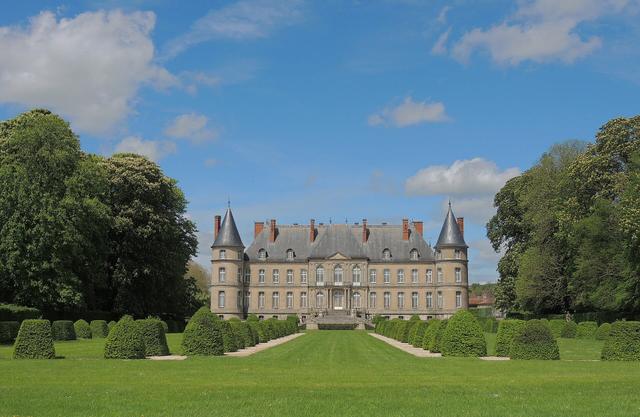
The Château d'Haroué, on the plain just below, is the closest stop: a large 18th-century château built for the Prince of Craon. See also: Château d'Haroué
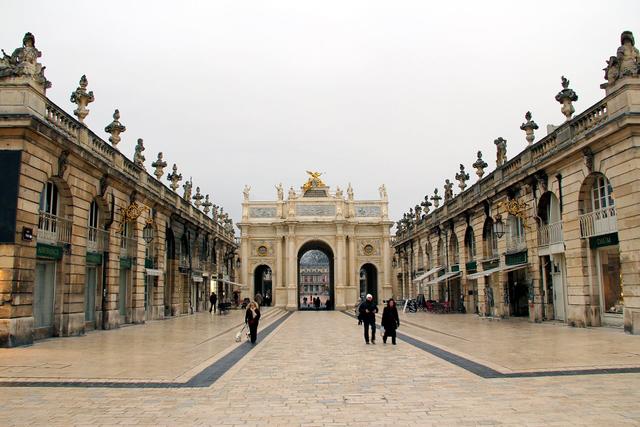
In Nancy, Place Stanislas shows Jean Lamour's work on a grand scale, after the screen you will have seen in the basilica. See also: Place Stanislas, Musée de l'École de Nancy
To stay with the theme of Lorraine's great pilgrimages, the basilica of Saint-Nicolas-de-Port and Joan of Arc's birthplace in Domrémy are less than an hour away. See also: Basilica of Saint-Nicolas-de-Port, Joan of Arc's Birthplace
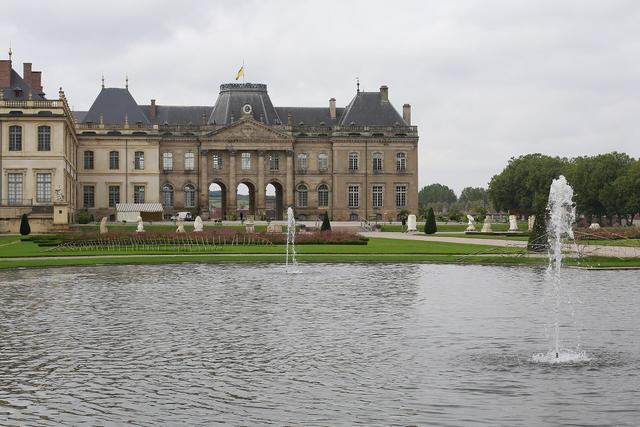
See also: Maison de la Mirabelle, Château de Lunéville, Lorraine
Where to eat and stay near Sion Hill
The official pages we checked do not mention any restaurant on the hill. The safest option is to bring a picnic or have lunch in the Saintois villages, in Vézelise for example. You will also find two products born here: a "Notre-Dame-de-Sion" cheese and a camembert called "La colline inspirée".
For accommodation, Nancy has the widest choice and lets you combine the hill with a visit to the city.
FAQ
Is Sion Hill free to visit?
Yes. The hill, the basilica and the Cité des Paysages exhibitions are free. Only some activities require registration.
Why is it called the "inspired hill"?
It is the title of Maurice Barrès's 1913 novel, La Colline inspirée, which tells the story of the Baillard brothers and sees Sion as "a place where the spirit blows".
How tall is the statue on the basilica?
The Virgin crowning the bell tower is 7 metres tall, on top of a 45-metre tower.
What does "Ce n'ame po tojo" mean?
"It is not for ever", in Lorraine dialect. The words were carved in 1873 under a broken Cross of Lorraine, in protest against the annexation of Moselle and Alsace.
How long does the visit take?
About 2.5 hrs with the walk to the Barrès monument, three quarters of an hour for the basilica alone.
Can I bring my dog?
Yes, the Meurthe-et-Moselle tourist office says dogs are allowed on the hill.
Practical information
Official ticket-office prices 2026
Free admission
Address
Basilique Notre-Dame de Sion, 4 rue Notre-Dame, 54330 Saxon-Sion, France
Directions · Phone+33 3 83 25 17 53
On site and nearby
- Nearest shops and pharmacy: Vézelise, 6 km away Straight-line distance, based on OpenStreetMap.
- Emergencies: 112 (all emergencies, free from any phone), 15 (SAMU, medical emergency)
Around the site, on Google Maps
With children
Family days out nearby: Château de Fléville (23 km), Maison de la Mirabelle (26 km), Fort de Villey-le-Sec (27 km)
Swimming pools and play areas nearby, on Google Maps
Facts checked on 11 November 2026. Sources: citedespaysages.meurthe-et-moselle.fr, tourisme-meurtheetmoselle.fr, tourisme-meurtheetmoselle.fr, tourisme-meurtheetmoselle.fr, info-lux.com, fr.wikipedia.org, fr.wikipedia.org, techno-science.net
Map
In the same region
- Maison de la MirabelleFree admission
- Amnéville ZooFree under 3