Visiting Fort Vaux, Major Raynal's fort
Fort Vaux at a glance
- High season
- 9:30 – 18:30
- Low season
- 9:30 – 17:30
- Full price
- €8
- Free
- children under 8
- Visitors per year
- 61,358 (2017)
- Where
- Douaumont-Vaux
Official ticket-office prices, checked on 11 November 2026. Full opening hours, reduced prices and access
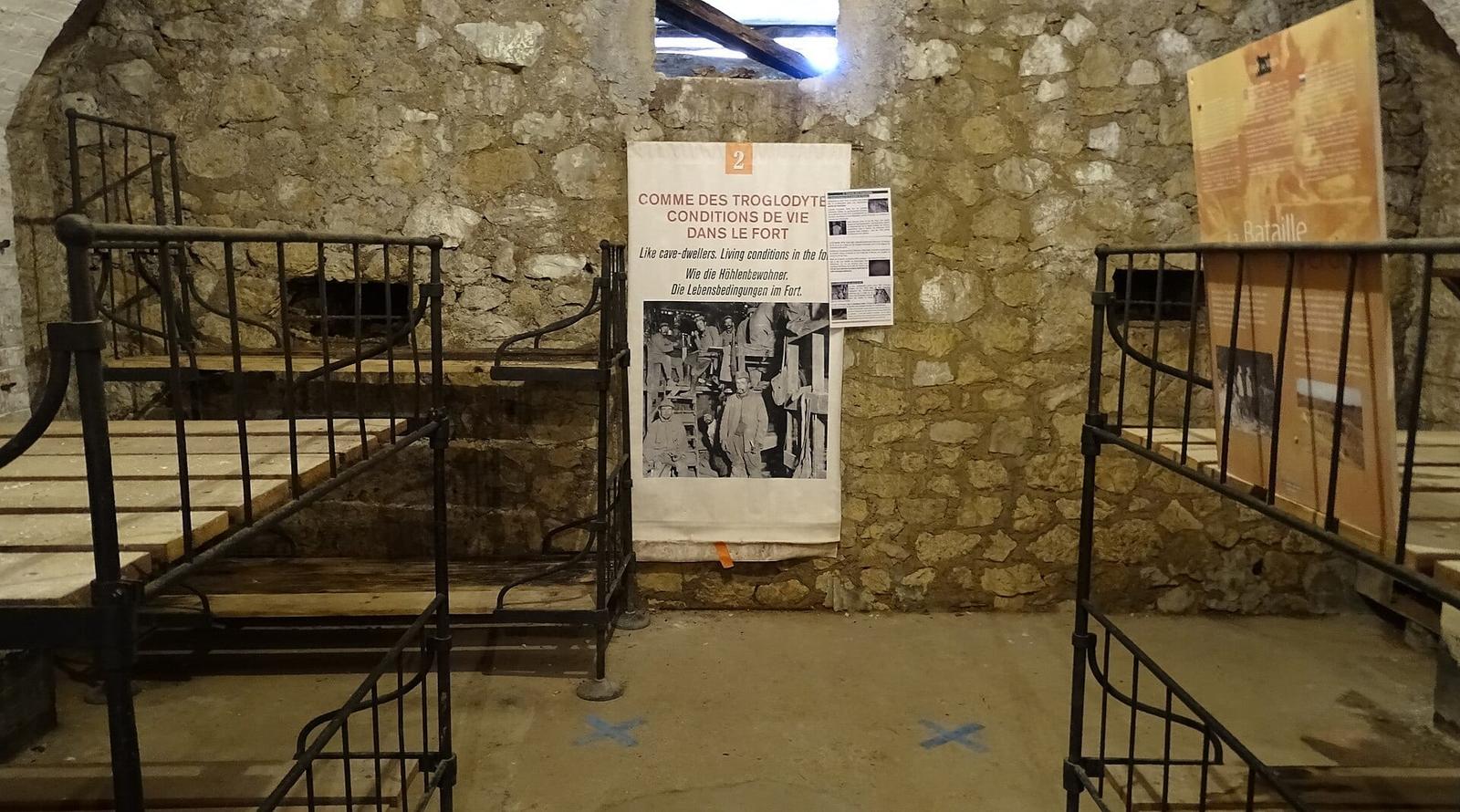

Fort Vaux is the smallest of the great forts on the Verdun battlefield, and perhaps the most moving. In June 1916, a few hundred French soldiers held out there for six days, shut underground without water, while the Germans stood on the roof above them. Closed for almost a year for works, it reopened on 4 July 2026 with a completely new tour. Here are the prices, opening hours, combined tickets and our tips for the visit.
Fort Vaux at a glance
- Where: on the Verdun battlefield, north-east of the town, about 10 minutes' drive from the centre, between Fort Douaumont and the destroyed village of Vaux.
- Price: €8 per adult, €6.50 reduced rate (including ages 8 to 18), free under 8. Family pass €19.
- Opening hours 2026: 9:30 – 17:30 every day until 31 December, except 24 and 25 December.
- Last entry: 30 minutes before closing.
- Combined tickets: with Fort Douaumont and the Verdun Memorial, valid for 48 hours.
- New: the fort reopened on 4 July 2026 after €5 million of works and a new exhibition design.
What is Fort Vaux?
Fort Vaux is part of the ring of forts built around Verdun after the defeat of 1870, following the system designed by General Séré de Rivières. It was built in masonry from 1881 to 1884, then strengthened from 1888: the barracks were given a shell of 2.25 metres of concrete, laid on a metre of sand.
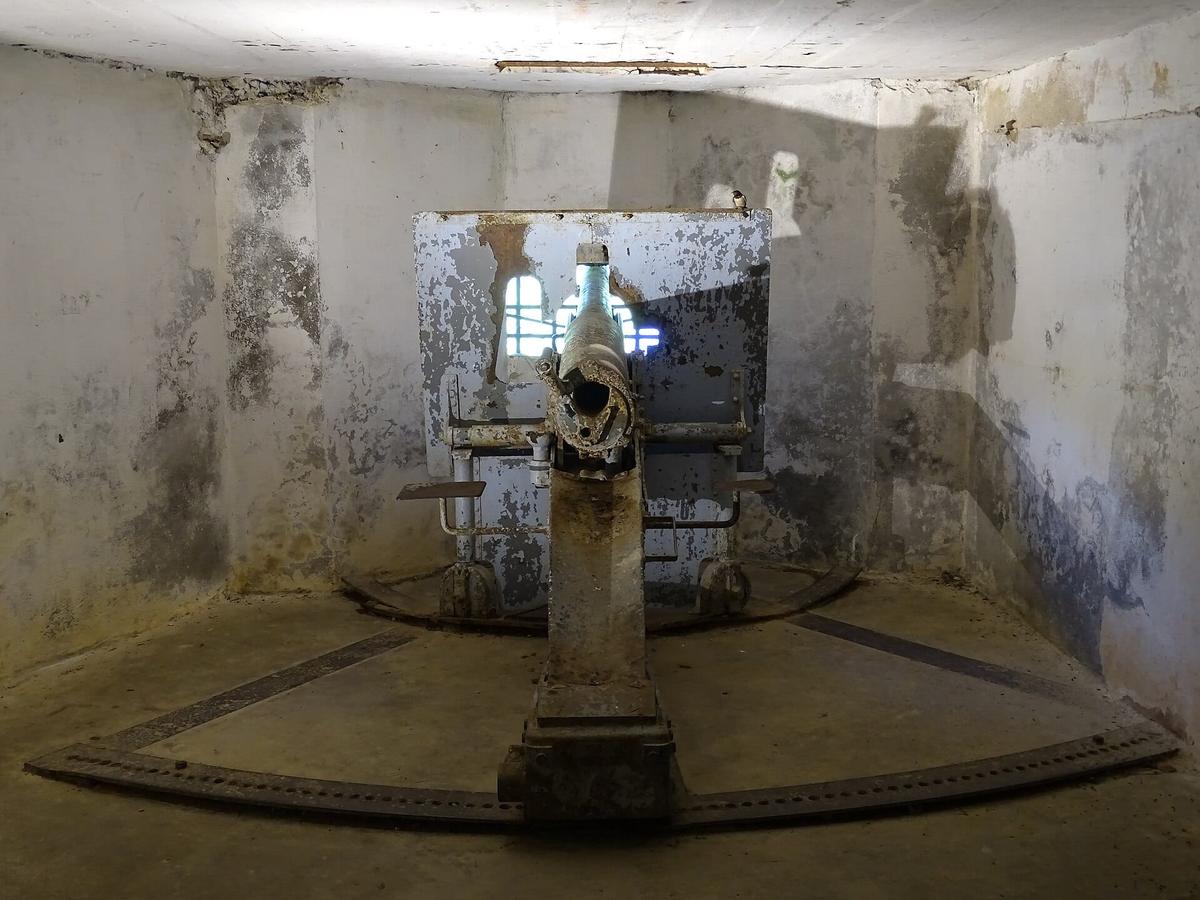
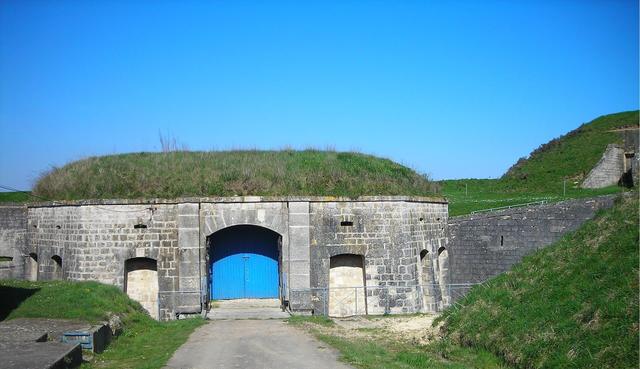
From 1904 to 1906, the army added a 75 mm gun turret, two armoured observation posts and three counterscarp casemates to cover the ditches. Between 1910 and 1912, concrete tunnels were built to link the barracks to every part of the fort. It is a small fort: the barracks were designed for about 150 men, with two underground cisterns.
The fort lies in the communes of Vaux-devant-Damloup and Damloup, in the Meuse. It is a listed historic monument and, like Fort Douaumont, is run by the Verdun Memorial.
It gets far fewer visitors than Douaumont. Wikipedia gives 40,808 visitors in 2013 and 61,358 in 2017, a year boosted by the centenary of the battle. Set a little apart from the road to the Memorial and the Ossuary, the fort has always been less visited. That is one of the reasons for its renovation.
June 1916: a six-day siege underground
A fort under fire. From February 1916, the German offensive on Verdun moved towards Vaux. According to the Memorial, in 1916 the fort was hit by nearly 8000 shells a day. A 420 mm shell struck the 75 mm turret while it was packed with explosives ready to destroy it if needed: the blast silenced the fort's last guns.

Major Raynal. The fort was commanded by Major Sylvain Eugène Raynal, aged 49, a veteran of the 7th Algerian Tirailleurs Regiment, who had returned to the front despite his wounds. He arrived with a garrison of about 250 men. When the Germans surrounded the fort, more than 500 soldiers had taken refuge there, and up to 600 were crammed into the underground barracks.
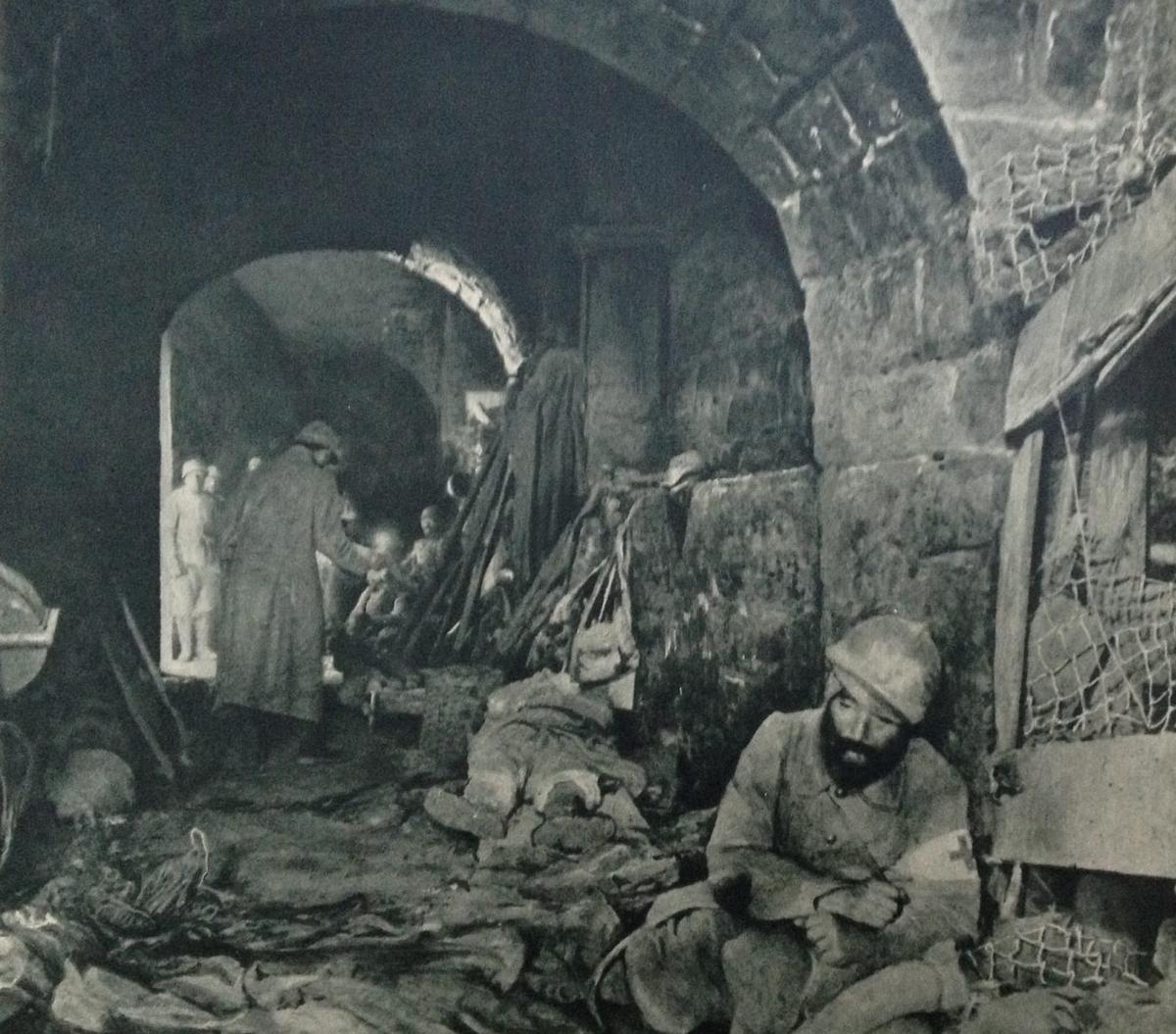
2 to 7 June 1916. On 2 June 1916, the Germans reached the top of the fort. The fighting then moved into the tunnels, from barricade to barricade, with grenades, in darkness and smoke. The worst enemy was thirst. The main water supply was a cistern of 5000 litres, which the explosions had cracked. On 7 June 1916 at 6.30 am, after six days of fighting, about 250 survivors laid down their arms.
A sacrificed counter-attack. To relieve the fort, General Nivelle launched a counter-attack. It failed: the 2nd Zouave Regiment lost 19 officers and 846 men.
The French return. After the French retook Douaumont on 24 October 1916, Vaux became too exposed. The Germans left it on 2 November 1916, after blowing up the turret and two observation posts. The French reoccupied it on the night of 2 to 3 November. In 1917 the army refitted it: casemates, wells, about 1500 metres of underground tunnels, electric lighting and ventilation.
Two stories to know before your visit
Vaillant the pigeon. Cut off from the outside world, Raynal communicated with the rear using four carrier pigeons. The last one, Vaillant, flew off on 4 June with a message beginning "We are still holding out". It reached Verdun poisoned by gas and was given a citation in the national order of the day. The Memorial paid tribute to it with a pigeon release during the reopening weekend in July 2026. Raynal also had a cocker spaniel with him, called Quiqui.

The major's sword. Raynal, wounded, walked with a cane and had left his sword at home. Received by the Crown Prince, the German emperor's son, he was first offered a German pioneer's dagger as a mark of respect. About ten minutes later, the prince had a French officer's sword handed to him.
What changed in 2026
The fort closed for almost a year for works on the visitor route. The project cost €5 million, funded by the French state, the Grand Est region, the Meuse département, the European Union and sponsors, including the Fondation du Souvenir de Verdun. The Memorial presents it as the first tour designed by historians and museum specialists since the fort opened to the public a century ago.

In practice, the visit is built around three tools:
- audio testimonies heard through bone conduction, a small device placed against the bone, with no headphones over your ears;
- projections on screens in the tunnels;
- text panels retelling the story of the siege.
The aim is to tell the siege "at the soldiers' level", through figures such as Major Raynal and Officer Cadet Léon Buffet.
Fort Vaux ticket prices
2026 prices from the Verdun Memorial for the fort alone:
- Adult (18 and over): €8.
- Reduced rate: €6.50, for ages 8 to 18, students, jobseekers, military personnel, teachers holding the Pass Éducation, disabled visitors and their carer, with proof.
- Family pass (2 adults and 1 young person aged 8 to 18): €19, then €6.50 per extra young person.
- Free: under-8s, journalists and ICOM card holders.
Combined tickets are better value if you are staying on the battlefield:
- Fort Vaux and Fort Douaumont: €14 per adult, €10 reduced, €38 family.
- Memorial and one fort: €19 per adult, €14 reduced, €50 family.
- Memorial and two forts: €22 per adult, €17 reduced, €60 family.
They are valid for 48 hours from your first visit. So you can do the Memorial and Douaumont one day, and Vaux the next morning.
Money-saving tips. The Pass Patrimoine gives free entry to the fort. Entry to all three Memorial sites is free on 31 December 2026, with no booking needed. Note: there is no cash machine on the battlefield.
Do you need to book?
Not for an unguided visit: tickets are sold at the fort's front desk. The fort is not sold on the big ticketing platforms. If you would rather have a guide, guided tours of the battlefield leave from Verdun:
Partner links: if you book through these links, we earn a commission at no extra cost to you. Partner links · Learn more
Opening hours 2026 and best time to visit
The fort follows the same hours as the Memorial and Fort Douaumont:
- From 4 July 2026 to 20 September 2026: 9:30 – 18:30, every day.
- From 21 September 2026 to 31 December: 9:30 – 17:30, every day.
The fort is closed on 24 and 25 December and on 1 January 2027. Last entry is 30 minutes before closing. The Memorial has not yet published its 2027 hours: in 2026, the sites reopened in early February after the January closure.
Our tip: come in the morning, at opening time. School groups and coaches arrive later, and the narrow tunnels are best experienced with only a few people around.
Bring a jacket. As the Memorial points out, the fort is cold and damp, even in summer.
How long does it take to visit Fort Vaux?
The Memorial gives no official visit length: you go round on your own, at your own pace. The fort is smaller than Douaumont, but the audio testimonies take time if you listen to them all. Also keep some time to climb onto the top of the fort and walk round the ditches. For a day on the battlefield, the simplest plan is the Memorial in the morning, then Douaumont, the Ossuary and Vaux in the afternoon, or Vaux the next day with the combined ticket.
What to see at Fort Vaux
The siege tunnels. This is where the fighting of June 1916 took place. The passages are low and narrow, which helps you understand what the soldiers went through, shut in without light or water.
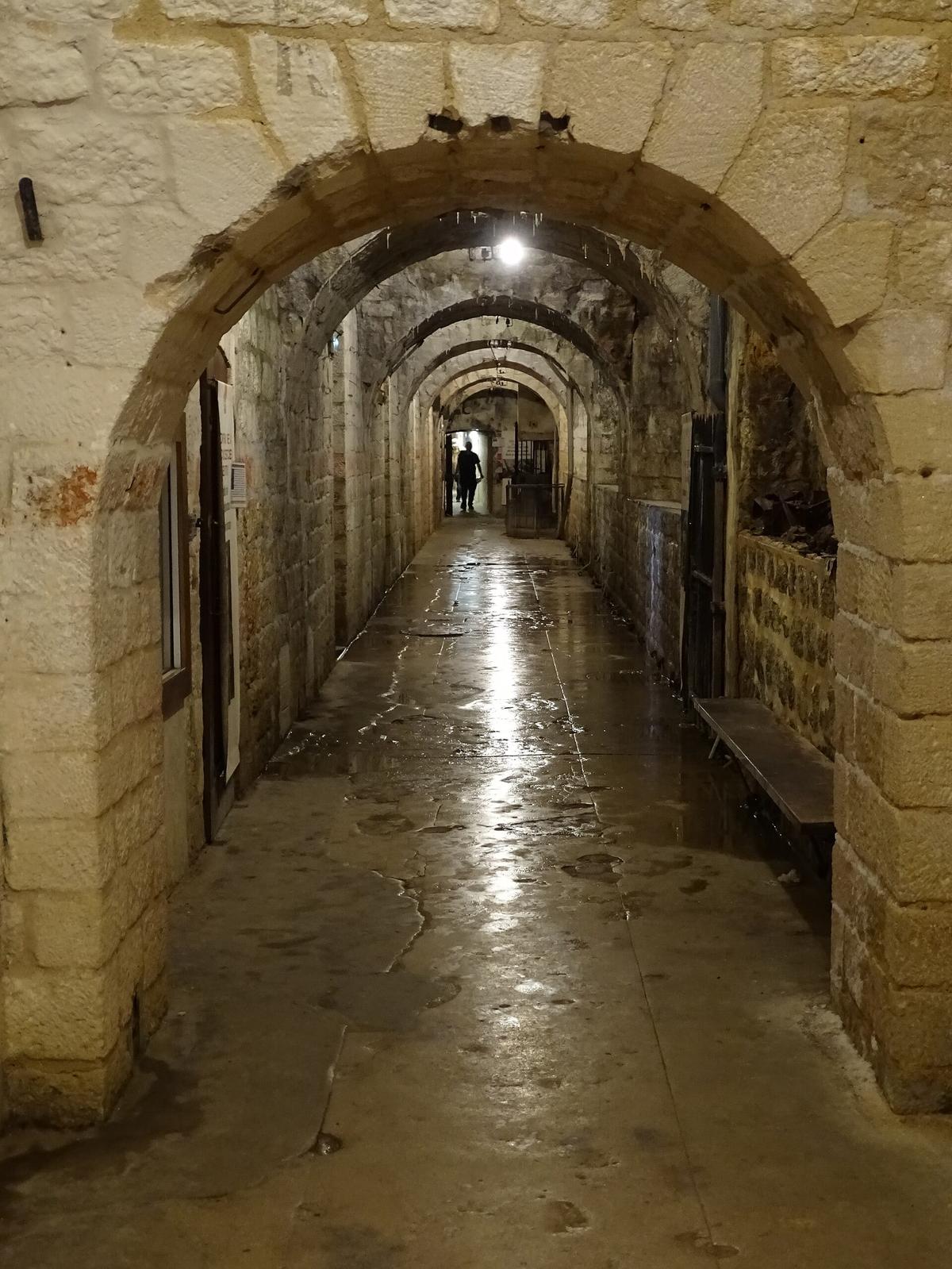

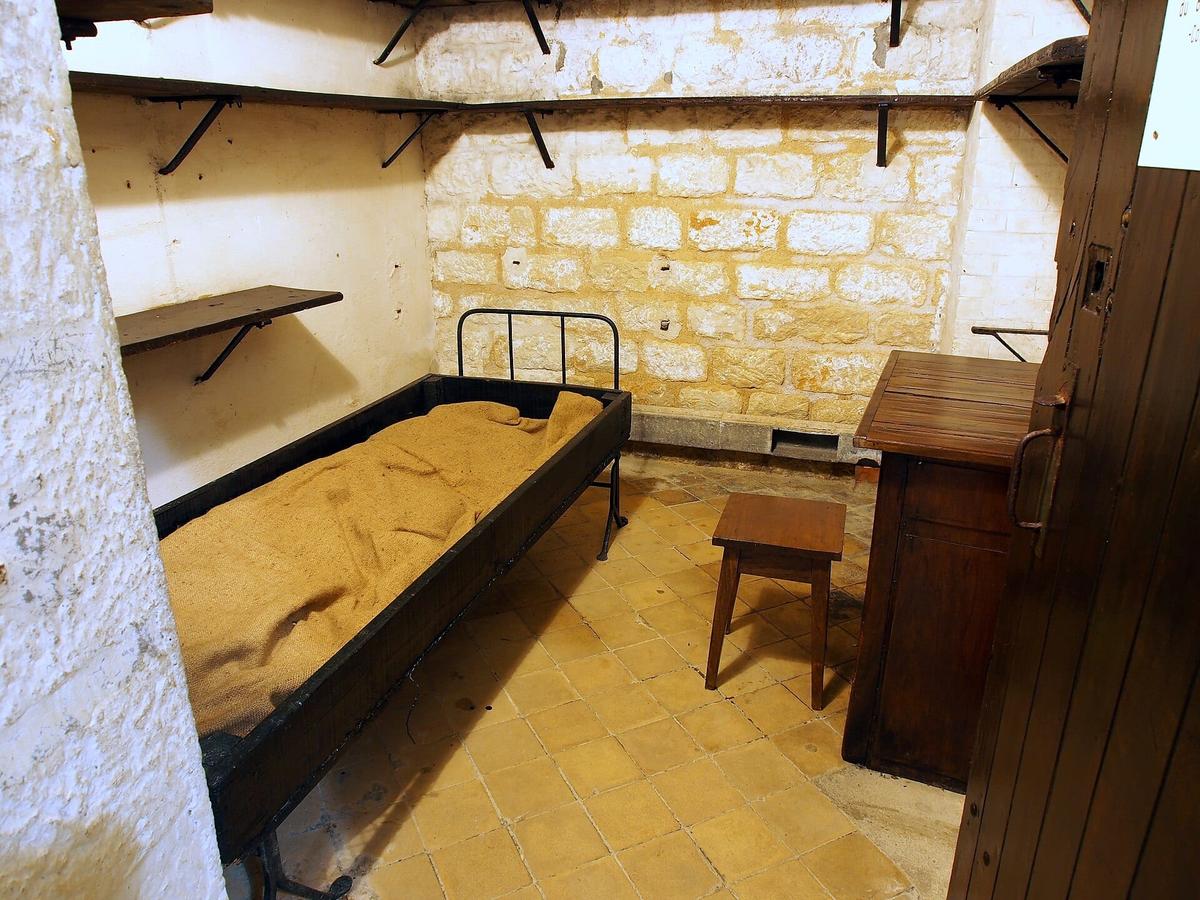
The underground barracks. Designed for 150 men, they sheltered up to 600. The new tour tells the life and death of the besieged men here.
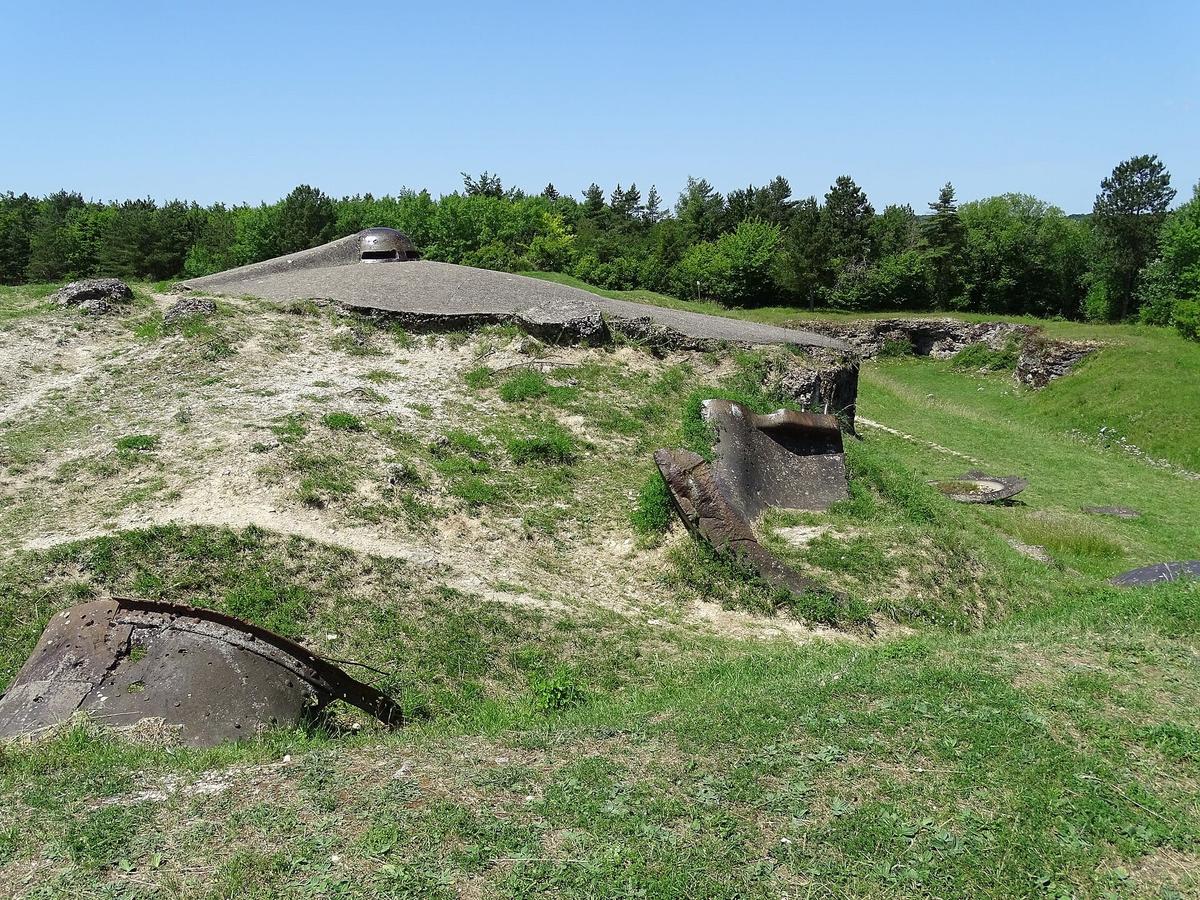
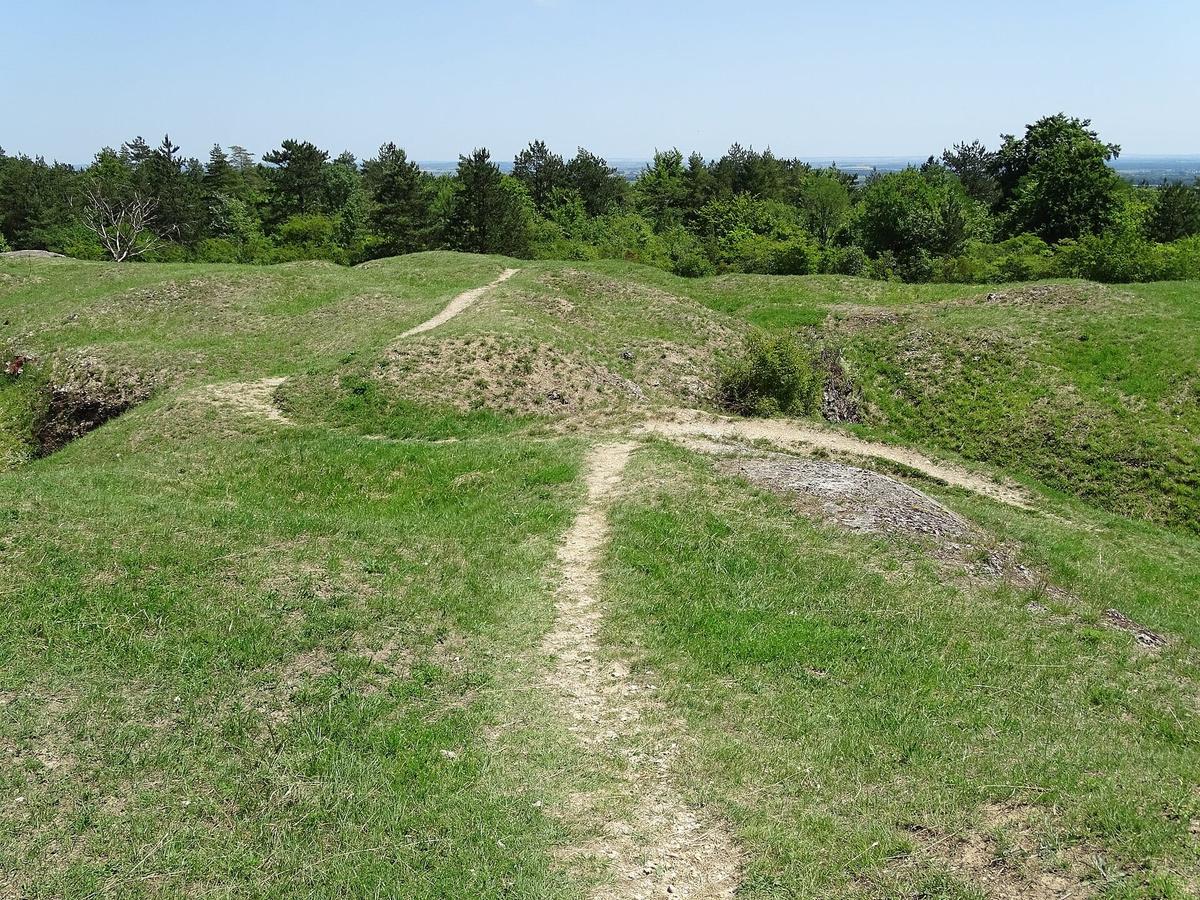
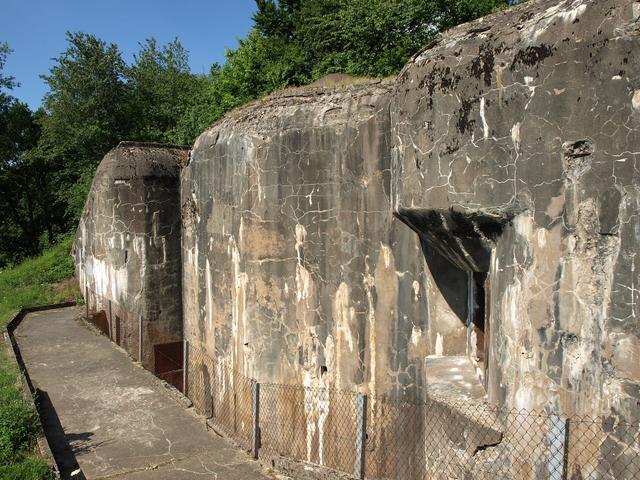
The top of the fort. The roof, churned up by shells, shows the remains of the destroyed 75 mm turret and the observation posts. The view stretches over the battlefield and its forests, replanted over the craters.
The ditches. From here you can see the counterscarp casemates, built into the outer wall to fire on attackers who had climbed down into the ditch.
The plaques. A plaque from the association "Les défenseurs du fort de Vaux" honours the garrison.
Visiting Fort Vaux with children
Fort Vaux suits children from about 8 to 10 who are interested in history. Younger ones may be frightened by the darkness, the cold and the subject. Entry is free under 8 and the family pass brings the price down. For a first introduction to the Great War, start with the Verdun Memorial, which is more educational, then show them the fort.

How to get to Fort Vaux
By car. This is the only easy way. From Verdun, follow signs for "Champ de bataille" (battlefield), then for "Fort de Vaux". The Memorial gives a journey time of about ten minutes from the town. The A4 motorway serves Verdun from Paris and Metz.
By public transport. No convenient scheduled bus serves the fort. Without a car, take a guided tour from Verdun.
Renting a car. Metz is the nearest large city, with a wide choice of rental agencies. A car lets you link the forts, the Ossuary and the Memorial, which are several kilometres apart.
What to combine with Fort Vaux on the battlefield
| Also worth seeing | Distance | Travel time |
|---|---|---|
| Fort Douaumont | 6 km | 10 min by car |
| Verdun Memorial | 6 km | 10 min by car |
| Verdun Underground Citadel | 12 km | 20 min by car |
Approximate road distances and travel times.
Fort Douaumont, taken by the Germans in February 1916, is the natural follow-on from Vaux, and the two-fort combined ticket brings the price down. See also: Fort Douaumont The Douaumont Ossuary, with the bones of 130,000 unknown soldiers and its military cemetery, is a few minutes away. See also: Douaumont Ossuary The Verdun Memorial gives the context of the battle with its collections. See also: Verdun Memorial
In town, Verdun's underground citadel shows life behind the front line, where bread was baked and soldiers rested. See also: Verdun Underground Citadel If you are heading on into eastern Lorraine, the Maginot Line can be visited at the Hackenberg fort, and the citadel of Bitche tells another siege story. See also: Ouvrage Hackenberg, Citadel of Bitche, Lorraine
Where to eat and stay
The Memorial does not list a permanent restaurant at the fort. The simplest option is lunch in Verdun, about ten minutes away, which has the most choice. Bring water and a snack if you are covering the whole battlefield in a day.

To stay, Verdun is the most convenient base, with hotels near the citadel and along the Meuse.
FAQ
Is Fort Vaux open?
Yes. Closed for works, it reopened on 4 July 2026. It is open every day 9:30 – 17:30 until 31 December, except 24 and 25 December.
How much does it cost to visit Fort Vaux?
€8 per adult, €6.50 reduced rate, free under 8. The two-fort ticket costs €14.
What is the difference between Fort Vaux and Fort Douaumont?
Douaumont is the largest fort at Verdun, taken almost without a fight in February 1916. Vaux is smaller, but its garrison held out underground for six days in June 1916.
Who was Vaillant the pigeon?
Major Raynal's last carrier pigeon, released on 4 June 1916 with a call for help. It reached Verdun despite the gas and was given a citation in the national order of the day.
Is it cold inside the fort?
Yes, the fort is cold and damp all year. Bring a jacket, even in summer.
Can you visit Fort Vaux and the Ossuary on the same ticket?
No. The combined tickets cover Vaux, Douaumont and the Memorial. The Ossuary has its own ticket office.
Practical information
Opening hours 2026
| 4 July 2026 to 20 September 2026 | 9:30 – 18:30 |
|---|---|
| 21 September 2026 to 31 December 2026 | 9:30 – 17:30 |
Closed: 24 December, 25 December, and 1 January 2027
Official ticket-office prices 2026
| Full price | €8 |
|---|---|
| Reduced rate | €6.50 |
| Family ticket | €19 |
| Free | children under 8 and journalists |
Address
Fort de Vaux, Vaux-devant-Damloup, 55100 Douaumont-Vaux, France
Directions · Phone+33 3 29 88 19 16
On site and nearby
- Nearest shops and pharmacy: Verdun, 8 km away Straight-line distance, based on OpenStreetMap.
- Emergencies: 112 (all emergencies, free from any phone), 15 (SAMU, medical emergency)
Around the site, on Google Maps
With children
Family days out nearby: Neufchef Iron Mine Museum (43 km), Amnéville Zoo (49 km), Walygator Grand-Est (50 km)
Swimming pools and play areas nearby, on Google Maps
Facts checked on 11 November 2026. Sources: memorial-verdun.fr, memorial-verdun.fr, memorial-verdun.fr, fr.wikipedia.org, memorial-verdun.fr, memorial-verdun.fr, lagazettefrance.fr, latitude.to
Map
In the same region
- Maison de la MirabelleFree admission
- Amnéville ZooFree under 3