Musée de l'École de Nancy: planning your visit
Musée de l'École de Nancy at a glance
- Opening hours 2026
- 10:00 – 18:00 (closed on Monday and Tuesday)
- Full price
- €7.50
- Free
- under 26
- Time needed
- about 1 h 30 min
- Visitors per year
- 42,584 (2017)
- Where
- Nancy
Official ticket-office prices, checked on 29 October 2026. Full opening hours, reduced prices and access
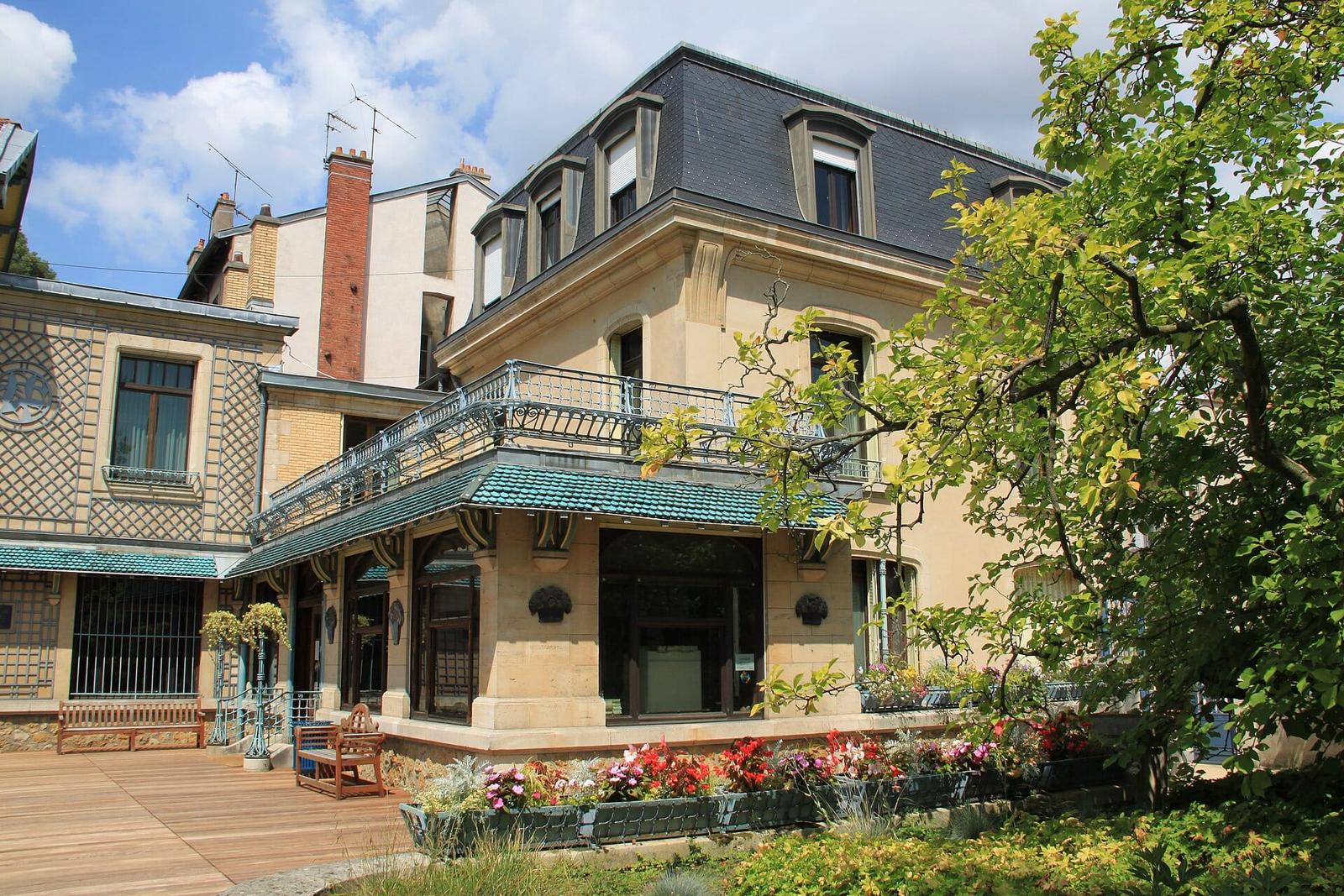

The Musée de l'École de Nancy is the museum of Lorraine's Art Nouveau. Majorelle furniture, glass by Gallé and Daum, stained glass by Gruber: everything is displayed in the former home of a patron of the arts, with its garden and aquarium pavilion. Less famous than Place Stanislas, it welcomed 42,584 visitors in 2017, which makes it a pleasant, uncrowded visit. Here are the prices, opening hours, free admission rules and what not to miss.
École de Nancy Museum at a glance
- Where: 36-38 rue du Sergent Blandan, south-west of the centre of Nancy.
- Price: €7.50 full price, €5 reduced. Free for under-26s and for everyone on the first Sunday of the month.
- Open: Wednesday to Sunday, 10:00 – 18:00. Closed Monday and Tuesday.
- Time needed: about 90 minutes, an hour more with Villa Majorelle.
- Wheelchair access: the museum states that it is not accessible to visitors with reduced mobility.
- Best for: lovers of decorative arts, design and architecture, anyone curious about Art Nouveau.
What is the École de Nancy?
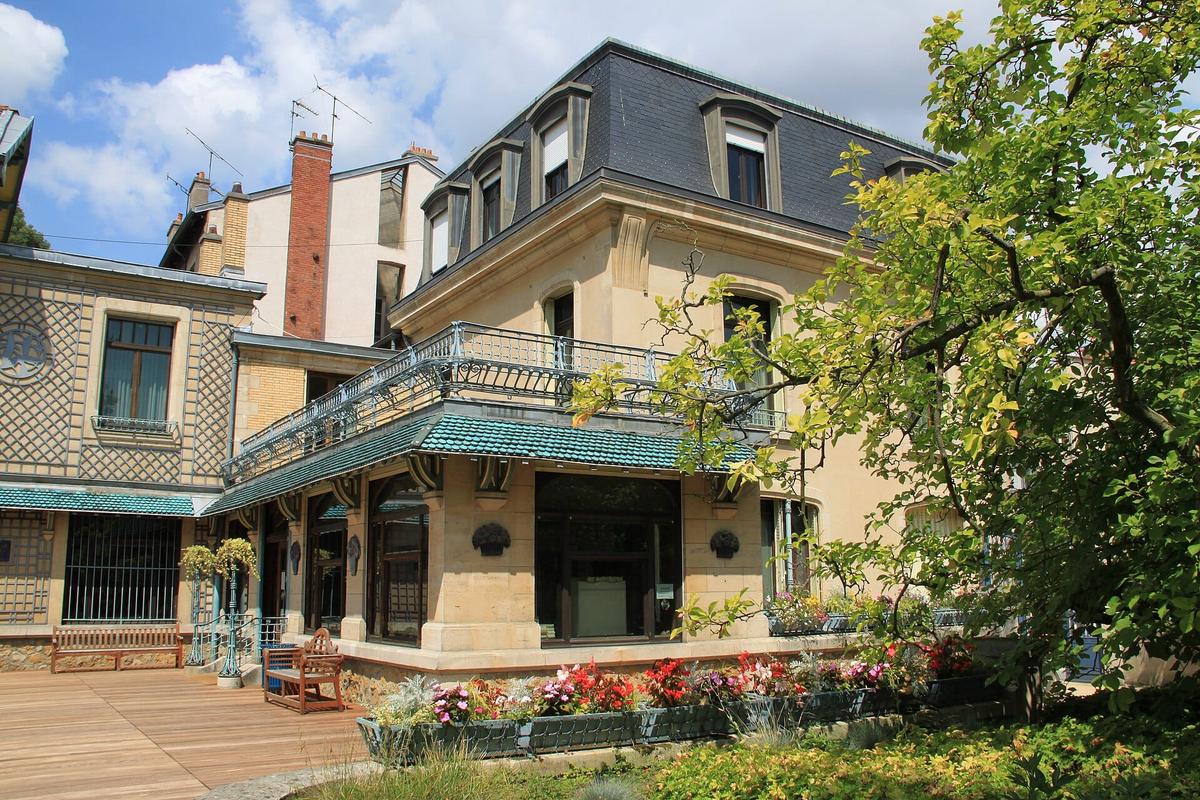
Around 1900, Nancy became one of the capitals of Art Nouveau in Europe. In 1901 artists and manufacturers from Lorraine came together in the "Alliance provinciale des industries d'art", known as the École de Nancy (School of Nancy). At its head was the glassmaker and cabinetmaker Émile Gallé. Around him: Louis Majorelle for furniture, the Daum brothers for glass, Eugène Vallin for woodwork, Jacques Gruber for stained glass, Victor Prouvé for painting and decoration.
Their idea was to bring art into every object in the home, from the bed to the vase, drawing on the nature of Lorraine. Dragonflies, umbellifers, water lilies, thistles and pine cones appear everywhere.
The museum occupies the former home of Eugène Corbin, a businessman and major patron of the École de Nancy. He gave his collection to the city of Nancy in 1935. Closed from 1945 to 1964, the museum reopened to the public in June 1964. The displays recreate complete interiors, which sets it apart from museums where objects are lined up in cases.
What to see at the Musée de l'École de Nancy

The Masson dining room. This is the museum's most famous room. Eugène Vallin made it in 1904 for Charles Masson, Eugène Corbin's brother-in-law. The panelling, fireplace and furniture form a single whole. Victor Prouvé made the leather wall panels and the ceiling paintings, on the theme of the five senses. Take time to look up.
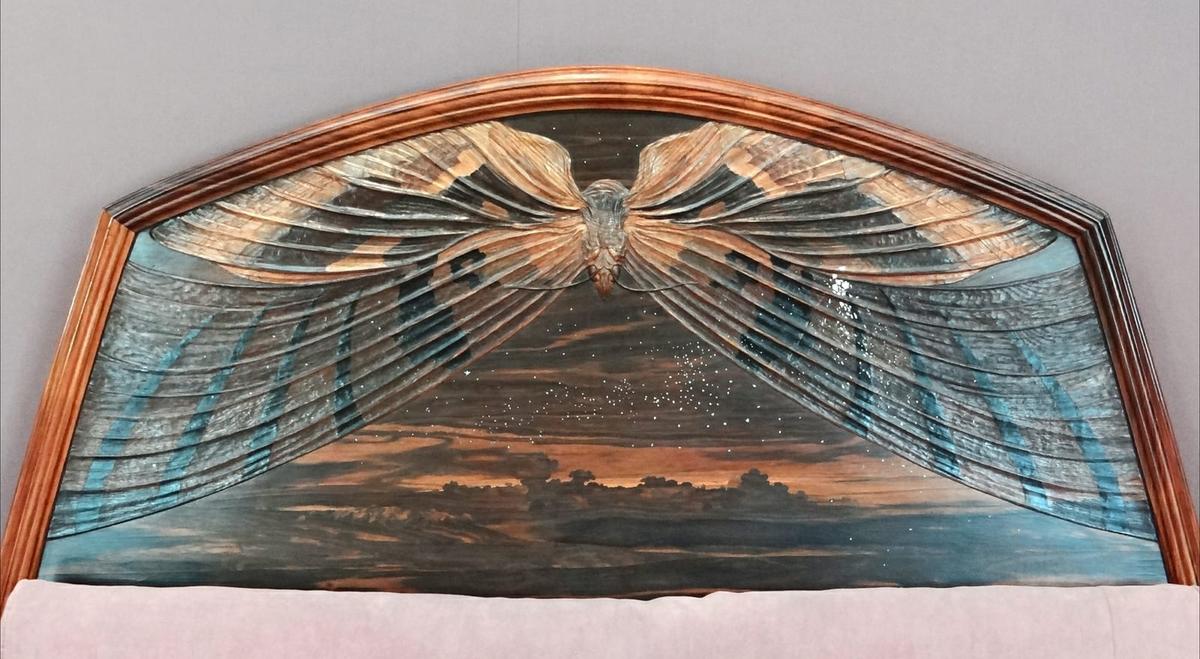
Émile Gallé's "Aube et Crépuscule" bed. A marquetry bed whose decoration, like its title (Dawn and Dusk), evokes the passage from night to day.
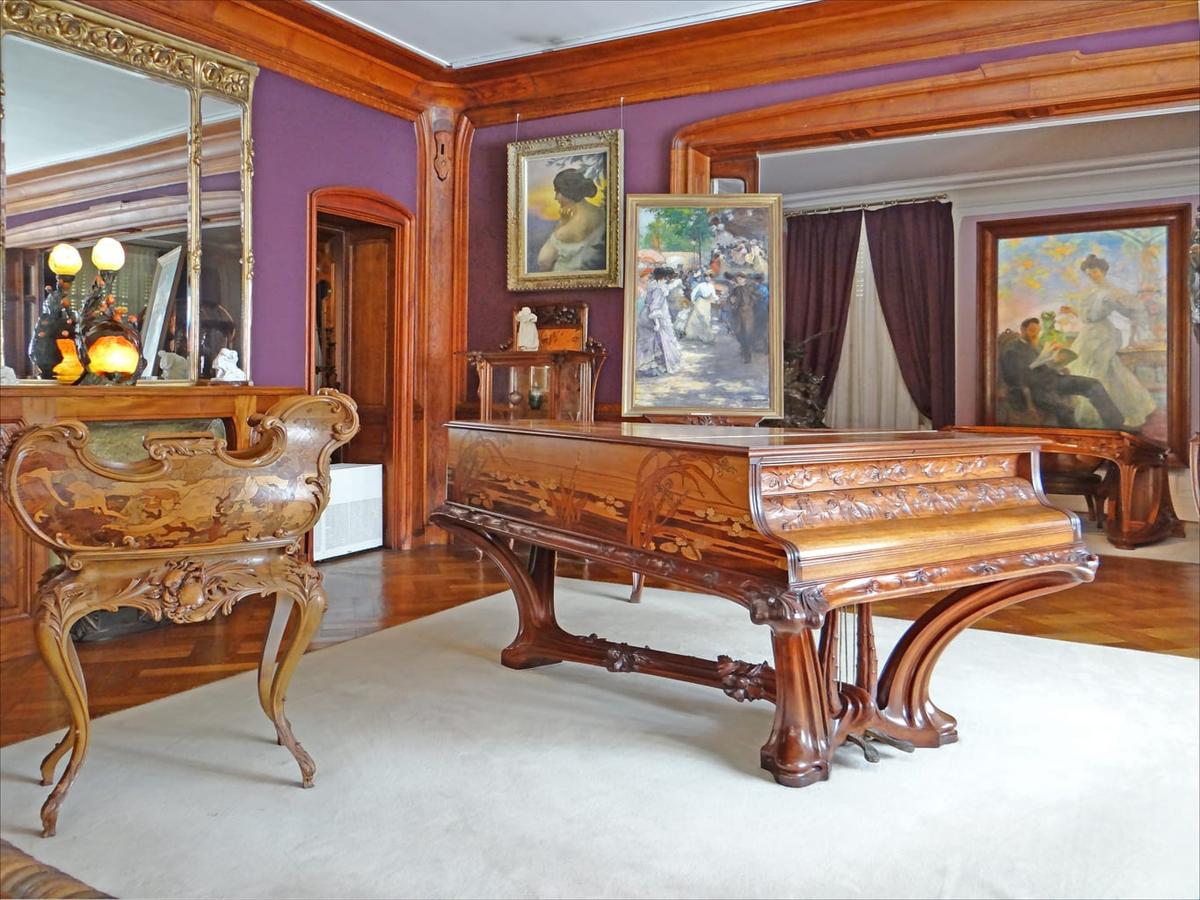
Majorelle furniture. Among the highlights: the piano "La Mort du Cygne" (The Death of the Swan, 1905) and the "lampe aux ombelles" (umbel lamp, 1903-1904), with a base by Majorelle and a shade by Daum.
Glass by Gallé and Daum. Vases, bowls and lamps in engraved, coloured or layered glass. Look out for Daum's vase "Libellules et calthas des marais" (dragonflies and marsh marigolds), around 1903-1904.
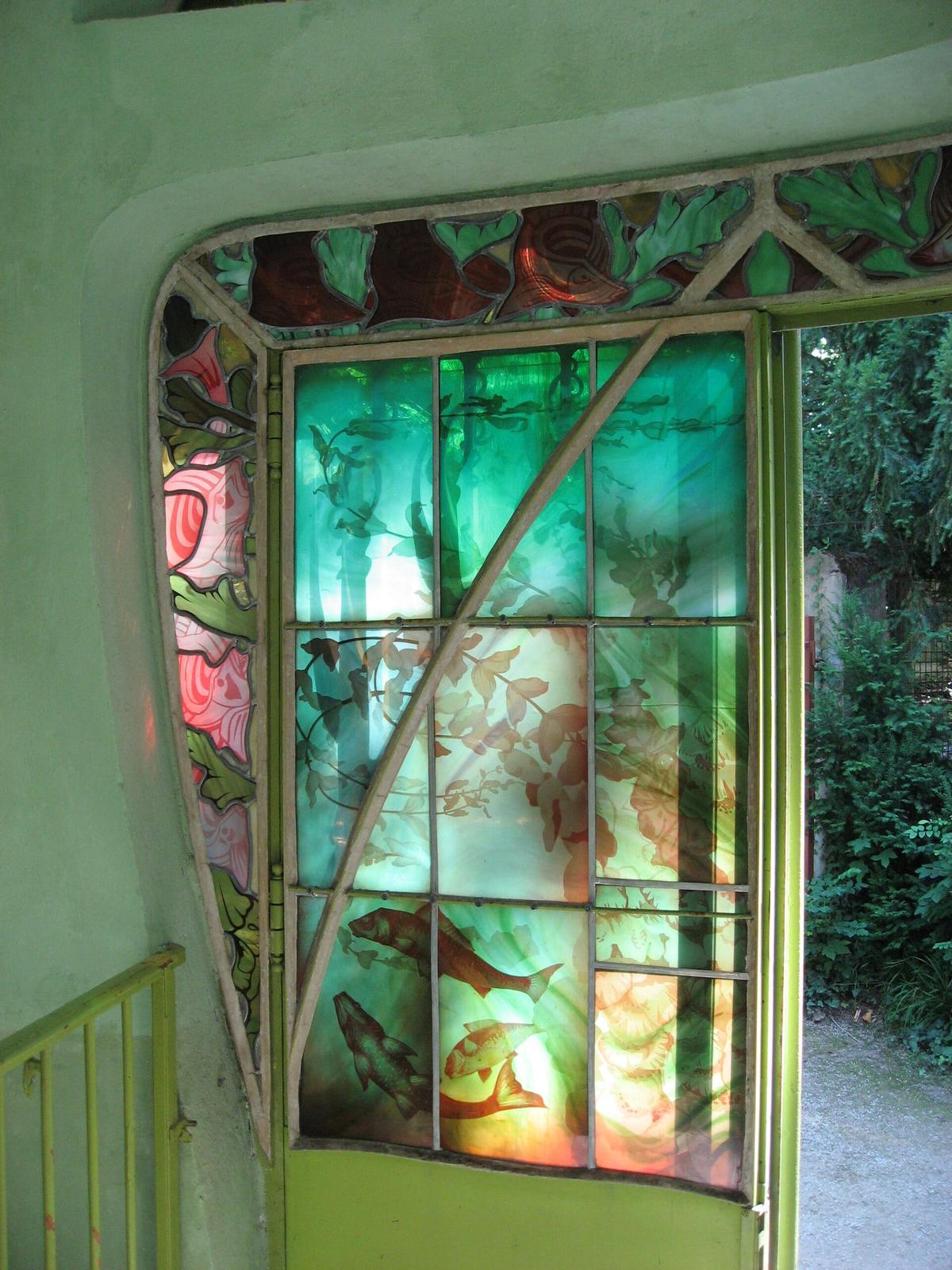
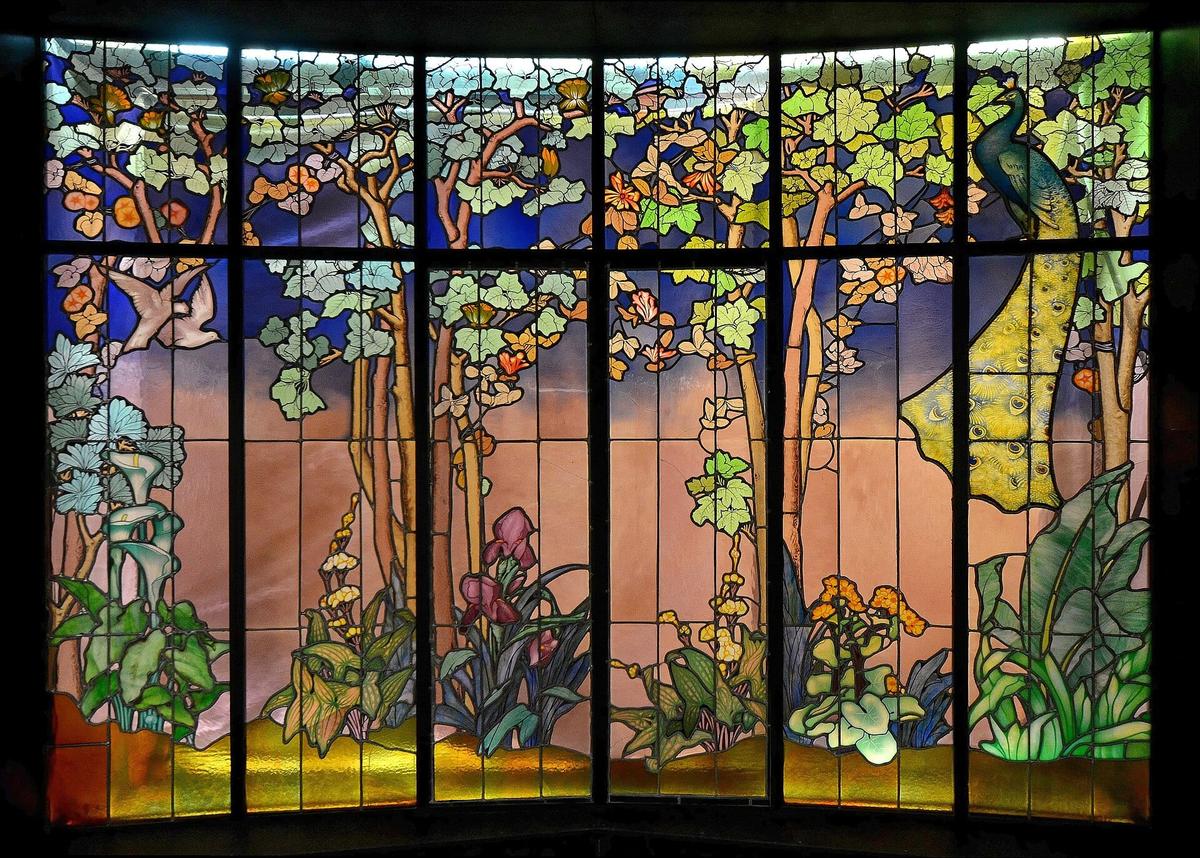
Jacques Gruber's stained glass. The glazed veranda nicknamed "La Salle" and the windows of the aquarium pavilion, in the garden.
Our tip: in 2026, Nancy is dedicating its cultural year to Émile Gallé. Check the museum's website for current exhibitions and tours before you come.
The garden and the aquarium pavilion

Do not leave without walking round the garden. It is a protected historic monument, together with the aquarium pavilion.
The aquarium pavilion was built around 1904 for Eugène Corbin, to designs by the Nancy architect Lucien Weissenburger. Jacques Gruber designed the stained glass of its door and transoms.
The funerary monument in the garden was put up in 1901 in the Préville cemetery, then moved here in 1969. It is the work of the architect Xavier Girard and the sculptor Pierre Roche.
The door of the Gallé workshops, in oak, was carved by Eugène Vallin in 1897 for Émile Gallé's workshops. It was installed in the garden in 1964.
In fine weather, the garden is the best place for a break between rooms.
How much is a ticket?
Prices in force in 2026:
- Full price: €7.50.
- Reduced rate: €5 for jobseekers, over-65s, people accompanying disabled visitors, large families and holders of certain cards (Pass Lorraine, Amis du Louvre and others).
- Combined ticket with Villa Majorelle: €9, or €6.50 reduced.
- Guided tour: €3 for a one-hour tour, 4 for a tour of one and a half to two hours, on top of the entry ticket.
- Groups of more than 10: €4.50 per person.
Who gets in free?
- Everyone, on the first Sunday of the month.
- Under-26s and students.
- Disabled visitors, and the person accompanying them when their card says so.
- People on RSA or ASPA benefits.
- Holders of the Nancy City Pass and the Museo card.
- Journalists and holders of ICOM, Musées Grand Est, Ministry of Culture or Ministry of Education cards.
The Museo card gives a year's access to the city's museums: €25 for one person, €40 for two. If you are staying several days or live in the region, it quickly pays for itself.
Our tip: the first Sunday of the month is free, but it is also the busiest day. If you are under 26, come on a weekday instead: entry is free and the rooms are quieter.
Opening hours and best time to visit

The museum is open Wednesday to Sunday, 10:00 – 18:00. It is closed on Mondays and Tuesdays, and on 1 January, 1 May, 14 July, 1 November and 25 December.
Villa Majorelle opens only in the afternoon, Wednesday to Sunday, 14:00 – 18:00.
Our tip: the Musée de l'École de Nancy in the morning, lunch in the neighbourhood, then Villa Majorelle in the afternoon.
How long does a visit take?

Allow about 90 minutes for the museum and garden, without rushing. Furniture lovers can stay longer: each piece deserves a close look, and the marquetry details take time.
With Villa Majorelle, plan half a day. Add Place Stanislas and the fine arts museum, which has a large collection of Daum glass, and you have a full day of Art Nouveau and the 18th century.
Villa Majorelle
Villa Majorelle is the house Louis Majorelle had built for himself, at 1 rue Louis Majorelle, a few streets from the museum. It belongs to the Musée de l'École de Nancy and can be visited with the combined ticket (€9). It is one of the few Art Nouveau houses in Nancy open to the public. The museum shows the objects; the villa shows a whole house designed by an artist.
How to get to the Musée de l'École de Nancy
On foot. From Nancy station, allow about twenty minutes' walk south-west. From Place Stanislas, about half an hour. The route passes streets lined with Art Nouveau facades: look up.
By bus. The Stan network serves the area. The Stan journey planner gives the nearest line and stop from where you are.
By car. The museum is in town, in a residential area. A car is only useful to go on to Lunéville or other sites in Lorraine.
Luggage: under the Vigipirate security plan, bags larger than cabin size are not allowed. If you arrive by train with a suitcase, drop it at your hotel first.
Partner links: if you book through these links, we earn a commission at no extra cost to you. Partner links · Learn more
Guided tours and tours of Nancy
The museum runs guided tours of one or two hours, charged on top of the ticket. The programme changes from month to month: see the calendar on the museum's website.
To discover Art Nouveau around the city, guided walks pass the facades and villas of the area, especially around the Parc de Saurupt. Tour companies also offer tours of Nancy.
Guided tours and day trips on GetYourGuide
Visiting the museum with children
Entry is free for under-26s, so a family visit costs little. The museum is not large, which suits children.
The easiest approach is to play with nature: look for the dragonflies, butterflies, umbellifers and animals hidden in the furniture, vases and windows. The Masson dining room and its painted ceiling go down well. The garden and the aquarium pavilion give you a break outdoors.
For young children, a 90-minute visit is the maximum: pick a few pieces rather than trying to see everything.
Accessibility
The museum states that it is not accessible to visitors with reduced mobility. Contact the front desk on +33 3 83 85 30 01 before you come. Disabled visitors get in free.
Facts and figures
- 42,584 visitors in 2017. That is few given how interesting the place is: you can often visit in peace.
- A family dining room. The Masson dining room was not made for the patron himself, but for his brother-in-law, Charles Masson.
- A monument from the cemetery. The funerary monument in the garden stood in the Préville cemetery until 1969.
- A workshop door. The oak door in the garden once closed Émile Gallé's workshops. Vallin carved it in 1897.
- An aquarium in the garden. The pavilion Corbin had built around 1904 housed an aquarium, hence its name.
Where to eat and stay
Eating. The area is residential and the museum's website lists no restaurant. The simplest option is lunch in the city centre, around Place Stanislas or rue des Maréchaux, or a picnic in a park. In Nancy, try bergamot sweets and macarons.
Staying. The city centre, between the station and Place Stanislas, lets you reach the museum on foot or by bus. It is the best choice without a car.
What to combine with the Musée de l'École de Nancy
| Also worth seeing | Distance | Travel time |
|---|---|---|
| Place Stanislas | 2.5 km | 30 min on foot |
| Château de Lunéville | 35 km | 35 min by car |
| Centre Pompidou-Metz | 57 km | 50 min by public transport |
Approximate road distances and travel times.
Place Stanislas. The 18th century after Art Nouveau: Jean Lamour's gilded gates, the town hall and the UNESCO-listed squares. See also: Place Stanislas
Château de Lunéville. Stanislas's palace, half an hour's drive to the east. See also: Château de Lunéville
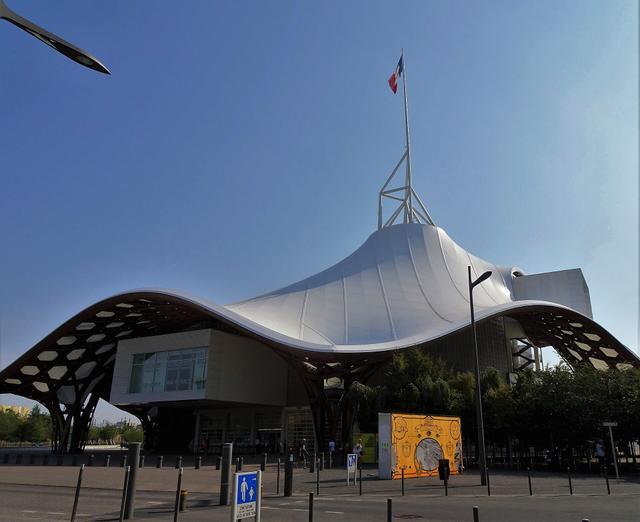
Metz. The Centre Pompidou-Metz, for modern and contemporary art, is less than an hour away by train. See also: Centre Pompidou-Metz
For the rest of the region: See also: Lorraine
FAQ
How much does the Musée de l'École de Nancy cost?
€7.50 full price, €5 reduced, €9 with Villa Majorelle. Free for under-26s.
Is the museum free on Sundays?
Only on the first Sunday of each month, for all visitors.
Which days is the museum closed?
Monday and Tuesday, as well as 1 January, 1 May, 14 July, 1 November and 25 December.
How long does a visit take?
About 90 minutes for the museum and garden, half a day with Villa Majorelle.
Can you visit Villa Majorelle?
Yes, in the afternoon from Wednesday to Sunday, with the combined ticket sold by the museum.
Is the museum wheelchair accessible?
No, the museum states that it is not accessible to visitors with reduced mobility.
Practical information
Opening hours 2026
| 1 January 2026 to 31 December 2026 | 10:00 – 18:00 (Closed: Monday and Tuesday) |
|---|
Closed: 1 January, 1 May, 14 July, 1 November, and 25 December
Official ticket-office prices 2026
| Full price | €7.50 |
|---|---|
| Reduced rate | €5 |
| Free | under 26, under 18s, students up to 26, disabled visitors, recipients of French welfare benefits, and journalists |
Address
Musée de l'École de Nancy, 36-38 rue du Sergent Blandan, 54000 Nancy, France
Directions · Phone+33 3 83 85 30 01
On site and nearby
- Nearest shops and pharmacy: Laxou, 1 km away Straight-line distance, based on OpenStreetMap.
- Emergencies: 112 (all emergencies, free from any phone), 15 (SAMU, medical emergency)
Around the site, on Google Maps
With children
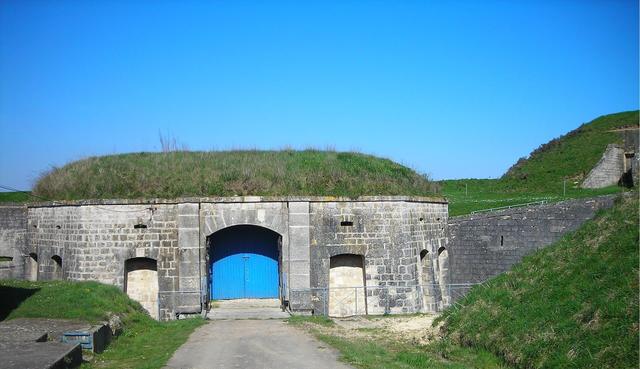
Family days out nearby: Place Stanislas (2 km), Château de Fléville (7 km), Fort de Villey-le-Sec (14 km)
Swimming pools and play areas nearby, on Google Maps
Facts checked on 29 October 2026. Sources: musee-ecole-de-nancy.nancy.fr, musee-ecole-de-nancy.nancy.fr, musee-ecole-de-nancy.nancy.fr, fr.wikipedia.org
Map
In the same region
- Maison de la MirabelleFree admission
- Amnéville ZooFree under 3