Douaumont Ossuary: planning your visit
Douaumont Ossuary at a glance
- Full price
- €7
- Time needed
- about 1 h
- Where
- Douaumont-Vaux
Official ticket-office prices, checked on 29 October 2026. Full opening hours, reduced prices and access
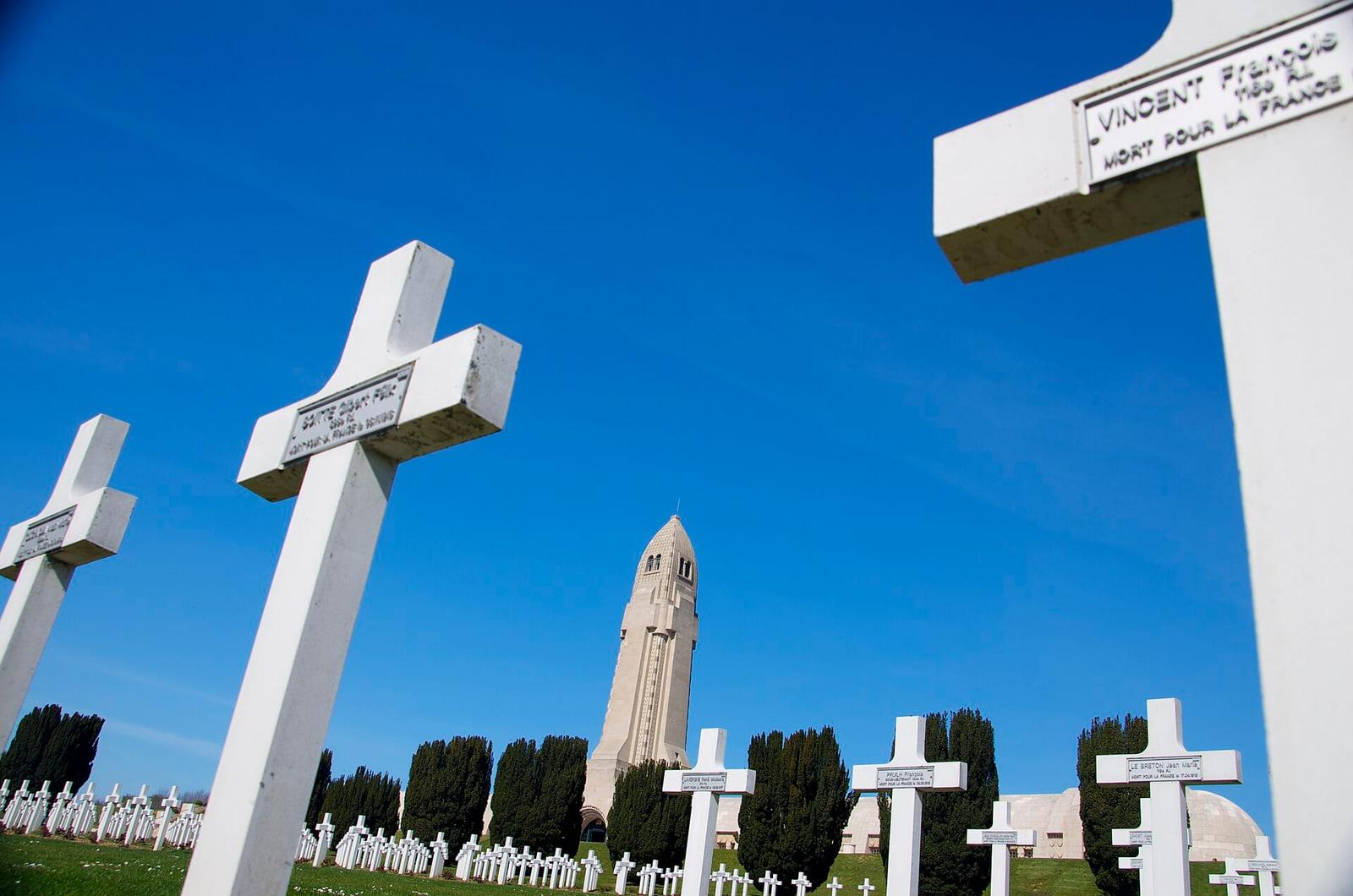

On the Douaumont ridge, in the middle of the Verdun battlefield, the Ossuary holds the remains of some 130,000 French and German soldiers who were never identified. In front of it, the national cemetery has 16,142 graves. Here is what you need to know for your visit: prices, opening hours, time needed, getting there and places to see nearby.
Douaumont Ossuary at a glance
- Where: in the commune of Douaumont-Vaux, about ten kilometres north-east of Verdun, in the middle of the former battlefield.
- Price: the full visit (film and tower) costs €7 per adult, €3 for ages 8 to 16.
- Open: all year except for a winter closure, from 6 January 2026 to 7 February 2026 in 2026, and on 25 December.
- Time needed: about 60 minutes for the Ossuary, longer with the cemetery.
- Getting there: by car from Verdun, following the "Champ de bataille" (battlefield) signs; free parking.
- Good to know: there are no cash machines on the battlefield. Bring cash or a bank card.
What is the Douaumont Ossuary?
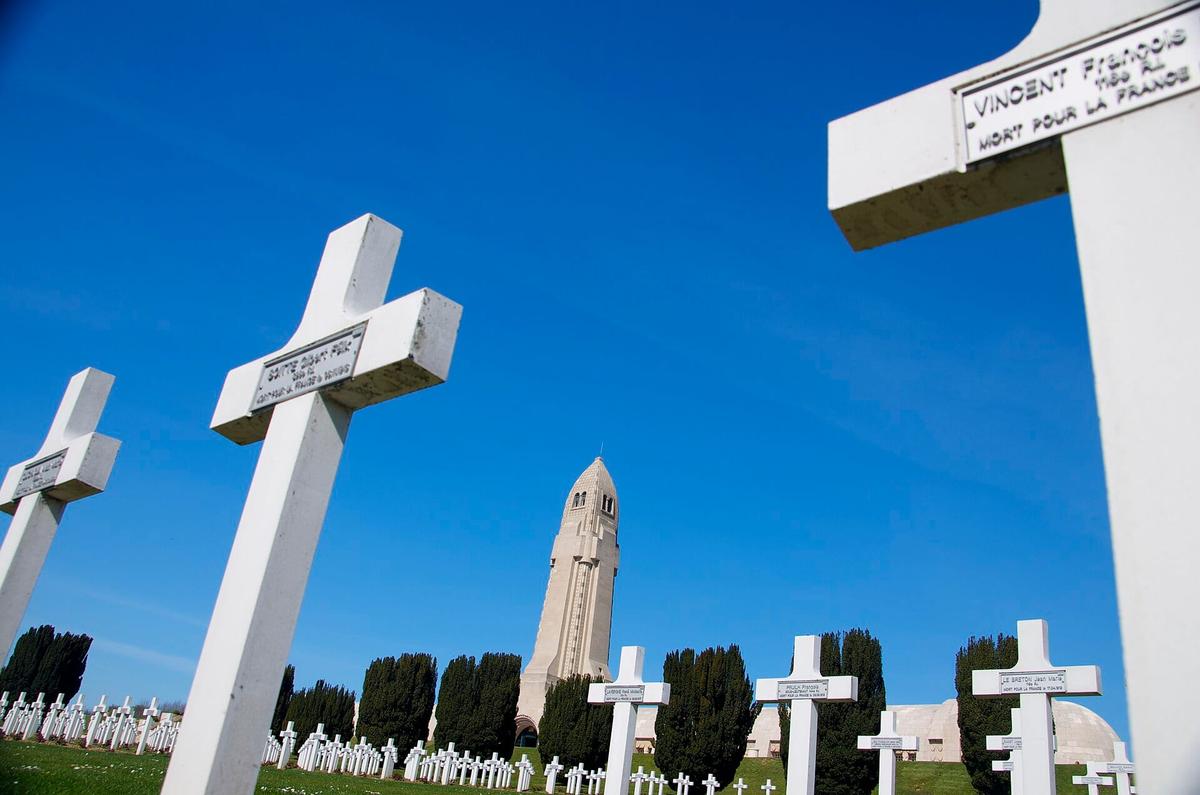
The Battle of Verdun lasted from February to December 1916. On a few square kilometres, hundreds of thousands of men were killed or wounded. After the armistice, the ground was covered with bones that no one could identify.
The Bishop of Verdun, Monsignor Charles Ginisty, then proposed an ossuary to give them a burial place. In 1919, a first temporary ossuary was set up in a wooden hut. The first stones of the present building were laid by Marshal Pétain and Monsignor Ginisty, and an architecture competition was won in 1923 by Léon Azéma, Max Edrei and Jacques Hardy.
The monument was inaugurated on 7 August 1932 in the presence of the President of the Republic, Albert Lebrun. It holds the remains of some 130,000 unknown soldiers, French and German, gathered together regardless of side.
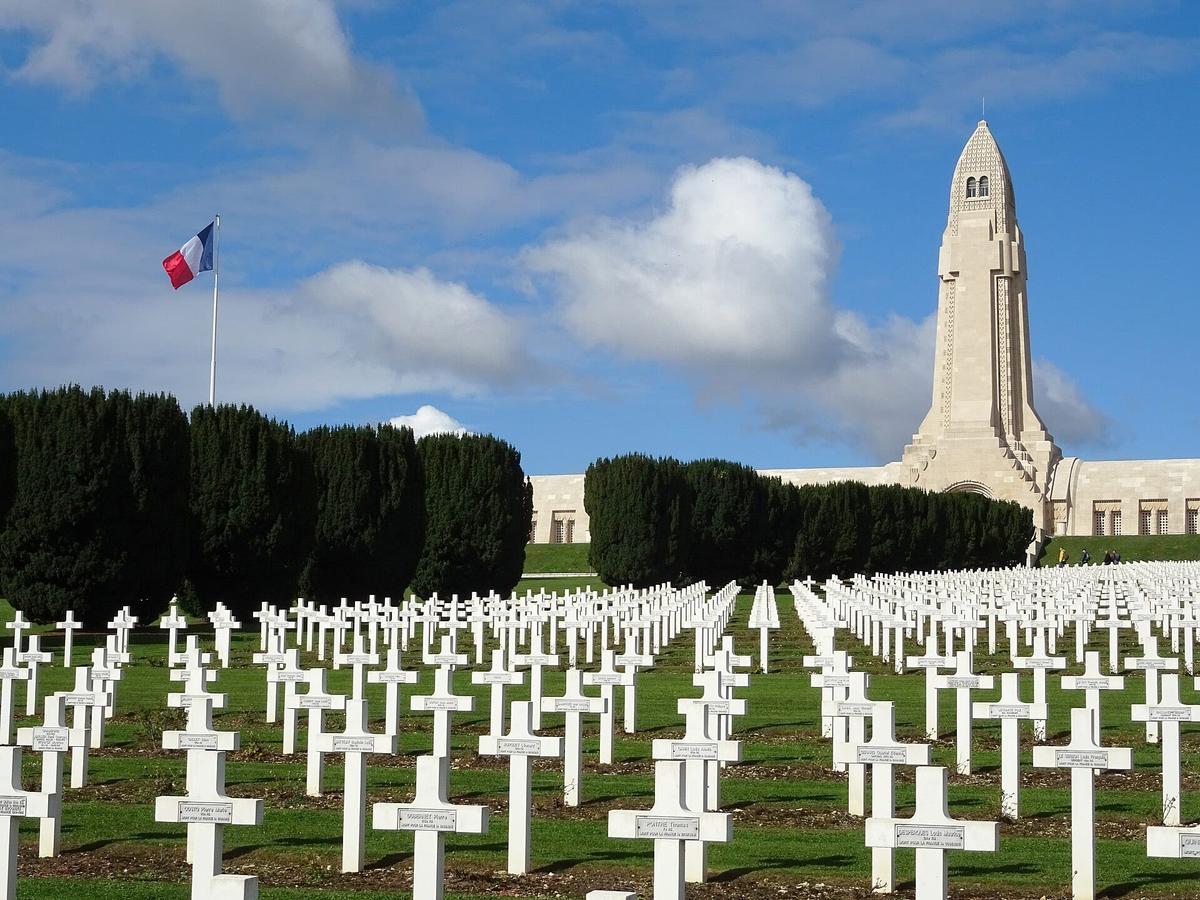
The building is long and low, with a vault running its full length. In the centre rises a 46-metre tower. Beneath the nave, the bones can be seen through small windows set at eye level along the back of the building. This is often what stays with visitors most.
How much does it cost to visit the Ossuary?
The full-visit ticket includes the film and the climb up the tower. Prices displayed by the Ossuary:
- Adult: €7.
- Child aged 8 to 16: €3.
- Student: €4.50.
- Groups of at least 20 people: €6 per adult and €2.50 per child without booking, €4.50 and €2 with booking.
You can pay in cash, by bank card, by cheque or with chèques-vacances holiday vouchers.
Combined tickets. The Ossuary is not included in the combined tickets sold by the Verdun Memorial. Those cover the Memorial and the forts of Douaumont and Vaux: €19 per adult for the Memorial and one fort, for example. The Ossuary ticket is therefore bought separately, on site.
Do you need to book?
No, not for an individual visit. Tickets are sold at the reception desk on the day. Only groups need to book, using the contact form on the Ossuary's website.
Douaumont Ossuary opening hours
Opening hours change almost every month. 2026 hours published by the Ossuary:
- 2 to 5 January: 14:00 – 17:00 on weekdays, closed at weekends.
- Winter closure: from 6 January 2026 to 7 February 2026.
- February (after reopening): 9:00 – 12:00 and 14:00 – 17:00 on weekdays; 14:00 – 17:00 at weekends and on public holidays.
- March: 9:00 – 12:00 and 14:00 – 17:30 on weekdays; 10:00 – 12:00 and 14:00 – 17:30 at weekends and on public holidays.
- April, May and June: 9:00 – 18:00 on weekdays; 10:00 – 18:00 at weekends and on public holidays.
- July and August: 9:00 – 18:30 on weekdays.
- September: 9:00 – 18:00 on weekdays; 10:00 – 18:00 at weekends and on public holidays.
- October and November: 9:00 – 17:30 on weekdays; 10:00 – 17:30 at weekends and on public holidays.
- December: 9:00 – 17:00 on weekdays; 10:00 – 17:00 at weekends and on public holidays. Closed on 25 December.
Last entry is 60 minutes before closing. The Ossuary warns that its hours may change without notice: check its website before a long journey, especially in winter.
Our tip: in February and March, the Ossuary closes at lunchtime on weekdays, and in February it only opens in the afternoon at weekends. Check the times above before you set off.
How long does a visit take?
The Ossuary gives a visit time of about 60 minutes. That covers the nave, the film and the climb up the tower. Add half an hour to walk through the cemetery and round the building, where the windows onto the bones are.
For the whole battlefield (Ossuary, Memorial, Fort Douaumont, the Bayonet Trench, the destroyed village of Fleury), allow a full day. Many visitors split it in two: the Memorial and Fleury one day, the Ossuary and the fort the next.
What to see at the Ossuary and nearby

The nave and the cloister. The long vaulted corridor runs the full length of the building. Soldiers' names are carved on the walls and vaults. The bones lie beneath the nave. Silence is expected.
The film. Shown in a room inside the building, it presents the Battle of Verdun and the history of the monument. It is included in the full-visit ticket.
The lantern tower. The 46-metre tower is climbed on foot. At the top, a viewpoint indicator locates the forts, the destroyed villages and the ridges fought over in 1916. At the summit, four rotating white and red lights sweep across the battlefield at night. The tower also houses a 2042 kg bell known as the "Bourdon de la Victoire" (Victory Bell).
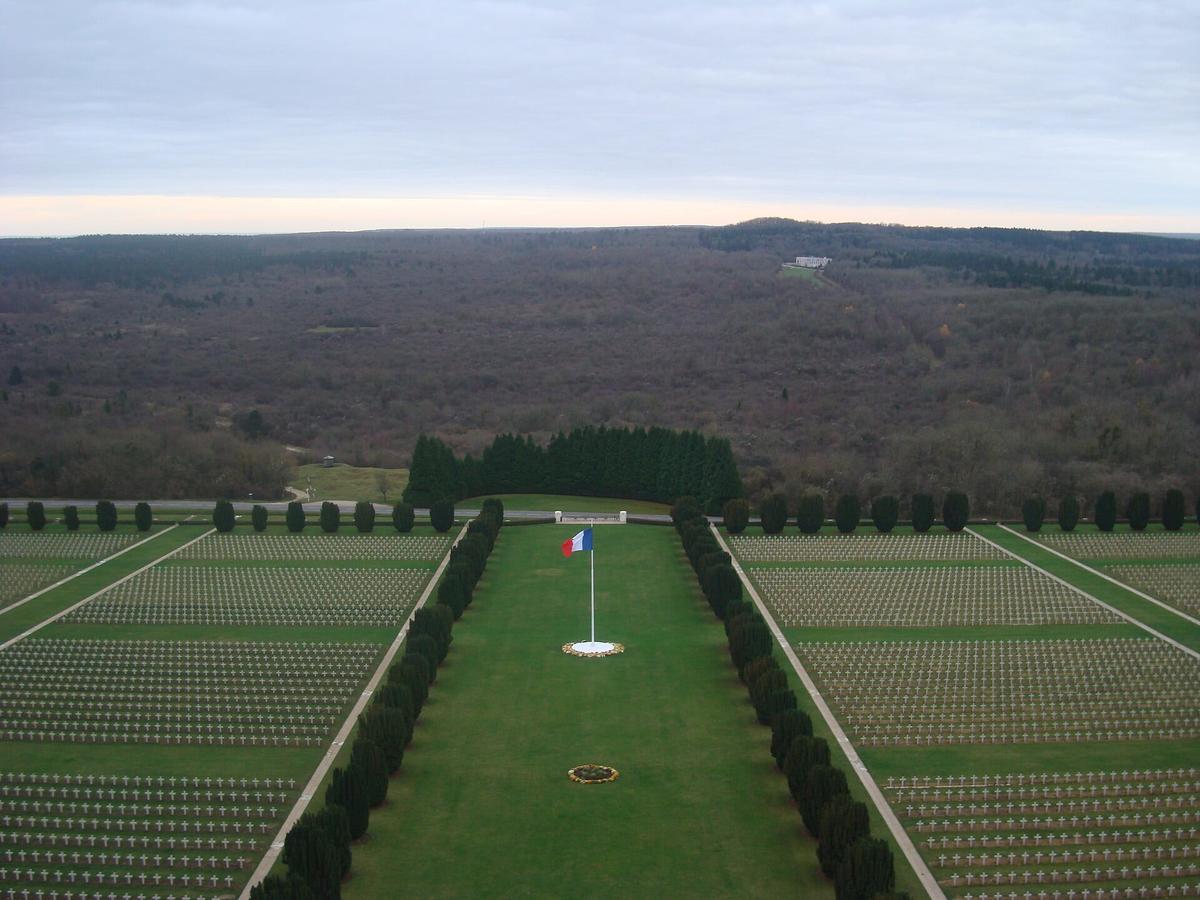
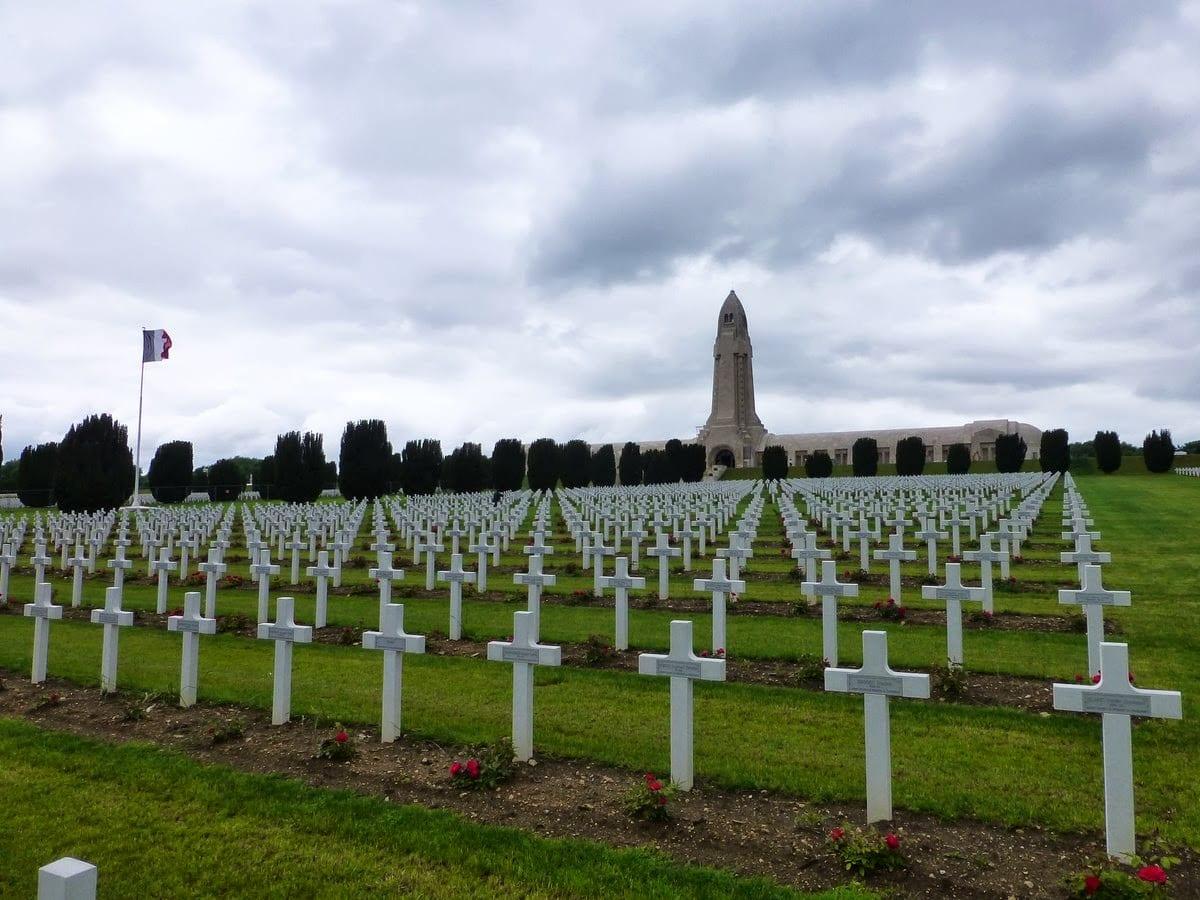
The national cemetery. In front of the Ossuary, the slope is covered with 16,142 graves of French soldiers. Most have a cross; a section of 592 headstones is set aside for Muslim soldiers, next to a monument in Islamic style.

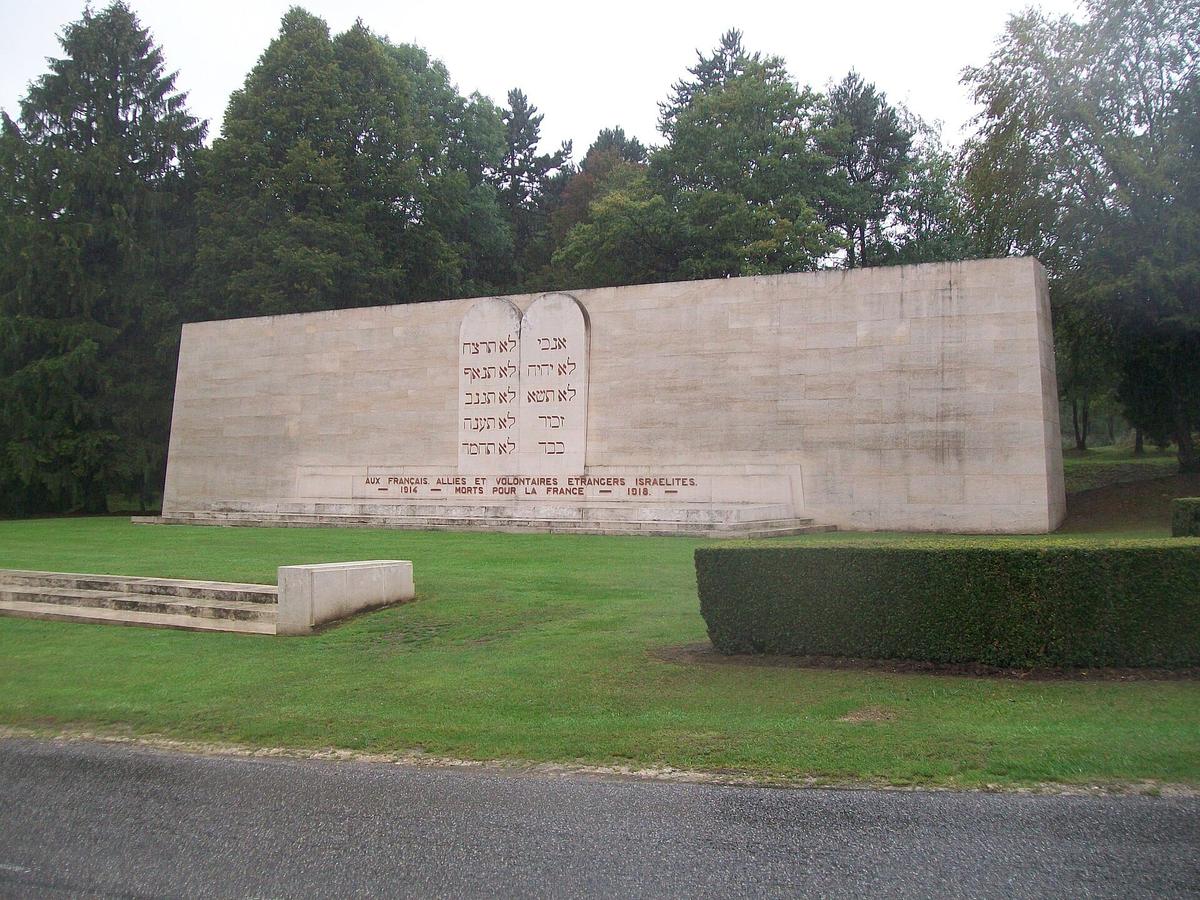
The Jewish memorial. Built nearby in 1938, it bears the Tablets of the Law in Hebrew letters and honours the Jewish soldiers who died at Verdun.
Fort Douaumont. A few kilometres away, this fort, taken by the Germans in February 1916 and retaken by the French in October, can be visited inside: galleries, casemates, gun turrets. It is run by the Verdun Memorial; entry costs €8 per adult (€19 for the family pass). It is also part of the Memorial's combined tickets. Bring a warm layer: the galleries are cool, even in summer.
The Bayonet Trench. Close to the Ossuary, a concrete monument covers the site of a trench where, according to tradition, French soldiers were buried standing up, with only the tips of their bayonets showing above the ground. Historians doubt this account, but the site remains a stop on the route. Access is free.
How to get to the Douaumont Ossuary

By car. This is the simplest way. From Verdun, follow the "Champ de bataille" signs: the road climbs to Fleury-devant-Douaumont and the Ossuary in about ten minutes. From Paris, the A4 motorway takes you to Verdun in about three hours; from Metz, allow about an hour. Parking is free, in front of the monument.
By train. The nearest TGV station is Meuse TGV, 25 km from Verdun. From there, a coach shuttle runs to Verdun station, and you still need a taxi, a rental car or a guided tour to reach the battlefield.
Renting a car. The forts, destroyed villages and memorials are spread over several kilometres. A car lets you link them all in a day. Metz, with its TGV station, is the most convenient place to rent one.
Partner links: if you book through these links, we earn a commission at no extra cost to you. Partner links · Learn more
Guided tours of the battlefield
Without knowing the history of the battle, the landscape says little: a forest on ground pitted by shells. A guided tour helps you read it. The Verdun tourist office runs guided tours of the battlefield, from two hours to a full day, that include the Ossuary and the forts. Ask which dates are open to individual visitors. Other operators run trips from Verdun or Metz.
Guided tours and day trips on GetYourGuide
Visiting the Ossuary with children
Children aged 8 to 16 pay €3. The bones visible through the outside windows can upset younger children: look first yourself, then decide. Children usually like the climb up the tower and the view from the top, as well as Fort Douaumont, which is more concrete for them.
For a primary school child, a short visit is enough: the cemetery, the nave, the tower. Explain before you come what an ossuary is and why people speak quietly there.
Accessibility and pets
The Ossuary is accessible to visitors with reduced mobility, except for the climb up the tower. Toilets are close to the monument.
Animals are not allowed in the monument, except guide dogs and assistance dogs.
How to behave on site
The Ossuary is a burial place. Eating, drinking and smoking are strictly forbidden. Dress appropriately, speak quietly and put your phone on silent. In the cemetery, do not walk on the graves or sit on the headstones.
What to see near the Ossuary on the same day
| Also worth seeing | Distance | Travel time |
|---|---|---|
| Verdun Memorial | 3 km | 5 min by car |
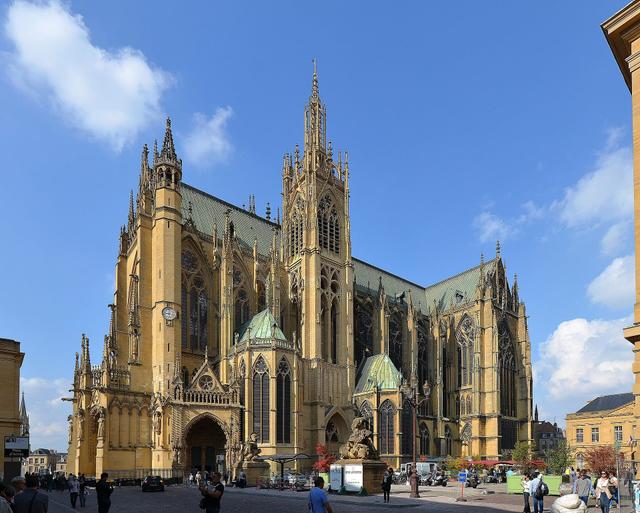
| Metz Cathedral | 85 km | 65 min by car |
Approximate road distances and travel times.
The Verdun Memorial. A few minutes' drive away, at Fleury-devant-Douaumont, the museum explains the battle from the point of view of soldiers on both sides. It is best seen before the Ossuary: you will understand better what you are looking at. See also: Verdun Memorial
Verdun. The town has its underground citadel, its World Centre for Peace and its quays along the Meuse.
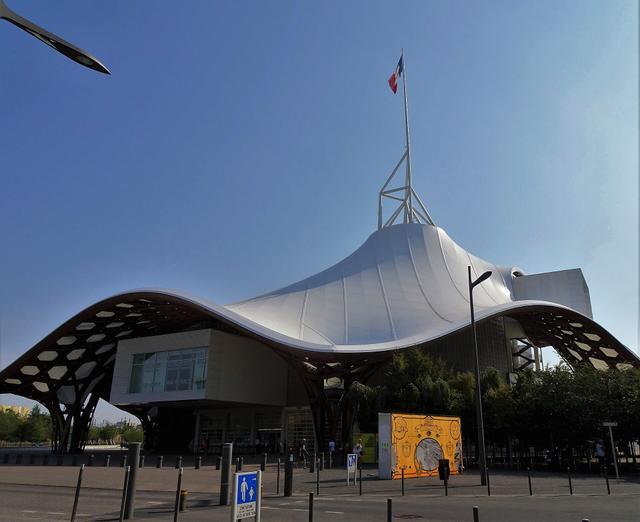
Metz. About an hour away by motorway, Metz makes a good next stop: the cathedral and its stained glass, then the Centre Pompidou-Metz. See also: Metz Cathedral, Centre Pompidou-Metz
For the rest of the region: See also: Place Stanislas, Musée de l'École de Nancy, Château de Lunéville, Citadel of Bitche, Lorraine
Facts and figures

- A fundraising bishop. To pay for the monument, Monsignor Ginisty made collection tours from 1919 to 1932 in 122 towns in France and 18 abroad, as far as Canada and the United States.
- A handshake. In September 1984, François Mitterrand and Helmut Kohl stood hand in hand in front of the Ossuary. The image became a symbol of Franco-German reconciliation.
- A German name. The name of a German soldier, Peter Freundl, was inscribed in the vault, a first in a place long reserved for French names. Some considered it sacrilege.
- A light at night. The rotating white and red lights at the top of the tower shine over the battlefield like a lantern for the dead.
- 16,142 graves in the national cemetery, six of them from the Second World War.
Where to eat and stay near the Ossuary
On site. The Ossuary has no restaurant, and eating inside the monument is forbidden. Keep water and a snack in the car if you are spending the day on the battlefield.
In Verdun. The restaurants are in town, especially along the Meuse quays. Verdun is also the most convenient base for the night: the battlefield is a quarter of an hour's drive away, so you can start early the next morning.
FAQ
How much is entry to the Douaumont Ossuary?
The full visit, with the film and the tower, costs €7 per adult and €3 for ages 8 to 16.
Is the Ossuary open in winter?
Yes, except during the annual closure, from 6 January 2026 to 7 February 2026 in 2026, and on 25 December. In February and March, it closes at lunchtime.
How long does a visit take?
About 60 minutes for the Ossuary. A full day for the whole battlefield.
Is the Ossuary included in the Verdun Memorial ticket?
No. The Memorial's combined tickets cover the Memorial and the forts of Douaumont and Vaux. The Ossuary is paid for separately.
Can I get there without a car?
It is harder. From Verdun station, take a taxi or a guided tour of the battlefield.
Are dogs allowed?
No, except guide dogs and assistance dogs.
Practical information
Official ticket-office prices 2026
| Full price | €7 |
|---|---|
| Student | €4.50 |
| Child (aged 8–16) | €3 |
Address
Ossuaire de Douaumont, place Monseigneur Ginisty, 55100 Douaumont-Vaux, France
Directions · Phone+33 3 29 84 54 81
On site and nearby
- On site: Toilets
- Nearest shops and pharmacy: Verdun, 6 km away Straight-line distance, based on OpenStreetMap.
- Emergencies: 112 (all emergencies, free from any phone), 15 (SAMU, medical emergency)
Around the site, on Google Maps
With children
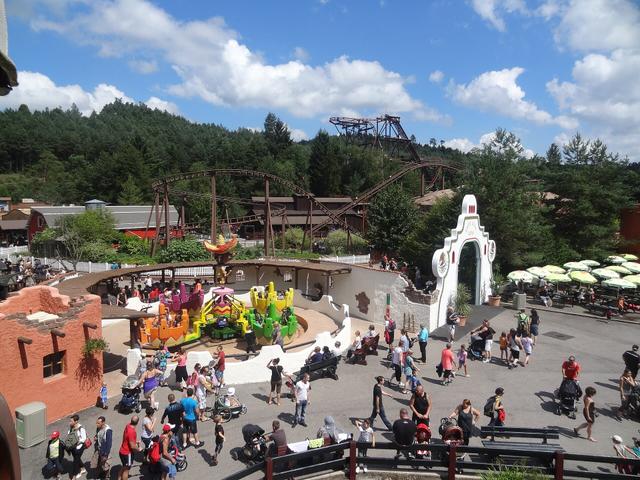
Family days out nearby: Neufchef Iron Mine Museum (46 km), Amnéville Zoo (52 km), Walygator Grand-Est (53 km)
Swimming pools and play areas nearby, on Google Maps
Facts checked on 29 October 2026. Sources: verdun-douaumont.com, verdun-douaumont.com, memorial-verdun.fr, fr.wikipedia.org, en.wikipedia.org
Map
In the same region
- Maison de la MirabelleFree admission
- Amnéville ZooFree under 3