Verdun in one day: the sites of the 1916 battle
In one day, you can see the essentials of the Verdun battlefield: the underground citadel in town, then the Memorial, the destroyed village of Fleury, Fort Douaumont, the Ossuary and the Bayonet Trench, all a few minutes' drive from each other. Here is the order of visits, how long to allow at each site, the combined tickets that really exist, getting there by TGV or car, and where to stay.
The key facts
- Recommended order: the underground citadel at 9.30 am, the Memorial and Fleury in the late morning, then Fort Douaumont, the Ossuary and the Bayonet Trench in the afternoon.
- Distances: the Memorial, the fort and the Ossuary are 5 to 8 minutes' drive from each other, and about ten minutes from central Verdun.
- Combined ticket: the Memorial and Fort Douaumont for €19, valid for 48 hours. The Ossuary and the citadel are paid for separately.
- Free: the destroyed village of Fleury, the Bayonet Trench and the national cemetery.
- A car is almost essential. Without one, take a guided tour from Verdun.
- Avoid: January, when the Memorial, the forts and the citadel close.
Verdun in one day: the hour-by-hour plan
| Time | Site | Time on site |
|---|---|---|
| 9.30 am | Underground citadel, in Verdun | 1 h 30 |
| 11.15 am | Verdun Memorial | 2 h |
| 1.15 pm | Destroyed village of Fleury, picnic | 45 min |
| 2.15 pm | Fort Douaumont | 1 h |
| 3.30 pm | Ossuary and national cemetery | 1 h 15 |
| 4.45 pm | Bayonet Trench | 15 min |
The times are based on winter closing times, the shortest of the year. In summer, you gain an hour at the end of the day.
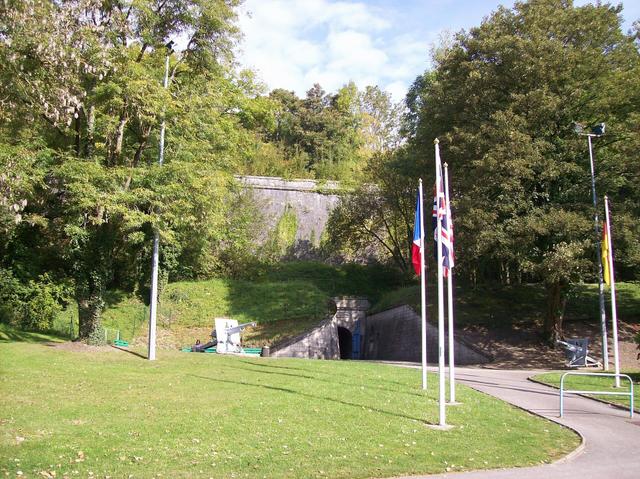
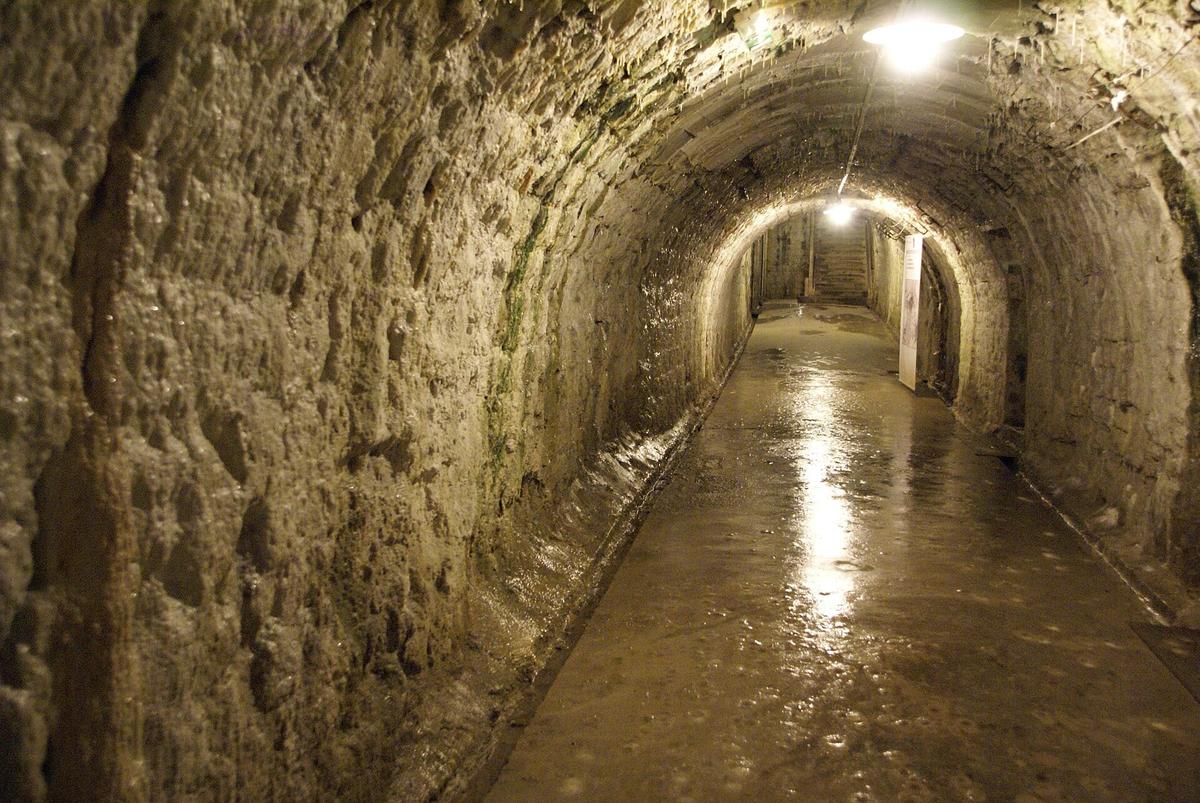
9.30 am: the underground citadel. In November and December, it opens at 9.30 am; check the summer times on its website. The visit lasts about 90 minutes, including 35 in a small car running through the tunnels. It is 8 °C all year round: bring a jacket. Children under 8 are not allowed. The morning is the only good slot: the last departure is 90 minutes before closing. See also: Verdun Underground Citadel
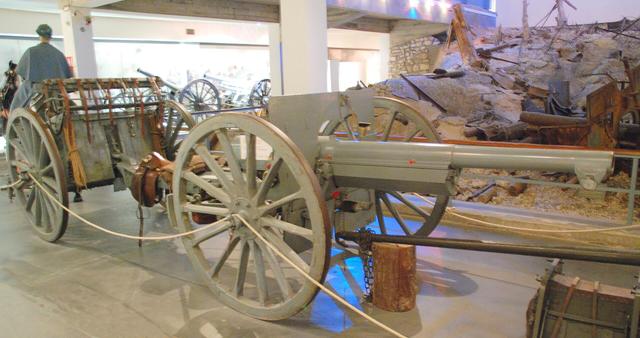
11.15 am: the Verdun Memorial, a 15-minute drive away, at Fleury-devant-Douaumont. Follow the "Champ de bataille" (battlefield) signs. The museum tells the story of the battle from the point of view of soldiers on both sides, over three levels. Two hours are enough for the essentials; you need twice that to read everything. Buy the combined ticket with the fort here. See also: Verdun Memorial
1.15 pm: Fleury-devant-Douaumont. The destroyed village is a few minutes' walk from the Memorial. Bring a picnic: there are very few restaurants on the battlefield, and no cash machines.
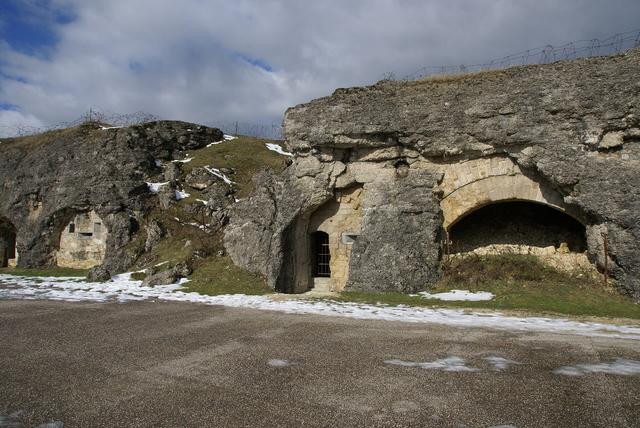
2.15 pm: Fort Douaumont, 8 minutes from the Memorial. You visit on your own, through the galleries, the barrack rooms and the turrets. Allow about an hour, then climb onto the top of the fort, pitted with shell holes. Last entry is 30 minutes before closing. See also: Fort Douaumont
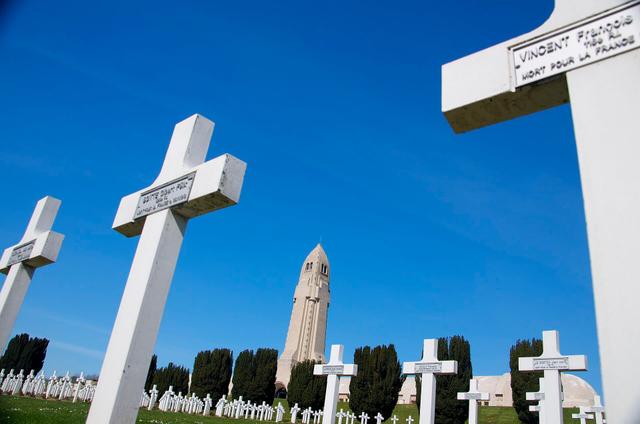
3.30 pm: the Douaumont Ossuary, 5 minutes away. The ticket covers the film and the climb up the tower. Last entry is 60 minutes before closing: 4.30 pm in October and November, 4 pm in December. Then walk round to the back of the building, where small windows reveal the bones, and go down into the cemetery. See also: Douaumont Ossuary
4.45 pm: the Bayonet Trench, close to the Ossuary, free to visit. A quarter of an hour is enough. Back in Verdun in about ten minutes.
If you arrive the day before, do the citadel on the afternoon of the first day. You can then start the battlefield at 9.30 am with the Memorial, which helps you understand everything else.
How long do you need to visit Verdun?
One day is enough for the six sites in this plan, as long as you have a car and start early. It leaves out the other places on the battlefield: Fort Vaux, the other destroyed villages, the trenches in the forest.
Two days let you read the whole Memorial and add Fort Vaux. It reopened on 4 July 2026 with a completely new visitor route. The combined ticket, valid for 48 hours, is designed for this.
The Battle of Verdun in 1916: what happened, and where to see it
21 February 1916. The German army launched its offensive north of Verdun, after a massive bombardment. The aim was to wear down the French army at a point it could not give up.
25 February. Fort Douaumont, the largest in the ring of forts around Verdun, fell almost without a fight. It was held by only 57 territorial (reservist) soldiers. The German sergeant Kunze was the first to get in, through an embrasure; yet it was two officers, Brandis and Haupt, who received the highest Prussian decoration. Today you walk along the same corridors.
Spring. Troops were constantly moving up to the front and back again. Behind the lines, Verdun's citadel, built from 1674 to plans by Vauban, sheltered up to 10,000 men in its tunnels. Its ovens produced 28,000 bread rations a day. See also: Vauban
8 May. An explosion tore through the inside of Fort Douaumont, then held by the Germans. 679 soldiers still lie behind two walled-up casemates: it is the quietest spot on the visit.
June. Fort Vaux fell early in the month. On 12 June, under a bombardment lasting several days, men of the 137th Infantry Regiment, mostly from the Vendée, disappeared in their trench: this is the origin of the Bayonet Trench.
June to August. The village of Fleury-devant-Douaumont was taken and retaken many times. It was one of the points closest to Verdun reached by the German offensive. Nothing of it remains.
24 October. Colonial troops and the Moroccan Colonial Infantry Regiment retook Fort Douaumont. The battle ended in December 1916. It left more than 300,000 dead, French and German, on a front a few dozen kilometres long.
| Date | Event | Where to see it today |
|---|---|---|
| 21 February 1916 | start of the German offensive | Memorial |
| 25 February 1916 | capture of Fort Douaumont | Fort Douaumont |
| 8 May 1916 | explosion inside the fort | the fort's German cemetery |
| 12 June 1916 | the 137th Infantry under shellfire | Bayonet Trench |
| June to August 1916 | Fleury taken and retaken | destroyed village of Fleury |
| 24 October 1916 | the French retake the fort | Fort Douaumont |
| 10 November 1920 | choice of the Unknown Soldier | underground citadel |
| 7 August 1932 | inauguration of the Ossuary | Ossuary |
| 17 September 1967 | opening of the Memorial | Memorial |
What to see at each battlefield site
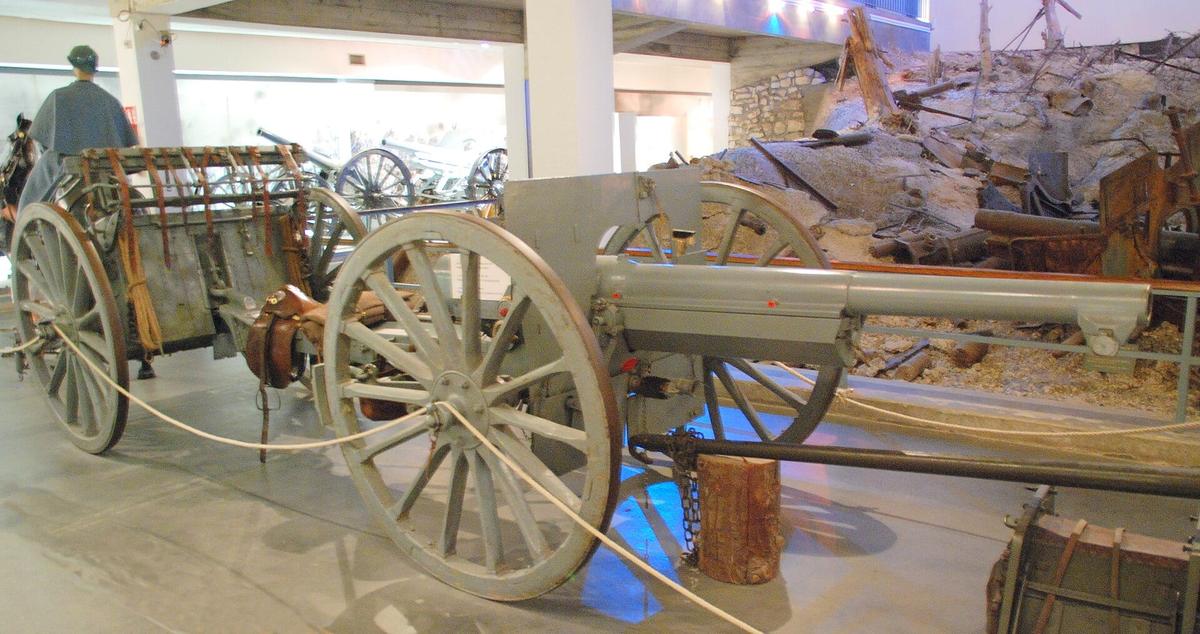
The Verdun Memorial. It stands on the site of Fleury's old railway station. More than 2000 objects are on display: uniforms, letters, gas masks, a 75 mm field gun and a German howitzer from 1916. The writer Maurice Genevoix, a veteran of the war, chaired the committee that created it. It reopened in 2016 after renovation work, for the centenary.
The destroyed village of Fleury. Markers show where the houses stood, among grass-covered shell holes, and a memorial chapel stands in the centre. Fleury is one of the nine villages in the Meuse destroyed in 1916 and never rebuilt. They have no inhabitants left, but they still have a mayor.
Fort Douaumont. The 155 mm turret weighs 37 tonnes: it rose up to fire and then sank back under the concrete. The galleries stay cool even in summer.
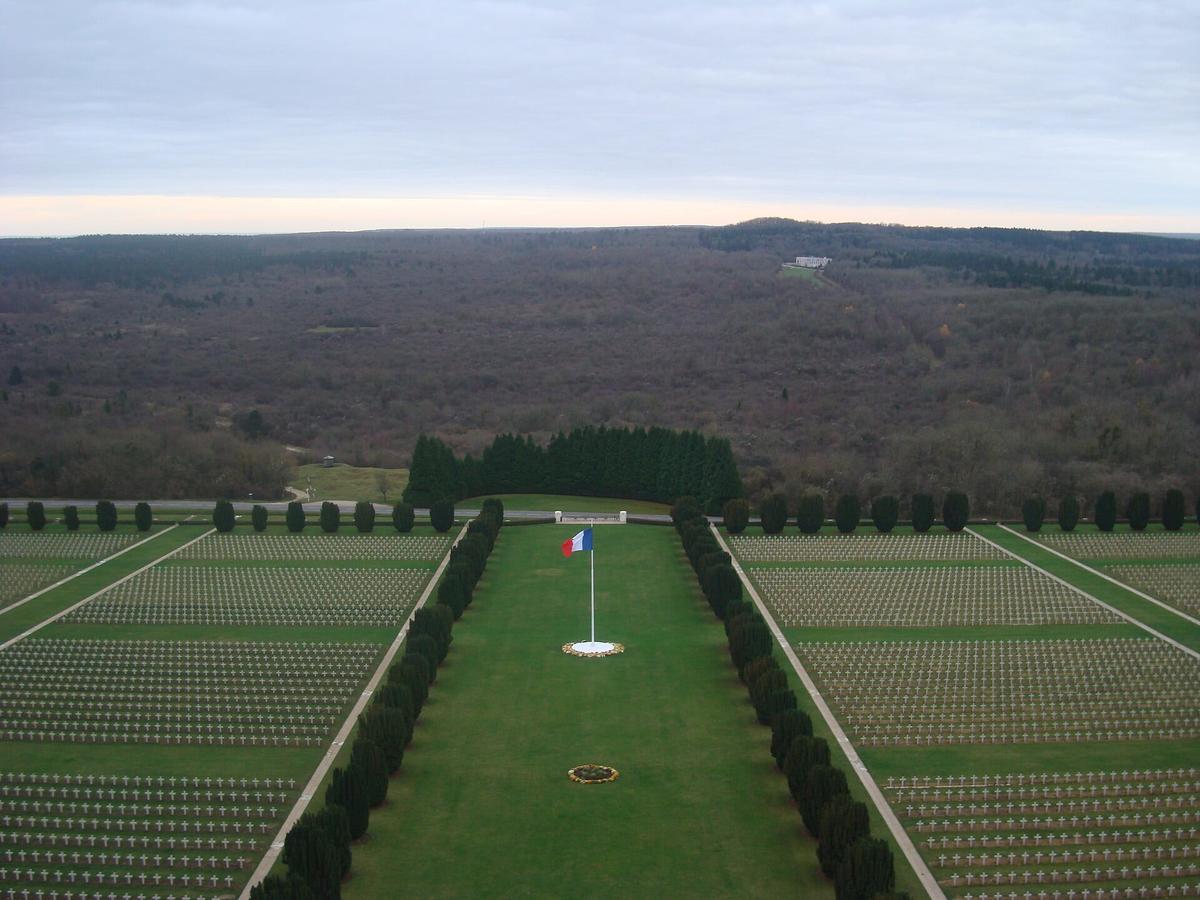
The Douaumont Ossuary. It holds the remains of around 130,000 unknown soldiers, French and German. Its tower is 46 metres high; at the top, a viewpoint table identifies the forts and villages. In front, the national cemetery has 16,142 graves in rows, with a section of 592 Muslim headstones. The Jewish memorial is next to it.
The Bayonet Trench. A concrete monument, given by an American banker and designed by the architect André Ventre in 1920, protects the site. Tradition says that soldiers were buried standing up by a shell, with only their bayonets sticking out of the ground. Historians do not believe it: earth churned up by shells cannot fill a trench. The rifles probably marked a mass grave dug after the attack.
The underground citadel. The ride through the tunnels shows life behind the front line, and recalls the choice of the Unknown Soldier.
Are there combined tickets at Verdun?
Yes, but only between the sites run by the Memorial: the Memorial, Fort Douaumont and Fort Vaux. The Ossuary and the citadel each have their own ticket office. 2026 prices, checked on 11 November 2026:
| Ticket | Adult | Reduced price |
|---|---|---|
| Memorial only | €14 | €9 |
| Fort Douaumont only | €8 | €6.50 |
| Memorial and one fort | €19 | €14 |
| Memorial and two forts | €22 | €17 |
| Ossuary (film and tower) | €7 | €3 (ages 8 to 16) |
| Fleury, Bayonet Trench, cemetery | free | free |
The reduced price at the Memorial and the forts applies to young people aged 8 to 18, students and jobseekers, among others. Entry is free under 8 at the Memorial, the forts and the Ossuary. The family ticket, for two adults and one young person, costs €50 for the Memorial and one fort.
The maths. The Memorial and Douaumont combined ticket costs less than the two tickets bought separately. If you add Fort Vaux the next day, the ticket for three sites costs only €22.
The underground citadel. Its official page did not show prices when we checked. Look on its online ticket office, or ask at the Verdun tourist office.
Good to know: the Memorial has announced a free day at its three sites on 31 December 2026. There are no cash machines on the battlefield: the fort takes cards and cash.
How to get to Verdun: TGV, car or guided tour
By TGV. From Paris-Est, the TGV stops at Meuse TGV station, 25 km from Verdun. A shuttle coach runs to Verdun station. Check on SNCF Connect that it runs at your arrival time. After that, you need a taxi, a hire car or a guided tour to get up to the battlefield: no regular bus links the sites.
Without a car: a guided tour. This is the best option if you arrive by train. The Verdun tourist office runs tours of the battlefield, from two hours to a full day, taking in the Ossuary and the forts. Other guides leave from Verdun or Metz. Check what is included: transport, admission, the citadel.
Partner links: if you book through these links, we earn a commission at no extra cost to you. Partner links · Learn more
Guided tours and day trips on GetYourGuide
By car. Verdun is on the A4 motorway, about three hours from Paris and one hour from Metz. From Paris, take exit 30 "Voie Sacrée"; from Metz or Strasbourg, exit 31 "Verdun". On the battlefield, each site has its own car park; the Ossuary's is free.
Hiring a car. Metz, served by TGV from Paris, is the most convenient place to pick up a hire car. You reach Verdun on the A4, and can carry on to Nancy afterwards.
When to visit Verdun
- April to September: the Memorial and the forts close at 6.30 pm from 4 April 2026 to 20 September 2026. It is the most comfortable season, but also the busiest at weekends.
- October to December: closing time is 5.30 pm at the Memorial and the forts, and it gets dark early. The plan above works, with no time to spare.
- In January: the Memorial and the forts are closed, the citadel too at the start of the year, and the Ossuary closes for several weeks (from 6 January 2026 to 7 February 2026 in 2026). The 2027 dates had not been published.
- On 24 and 25 December and 1 January, the Memorial and the forts are closed.
Where to stay to visit Verdun
In Verdun. This is the most convenient base: the battlefield is about ten minutes away, and the citadel is in town. Staying the night before means you can be at the citadel at 9.30 am without getting up at dawn. The restaurants are along the banks of the Meuse.
In Metz. More choice of hotels, an hour's drive away. Handy if you are carrying on to Saint-Étienne Cathedral and the Centre Pompidou-Metz. See also: Things to do in Metz
With children
Entry is free under 8 at the Memorial, the forts and the Ossuary, but children under 8 are not allowed in the citadel. Fort Douaumont, with its corridors and turret, often means more to children than the museum. At the Ossuary, look through the windows at the bones yourself first before taking them there. Everywhere, stay on the paths: picking up shell fragments is forbidden.
Stories from Verdun
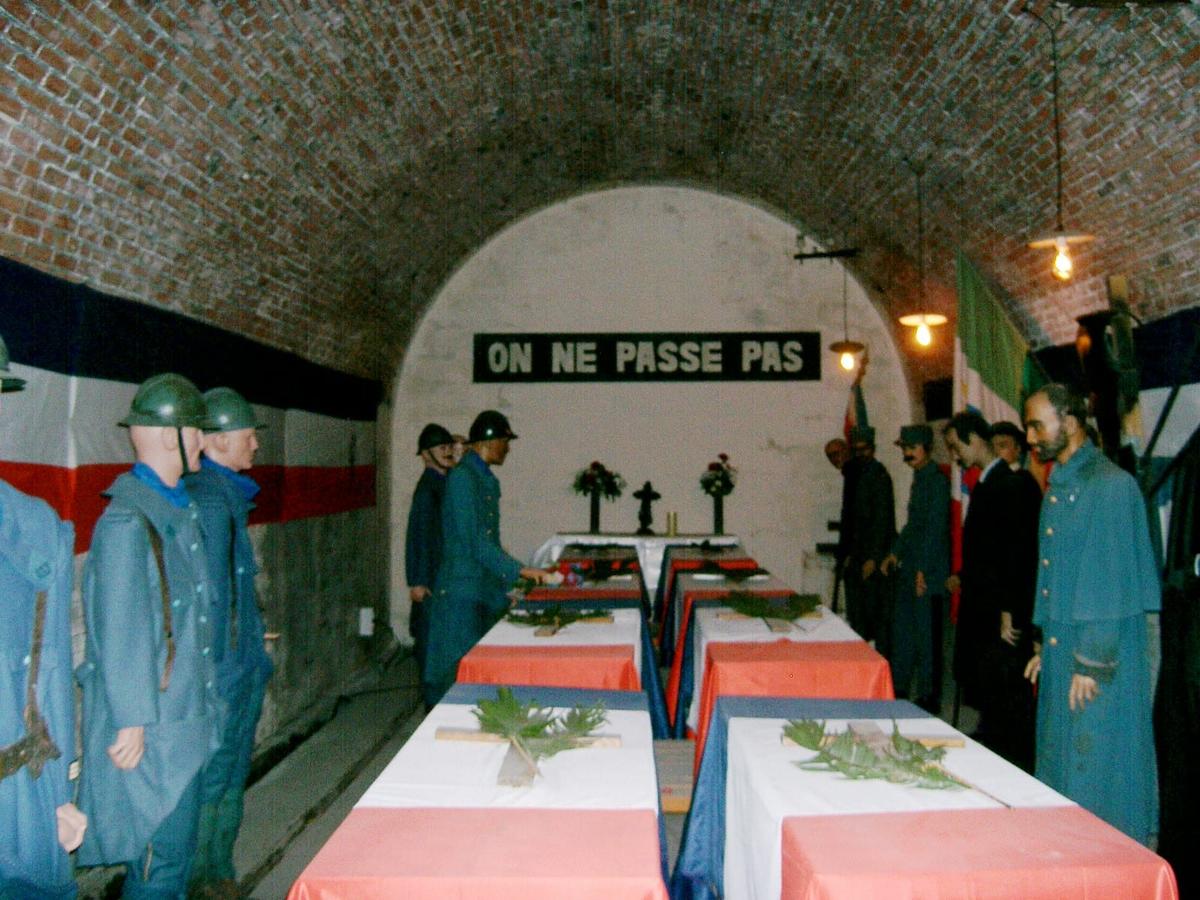
- The sixth coffin. On 10 November 1920, in the citadel, Corporal Auguste Thin had to choose one coffin out of eight. He picked the sixth, by adding up the digits of his regiment, the 132nd. That soldier lies beneath the Arc de Triomphe.
- A handshake. In September 1984, François Mitterrand and Helmut Kohl held hands in front of the Ossuary.
- A fundraising bishop. To pay for the Ossuary, Bishop Ginisty collected donations in 122 towns in France and 18 towns abroad.
For the rest of the region: See also: Lorraine, Metz Cathedral, Place Stanislas
FAQ
Can you visit Verdun in one day?
Yes, for the essentials: the underground citadel, the Memorial, Fleury, Fort Douaumont, the Ossuary and the Bayonet Trench. You need a car and a 9.30 am start.
In what order should you visit the Verdun battlefield?
The Memorial first, to understand, then Fort Douaumont and the Ossuary. Do the citadel in the morning or the day before, as its last departure is early.
Is there a combined ticket with the Douaumont Ossuary?
No. The combined ticket covers the Memorial and Forts Douaumont and Vaux, from €19. The Ossuary costs €7 separately.
How much does a day at Verdun cost?
For an adult, €19 for the Memorial and the fort, €7 for the Ossuary, plus the citadel. Fleury, the Bayonet Trench and the cemetery are free.
Can you get to the Verdun battlefield without a car?
Yes, with a guided tour from Verdun or by taxi. The TGV stops at Meuse TGV, linked to Verdun by a shuttle.
Is the Verdun battlefield open in winter?
Yes, except in January, when the Memorial and the forts close. The Ossuary closes for a few weeks in winter, and it gets dark early: start at opening time.