Kermaria an Iskuit Chapel in Plouha: seeing the Danse Macabre
Kermaria an Iskuit Chapel at a glance
- Admission
- Free
- Where
- Plouha
Facts checked on 12 November 2026. Full opening hours, reduced prices and access
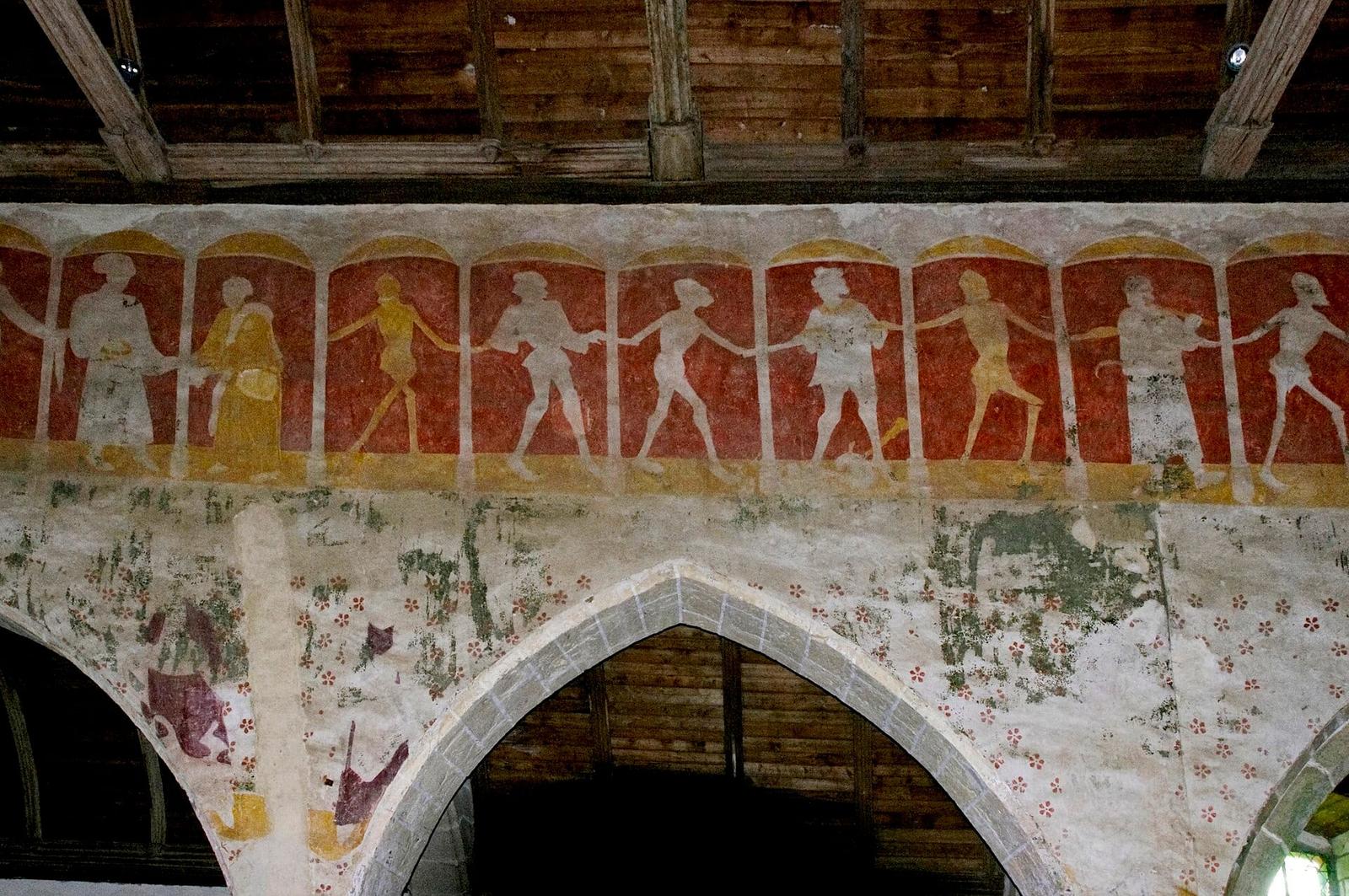

In a hamlet of Plouha, between Saint-Brieuc and Paimpol, a granite chapel holds one of the only two painted dances of death in Brittany. Forty-seven figures, dead and living, have been circling the walls of the nave since the end of the Middle Ages. Here are the opening hours, the guided tours, what to look for and how to get there.
Kermaria Chapel at a glance
- Where: in the hamlet of Kermaria, in the commune of Plouha (Côtes-d'Armor), a few kilometres west of the village centre and about twenty minutes from Paimpol.
- Price: entry is free.
- Open: in summer, without booking, Monday to Friday 10:00 – 12:30 and 15:00 – 19:00, Sunday 15:00 – 19:00. The rest of the time, guided tours depending on the guides' availability.
- Time needed: half an hour is enough for the Danse Macabre, an hour with the porch and a guided tour.
- What to see: the late 15th-century Danse Macabre, the porch with the twelve apostles, the Tale of the Three Dead and the Three Living.
- Good to know: the chapel is closed on Saturdays, Sunday mornings and public holidays.
Why visit Kermaria Chapel
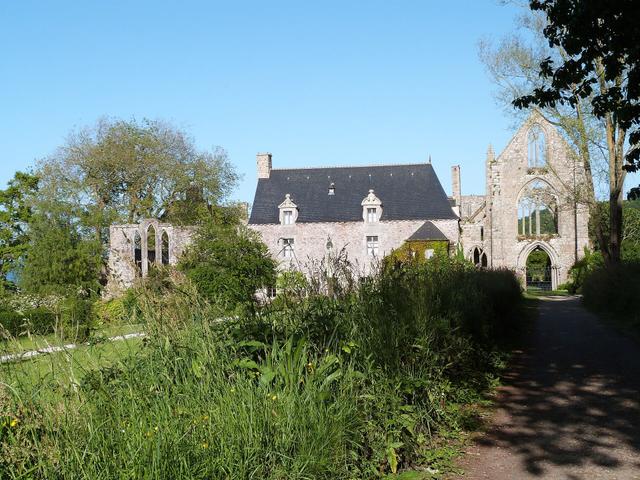
From the road, Kermaria looks like many Breton chapels: a slate-covered bell tower, a porch, granite walls in a hamlet. The interest lies inside. Above the arches of the nave, a long painted frieze shows Death leading everyone away, from the pope to the ploughman. This is a Danse Macabre, or dance of death, a very common theme at the end of the Middle Ages, but very few examples painted on walls survive in France.
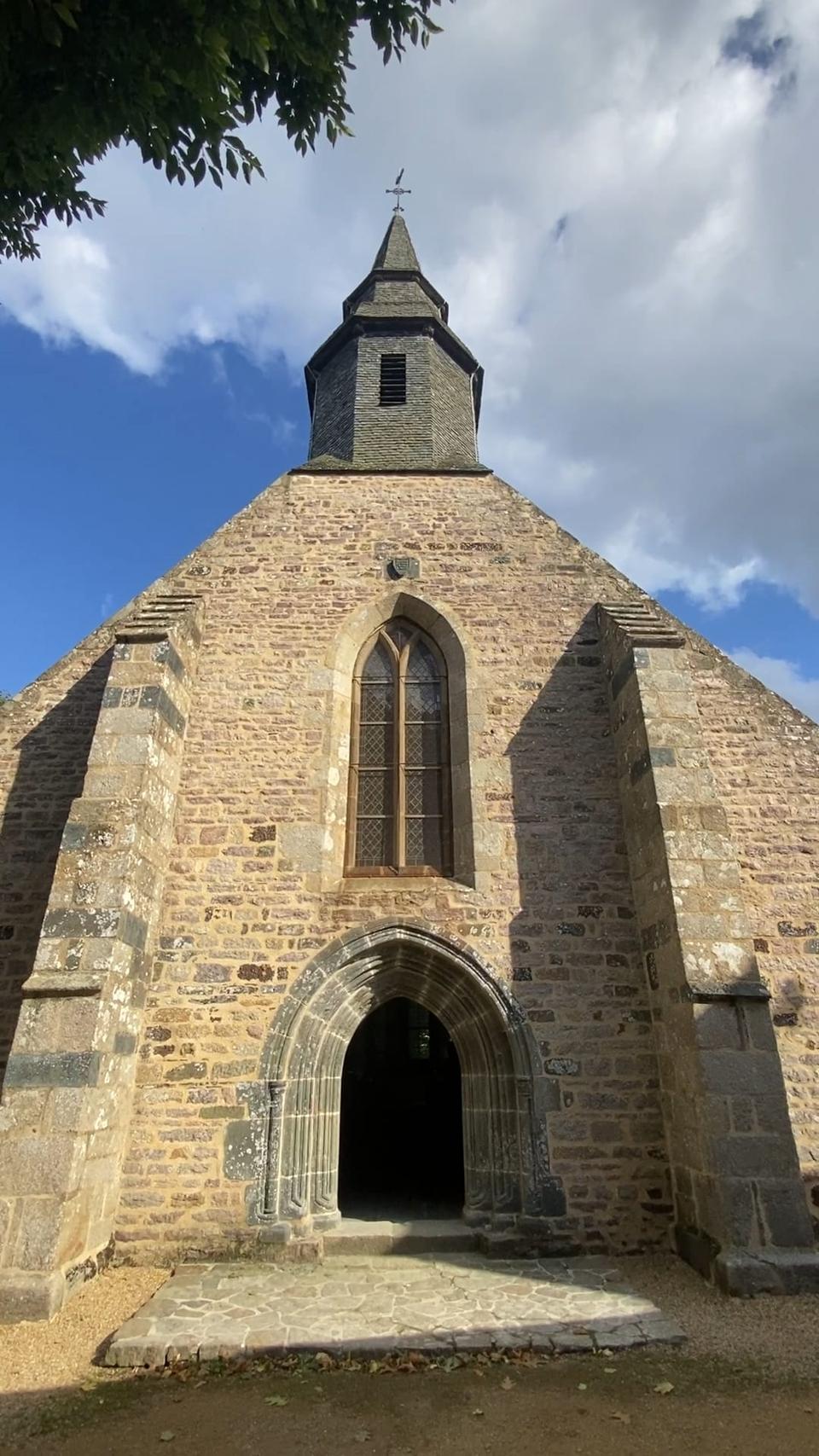

Only two are known in Brittany: the one at Kermaria and the one at Kernascléden, in the Morbihan. The chapel has been listed as a historic monument since 1907, and its surroundings have been a protected site since 1935, according to the French Ministry of Culture's Mérimée database. It belongs to the commune of Plouha.
The other reason to come is the peace and quiet. This is not an organised tourist site: no ticket office, no shop, no crowds. You are often alone, or nearly so, in front of the paintings, which is rare for a work of this importance.
What does Kermaria an Iskuit mean?
The name is Breton. Ker means "village" or "inhabited place", and Maria refers to the Virgin Mary: Kermaria is "Mary's village". According to Wikipedia, the place used to be called Kergrist, "Christ's village".

An Iskuit is harder to translate. The word is thought to come from is and kuit, the idea of someone who gets out of trouble, who escapes. The chapel is dedicated to Itron Maria an Iskuit, a Virgin that Wikipedia links to Our Lady of Sorrows. You will also see the spellings Kermaria-an-Isquit and Kermaria-Nisquit on signs and maps.
A short history
The founding. Tradition credits the chapel to Henri II d'Avaugour, Count of Goëlo. Having gone on crusade with Pierre de Dreux, he is said to have returned to his lands in 1240 and built the chapel to thank the Virgin. The first four bays of the nave, on the west side, do indeed date from the 13th century, as does the west door.

The extensions. In the 15th century, the pilgrimages and fairs held around the chapel brought in money. The nave was lengthened, and a lord's chapel was added on the south side along with the great porch. The nave now has 7 bays. The timber spire of the west tower dates from 1702, and the present choir was built in 1720 and 1721.
The Danse Macabre hidden and found again. In the 18th century, the paintings went out of fashion and were covered with limewash. They vanished for more than a century. In 1856, Charles de Taillart, a descendant of the former lords of the place, scraped a wall and brought the figures back to light. The Exploration Patrimoine website also reports that a 19th-century parish priest wanted to demolish the chapel to reuse its stones, and that the local people opposed him.
A film connection. According to Wikipedia, the Kermaria Danse Macabre inspired Ridley Scott for some of the sets of Kingdom of Heaven, released in 2005.
The Kermaria Danse Macabre: what to look for
The frieze runs above the arches of the nave, on both sides. It has 47 figures, each about 1.3 m tall. A gaunt, almost dancing corpse alternates with a living person it holds by the hand. The living are lined up by social rank: the pope, the emperor, the king, the bishop, the abbot, then, lower down the ladder, the minstrel, the ploughman and the child. The message is simple: death strikes everyone, whatever their rank.
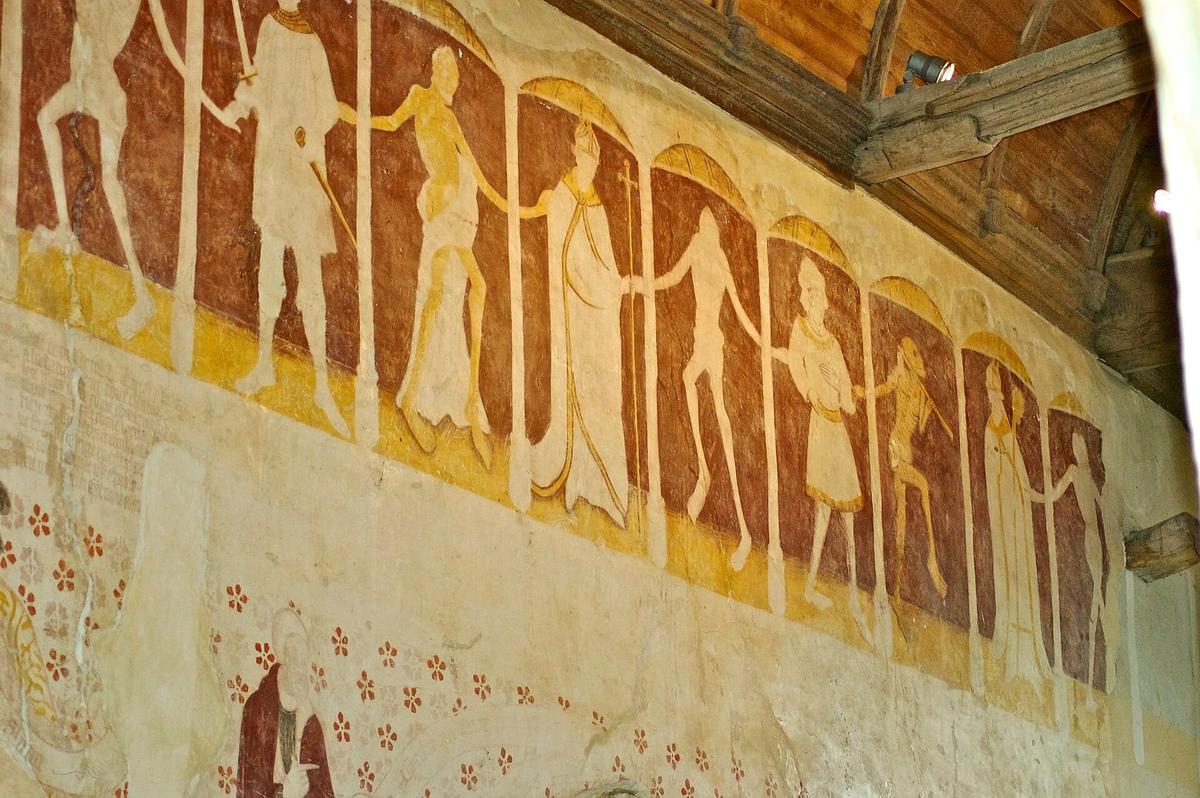

The date. Wikipedia and most guides date the painting to between 1488 and 1501. The Mérimée entry places it earlier, around 1470 to 1480. Either way, it came about half a century after the famous Danse Macabre at the Cemetery of the Holy Innocents in Paris, now lost, whose model it follows.
The verses. Under each pair, an eight-line verse has the dead and the living speak to each other. These lines are partly worn away. The figure of the "author", who introduced the dance at the start of the frieze, has disappeared.
How to look at it. The frieze is high up and the light in the nave is dim on grey days. Bring binoculars or use your phone's zoom: the faces, costumes and gestures of the dead are more expressive than you would think from below. Start on the side where the pope is and follow the order of the figures.
The Tale of the Three Dead and the Three Living. A second painting, about 7 m long, was originally in the north aisle. It shows three young nobles on horseback meeting three dead men. It is another major theme of the late Middle Ages, older than the Danse Macabre.
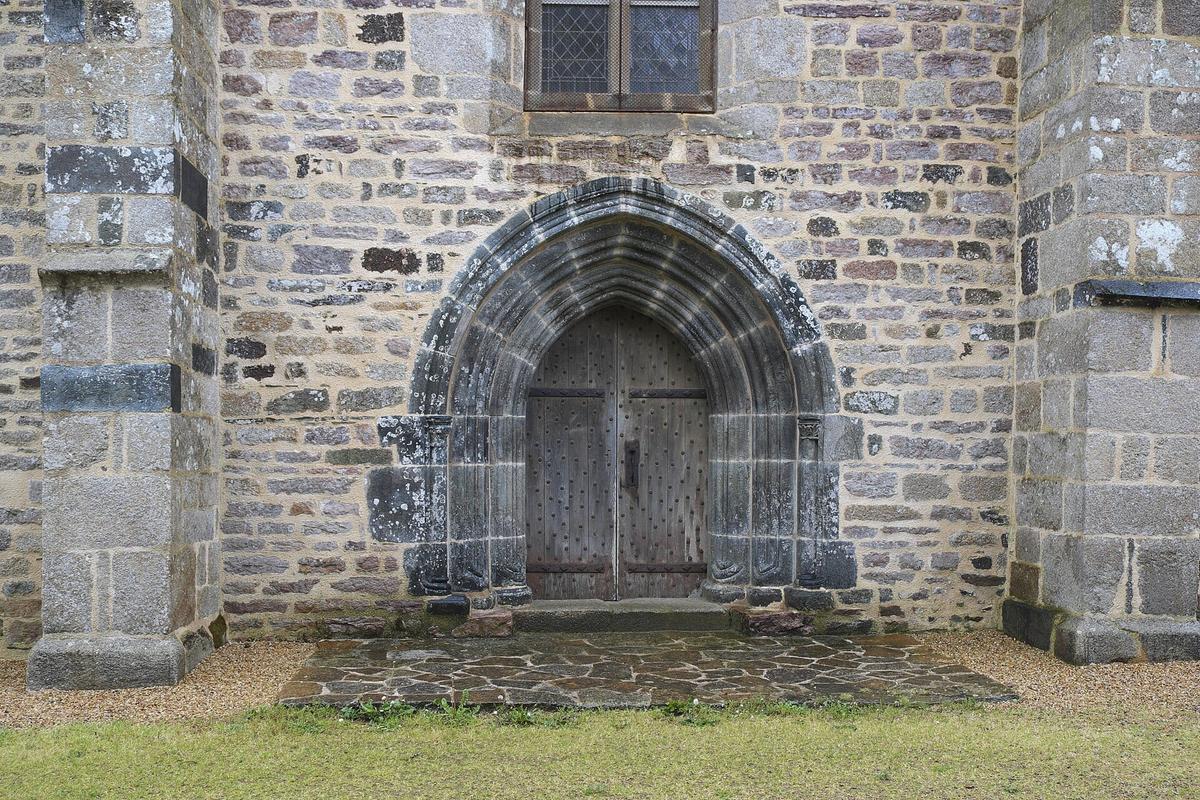
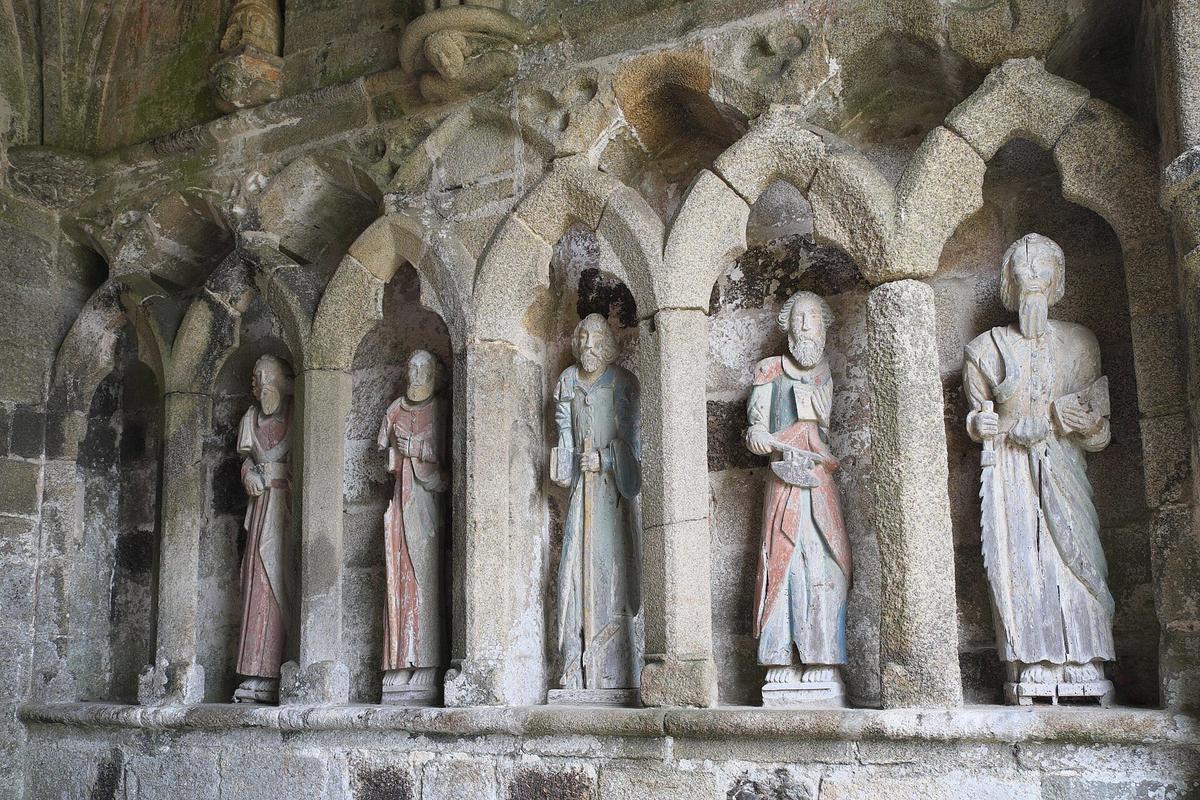
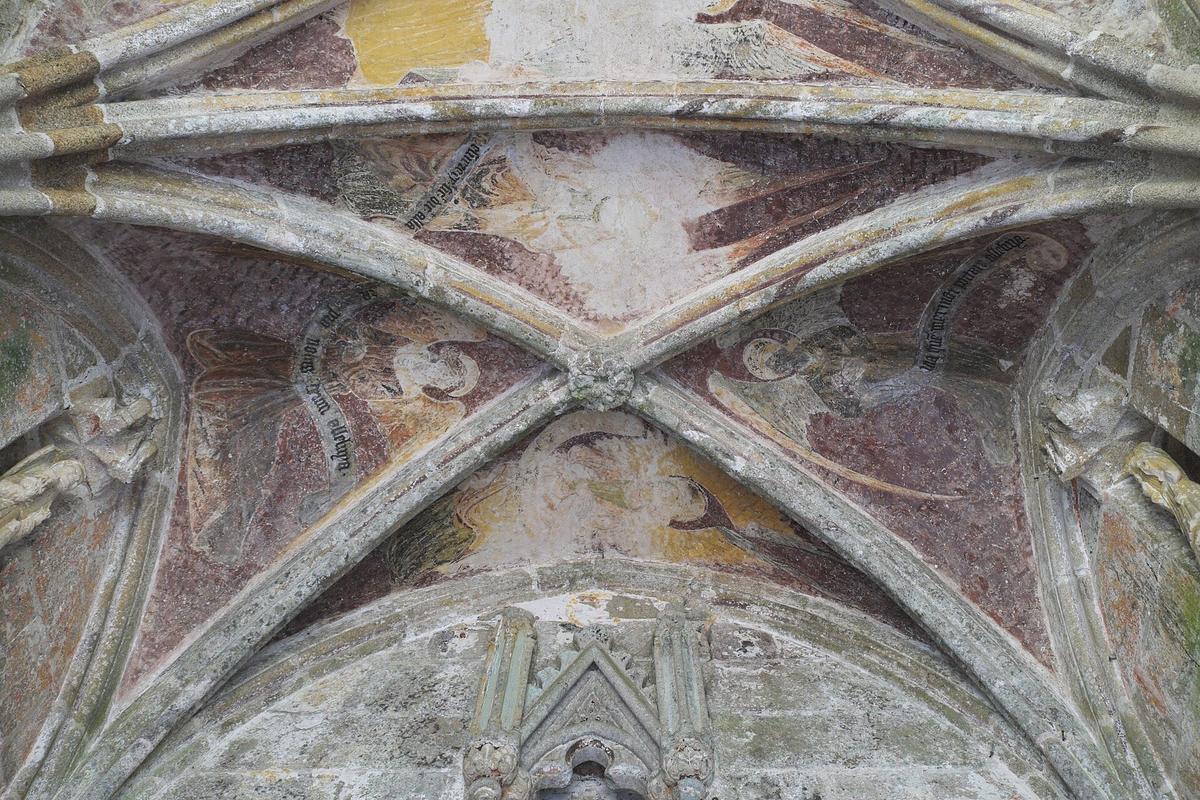
The porch. The south porch is one of the most richly decorated in the area. Inside, 12 painted wooden statues of the apostles stand in niches on either side. A painted stone Virgin stands above the inner door, and the vault is painted with angels. The upper floor of the porch, reached by a stone staircase from the south aisle, was used as a meeting room and a court: the lord's justice was dispensed there.
Outside details. Walk around the chapel. The 16th-century gargoyles are finely carved, and the west door still looks as it did in the 13th century.
Is there an entry fee at Kermaria Chapel?
No. Entry is free. The chapel belongs to the commune and has no ticket office. Guided tours are offered on site; the town hall does not publish a price for them. No online tickets are sold for Kermaria, so there is no point looking on booking platforms.
Kermaria Chapel opening hours
Opening hours published by Plouha town hall:
- In summer, without booking: Monday to Friday 10:00 – 12:30 and 15:00 – 19:00, Sunday 15:00 – 19:00.
- Guided tours: 10:00 – 12:00 and 14:30 – 17:00, depending on the guides' availability, by booking over the phone (the number is on the town hall's page).
- Closed: Saturdays, Sunday mornings and public holidays.
Out of season, be careful. The town hall does not give the exact dates of the summer period. In November or in winter, do not come without calling first: Plouha town hall can be reached on +33 2 96 20 21 26. If no guide is available, you may find the door locked.
The pardon. The Kermaria pardon takes place every year on the Sunday after 15 September, with a Mass in the morning and a procession around the chapel. It is a good chance to see the chapel in use; to look at the paintings in peace, pick another day.
How long to spend at Kermaria
Allow half an hour to look at the Danse Macabre and walk around the nave. An hour if you go up to the upper floor of the porch on a guided tour and walk around the outside. The chapel is easy to combine with another visit in the same half day, such as Beauport Abbey or La Roche-Jagu.

Visiting with children
The theme may seem grim, but it often works well with children aged eight or ten. Ask them to find the pope, the king, the musician or the child in the frieze, or to count the skeletons. The dead of Kermaria strike almost comic poses, and the visit is short. For younger children, the chapel will mostly be a stop on the way to the beach or the Plouha coastal path.
How to get to Kermaria Chapel
Address. Kermaria an Isquit, 22580 Plouha. Enter "Kermaria Plouha" in your satnav: the hamlet is west of the village centre, towards Lanloup.
By car. This is the easiest way. Kermaria is about 35 km from Saint-Brieuc along the coast road and about twenty kilometres from Paimpol. From Rennes, allow about an hour and a half via the RN12 and then the Paimpol road.
By bike. The Brittany tourist board suggests a cycle route around the chapels of Plouha that goes past Kermaria. It is a lovely way to link the chapels of the commune and the coast.
By public transport. The hamlet has no practical public transport. The nearest stations are Saint-Brieuc, on the Paris to Brest TGV line, and Guingamp. From there you need a car.
Renting a car. To combine Kermaria, Beauport Abbey and the Goëlo coast, a hire car picked up in Rennes or Saint-Brieuc is the most flexible option.
Partner links: if you book through these links, we earn a commission at no extra cost to you. Partner links · Learn more
Accessibility
The town hall does not publish any information on wheelchair access. The upper floor of the porch is reached by a stone staircase. To arrange an adapted visit, call the town hall before you come.
What to combine with Kermaria on the same day
| Also worth seeing | Distance | Travel time |
|---|---|---|
| Beauport Abbey | 14 km | 18 min by car |
| Château de la Roche-Jagu | 22 km | 28 min by car |
Approximate road distances and travel times.
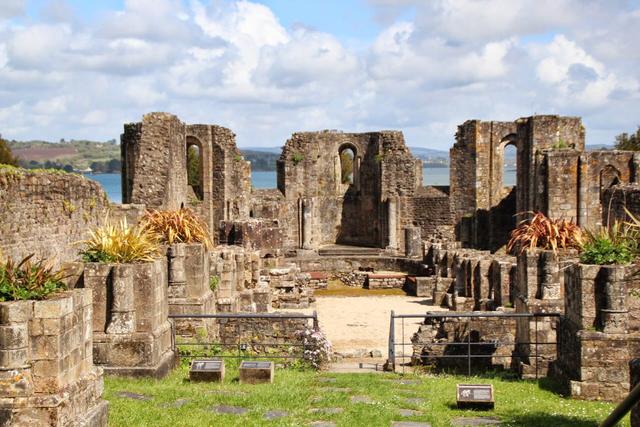
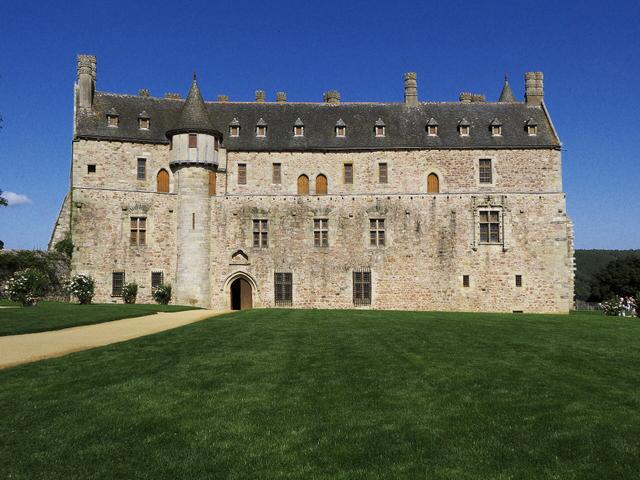
Beauport Abbey, in Paimpol, is the nearest and best complement: a large, partly ruined abbey by the sea, with a garden and salt meadows. See also: Beauport Abbey A little further west, the Domaine de la Roche-Jagu overlooks the Trieux valley with its 15th-century castle and gardens. See also: Château de la Roche-Jagu
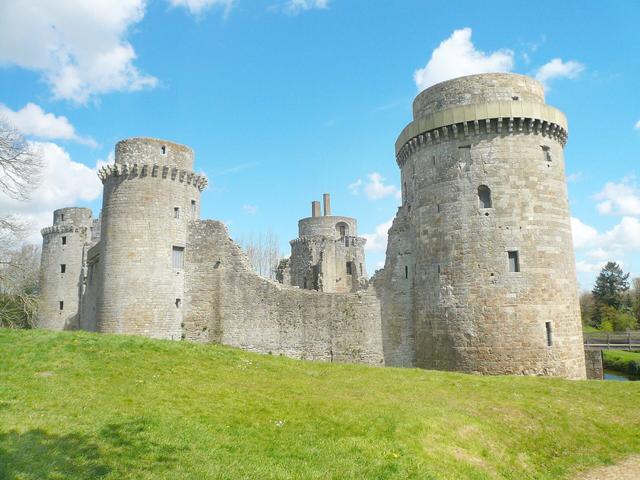
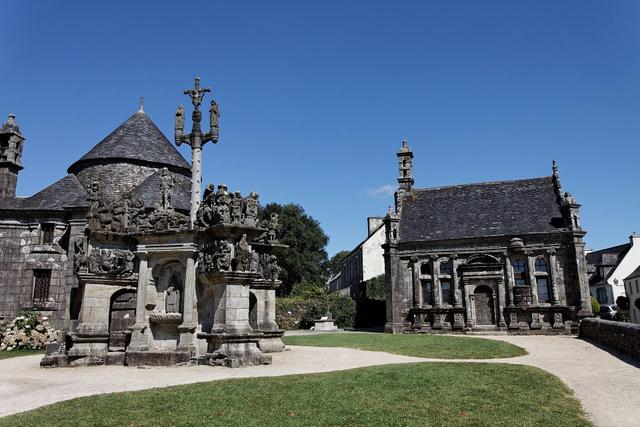
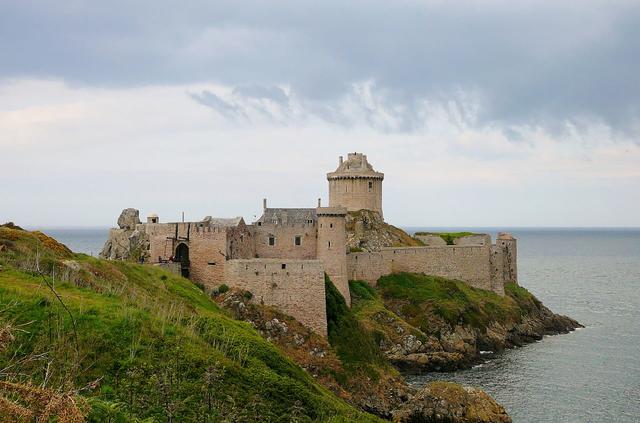
Heading east, the Château de la Hunaudaye and Fort la Latte round off a stay in the Côtes-d'Armor. See also: Château de la Hunaudaye, Fort La Latte If Breton religious art interests you, the parish close of Guimiliau, in the Finistère, shows another way of picturing death and the Passion, a century later. See also: Guimiliau Parish Close
For comparison, the chapel of Notre-Dame-des-Fontaines, in La Brigue in the Alpes-Maritimes, is the other great set of wall paintings from the same period that we cover. See also: Notre-Dame-des-Fontaines Chapel Find more places to visit in the region on our See also: Brittany page.
Where to eat and stay near Kermaria
There is no café or restaurant in the hamlet. The village centre of Plouha, a few minutes away, has bakeries, crêperies and restaurants. For lunch facing the sea, head down to the harbour of Gwin Zegal or towards Palus beach, on the Plouha coast, or go on to Paimpol.
To stay the night, Plouha and the neighbouring communes (Lanloup, Tréveneuc, Saint-Quay-Portrieux) offer B&Bs, self-catering cottages and campsites. Paimpol has more hotels and makes a good base for visiting the island of Bréhat too.
FAQ
Is Kermaria Chapel free?
Yes, entry is free. The chapel belongs to the commune of Plouha and has no ticket office.
When is Kermaria Chapel open?
In summer, Monday to Friday 10:00 – 12:30 and 15:00 – 19:00, and Sunday 15:00 – 19:00. The rest of the year, by guided tour depending on the guides' availability. It is closed on Saturdays, Sunday mornings and public holidays.
How many figures are there in the Kermaria Danse Macabre?
47 figures, dead and living, each about 1.3 m tall, painted at the end of the 15th century.
Are there other dances of death in Brittany?
Yes, only one other survives: the one in the chapel at Kernascléden, in the Morbihan.
When is the Kermaria pardon?
On the Sunday after 15 September, with a Mass and a procession around the chapel.
How long does a visit take?
Half an hour to an hour, depending on whether you join a guided tour.
Practical information
Official ticket-office prices 2026
Free admission
Address
Kermaria an Isquit, 22580 Plouha, France
Directions · Phone+33 2 96 20 21 26
On site and nearby
- Nearest shops and pharmacy: Pléhédel, 2 km away Straight-line distance, based on OpenStreetMap.
- Emergencies: 112 (all emergencies, free from any phone), 15 (SAMU, medical emergency)
Around the site, on Google Maps
With children
Family days out nearby: Beauport Abbey (10 km), Château de la Roche-Jagu (14 km), Fort La Latte (51 km)
Swimming pools and play areas nearby, on Google Maps
Facts checked on 12 November 2026. Sources: plouha.fr, exploration-patrimoine.com, festivalenfrance.com, fr.wikipedia.org, pop.culture.gouv.fr
Map
In the same region