Notre-Dame-des-Fontaines in La Brigue: Canavesio's frescoes
Notre-Dame-des-Fontaines Chapel at a glance
- Full price
- €4
- Free
- under 12
- Time needed
- about 1 h
- Visitors per year
- about 12,000
- Where
- La Brigue
Official ticket-office prices, checked on 12 November 2026. Full opening hours, reduced prices and access

In a side valley of the upper Roya, a few kilometres from Italy, an isolated chapel holds one of the largest late medieval fresco cycles in the Alps. Giovanni Canavesio painted the Passion of Christ and a Last Judgement here, finished in 1492. Here are the prices, summer opening hours, how to arrange a visit in winter, how to get there and what to look for on the walls.
Notre-Dame-des-Fontaines at a glance
- Where: in the Vallon de la Madone, about 4 km from the village of La Brigue, in the Roya valley (Alpes-Maritimes), at an altitude of 850 m.
- Price: €4 for a self-guided visit, €6 for a guided tour. Free for children.
- Open: every day from 1 June 2026 to 30 September 2026, 10:00 – 12:30 and 14:00 – 17:30. The rest of the year, by appointment only.
- Time needed: about 60 minutes inside the chapel, plus the trip from the village.
- Good to know: the chapel has no electricity. You look at the frescoes by daylight.

Why visit Notre-Dame-des-Fontaines
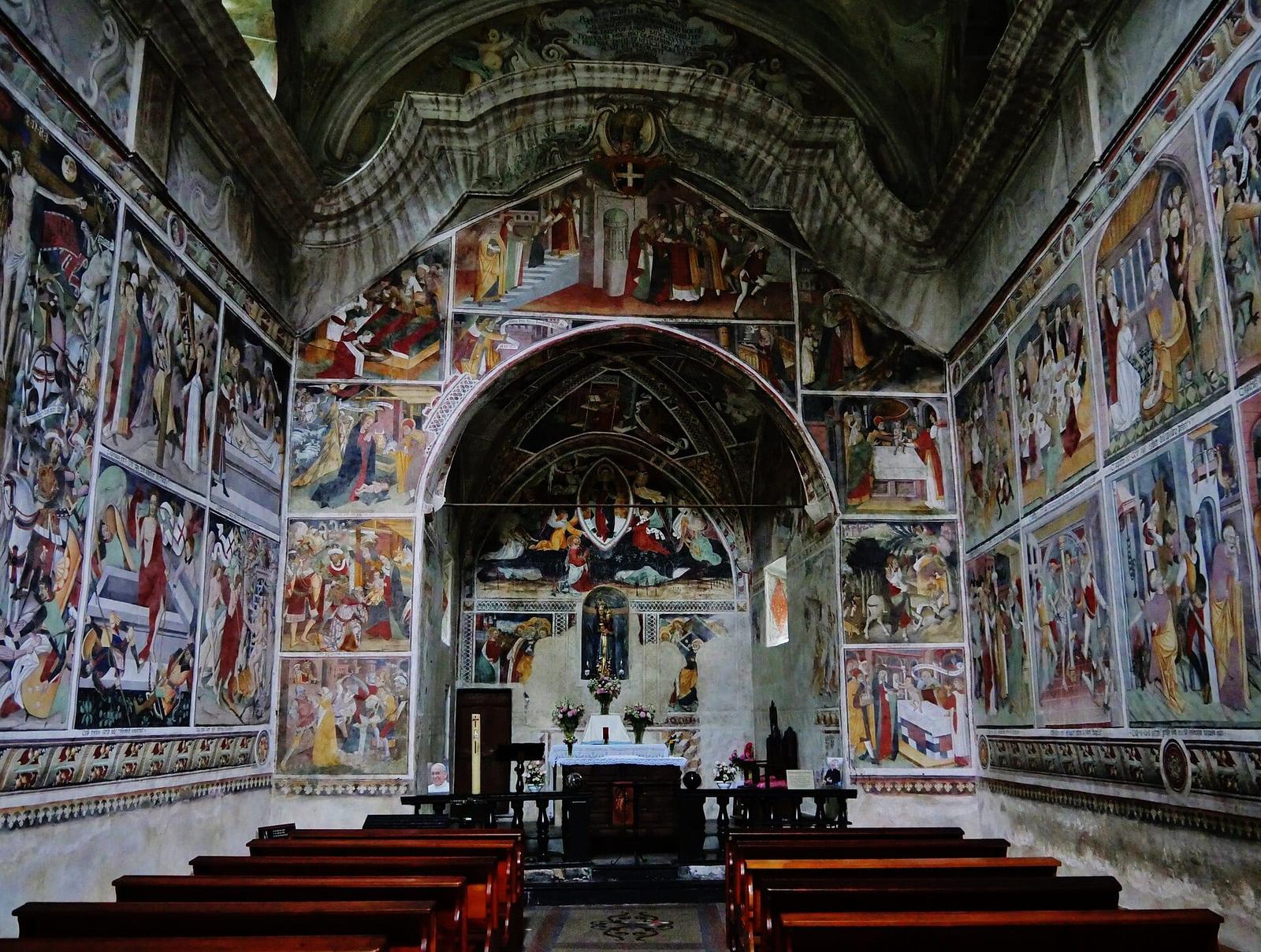
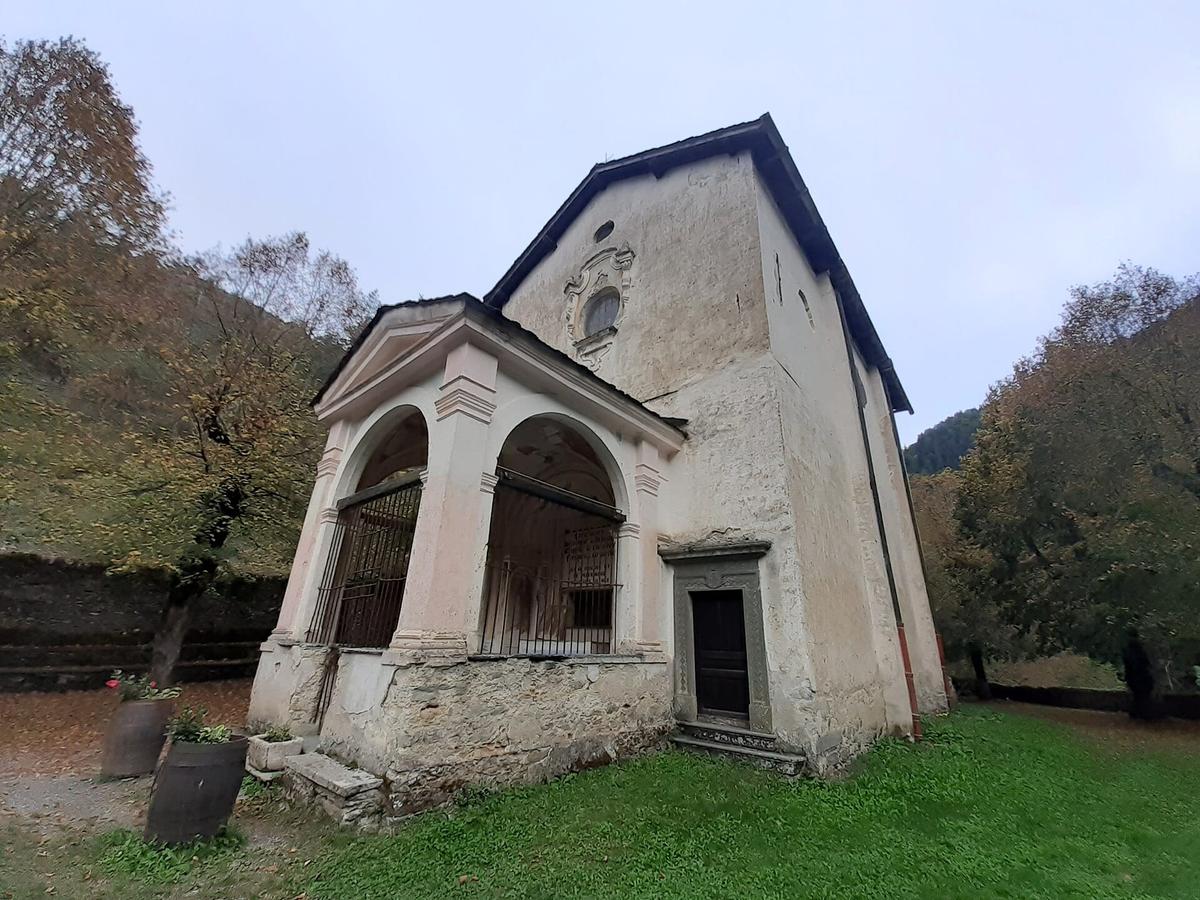
From the outside, it is a fairly plain mountain chapel with an open porch, set above a stream. Inside, the walls are covered with paintings from floor to ceiling. The late 15th-century frescoes cover about 220 m² on the walls of the nave and the choir, according to the Vermenagna-Roya cross-border programme.
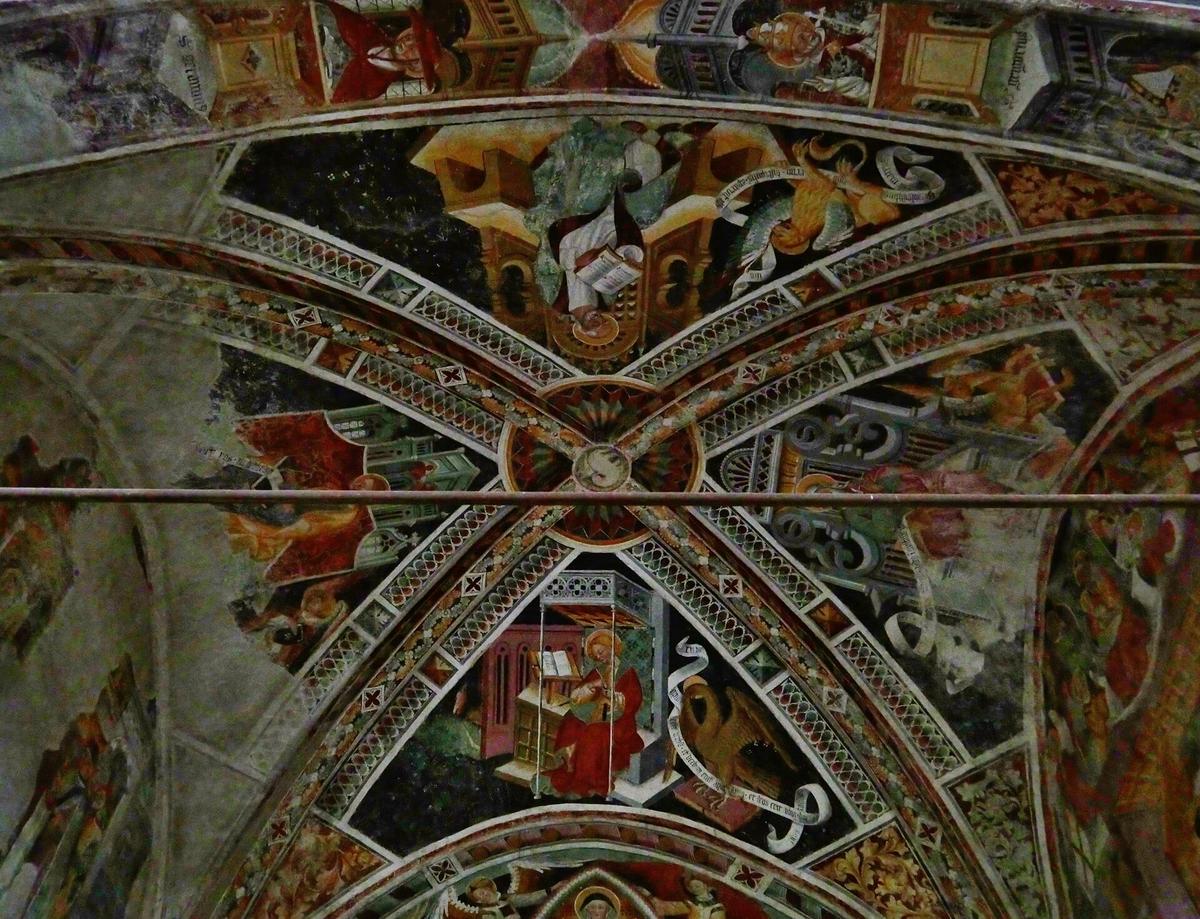

The nave measures 16 m by 10 m. Scene after scene, it shows the whole Passion of Christ, from the Entry into Jerusalem to the Resurrection, then a huge Last Judgement on the inside of the façade wall. Guides and tourist leaflets call it the "Sistine Chapel of the Southern Alps". The name is a bit of a sales pitch, but the effect when you walk in is real: nothing prepares you for so many images in such a remote valley.
The chapel has been a listed historic monument since 1951. According to Wikipedia, it receives up to 12,000 visitors a year, which is very few by French Riviera standards.
A little history
A place of springs. The name ("Our Lady of the Fountains") comes from the springs that gush from the rock here. The English version of Wikipedia counts 7 of them. Like many springs in the region, the site was sacred before Christianity: Roman coins and votive offerings have been found nearby.

The legend. According to the tradition reported by Wikipedia, the springs had dried up after earthquakes and a tornado. The Countess of Tende is said to have promised that they would return if an expiatory chapel was built. A first chapel, built near the village, was supposedly destroyed in a single night. It was then rebuilt facing the springs, which began to flow again. Some versions speak of intermittent springs that start and stop.
The known dates. The oldest known document dates from 1375: it already mentions a pilgrimage and two Benedictine monks in charge of the chapel. The nave was enlarged in the 15th century. Canavesio's frescoes were finished on 12 October 1492. The porch was paid for in 1605 by a notary and was used for open-air Mass on crowded days. In the mid-18th century, the nave was raised and given a painted stucco vault: this is the Baroque ceiling you will see above the frescoes.
A chapel that was long Italian. La Brigue belonged to the County of Tende, then to the House of Savoy and finally to Italy. It has only been French since 1947, under the Treaty of Paris that followed the Second World War. That is why the chapel, its painters and its inscriptions look towards Piedmont and Liguria rather than Nice.
The rediscovered choir. The choir paintings were covered with whitewash in the 19th century. They reappeared in 1959, when a workman accidentally broke the plaster. The whole chapel was then restored from 1973 to 1978, under the supervision of the historic monuments inspectorate.
How much does it cost to visit Notre-Dame-des-Fontaines?
Prices published by the Menton, Riviera & Merveilles tourist office, which runs visits for the municipality:
- Self-guided visit: €4.
- Self-guided visit, students: €3.
- Guided tour (booking required): €6.
- Guided tour, students: €4.
- Children: free. The tourist office says "up to 12" on one page and "up to 11" on another, so expect the question if your child is 12.
Bring cash. Only cheques and cash are accepted. The valley is remote: get cash out before you drive up.
These prices were published for the period from October 2025 to September 2026. If they change for the next season, the tourist office will announce it; changes are usually around a euro.
Opening hours 2026: when is the chapel open?
June to September. From 1 June 2026 to 30 September 2026, the chapel is open every day, 10:00 – 12:30 and 14:00 – 17:30. A member of staff is on site and you pay at the door.
October to May. There are no fixed hours. Visits are by appointment, booked through the La Brigue information office, place Saint-Martin, on 04 83 93 95 50 (from outside France, dial +33 and drop the first 0). The tourist office states that booking is compulsory in winter. If you do not turn up within 30 minutes, the chapel is locked again.
Booking this winter. From 12 November 2026 to 31 March 2027, the La Brigue office is open on weekday mornings (9:00 – 12:30) and closed at weekends. So call on a weekday, a few days ahead, to fix a time slot. The tourist office pages mention afternoon visits; the exact time is agreed on the phone.
The best time. As the chapel has no lighting, the light matters. Come on a clear day, ideally late morning or early afternoon, when daylight comes in best through the windows. On overcast days, the scenes at the back stay in the shadows. In summer the chapel is cool: a jumper is welcome after the heat of the road.
Do you need to book?
In summer, no for a self-guided visit: the chapel is open every day at the times shown. A guided tour always needs to be booked. Out of season, yes, booking is compulsory since the chapel is locked without an appointment.
A guided tour is worthwhile here. The scenes are read in a set order, and many details (clothes, objects, inscriptions, the faces of the executioners) go unnoticed without explanation. The guide also shows you where to look to find Judas, the donor or the painted date.
Partner links: if you book through these links, we earn a commission at no extra cost to you. Partner links · Learn more
How long does it take to visit?
Allow about 60 minutes inside the chapel if you follow the Passion scene by scene. A quick visit takes half an hour, but it would be a shame to make the trip for so little.
Add the journey from the village: a few minutes by car, longer on the waymarked footpath (see below). For a full half day, combine the chapel with the village of La Brigue.
What to see in the chapel
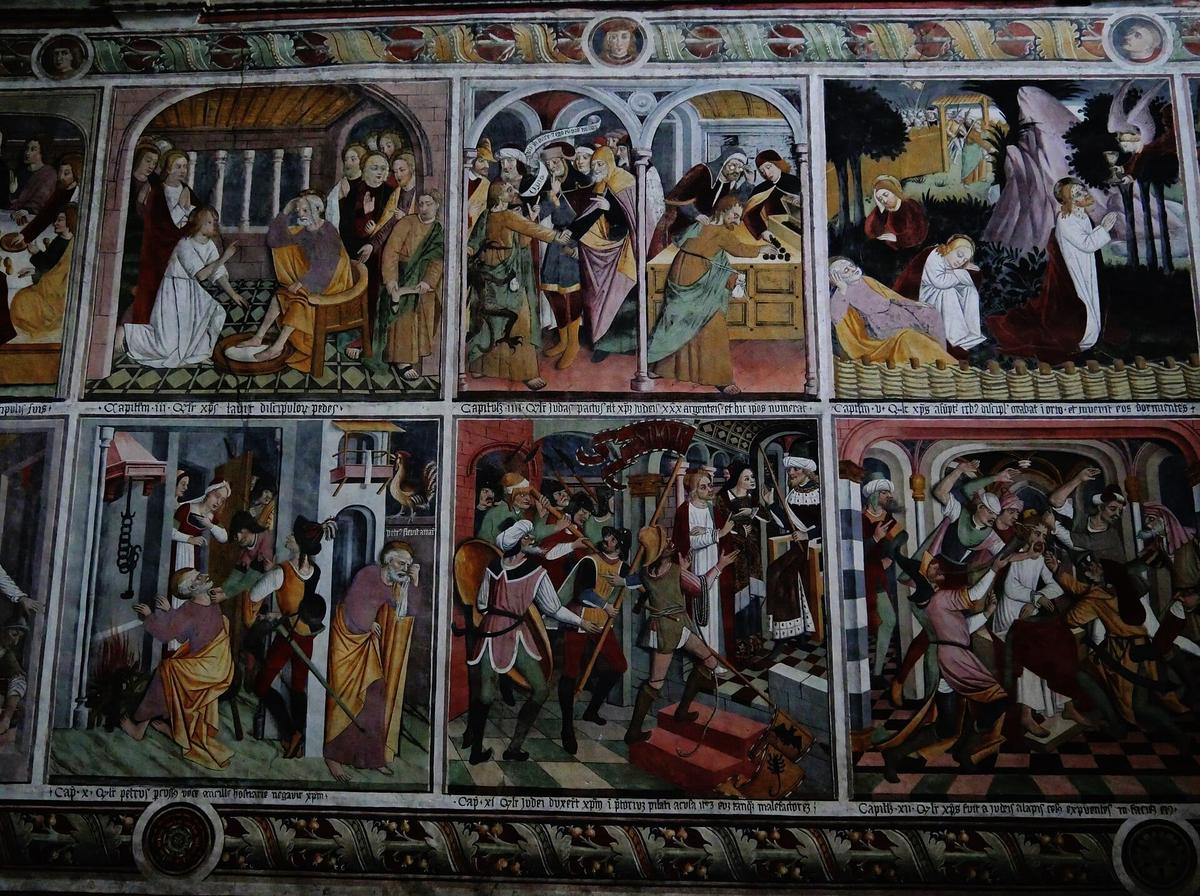
Canavesio's Passion. The side walls of the nave tell the Passion in twenty-five or twenty-six panels, depending on how you count, read like a comic strip. You follow the Entry into Jerusalem, the Last Supper, the Washing of the Feet, the Arrest, Peter's Denial, the Flagellation, Jesus before Caiaphas and then Pilate, the Crucifixion, the Entombment, the Descent into Hell and the Resurrection. The figures wear late 15th-century clothes, which also gives a picture of the fashion and weapons of the time.

Judas hanged. This is the scene everyone looks for. Judas is shown hanged, below a window that was later bricked up, next to the scene of Jesus before Pilate. It is a raw image, and it surprises children and adults alike.
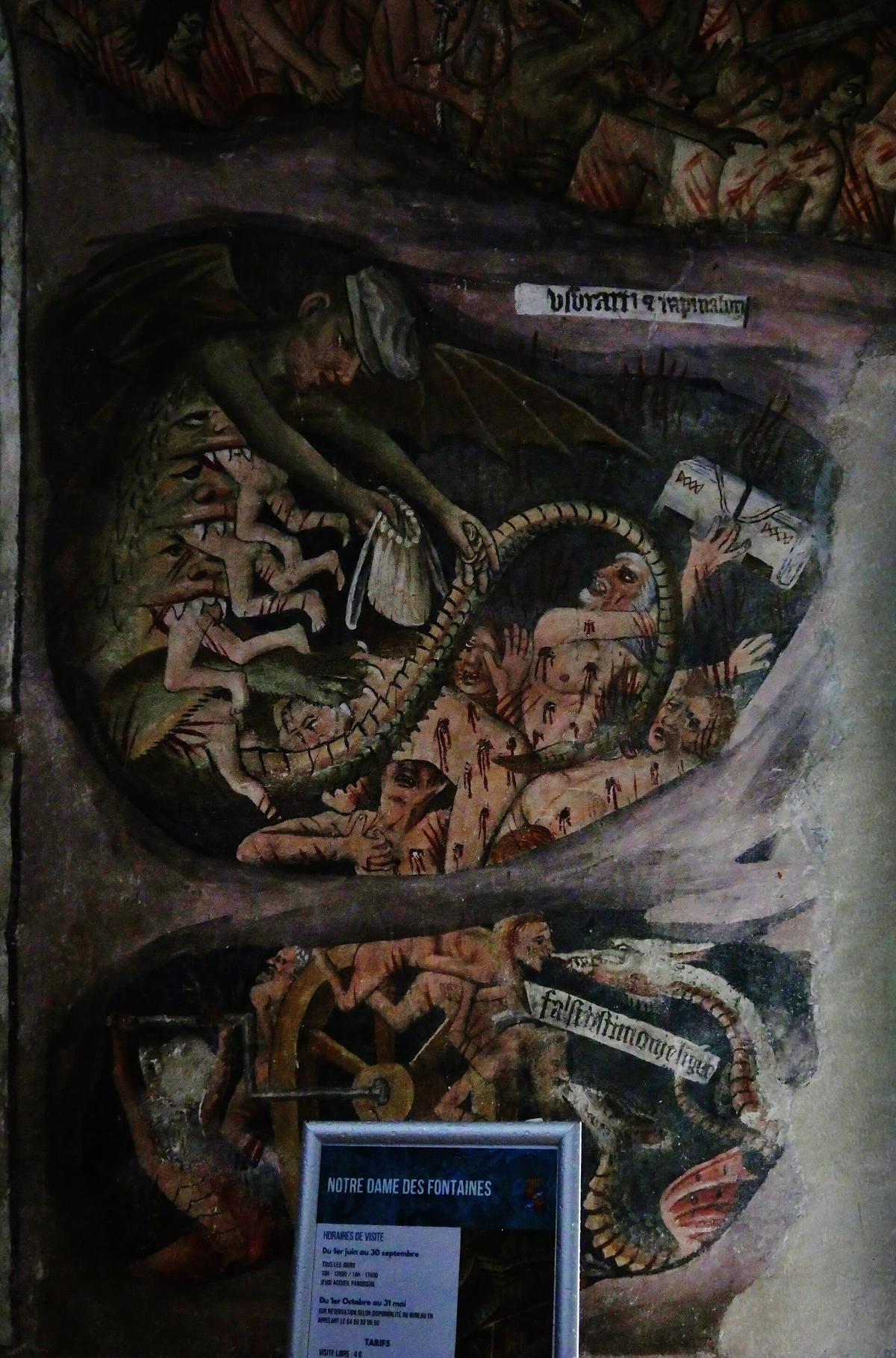
The Last Judgement. On the west wall, on the inside of the entrance, Christ the Judge is surrounded by the twelve apostles. The Virgin and St John the Baptist intercede, and St Michael weighs souls. On Christ's left, the damned are thrown into the jaws of Leviathan, and a monster devours usurers and thieves. Historians often compare these demons and torture machines with those of Hieronymus Bosch, his contemporary.
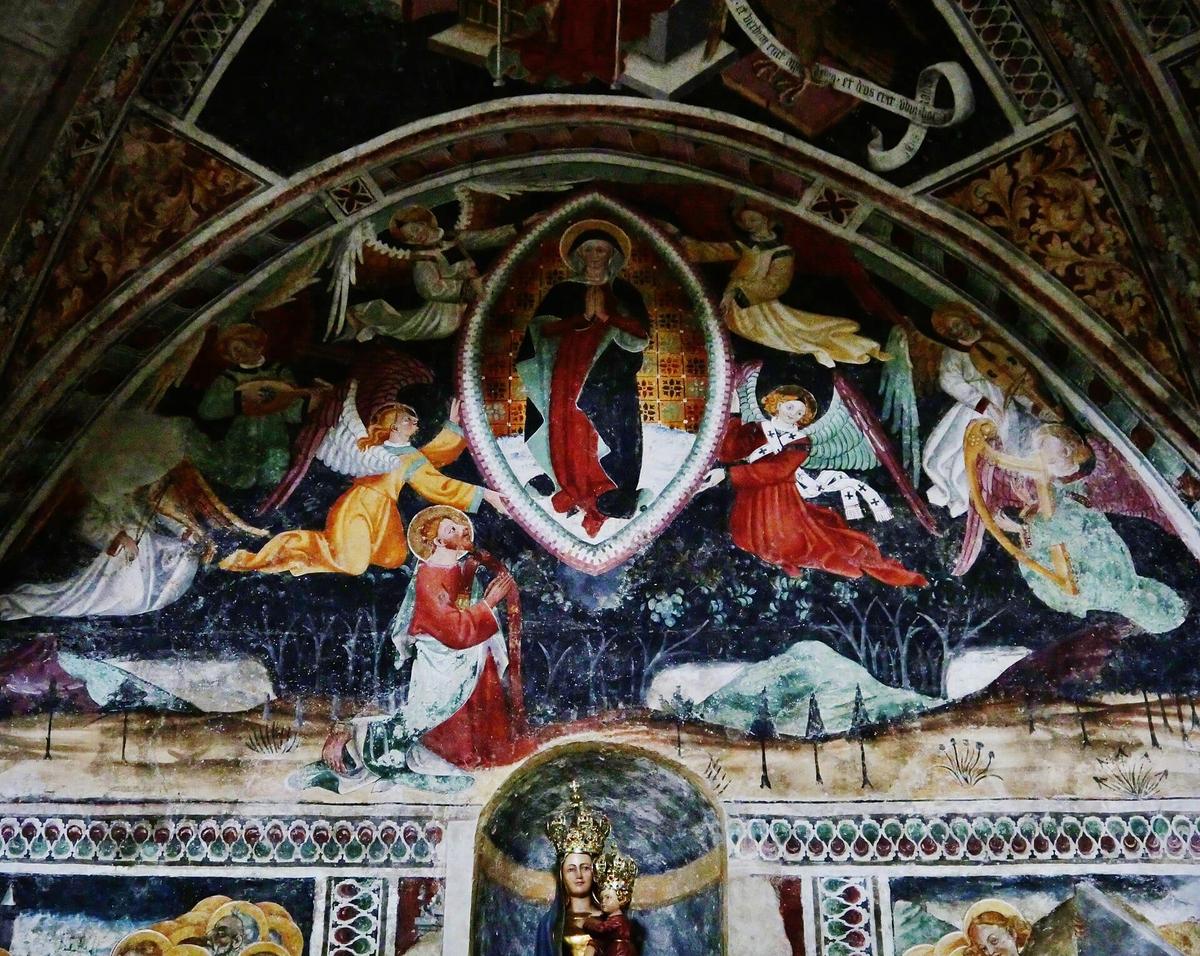
The triumphal arch. Above the entrance to the choir are scenes from the life of the Virgin with the Child. They were long attributed to Giovanni Baleison; today they are more often credited to Canavesio.
Baleison's choir. Older in style, it shows the end of the Virgin's life, with the four Evangelists on the vault and the four Doctors of the Church beneath the double arch. Part of it is damaged, but the colours are still clear.
The signature. Look for the inscription "PRESBYTERO IOANES CANAVESIO PICTORE", with the date the work was finished. Canavesio was both a priest and a painter, hence the word "presbytero". According to Wikipedia, this inscription was repainted during a restoration in 1583.
The Baroque ceiling. Look up: the 18th-century painted stucco vault has nothing in common with the frescoes below. The contrast between the two periods is part of the visit.
How to get to Notre-Dame-des-Fontaines
By car. This is the easiest option. From the Roya valley, take the D 43 to La Brigue, then the D 143, which climbs the side valley to the chapel. There is a car park next to it, as well as a motorhome area. From Nice, allow nearly two hours' drive via Sospel and Breil-sur-Roya. Before setting off, check the state of the roads in the Roya valley, often affected by roadworks since Storm Alex in 2020.
By train. The Nice-Breil-Tende line serves La Brigue station, below the village. TER regional trains run on it; the Train des Merveilles, with commentary on board, uses the same line on certain days. From the station it is still about 4 km to the chapel: plan to walk or book a taxi in advance.
On foot from the village. A nature and heritage trail waymarked in yellow starts from the chemin de Saint-Jean, behind the tennis court, on the east side of the village. It follows the Vallon de la Madone, passes an old lime kiln, climbs about 70 m and then comes back down by a footbridge onto the road, just before the chapel. You can return the same way, or by the road to see the Pont du Coq and the small wayside shrines. The tourist office warns that livestock may be on the trail.
Renting a car. To combine the upper Roya and the coast in one day, a car picked up in Nice is the most flexible solution.
Visiting with children
Children get in free. The chapel is not designed for them, but the frescoes can be read like a picture story: give them a mission (find Judas, count the soldiers, spot the devils in the Last Judgement). A short visit followed by the trail or a picnic by the stream works better than a long explanation.
Warn them that some scenes are violent: Judas hanged and the torments of the damned can upset younger children.
Accessibility and pets
The Vermenagna-Roya programme does not list the chapel among its accessible sites. The tourist office publishes no information on wheelchair access, so call the La Brigue office before you come.
Animals are not allowed in the chapel. Around it, they must be kept on a lead.
Practical tips
- Do not come out of season without an appointment. The door will be locked, and the valley is a long way from anywhere.
- Be on time for your appointment. After 30 minutes, the chapel is locked again.
- Bring cash. Cards are not accepted.
- Choose a bright day. With no electricity, the quality of the visit depends on the sky.
- Bring your lunch. There is no restaurant in the valley, but there is a picnic area.
Stories and figures
- The same day as Christopher Columbus. The frescoes were finished on 12 October 1492, the day Christopher Columbus reached the Americas. Local legend even makes it the day the chapel was reconsecrated.
- A village spared by the plague. In 1630 and 1631, the plague killed about 10,000 people in Tende, according to Wikipedia, but spared La Brigue. Later, the village also escaped the looting of the War of the Austrian Succession; it was in thanks that the nave was raised and decorated in the 18th century.
- Copies in Paris. Some scenes have been reproduced at the Cité de l'architecture et du patrimoine in Paris, in the mural painting gallery of the former Museum of French Monuments.
- A ransom turned into decoration. Wikipedia reports that in 1483, a ransom of 800 florins demanded from a member of the family of the Counts of Tende was replaced by an obligation to embellish the chapel. Historians do not all agree on the role of the Lascaris family in commissioning the frescoes.

What to combine with your visit
| Also worth seeing | Distance | Travel time |
|---|---|---|
| Castle Hill (Nice) | 85 km | 110 min by car |
| Matisse Museum Nice | 85 km | 110 min by car |
Approximate road distances and travel times.
In the valley, the village of La Brigue is worth an hour: old lanes, the collegiate church of Saint-Martin and the Chapel of the Annunciation. For a day that starts in the mountains and ends on the coast, head back down to Nice: Castle Hill has the best view over the Baie des Anges See also: Castle Hill (Nice), and the Matisse Museum in Cimiez shows another way of painting light See also: Matisse Museum Nice. The neighbouring Cimiez Monastery holds altarpieces by the Nice primitives, in the same tradition as the painters of La Brigue. See also: Cimiez Monastery, Villa Masséna Museum, Villa Ephrussi de Rothschild, French Riviera
Where to eat and stay
There is nothing to eat on site. The village of La Brigue has a few restaurants and shops, open mainly in season. The picnic area near the chapel is the simplest solution in summer.
To stay, La Brigue and Tende have hotels, holiday cottages and B&Bs. They also make a good base for the Vallée des Merveilles. If you would rather stay on the coast, Menton and Nice are just under two hours away.
FAQ
How much does it cost to visit Notre-Dame-des-Fontaines?
€4 for a self-guided visit and €6 for a guided tour. Students pay €3, and entry is free for children. Payment by cash or cheque.
Is the chapel open in winter?
Only by appointment. Call the La Brigue information office on 04 83 93 95 50, on a weekday morning, to book a time slot.
What are the summer opening hours?
From 1 June 2026 to 30 September 2026, every day, 10:00 – 12:30 and 14:00 – 17:30.
Who painted the frescoes?
Giovanni Canavesio painted the nave, with the Passion and the Last Judgement, finished on 12 October 1492. The choir is attributed to Giovanni Baleison.
Can you walk there from La Brigue?
Yes. A trail waymarked in yellow leaves the village and follows the Vallon de la Madone for about 4 km, with a climb of about 70 m.
Why is it called the Sistine Chapel of the Alps?
Because its walls are entirely painted, like those of the Sistine Chapel. It is a tourist nickname, but it gives a fair idea of the effect when you walk in.
Practical information
Opening hours 2026
| 1 June 2026 to 30 September 2026 | 10:00 – 12:30, 14:00 – 17:30 |
|---|
Official ticket-office prices 2026
| Full price | €4 |
|---|---|
| Student | €3 |
| Free | under 12 |
Address
Vallon de la Madone, 06430 La Brigue, France
Directions · Phone+33 4 83 93 95 50
On site and nearby
- On site: Picnics allowed
- Nearest shops and pharmacy: Triora, 12 km away Straight-line distance, based on OpenStreetMap.
- Emergencies: 112 (all emergencies, free from any phone), 15 (SAMU, medical emergency)
Around the site, on Google Maps
With children
Family days out nearby: Saorge Monastery (12 km), Fragonard Perfume Factory, Èze (44 km), Matisse Museum Nice (49 km)
Swimming pools and play areas nearby, on Google Maps
Facts checked on 12 November 2026. Sources: cotedazurfrance.fr, cotedazurfrance.com, en.wikipedia.org, fr.wikipedia.org, vermenagna-roya.eu
Map
In the same region
- National Sports Museumfrom €8Free under 18