Cimiez Monastery: visiting the garden, church and cemetery
Cimiez Monastery at a glance
- 1 November 2026 to 31 March 2027
- 8:30 – 18:00
- Admission
- Free
- Time needed
- about 1 h
- Where
- Nice
Facts checked on 11 November 2026. Full opening hours, reduced prices and access
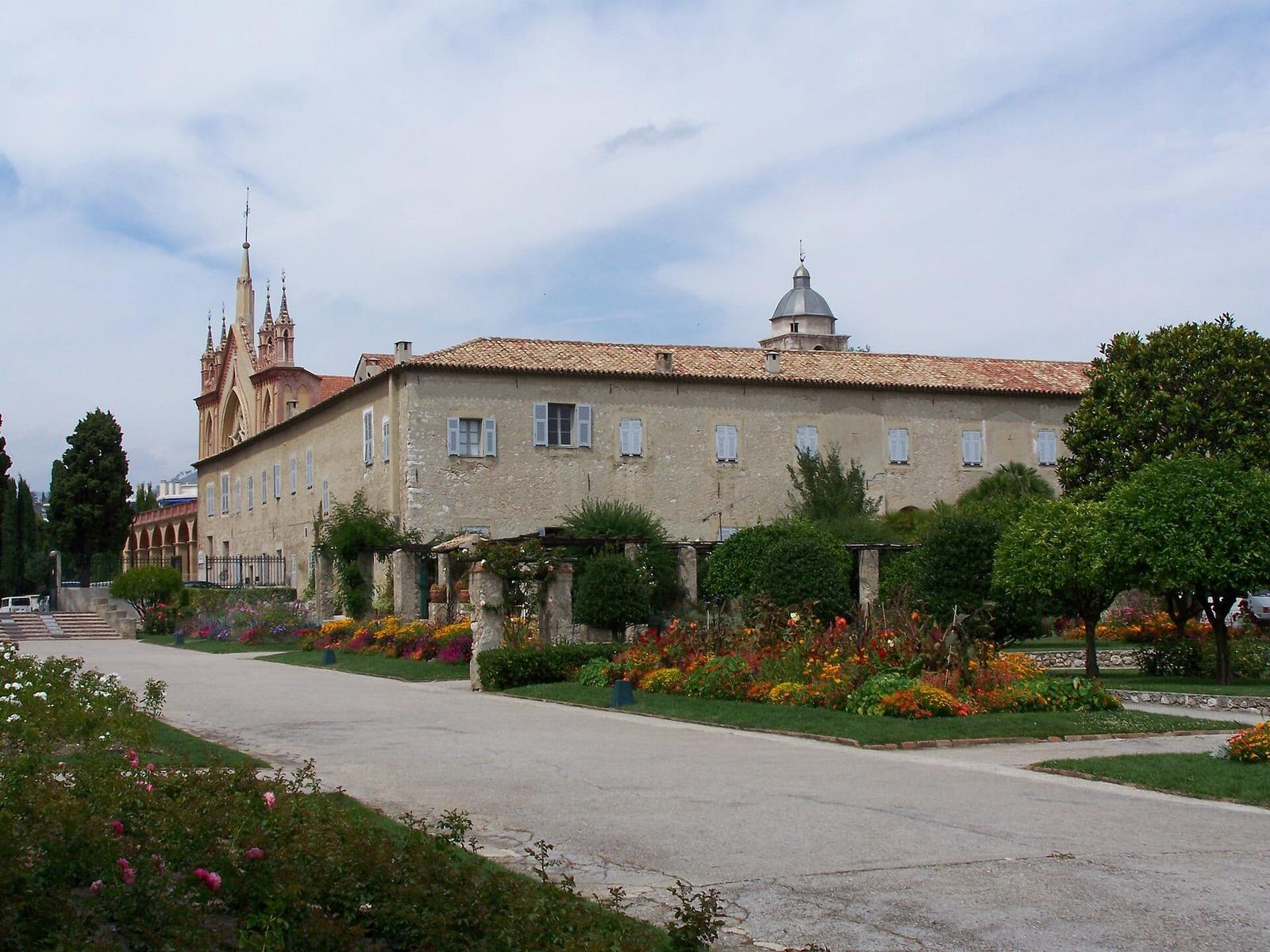

On Cimiez hill, a short walk from the Matisse Museum, Franciscan friars have lived in the monastery since the mid-16th century. People come for a public garden looking out to sea, a church with three paintings by Louis Bréa and a cemetery where Henri Matisse and Raoul Dufy are buried. Everything is free. Here are the opening hours, how to get there from the centre and what to know before you go.
Cimiez Monastery at a glance
- Where: Place Pape Jean Paul II, on Cimiez hill, about three kilometres north of central Nice, next to the Arènes park and the Matisse Museum.
- Price: free entry to the garden, the church, the cemetery and the Franciscan museum.
- Open: garden every day, 8:30 – 18:00 in winter and 8:30 – 20:00 in summer; Franciscan museum Monday to Friday, 10:00 – 12:00 only.
- Time needed: allow 1 h for the garden, the church and the cemetery.
- Best for: lovers of gardens and views over Nice, anyone following in Matisse's footsteps, visitors looking for somewhere quiet.
- Good to know: the Franciscan museum is not wheelchair accessible and does not allow animals.
What is Cimiez Monastery?
It is a Franciscan friary that is still lived in, with its church, a garden that is now public and a cemetery. The Nice tourist office describes it as one of the city's most important places of worship, culture and tourism.
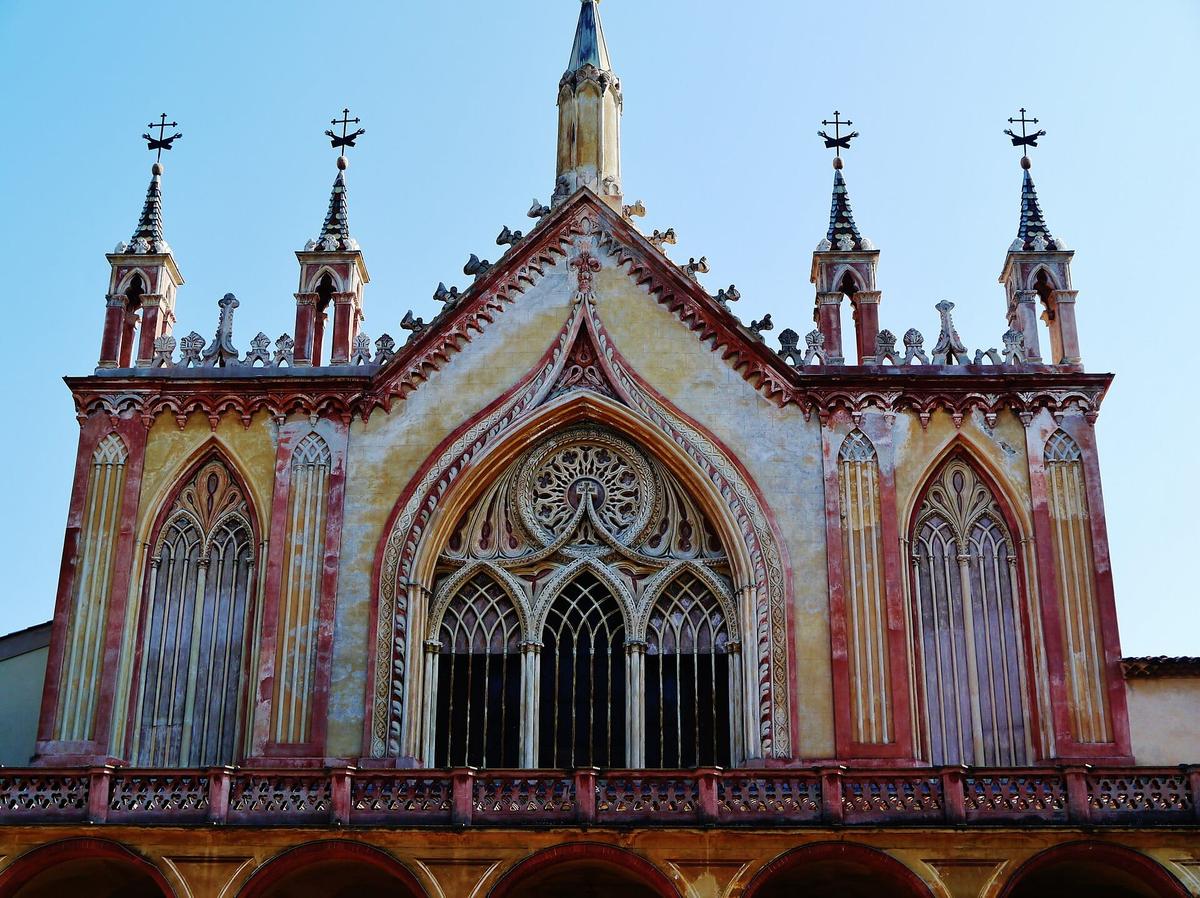

From Benedictines to Franciscans. According to Wikipedia, a chapel of Notre-Dame de Cimiez, built by the Benedictine monks of the Abbey of Saint-Pons, is first mentioned in 1010. In 1546 the abbey handed it over, with the land around it, to the Observant Friars Minor, who had been without a friary since the siege of Nice in 1543. The Franciscans then enlarged the buildings over the centuries. The church of Notre-Dame-de-l'Assomption dates from the 15th century, the cloister from the 16th.
A listed monument. The monastery is a listed historic monument, as is the ground of the former garden and of the cemetery. A major restoration of the roofs, the cloister and the façades was carried out with the French state heritage services.
A culinary story. Wikipedia reports a tradition that the Franciscans of Cimiez invented mesclun, the mix of young salad leaves typical of Nice. They sowed mixed seeds, "lou mesclun" in the Niçois dialect, and gave the poor the seedlings they thinned out.
A place of procession. In the past, the penitent brotherhoods of Nice walked in procession up to the monastery, passing the nearby Roman arena.
How many visitors? The garden and church do not count their visitors. Only the small Franciscan museum publishes a figure: 982 visits in 2025, according to the Côte d'Azur regional tourist board. Its very short opening hours partly explain that number.
How much does it cost to visit?
Nothing. The garden is a public garden run by the City of Nice, the church is a place of worship and the cemetery is municipal. The tourist office also states that the Franciscan museum is free.
Groups can ask for a guided tour of the museum, lasting about 60 minutes, for up to 20 people. Requests are made by phone on +33 4 93 81 00 04.
Opening hours 2026: garden, museum, cemetery
Each part of the site has its own opening hours.
The monastery garden (City of Nice):
- Winter, 1 November to 31 March: 8:30 – 18:00, every day.
- Summer, 1 April to 31 October: 8:30 – 20:00, every day.
The Franciscan museum (tourist office): Monday to Friday, 10:00 – 12:00, from 6 January 2026 to 23 December 2026. It is closed at weekends and on public holidays: in 2026, 1 January, Easter Monday, 1 May, 8 May, Ascension Thursday, Whit Monday, 14 July, 15 August, 1 November, 11 November and 25 December.
The cemetery (City of Nice):
- 1 November to 28 February: 8:30 – 17:00, every day.
- 1 March to 31 October: 8:30 – 18:00, every day.
The church. Neither the city nor the tourist office publishes visiting hours for the church. It is a working place of worship: avoid Mass times and check with the monastery if you are coming a long way to see the Bréa paintings.
Our tip: to see everything, come on a weekday in the late morning. The Franciscan museum is only open for two hours in the morning: arrive around 10 am, see the museum, then the church, and keep the garden and cemetery for last. At weekends, stick to the garden, the church and the cemetery. In summer, with the garden open until 8 pm, it is lovely in the early evening, when the light falls across the bay.
Do you need to book?
No. Nothing needs booking for an individual visit. Only group guided tours of the museum have to be requested in advance.
To discover Cimiez and the rest of Nice with a guide, small-group walking tours can be booked online:
Partner links: if you book through these links, we earn a commission at no extra cost to you. Partner links · Learn more
How long to allow
Allow 1 h to walk round the garden, go into the church and find the graves of Matisse and Dufy. Add half an hour if the Franciscan museum is open. The easiest plan is to combine the monastery with the Matisse Museum, five minutes' walk away: then allow half a day on the hill.

What to see at Cimiez Monastery
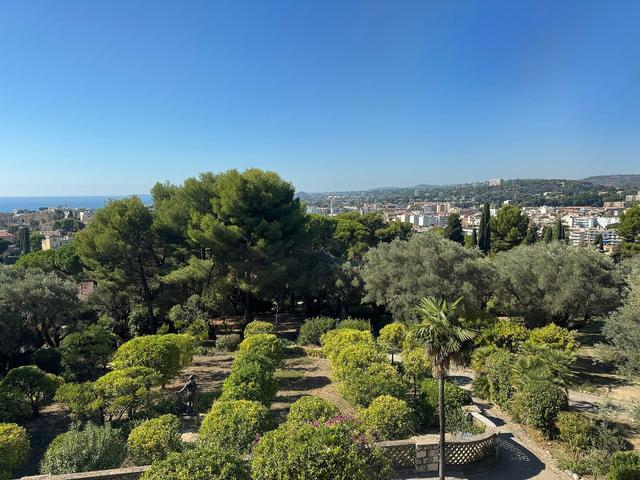
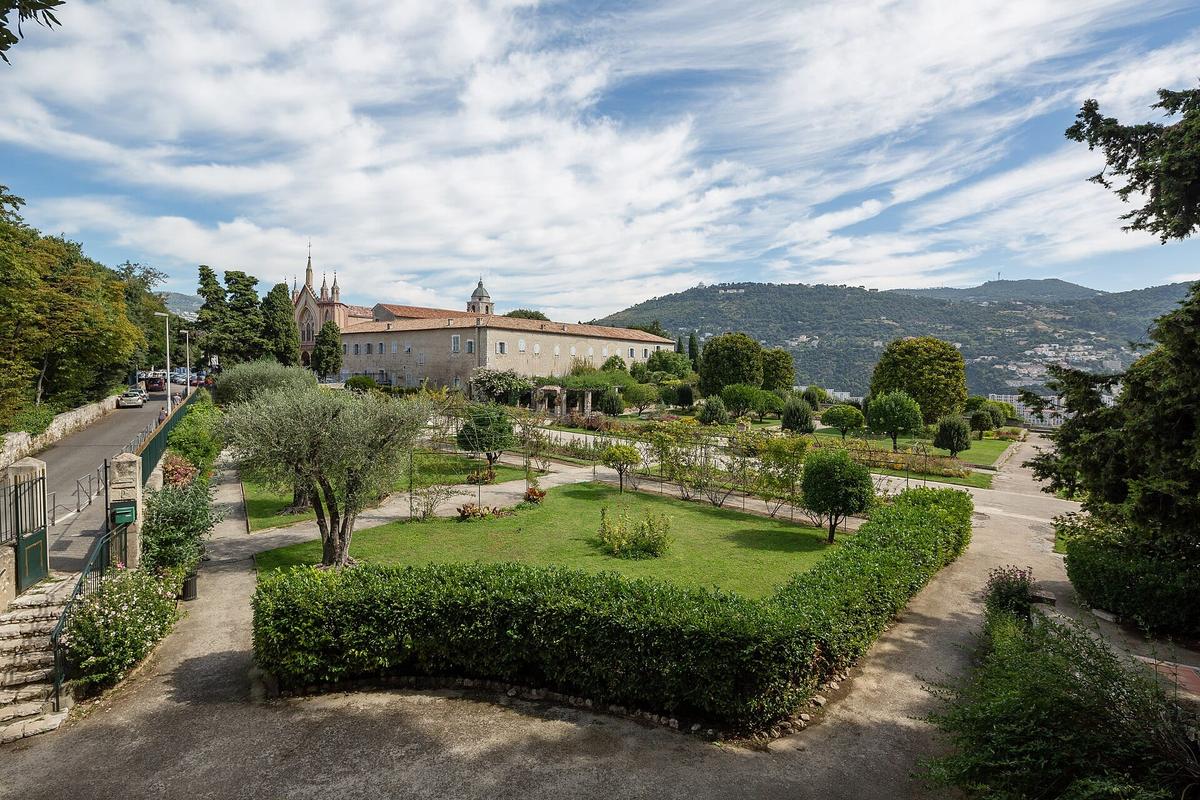
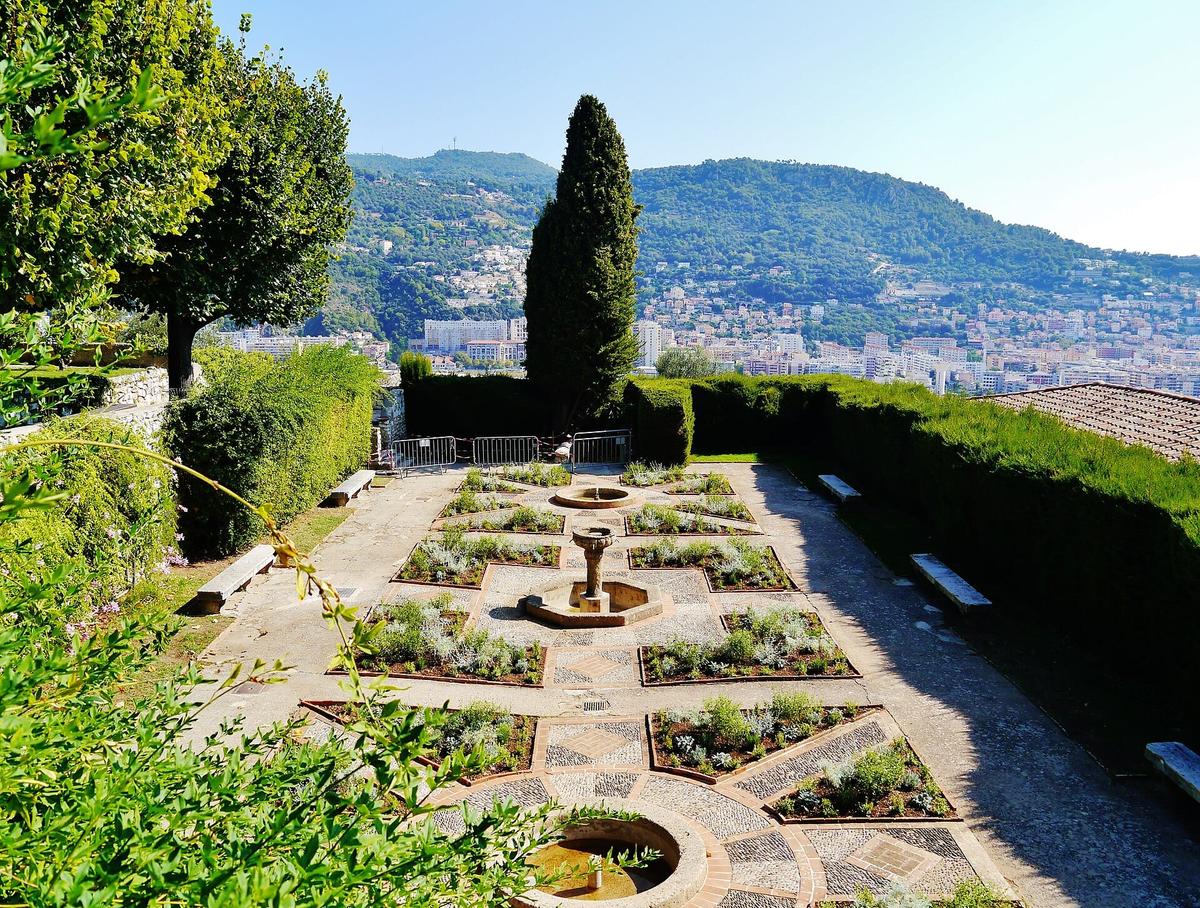
The garden. The city describes it as an Italian-style garden, with a rose garden, fruit trees, flower beds and a panoramic view over the sea and eastern Nice. It occupies the monks' former kitchen garden, which the city bought in the early 20th century to make it a public garden. It is one of the best free views in Nice, and a quiet spot even in high summer.
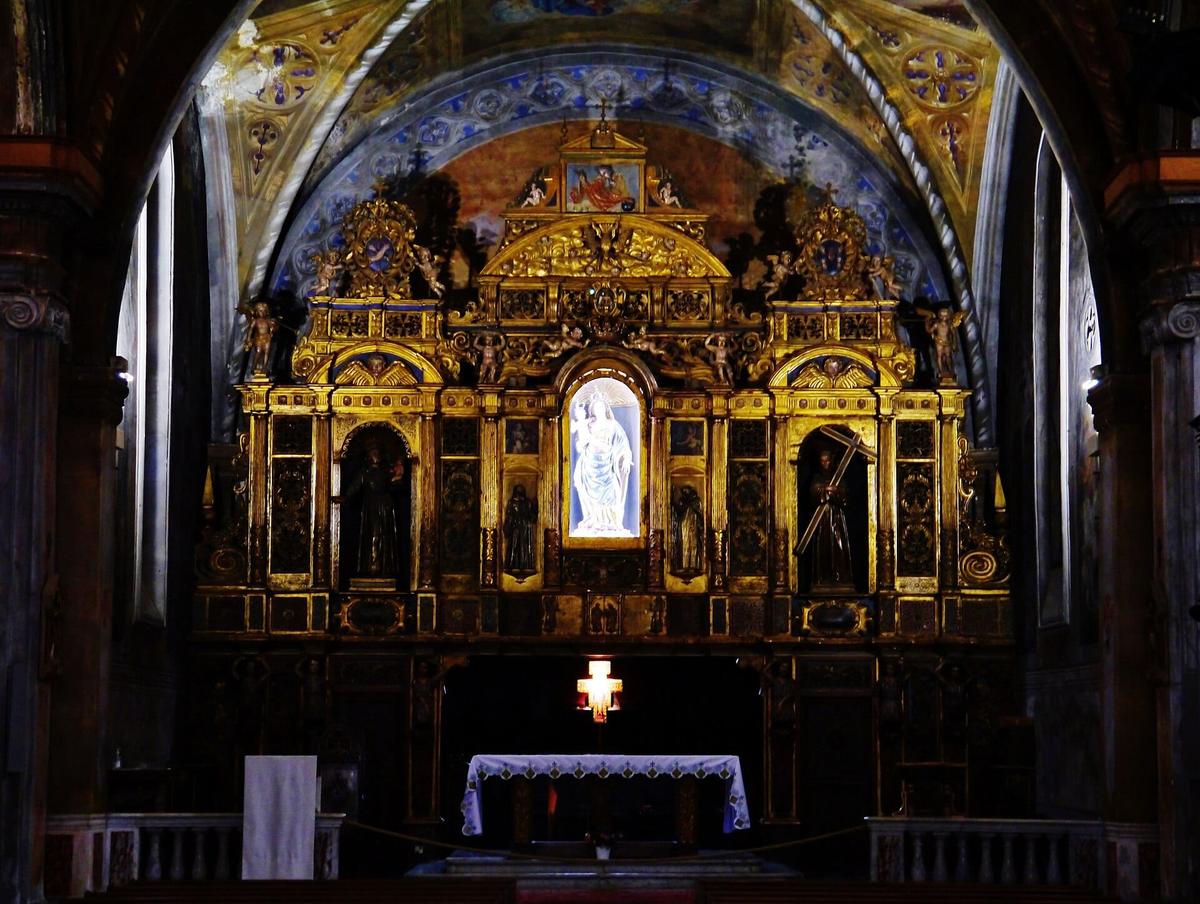

The church of Notre-Dame-de-l'Assomption. It holds three paintings by Louis Bréa, the great Niçois painter of the late Middle Ages: a Pietà from around 1475, a Crucifixion from around 1512 and a Deposition. The three works span some forty years of his career. Take time to compare them: you can see the painter's style change from one to the next.
The Seraphic Cross. On the square in front of the church stands a marble cross 5.8 metres high. It is a copy: the original, from 1477, is kept inside the church. Compare the two as you go in.
The Franciscan museum. It occupies the second floor of the old friary, in the friars' cells. Paintings, sculptures, illuminated manuscripts and frescoes tell the story of the Franciscans in Nice from the 13th to the 18th century. The museum is small and its hours are short: a bonus if you are there on a weekday morning.
The cloister. It dates from the 16th century. According to Wikipedia, it hosts concerts of the Nuits Musicales de Nice and, in summer, Sunday Masses.
The graves of Matisse and Dufy
The Cimiez cemetery, next to the monastery, is where the painters Henri Matisse and Raoul Dufy are buried. Matisse, who lived at the nearby Hôtel Régina, died in Nice in 1954. The writer Roger Martin du Gard, winner of the Nobel Prize in Literature in 1937, is also buried at Cimiez, as is the Goiran family, including General François Goiran, a former mayor of Nice.
How to find the graves. The city does not give their location on its page, but it has an online cemetery map (cartes.nicecotedazur.org) for finding a grave. Check it before you come, or ask the way at the entrance. The cemetery is a place of contemplation: keep the picnic for the Arènes park.
Visiting with children
Children enjoy the garden for its space and view; the church and museum will hold them for less time. The Arènes park next door, with its long avenues of olive trees and the remains of the Roman amphitheatre, is better for a break and a picnic. For a family outing, combine the park, the monastery garden and an ice cream on the way back down to the centre.

Accessibility
The tourist office states that the Franciscan museum, on the second floor, is not wheelchair accessible and that animals are not allowed. The city gives no accessibility information for the garden or the cemetery: call ahead if you have difficulty getting around.
How to get to Cimiez Monastery
By bus. From the centre, Lignes d'Azur bus line 5 leaves from the Masséna / Guitry stop and climbs to the Arènes / Musée Matisse stop in about 20 minutes. The monastery is at the far end of the Arènes park, a few minutes' walk away. The Lignes d'Azur journey planner gives the day's times.
On foot. From Place Masséna, it is about three kilometres uphill along Boulevard de Cimiez. The nicest option is to take the bus up and walk back down, stopping at the Chagall Museum.
By car. There is parking in the streets around Place du Monastère, but it fills up quickly in season. A car is mainly useful to combine Cimiez with Èze, Saint-Jean-Cap-Ferrat or Saint-Paul-de-Vence.
What to visit nearby on the same day
| Also worth seeing | Distance | Travel time |
|---|---|---|
| Matisse Museum Nice | 0.3 km | 5 min on foot |
| Chagall Museum Nice | 2 km | 25 min on foot |
| Castle Hill (Nice) | 4 km | 30 min by public transport |
Approximate road distances and travel times.
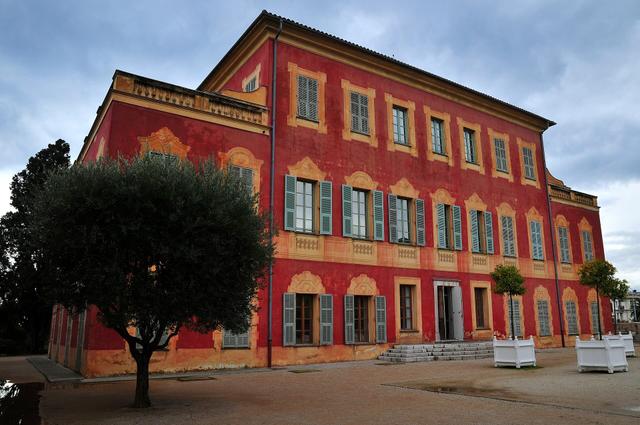
The Matisse Museum and the Roman arena. Five minutes' walk away, the Matisse Museum traces the career of the painter whose grave you will find in the cemetery. Unlike the garden, it is closed on Tuesdays. See also: Matisse Museum Nice
The Chagall Museum on the way down. The Marc Chagall National Museum is on the way back to the centre and is easy to visit straight after Cimiez. See also: Chagall Museum Nice
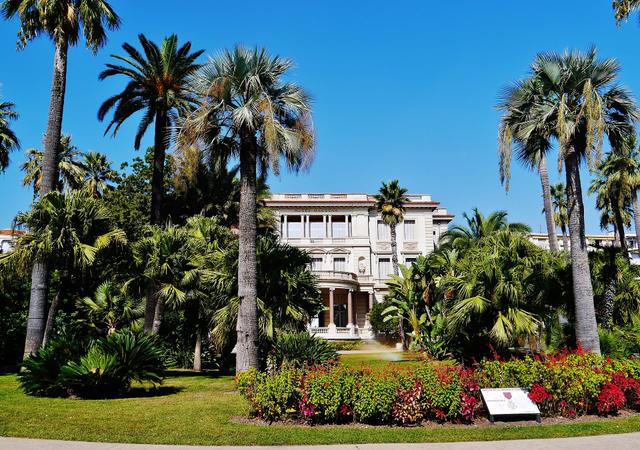
The rest of Nice. Back in town, the Villa Masséna tells the story of 19th-century Nice, and Castle Hill gives a view over the Baie des Anges and Old Nice. See also: Villa Masséna Museum, Castle Hill (Nice), French Riviera
Where to eat and stay
There is no restaurant at the monastery. A few cafés and bakeries line Boulevard de Cimiez, and the Arènes park next door is good for a picnic.
To stay, Cimiez is a quiet residential area with a few hotels. To explore Nice on foot and go out in the evening, the centre, between Place Masséna and Old Nice, is more practical, twenty minutes by bus from the monastery.
FAQ
Do you have to pay to visit Cimiez Monastery?
No. The garden, the church, the cemetery and the Franciscan museum are all free.
What are the opening hours of the Cimiez Monastery garden?
Every day, 8:30 – 18:00 from 1 November to 31 March and 8:30 – 20:00 from 1 April to 31 October.
Where is Henri Matisse buried?
In the Cimiez cemetery, next to the monastery, a few minutes' walk from the Matisse Museum. Raoul Dufy is buried in the same cemetery.
Is the Franciscan museum open at weekends?
No. It opens Monday to Friday, 10:00 – 12:00, except on public holidays.
How do I get to Cimiez Monastery from central Nice?
Take bus 5 from the Masséna / Guitry stop to the Arènes / Musée Matisse stop, then walk through the Arènes park.
What is there to see in the monastery church?
Three paintings by Louis Bréa, including a Pietà and a Crucifixion, and the original Seraphic Cross from 1477.
Practical information
Opening hours 2026
| 1 January 2026 to 31 March 2026 | 8:30 – 18:00 |
|---|---|
| 1 April 2026 to 31 October 2026 | 8:30 – 20:00 |
| 1 November 2026 to 31 March 2027 | 8:30 – 18:00 |
Official ticket-office prices 2026
Free admission
Address
Monastère de Cimiez, place Pape Jean Paul II, 06000 Nice, France
Directions · Phone+33 4 93 81 00 04
On site and nearby
- Nearest shops and pharmacy: Saint-André-de-la-Roche, 2 km away Straight-line distance, based on OpenStreetMap.
- Emergencies: 112 (all emergencies, free from any phone), 15 (SAMU, medical emergency)
Around the site, on Google Maps
With children
Family days out nearby: Matisse Museum Nice (0 km), Chagall Museum Nice (1 km), Castle Hill (Nice) (3 km)
Swimming pools and play areas nearby, on Google Maps
Facts checked on 11 November 2026. Sources: explorenicecotedazur.com, nice.fr, fr.wikipedia.org, cotedazurfrance.fr, fr.wikipedia.org
Map
In the same region

- National Sports Museumfrom €8Free under 18