Parliament of Brittany: how to visit the palace
Parliament of Brittany at a glance
- Free
- children under 7
- Time needed
- about 1 h 30 min
- Visitors per year
- about 30,000 (2003)
- Where
- Rennes
Facts checked on 11 November 2026. Full opening hours, reduced prices and access

The Parliament of Brittany is the most famous monument in Rennes, but you cannot walk in on your own: it is a working court, home to the Court of Appeal. The only way to see its painted ceilings and gilded panelling is the guided tour run by the Rennes tourist office, and it is given in French. Here is how to book, what it costs, what you will see and how to plan your visit.
Parliament of Brittany at a glance
- Where: in the centre of Rennes, place du Parlement de Bretagne, a short walk from the town hall and the opera house.
- Visiting: by guided tour only, lasting 1 h 30, run by the Rennes tourist office, in French.
- Price: from €6.50, free for children under 7.
- Booking: required, online on the tourist office website.
- Good to know: the palace is still a court. Some rooms may close without notice, knives and sharp objects are banned and animals are not allowed.
- Note for November 2026: when we checked, the tourist office said tours were "exceptionally cancelled for the next few days". Check the online calendar before planning your visit.
Can you visit the Parliament of Brittany on your own?
No. The tourist office is clear about it: the Parliament of Brittany cannot be visited freely. The building houses the Rennes Court of Appeal, which has sat there since 1804, and the Ille-et-Vilaine criminal court. Hearings take place all week.
You can, however, admire the façade and the square from outside for free, at any time. To see the inside, you need a guided tour booked in advance. This is what surprises visitors most: many turn up at the gates expecting to buy a ticket on the spot, and leave without getting in.
The European Heritage Days in September are the other chance to go inside. The Rennes programme is published a few weeks beforehand.
How much does a tour of the Parliament of Brittany cost?
The tourist office lists two options for 2026:
- The Parliament of Brittany palace in 90 minutes: from €6.50 per person.
- Combined tour of the historic centre and the Parliament: from €7.50 per person, for about 2 h.
In both cases, the tour is free for children under 7. The exact price depends on the rate you choose when booking (full, reduced, child): the website only shows the lowest price, and the full price list appears in the booking form.
Money-saving tip: the Parliament tour is included in the tourist office's Pass Rennes Loisirs. If you are staying several days and plan other guided tours, compare the price of the pass with single tickets.
Groups: for more than 12 people, go through the tourist office's group service (groupes@destinationrennes.com).
Do you need to book? How booking works
Yes, booking is required. It is done online on the Rennes tourist office website, under "Sortir" (going out) or "Visites guidées" (guided tours). You pick a date and a time slot, then pay online.
A few tips so you do not miss your slot:
- Book as soon as your dates are set. Groups are small and this is the only way in: without a booking, nobody will let you in.
- Check the day before. Tours depend on how the Court of Appeal is running. A long hearing or a court event can close a room, or even cancel the tour. In November 2026, the tourist office was indeed announcing exceptional cancellations.
- Leave your knife at the hotel. All blades are banned in the palace, including a pocket knife, a Swiss Army knife, a box cutter or scissors.
- In person, the tourist office is at 1 rue Saint-Malo, in the former Jacobins convent, near Sainte-Anne metro station. The staff can help you book.
Booking platforms also offer guided walks in old Rennes, in French or in English. They do not replace the tour inside the Parliament, which only the tourist office runs, but they round off a day in the historic centre well, especially if you do not speak French.
Partner links: if you book through these links, we earn a commission at no extra cost to you. Partner links · Learn more
Where is the meeting point?
For the 90-minute tour, the meeting point is rue de Brilhac, under the arcades, on the side of the palace. Do not wait in front of the main façade on the square: tours do not go in that way.
For the combined tour, you start at the tourist office, 1 rue Saint-Malo. The guide leads you through the streets of the centre to the palace.
How long does the tour last?
The guided tour of the palace lasts 1 h 30. The combined version with the historic centre lasts about 2 h. Both are given in French only, and there is no English tour. If you do not speak French, you can still enjoy the decor, but read up on the palace's history before you come so you know what you are looking at.
Arrive at the meeting point ten minutes early: the group leaves on time.
What to see inside the palace
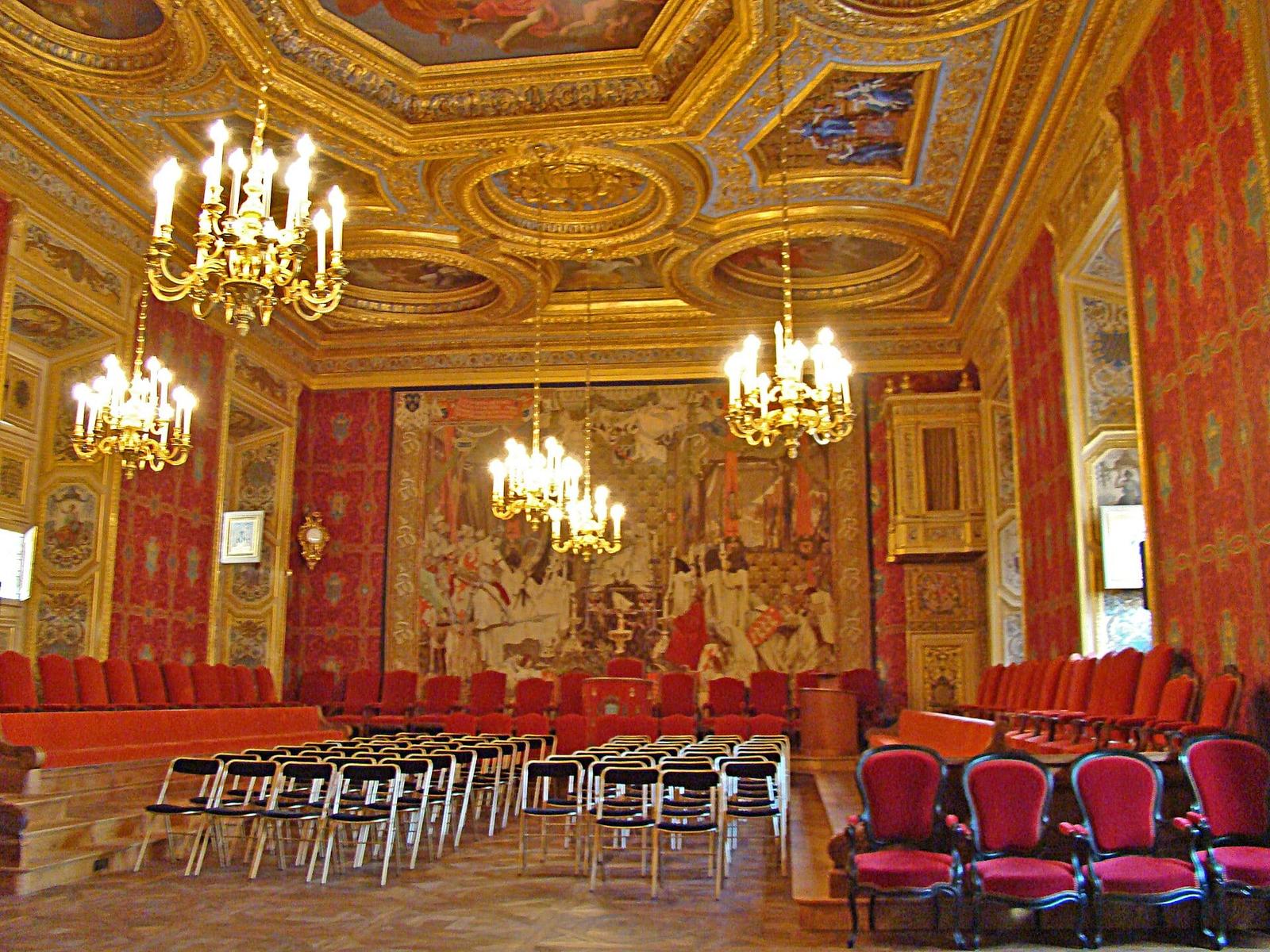
The palace is the most prestigious civil building in Brittany. The outside is plain, in granite and tufa stone. The inside, by contrast, is covered in wood panelling, gilding and painted ceilings. The guide takes you through the grand state rooms, depending on which ones are free that day.
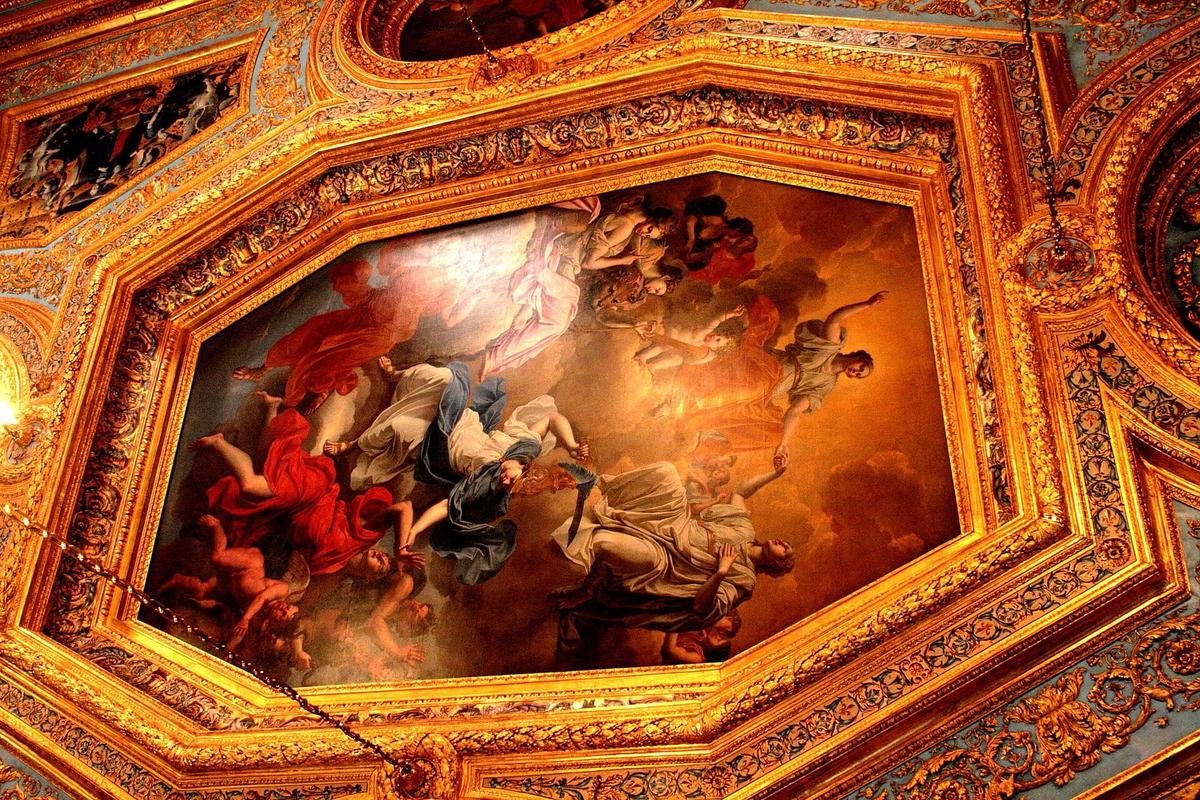

The Grand'Chambre. This is the most spectacular room, the former chamber where the parliament sat. Its coffered ceiling was designed by Charles Errard and painted by Noël Coypel, two painters from the court of Louis XIV. The canvases, painted in Paris, arrived in Rennes by boat in 1662, and the ceiling was finished in 1665. Look up: this decor alone makes the tour worthwhile.
The tapestries of the history of Brittany. The walls of the Grand'Chambre were hung with a series of Gobelins tapestries woven around 1900, telling the history of Brittany. Their fate was a run of bad luck: sent away for restoration after the 1994 fire, half of them were destroyed in 1997 by another fire, in the restoration workshop. The other half is kept by the Mobilier National, the French state furniture collection.
The Salle des Pas Perdus. This great hall is where lawyers, litigants and onlookers waited for hearings. It gives a good idea of life in the palace in the days of the parliament.
The council chamber. Its ceiling, painted from 1694 by Jean-Baptiste Jouvenet, is the palace's other great decor.
The Chambre des Enquêtes. Its decoration was entrusted in 1706 to Louis Ferdinand Elle the Younger. The interior decoration was only fully completed in 1709, almost a century after the first stone was laid.
Bear in mind that the route is not guaranteed. The courtrooms are still in use: if a trial is on, the guide changes the route.
History of the Parliament of Brittany in a few dates
Before the palace. The Parliament of Brittany was the sovereign court of justice of the province. For decades it had no building of its own. Its members sat in the Cordeliers convent for 48 years. To pay for a palace, the city of Rennes raised a tax on cider from 1578.
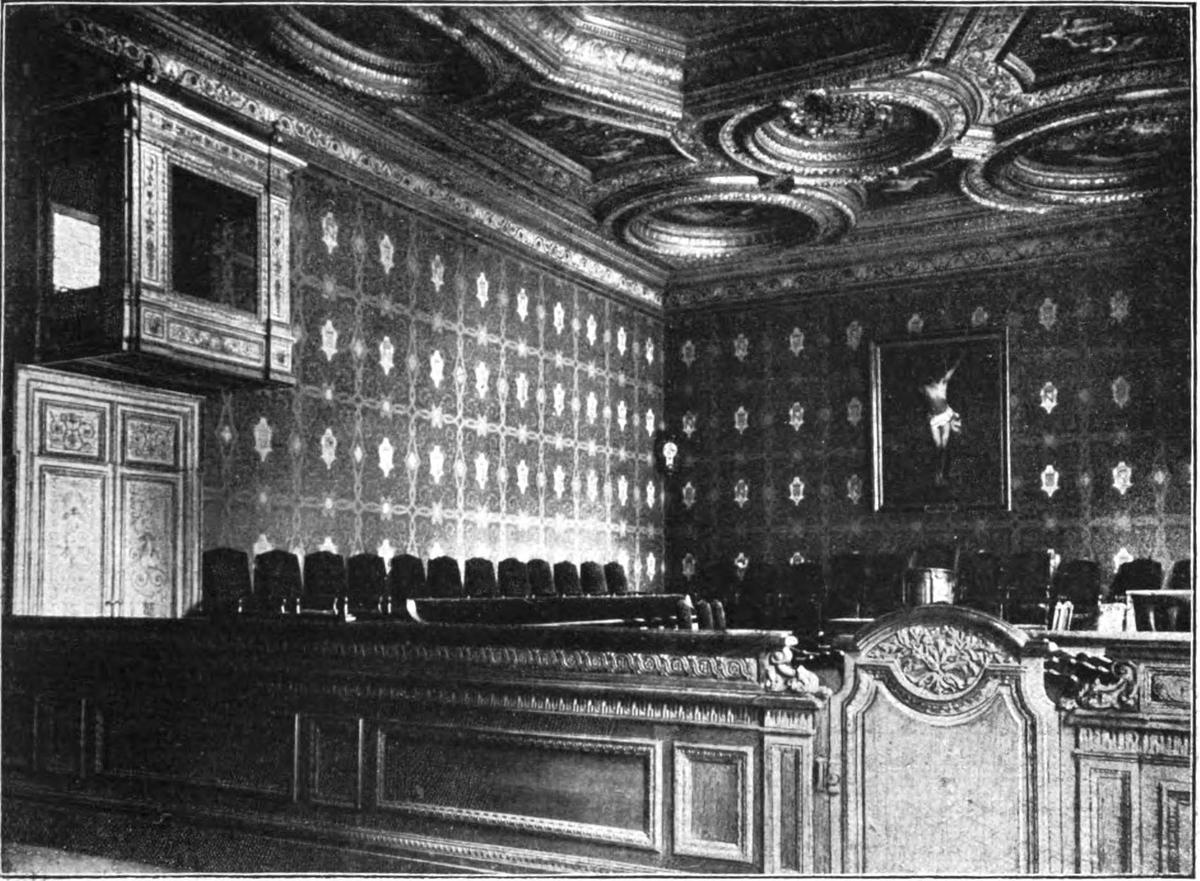

Building the palace. Germain Gaultier, the city architect, drew up the first plans around 1615. The project was revised by Salomon de Brosse, architect of the Luxembourg Palace in Paris, who reworked the façade and the courtyard arcades. The first stone was laid in 1618. The main structure was finished in 1654, and the decoration took another half-century.
The royal square. After the great fire of Rennes in 1720, Jacques Gabriel designed the square in front of the palace in 1726. An equestrian statue of Louis XIV by Coysevox was put up there. Historians tell the story that, according to Gabriel, the palace was meant to "bow before the statue of Louis XIV". The grand staircase on the façade was removed so that nothing would compete with it. The statue was destroyed during the Revolution.
After the Revolution. The parliament disappeared with the old regime, but the building remained a law court: the Court of Appeal moved in in 1804. The palace was the first building in Rennes to be protected as a historic monument.
The 1994 fire: what happened
This is the episode every Rennes local knows. On 4 February 1994, a demonstration by fishermen protesting against collapsing fish prices turned into a riot in front of the palace. A distress flare fired during the clashes went through the roof and lodged in the timber frame.
During the night of 4 to 5 February, between half past midnight and 2 am, the fire engulfed the roof. It could be seen ten kilometres away. The roof timbers collapsed onto the first floor and thousands of documents were destroyed.
The decision was taken to rebuild exactly as before. Work began two years later and lasted 3 years. Carpenters, gilders and painting restorers rebuilt the roof and the decor. During the tour, the guide shows what is original and what was redone.
Is the Parliament of Brittany worth visiting?
Yes, if you like 17th century architecture and decoration. The palace drew more than 30,000 visitors a year in the early 2000s, making it one of the most visited sites in Rennes, even though it can only be seen in small guided groups.
It suits visitors in a hurry less well, and those who do not understand French, since the whole tour is a commentary. With young children, an hour and a half of rooms and explanations can feel long: the combined tour, which starts with a walk through the streets, goes down better.
The palace is also a film location. André Téchiné's In the Name of My Daughter (L'Homme qu'on aimait trop, 2014) was shot there.
Place du Parlement
The square, designed by Jacques Gabriel, is open to all at any time. It is the best place to take in Salomon de Brosse's façade as a whole and see the effect intended once the grand staircase was removed. It is easy to combine with the place de la Mairie and the opera house, two minutes' walk away.
Wheelchair access
The tourist office says the tour is accessible to visitors with reduced mobility. If you use a wheelchair, let them know in advance by email at billetterie@destinationrennes.com, so the route can be adapted. Animals are not allowed.
How to get to the Parliament of Brittany
By metro. Line A to République, or line B to Saint-Germain. Either way, the palace is a few minutes' walk away.
By bus. City and metropolitan bus lines stop at République. The free electric shuttle in the city centre, handy for anyone who has trouble walking, stops at Parlement.
By bike. The nearest bike-share station is Mairie – Opéra.
By car. Central Rennes is best explored on foot. Park at the Hoche car park, the closest to the palace.
By train. Rennes station is about twenty minutes' walk away, or two metro stops (line A to République). Direct TGV trains run from Paris-Montparnasse, and if you are arriving from abroad, Paris is the usual gateway.
For trips around Rennes. A car becomes useful if you want to go on to the castles of Combourg and Fougères, which are poorly served by public transport.
What to visit near the Parliament of Brittany
| Also worth seeing | Distance | Travel time |
|---|---|---|
| Combourg Castle | 40 km | 35 min by car |
| Fougères Castle | 50 km | 45 min by car |
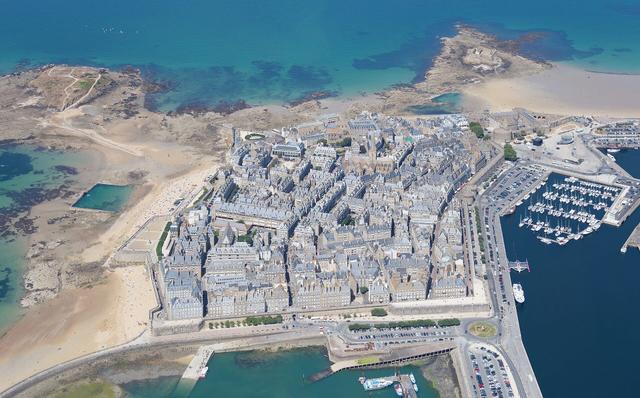
| Saint-Malo Ramparts | 75 km | 60 min by public transport |
Approximate road distances and travel times.
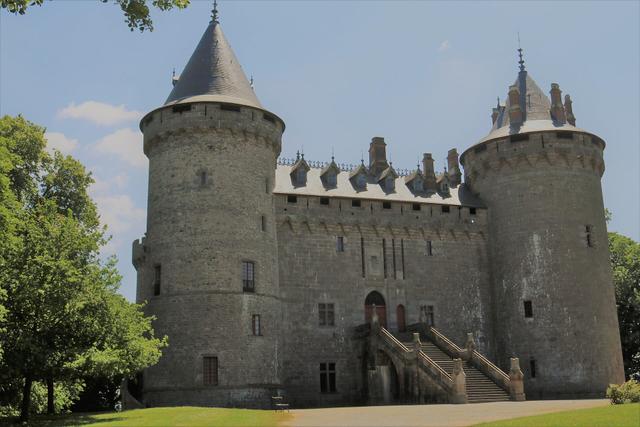
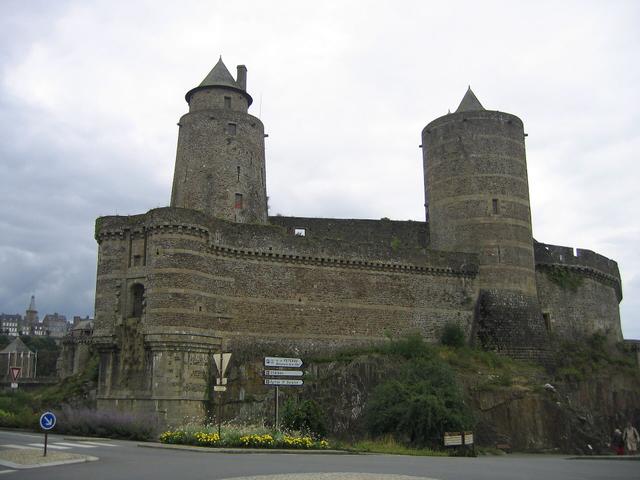
The château de Combourg, where Chateaubriand spent part of his youth, is half an hour's drive north. See also: Combourg Castle The château de Fougères, one of the largest medieval fortresses in Europe, is 45 minutes away. See also: Fougères Castle Saint-Malo is about an hour by direct train: its ramparts make an easy day trip. See also: Saint-Malo Ramparts
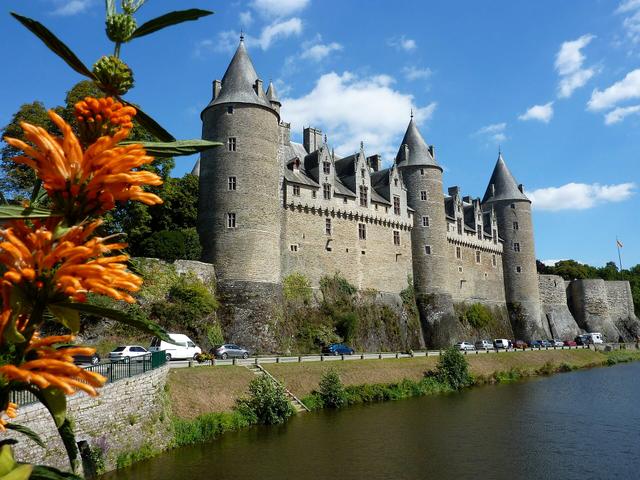
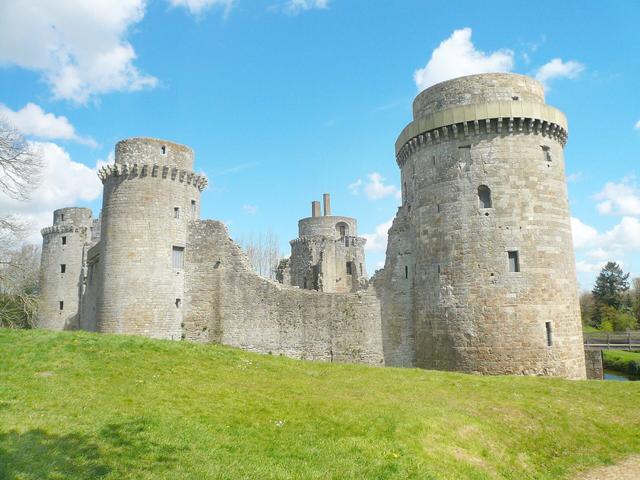
For a longer weekend, the châteaux of Josselin and La Hunaudaye are about an hour's drive away. See also: Château de Josselin, Château de la Hunaudaye, Brittany
Where to eat and stay near the Parliament
The palace is right in the centre, surrounded by cafés and restaurants. The streets around place Sainte-Anne and rue Saint-Michel, nicknamed "rue de la Soif" (Thirst Street), are the liveliest in the evening. For crêpes, the streets of old Rennes, between the cathedral and place des Lices, have plenty. On Saturday mornings, the Lices market, one of the largest markets in France, is ten minutes' walk from the palace.
To stay, the historic centre lets you do everything on foot. The station area, twenty minutes' walk away, has more hotels and often lower prices.
FAQ
Can you visit the Parliament of Brittany without a guide?
No. The palace is home to the Court of Appeal and can only be visited on a guided tour booked through the Rennes tourist office. The façade and the square are open to all.
How much is a tour of the Parliament of Brittany?
From €6.50 for the 1 h 30 tour, from €7.50 for the combined tour with the historic centre. It is free for children under 7.
Where does the tour start?
Rue de Brilhac, under the arcades, for the palace tour. At the tourist office, 1 rue Saint-Malo, for the combined tour.
Is there a tour in English?
No, tours of the palace are given in French only.
Why did the Parliament of Brittany burn down?
On 4 February 1994, a flare fired during a fishermen's demonstration lodged in the roof timbers. The fire destroyed the roof during the night. The palace was restored exactly as it was.
Can I bring a knife or a pet?
No. All blades are banned, even a pocket knife, and animals are not allowed.
Practical information
Address
Place du Parlement de Bretagne, 35000 Rennes, France
Directions
On site and nearby
- Nearest shops and pharmacy: Rennes, less than 1 km away Straight-line distance, based on OpenStreetMap.
- Emergencies: 112 (all emergencies, free from any phone), 15 (SAMU, medical emergency)
Around the site, on Google Maps
With children
Family days out nearby: Cobac Parc (36 km), Fougères Castle (44 km), Dinan Castle (46 km)
Swimming pools and play areas nearby, on Google Maps
Facts checked on 11 November 2026. Sources: tourisme-rennes.com, tourisme-rennes.com, tourisme-rennes.com, fr.wikipedia.org
Map
In the same region