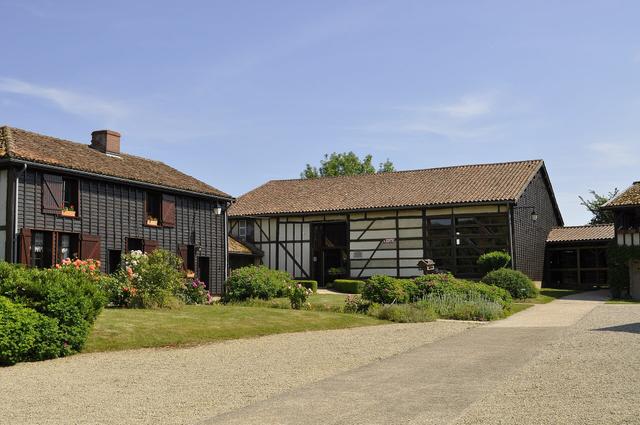
Hautvillers Abbey Church: the grave of Dom Pérignon
Hautvillers Abbey Church at a glance
- 1 November 2026 to 28 February 2027
- 9:00 – 16:00
- Admission
- Free
- Where
- Hautvillers
Facts checked on 11 November 2026. Full opening hours, reduced prices and access
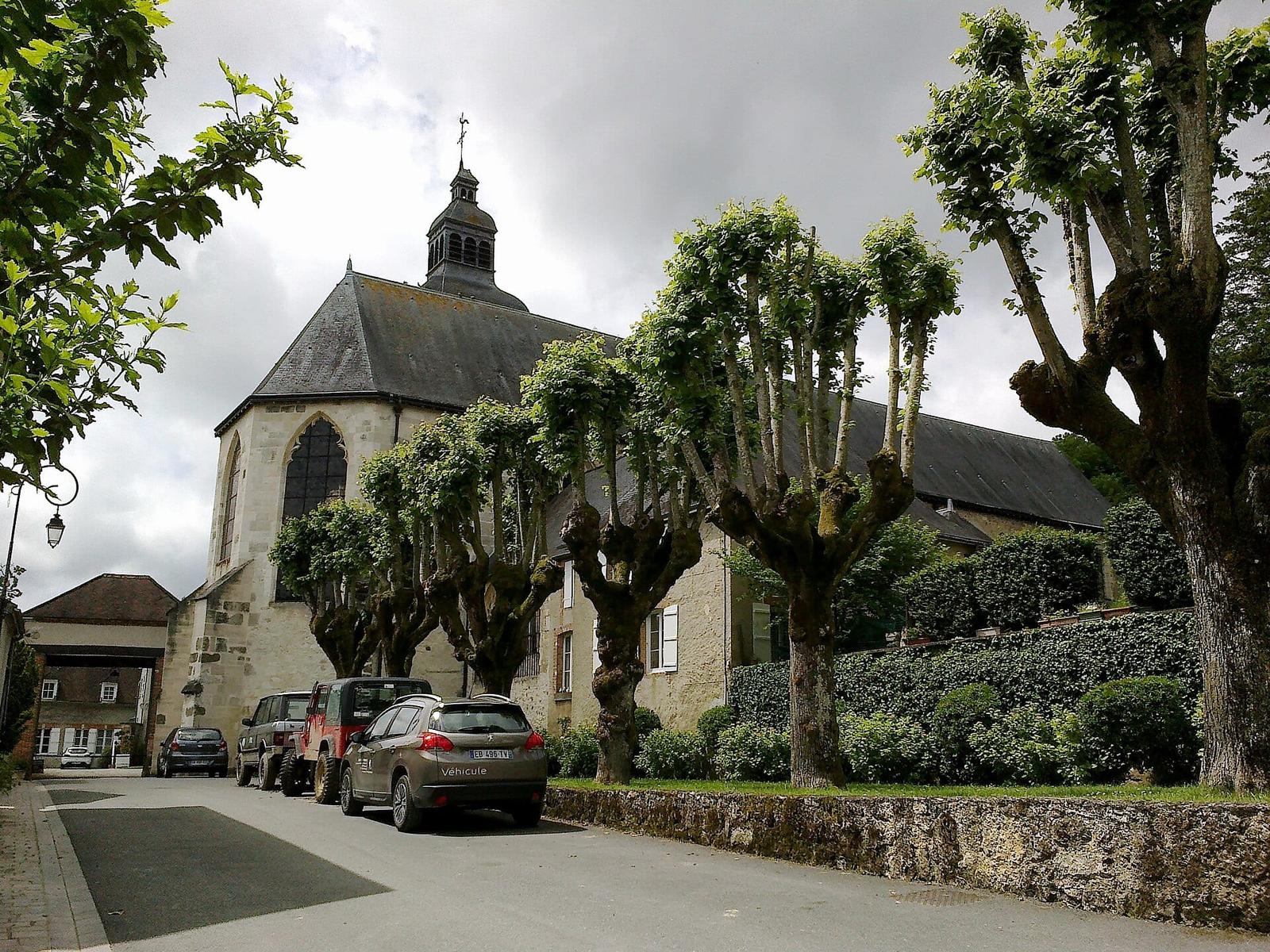

On the hillside above the Marne, five kilometres from Épernay, the village of Hautvillers keeps the church of the abbey where Dom Pérignon spent almost all his life as a monk. His tombstone still lies in front of the choir. Entry is free, the abbey next door is not open to visitors, and you can walk around the village in a morning. Here are the opening hours, what to see and how to plan your visit.
Hautvillers Abbey Church at a glance
- Where: in Hautvillers (Marne), on the Montagne de Reims, 5 km north of Épernay.
- Price: free entry.
- Open: every day. In winter, 9:00 – 16:00 according to the Hautvillers tourist office.
- Closed: 25 December and 1 January.
- Highlights: Dom Pérignon's grave, the 18th-century choir stalls and wood panelling, the 17th and 18th-century paintings.
- Good to know: the Abbey of Saint-Pierre next door belongs to Moët & Chandon and is not open to visitors. Only the church is.
Why visit Hautvillers church
Hautvillers calls itself the "cradle of Champagne". This is where Dom Pierre Pérignon, a Benedictine monk, ran the abbey's vineyards and wine presses for nearly half a century, at the end of the 17th century. He did not invent Champagne, but his name became that of Moët & Chandon's prestige cuvée, and his grave draws visitors from all over the world.
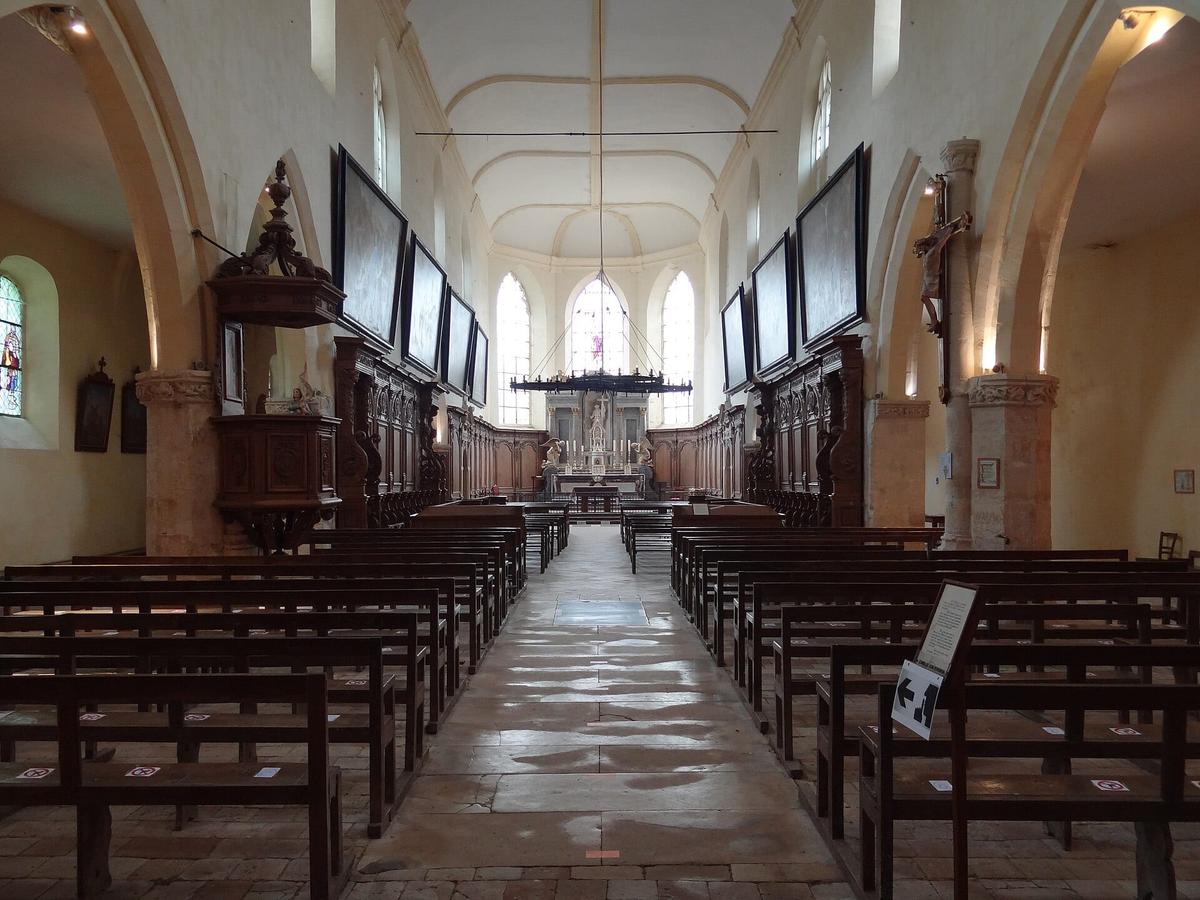

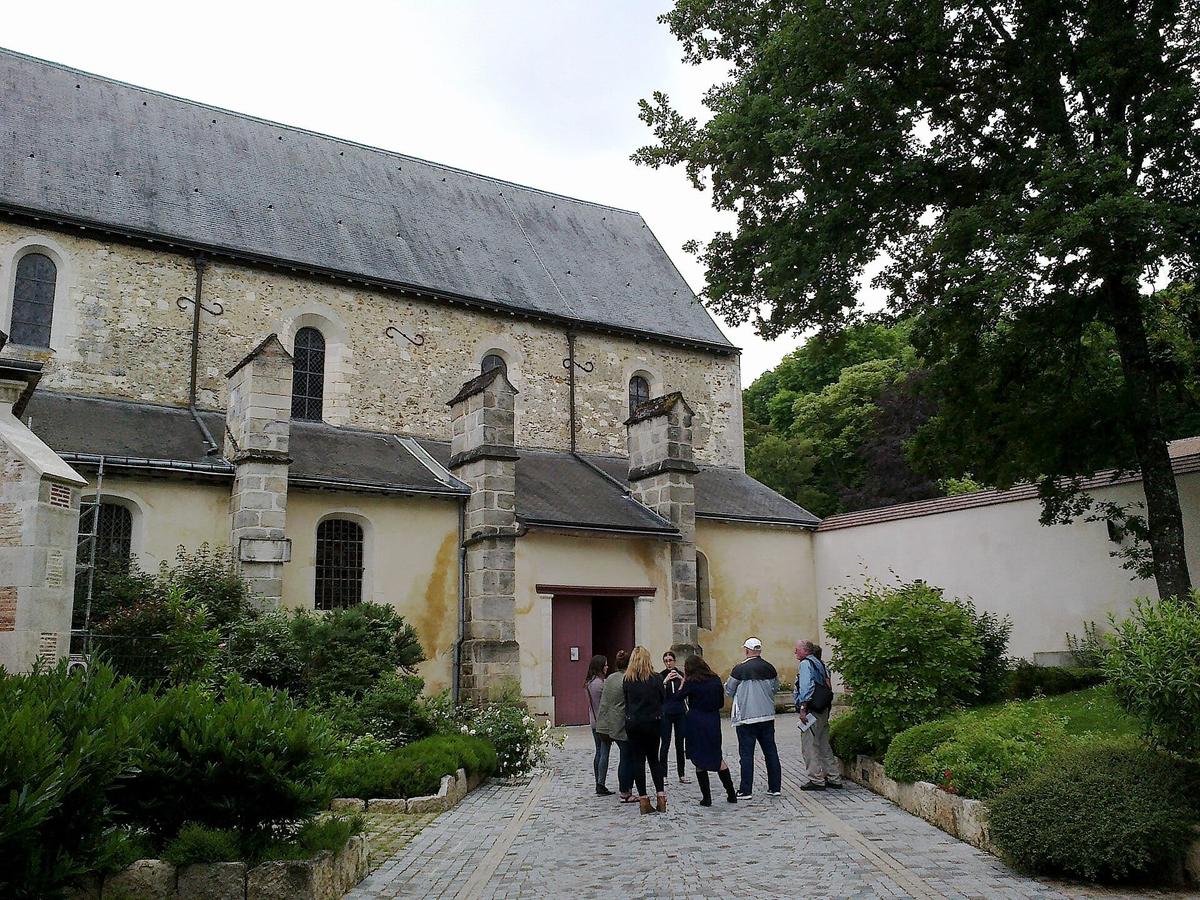
The abbey church of Saint-Sindulphe is the only part of the former abbey open to the public. It belongs to the village, while the monastic buildings belong to Moët & Chandon. You can walk in freely, find the monk's tombstone, and the interior, with its woodwork and paintings, deserves more than a quick glance.
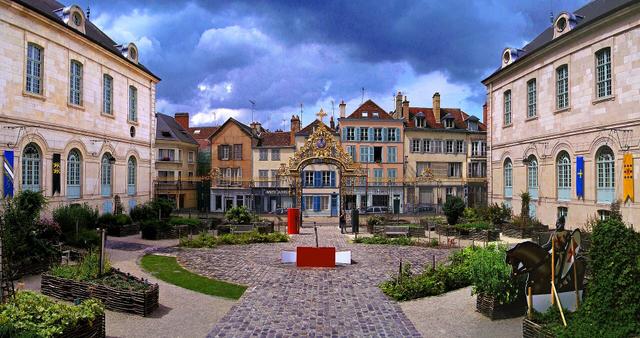
The church is also a good starting point for exploring the village, with its wrought-iron signs and views over vineyards listed as a UNESCO World Heritage Site as part of the "Champagne Hillsides, Houses and Cellars".
Hautvillers Abbey: thirteen centuries of history
Around 650: the foundation. Saint Nivard, Archbishop of Reims, founds the Abbey of Saint-Pierre d'Hautvillers. According to legend, a dove showed him the spot. The monks follow the rules of Saint Benedict and Saint Columbanus.

Carolingian period: the manuscripts. The abbey becomes a centre for copying manuscripts. The Ebbo Gospels are attributed to it and, possibly, the famous Utrecht Psalter.
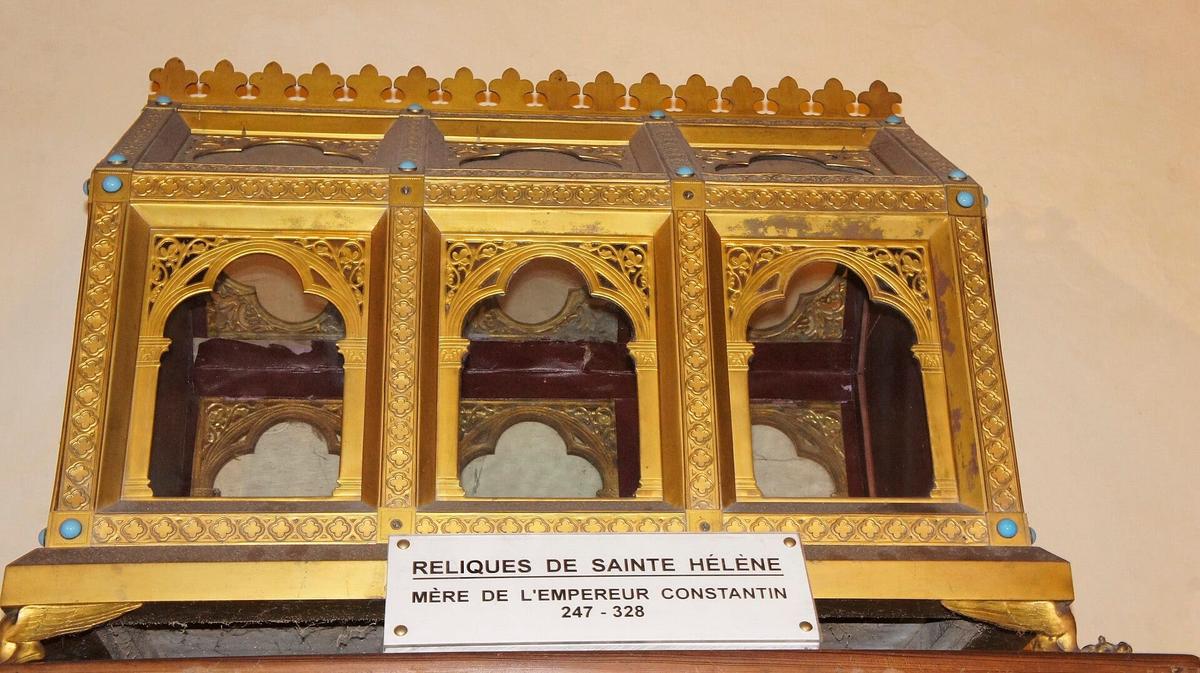
841: the relics of Saint Helena. A priest from Reims brings back from Rome, by stealing it, a relic of Saint Helena, mother of Emperor Constantine. Pilgrims flock in, and their gifts allow the abbey to build up a vineyard of around forty hectares.
1668: Dom Pérignon arrives. Born in Sainte-Menehould (baptised on 5 January 1639), Pierre Pérignon joins Hautvillers at 30 as procurator, in other words the abbey's steward. He stays until his death in 1715.
The French Revolution. The abbey is dissolved and some of its buildings are destroyed. The cellarer hides the relics of Saint Helena; they are now in Paris, in the church of Saint-Leu-Saint-Gilles.
1983: listed as a historic monument. The church and part of the cloister are listed. In 2012, Moët & Chandon restores the cloister and rebuilds the Sainte-Hélène gate exactly as it was, with the state heritage architects.
Did Dom Pérignon invent Champagne?
No. It is the question everyone asks on entering the church, and the answer is clear: Dom Pérignon did not discover how to make wine sparkle. Sparkling wines existed before him, and Charles Perrault was already writing of a "sparkling wine of Champagne" in a verse letter of 1692. At the time, this wine was called "saute-bouchon" (cork-popper) or "devil's wine", because the bottles exploded in the cellars.
His real talent, according to historians, was blending: combining grapes from different plots to make a better and more consistent wine. He tasted the grapes from each vineyard and chose how to mix them.
The legend of the "father of Champagne" appeared more than a century after his death. In 1821, Dom Grossard, the abbey's last procurator, wrote a letter to the deputy mayor of Aÿ crediting his predecessor with inventing sparkling wine. In 1877, the monk was officially proclaimed its inventor, based on a paper by the agronomist Gustave Heuzé.
The famous quote. "Come quickly, I am drinking the stars!" is said to have been Dom Pérignon's reaction on tasting his first Champagne. It is apocryphal: it only appears at the end of the 19th century, in an advertisement.
Where is Dom Pérignon buried?
The tombstone is set in the floor, in front of the choir of the church. It is a plain slab with no decoration. Dom Pérignon lies next to Dom Royer, prior of the abbey, whose slab is beside his.
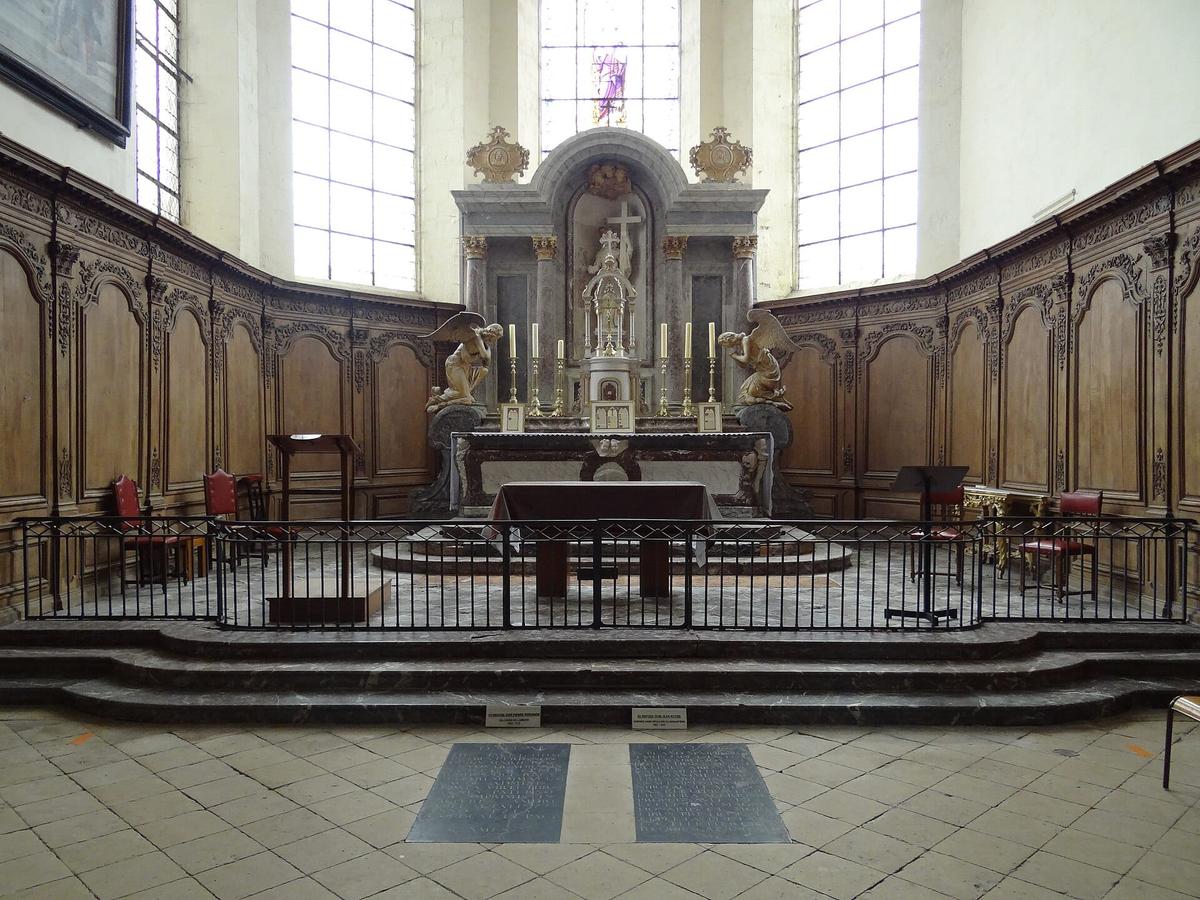

The epitaph is in Latin and begins "HIC JACET DOM PETRUS PERIGNON". It records that he was cellarer of the abbey for 47 years and died aged 77, in 1715. Take the time to read it: it is the only document from his time about the monk that you will see on site.
Please be discreet: the church is still a place of worship, with Mass on the third Sunday of odd-numbered months (except July).
What to see inside the abbey church
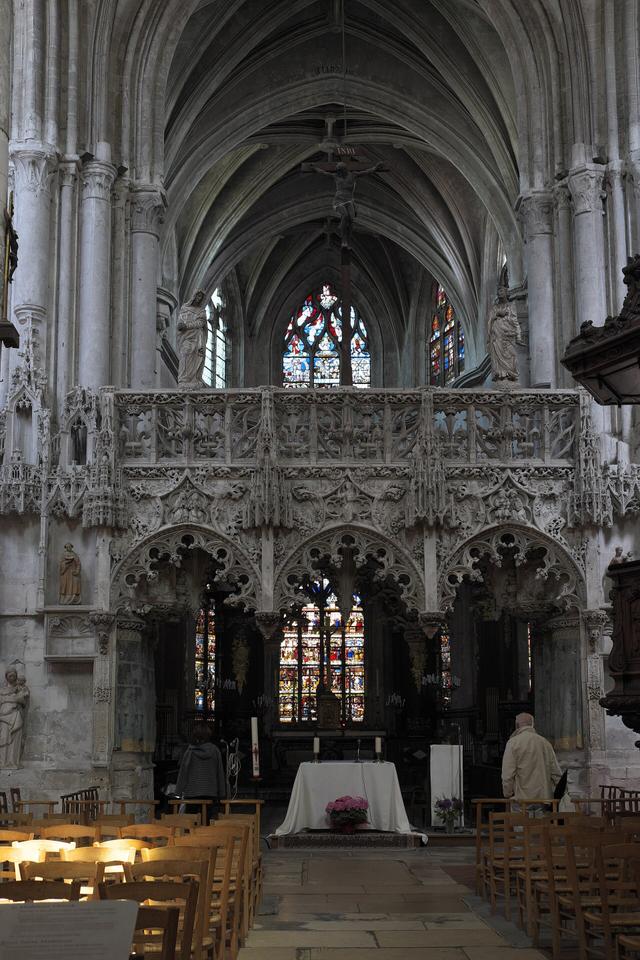
The 16th-century nave. It has a basket-handle ceiling, a low wooden vault that gives the interior a more intimate feel than a large abbey church.
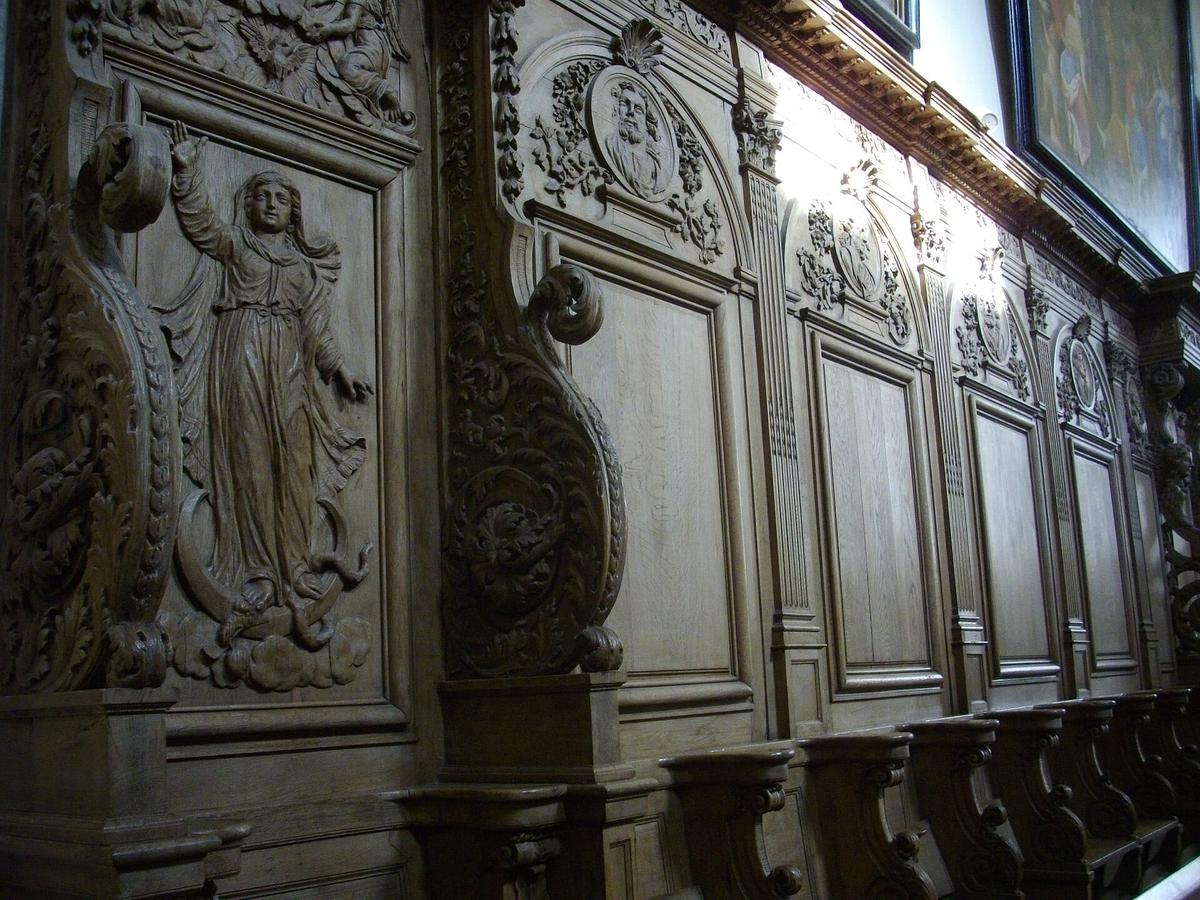

The choir stalls and panelling. The 18th-century stalls and wood panelling line the choir. This is where the monks sang the services. Some stalls are topped with paintings.
The paintings. The church holds many canvases from the 17th and 18th centuries, hung in the nave and the choir.
The Saint Helena chapel. Its Baroque decoration recalls the saint's relics, which made the abbey's fortune for centuries.
A story about the organ. A first organ was built in 1630, rebuilt around 1769, then altered in the 19th century. During the Second World War, around 438 pipes were scattered.
2026 opening hours
The Hautvillers tourist office publishes the following hours:
- Until 31 October: every day 9:00 – 18:00, except Wednesday 9:00 – 16:15.
- From 1 November: every day 9:00 – 16:00.
- Closed: 25 December and 1 January.
The Épernay tourist office, for its part, gives 10:00 – 16:00 from 1 November to 28 February. If you plan to come early in the morning in winter, allow some leeway or call the Hautvillers tourist office on +33 3 26 57 06 35.
Our tip: in summer and at weekends, tour groups mostly arrive in the late morning. Come at opening time to see the grave without waiting, then walk around the village while the coaches arrive.
How much does it cost to visit?
Entry to the church is free. The only possible costs are the guided tours and the village sign trail:
- "Le nez en l'air" guided tour: from €12, about 90 minutes, about the village's wrought-iron signs, in French or English according to the booking page. A tasting at a grower's is available as an option.
- "Sur les pas de dom Pérignon" guided tour (In the footsteps of Dom Pérignon): about 60 minutes, with an optional Champagne tasting at the end. The price is given when you book.
- Self-guided sign trail: a booklet covering 28 signs, sold for €1 at the tourist office.
Do you need to book?
Not for the church, which is free to enter. The tourist office guided tours can be booked online or at the front desk, place de la République. This is where the tours start.
Hautvillers is also included in many Champagne day trips from Reims or Épernay, which combine the village, a Champagne house and a grower:
Partner links: if you book through these links, we earn a commission at no extra cost to you. Partner links · Learn more
How long do you need?
The church alone takes fifteen minutes to half an hour. Add a walk around the village, its signs and the viewpoint, and allow one to two hours. With a guided tour and a tasting, plan for half a day.
What to see in Hautvillers village
The wrought-iron signs. The Hautvillers tourist office counts 140 of them on the house fronts. Put up from the 1960s onwards, they show trades: cooper, blacksmith, cellar master, carpenter. The trail sold at the tourist office picks out 28 of them.

The Dom Pérignon statue. Unveiled in June 2022 in the Parc Pierre Cheval, this bronze statue by Juan Carlos Carrillo, a sculptor from Châlons, is about 3 metres tall and weighs 700 kg.
The Dom Pérignon viewpoint. It looks out over the Marne Valley and the vineyards below. The Croix Joseph panoramic site, towards Saint-Imoges, is another viewpoint.
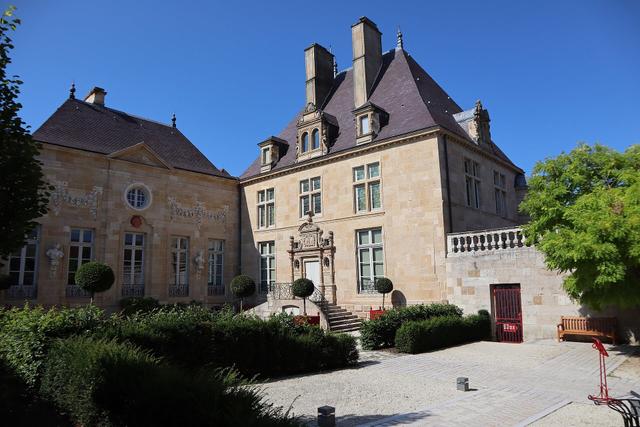
The Abbey of Saint-Pierre. It is not open to visitors, but you can see its gateway and walls from the street, right next to the church.
Hautvillers with kids
The church will not hold young children's attention for long. They will enjoy the village more: hunting for the wrought-iron signs with the tourist office booklet makes a ready-made treasure hunt. The village is on a slope; with a pushchair, stick to the main streets.
How to get to Hautvillers
By car. From Épernay, allow about ten minutes via the Dizy road. From Reims, about 30 minutes. Parking is free: a 9-space car park is in front of the tourist office and another with 47 spaces is about 150 metres away. Coaches park at the Jard Kiedrich.
By bike. The tourist office rents out electric bikes. The climb up from the Marne Valley is steep, so electric assistance is no luxury.
By train. The nearest station is Épernay, with trains to Paris and Reims. From there you need a taxi, a bike or a good uphill walk to reach the village.
Toilets. Free toilets are at the entrance to the church.
Renting a car. To combine Hautvillers, Épernay, Aÿ and the Montagne de Reims, a car is the easiest option, picked up in Reims for example.
What to visit near Hautvillers on the same day
| Also worth seeing | Distance | Travel time |
|---|---|---|
| Avenue de Champagne (Épernay) | 6 km | 10 min by car |
| Pressoria | 7 km | 10 min by car |
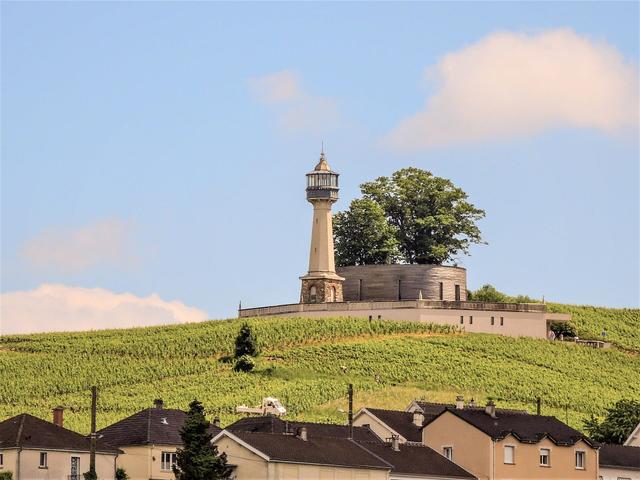
| Verzenay Lighthouse | 25 km | 30 min by car |
Approximate road distances and travel times.
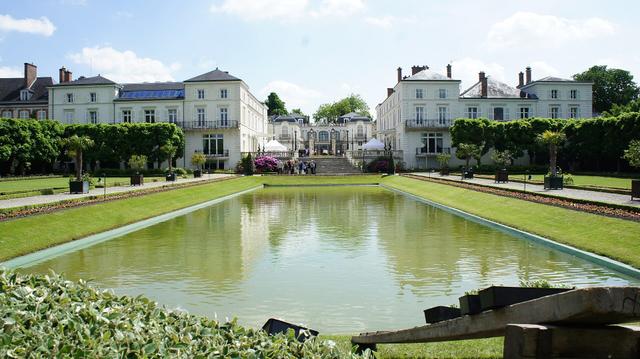
The Avenue de Champagne in Épernay is lined with the great Champagne houses, including Moët & Chandon, owner of Hautvillers Abbey. See also: Avenue de Champagne (Épernay), Moët & Chandon (Épernay) The Champagne wine museum, on the same avenue, explains the history of the vineyards. See also: Château Perrier Champagne museum (Épernay) In Aÿ, across the valley, Pressoria shows how Champagne is made in an interactive way. See also: Pressoria On the road to Reims, the Verzenay lighthouse stands above the vineyards of the Montagne de Reims. See also: Verzenay Lighthouse
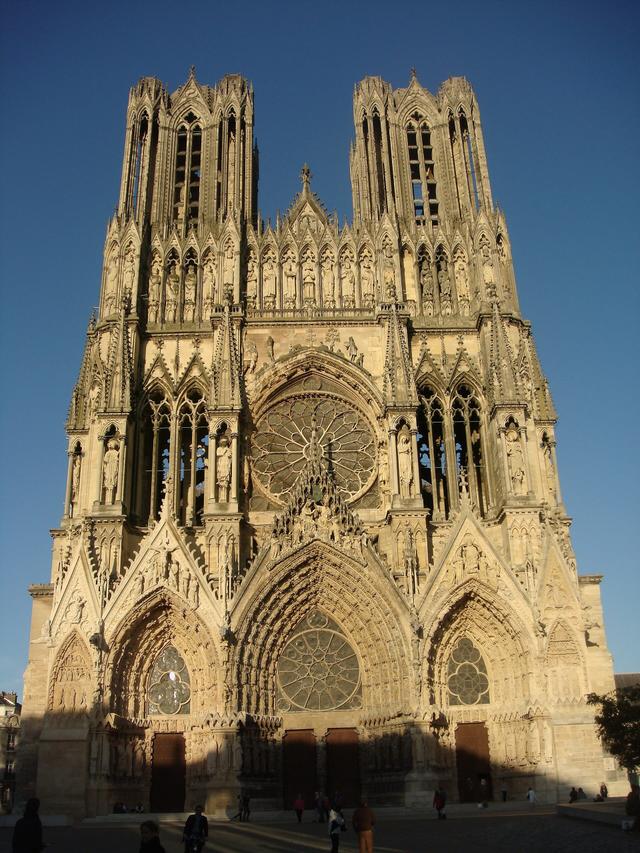
In Reims, the cathedral and the Basilica of Saint-Remi round off a day devoted to the religious history of Champagne. See also: Reims Cathedral, Basilica of Saint-Remi, Reims, Champagne
Where to eat and stay
Hautvillers has several growers offering tastings, and the tourist office can point you to the village restaurants. There is more choice in Épernay, 5 km away.
To stay, Épernay is the most convenient base, with hotels and B&Bs at the foot of the Avenue de Champagne. You will also find B&Bs in the wine villages.
FAQ
Where is Dom Pérignon buried?
In the abbey church of Saint-Sindulphe in Hautvillers, under a slab in front of the choir, next to that of Dom Royer.
Is there an entry fee for Hautvillers church?
No, the church is free to enter.
Can you visit Hautvillers Abbey?
No. The abbey buildings belong to Moët & Chandon and are not open to visitors. Only the church is open to the public.
What are the church's opening hours?
Every day. Until 31 October, 9:00 – 18:00 (Wednesday until 4.15 pm); from 1 November, 9:00 – 16:00. Closed on 25 December and 1 January.
Did Dom Pérignon invent Champagne?
No. Sparkling wines already existed. His main achievement was perfecting the blending of grapes. The legend of the inventor dates from the 19th century.
How do I get to Hautvillers from Épernay?
By car or bike, in about ten minutes for 5 km. Parking near the church is free.
Practical information
Opening hours 2026
| 1 November 2026 to 28 February 2027 | 9:00 – 16:00 |
|---|
Closed: 25 December and 1 January
Official ticket-office prices 2026
Free admission
Address
Rue de l'Église, 51160 Hautvillers, France
Directions · Phone+33 3 26 57 06 35
On site and nearby
- On site: Toilets
- Nearest shops and pharmacy: Dizy, 3 km away Straight-line distance, based on OpenStreetMap.
- Emergencies: 112 (all emergencies, free from any phone), 15 (SAMU, medical emergency)
Around the site, on Google Maps
With children
Family days out nearby: Champagne Mercier cellars (Épernay) (5 km), Château Perrier Champagne museum (Épernay) (5 km), Verzenay Lighthouse (18 km)
Swimming pools and play areas nearby, on Google Maps
Facts checked on 11 November 2026. Sources: tourisme-hautvillers.com, epernay-tourisme.com, fr.wikipedia.org, fr.wikipedia.org, epernay-tourisme.com
Map
In the same region
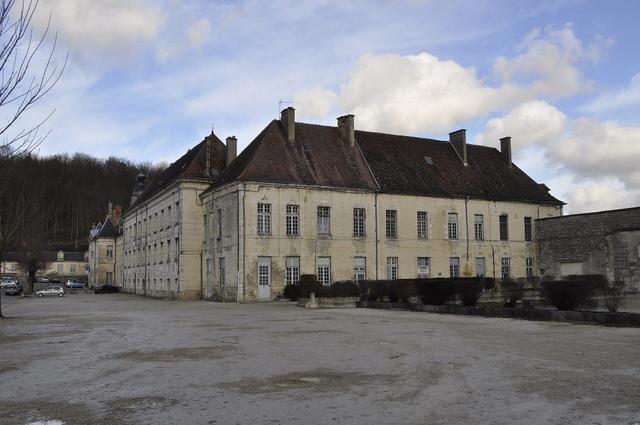
- Taittinger Champagne cellars (Reims)from €40