Basilica of Saint-Urbain, Troyes: planning your visit
Basilica of Saint-Urbain, Troyes at a glance
- 1 November 2026 to 31 March 2027
- 9:30 – 17:00
- Admission
- Free
- Time needed
- about 30 min
- Where
- Troyes
Facts checked on 12 November 2026. Full opening hours, reduced prices and access
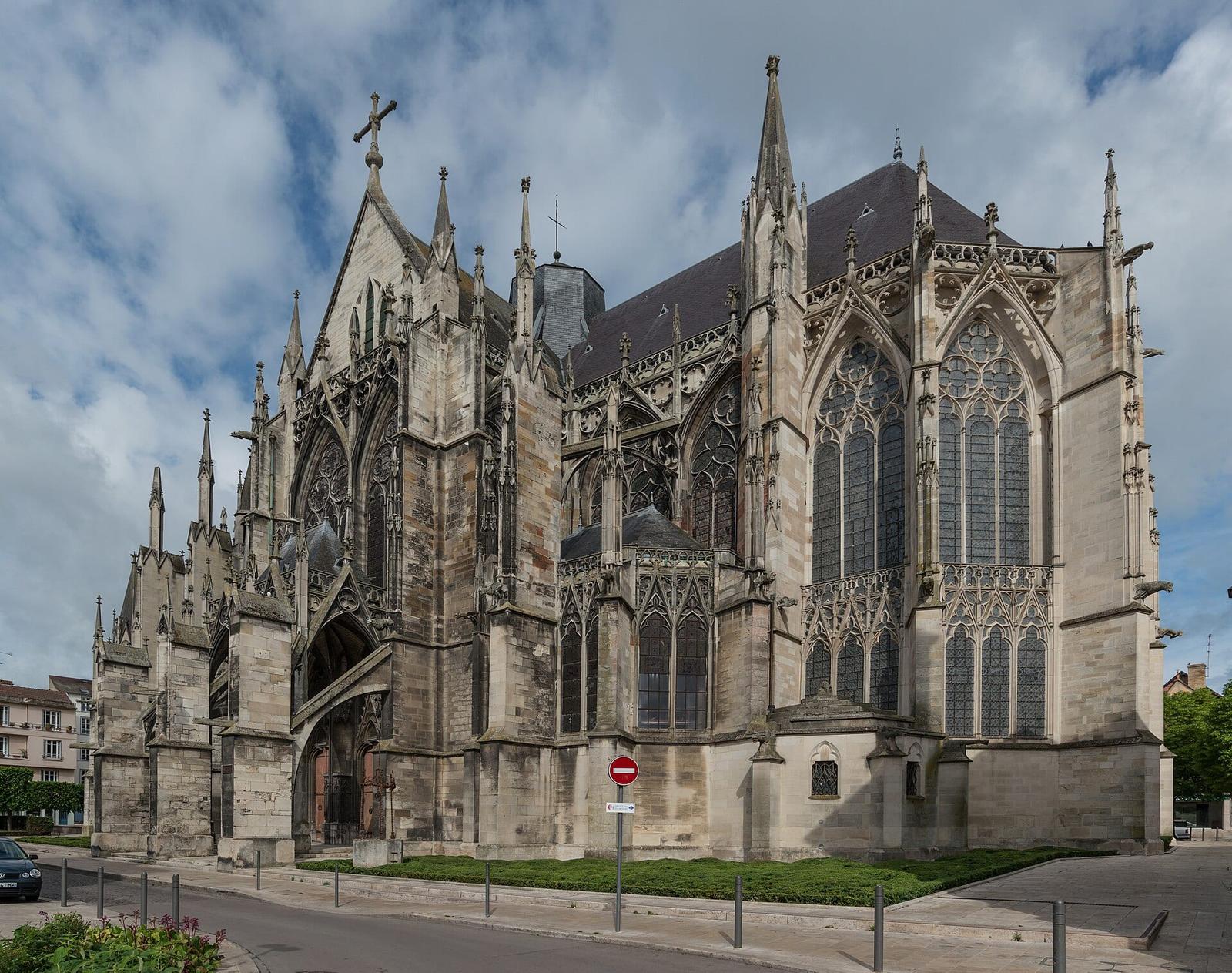

A pope born in Troyes, the son of a shoemaker, has a church built on the site of his father's shop. The abbess next door sends armed men to wreck the building site. What survives is the Basilica of Saint-Urbain, almost a cage of glass, whose choir still has its stained glass from around 1270. Entry is free. Here are the opening hours, what to look for and our tips.
Saint-Urbain Basilica at a glance
- Where: Place Vernier, in the centre of Troyes (Aube), a few minutes' walk from the town hall and the cathedral.
- Price: free entry.
- Winter opening hours: Monday to Saturday 9:30 – 12:30 and 14:00 – 17:00, Sunday afternoon only (14:00 – 17:00), from 1 November 2026 to 31 March 2027.
- Highlights: the stained glass in the choir, the Virgin with the Grapes, the Last Judgement portal, the flying buttresses seen from outside.
- Time needed: about 30 minutes, a little more if you walk round the outside.
- Best for: lovers of Gothic architecture and stained glass, and anyone spending a day in Troyes.
Why visit the Basilica of Saint-Urbain
Compared with Troyes Cathedral, Saint-Urbain is a small church. But it is one of the benchmark buildings of Rayonnant Gothic, often compared with the Sainte-Chapelle in Paris. The Troyes and Aube tourist offices recall its nickname: the "Parthenon of Champagne".
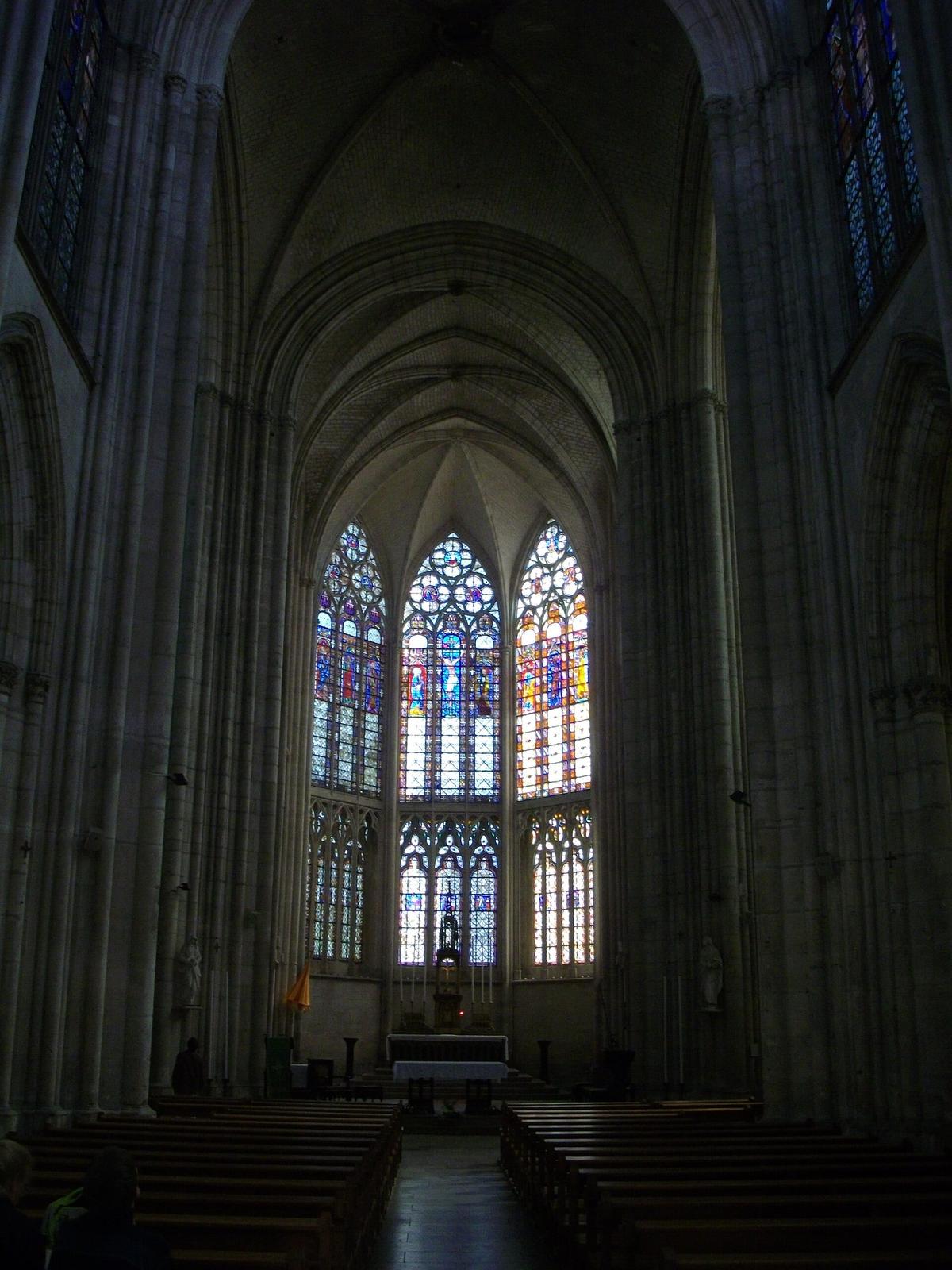

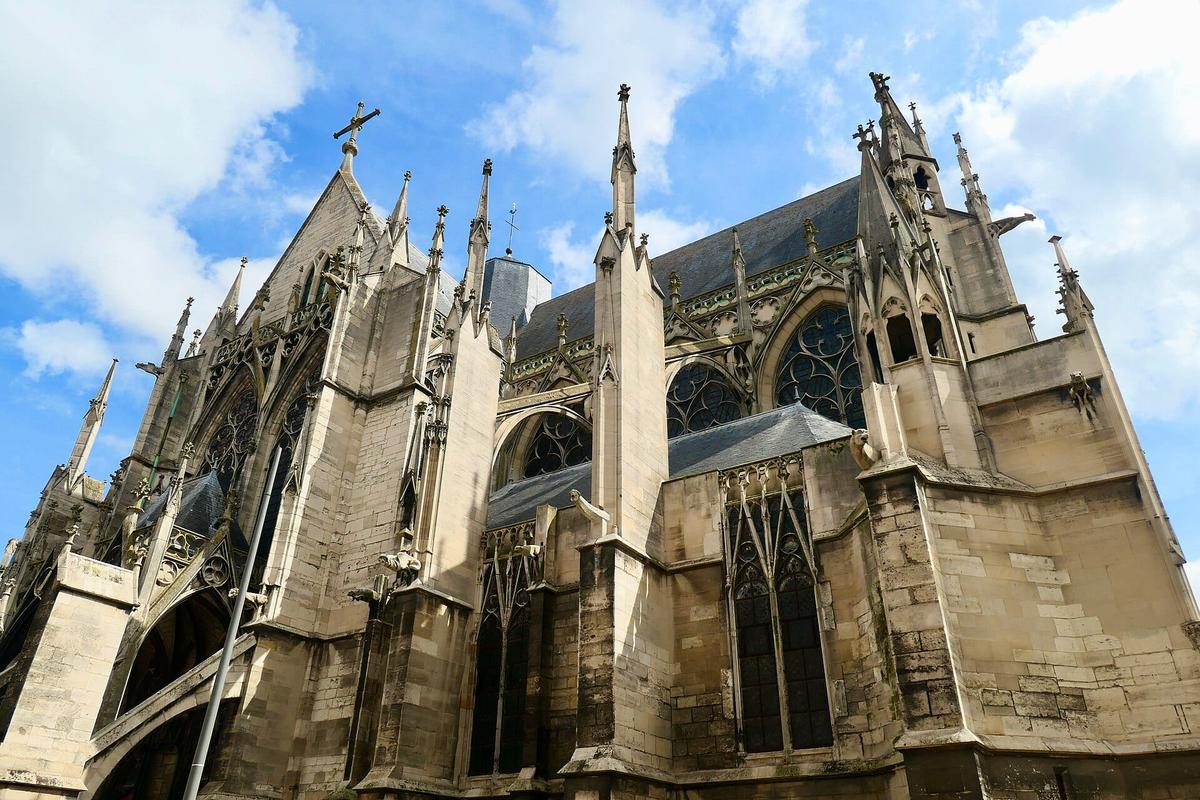
What strikes you is how much of it is glass. The architects did away with the triforium, the usual middle storey of Gothic churches. Only two levels remain: the main arcades below and the clerestory windows above. The thrust of the vaults is carried outside, onto flying buttresses. The walls are reduced to almost nothing, and the windows take up most of the surface. English Wikipedia calls it a "delicate glass cage".
Viollet-le-Duc, the architect who restored Notre-Dame de Paris, admired the building. According to Wikipedia, he saw Saint-Urbain as the finest example of shafts rising in one unbroken line to the vault ribs, with no capitals to interrupt them.
The church has been a listed historic monument since 1840. Pope Paul VI raised it to the rank of minor basilica in 1964.
History of Saint-Urbain: a pope, a shop and an angry abbess
A shoemaker's son who became pope. Jacques Pantaléon was born in Troyes at the end of the 12th century, the son of a shoemaker. He rose through the Church, became Patriarch of Jerusalem, and was elected pope in 1261 as Urban IV. In May 1262, he announced the building of a church in Troyes dedicated to his patron saint, Saint Urban. He wanted it on the site of his father's shop, according to the Troyes tourist office.
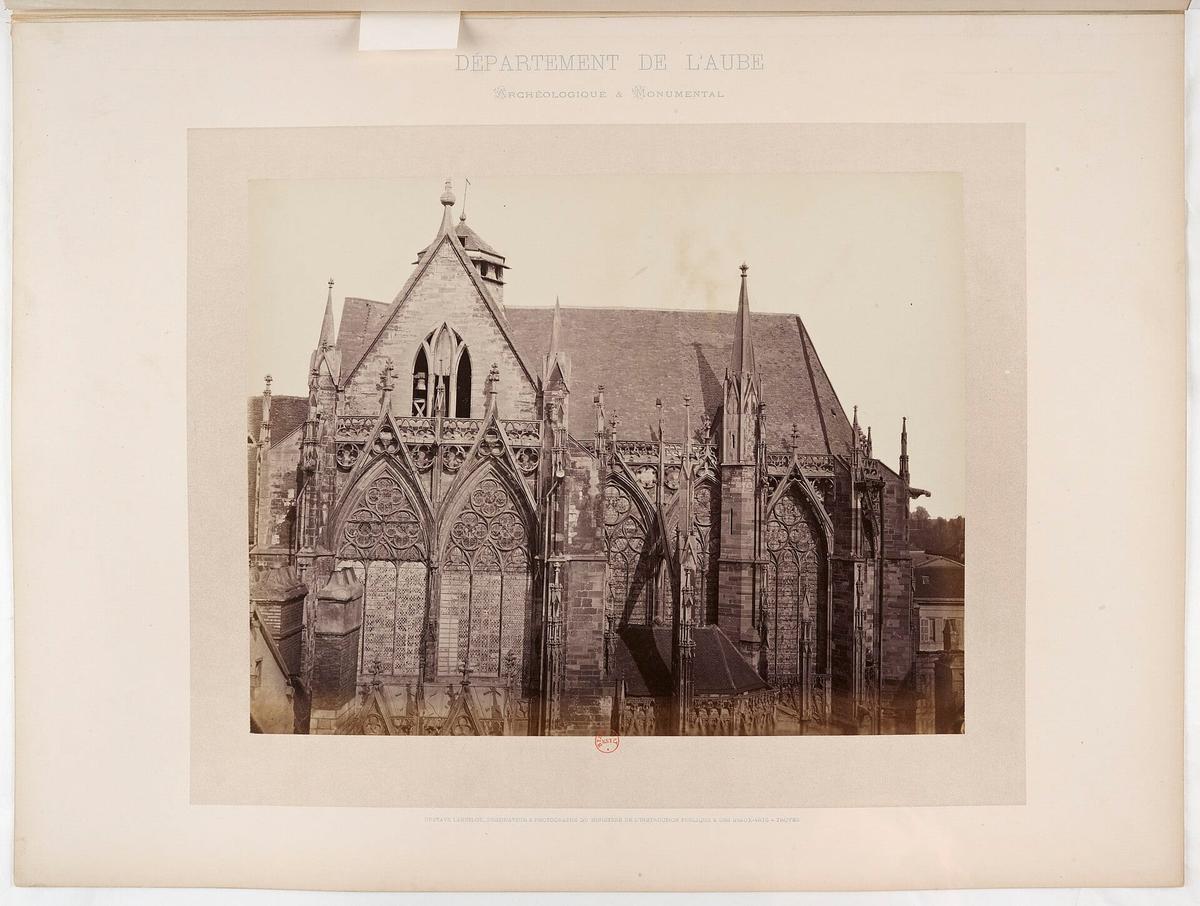

A very fast building site. The master builder was Jean Langlois, a Troyes burgher. The choir and transept went up in a few years. The high altar was consecrated in October 1265. Urban IV never saw his church: he died in 1264 and was buried in Perugia, Italy. His nephew, Cardinal Ancher, took over and oversaw the work.
The abbess against the pope. The project upset its neighbour, the abbey of Notre-Dame-aux-Nonnains. The new church lay outside its authority, and Abbess Ode de Pougy opposed it by force. In 1266, her people attacked the building site. A few months later, a fire destroyed the timber roof of the choir. In 1268, armed men paid by the nuns stopped the Archbishop of Tyre and the Bishop of Auxerre from blessing the new cemetery. On 15 July 1268, Pope Clement IV excommunicated the abbess and her accomplices. The sentence was only lifted in 1283, by Martin IV.
Six centuries to finish. After that burst of activity, money ran out. Most of the church was built between 1262 and 1286, but the nave was left unfinished under a wooden vault. The church was nevertheless consecrated in 1389. In 1761, lightning set fire to the 34 m spire, which the chapter then had pulled down. During the Revolution, the building was used as a granary and a storehouse.
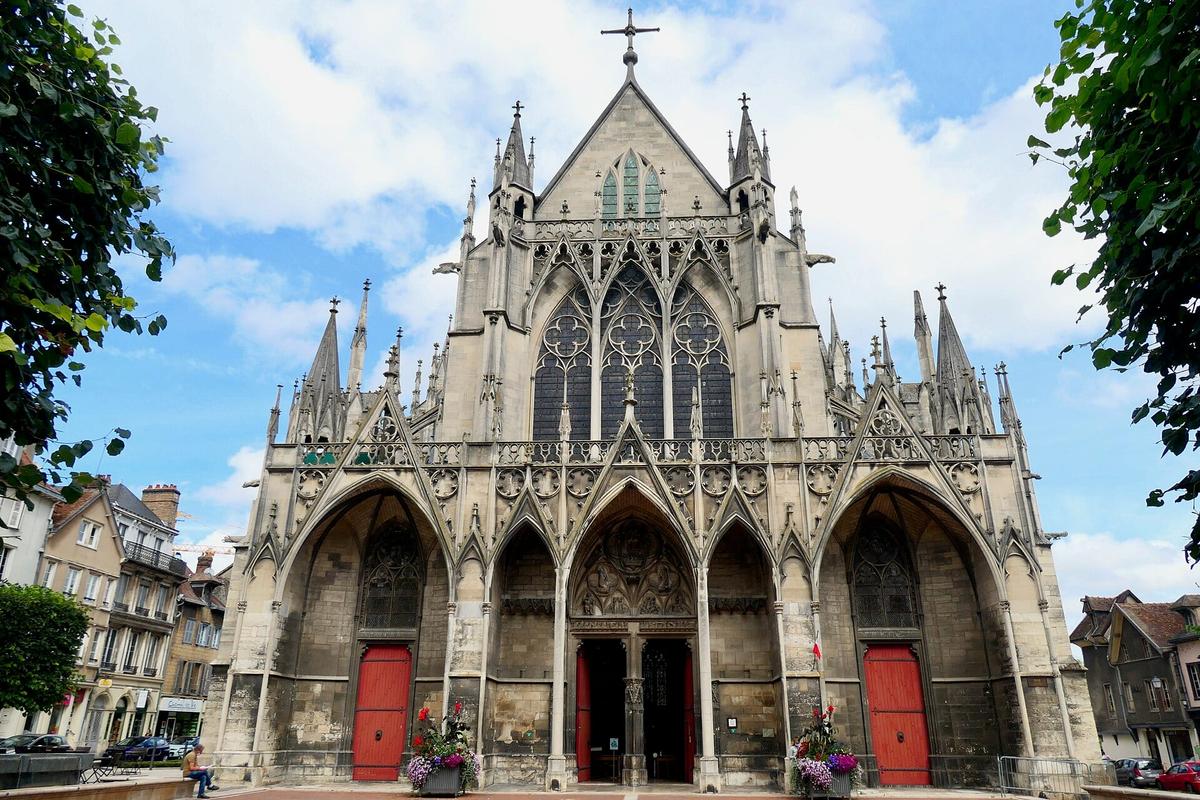
Only at the end of the 19th century did the architect Paul Selmersheim complete the nave, following the original plan. The west portal was not finished until 1905. Finally, in 1935, the remains of Urban IV were brought from Perugia to Troyes, to the church he had wanted.
How much does it cost to visit Saint-Urbain?
Nothing. Entry is free, as the Troyes La Champagne tourist office states. You can walk in during opening hours.
As in any working church, visits stop during services. Be discreet if a Mass or funeral is under way, and come back a little later to see the choir.
Saint-Urbain opening hours 2026
Hours published by the Troyes tourist office and by Aube en Champagne for the period from 1 November 2026 to 31 March 2027:
- Monday to Saturday: 9:30 – 12:30 and 14:00 – 17:00.
- Sunday: afternoon only, 14:00 – 17:00.
The basilica closes from 12.30 pm to 2 pm. This is the classic trap: you come out of the market at midday and find the door shut. Do not count on visiting on Sunday morning.
What about from April? The spring and summer 2026 hours were no longer listed when we checked (12 November 2026), and those for the next season had not yet been published. Before visiting between April and October, check the tourist office website or give them a call.
Our tip: the 13th-century stained glass is in the choir, at the east end. Come in the morning on a clear day if you can: the sun then shines through those windows and the colours light up. On a grey day, the difference is obvious. In winter, the light fades quickly in the late afternoon: aim for opening time, at 9.30 am.
What to see inside the basilica
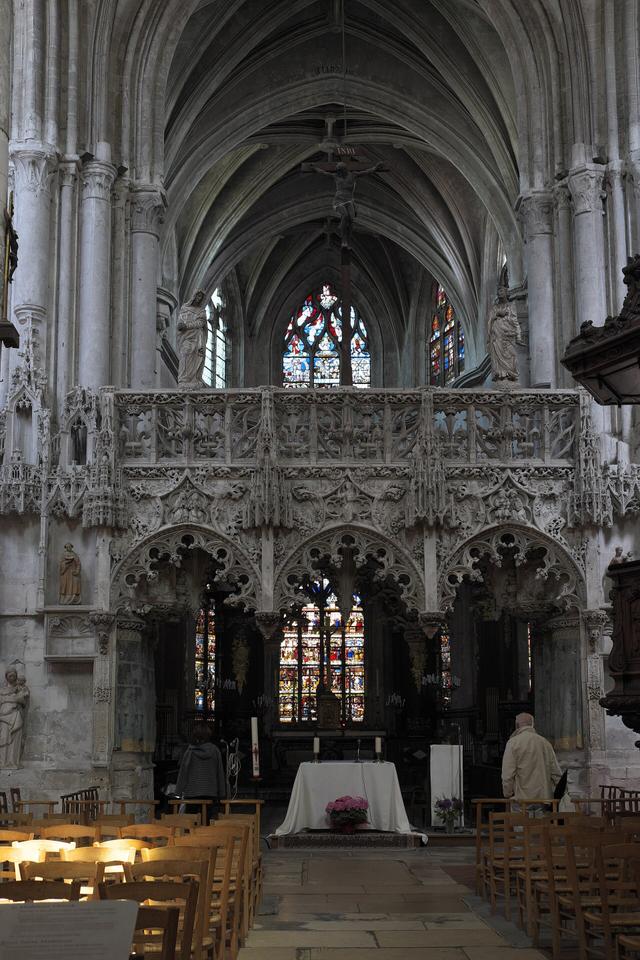
The stained glass in the choir. This is the main reason to come. The transept and choir have kept their original windows, put in around 1270 and restored in 1992, according to the tourist office. Look at how they are composed: full-colour figures in two rows, framed by wide areas of grisaille, clear glass painted with grey patterns. It is this mix that lets in so much light. Pick out the series of patriarchs, in grisaille windows from around the same time.
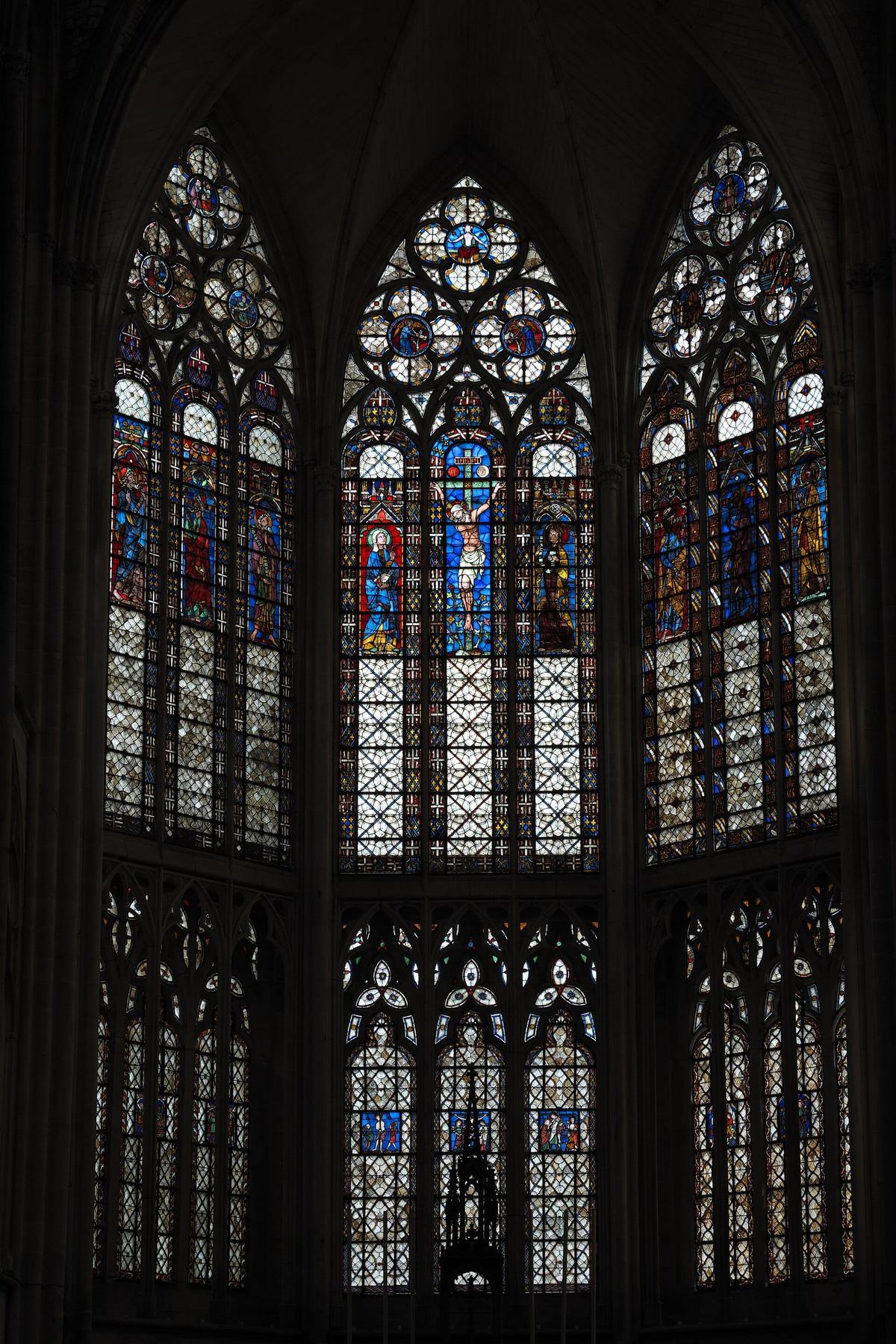

The windows of the life of Saint Urban. In the north aisle, 16 panels tell the life of the saint the church is dedicated to. They were restored at the end of the 19th century. In the north chapel, look out too for the 13th-century Visitation window.
The Virgin with the Grapes (Vierge au raisin). This 16th-century statue, in the chapel of the south aisle, is the church's most famous work after the stained glass. It comes from the Troyes school of sculpture, which was very active in the Renaissance. The bunch of grapes that gives it its name speaks volumes in a wine region. It is a listed historic object.
The 13th-century piscina. Near the altar, a large stone niche was used for the priest's ablutions. It shows the Coronation of the Virgin, with Urban IV and Cardinal Ancher as donors. English Wikipedia notes its unusual size.
The baptismal font. It dates from the 15th century and comes from another Troyes church, Saint-Pierre-aux-Nonnains.
The tomb slabs. The floor keeps gravestones from the 14th to the 16th centuries, and a transi of the Cauchon-Maupas family dated 1570. A transi is a sculpture showing the dead person as a corpse: a way of reminding the living of death.
What to look for outside
Don't leave without walking round the church. It is outside that you understand how it stands up.

The flying buttresses. They carry the vaults and allow the walls to be almost entirely glass. Walk round by the east end to see them soar.
The Last Judgement portal. The west portal was only completed in 1905, but its tympanum is 13th-century. It shows the Last Judgement, with the saved on one side and the damned on the other.
The north porch. It is sheltered by a very fine, openwork stone canopy that shows the skill of 13th-century sculptors.
How long does it take to visit Saint-Urbain?
Allow about 30 minutes inside to look at the choir windows, the Virgin with the Grapes and the piscina. Add a quarter of an hour to walk round the outside. Saint-Urbain fits easily into a morning in Troyes, with the cathedral and the Cité du Vitrail close by.

Bring binoculars or a camera with a good zoom. The finest windows are high up in the choir, and the details are hard to make out with the naked eye.
Can you take a guided tour?
The self-guided visit needs no booking. The Troyes La Champagne tourist office lists guided tours of the basilica among its services, without publishing dates or prices on the monument's page. The Aube department's 2026 booklet on the churches of the Aube says that the ten Catholic churches of Troyes can be visited on your own or with a tourist office guide. To find out when a guided tour includes Saint-Urbain, ask at the tourist office.
Concerts are also held in the basilica. They are listed in the tourist office's events calendar.
To explore the old centre of Troyes, its half-timbered houses and narrow lanes, tours and activities can be booked online:
Partner links: if you book through these links, we earn a commission at no extra cost to you. Partner links · Learn more
Accessibility
Neither the tourist office nor Aube en Champagne gives information on wheelchair access. Check with the tourist office before you come.
How to get to the Basilica of Saint-Urbain
By train. Troyes station is about 1 hr 30 from Paris-Est. The basilica is about fifteen minutes' walk from the station, across the centre.
By car. Troyes is served by the A5 (from Paris and Dijon) and the A26 (from Reims). Place Vernier is in the old town, with narrow streets: leave the car in a central car park and finish on foot.
On foot in Troyes. Saint-Urbain is a stone's throw from the town hall and the shopping streets. The cathedral is on the other side of the canal, in the Cité quarter, less than ten minutes away. The Cité du Vitrail is even closer.
What to combine it with
| Also worth seeing | Distance | Travel time |
|---|---|---|
| Cité du Vitrail (Troyes stained glass museum) | 0.3 km | 4 min on foot |
| Troyes Cathedral | 0.6 km | 8 min on foot |
| Maison de l'Outil tool museum (Troyes) | 0.6 km | 8 min on foot |
Approximate road distances and travel times.
Saint-Urbain makes most sense on a day devoted to stained glass. At the Cité du Vitrail, in the Hôtel-Dieu-le-Comte, you see stained glass up close, at eye level, which the basilica does not allow. See also: Cité du Vitrail (Troyes stained glass museum) The Cathedral of Saint-Pierre-et-Saint-Paul completes the lesson with about 1,500 m² of stained glass from the 13th to the 17th centuries and the famous Mystic Wine Press window. Comparing the two is fascinating: the cathedral took four centuries to build, while Saint-Urbain was conceived in one go. See also: Troyes Cathedral
The Maison de l'Outil et de la Pensée ouvrière (museum of tools and craftsmanship), in a Renaissance mansion in the centre, is a few minutes away. See also: Maison de l'Outil tool museum (Troyes)
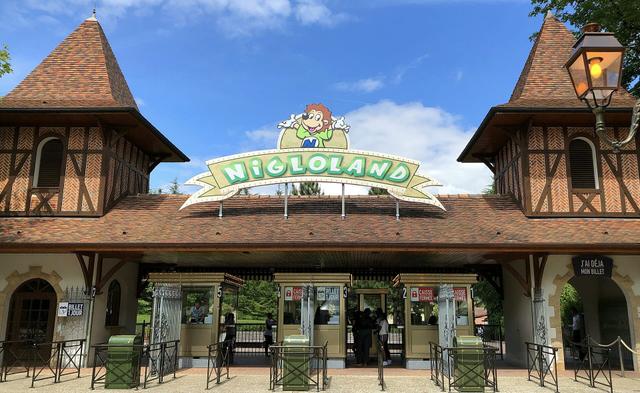
Outside the city, Clairvaux Abbey, founded by Saint Bernard, can be visited to the south-east. See also: Clairvaux Abbey To the west, towards Nogent-sur-Seine, the Château de la Motte-Tilly is an 18th-century house with its park. See also: Château de La Motte-Tilly With children, the Nigloland theme park is a change of scene. See also: Nigloland
If you head north towards the Marne, the Basilica of Notre-Dame de l'Épine, near Châlons, and Reims Cathedral are the two other great Gothic stops in the region. See also: Basilica of Notre-Dame de l'Épine, Reims Cathedral, Champagne
Where to eat and stay in Troyes
The basilica is in the heart of the old town: restaurants are a few steps away. The streets around Place de l'Hôtel-de-Ville and Rue Champeaux are the liveliest. Try andouillette de Troyes, the local speciality.
To stay, choose the historic centre. You can do everything on foot: Saint-Urbain, the cathedral, the Cité du Vitrail and the museums. Troyes is also a good base for the lakes of the Forêt d'Orient and for the Côte des Bar, the Aube's champagne vineyards.
FAQ
Is there an entry fee for the Basilica of Saint-Urbain?
No, entry is free.
What are the Basilica of Saint-Urbain's opening hours?
In winter, Monday to Saturday 9:30 – 12:30 and 14:00 – 17:00, and Sunday 14:00 – 17:00. For April to October, check with the tourist office.
Why is it called Saint-Urbain?
It was founded by Pope Urban IV, who was born in Troyes, and dedicated to his patron saint, Saint Urban. It stands where his father's shoemaker's shop used to be.
How old is the stained glass?
The windows in the choir and transept are original and date from around 1270. Other windows, in the nave, date from the late 19th and early 20th centuries.
Where is the Virgin with the Grapes?
In the chapel of the south aisle. It is a 16th-century statue from the Troyes school.
How long does a visit take?
About 30 minutes inside, three quarters of an hour with a walk round the outside.
Practical information
Opening hours 2026
| 1 November 2026 to 31 March 2027 | 9:30 – 17:00 |
|---|
Official ticket-office prices 2026
Free admission
Address
Basilique Saint-Urbain, place Vernier, 10000 Troyes, France
Directions
On site and nearby
- Nearest shops and pharmacy: Troyes, less than 1 km away Straight-line distance, based on OpenStreetMap.
- Emergencies: 112 (all emergencies, free from any phone), 15 (SAMU, medical emergency)
Around the site, on Google Maps
With children
Family days out nearby: Maison de l'Outil tool museum (Troyes) (0 km), Nigloland (40 km), Château de La Motte-Tilly (51 km)
Swimming pools and play areas nearby, on Google Maps
Facts checked on 12 November 2026. Sources: en.troyeslachampagne.com, fr.wikipedia.org, en.wikipedia.org, aube-champagne.com
Map
In the same region
- Taittinger Champagne cellars (Reims)from €40