Langres ramparts: walking round the fortified town
Langres ramparts at a glance
- Admission
- Free
- Free
- under 12
- Time needed
- about 2 h
- Where
- Langres
Facts checked on 12 November 2026. Full opening hours, reduced prices and access
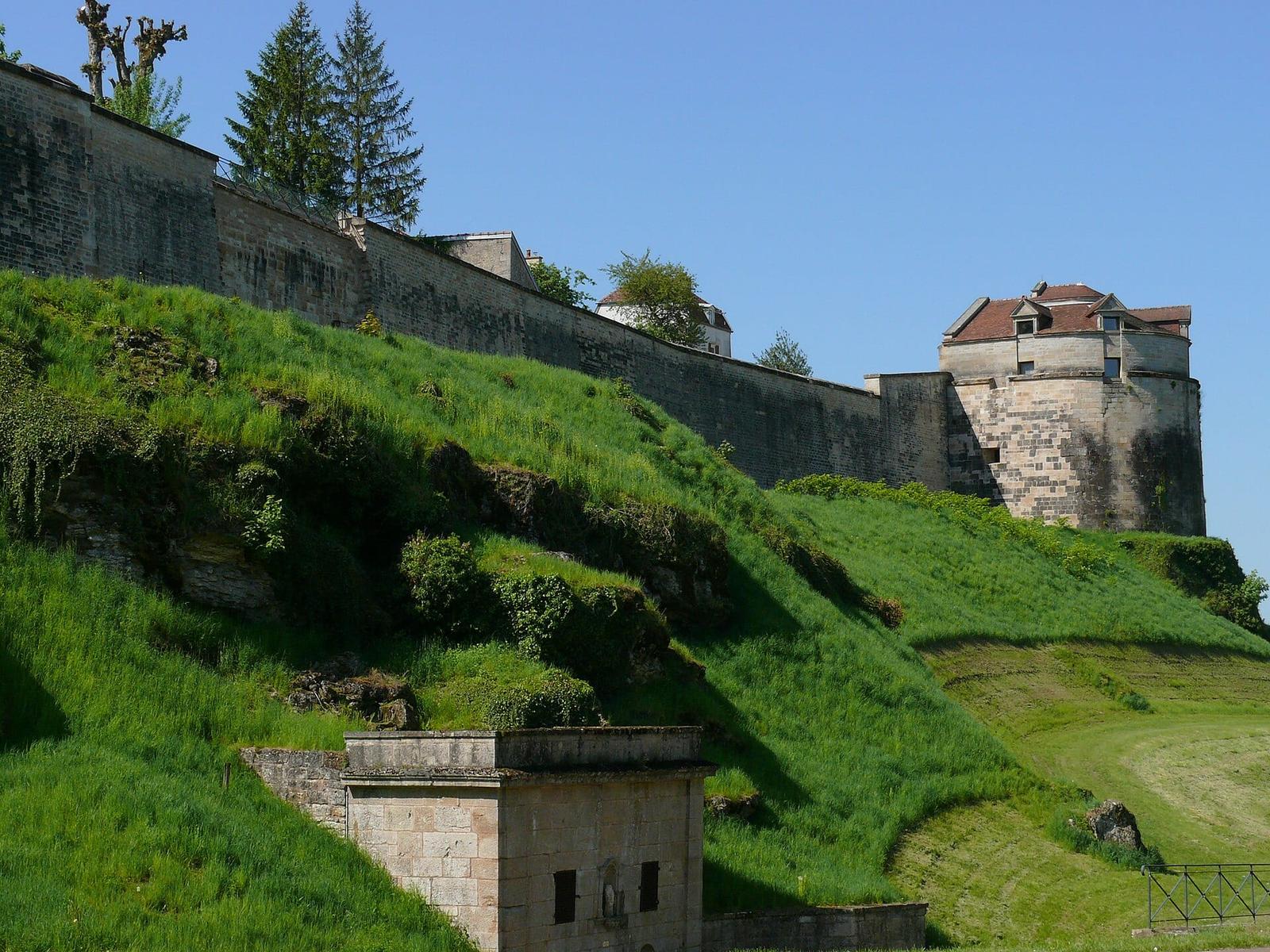

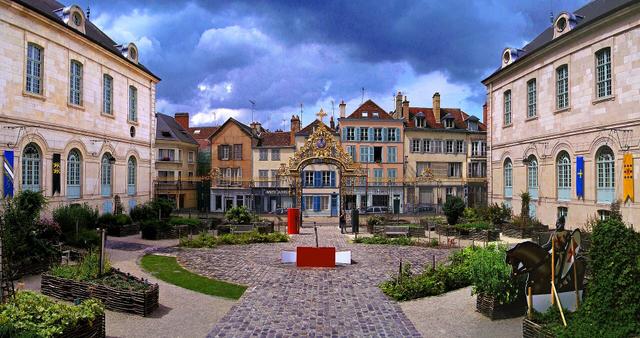
Perched on a spur above the plateau, Langres is still completely enclosed by its walls. The wall walk circles the old town without a single step, from tower to gate, with views as far as the Vosges on a clear day. Here is how to do the walk, what the Tour de Navarre costs, the opening hours and our tips for making the most of it.
Langres ramparts at a glance
- Where: around the old town of Langres, in the Haute-Marne department, a few minutes from exits 6 and 7 of the A31 motorway.
- Price: the ramparts walk is free, all year round. The Tour de Navarre costs €5 (€3.50 reduced), free for children under 12 with their family.
- Length: a 3.5 km loop, with only 46 m of height difference.
- Time needed: about 120 minutes on foot at an easy pace, 50 minutes by tourist train.
- Tour de Navarre: open from April to the end of September, in the afternoon from Wednesday to Sunday, every day in July and August. Closed from October to March.
- Best for: everyone. The wall walk is flat, can be done on foot, by bike or with a pushchair, and dogs are allowed.
Why walk the Langres ramparts
Langres is one of the few towns in France whose walls have survived almost intact. The wall walk follows the ramparts for 3.5 km, past 12 towers and several gates. According to the Haute-Marne tourist board, these walls sum up nearly 17 centuries of military history, from Antiquity to the end of the 19th century.
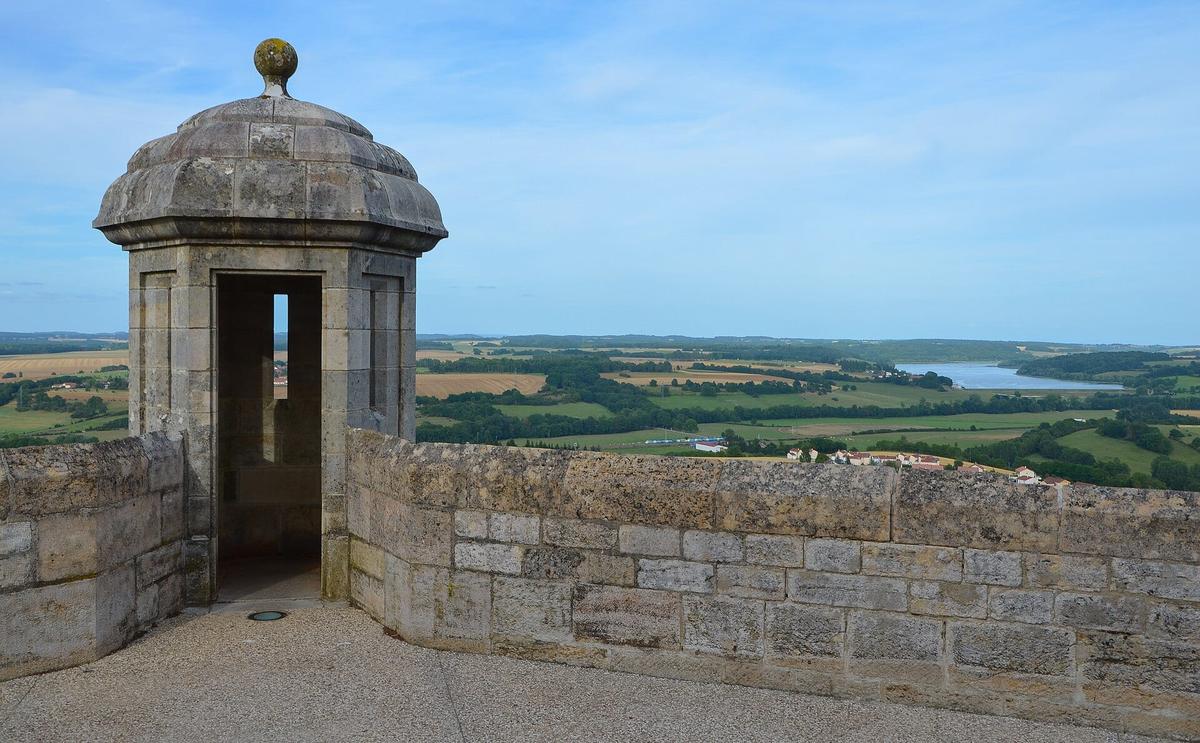

The other draw is the view. The town stands at about 475 m above sea level, on a limestone spur between the Marne and Bonnelle valleys. To the west, you look out over the Langres plateau. To the east, on a clear day, you can make out the Vosges and Jura mountains.
Finally, it is an easy walk. The wall walk has no steps. You can do it on foot, by bike, on a scooter, in a rosalie (a pedal car) or by tourist train. It runs past houses, hanging gardens and old barracks, which makes the walk feel very lively.
Seventeen centuries of walls: a short history
Antiquity. Langres was called Andemantunnum. It was the capital of the Lingones, a Gallic people. The oldest visible trace is a Gallo-Roman gate dating from around 20 BC, later built into the walls. After an attack in 264, the inhabitants built a first wall on the north side of the town. According to tradition, Bishop Saint Didier was beheaded during this attack while pleading for his people before an Alamannic chief.

The Middle Ages. The town spread south and the walls followed. The Sous-Murs suburb was enclosed in 1266, then a new southern rampart went up around 1347. In 1360, the Dauphin granted the people of Langres privileges in exchange for building the southern walls and casting cannons. It is one of the earliest known examples of a town making its own artillery.
The Renaissance and artillery. With cannons, the walls had to get thicker. Louis XI had the Tour Saint-Ferjeux built in 1471, the first part of the walls designed for cannon fire. Then came the Tour de Navarre, begun in 1512. In 1569, Jean II du Châtelet added the Tour Piquante, the only bastion in the walls.
The 19th century. In 1814, around 15,000 Austrian, Russian and Prussian soldiers took the town, whose defences had not changed since Louis XIV. The army responded: work on the citadel began in 1841, 600 m from the old town. Langres became a "two-headed fortress". Between 1875 and 1905, a ring of forts was built on the surrounding hills.
How much does it cost to visit the Langres ramparts?
The wall walk is free. It is part of the town: you can get on it through any gate, at any time, with no ticket.
The Tour de Navarre charges admission. 2026 prices published by the Haute-Marne tourist board, which runs the tower:
- Adult: €5.
- Reduced rate (students, jobseekers): €3.50.
- Children under 12 with their family: free.
- Treasure-trail booklet for children: €0.50.
Payment. The official listing only mentions cash and cheques. Bring some cash.
The tourist train. It goes round the ramparts in 50 minutes, with a commentary in French and music:
- Adult: €7.75.
- Child aged 4 to 12: €5.30.
- Under 4 with an adult: free.
Tickets are sold at the tourist office, Square Olivier-Lahalle, where the train leaves from.
Groups. The Tour de Navarre can be visited on request all year round by groups of 20 to 55 people. There is no coach parking in front of the tower.
Do you need to book?
No. The wall walk is open access, and the Tour de Navarre can be visited without booking during opening hours. In summer, seats on the tourist train can go fast on sunny days: drop in at the tourist office as soon as you arrive to choose your departure.
There are no online tickets for Langres on the big booking platforms. If you are looking for a guided tour of the town, the tourist board runs themed tours and short "flash" tours in summer. In July 2026, a flash tour of the Tour de Navarre lasting about 30 minutes was offered at 10.30 am in French and at 11 am in English.
Partner links: if you book through these links, we earn a commission at no extra cost to you. Partner links · Learn more
Guided tours and day trips on GetYourGuide
Tour de Navarre opening hours 2026
The wall walk is open every day, all year round. Opening hours only apply to the Tour de Navarre:
- 1 April to 5 July: 14:00 – 18:00, Wednesday to Sunday. Closed on Mondays and Tuesdays.
- 6 July to 30 August: 10:30 – 12:30 / 14:00 – 18:00, every day.
- 31 August to 27 September: 14:00 – 18:00, Wednesday to Sunday.
- October to March: closed to individual visitors.
The ticket office closes at 17:30. If you reach Langres late in the afternoon, start with the tower.
The tourist train runs from April to September: on Wednesdays, Sundays and public holidays in April; on Wednesdays, Saturdays, Sundays and public holidays in May, June and September; and every day in July and August.
In winter, the ramparts walk is still possible and often very beautiful, but the town is exposed to the wind on its spur. Wrap up warm.
How long does the Langres ramparts walk take?
The tourist board gives 120 minutes on foot for the 3.5 km loop. That is a strolling pace, with stops at the viewpoints. A brisk walker can do it in an hour. Add half an hour to 45 minutes for the Tour de Navarre.
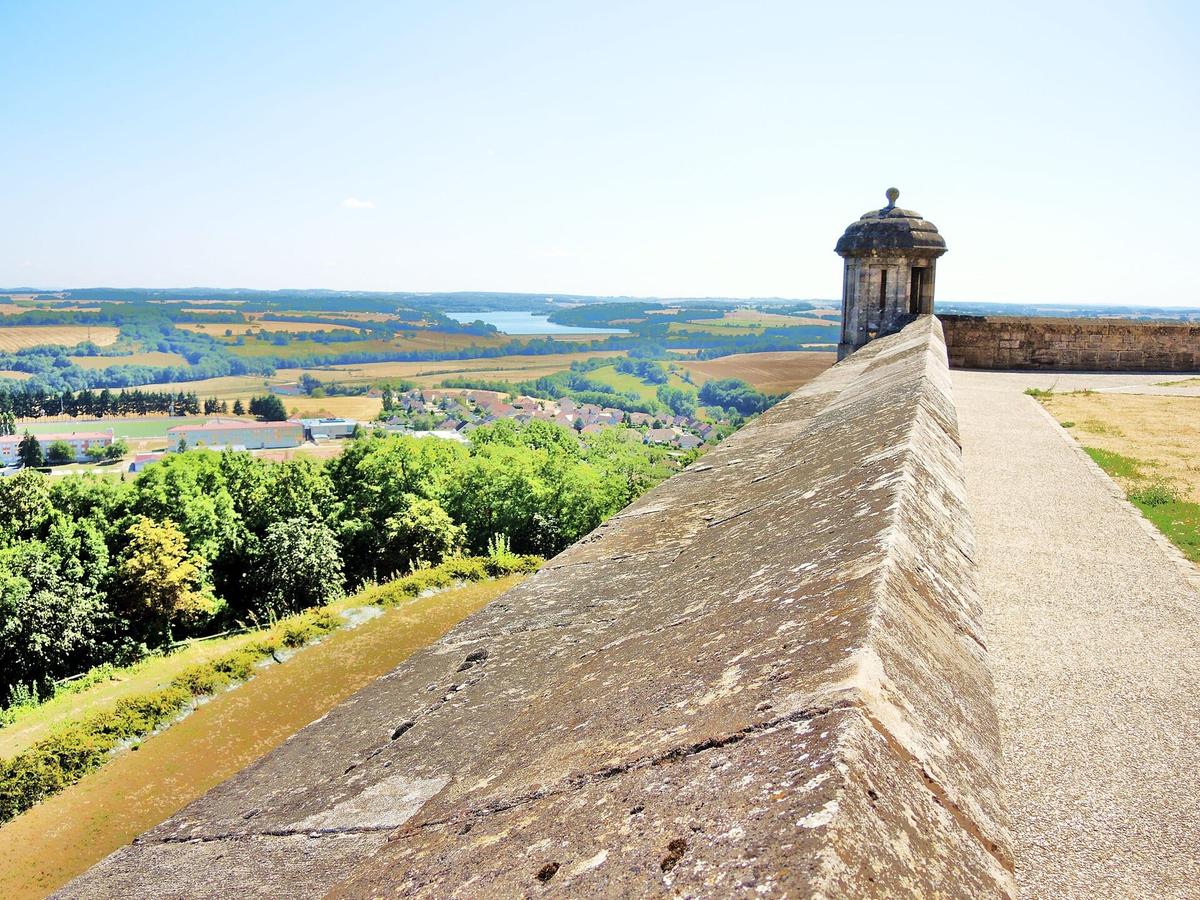

For a full day in Langres, do the ramparts in the morning, Saint-Mammès Cathedral and Place Diderot at midday, then the Maison des Lumières Denis Diderot in the afternoon. See also: Maison des Lumières Denis Diderot
What to see on the Langres ramparts
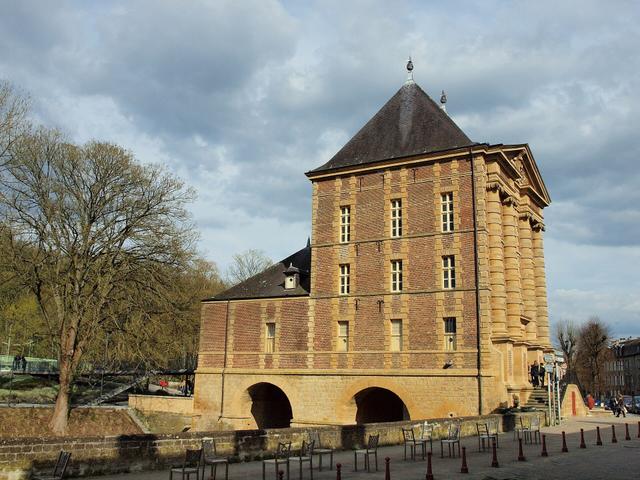
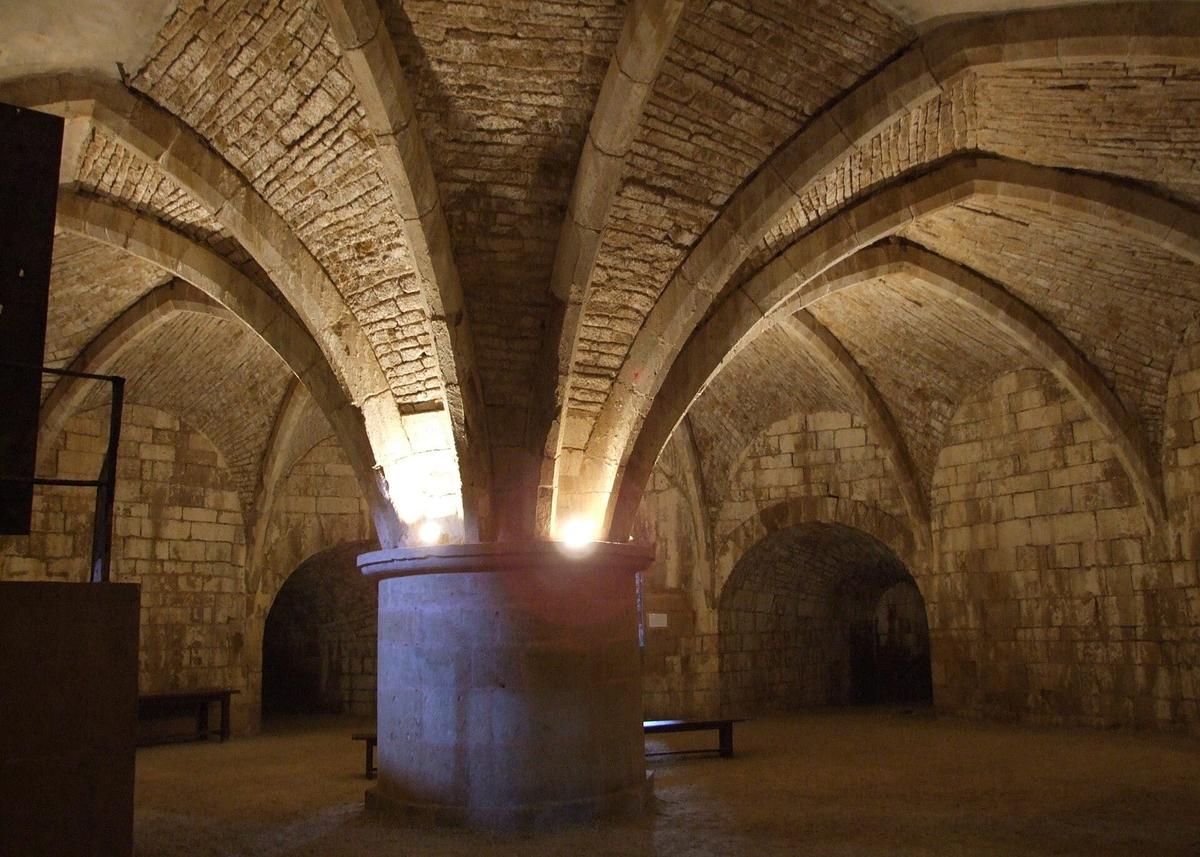
The Tour de Navarre. This is the centrepiece of the walls. The artillery tower is 28 m across and 20 m high. Its walls are 7 m thick and contain two vaulted rooms and about twenty gun ports on four levels. It was almost finished in 1515, after four years of work, and inaugurated by Francis I in 1521. It was later raised by 2.5 m so the cannons could fire further.
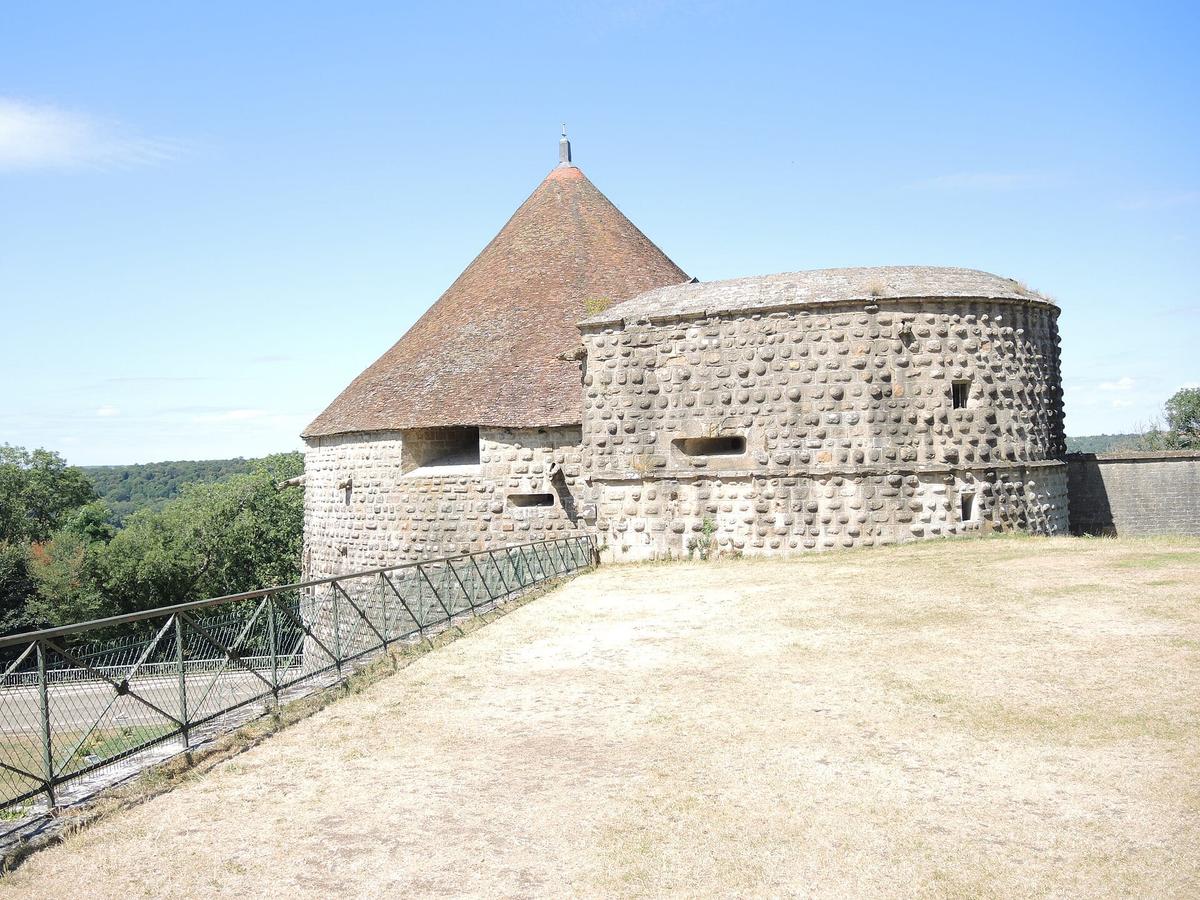

A story about the Tour d'Orval. Attached to the Tour de Navarre, the Tour d'Orval hides a spiral ramp. It was used to haul cannons up to the top, sheltered from enemy fire. Look at the gentle slope: it was designed for artillery, not for people on foot.
The oak roof frame. In 1825, the army engineers turned the tower into a powder magazine and topped it with a large conical timber roof. Today it is lit up in colour during the visit.
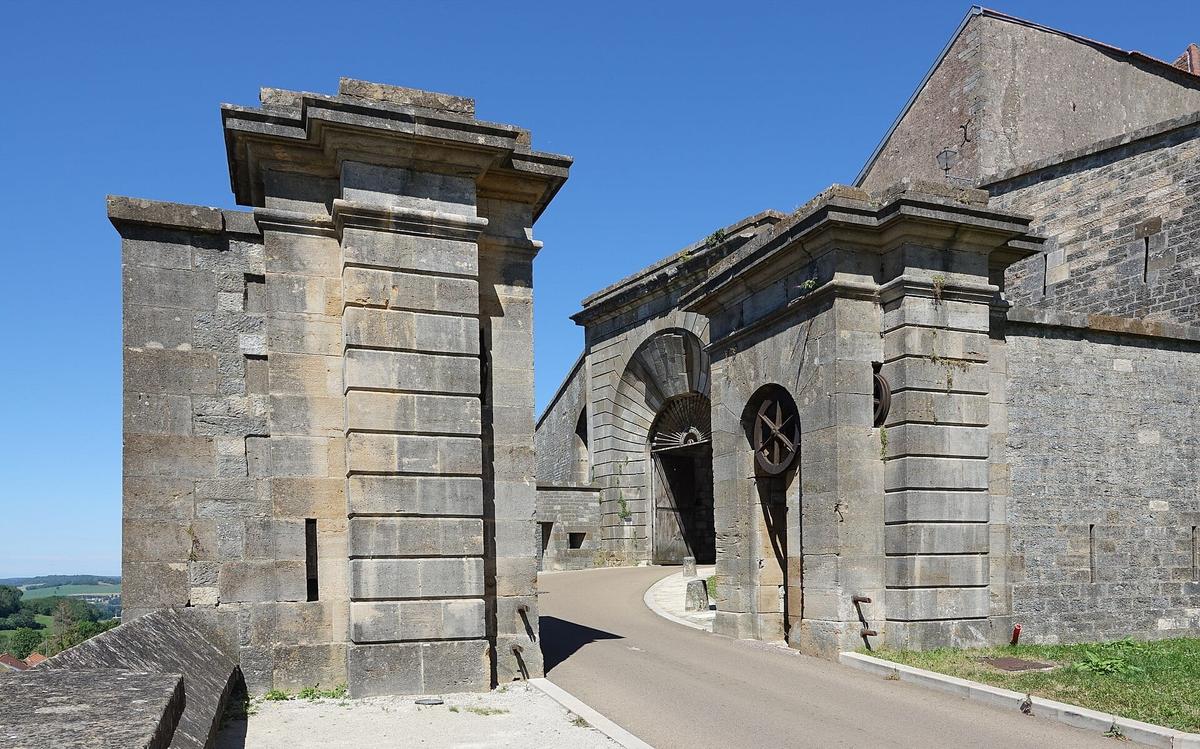
The Gallo-Roman gate. This is the oldest gate in the town. Its ancient arches, set into the wall, are a reminder that Langres was already an important place under the Emperor Augustus.
The Tour du Petit-Saut. Also called the Tour du Marché, it is horseshoe-shaped with walls 7 m thick. Historians disagree on its date: between 1517 and 1535 for some, 1573 for others.
The Tour Saint-Jean. It houses a café-bar, handy for a break halfway round.
Porte des Moulins and Porte de l'Hôtel-de-Ville. These are the grand entrances to the old town, to the south and north-west. The Porte de l'Hôtel-de-Ville, fortified in 1592, was rebuilt in 1750.
Traces of the rack railway. From 1887 to 1971, a rack railway linked the station, down below, to the upper town. It was the first rack railway in France. Another story to tell the children as you pass near the Porte des Moulins.
Visiting Langres with kids
The Langres ramparts make a good family outing. The wall walk is flat with no steps, so you can manage it with a pushchair or by bike. The Tour de Navarre is free for children under 12 with an adult, and a treasure-trail booklet is offered at the entrance.

The tourist board also offers free digital treasure trails with the Id-Vizit app, such as "Le petit détective de Langres", and 360-degree drawings showing life on the ramparts at different periods. In summer, the Hallebardiers company puts on arquebus firing demonstrations, and the citadel hosts cannon firing during the "Tonnerres de la citadelle".
For the youngest, the tourist train or a rosalie (up to three adults and two children) lets you go all the way round without getting tired.
One word of caution: the walls are high and some viewpoints only have a low parapet. Hold children's hands near the edges.
Wheelchair and pushchair access
According to the tourist board, the wall walk has no steps, which makes much of the route usable in a wheelchair, although some slopes call for a companion. The tourist train can take two wheelchairs. The official listing for the Tour de Navarre gives no information on wheelchair access: check with the tourist office before you come. Dogs are allowed in the Tour de Navarre and on the tourist train.
How to get to the Langres ramparts
By car. This is the easiest option. Langres is served by the A31 motorway, exits 6 (Langres-Sud) and 7 (Langres-Nord). The junction with the A5, between these two exits, gives direct access from the south-east of Paris. Allow about an hour from Dijon. A car park is signposted near the Tour de Navarre. It is best to park outside the old town, near the gates, and walk in.
By train. Langres station is on the Paris-Mulhouse line, below the upper town. From there you have to walk up to the upper town, a fairly steep climb, or take a taxi.
Renting a car. To combine Langres, the Charles de Gaulle Memorial and Clairvaux Abbey, a car is essential. Dijon is the nearest big city to rent one.
What to see near Langres on the same day
| Also worth seeing | Distance | Travel time |
|---|---|---|
| Maison des Lumières Denis Diderot | 0.8 km | 10 min on foot |
| Charles de Gaulle Memorial (Colombey-les-Deux-Églises) | 65 km | 55 min by car |
| Clairvaux Abbey | 75 km | 65 min by car |
Approximate road distances and travel times.
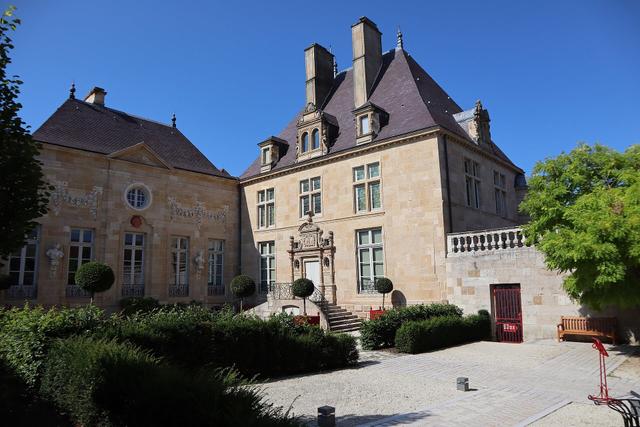
Inside the walls, the Maison des Lumières Denis Diderot tells the story of Langres's most famous son, whose bronze statue by Bartholdi has stood on Place Diderot since 1884. See also: Maison des Lumières Denis Diderot
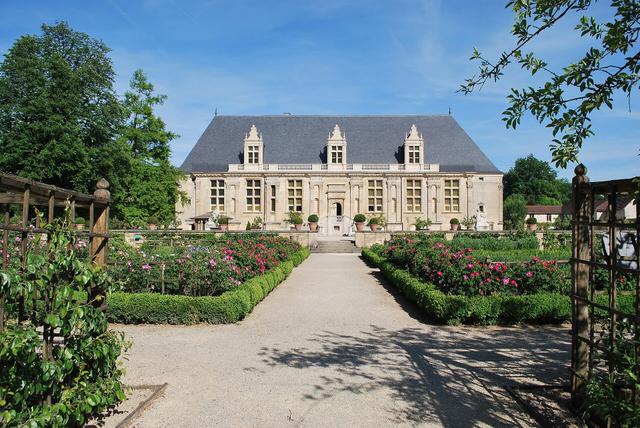
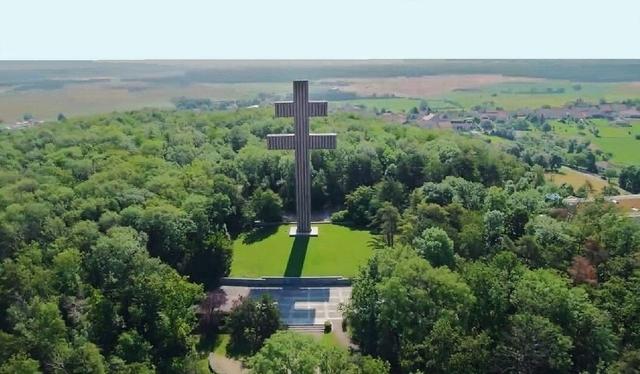
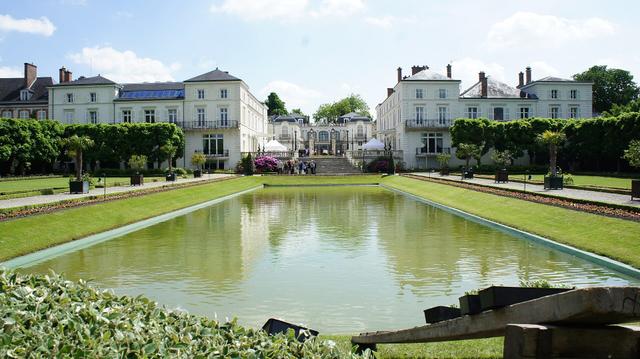
An hour to the north, Colombey-les-Deux-Églises is home to the Charles de Gaulle Memorial. See also: Charles de Gaulle Memorial (Colombey-les-Deux-Églises) In the Aube, Clairvaux Abbey, founded by Saint Bernard and later turned into a prison, tells a very different story. See also: Clairvaux Abbey In Joinville, the Château du Grand Jardin and its Renaissance garden round off a tour of the Haute-Marne. See also: Château du Grand Jardin (Joinville)
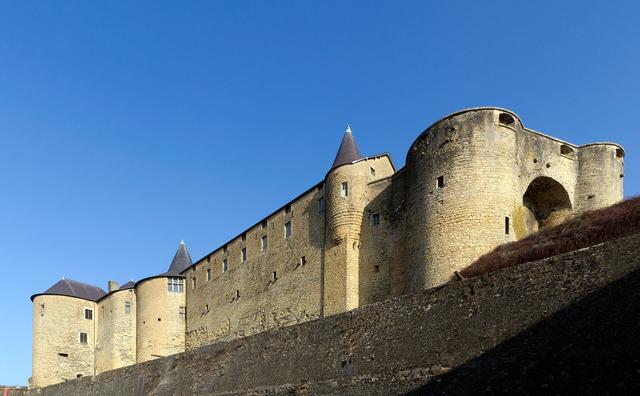
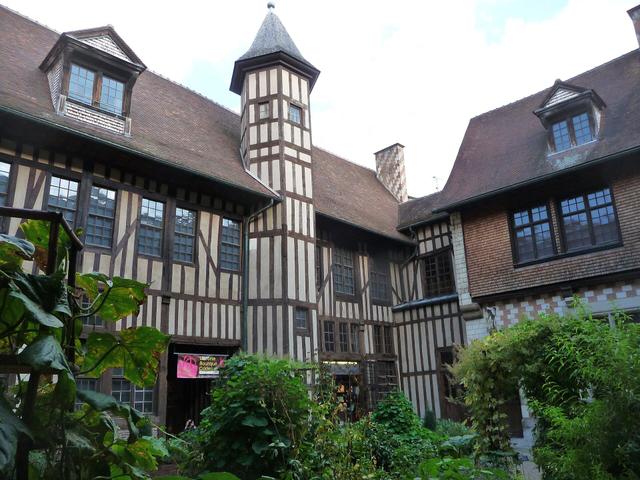
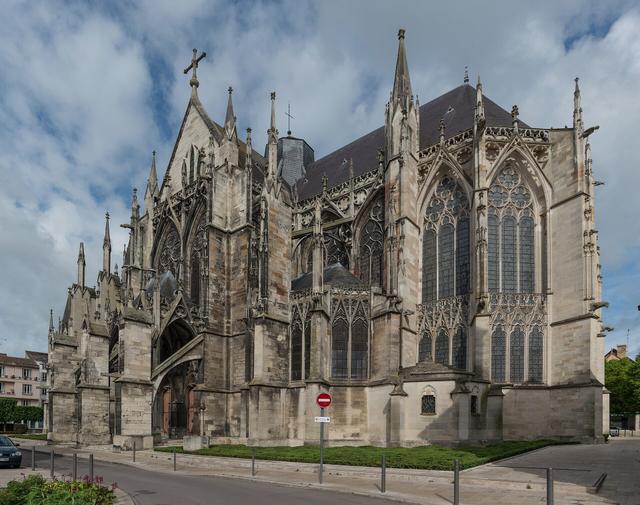
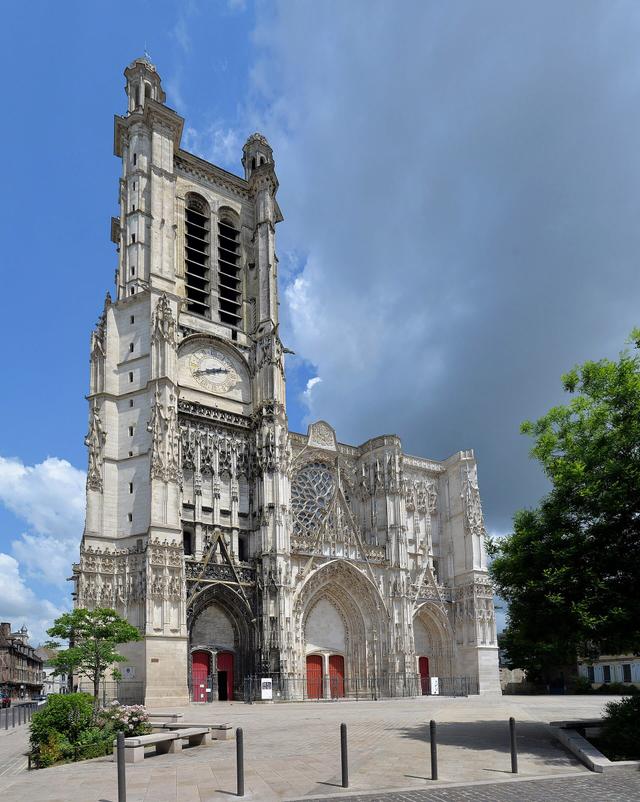
If you like fortified towns, Sedan, in the Ardennes, has one of the largest fortified castles in Europe. See also: Sedan Castle (Château fort de Sedan) Towards Burgundy, the medieval village of Noyers-sur-Serein has kept its ramparts and half-timbered houses. See also: Noyers-sur-Serein Troyes and its cathedral make another fine stop. See also: Troyes Cathedral, Champagne
Where to eat and stay in Langres
The old town has several restaurants, mainly around Place Diderot and Rue Diderot. The Tour Saint-Jean, on the wall walk, houses a café-bar. Make sure you try langres, a PDO washed-rind cheese recognisable by the small hollow on top. In summer, the tourist board even runs "visit'apéros" that end with a cheese tasting.
To stay, the upper town has hotels and B&Bs in old houses, some with views of the walls. With 7683 inhabitants in 2022, Langres is still a small town: book ahead in July and August.
FAQ
Is the Langres ramparts walk free?
Yes. The wall walk is free and open all year round. Only the Tour de Navarre (€5) and the tourist train (€7.75) charge admission.
How long is the walk round the Langres ramparts?
A 3.5 km loop, with only 46 m of height difference. Allow about 120 minutes on foot.
Is the Tour de Navarre open in winter?
No. In 2026 it opens from 1 April to 27 September, in the afternoon from Wednesday to Sunday, and every day in July and August. Groups can visit on request all year round.
Can you do the ramparts walk with a pushchair or by bike?
Yes, the wall walk has no steps. You can also do it on a scooter, in a rosalie or by tourist train.
Are dogs allowed?
Yes, on the wall walk, in the Tour de Navarre and on the tourist train.
Where can I park to visit the ramparts?
A car park is signposted near the Tour de Navarre and the tourist office, Square Olivier-Lahalle. Coaches cannot park in front of the tower.
Practical information
Opening hours 2026
| 1 April 2026 to 5 July 2026 | 14:00 – 18:00 (Closed: Monday and Tuesday) |
|---|---|
| 6 July 2026 to 30 August 2026 | 10:30 – 18:00 |
| 31 August 2026 to 27 September 2026 | 14:00 – 18:00 (Closed: Monday and Tuesday) |
Official ticket-office prices 2026
Free admission
Address
Tour de Navarre, square Olivier-Lahalle, 52200 Langres, France
Directions · Phone+33 3 25 87 67 67
On site and nearby
- On site: Food and drink
- Nearest shops and pharmacy: Langres, less than 1 km away Straight-line distance, based on OpenStreetMap.
- Emergencies: 112 (all emergencies, free from any phone), 15 (SAMU, medical emergency)
Around the site, on Google Maps
With children
Swimming pools and play areas nearby, on Google Maps
Facts checked on 12 November 2026. Sources: bienvenue-hautemarne.fr, bienvenue-hautemarne.fr, bienvenue-hautemarne.fr, bienvenue-hautemarne.fr, fr.wikipedia.org, fr.wikipedia.org
Map
In the same region
- Taittinger Champagne cellars (Reims)from €40